
绿色贸易

Search documents
绿色贸易领域首个专项政策文件发布
Jing Ji Wang· 2025-11-04 02:45
Core Viewpoint - Green trade has become a core indicator of national trade competitiveness amid deepening global climate governance and reshaping trade patterns, as highlighted by the Ministry of Commerce's recent implementation opinions on expanding green trade [1] Group 1: Implementation Measures - The implementation opinions propose 16 targeted measures to enhance the green low-carbon development capabilities of foreign trade enterprises, expand the import and export of green low-carbon products and technologies, create a favorable international environment for green trade, and establish a robust support system for green trade [2][3] - Specific measures include supporting enterprises in adopting green design, obtaining green product certifications, and encouraging carbon emission reductions through equipment upgrades and process modifications [2] - The establishment of a carbon footprint database and the promotion of green packaging and transportation methods are also emphasized to facilitate the transition to green trade [2][3] Group 2: Market Potential and Growth - The global market for electric vehicles, solar energy, and wind energy is projected to reach $2.1 trillion by 2030, five times its current size, indicating significant market potential for green low-carbon products [4] - China's exports of green low-carbon products have shown remarkable growth, with wind turbine exports increasing by over 30% in the first three quarters of this year, and electric vehicle exports surpassing 2 million units last year [4] - The implementation opinions aim to enhance the international competitiveness of green low-carbon products by promoting the use of recycled materials and developing sustainable fuel trade [4] Group 3: International Cooperation and Challenges - China is committed to participating in global green governance and enhancing the "green content" of its free trade agreements, despite facing challenges such as rising carbon footprint standards in international markets [6][7] - The Ministry of Commerce plans to engage in the formulation of international rules and standards, while the Ministry of Industry and Information Technology aims to increase the output share of green factories to 40% by 2030 [7] - The implementation of these measures is expected to create multiple opportunities for China's green trade, transforming trade structures and development methods [7]
“十五五”对外开放新蓝图:鼓励服务出口,完善海外综合服务体系
2 1 Shi Ji Jing Ji Bao Dao· 2025-11-04 00:26
Core Points - China's door to openness is widening, benefiting its people through various policies and trade initiatives [1][4] - The "14th Five-Year Plan" emphasizes expanding high-level openness, enhancing international cooperation, and sharing opportunities with the world [1][4] - The implementation of institutional openness includes aligning with international standards in areas like intellectual property and environmental regulations [3][5] Trade and Investment - In the first three quarters of this year, China's trade with Belt and Road countries reached 17.37 trillion yuan, a 6.2% increase, accounting for 51.7% of total trade [1] - The proposal includes expanding unilateral and regional openness, optimizing regional trade layouts, and enhancing free trade zones [4][5] - China's foreign direct investment flow in 2024 is projected to be $192.2 billion, an 8.4% increase from 2023, maintaining a global share of 11.9% [10] Service and Digital Trade - Service trade imports and exports totaled 38.87 billion yuan in the first half of 2025, with exports growing by 15% [7] - The focus on green trade is evident, with significant growth in exports of wind power and solar products, and electric vehicle exports surpassing 2 million units last year [7][8] - Cross-border e-commerce is also thriving, with imports and exports reaching 2.63 trillion yuan in 2024, a 10.8% increase [9] Overseas Investment Support - The government is enhancing the overseas comprehensive service system to support Chinese enterprises in global investments [10][11] - Local initiatives in regions like Zhejiang and Shanghai are providing platforms and services to facilitate overseas investments [11] - The complexity of the global investment environment necessitates improved risk management and resource allocation capabilities for Chinese companies [10][11]

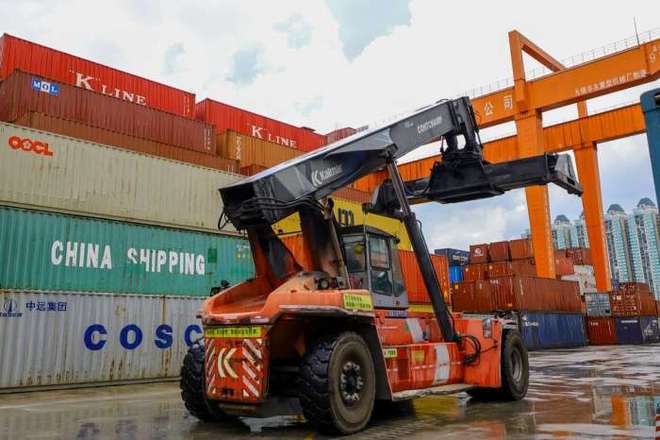
中国出台绿色贸易领域首个专项政策文件 四方面16项针对性举措促进外贸优化升级
Chang Jiang Shang Bao· 2025-11-02 23:14
Core Viewpoint - The development of green trade is a crucial measure to optimize trade, achieve carbon peak and carbon neutrality goals, and accelerate the construction of a strong trade nation [1][2] Group 1: Policy Implementation - The Ministry of Commerce has released the "Implementation Opinions on Expanding Green Trade," which includes 16 specific measures across four areas to enhance the green and low-carbon development capabilities of foreign trade enterprises [1][2] - The document is the first specialized policy in the field of green trade in China, focusing on weak links in green trade development and proposing targeted measures [1][2] Group 2: Market Trends - China's foreign trade enterprises are increasingly aligning with the global trend of green trade, contributing significantly to climate change mitigation [2][3] - In the first three quarters, exports of high-end equipment related to new production capabilities grew by 22.4%, with green products like wind power generators and electric locomotives also seeing double-digit growth [1][3] Group 3: Future Outlook - The global market for electric vehicles, solar energy, and wind energy is projected to reach $2.1 trillion by 2030, indicating a significant growth opportunity for green products [3] - China aims to continue enhancing its capacity to serve global green trade and share better low-carbon outcomes with the world [4] Group 4: Financial Support - The green finance system in China has been improving, playing a positive role in supporting green trade development through carbon footprint assessments and emerging service industries [6][7] - The People's Bank of China is focusing on supporting green trade through various financial tools, including green credit and bonds, and has included green trade in the scope of green finance support [6][7] Group 5: Information Disclosure and International Cooperation - Financial institutions are encouraged to enhance sustainable information disclosure, particularly for small and medium-sized enterprises, to better address new green trade barriers [7] - The People's Bank of China has collaborated with international entities to promote green trade and related investment financing through a common classification directory [7]
城市24小时 | 这座一线城市,再出手“抢人”
Sou Hu Cai Jing· 2025-11-01 02:49
Group 1: Employment Support for Graduates - Beijing's recent policy aims to support high-quality employment for college graduates and youth by implementing nine specific measures across three dimensions: policy improvement, service optimization, and mechanism enhancement [2][3] - The city will focus on attracting talent in key sectors such as artificial intelligence, integrated circuits, and biomedicine, particularly targeting small and medium-sized tech enterprises [2][3] - By 2025, the number of college graduates in China is expected to reach 12.22 million, marking an increase of 430,000 from 2024, highlighting the urgency of addressing youth employment issues [2] Group 2: Competitive Talent Attraction - Beijing faces competition from cities like Shanghai, Shenzhen, and Hangzhou in attracting young talent, necessitating effective policies to retain and nurture skilled individuals [3][4] - The city's latest initiatives reflect a targeted approach to service industry development, emphasizing support for emerging sectors and the importance of high-quality talent for economic growth [3] Group 3: Housing and Living Support - To alleviate housing challenges for young professionals, Beijing has introduced measures such as accommodation guarantees and housing subsidies in certain districts [2][4] - Previous initiatives included offering free accommodation for job seekers and discounted rental options for recent graduates, marking a significant step in addressing the living costs in the city [4]
绿色贸易领域首个专项政策文件出台!
券商中国· 2025-11-01 02:21
Core Viewpoint - The Ministry of Commerce has released the "Implementation Opinions on Expanding Green Trade," which includes 16 targeted measures to enhance the green and low-carbon development capabilities of foreign trade enterprises, expand the import and export of green low-carbon products and technologies, create a favorable international environment for green trade development, and establish a robust support system for green trade [1][2]. Group 1: Policy Framework - The "Implementation Opinions" is the first specialized policy document in the field of green trade, reflecting a clear focus on innovation and addressing weak links in China's green trade development, such as the shortcomings in enterprises' green low-carbon development capabilities and the untapped carbon reduction potential in logistics [2][3]. - Key measures include strengthening financial policy support, enhancing the carbon footprint database for foreign trade products, improving carbon pricing mechanisms, and establishing a green trade statistical monitoring and analysis system [2]. Group 2: Global Engagement - Green transformation is recognized as a significant trend and growth engine in the global economy, with China committed to participating in global green governance and enhancing the "green content" of its free trade agreements [3]. - China aims to actively engage in discussions on green development topics at international forums such as the G20 and BRICS, sharing its practices and proposals [3]. Group 3: Market Opportunities - The shift towards green trade is accelerating, with green low-carbon products becoming a new driving force for foreign trade. The global market for electric vehicles, solar energy, and wind energy is projected to reach $2.1 trillion by 2030, five times its current size [4]. - China's exports of green low-carbon products have shown remarkable growth, with wind turbine exports increasing by over 30% in the first three quarters of this year, and electric vehicle exports surpassing 2 million units last year [4]. Group 4: Financial Support - Strengthening financial policy support is a targeted measure to establish a robust support system for green trade, with the People's Bank of China focusing on green credit, green bonds, and green equity funds to empower the development of green service trade [5]. - Future efforts will include promoting the application of green finance standards, encouraging financial institutions to support various production service sectors, and facilitating the issuance of green financial products in global markets to provide more Chinese green assets to global investors [5].

商务部:绿色贸易发展步伐加快
Ke Ji Ri Bao· 2025-11-01 02:15
Core Viewpoint - The Chinese government is promoting green trade through a new policy document aimed at enhancing the country's green trade capabilities and addressing existing weaknesses in the sector [1] Group 1: Policy Implementation - The "Implementation Opinions" issued by the Ministry of Commerce is the first specialized policy document in the field of green trade, emphasizing innovation [1] - The document outlines four targeted measures to enhance green trade, including promoting green low-carbon development in foreign trade enterprises, expanding the import and export of green products and technologies, creating a favorable international environment for green trade, and establishing a supporting system for green trade [1] Group 2: Trends in Foreign Trade - Green low-carbon products are becoming a new driving force for foreign trade, with solar products exporting over 200 billion yuan for four consecutive years and electric vehicle exports surpassing 2 million units last year [2] - The integration of green concepts into product design is increasingly prevalent, with 47% of new products at the ongoing 138th Canton Fair incorporating green design principles [2] - The shift from merely selling products to providing integrated solutions is evident, as companies are offering complete solutions that include technology, services, and management alongside green products [2]
促进贸易优化升级 助力实现“双碳”目标(权威发布)
Ren Min Ri Bao· 2025-10-31 22:32
Core Points - The Chinese government has issued implementation opinions on expanding green trade, aiming to promote trade optimization and support the achievement of carbon neutrality goals in the context of global climate change [1] Group 1: Green Trade Development - The implementation opinions are the first specialized policy document in the field of green trade, focusing on addressing weaknesses in China's green trade development and proposing targeted measures [1] - Key measures include enhancing the awareness of green low-carbon development among foreign trade enterprises, promoting green design and production, and establishing a public service platform for green trade [1] Group 2: Export Performance - China's exports of green low-carbon products, such as wind power, photovoltaics, and new energy vehicles, have performed well, reaching over 200 countries and regions, significantly reducing global wind and solar power generation costs by over 60% and 80% respectively [2] Group 3: Industrial Green Transformation - The Ministry of Industry and Information Technology has created 451 green design enterprises and developed over 40,000 green products, with the output value of national green factories accounting for over 20% [2] - The goal is to increase the output value of green factories at all levels to 40% by 2030 [2] Group 4: Regulatory and Financial Support - The State Administration for Market Regulation has revised the management measures for adopting international standards, which has shortened the time for international standard conversion by nearly six months [3] - The People's Bank of China plans to introduce a green low-carbon transition industry guidance catalog in February 2024 to clarify green trade recognition and reduce trade barriers [3] - The People's Bank has also included green trade in the green finance support scope, aiming to encourage financial institutions to develop more products that meet green trade needs [3]
我国首个绿色贸易领域专项政策文件出台
Sou Hu Cai Jing· 2025-10-31 19:53
Core Insights - The global market for green technologies such as electric vehicles, solar energy, and wind energy is projected to reach $2.1 trillion by 2030, which is five times the current size [1] - China has issued its first special policy document on green trade, titled "Implementation Opinions on Expanding Green Trade," focusing on addressing weaknesses in the country's green trade development [1] - China aims to actively participate in discussions on green development at major international forums and has included environmental content in existing free trade agreements [1] Group 1 - The Ministry of Industry and Information Technology plans to increase the proportion of output from green factories to 40% by 2030 and promote zero-carbon factories [2] - The People's Bank of China will support the application of green finance and transition finance standards, encouraging financial institutions to provide more support for green service trade enterprises [2] - China's wind power, photovoltaic, and new energy vehicle products have been exported to over 200 countries, significantly reducing global wind and solar power generation costs by over 60% and 80%, respectively [2]
我国将采取多项举措拓展绿色贸易
Yang Shi Wang· 2025-10-31 12:14
Group 1 - The core viewpoint is that China is actively expanding its green trade initiatives and enhancing participation in global green governance [1][3] - The Ministry of Commerce will engage in the formulation of international rules and standards, and promote high-standard free trade agreements with a focus on increasing the "green content" [3] - The Ministry of Industry and Information Technology aims to guide enterprises in green design and manufacturing, with a target for green factory output to account for 40% by 2030 [3] Group 2 - The People's Bank of China and the State Administration for Market Regulation plan to lower financing thresholds and costs for green service trade enterprises [5] - There will be an orderly expansion of the certification scope for green products [5]
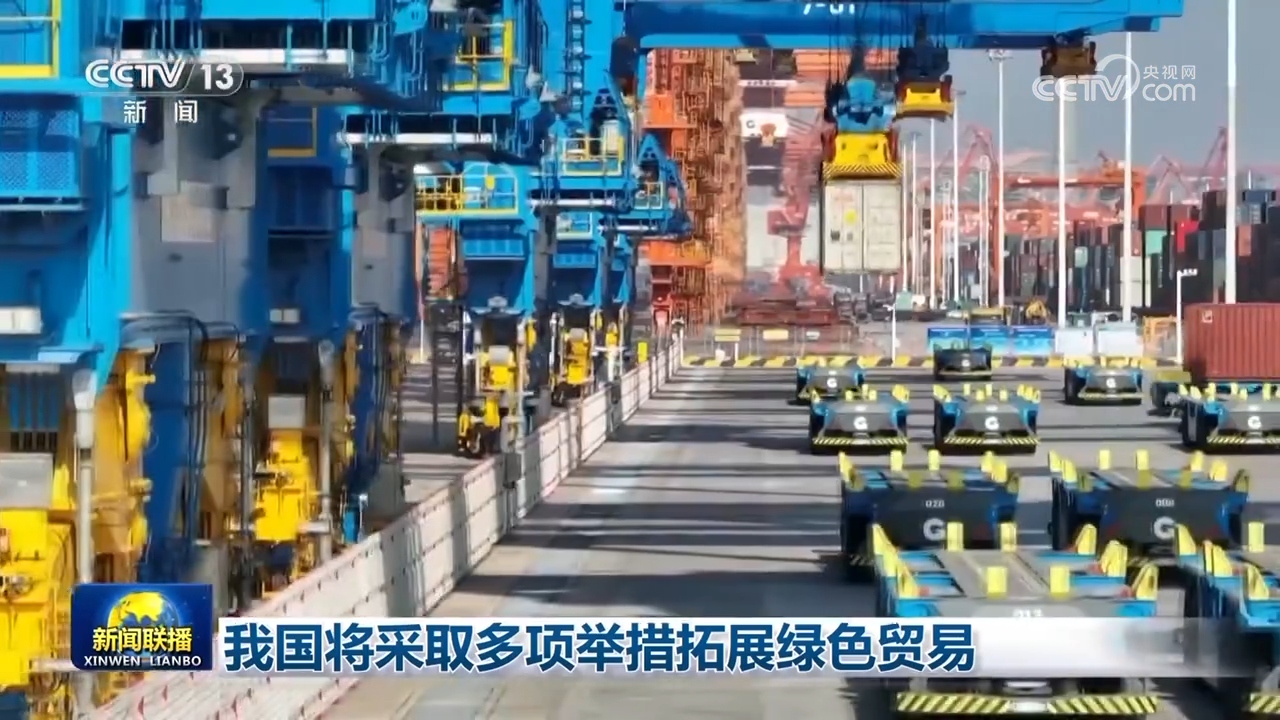
谁将成为绿色贸易“新主力”
Jin Rong Shi Bao· 2025-10-28 00:34
Core Viewpoint - The Chinese government is prioritizing the development of green trade as a strategic initiative to enhance trade optimization, achieve carbon neutrality goals, and accelerate the construction of a strong trade nation in response to climate change and international competition [1][2]. Group 1: Green Trade Development in China - The State Council, led by Premier Li Qiang, has outlined measures to expand green trade, positioning it as essential for economic transformation and international competitiveness [1]. - China's green trade exports have seen significant growth, with high-end equipment related to new production capabilities increasing by 22.4% year-on-year in the first three quarters of the year [1]. - In 2022, China's green trade import and export total reached $1,079.28 billion, accounting for 12.2% of global green trade, an increase of 2.3 percentage points since 2013 [2]. Group 2: Global Green Trade Trends - Global green trade has shown stable growth, with an average annual growth rate of 0.85% from 2013 to 2022, reaching $6.5 trillion in the first three quarters of 2023 [2]. - Green trade accounted for approximately 18.17% of total global trade in 2022, reflecting a slight decrease despite overall trade growth [2]. Group 3: Challenges in Green Trade Mechanisms - Existing green trade mechanisms face challenges, including limited effectiveness and slow progress, with non-tariff barriers becoming significant obstacles to green trade liberalization [3][4]. - Non-tariff barriers, such as inconsistent technical standards and complex certification processes, are major hindrances to the free trade of green products, particularly in the electric vehicle sector [4][7]. Group 4: RCEP as a Platform for Green Trade - The Regional Comprehensive Economic Partnership (RCEP) is seen as a potential optimal platform for promoting regional green trade due to its members' consensus on trade liberalization and diverse economic structures [5][6]. - Experts suggest that RCEP can facilitate the establishment of green product standards and streamline customs processes for electric vehicles and related components [6][7]. Group 5: Recommendations for Enhancing Green Trade - Recommendations include eliminating tariffs on green and low-carbon products, as current tariffs can be as high as 20% in the RCEP region [7]. - Reducing non-tariff barriers is crucial, with suggestions for measures such as simplifying import/export quotas, coordinating standards, and utilizing digital tools for data sharing [7].