绿色金融

Search documents
聚力绿色金融 夯实可持续发展战略根基
Xin Lang Cai Jing· 2026-01-18 21:31
Core Viewpoint - The article emphasizes the importance of green finance in promoting comprehensive green transformation and sustainable development in China, as outlined in the Central Economic Work Conference held in December 2025 [1]. Group 1: Green Finance Framework - A sustainable development-oriented green finance policy framework needs to be established, focusing on resource allocation and promoting green transformation [1]. - The top-level design of green finance should be improved, aligning with national sustainable development strategies and setting phased goals for key areas such as green industries and climate governance [1]. - A multi-tiered sustainable standard system should be constructed to enhance the scientific and operational standards for green finance tools like green credit and green bonds [1]. Group 2: Diversified Green Finance Tools - There is a need to innovate and diversify green finance tools to meet various financing demands for sustainable development [2]. - Traditional debt financing tools like green credit and green bonds should be enriched, and new varieties such as sustainable development-linked bonds should be introduced [2]. - Equity financing channels should be expanded through the establishment of green development funds and carbon neutrality-themed funds to attract social capital into green industries [2]. Group 3: Targeted Green Finance Services - Green finance should focus on key areas and weak links in sustainable development, providing precise support for industrial green transformation [3]. - Financial support for ecological protection should be strengthened, with innovative financial models for ecological compensation and value realization [3]. - Green technology innovation should be promoted through the establishment of green technology venture capital funds and improved financing mechanisms for green intellectual property [3]. Group 4: Digital Economy and Green Finance Innovation - The integration of digital technology with green finance is essential, requiring the construction of digital infrastructure for green finance [4]. - Innovative digital green finance products should be developed, utilizing technologies like IoT and AI for environmental benefit monitoring and risk assessment [4]. - Collaboration between financial institutions and technology companies should be encouraged to foster green finance technology innovation [5]. Group 5: Collaborative Green Finance System - A value co-existence system should be established to align economic growth with ecological protection, promoting a sustainable development model [5]. - Green finance tools should guide funding towards circular economy sectors, supporting energy-saving and carbon-reducing technology upgrades [5]. - Financial products should be developed to broaden the benefits of sustainable development, particularly for small and micro green enterprises and rural green industries [5].
虹口这支专业团队,为大楼披上可发电的“新甲”
Xin Lang Cai Jing· 2026-01-18 06:08
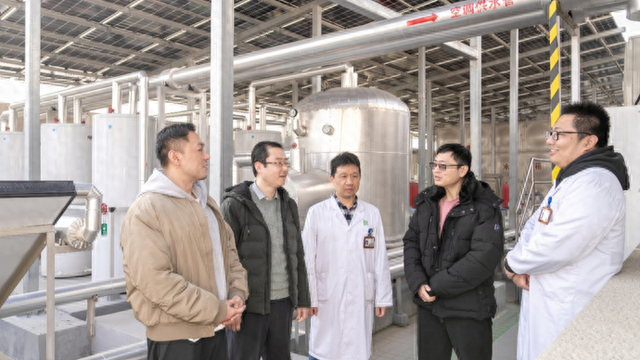
Core Insights - The article highlights the efforts of the Hongkou District Green Low-Carbon Service Task Force in successfully integrating photovoltaic panels on the rooftop of the Shanghai Integrated Traditional Chinese and Western Medicine Hospital, overcoming challenges posed by the building's height and existing equipment [3][4]. Group 1: Project Implementation - The task force collaborated with various entities, including the Shanghai Runtianlei New Energy Co., to ensure the photovoltaic components were seamlessly integrated with existing rooftop equipment, enhancing the project's wind resistance [3]. - The project transformed a previously deemed "unusable" rooftop into a functional energy-generating space, showcasing the task force's innovative approach to resource management and green energy solutions [3]. Group 2: Statistical Framework Development - Starting in 2024, Hongkou District will serve as a pilot area for green low-carbon services, necessitating the development of a precise statistical framework to measure the industry's growth [4]. - The task force, in collaboration with the Shanghai Energy Efficiency Center, created an industry map and statistical measurement system to reflect the local green low-carbon service industry, addressing challenges such as unclear statistical standards and data barriers [4]. - The initiative resulted in the establishment of the "Hongkou Code," a statistical framework that aligns with national standards while incorporating regional characteristics, gaining recognition from city-level authorities [4]. Group 3: Innovation and Ecosystem Development - The task force initiated the "Tianjiao Bay Cup" Green Low-Carbon Innovation and Entrepreneurship Competition to foster an entrepreneurial ecosystem and stimulate development within the sector [6]. - The competition facilitated connections between innovative companies and local projects, exemplified by Shanghai Lanjimi Technology Co., which proposed smart lighting solutions for an underground parking garage [6]. - The task force actively encourages green low-carbon enterprises to cluster in specialized parks, enhancing technological upgrades and supporting the growth of a vibrant green industry in Hongkou District [6]. Group 4: Industry Growth Metrics - Over the past two years, Hongkou District has seen the establishment of more than 50 new green low-carbon enterprises, with the industry scale approaching 800 billion yuan [7]. - The region has achieved a cumulative photovoltaic grid connection of over 20,000 kilowatts, indicating significant progress in renewable energy adoption [7].

从“生态好”走向“能转化、可持续、有支撑”
Xin Lang Cai Jing· 2026-01-12 19:03
Core Viewpoint - Qinghai is at a crucial stage of ecological civilization construction, aiming to transform its ecological advantages into institutional, market-oriented, and industrialized benefits, thereby enhancing sustainable governance and high-quality development [1] Group 1: Institutional Framework for Ecological Advantages - The focus is on establishing a rigorous institutional framework to institutionalize ecological advantages, emphasizing the importance of ecological protection as a national priority [1] - Key measures include implementing strict land use regulations, ecological protection red lines, and a natural protection area system to minimize ecological fragmentation and disorderly development [1] - The approach also involves integrated protection and systematic governance of ecosystems, transitioning from point-based restoration to comprehensive regional management [1] Group 2: Marketization of Ecological Advantages - The article highlights the need for market mechanisms and compensation systems to address the cost-benefit mismatch in ecological services, facilitating the realization of ecological product values [2] - It emphasizes the importance of ecological product value assessment and management, converting ecological contributions into measurable values for policy-making and funding allocation [2] - The development of trading mechanisms for ecological resources, such as carbon credits and water rights, is essential to create positive incentives for conservation behaviors [2] Group 3: Industrialization of Ecological Advantages - The transformation of ecological advantages into a modern industrial system is crucial, focusing on converting ecological resources into products and services while driving industrial upgrades through green constraints [3] - The establishment of a high-quality, low-impact ecological experience and education sector is proposed, leveraging national parks to create a new growth point for ecological branding [3] - The article advocates for a robust supply system for green organic agricultural products, enhancing local transformation capabilities and market credibility [3]
数字人民币App上线“碳普惠”服务|绿色金融周报
2 1 Shi Ji Jing Ji Bao Dao· 2026-01-12 04:11
Key Insights - The rapid development of the green finance market has led to an increase in relevant information and data, with a focus on the latest trends and practices in green finance to provide decision-making references for stakeholders [1] Group 1: Digital Currency and Green Finance - The digital RMB app has launched a carbon-inclusive service to enhance the application of digital RMB in green finance, allowing users to accumulate carbon credits from their low-carbon behaviors and exchange them for digital RMB [3] - This initiative is seen as a significant step by the People's Bank of China to encourage public participation in green low-carbon actions, linking personal green behavior with monetary incentives [3] Group 2: Policy Optimization in Green Financing - Jiangsu Province has optimized the "Environmental Base Loan" policy to expand support, enhance interest subsidy effectiveness, and strengthen financing guarantees, including the removal of financing limits and an increase in interest subsidy rates from 1% to 1.5% [4][5] - The policy aims to simplify application processes and improve loan issuance efficiency, addressing funding challenges for industrial enterprises in emission reduction [5] Group 3: Carbon Market Performance - The national carbon market saw a maximum price of 83.00 CNY per ton last week, with a closing price increase of 1.78% compared to the previous week [6] - The total transaction volume for carbon emission allowances reached 4,688,068 tons, with a total transaction value of approximately 352 million CNY [7] Group 4: Green Financial Instruments - Gansu Province issued the first "green infrastructure + regional coordinated development" dual-dimension sustainable bond in China, with a scale of 2 billion CNY and a 3-year term, linking the interest rate to specific performance targets [8][9] - Swire Properties successfully issued a 5-year, 500 million USD green bond with a coupon rate of 4.25%, reflecting strong market demand with an oversubscription of over four times [10] - The proceeds from the bond will be used for sustainable building projects and refinancing existing green projects, enhancing transparency and responsibility in fund usage [10]



节能改造催生新机遇
Jing Ji Ri Bao· 2026-01-08 21:45
Group 1: New Energy System and Investment Opportunities - The construction of a new energy system is a core engine for the "dual carbon" transition and a focus for capital market layout, emphasizing the importance of clean energy sources like solar, wind, and hydrogen, as well as supporting sectors such as new energy storage and smart grids [1] - The "dual carbon" goals present systemic opportunities primarily along two main lines: the first being the clean energy revolution, which has moved from demonstration to large-scale application, and the second being the empowerment of industrial transformation through energy-saving renovations and innovations in the new energy vehicle supply chain [1] - The carbon management and circular economy sectors are emerging as significant growth areas, with the national carbon market expanding and carbon pricing mechanisms maturing, leading to increased demand for carbon asset management, carbon capture, utilization, and storage (CCUS), and resource recycling [1] Group 2: Structural Opportunities in Traditional Industries - The resonance between green transformation and "anti-involution" policies is creating structural opportunities for traditional high-energy-consuming industries, such as coal and steel, which can achieve green transformation through technological upgrades [2] - The continuous improvement of the green finance system provides capital support for industrial transformation, with the 2025 version of the Green Finance Support Project Directory standardizing definitions for green projects, guiding funds towards low-carbon sectors [2] - Capital markets should collaborate across standards, products, and partnerships to seize opportunities, including establishing mandatory environmental information disclosure frameworks and developing green equity financing and innovative transition bonds [2] Group 3: Role of Financial Institutions in Green Transition - Securities firms are encouraged to evolve from traditional financial intermediaries to "enablers" and "catalysts" for green transformation, creating a comprehensive service system covering the entire lifecycle of green projects [3] - Three main pathways for securities firms include acting as a "capital engine" by expanding green bond underwriting and establishing green industry funds, creating an "innovation hub" by enhancing carbon market research and developing ESG indices, and forming an "intellectual hub" by assembling specialized research teams to develop ESG rating models [3]
基于碳账户改革的衢州“双碳”实践
Xin Lang Cai Jing· 2026-01-06 19:29
Core Viewpoint - Quzhou, a city in Zhejiang Province, faces the dual pressure of industrial development and ecological protection, necessitating a green transformation driven by digitalization and a carbon account system to facilitate systemic change towards carbon neutrality [1][3]. Group 1: Financial Institutions' Role - In 2020, Quzhou was designated as a national green finance reform and innovation pilot zone, but faced challenges in accurately supporting carbon reduction due to a heavy reliance on high-energy-consuming industries [3][4]. - A digital revolution initiated the establishment of a carbon account system that collects energy consumption data from enterprises, allowing for precise carbon emission and reduction metrics [4]. - The first national "carbon credit" reporting mechanism was created, integrating carbon performance into the credit assessment process of 27 financial institutions, enabling better financing conditions for low-carbon enterprises [4][5]. Group 2: Industrial Enterprises' Transformation - The establishment of the carbon account system in late 2021 allowed companies like Mingwang Dairy to identify their energy efficiency and carbon reduction potential, leading to proactive transformation strategies [6][7]. - Through third-party energy management contracts, enterprises can achieve significant cost savings and improved carbon performance, with over 50 similar cases resulting in a total reduction of 1.6 billion yuan in costs [7]. Group 3: Citizens' Engagement - Quzhou's personal carbon account system incentivizes low-carbon behaviors among citizens, allowing them to earn carbon credits for actions like using shared bikes and recycling, which can be redeemed for financial benefits [8]. - The city has issued green loans based on personal carbon accounts totaling 34.9 billion yuan, benefiting over 1.6 million residents [8]. Group 4: Service Institutions' Evolution - Service providers in Quzhou are transitioning from traditional energy-saving roles to comprehensive carbon solution providers, implementing integrated services that include real-time carbon monitoring [9]. - Successful projects in public institutions have led to the replication of energy-saving models across multiple facilities, enhancing the overall carbon reduction efforts in the region [9]. Group 5: Government's Strategic Shift - The local government is evolving its approach from strict regulatory measures to facilitating a market-oriented carbon management system, aiming to transform carbon emissions into a productive factor [10][11]. - The launch of the carbon account 2.0 upgrade focuses on creating a reliable data space, enhancing governance capabilities, and promoting market accessibility for low-carbon initiatives [11].
三大美丽中国先行区明确绿色金融任务|绿色金融周报
2 1 Shi Ji Jing Ji Bao Dao· 2026-01-04 15:11
Key Points - The rapid development of the green finance market has led to an increase in relevant information and data, with the Green Finance Weekly focusing on the latest trends and providing decision-making references for stakeholders in the green finance sector [1] Group 1: Green Finance Initiatives - Three major "Beautiful China" pilot areas have defined green finance tasks, with specific action plans released by seven government departments, emphasizing green finance as a key support [1] - The Guangdong-Hong Kong-Macao Greater Bay Area aims to establish a financial project library, promote green finance standards, develop carbon finance, and conduct resource and environmental rights trading [1] - The Beijing-Tianjin-Hebei plan focuses on building a green finance and sustainable finance center, supporting the development of green credit, insurance, and bonds, and guiding financial resources towards green low-carbon sectors [1] - The Yangtze River Delta plan seeks to elevate local green finance standards to national levels and leverage national green development funds to attract social capital for green low-carbon projects [1][2] Group 2: Carbon Market Performance - The national carbon market saw a highest price of 75.99 yuan/ton and a closing price increase of 3.15% compared to the previous week, with total trading volume reaching 6,927,636 tons and total transaction value at approximately 507.58 million yuan [3] Group 3: Climate Investment and Financing Innovations - The Shanghai Pudong New Area launched a climate investment and financing risk online service, providing tools for assessing climate risks based on historical weather data, which aids in project site selection and investment evaluation [4] - This service addresses the long-ignored "physical risk" quantification in green investments, offering a significant tool for assessing asset stability over the long term [5] - Beijing Energy Group's subsidiary, Jingneng International, successfully issued 1.88 billion yuan in green asset-backed notes at a low interest rate of 1.78%, showcasing the trend of state-owned enterprises leveraging market conditions to activate green assets through innovative financial products [6][7]
为气候友好投资嵌入“导航仪”,浦东首创气候投融资风险服务
Sou Hu Cai Jing· 2026-01-04 07:28
Core Insights - The article discusses the launch of the "Yangtze River Delta Climate Risk Online Service," aimed at helping investors and project developers make informed decisions based on climate risk assessments, thereby enhancing the safety and precision of funding directed towards climate-resilient projects [1][3]. Group 1: Climate Risk Assessment Tools - The service includes two main tools: a climate risk map that provides a 30-year archive of extreme weather events in the Yangtze River Delta, focusing on key risks such as high temperatures, heavy rainfall, typhoons, and strong winds, which aids in regional planning and project site selection [3][4]. - The second tool allows users to input geographic information to generate a tailored climate resilience report, offering critical insights for project location, operation, and investment evaluation [3][4]. Group 2: Transition to Comprehensive Financial Services - The climate financing pilot in Pudong is evolving from a phase focused on providing carbon reduction profiles to a more integrated financial model that emphasizes project value and risk hedging [4]. - By internalizing climate risk as a core parameter in financial pricing, Pudong aims to not only manage risks but also guide the market towards creating a more climate-resilient economic structure [4].
1.5°C Talk|从6万亿到60万亿美元,如何把握全球绿债市场扩容先机?
Xin Lang Cai Jing· 2026-01-04 06:24
Group 1: Climate Financing and Cooperation - COP30 provides a roadmap for global climate action and financing, emphasizing the need for regional connectivity and "coalitions of the willing" to foster bilateral and multilateral cooperation [1][5] - China is promoting a green trade agreement with ASEAN, while the EU and Brazil are collaborating on sustainable agriculture, and India is exploring resource cooperation with Congo, showcasing practical examples within the COP framework [1][5] - The COP framework includes mechanisms for immediate implementation, such as Article 6 of the Paris Agreement, which allows countries with established carbon markets to transfer emission reductions with countries rich in forest resources [1][5] Group 2: Transition and Resilience - Transition financing for high-carbon industries is becoming a consensus among Japan, Singapore, China, and other Asian nations, with Chinese enterprises and financial institutions developing systematic transition plans [2][6] - A clear transition framework is crucial for achieving decarbonization in hard-to-abate sectors like steel and cement, with China's Hebei steel industry transition directory serving as a representative example [2][6] - Climate resilience is equally important, as the frequency of extreme weather events is increasing, necessitating enhanced resilience in social, community, and economic systems to mitigate risks and protect long-term investments [2][6] Group 3: Capital Market's Role - Capital markets play a critical role in driving global climate action, with a need to mobilize private capital alongside public funding to address climate challenges [3][7] - The annual funding requirement for climate mitigation, transition, and resilience is estimated at $10 to $15 trillion, necessitating the mobilization of approximately $150 trillion in long-term savings [3][7] - Development finance institutions and the private sector are proposing various solutions to bridge the climate funding gap, indicating a shift towards systematic design and multi-stakeholder collaboration in climate finance [3][7] Group 4: China's Experience and Global Implications - Over the past decade, China has made significant progress in enhancing its financial policy framework, innovating financial products, and exploring mixed financing mechanisms, providing valuable lessons for global green transition [4][8] - The significant reduction in solar power costs in Africa and the rapid penetration of electric vehicles globally can be attributed to China's large-scale investments over the past 10 to 20 years [4][8] - Currently, the global stock of green, climate, and sustainable bonds is approximately $6 trillion, with a long-term goal of increasing this to around $60 trillion, highlighting the need for collaborative efforts to achieve large-scale global green transition [4][8]
数读2025经济答卷 6组数据看“绿水青山”新画卷
Ren Min Wang· 2025-12-31 05:23
"十四五"规划收官之年,人民网财经推出"承前启后看发展·数读2025经济答卷"系列图解,透过民间投资、科技创新、交通物流外贸等核心数据,感受中 国经济发展的强劲脉动。 本期聚焦绿色发展,一年来,逐"绿"前行的中国,绿色低碳转型步伐稳健、成效显著,为高质量发展注入源源不断的动能。 首次超过90% 10人民用 数读 >中国 厚程增绿降碳 学习市 "十四五"期间 森林覆盖率超过25% 为全球贡献约四分之一新增绿化面积 坚定履行"双碳"承诺 单位GDP能源消耗四年累计降低11.6% 相当于减少了11亿吨二氧化碳排放量 深耕能源转型"主路径" 1至10月 我国可再生能源新增装机3.32亿千瓦 风电光伏发电量1.89万亿千瓦时 占全国发电量23.5% 四五"时期 全社会用电量中 每3千瓦时电就有1千瓦时绿电 al 于级"快车 1至11月 新能源汽车产销 分别完成1490.7万辆和1478万辆 同比分别增长31.4%和31.2% 目前 国家层面已经累计培育6430家绿色了 激活协同共治"强动力" il 截至三季度末 绿色贷款余额43.51万亿元 同比增长22.9% 绿色债券累计发行4.95万亿元 规模位居全球前列 《绿色金 ...