量子计算

Search documents
连续三年聚焦新质生产力 合肥“新春第一会”召开
Xin Lang Cai Jing· 2026-02-24 09:05
转自:合肥日报 2月24日,春节假期后首个工作日,合肥市召开"新春第一会"。 正处"十五五"开局之年,这场高规格会议会聚焦什么主题,释放出什么信号? 01 "新春第一会"指春节假期后开工第一天召开的大会,往往具有"把方向、定基调"的作用。 2月24日下午,合肥召开全市科技创新引领新质生产力发展大会,就是要动员全市上下以"开局即加速、起步即冲刺"的精气神,乘势而上、创先争优,在新 征程上再出发。 会议主题,划出了一座城市全年高质量发展的重点,最令人关注。 今年合肥"新春第一会"的主题是:科技创新引领新质生产力发展。这是这座城市连续第三年聚焦同一主题——"新质生产力"。 2024年2月24日,全市召开进一步优化营商环境加快发展新质生产力动员大会。 2025年2月11日,全市召开加快发展新质生产力暨重点项目推进会。 三年不变的主题,释放出鲜明信号:合肥,始终将发展新质生产力摆在突出的战略位置。 事实上,国内很多城市都通过固定"新春第一会"主题的方式,传递发展信号,为全年工作指向定调。 连续四年,武汉的"新春第一会"均聚焦科技创新。 连续五年,长沙的"新春第一会"都聚焦"高质量发展"。 无锡更是连续十年以"新春第一会 ...


全球首个!我国量子计算新突破
Shang Hai Zheng Quan Bao· 2026-02-24 04:43
"本源司南"由本源量子计算科技(合肥)股份有限公司(以下简称"本源量子")自主研发,2021年首次 发布。此后,"本源司南"历经多轮迭代升级,已成为兼容超导、离子阱、中性原子等多种主流技术路线 的"量超智"融合先进计算操作系统,目前已部署在本源量子的"本源悟空"系列量子计算机上并对外开 放。 量子操作系统与软件、量子计算云平台、量子计算应用软件作为量子计算的三大关键软件环节,是技术 落地生态核心。 量子计算机操作系统是量子计算机的"大管家",不仅承担着资源调度、软硬件协同管理等核心职能,还 具备量子任务并行计算、量子比特自动校准等关键能力,能够显著提升量子计算机整机运行效率。 当前国际范围内尚无成熟量子计算机操作系统完全开放本地下载部署——美国IBM、谷歌等科技巨头仅 提供Qiskit、Cirq等量子编程框架与云服务,底层操作系统并未对外开放。"本源司南"则通过统一编程 接口与标准化驱动体系的开放,打破了量子计算核心软件的技术壁垒,让全球科研机构、高校及开发者 都能够便捷获取中国自主量子计算机操作系统。 2月24日,安徽省量子计算工程研究中心宣布,我国首款自主研发量子计算机操作系统"本源司南"正式 开放线上下 ...
量子热潮席卷而来! 芬兰量子计算领军者IQM借SPAC赴美上市 手握超1亿美元订单
智通财经网· 2026-02-23 13:56
IQM指出,截至目前其已向13家客户售出21套其独家研发的量子计算系统,其中包括全球前十大超级计 算中心中的4家。该公司补充称,其在2025年实现了最前沿量子计算技术带来的至少3500万美元的未经 审计营收,并且截至2025日历年末,其在手量子计算业务订单/营收可见度超过1亿美元。 IQM联合创始人兼首席执行官扬·格茨(Jan Goetz)表示:"量子计算不再只是科学研究项目。它已经成为 一个早期产业——客户们拥有、运营并在先进量子计算机之上进行项目构建。这正是IQM所能实现 的。" IQM与Real Asset的董事会均已批准拟议的业务合并。 IQM是总部位于欧洲的量子计算核心参与者之一。其他欧洲量子计算领军者方面,CNBC报道称,总部 位于英国的Quantinuum去年通过两轮融资筹集了8亿美元;总部位于西班牙的Multiverse Computing去年在 B轮融资中筹集了1.89亿欧元。IQM核心业务聚焦于超导路线的量子计算硬件/系统(某种程度上的"量子 计算全栈"),该公司打造的量子处理器(QPU)基于超导电路,并把整机交付为可在本地部署的量子计算 机(面向HPC中心等),同时也支持云端高速访问。 ...
特朗普遭背刺,向全球宣布一件与中国有关大事,中方:日本没资格
Sou Hu Cai Jing· 2026-02-22 15:37
Group 1: U.S. Trade Policy and Economic Impact - The U.S. Supreme Court ruled on February 20 that tariffs imposed by the President under the Emergency Economic Powers Act exceeded his authority, with a 6-3 vote against these measures, necessitating a shift in trade strategy from the White House [1] - Following the ruling, the White House signed a new executive order to impose additional tariffs on global imports, referencing the Trade Act of 1974, with initial rates later mentioned at higher levels to maintain trade balance [1] - The U.S. Department of Commerce reported that economic growth for Q4 2025 was below previous expectations, with significant job losses in manufacturing, indicating pressure from trade policy adjustments and rising corporate costs [3] Group 2: Japan's Defense and Economic Strategy - Japan's government approved a record-high defense budget for FY2026, focusing on missile development and modernization of military capabilities to address regional security challenges [3][6] - As part of a trade agreement, Japan committed to injecting substantial funds into strategic industries in the U.S. by 2029, with initial projects selected in energy infrastructure and critical minerals [5] - The agreement was a result of negotiations where Japan agreed to lower automotive tariffs in exchange for investment opportunities, although Japan now faces risks of tariff reinstatement following the U.S. court ruling [5] Group 3: U.S.-China Agricultural Trade Relations - The White House announced a state visit to China from March 31 to April 2, aimed at discussing agricultural trade cooperation, particularly for U.S. exports like soybeans and corn, in response to domestic agricultural product inventory issues [3][5] - The visit is expected to focus on collaboration opportunities to avoid escalating trade tensions, emphasizing dialogue to resolve differences and promote mutually beneficial trade [5]
强化基础研究战略性、前瞻性、体系化布局——不断夯实高水平科技自立自强根基
Ren Min Ri Bao· 2026-02-19 22:17
Group 1 - Strengthening basic research is an urgent requirement for achieving high-level technological self-reliance and building a world-class scientific power [1] - The emphasis on basic research has led to significant achievements, with over half of the top ten scientific advancements in China for 2025 stemming from basic research [1] - The development of quantum computing in China demonstrates the importance of addressing foundational scientific issues to meet national strategic needs [2][3] Group 2 - Basic research serves as the theoretical foundation for technological breakthroughs and is a driving force for industrial transformation [4] - The establishment of collaborative frameworks between enterprises and research institutions is crucial for advancing basic research [5][9] - The integration of enterprises into the national basic research system allows for a collaborative innovation mechanism where companies can propose scientific challenges to be addressed by research teams [6][7] Group 3 - The cultivation of young scientific talent is essential for the future of basic research, with significant support being provided to young researchers [10][12] - The National Natural Science Foundation has funded numerous projects led by researchers aged 45 and below, indicating a strong focus on nurturing young talent [12] - The foundation has supported a total of 880,000 research projects over 40 years, with funding amounting to 460.8 billion yuan, contributing to a wealth of foundational and original scientific achievements [12]
美国可以靠AI打破中国稀土主导权?“极不现实”
Guan Cha Zhe Wang· 2026-02-15 12:48
Core Viewpoint - The United States is eager to break China's dominance in critical mineral sectors, particularly in rare earths, and is exploring the use of AI and quantum computing to develop alternative materials, aiming to reduce geopolitical risks in supply chains [1][2]. Group 1: AI and Quantum Computing Potential - AI and quantum computing are proposed as "dual engines" that could help design alloys using abundant materials, potentially shortening the time required to obtain critical materials from 10-20 years to just a few years [2]. - Current AI technology is not yet capable of delivering substantial results in mining and materials, and many ideas surrounding these technologies are seen as hype rather than practical solutions [2][4]. Group 2: China's Competitive Advantage - China has invested heavily in AI, advanced computing, and materials science, maintaining a significant lead in innovation speed and capabilities in creating new materials [2][5]. - The complete industrial ecosystem that China has built over decades makes it unrealistic for the U.S. to challenge China's position in the short term [5]. Group 3: Challenges in Material Development - Transitioning from alloy design to commercial-scale production is a lengthy process, and historical trends suggest that attempts to reduce reliance on one material often lead to increased dependence on another [4]. - Even if the U.S. successfully designs new materials in laboratories, challenges such as material stability, scalability, and cost control must be addressed before industrial application can occur [5].

中国AI再迎“Seedance时刻”,印证了一个重要趋势
Xin Lang Cai Jing· 2026-02-15 00:02
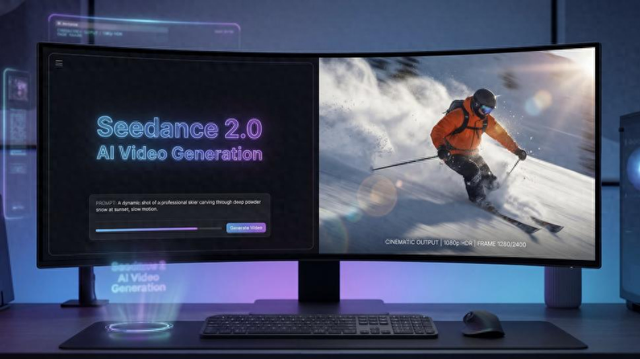
近日,一款名为Seedance 2.0的AI视频生成模型在国内外互联网上迅速走红。该模型采用双分支扩散变 换器架构,可同时生成视频和音频。用户只需输入文本或上传图片,即可在60秒内获取带有原生音频的 多镜头序列视频,不少媒体与网友直呼"Seedance时刻"已经到来。 字节跳动发布视频模型Seedance 2.0。 重器频出开盛景,科创逐梦迎春风。过去一年,以Seedance 2.0为代表的中国科技在能源、航天、AI等 领域多点开花、捷报频传,这些突破不仅彰显了中国自主创新的硬核实力,更勾勒出从"跟跑"到"并 跑"乃至"领跑"的奋进轨迹,为高质量发展注入澎湃动能。 领跑能源,重塑绿色发展。 从能源工程探索、资源拓展到技术应用,我国在能源领域实现多项"全球首次",取得一系列突破性成 果。 2025年年初,有"人造太阳"之称的EAST核聚变实验装置,首次实现"亿度千秒"量级的高温等离子体持 续运行,标志着我国聚变能源研究实现从基础科学向工程实践的重大跨越,对人类加快推进聚变发电具 有重要意义。 2025年年末,钍基熔盐实验堆正式建成,这座实验堆是我国自主设计、研发和建设的第四代先进裂变核 能系统,也是目前国际上唯 ...
禾信仪器业绩预亏股价反涨 资产重组预期成关键
Jing Ji Guan Cha Wang· 2026-02-13 10:04
Core Viewpoint - The company is facing significant financial challenges with a projected net loss for 2025, yet its stock price has seen a substantial increase driven by expectations of a major asset restructuring and market sentiment [1][2]. Financial Performance - The company announced a projected net loss of approximately 89 million yuan for 2025, representing a 93.52% year-on-year decline, with revenues expected to be around 97 million yuan [2]. - In the first three quarters of 2025, revenue declined by 52.81%, and the gross margin fell from 39.96% to 27.54%, with core product line revenues dropping by over 70% [2]. Stock Price Movements - The stock price has been influenced by expectations of a major asset restructuring, specifically the acquisition of a 56% stake in Shanghai Liangxi Technology Co., which aims to enter emerging fields like quantum computing [3]. - Despite a 4.52% drop on February 13, 2026, the stock's turnover rate was 2.87%, with a trading volume of 289 million yuan, indicating high participation from leveraged funds [3]. - The company's market capitalization is approximately 9.961 billion yuan, with a concentrated shareholder base of only 3,228 accounts, making it susceptible to short-term capital movements [3]. Industry and Risk Analysis - There is a significant disconnect between the company's valuation and its financial performance, with a price-to-sales ratio (TTM) of 97 times, far exceeding the industry average of 5-10 times, and a price-to-earnings ratio (TTM) of -166.08 times, indicating a lack of earnings support for its valuation [4]. - The traditional environmental monitoring mass spectrometer market is experiencing a decline due to government procurement cycles, and new business ventures have yet to contribute to revenue [4]. - The company faces potential delisting risks if its 2025 annual report triggers delisting indicators, which could put pressure on its stock price [5]. Future Development - If the restructuring is successful, it may expand the company's technological boundaries, but attention must be paid to the results of the transaction review and the progress of new business implementations [6]. - The current stock price increase appears to reflect speculative trading rather than improvements in the company's fundamentals [6].

IonQ收购Oxford Ionics后整合进展与未来技术路线图公布
Jing Ji Guan Cha Wang· 2026-02-12 20:48
Core Insights - The recent significant event related to "Itonic Holdings Ltd" is the acquisition and subsequent integration of the UK quantum computing company Oxford Ionics by IonQ [1] Recent Events - IonQ announced the full acquisition of Oxford Ionics for approximately $1.075 billion in stock and cash, which was completed in the third quarter of 2025. Over 80 employees from Oxford Ionics have joined the IonQ team post-acquisition [2] Project Advancement - IonQ plans to leverage Oxford Ionics' electronic quantum bit control technology to launch a 256-qubit system in 2026, aiming for a fidelity target of 99.99%. This represents a critical technological milestone following the acquisition [3] Future Development - According to Oxford Ionics' roadmap published in May 2025, the "large-scale value" phase aims to introduce a quantum processor with over 10,000 high-fidelity qubits by 2027. This plan has been incorporated into IonQ's long-term objectives to accelerate the realization of fault-tolerant quantum computers [4] Business Progress - Prior to the acquisition, Oxford Ionics delivered the ion trap quantum computer "Quartet" to the UK National Quantum Computing Centre and collaborated with Infineon to develop the portable quantum computer "MinIon." The progress of these projects is noteworthy. The company was also selected for the US Defense Advanced Research Projects Agency's quantum benchmark program, which may accelerate its market expansion in the US due to the acquisition by IonQ [5]

“量子计算”投资主题的里程碑时刻! 挪威主权基金投向“量子三剑客” 机构资金蓄势待发
智通财经网· 2026-02-12 04:36
Core Viewpoint - The significant investment by Norway's sovereign wealth fund in IonQ marks a potential milestone for active asset management firms entering the quantum computing sector, indicating a growing belief in the long-term growth potential of this technology [1][3]. Group 1: Investment Insights - Norway's central bank investment management (NBIM) has disclosed a long position in multiple quantum computing companies, including IonQ, Rigetti, and D-Wave Quantum, with a notable focus on IonQ [1][2]. - The total value of the holdings includes approximately $200 million in IonQ stock, $39 million in Rigetti, and $4 million in D-Wave Quantum [2]. - The investment is seen as a strategic move by a major asset management institution, potentially paving the way for other large firms to enter the quantum computing space [3][8]. Group 2: Market Outlook - Analysts believe that the quantum computing sector is on the verge of significant breakthroughs, with predictions of achieving "quantum supremacy" within the next three to five years [4][5]. - The transition from academic discussions to practical applications in quantum computing is becoming urgent, particularly regarding national security implications [4][5]. - The market for quantum computing is expected to expand, with multiple successful technology paths likely to emerge, similar to the current trends in artificial intelligence [2][3]. Group 3: Technological Developments - IonQ's advancements in quantum hardware, including achieving 99.99% fidelity in two-qubit gates, are critical milestones in the journey toward practical quantum computing [4]. - The focus is shifting from merely increasing the number of physical qubits to achieving error correction and stable logical qubits necessary for commercial viability [6][7]. - The recent progress in quantum error correction and the establishment of fault-tolerant architectures are seen as essential steps toward large-scale commercial applications [6][7].