铁路运输业

Search documents
国家统计局:1—11月份全国固定资产投资(不含农户)444035亿元
Sou Hu Cai Jing· 2025-12-15 02:20
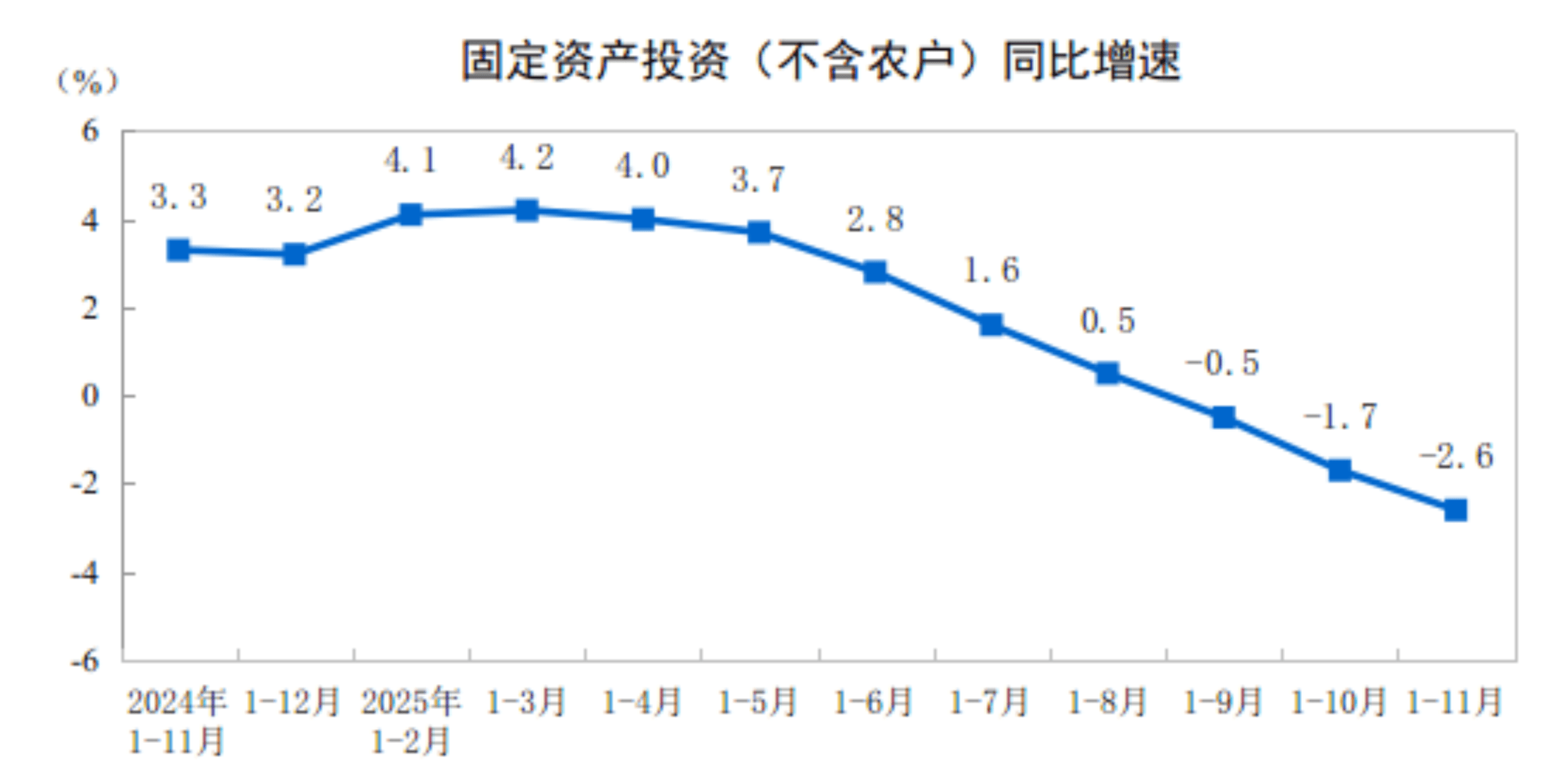
Core Insights - National fixed asset investment (excluding rural households) reached 444,035 billion yuan from January to November 2025, showing a year-on-year decline of 2.6% [1] - Private fixed asset investment decreased by 5.3% year-on-year [1] - In November, fixed asset investment (excluding rural households) fell by 1.03% month-on-month [1] Investment by Industry - Primary industry investment totaled 8,770 billion yuan, with a year-on-year growth of 2.7% [3] - Secondary industry investment was 162,243 billion yuan, increasing by 3.9% [3] - Tertiary industry investment reached 273,022 billion yuan, experiencing a decline of 6.3% [3] - Within the secondary industry, industrial investment grew by 4.0%, with mining investment up by 4.0%, manufacturing investment rising by 1.9%, and investment in electricity, heat, gas, and water production and supply increasing by 10.7% [3] - In the tertiary industry, infrastructure investment (excluding electricity, heat, gas, and water production and supply) decreased by 1.1% [3] - Pipeline transportation investment grew by 16.8%, water transportation investment increased by 8.9%, and railway transportation investment rose by 2.7% [3] Investment by Region - Eastern region investment declined by 6.6% year-on-year [3] - Central region investment fell by 1.7% [3] - Western region investment decreased by 0.2% [3] - Northeastern region investment saw a significant decline of 14.0% [3] Investment by Registration Type - Domestic enterprise fixed asset investment decreased by 2.6% year-on-year [3] - Investment from Hong Kong, Macau, and Taiwan enterprises fell by 2.2% [3] - Foreign enterprise fixed asset investment experienced a substantial decline of 14.1% [3]

广州地铁取得大吨位转体桥球铰定位结构及施工方法专利
Sou Hu Cai Jing· 2025-12-05 06:29
Group 1 - Guangzhou Metro Group Co., Ltd. has obtained a patent for a "large tonnage rotating bridge ball hinge positioning structure and construction method," with authorization announcement number CN119411498B, applied on December 2024 [1] - Guangzhou Metro Group Co., Ltd. was established in 1992, located in Guangzhou, primarily engaged in road transportation, with a registered capital of 58,425.39737 million RMB [1] - The company has invested in 106 enterprises, participated in 5,000 bidding projects, holds 75 trademark records, 1,432 patent records, and possesses 7,438 administrative licenses [1] Group 2 - China Railway (Guangzhou) Investment Development Co., Ltd. was established in 2017, located in Guangzhou, primarily engaged in capital market services, with a registered capital of 3,000 million RMB [2] - The company has invested in 8 enterprises, participated in 1,000 bidding projects, holds 221 patent records, and possesses 10 administrative licenses [2] - China Railway Guangzhou Engineering Bureau Group Bridge Construction Co., Ltd. was established in 2021, located in Jiangmen, primarily engaged in civil engineering construction, with a registered capital of 101 million RMB [2] Group 3 - China Railway Guangzhou Engineering Bureau Group Bridge Engineering Co., Ltd. was established in 2017, located in Guangzhou, primarily engaged in civil engineering construction, with a registered capital of 11 million RMB [2] - The company has participated in 1,814 bidding projects, holds 191 patent records, and possesses 46 administrative licenses [2] - China Railway Guangzhou Engineering Bureau Group Co., Ltd. was established in 2016, located in Guangzhou, primarily engaged in housing construction, with a registered capital of 305 million RMB [3] Group 4 - China Railway Guangzhou Engineering Bureau Group Co., Ltd. has invested in 83 enterprises, participated in 5,000 bidding projects, holds 1,379 patent records, and possesses 1,631 administrative licenses [3]
产需两端均有改善 11月制造业PMI回升
Di Yi Cai Jing· 2025-11-30 13:56
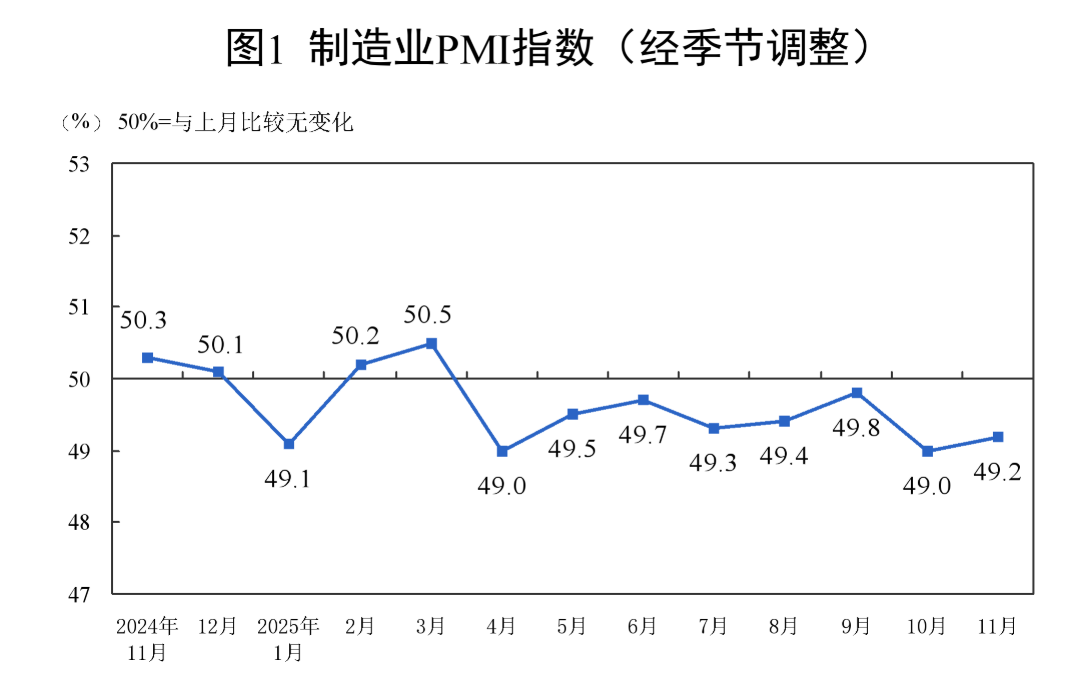
Group 1: Manufacturing Sector Overview - The manufacturing PMI for November is reported at 49.2%, an increase of 0.2 percentage points from October, but it has remained below the critical line for eight consecutive months [1] - The production index and new orders index for November are 50.0% and 49.2%, respectively, indicating improvements in both production and demand [4] - High-tech manufacturing PMI stands at 50.1%, remaining above the critical point for ten months, suggesting continued growth in this sector [4] Group 2: Economic Indicators and Market Sentiment - The production expectations index for November is 53.1%, reflecting increased confidence among manufacturing enterprises regarding market development [5] - The new export orders index has risen to 47.6%, up 1.7 percentage points from October, indicating a stabilization in manufacturing exports [5] - The overall manufacturing market demand is showing signs of recovery, with the new orders index increasing by 0.4 percentage points from October [5] Group 3: Price Trends and Inventory Levels - The purchasing price index for raw materials is at 53.6%, up 1.1 percentage points from October, indicating rising input costs [7] - The finished goods inventory index is at 47.3%, down 0.8 percentage points from October, suggesting smoother sales activities for enterprises [6] Group 4: Service Sector Performance - The non-manufacturing business activity index is reported at 49.5%, a decrease of 0.6 percentage points from October, indicating a slowdown in service sector activities [9] - The financial services sector shows strong performance, with business activity and new orders indices both exceeding 55%, indicating robust growth [13] - The construction industry business activity index has improved to 49.6%, up 0.5 percentage points from October, signaling a recovery in construction activities [14]
产需两端均有改善,11月制造业PMI回升
Di Yi Cai Jing· 2025-11-30 13:40
Manufacturing Sector - The manufacturing PMI for November is reported at 49.2%, showing a slight increase of 0.2 percentage points from October, but remains below the growth threshold for eight consecutive months [1][4] - The production index and new orders index for November are 50.0% and 49.2%, respectively, indicating improvements in both production and demand, with the production index returning to the critical point [4][5] - High-tech manufacturing PMI stands at 50.1%, remaining above the critical point for ten consecutive months, indicating continued growth in this sector [1][4] Economic Outlook - Analysts suggest that the slight recovery in the manufacturing PMI reflects improved market confidence, driven by the "14th Five-Year Plan" and recent positive outcomes from US-China trade talks [4][5] - Despite the improvements, there are still significant downward pressures on the economy, particularly due to external uncertainties and ongoing adjustments in the real estate market [6][8] - The production activity expectation index for November is 53.1%, indicating increased confidence among manufacturing enterprises regarding market development [5] Export and Demand - The new export orders index for November is 47.6%, up 1.7 percentage points from October, suggesting a stabilization in manufacturing exports [5] - All major manufacturing sectors, including high-tech and consumer goods, have seen increases in new export orders, with high-tech manufacturing new export orders rising over 3 percentage points [5][6] Price Trends - The purchasing price index for raw materials is at 53.6%, up 1.1 percentage points from October, indicating rising costs for manufacturers [7][8] - The factory price index is at 48.2%, showing a slight recovery but still in the contraction zone, suggesting that price increases are primarily affecting upstream sectors [7][8] Service Sector - The non-manufacturing business activity index for November is 49.5%, down 0.6 percentage points from October, reflecting a seasonal decline in consumer-related services [9][12] - The financial services sector shows strong performance, with business activity and new orders indices both exceeding 55%, indicating robust growth in this area [12][13] - The construction sector's business activity index has improved to 49.6%, signaling a recovery in construction activities, supported by recent policy measures [13][14]
——11月PMI数据解读:出口带动低位改善
Huafu Securities· 2025-11-30 12:54
Group 1: PMI Performance - The national manufacturing PMI for November recorded at 49.2%, a slight increase of 0.2 percentage points from the previous month, but still 0.9 percentage points below the median of the past five years[3] - The new orders index rose to 49.2%, up 0.4 percentage points from last month, indicating a recovery in demand[5] - The production index reached 50.0%, increasing by 0.3 percentage points, returning to the growth threshold[5] Group 2: Export and Demand Improvement - The new export orders index significantly rebounded to 47.6%, up 1.7 percentage points from last month, reflecting resilience in exports[5] - Tariff reductions from recent US-China trade talks are expected to provide a short-term boost to export demand, similar to previous tariff easing events[4] - The manufacturing purchase price index rose to 53.6%, up 1.1 percentage points, indicating upward pressure on PPI[19] Group 3: Construction and Non-Manufacturing Sector - The construction industry business activity index increased to 49.6%, up 0.5 percentage points, although it remains below the growth threshold[6] - The construction new orders index rose to 46.1%, marking the second highest level this year[6] - The non-manufacturing business activity index fell to 49.5%, down 0.6 percentage points, indicating a decline in service sector activity[25] Group 4: Risks and Economic Outlook - Risks include unexpected changes in fiscal and monetary policy, macroeconomic data, and external factors such as tariffs[7] - Infrastructure investment is anticipated to accelerate in the fourth quarter as a key driver for achieving growth targets[4]
“冰雪假期”催热冬季游 “交通畅行+惠民礼包”激发文旅消费热潮
Yang Shi Wang· 2025-11-29 03:14
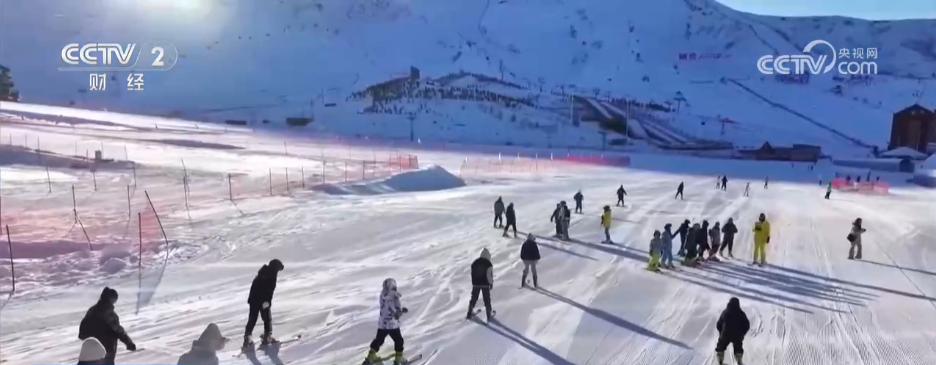
Group 1 - The first "snow holiday" for middle and primary school students in Xinjiang will take place from December 1 to 5, allowing for a maximum of 9 days off when combined with weekends [1][11] - Urumqi and Altay have introduced various preferential measures to enhance the holiday experience for children, including discounts and special activities [1][6] - Ski resorts in Urumqi are offering public welfare skiing courses for youth, with over 200 professional coaches available to assist students in learning skiing skills [4][6] Group 2 - During the "snow holiday," students in Altay can enjoy free skiing tickets at several local ski resorts by presenting relevant documents [8] - Local libraries and museums in Altay are collaborating with ski resorts and hotels to provide special discounts, promoting a balance of leisure and learning during the holiday [8] - To accommodate increased travel demand, the railway department plans to add 119 temporary passenger trains, enhancing travel options for holidaymakers [9][11]
上海国铁工程建设管理有限公司成立,注册资本3000万人民币
Sou Hu Cai Jing· 2025-11-28 17:18
Core Points - Shanghai Guotie Engineering Construction Management Co., Ltd. has been established with a registered capital of 30 million RMB [1] - The company is wholly owned by China Railway Shanghai Bureau Group Co., Ltd. [1] - The business scope includes engineering management services, auxiliary activities for railway transportation, and engineering cost consulting [1] Company Information - Company Name: Shanghai Guotie Engineering Construction Management Co., Ltd. [1] - Legal Representative: Zhang Liguo [1] - Registered Capital: 30 million RMB [1] - Industry Standard: Transportation, Warehousing, and Postal Services; Railway Transportation; Railway Passenger Transportation [1] - Address: Room 1606, No. 1500 Zhongxing Road, Jing'an District, Shanghai [1] - Company Type: Limited Liability Company (wholly owned by a legal entity) [1] - Business Duration: Until November 28, 2025, with no fixed term [1] - Registration Authority: Jing'an District Market Supervision Administration [1]
到贵州划桨板、品荔枝!黔西南州驶入“高铁时代”!
Nan Fang Nong Cun Bao· 2025-11-28 12:42
Core Viewpoint - The opening of the Panxing High-Speed Railway marks a significant milestone for Guizhou Province, connecting all nine city administrative centers with high-speed rail and enhancing regional economic development [3][4][10]. Group 1: High-Speed Railway Details - The Panxing High-Speed Railway, which took four years to construct, officially opened, with the first train departing from Xingyi South Station to Guiyang North Station [2][6]. - The railway spans 99 kilometers with a design speed of 250 km/h and a total investment of 13.934 billion yuan [7]. - It features a bridge-tunnel ratio of 90.66%, setting a new record for high-speed rail construction in Guizhou, with 46 bridges and 38 tunnels [8][9]. Group 2: Economic and Social Impact - The railway reduces travel time from Guiyang to Xingyi from 4 hours to 2 hours, and from Panzhou to Xingyi to just 30 minutes, creating a "1-2 hour high-speed rail traffic circle" centered around Guiyang [10][11]. - This development is expected to enhance the transportation network in Guizhou and promote high-quality economic and social development in the Qianxinan region [11][12]. Group 3: Tourism and Cultural Integration - Xingyi South Station connects with Wanfenglin Airport through a 224-meter fully enclosed passage, facilitating seamless air-rail transfers for travelers [14][18]. - The region aims to become a world-class mountain tourism destination and a first-class vacation and health destination, leveraging its natural and cultural resources [29][30]. Group 4: Agricultural Collaboration - The collaboration between Guangdong and Qianxinan has led to the establishment of the "Mei Li Legend" lychee planting base, enhancing local agricultural production and promoting the lychee brand [54][56]. - The partnership has also resulted in significant sales and agreements, with over 500 million yuan in production and sales intentions reached during a recent event [62].

金融为高水平对外开放积蓄力量
Jin Rong Shi Bao· 2025-11-20 01:24
Core Insights - The China-Europe Railway Express has surpassed 110,000 trips, with a total cargo value exceeding $450 billion, highlighting its rapid growth since its inception in 2011 [1][1][1] Group 1: Growth and Expansion - The railway service connects 26 countries and 229 cities in Europe, as well as over 100 cities in 11 Asian countries, demonstrating its extensive reach [1][1] - The service is referred to as a "steel camel team," symbolizing its steady progress towards broader horizons [1] Group 2: Financial Support - Strong financial backing from banking institutions plays a crucial role in supporting the rapid development of the China-Europe Railway Express, particularly in the context of global trade adjustments [1][1] - The railway is positioned as a vital channel for connecting global industrial and supply chains under the Belt and Road Initiative [1][1] Group 3: Future Outlook - Looking ahead to the 14th Five-Year Plan, China aims to enhance its high-level opening-up system and share cooperation opportunities with countries worldwide [1][1] - In response to evolving global political and economic landscapes, China is committed to high-quality development and maintaining a high level of openness [1][1]
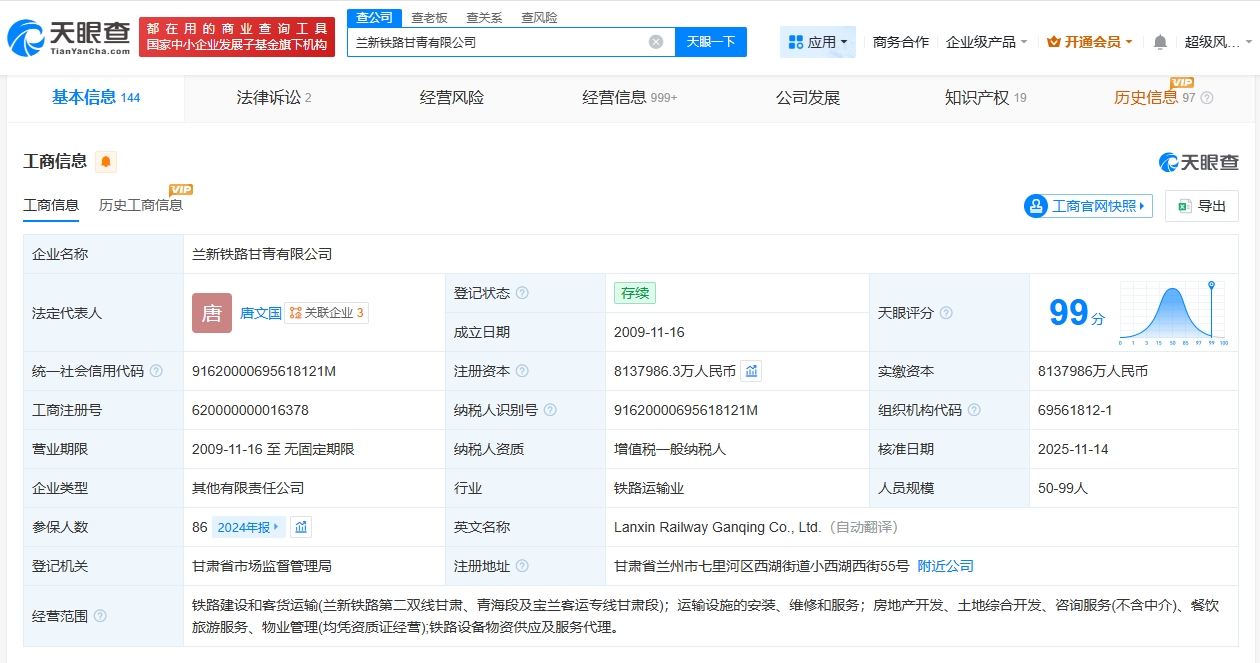
兰新铁路甘青公司增资至约813.8亿元
Mei Ri Jing Ji Xin Wen· 2025-11-18 02:28
Core Insights - Recently, Lanxin Railway Ganqing Co., Ltd. increased its registered capital from 76.416 billion RMB to approximately 81.38 billion RMB, marking an increase of about 6.5% [1][2][3] - The company also underwent changes in its senior management [1][3] Company Overview - Lanxin Railway Ganqing Co., Ltd. was established in November 2009 and is involved in railway construction and passenger and freight transportation, as well as real estate and land development [1][2] - The legal representative of the company is Tang Wenguo [1][2] Shareholder Information - The company is jointly held by several entities, including China Railway Lanzhou Bureau Group Co., Ltd., China Railway Development Fund Co., Ltd., and Gansu Railway Investment Construction Group Co., Ltd. [1][2] - The largest shareholder is China Railway Lanzhou Bureau Group Co., Ltd., holding approximately 60.25% of the shares [2][3] Recent Changes - The registered capital change was officially recorded on November 14, 2025, along with updates to the senior management team [3] - The new management includes positions such as Chairman, Vice Chairman, and various directors, with some previous members exiting [3]