集换式卡牌

Search documents
商业秘密|绝版卖出一套房价格的卡牌,是不是又一场郁金香泡沫?
Di Yi Cai Jing· 2025-09-14 11:51
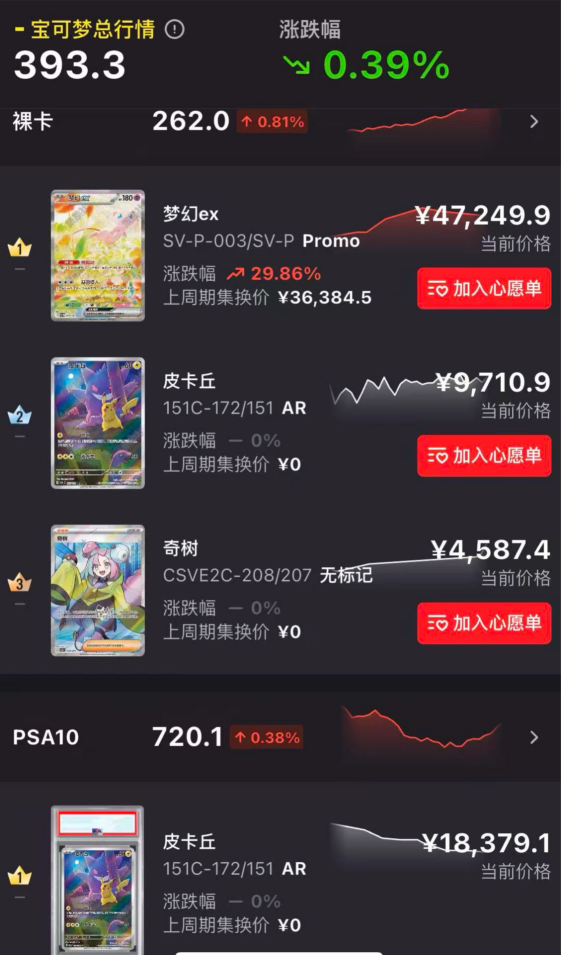
Core Viewpoint - The rapid growth of the trading card market, particularly collectible cards, raises concerns about potential speculative bubbles similar to the historical tulip mania, where prices may be artificially inflated and could lead to significant losses for investors [1][38]. Industry Overview - The collectible card market is experiencing intense competition, with major players like Pokémon opening official card venues in major cities, leading to significant stock price increases for companies involved in this sector, such as Kai Zhi Le International [2][8]. - The market is characterized by a diverse consumer base, with younger audiences drawn to the gameplay and older consumers focusing on investment opportunities [5][18]. - The rise of collectible cards is attributed to the increasing influence of IPs (Intellectual Properties) and the growing trend of experiential consumption among younger generations [24][28]. Market Dynamics - The secondary market for cards, particularly rare and limited editions, has seen prices soar, with some cards fetching prices comparable to real estate [11][18]. - The trading card industry is evolving, with companies exploring partnerships with various IPs and expanding their product offerings to include both traditional and digital formats [8][19]. - The market is also witnessing a shift towards investment and collection, with some cards showing annual returns that exceed traditional financial assets [18][28]. Risks and Challenges - The industry faces risks from irrational consumer behavior, expiration of IP licenses, and the prevalence of counterfeit products, which could undermine market stability [28][33]. - Regulatory oversight is deemed necessary to protect consumer rights and ensure a healthy market environment, as the current landscape lacks sufficient consumer protection measures [32][33]. - The competitive nature of the industry, coupled with the rapid evolution of consumer preferences, poses challenges for companies to maintain relevance and profitability [33][37].

一张卡牌炒至数万元,合作企业股价飙升160%,北京宝可梦道馆排队数小时:理财还是热爱?
Mei Ri Jing Ji Xin Wen· 2025-09-13 08:53
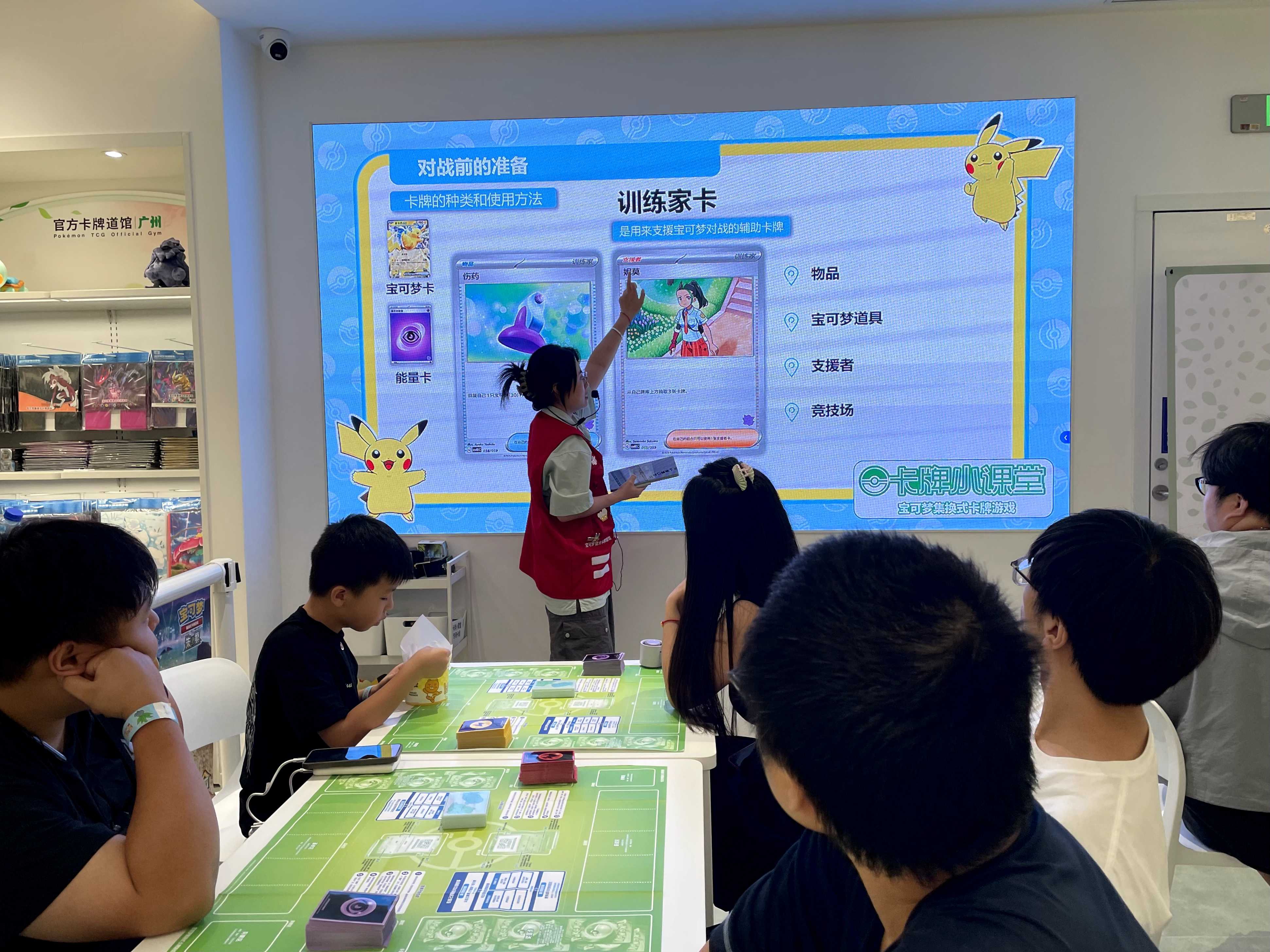
Core Insights - The opening of the first official Pokémon trading card venue in Beijing has attracted significant consumer interest, with long queues observed even days after the launch [1][2] - The popularity of trading cards is expanding beyond traditional demographics, appealing to a wider audience including families and couples [1][2] - The capital market is responding positively to the trading card trend, with companies like Kai Zhi Le International seeing stock price surges following partnerships with Pokémon [2][5] Market Dynamics - The trading card market in China is projected to reach approximately 26.3 billion yuan in 2024, with a compound annual growth rate of 56.6% from 2019 to 2024 [7] - The market is currently dominated by game and cultural IPs, with significant growth potential due to low per capita spending compared to markets like the US and Japan [7][8] - The trading card industry is heavily reliant on IP, which can lead to volatility in company valuations based on the lifecycle and popularity of specific IPs [5][6] Consumer Behavior - Consumers are increasingly willing to spend large amounts on trading cards, with limited edition cards and exclusive events driving demand [3][4] - The Pokémon brand has a strong fan base and brand influence, which translates into consumer purchasing behavior and willingness to pay premium prices [2][3] - The current consumer demographic is primarily young adults and teenagers, with a focus on both entertainment and investment aspects of trading cards [12] Investment Trends - The trading card market is beginning to show signs of becoming a financial asset class, with trends in secondary markets indicating significant appreciation in card values [8][9] - The establishment of authoritative rating agencies and standardized auction platforms could accelerate the financialization of the domestic trading card market [12] - The potential for trading cards to serve as investment collectibles is growing, with notable sales in the secondary market reflecting high demand for rare cards [8][9]
高瓴入局! 一张小卡片撬动数亿元融资 闪魂能否用游戏IP重构卡牌赛道?
Sou Hu Cai Jing· 2025-08-13 12:17
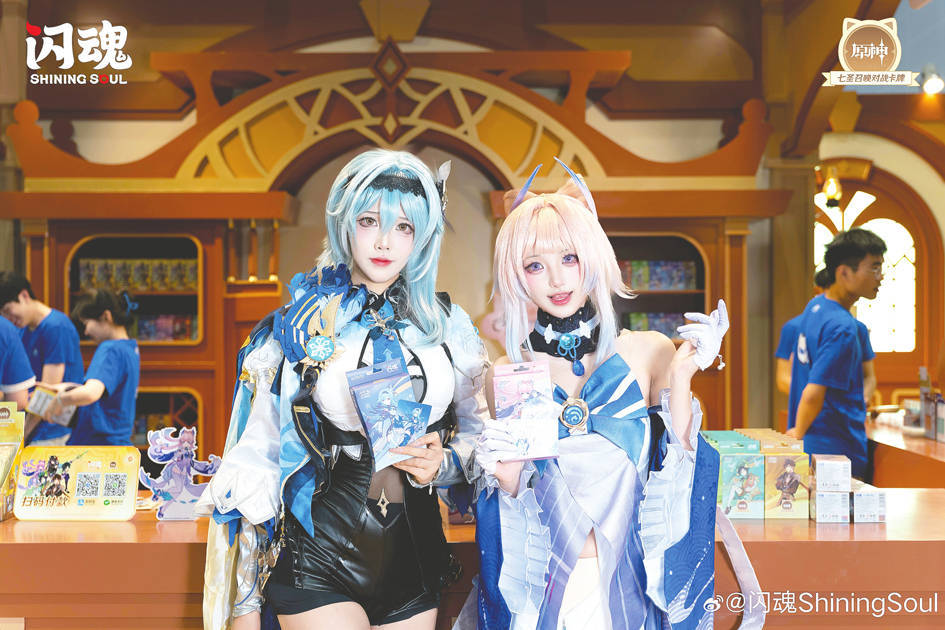
Core Viewpoint - ShiningSoul, a cultural technology brand under Shanghai Zhenyouqu, has successfully completed a financing round of several hundred million RMB, led by Hillhouse Capital, indicating strong investor confidence in the collectible card game (CCG) market and its growth potential in China [1][5]. Company Overview - ShiningSoul was co-founded by Yao Shuo Bin, chairman of Yaoji Technology, and industry veteran Sheng Chuan, with the brand officially launched in November 2023 after its registration in March [3][4]. - The company focuses on game IPs, leveraging popular franchises to create collectible card products, which have shown promising market reception [3][4]. Market Potential - The collectible card industry in China is experiencing significant growth, with a projected market size of 101.8 billion RMB in 2024 and an expected annual compound growth rate of 15.8% from 2024 to 2029 [3]. - The segment of trading card games (TCG) is particularly noteworthy, with a remarkable annual compound growth rate of 56.6% from 2019 to 2024 [3]. Product Success - ShiningSoul's collaboration with major IPs such as "Identity V" and "Genshin Impact" has resulted in several successful card series, with the "Identity V" series selling out within 26 days of launch [4][5]. - The emotional connection between players and game IPs enhances the willingness to purchase physical cards, as these products serve as tangible extensions of the gaming experience [5]. Competitive Landscape - The competitive landscape includes other major players like KAYOU, which has reported a staggering revenue growth of 277.8% year-on-year for 2024, highlighting the lucrative nature of the card game market [6]. - The rise of collectible cards among younger demographics, particularly elementary school students, indicates a strong and growing consumer base for TCGs [5][6]. Strategic Plans - Following the recent financing, ShiningSoul plans to deepen strategic partnerships with top global IPs and expand its presence in key markets such as North America, Europe, and Southeast Asia [5][6]. - The company aims to balance short-term explosive growth with long-term sustainability in the collectible card business, which is characterized by its blend of collection, competition, and social interaction [7].
集换式卡牌三问三答:新势已燎原,破局正当时
Changjiang Securities· 2025-07-25 14:38
Investment Rating - The report does not explicitly state an investment rating for the industry Core Insights - The domestic card market primarily relies on overseas high-quality IP, while the overseas market is dominated by proprietary IP [7][22] - The core advantages of trading card games (TCG) include longer lifecycles and broader monetization channels [8][10] - Recent efforts by domestic and international manufacturers have created a positive cycle in the trading card industry, potentially leading to new growth points [9] Summary by Sections Differences Between Domestic and International Card Markets - Domestic card companies mainly operate on overseas high-quality IP, while the US and Japan markets are mature with proprietary IP [7][22] - The card types differ, with TCG being predominant overseas and collectible card games (CCG) being more common in China [28] - The domestic card industry is expected to undergo accelerated integration across its value chain [40] Advantages of Trading Card Games - TCGs benefit from longer lifecycles due to evergreen IP and competitive content design [8][57] - The competitive nature and blind box attributes of TCGs enhance user loyalty and consumption frequency [62][71] - TCGs have diversified monetization channels through mobile games and other derivative products [8][10] Breaking Through in the Trading Card Industry - The industry is in a cultivation phase, with consumer habits around competitive play still developing [9] - Domestic manufacturers are enhancing their channel strategies and event experiences to foster a trading card culture [9][49] - The establishment of a robust ecosystem through collaboration between manufacturers and event organizers is crucial for market maturation [9][53]
万联证券:传媒业呈现周期性变化态势 2025H2把握IP、AI双主线
智通财经网· 2025-07-04 02:47
Group 1: Media Industry Outlook - The media industry is expected to face revenue and net profit pressure in 2024, with a rebound anticipated in Q1 2025, showing cyclical changes [1] - The IP economy is projected to grow through the incubation of proprietary IP and collaboration with popular IPs, exploring mature business forms like "谷子" (Guzi), blind boxes, and trading cards [1] - AI is recognized as a transformative technology, becoming a focal point in global tech competition and a key driver for future industries, with significant potential and application prospects across various media sub-industries [1] Group 2: IP Economy Insights - "谷子" (Guzi) products are evolving into key emotional carriers within the IP ecosystem, driven by the Z generation's shift towards emotional investment and community expression, leading to rapid market growth [1] - Blind boxes leverage the element of surprise to stimulate retail, focusing on product design and original IP commercialization, with strong social engagement and market maturity [1] - Trading cards, particularly collectible cards, create interactive consumer experiences through collection and trading, showcasing strong social attributes and user engagement advantages [1] Group 3: AI Applications and Developments - The AI industry has diversified into multiple tracks and scenarios, covering over 20 applications, enhancing user experience and meeting personalized needs [2] - AI is widely applied in various media sectors such as film, advertising, and gaming, improving content production efficiency and reducing costs [2] - AI smart glasses are emerging as a breakthrough in the AI terminal market, with significant growth expected in sales by 2025, as various manufacturers actively enter this field [2]
第一创业晨会纪要-20250703
First Capital Securities· 2025-07-03 03:32
Macro Economic Group - The ADP report indicates a decrease of 33,000 jobs in the US for June, marking the first negative growth since March 2023, with expectations set at an increase of 98,000 jobs [4] - The service sector saw a significant decline, losing 66,000 jobs, primarily in professional and business services, healthcare, and education [4] - Market anticipations for the upcoming non-farm payroll report suggest a modest increase of 100,000 jobs, with unemployment rates potentially reaching 4.3%, the highest since 2021 [5] Industry Comprehensive Group - A trade agreement between the US and Vietnam was announced, imposing a minimum 20% tariff on all goods exported to the US from Vietnam, which could lower the tariff rates compared to the current over 30% rates from China [8] - The agreement is expected to reduce uncertainty regarding the US-China trade war, as it reflects the worst-case scenario for tariffs [8] Advanced Manufacturing Group - In June, the top five automotive companies by sales were BYD, SAIC, Geely, Chery, and Great Wall, with sales figures of 383,000, 365,000, 236,000, 234,000, and 111,000 units respectively, showing year-on-year growth rates of 11.9%, 21.6%, 42%, 16.6%, and 12.9% [11] - New energy vehicle sales are driven by technological advancements, particularly in pure electric range and fast-charging technology, alleviating consumer concerns [11] - BYD's overseas sales surged from 27,000 units two years ago to 90,000 units, indicating the global competitiveness of Chinese new energy vehicles [11] Consumer Group - The company Card Game reported a revenue of 10.057 billion yuan for 2024, a year-on-year increase of 278%, with an adjusted net profit of 4.466 billion yuan, reflecting a 378% growth [16] - The company holds a market share of 71.1% in the collectible card segment, with rapid growth in non-card revenue, increasing by 284.5% year-on-year [16] - The diversified product layout, including figurines and stationery, has significantly supported the company's sustained growth [16]

276亿市场,为何国产球星卡还不如“小马宝莉”?
3 6 Ke· 2025-06-06 11:33
Core Insights - The emergence of a truck carrying 6,000 rare star cards valued at 20 million yuan from Shanghai marks a significant moment for the domestic star card market, highlighting the potential value of these collectibles [1] - The history of domestic star cards in China spans over 30 years, evolving from promotional items to collectible cultural products, with a pivotal moment occurring in 1998 when commercial operations began [2][4] - The market for collectible cards in China is projected to reach 27.66 billion yuan by 2025, indicating a growing interest and investment in this sector [5][20] Industry Evolution - Domestic star cards began in the mid-1990s as promotional items for football clubs, but the 1998 launch of the "98甲A联赛球星卡" marked the transition to a collectible market [2][4] - The rise of the internet facilitated the growth of online trading platforms, allowing collectors to form national communities, although the domestic market struggled due to weak sports IP influence [4][6] - The COVID-19 pandemic in 2020 significantly boosted the domestic star card market, with a consumption growth rate of 205%, surpassing the global average [6] Market Dynamics - The most collectible domestic star cards are those associated with Olympic and world champions, reflecting a strong national sentiment [6][8] - High-value transactions have been recorded, with individual cards selling for over 25,000 yuan, indicating a willingness among consumers to invest in domestic star cards [9] - The domestic star card market faces challenges, including a lack of strong sports culture, high competition from international brands, and the need for better IP development [12][15][19] Future Opportunities - The domestic star card market can learn from successful IP strategies in other sectors, such as leveraging local sports events and historical figures to create more relatable products [22][24] - Innovative approaches, such as integrating AR technology and creating immersive experiences, could enhance consumer engagement and transform star cards into dynamic cultural products [24][26] - The market's growth potential is supported by a significant number of companies entering the space, with approximately 2,830 card-related enterprises expected by 2025 [20]

后物质时代的消费革命:卡牌热是泡沫还是风口?
3 6 Ke· 2025-06-03 09:38
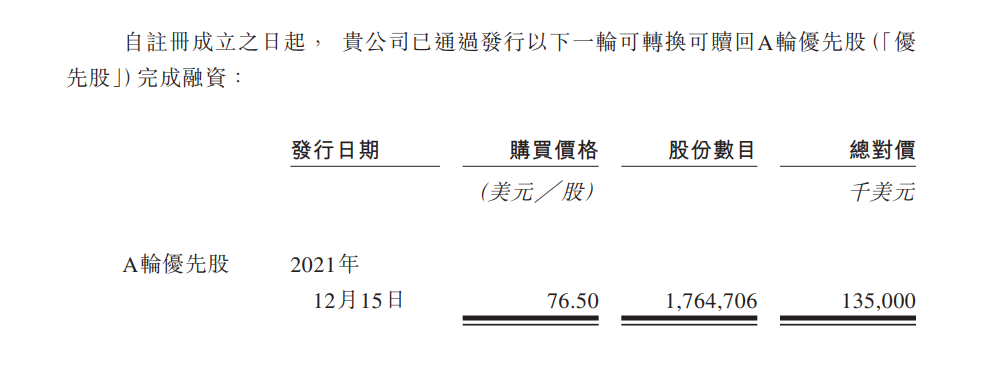
Core Viewpoint - The article discusses the investment potential and operational dynamics of a collectible card game company, emphasizing the importance of supply-side factors over demand-side analysis in understanding the company's business model and market positioning [3][4]. Group 1: Company Overview - The company operates primarily in the collectible card game sector, relying on non-exclusive IP licensing and targeting younger audiences [4]. - The business model is straightforward, focusing on acquiring IP and selling toys, which leads to significant revenue volatility [5]. Group 2: Financial Performance - Revenue projections for 2022, 2023, and 2024 are 4.13 billion, 2.66 billion, and 10.06 billion RMB respectively, with a notable decline of 35.6% in 2023 followed by a projected increase of 277.8% in 2024 [6]. - Gross profit for the same years is 2.84 billion, 1.75 billion, and 6.77 billion RMB, with gross margins of 68.8%, 65.8%, and 67.3% respectively [7]. - The company experienced a net loss in 2024, attributed to high stock-based compensation and fair value changes of preferred shares, which are not expected to impact cash flow significantly [10]. Group 3: Market Dynamics - The company heavily relies on the Ultraman IP, which constituted over 80% of its revenue in 2022, leading to vulnerability during market disruptions [8]. - In 2023, the company introduced 36 new IPs, but the transition to new revenue streams was slow, contributing to the revenue drop [8]. Group 4: Competitive Advantage - The company's core competency lies in its expertise in collectible card design and manufacturing, which is crucial for maintaining IP partnerships [11][14]. - The relationship with IP licensors is strengthened by the company's established manufacturing capabilities and compliance, making it a preferred partner for IP owners [13][14]. Group 5: Industry Context - The article highlights the unique advantages of the Chinese market, including strong manufacturing capabilities, legal protections for IP, and a robust secondary market for collectibles, which are essential for the growth of companies like this one [15][18].

盲卡不可有“盲区”
Ren Min Ri Bao Hai Wai Ban· 2025-06-01 22:12
Core Viewpoint - The rise of blind box cards, particularly themed around popular anime, games, and movies, has become a significant trend among youth, leading to concerns about addiction and its impact on family dynamics and academic performance [2][3][5]. Industry Overview - The collectible card market in China is projected to grow from 2.8 billion to 26.3 billion yuan from 2019 to 2024, with a compound annual growth rate of 56.6%, and is expected to reach 29.9 billion yuan by 2025, making it one of the fastest-growing segments in the domestic toy industry [3]. Consumer Behavior - Many children exhibit compulsive behaviors related to card collecting, often prioritizing it over essential needs like meals and academic responsibilities, leading to significant financial expenditures by families [2][3][5]. - The culture surrounding card collecting has become a social currency among peers, where possessing rare cards enhances social status [3]. Psychological Impact - The addictive nature of card collecting is linked to the brain's reward system, similar to gambling, where the thrill of opening packs and the potential for rare finds creates a cycle of reinforcement [5][6]. - Adolescents are particularly vulnerable due to their developing self-control and impulsivity, making them more susceptible to addictive behaviors [6]. Regulatory Environment - Current regulations, such as the guidelines issued by the State Administration for Market Regulation, restrict sales to minors but lack enforcement mechanisms, highlighting a need for stronger legal frameworks [9]. - Experts suggest that regulatory bodies should mandate transparency in card design rules and probabilities, and implement mechanisms to reduce the speculative nature of card collecting [9]. Recommendations for Stakeholders - The industry should focus on ethical marketing practices and avoid exploiting vulnerable consumers, while platforms must enhance oversight of promotional content to prevent misleading claims [9]. - Parents and educators are encouraged to engage with children about the risks of excessive card collecting and to promote healthier consumption habits through education and structured activities [10].

卡游港股IPO:违规经营卡牌盲盒曾遭央视曝光 未成年人保护不应“纸上谈兵”
Xin Lang Zheng Quan· 2025-05-27 07:40
Core Viewpoint - The company KAYOU is attempting to relaunch its IPO process on the Hong Kong Stock Exchange after facing regulatory challenges and significant financial losses, while also grappling with compliance issues related to the sale of products to minors [1][3][13]. Financial Performance - KAYOU's revenue in 2024 saw a substantial increase of 277.78% year-on-year, surpassing 10 billion yuan, but the company reported a net loss of 1.242 billion yuan, a shift from a profit of 450 million yuan in the previous year [1][8]. - The fair value loss of KAYOU's Series A preferred shares increased dramatically to 3.867 billion yuan, up from a loss of 201 million yuan the previous year, marking a 1823.88% increase [9][10]. Market Position - KAYOU is recognized as a leading company in the pan-entertainment product sector, holding the top market shares of 13.3% in the pan-entertainment products industry and 21.5% in the pan-entertainment toys industry as of 2024 [3]. - In the collectible card segment, KAYOU commands a dominant market share of 71.1%, earning the nickname "King of Elementary School Cards" [3]. Regulatory Challenges - KAYOU's IPO application was initially submitted in January 2024 but was stalled due to requests from the China Securities Regulatory Commission for additional information regarding its equity structure and data security [1][3]. - The company has faced scrutiny for its marketing practices targeting minors, which have been criticized as exploitative, leading to compliance issues that could hinder its IPO prospects [13][16]. Corporate Governance - KAYOU's founder and CEO, Li Qibin, received a total compensation of 1.8 billion yuan in 2024, raising concerns about potential conflicts of interest and excessive remuneration in a highly concentrated ownership structure [11][12]. - The company has been criticized for its stock incentive plan, which was perceived as disproportionately benefiting the founder and related parties at the expense of minority shareholders [10][12]. Social Responsibility - KAYOU's business model has been labeled as "quasi-gambling," particularly in its marketing strategies aimed at children, which could lead to social issues such as compulsive spending and addiction [14][17]. - The company has been under pressure to implement effective measures to protect minors, especially following regulatory guidelines that prohibit the sale of blind box products to children under eight years old [16][17].