
食品业

Search documents
服贸会主宾国澳大利亚国家馆开馆 “最大团展”拓合作良机
Zhong Guo Xin Wen Wang· 2025-09-10 14:05
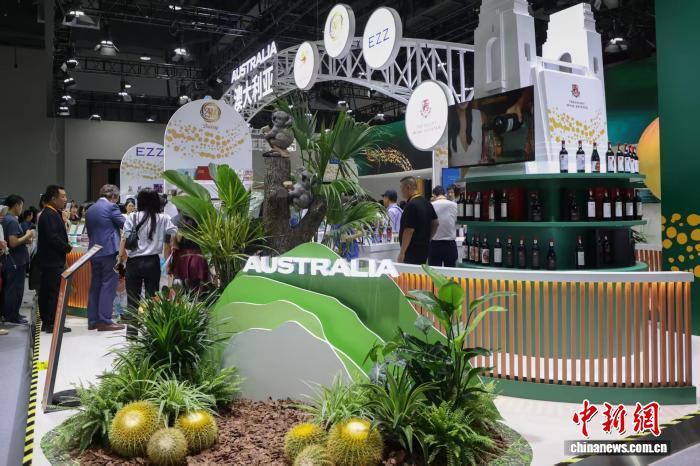
Group 1 - The 2025 China International Fair for Trade in Services (CIFTIS) opened on September 10, 2023, in Beijing, with Australia as the guest country, showcasing the largest exhibition area for a guest country in the event's history at 360 square meters [1][3] - Australia has formed the largest delegation in its participation history, including nearly 60 institutions and enterprises such as ANZ Bank, the University of Adelaide, and the Australian Tourism Board [3] - Australian Trade Minister Farrell emphasized the focus on showcasing strengths in green economy, international education, finance, healthcare, food, and tourism at the fair, highlighting the solid trade partnership and cultural ties between Australia and China [3] Group 2 - China's Vice Minister of Commerce, Sheng Qiuping, noted that service trade is one of the most dynamic areas of economic cooperation between China and Australia, with significant growth potential in traditional sectors like education and tourism, as well as emerging fields such as green development, digital economy, and technological innovation [3] - The Australian pavilion features creative designs, including the Sydney Harbour Bridge and the Sydney Opera House, along with interactive screens to provide an immersive experience for visitors to learn about Australian products and services [3]

中国新闻网:“湖北·武汉澳门周”启幕
Zhong Guo Xin Wen Wang· 2025-09-06 03:58
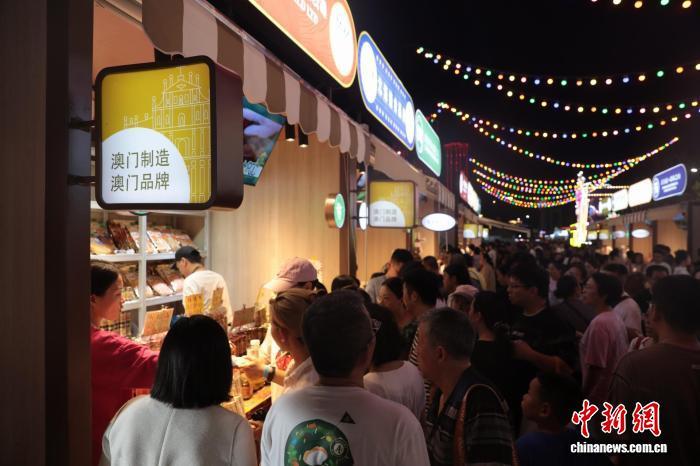
Group 1 - The "Hubei·Wuhan Macao Week" event commenced on the evening of September 5, allowing local residents to experience Macao's cuisine, culture, tourism, and sports [1][3] - Over 20 small and medium-sized enterprises from Macao participated in the event, promoting "Macao manufacturing," "Macao brands," and products from Portuguese-speaking countries [2] - A food company representative noted that their roasted meat products sold out within three hours, indicating strong demand and potential for collaboration with local hotels in Wuhan [2] Group 2 - The Hubei province has a significant number of exchanges with Macao, with over 600 Macao students studying in Hubei universities [2] - Hubei is identified as an important source market for Macao tourism, with a projected 11% year-on-year increase in travelers from Hubei to Macao in 2024 [2] - The integration of Macao's cultural tourism resources with Hubei's natural and cultural assets is expected to enhance collaboration and stimulate a "tourism plus" synergy effect [2]
汉澳琴联袂绘发展新篇 澳企携特色品牌登陆武汉
Chang Jiang Ri Bao· 2025-09-06 03:38
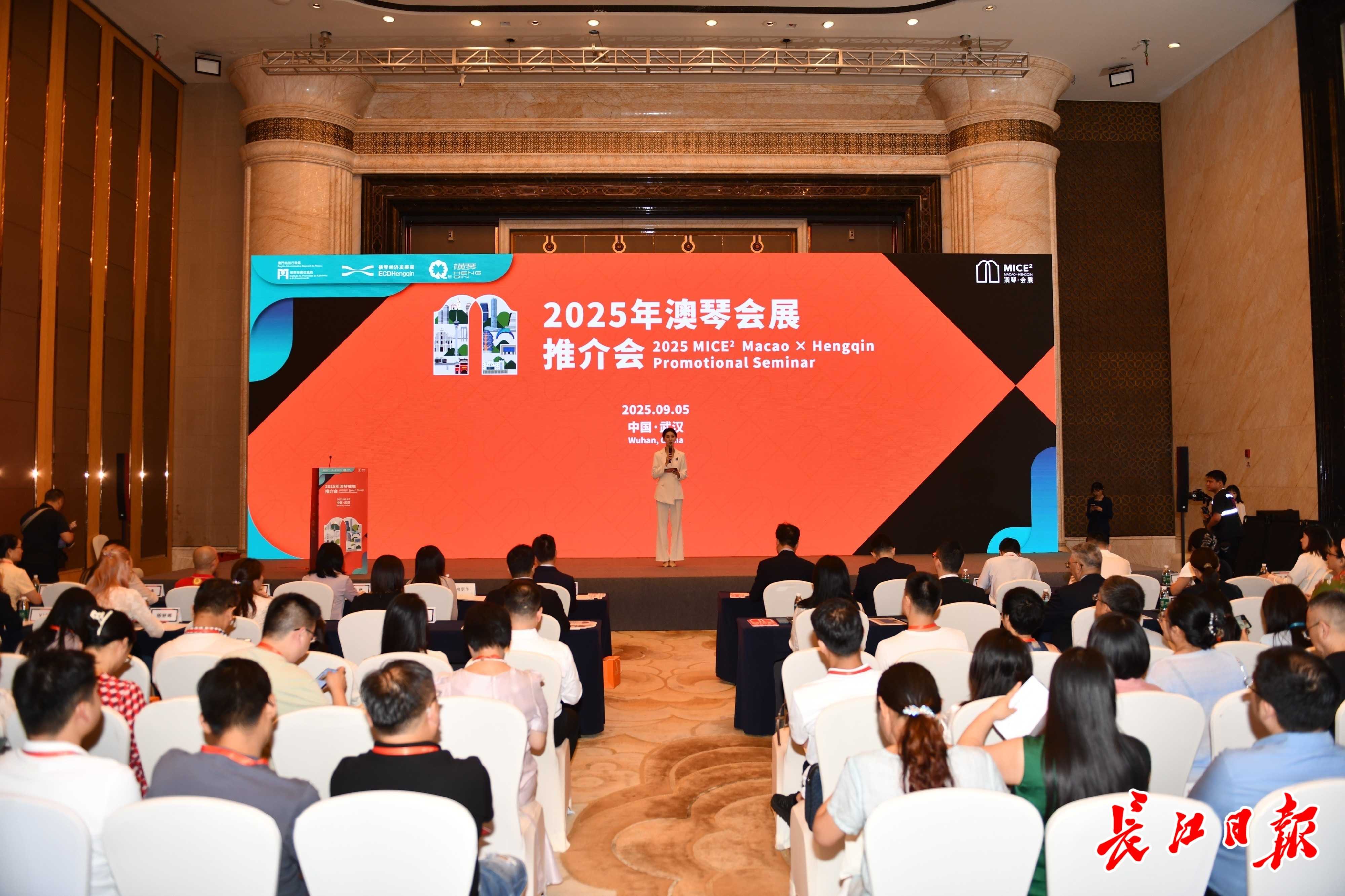
Core Points - The "Hubei·Wuhan Macao Week" was held in Wuhan from September 5 to 8, serving as an important platform for interaction between enterprises from Macao and Wuhan [1] - The event included a promotional meeting for the 2025 Macao Convention and Exhibition, attended by over 150 representatives from Hubei, Macao, and the Hengqin Guangdong-Macao Deep Cooperation Zone, focusing on new cooperation paths in the exhibition industry [2][5] Group 1: Event Overview - The promotional meeting aimed to explore cooperation in the exhibition industry, covering areas such as exhibition tourism, cross-border e-commerce, and technological research and development [2] - The event was organized by the Macao Investment Promotion Agency and the Economic Development Bureau of the Hengqin Guangdong-Macao Deep Cooperation Zone [5] Group 2: Business Opportunities - The meeting highlighted the advantages of Macao's exhibition policies and business environment, encouraging collaboration between enterprises from Macao and Wuhan [5] - Local exhibitors from Macao showcased unique products, including coffee and traditional handicrafts, attracting interest from Hubei businesses [10][19] Group 3: Market Insights - Representatives from Macao expressed optimism about the market potential in Wuhan, citing its large population and growing consumer spending power [16] - The establishment of a physical store in Wuhan by a Macao company indicates a strategic move to tap into the local market, emphasizing the city's appeal as a tourist destination [15][17]
临沂|临沂展览业综合指数居全国地级市第二
Da Zhong Ri Bao· 2025-09-05 00:45
Group 1 - The core viewpoint of the news is that Linyi has achieved significant recognition in the exhibition industry, ranking second among prefecture-level cities in China according to the 2024 China Exhibition Data Statistical Report [1] - In the first seven months of 2025, Linyi hosted a total of 101 various exhibition events, including 54 professional exhibitions, covering a total exhibition area of 998,000 square meters, with 15,000 participating enterprises and 1.344 million visitors [1] - Linyi's wood industry is highlighted as a key sector, with the Wood Expo being a flagship event that has transitioned from government-led to market-driven operations, becoming one of the most successful market transformation exhibitions in the province [1] Group 2 - The city has made efforts to internationalize its marketplace, inviting over 2,400 overseas buyers to participate in exhibitions, marking a 180% increase compared to the same period last year [2] - The implementation of the "Exhibition and Cultural Tourism Integration Development Plan" has successfully driven cultural tourism consumption exceeding 1.2 billion yuan through various exhibition activities [2] - Linyi plans to host over 150 exhibition events throughout the year, with a total exhibition area expected to exceed 1.6 million square meters, including key events like the 74th Autumn National Hardware Commodity Fair [2]
水饺仅售4.9元,老人鞋大王足力健杀入食品赛道,自救还是自虐?
3 6 Ke· 2025-09-03 04:19
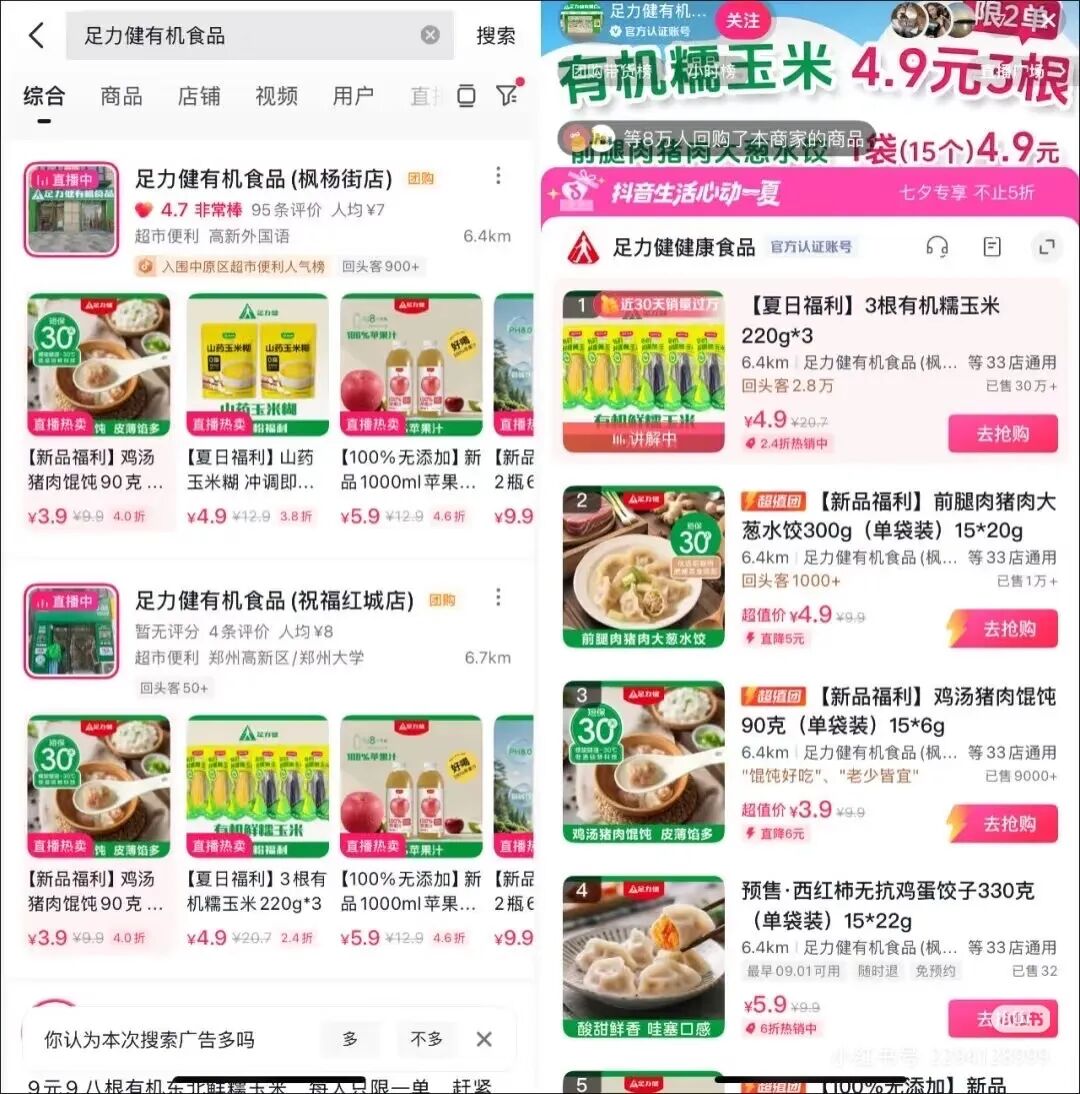
Core Viewpoint - The company, originally known for its elderly footwear, has recently ventured into the food industry, particularly organic and health-focused products, in response to market trends and its declining traditional business [3][4][10]. Group 1: Company Transition - The company has seen its membership for organic food exceed 80,000, with 34 physical stores primarily located in Zhengzhou, Henan [4]. - The product line includes over 200 SKUs, covering snacks, grains, frozen foods, beverages, and health products, with prices ranging from 1 yuan to 300 yuan [4]. - The shift to food is driven by the growing consumer focus on health, with 43.8% of consumers indicating increased attention to health and wellness in their food choices [6]. Group 2: Market Potential - The elderly health food market is projected to grow significantly, with estimates suggesting a total consumption of 12 trillion to 15.5 trillion yuan by 2030 [7]. - The company aims to address the supply shortage and high prices in the elderly health food market by offering low-cost products and incentives like free samples [7]. Group 3: Challenges and Risks - The company's traditional footwear business has faced severe challenges, including a decline in sales and a tarnished reputation due to quality issues and legal disputes [10][11]. - The transition to food products is complicated by the company's reliance on a light-asset model, using third-party manufacturers, which raises concerns about quality control and food safety [16]. - There is a significant brand perception gap, as consumers associate the brand primarily with footwear, leading to skepticism about its new food offerings [16][17].
广弘控股:8月24日召开董事会会议
Mei Ri Jing Ji Xin Wen· 2025-08-26 22:07
Group 1 - Guanghong Holdings (SZ 000529) announced on August 27 that its 11th sixth board meeting was held via communication voting on August 24, 2025, where the proposal for establishing Guangdong Hongchuang Industrial Operation Service Co., Ltd. was reviewed [1] - For the first half of 2025, Guanghong Holdings reported that its revenue composition was 100.0% from the food industry [1] Group 2 - The pet industry is experiencing a significant boom, with a market size of 300 billion yuan, leading to a surge in stock prices for related listed companies [1]

位列全国地级市第2位!临沂会展业蓬勃发展
Qi Lu Wan Bao Wang· 2025-08-26 07:28
Core Insights - The government of Linyi has prioritized the high-quality development of the exhibition economy, achieving significant milestones in the first seven months of the year [1][2] - Linyi ranked second among all prefecture-level cities in China according to the comprehensive index of the exhibition industry released by the China Exhibition Economic Research Association [1] Group 1: Exhibition Activities - A total of 101 exhibition events were held in Linyi from January to July, including 54 professional exhibitions, covering a total exhibition area of 998,000 square meters [1] - The number of participating enterprises reached 15,000, with 1.344 million attendees at the exhibitions [1] Group 2: Industry Focus and Innovations - The exhibitions focused on Linyi's advantageous industries such as hardware, building materials, home decoration, pharmaceuticals, and food, with over 6,000 local participating enterprises [2] - The Wood Expo, a key event based on Linyi's wood industry, will transition to a market-oriented operation starting in 2024, marking it as one of the most successful market-oriented exhibitions in the province [2] - The city has hosted three home expos and five auto shows this year, enhancing consumer experiences [2] Group 3: International Engagement and Economic Impact - Linyi has increased efforts to invite international buyers, with over 2,400 foreign buyers participating in exhibitions by the end of July, a 180% increase compared to the same period last year [2] - The integration of tourism and exhibitions has been promoted, generating over 1.2 billion yuan in tourism consumption through exhibition activities this year [2] Group 4: Future Plans - Linyi plans to host over 150 exhibition events throughout the year, with total exhibition space expected to exceed 1.6 million square meters [3]
急求“关税豁免令”!美国食品业碎片化游说求生
Jin Shi Shu Ju· 2025-08-25 03:32
Core Viewpoint - The U.S. food industry is lobbying for tariff exemptions, arguing that certain products cannot be affordably produced domestically due to high tariffs imposed by the Trump administration, which have raised the actual tariff rate to its highest level in decades [2][3]. Group 1: Tariff Impact on Food Industry - The food industry is particularly vulnerable to tariffs, as about 20% of the food consumed in the U.S. relies on imports, with seafood being heavily impacted due to the U.S. consuming 85% of its seafood from imports [2][3]. - The seafood trade deficit reached $24 billion in 2022, with approximately 90% of shrimp supply coming from imports, primarily from India [2][3]. - The International Fresh Produce Association (IFPA) reported that the total import value of fresh fruits and vegetables in the U.S. is $36 billion, with Mexico being the largest supplier [3]. Group 2: Lobbying Strategies and Challenges - Industry groups are advocating for specific product exemptions rather than a blanket opposition to tariffs, indicating a fragmented approach to lobbying [2][3]. - The process for obtaining tariff exemptions is complex, with no unified mechanism currently in place for applications [3][5]. - The National Restaurant Association warned that tariffs on fresh produce could lead to significant price increases for restaurants, emphasizing the need for exemptions [3][5]. Group 3: Future Exemptions and Trade Agreements - Some food products may be exempt from tariffs under future trade frameworks, such as the agreement with Indonesia that includes provisions for non-domestically produced resources [3][4]. - The U.S.-Mexico-Canada Agreement (USMCA) promises lower tariffs for food products that meet its criteria, indicating a potential pathway for certain goods to avoid high tariffs [4][5]. - The U.S. Commerce Secretary mentioned that natural resources not produced domestically, like coffee and mangoes, might qualify for tariff exemptions [5]. Group 4: Price Implications and Market Dynamics - The FMI noted that the price of cucumbers, which saw a rise in import dependency from 35% in 1990 to nearly 90% today, exemplifies the potential price increases due to tariffs [6]. - The food industry is seeking targeted tariff exemptions to support domestic production and employment, while acknowledging the high costs associated with tariffs [6]. - Industry representatives argue that reverting to the free trade policies of the 1990s is unrealistic, reflecting a shift in economic and political perspectives [6].
财经早报:特朗普:在俄罗斯问题上取得重大进展!房东税冲上热搜,多地紧急辟谣
Xin Lang Zheng Quan· 2025-08-17 23:43
Group 1 - Trump announced significant progress on the Russia issue and called for attention from the public [2] - Trump and Putin held a meeting in Anchorage, Alaska, but did not reach an agreement on the Ukraine ceasefire [2] - Ukrainian President Zelensky confirmed a meeting with Trump, which may lead to a trilateral meeting involving the US, Russia, and Ukraine [2] Group 2 - Trump stated there are no plans to impose tariffs on China for purchasing Russian oil after his meeting with Putin [3] - The US recently imposed additional tariffs on India for buying Russian oil, indicating a potential shift in trade policy [3] Group 3 - Trump plans to announce tariffs on imported chips and semiconductors, with rates potentially reaching up to 300% [4] - Following this announcement, US chip stocks experienced significant declines, with Applied Materials dropping over 14% [4] - The Trump administration also expanded the scope of tariffs on steel and aluminum imports by 50% [4] Group 4 - The People's Bank of China reiterated a moderately loose monetary policy, focusing on improving the quality and efficiency of credit issuance [5][6] - The central bank's report highlighted the need for a balanced approach to monetary policy in response to complex international conditions [6] Group 5 - In July, non-bank deposits in China increased by 2.14 trillion yuan, the highest level recorded for that period since 2015 [7] - Analysts suggest that this influx of deposits may be directed towards the stock market, indicating a potential shift in investor behavior [7] Group 6 - Several banks in China have issued statements prohibiting credit card funds from being used in the stock market [11][12] - This move comes amid a surge in A-share market activity, with banks emphasizing the importance of compliance with regulations [12] Group 7 - China Shenhua, a state-owned enterprise, announced a major acquisition involving 13 companies, with total assets of 258.3 billion yuan [15][16] - The company plans to issue A-shares to raise funds for this acquisition, indicating a significant expansion strategy [16] Group 8 - Swatch faced backlash over a controversial advertisement and has since apologized, highlighting the importance of cultural sensitivity in marketing [17][18]

7月辽宁工业生产者出厂价格同比下降5.8%
Xin Hua Cai Jing· 2025-08-12 06:28
Core Insights - In July 2025, the Producer Price Index (PPI) in Liaoning decreased by 5.8% year-on-year, with the decline widening by 0.2 percentage points compared to the previous month [1] - The Industrial Producer Price Index (IPI) also saw a year-on-year decrease of 6.8%, with a slight month-on-month decline of 0.2%, which is a narrowing of the previous month's decline by 0.7 percentage points [1] Price Trends - The prices of production materials decreased by 5.0% year-on-year in July, with the mining industry down by 10.7%, raw materials down by 5.8%, and processing industry down by 3.7% [1] - Consumer goods prices fell by 9.5% year-on-year, with durable goods down by 15.1%, food down by 5.5%, general daily necessities down by 2.2%, while clothing saw a slight increase of 0.1% [1] Raw Material Price Movements - In July, the prices of nine major raw materials showed a mixed trend with two categories increasing and seven decreasing [1] - Textile raw materials increased by 1.7%, and non-ferrous metals and wire materials increased by 1.4% [1] - Conversely, building materials and non-metallic materials decreased by 0.9%, wood and pulp decreased by 1.0%, other industrial raw materials and semi-finished products decreased by 1.1%, chemical raw materials decreased by 7.9%, black metal materials decreased by 8.7%, agricultural and sideline products decreased by 9.9%, and fuel and power decreased by 12.8% [1]