
制造业

Search documents
于无声处听惊雷——从2025年统计数据看中国未来
泽平宏观· 2026-02-10 16:00
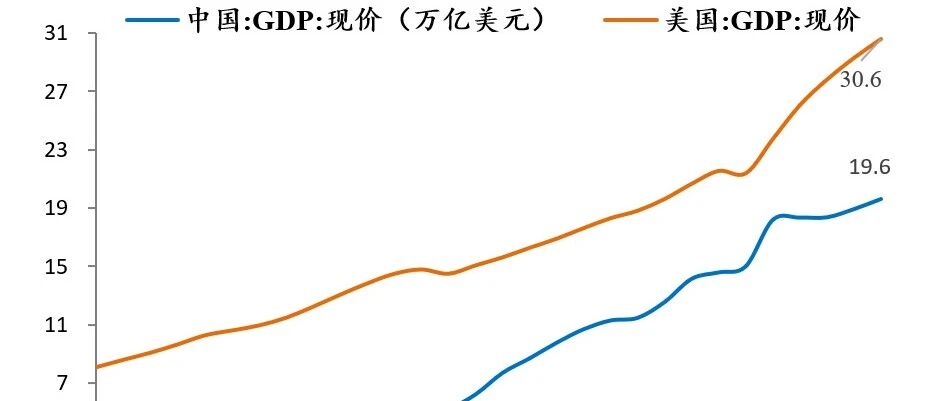
Core Viewpoints - China's economy is undergoing significant changes, with GDP approaching that of the largest economy globally and contributing over 30% to global economic growth in recent years [2][4][5] - The rise of AI and the competition for computing power are reshaping industries, necessitating breakthroughs in energy technology to meet future demands [2][21] Economic Growth and Structure - By 2025, China's GDP is projected to reach 140.2 trillion yuan (approximately 19.6 trillion USD), accounting for about 17% of the global economy, with a growth rate of 5% [4][5] - China's per capita GDP is expected to be 13,970 USD by 2025, nearing the high-income country threshold [9] - The contribution of the tertiary sector to GDP has reached a new high, with significant growth in modern service industries [9][15] Consumption Trends - Final consumption expenditure is projected to contribute 52% to GDP growth in 2025, indicating a shift towards consumer-driven growth [10][16] - The consumption market is expanding, with a focus on service and interest-based consumption, reflecting changing consumer preferences [15][19] - Policies aimed at boosting consumption are evolving from single-item incentives to comprehensive strategies that enhance income expectations and consumer environments [16][47] Infrastructure and Technology - China has a robust infrastructure, with the largest energy infrastructure globally and a rapidly growing digital economy, positioning itself as a leader in AI computing power [21][22] - The manufacturing sector remains dominant, with a projected industrial value added of 41.7 trillion yuan by 2025, maintaining its status as the world's largest manufacturing economy [22][23] Real Estate Market - The real estate sector is experiencing a bifurcation, with policies aimed at stabilizing the market and promoting urban renewal [29][30] - The urbanization rate is expected to reach 67.89% by 2025, indicating ongoing growth potential in urban development [31] Talent and Innovation - The demographic dividend is shifting towards a talent and engineering dividend, with a focus on innovation and high-quality development [34][35] - R&D investment is increasing, with a projected ratio of R&D expenditure to GDP reaching 2.8% by 2025, surpassing the OECD average [25] Policy Measures - Fiscal policies are becoming more proactive, with an emphasis on expanding domestic demand and optimizing economic structure through targeted investments [44][45] - Monetary policy is adopting a dual approach of overall easing and structural tools to support innovation and consumption [48][49]

大模型产业化最好的时代,中国AI「杀死」了参数崇拜
3 6 Ke· 2026-02-10 13:58
Core Insights - The "Chinese solution" is positioned to lead in the AI industrialization era due to a long-term approach [2][5] - 2025 is seen as a pivotal year for large models, shifting from mere technical exploration to practical commercial applications [3][4] - Chinese large models are moving from a focus on parameters to industry-centric solutions, demonstrating resilience against computational restrictions [4] Market Adaptation - The market's adaptability has significantly compressed the iteration cycle of models from years to months or even weeks, creating an opportunity for China to "overtake" in AI [3] - Major companies like OpenAI and Google are pivoting towards cost-effective reasoning models for enterprise markets [3] Industrialization Trends - Large models are becoming "super supporting roles" in various industries, particularly in smart driving, where they operate behind the scenes [7] - Chinese automakers, supported by companies like Alibaba Cloud, are rapidly implementing AI in vehicles, achieving impressive speeds in smartization [9] Technological Advancements - Xiaopeng Motors has built a 10 EFLOPS AI computing cluster, enabling rapid iteration cycles of about five days [9] - The integration of large models into manufacturing processes is evident, with companies like Sany Heavy Industry utilizing AI agents across their operations [10] Efficiency and Cost-Effectiveness - The focus has shifted from merely achieving high scores in benchmarks to ensuring that technology is practical and cost-effective for businesses [14] - The emphasis on return on investment (ROI) for computational power is driving the evolution of AI in China, prioritizing efficiency over sheer intelligence [14] Open Source Ecosystem - The open-source strategy adopted by Alibaba Cloud is a key competitive advantage, allowing for rapid iteration and ecosystem development [22][25] - The Qwen architecture is emerging as a de facto standard in the global AI industry, with many developers leveraging it for their applications [26][28] Global Impact - Chinese AI is set to redefine global industrial standards through practical applications and open-source collaboration, positioning itself as a leader in the upcoming industrial revolution [28]

Trade organization warns USMCA exit could jeopardize millions of US jobs
Yahoo Finance· 2026-02-10 13:30
Core Insights - The Business Roundtable warns that withdrawing from the USMCA could disrupt North American supply chains and jeopardize millions of U.S. jobs, despite the Trump administration's dissatisfaction with the trade agreement [1] Group 1: Economic Impact - U.S. trade with Canada and Mexico supported 1.2 million jobs in Texas in 2023, with Texas exporting $168 billion in goods and services to these countries in 2024 [2] - California's trade with Canada and Mexico supported 1.7 million jobs in 2023, with the state exporting $76 billion in goods and services in 2024 [4] - Since 2015, Texas goods exports to Canada and Mexico have increased by 35%, while services exports have risen by 38% [2] Group 2: Trade Dynamics - Approximately two-thirds of Texas' imports from Canada and Mexico are used as intermediate inputs for U.S. production, while about half of California's imports serve a similar purpose [5] - Integrated production networks, where goods cross borders multiple times before completion, are more efficient than separate bilateral trade deals [6][7] Group 3: Advocacy for USMCA - The Business Roundtable emphasizes the need for timely extension of the USMCA to ensure the vitality of U.S. businesses and calls for stronger North American integration and enhanced cooperation on economic security [2] - Canada and Mexico have invested $775 billion in the U.S. since the USMCA came into effect, contributing to a 50% increase in overall North American trade [6]
规上工业总产值突破5万亿元,外贸进出口总额连续两年全国第一深圳“十四五”经济发展成就有哪些
Mei Ri Jing Ji Xin Wen· 2026-02-10 13:02
Core Viewpoint - Shenzhen has achieved significant breakthroughs in economic development and technological innovation during the "14th Five-Year Plan" and aims to build a more competitive modern industrial system in the "15th Five-Year Plan" [1] Group 1: Industrial Development - Shenzhen's industrial output value has surpassed 5 trillion yuan, with the total industrial added value reaching 1.2 trillion yuan [2] - The revenue of the information service industry has exceeded 1.2 trillion yuan, with a cumulative growth of 87.8% [2] - The proportion of added value from strategic emerging industries in GDP has increased from 37.1% to 43% [2][3] - The coverage rate of R&D institutions in large-scale industrial enterprises has risen from 40% to over 70% [3] Group 2: Foreign Trade - Shenzhen's foreign trade import and export total is projected to reach 4.55 trillion yuan by 2025, maintaining the top position among cities in China for two consecutive years [4] - The total import and export scale has increased by 49.2% compared to the end of the "13th Five-Year Plan," contributing over 1.5 trillion yuan to the national total [4] - By 2025, the number of enterprises engaged in import and export is expected to reach 62,300, a growth of 16% [4] - High-tech product imports and exports are projected to reach 1.4 trillion yuan by 2025, accounting for 30.7% of Shenzhen's total import and export value, which is 9.8 percentage points higher than the national average [4]
【环球财经】土耳其推进贸易多元化应对外部经济冲击
Xin Hua Cai Jing· 2026-02-10 12:53
Core Viewpoint - Turkey is enhancing its economic resilience through trade diversification and structural reforms in response to increasing global economic uncertainty and trade fragmentation [1] Group 1: Economic Strategy - Turkey's Finance Minister, Mehmet Simsek, emphasized the importance of policy responses in maintaining a relatively stable position against external pressures [1] - The country has established a customs union with the EU and signed free trade agreements with 27 other countries, covering approximately 62% of its exports under free trade arrangements [1] - Turkey's foreign trade is highly concentrated in neighboring regions such as the Middle East, North Africa, and Central Asia, which helps mitigate the impacts of global trade frictions [1] Group 2: Service Trade and China Relations - In terms of service trade, it has not faced significant protectionist restrictions compared to goods trade, providing structural support to the economy [1] - Turkey aims to promote more balanced and sustainable economic cooperation with China by increasing Chinese tourist visits and encouraging Chinese financial institutions and enterprises to invest in Turkish infrastructure and manufacturing [1]
创意长图:人工智能+制造,打造中国高质量发展闪亮名片
Xin Lang Cai Jing· 2026-02-10 11:50
Group 1 - The core viewpoint emphasizes that the integration of artificial intelligence (AI) into the manufacturing sector provides a significant opportunity for industry development and innovation [2][3]. - AI has deeply integrated into production and manufacturing, enabling a two-way empowerment that drives the industrial system towards mutual advancement [4]. - The application of AI in various stages of manufacturing, such as design, production, and operation, significantly enhances efficiency and reduces product development cycles [5]. Group 2 - The deep integration of AI technology across various industries requires ongoing efforts to address technical challenges and ensure compatibility between hardware and software [6]. - Focusing on technical pain points and promoting the collaborative development of intelligent chips can lower the technical barriers for AI implementation, ensuring a stable and reliable supply chain [7]. - To stimulate proactive engagement in AI transformation, it is essential to reduce the costs associated with AI usage and enhance the ecosystem for better adaptability [8].

宏观经济信用观察(二零二五年年报):增长目标顺利实现 结构转型持续深化
联合资信评估· 2026-02-10 10:25
Economic Performance - In 2025, China's GDP reached 140.19 trillion yuan, growing by 5.0% year-on-year, achieving the annual growth target[10] - The quarterly GDP growth rate showed a decline from 5.4% in Q4 2024 to 4.5% in Q4 2025, primarily due to high base effects and policy timing[10] - Consumption contributed 2.6 percentage points to GDP growth, with a contribution rate of 52%, up from 47% in 2024[11] Investment Trends - Total fixed asset investment was 48.52 trillion yuan, down 3.8% year-on-year, with infrastructure and real estate investments declining significantly[20] - Manufacturing investment grew by only 0.6%, indicating a slowdown in growth momentum[20] - Infrastructure investment (excluding electricity) decreased by 2.2%, reflecting deeper local government debt issues[21] Export and Import Dynamics - Total goods trade reached 6.35 trillion USD, a 3.2% increase, with exports at 3.77 trillion USD, growing by 5.5%[27] - High-tech product exports rose by 13.2%, contributing 2.4 percentage points to overall export growth[27] - The diversification of export markets has strengthened, with ASEAN becoming the largest export market for three consecutive years[27] Price and Employment - CPI remained flat year-on-year, while PPI decreased by 2.6%, indicating low inflation and ongoing deflationary pressures[30][31] - The average urban unemployment rate was 5.2%, slightly below the target of 5.5%, with seasonal fluctuations observed throughout the year[42] Credit and Financing - Social financing increased by 35.6 trillion yuan, with a year-on-year growth of 8.3%[45] - Government bond financing rose by 2.5 trillion yuan, while household loans decreased by 2.3 trillion yuan, indicating a shift in financing dynamics[45]
锐财经|促进有效投资,更多举措落地
Ren Min Ri Bao Hai Wai Ban· 2026-02-10 06:31
Group 1 - The State Council's recent meeting emphasized the need to innovate and improve policies to promote effective investment, utilizing various financial tools such as central budget investments, ultra-long-term special bonds, and local government special bonds [1] - A series of policy measures aimed at promoting effective investment have been implemented, which are expected to stabilize investment and enhance its role in expanding domestic demand, optimizing supply, and benefiting people's livelihoods [1] Group 2 - In 2025, national fixed asset investment (excluding rural households) reached 48,518.6 billion yuan, a decrease of 3.8% from the previous year, indicating downward pressure on fixed asset investment due to local government debt and economic transition factors [2] - Investment in key sectors showed faster growth, with industrial investment increasing by 2.6%, contributing 0.9 percentage points to overall investment growth [2] Group 3 - In infrastructure investment, pipeline transportation investment grew by 36.0%, internet and related services investment increased by 23.8%, and multimodal transport and agency services investment rose by 22.9% in 2025 [3] - Private investment in infrastructure grew by 1.7%, accounting for 21.0% of total infrastructure investment, with significant growth in water management and road transport sectors [3] Group 4 - Equipment and tool purchase investment increased by 11.8% in 2025, contributing 1.8 percentage points to overall investment growth, with a focus on supporting over 8,400 equipment renewal projects through ultra-long-term special bonds [4] - The first batch of 936 billion yuan in ultra-long-term special bonds for 2026 has been allocated to support approximately 4,500 projects across various sectors, driving total investment exceeding 460 billion yuan [4] Group 5 - The National Development and Reform Commission (NDRC) is optimizing the implementation of "two new" policies to support equipment renewal by lowering investment thresholds and enhancing project review standards [5] - The NDRC aims to strengthen the management of equipment renewal projects and improve the efficiency of fund utilization through better coordination and monitoring [5] Group 6 - The NDRC highlighted the importance of effective government investment to avoid inefficient and redundant construction, focusing on improving project quality and maturity for central budget investments and special bonds [7] - The recent fiscal and financial policies aim to stimulate private investment, with measures including credit support, interest subsidies, and guarantees to lower financing costs and barriers for private enterprises [8]
促进有效投资,更多举措落地
Ren Min Ri Bao Hai Wai Ban· 2026-02-10 03:56
Group 1 - The core viewpoint of the article emphasizes the need for innovative and effective investment policies to stabilize and promote investment, particularly through the use of central budget investments, special bonds, and new policy financial tools [2][7]. - In 2025, national fixed asset investment (excluding rural households) reached 48,518.6 billion yuan, a decrease of 3.8% from the previous year, indicating downward pressure on fixed asset investment due to various factors [3]. - Key sectors such as industrial investment grew by 2.6%, contributing 0.9 percentage points to overall investment growth, with significant increases in electricity, heat, gas, and water supply sectors, which saw a 9.1% increase [3][4]. Group 2 - Infrastructure investment in key areas showed robust growth, with pipeline transportation investment increasing by 36.0% and internet-related services growing by 23.8% in 2025 [4]. - Equipment and tool purchase investment rose by 11.8%, contributing 1.8 percentage points to total investment growth, with a focus on supporting over 8,400 equipment renewal projects through special bonds [5][6]. - The government aims to enhance the effectiveness of investment by optimizing the structure of government investments, particularly in social welfare projects, and by utilizing new policy financial tools to stimulate private investment [8].
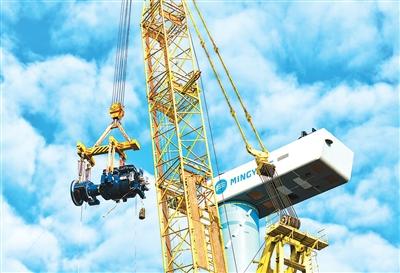
2025年制造业增加值累计值为34.67万亿元
Chan Ye Xin Xi Wang· 2026-02-10 03:41
2018-2025年Q4制造业增加值指数当季值与累计值统计图 数据来源:国家统计局 2018-2025年制造业增加值Q4当季值与年度累计值统计图 数据来源:国家统计局 相关报告:智研咨询发布的《2026-2032年中国制造业市场竞争格局分析及投资发展研究报告》 根据国家统计局公布的数据,2025年第四季度制造业增加值当季值为9.25万亿元,2025年第四季度制造 业增加值累计值为34.67万亿元;2025年第四季度制造业增加值指数当季值为105.1,2025年第四季度制 造业增加值指数累计值为106.1。 ...
