
教育

Search documents
中纪委全会的四大关注点
一瑜中的· 2026-01-15 16:03
文 : 华创证券首席经济学家 张瑜(执业证号:S0360518090001) 联系人: 袁玲玲(微信 Yuen43) 一 、中纪委全会的四大关注点 中国共产党第二十届中央纪律检查委员会第五次全体会议,于 2026 年 1 月 12 日至 14 日在北京举行。中共中央总书记、国家主席、中央军委主席习近平出席全会并发表重 要讲话。中共中央政治局常委、中央纪律检查委员会书记李希代表中央纪委常委会作工作报告《以更高标准、更实举措推进全面从严治党,为实现"十五五"时期目标任务提供 坚强保障》 (参考往年情况,或于 2 月下旬发布报告全文) 。 (一) 金融、国企、能源、开发区、招投标仍是重点行业 2025 年和 2026 年中纪委全会中,金融、国企、能源、开发区、招投标这五个行业,连续两年均被列为年度反腐重点行业。 其中对于金融行业, 2018 年十九届中纪委二次 全会以来,每次会议都将其列入重点行业; 2023 年,二十届中纪委二次全会首次将其放在首位,到今年已连续四年位居首位。 | 时间 | কার্যা | 重点行业 | | --- | --- | --- | | 2026年1月12日至14日 | 二十届中央纪委 ...


2025年末哈萨克斯坦劳务市场用工需求持续上升
Zhong Guo Xin Wen Wang· 2026-01-15 14:08
Core Insights - Kazakhstan's labor market demand is expected to continue rising by the end of December 2025, with over 109,000 job postings on online platforms, indicating a "more jobs, fewer applicants" scenario [1][2] Group 1: Job Market Overview - In December, employers posted a total of 109,600 job openings, reflecting a month-on-month increase of 8.4% [1] - The number of job seekers uploading resumes decreased significantly to 71,500, showing a month-on-month decline of 29.4% [1] - The job postings are primarily concentrated in the education, service, and agriculture sectors, with education positions at 23,300 (21.3%), service positions at 23,200 (21.2%), and agriculture-related roles at 18,700 (17.1%) [1] Group 2: Applicant Demographics - The majority of job seekers are under 35 years old, accounting for 40.8% of applicants, while those aged 35-44 make up 29.9%, 45-54 years old represent 19.1%, and those over 55 years old are at 10.2% [2] - Female applicants slightly outnumber male applicants, with women making up 52.1% and men 47.9%. Women tend to apply for positions in education, healthcare, and accounting, while men prefer technical and managerial roles [1] Group 3: Market Dynamics - The Ministry of Labor and Social Protection of Kazakhstan indicates a temporary mismatch in supply and demand in the labor market due to increased hiring by companies and a slowdown in job-seeking behavior among workers [2] - It is anticipated that job-seeking activity will rebound after the holiday season in early 2026, potentially improving the overall supply-demand relationship [2]
“现代化城市雄安探路”系列报道 | 普惠共享 幸福之城
Xin Lang Cai Jing· 2026-01-15 13:17
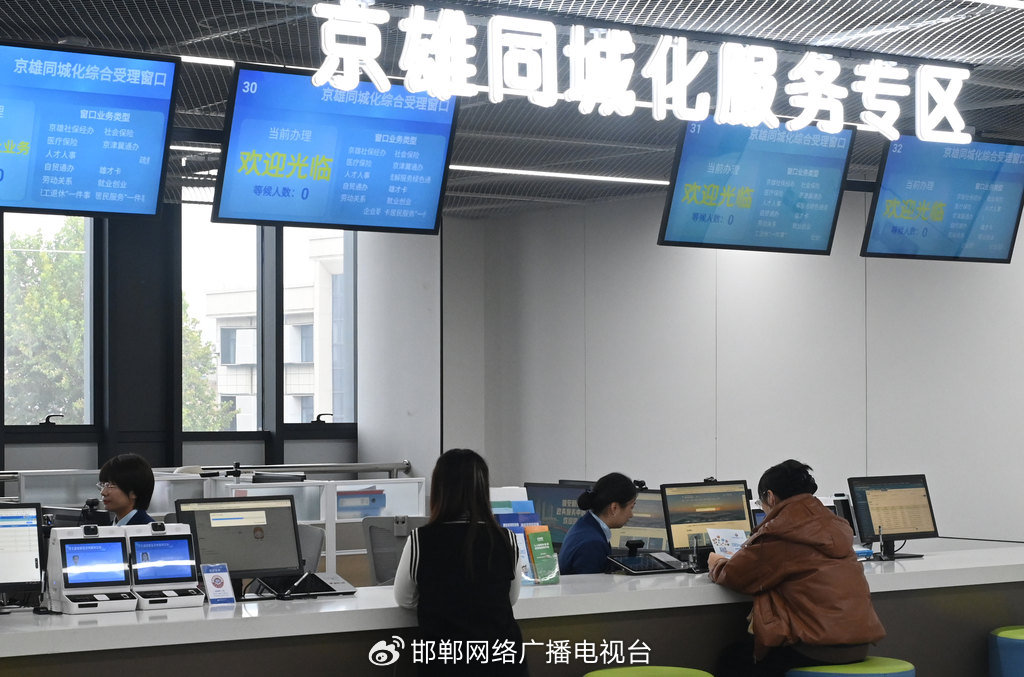
Core Viewpoint - Xiong'an New Area is focusing on enhancing public services and improving the quality of life for residents through innovative policies and the integration of resources with Beijing, aiming to create a modern, livable city that prioritizes people's needs [1][12]. Public Services and Social Security - Xiong'an has established a multi-tiered pension system that includes basic pension insurance, enterprise annuities, and personal pensions, with a notable "automatic enrollment" mechanism for enterprise annuities, enhancing both employee benefits and tax advantages for companies [3]. - The area has developed a unique employee medical insurance model that ensures hospitalization and major illness benefits are comparable to those in Beijing, with outpatient services offering even greater advantages [4]. - By the end of December 2025, over 800,000 social security cards are expected to be issued in Xiong'an, with more than 6 million uses recorded, facilitating seamless access to social security services [4]. Healthcare and Education - Xiong'an Xuanwu Hospital, supported by Capital Medical University, has opened 38 departments and has seen nearly 560,000 outpatient visits since its opening in October 2023, providing high-quality medical services locally [5]. - The area has also established several educational institutions, including Xiong'an Shijia Hutong Primary School and Beijing 4th High School Xiong'an Campus, ensuring access to quality education for local children [5]. Business Environment and Migration - Xiong'an has streamlined the business migration process, allowing companies to transfer operations from Beijing with minimal disruption, maintaining their original names and qualifications [6]. - The local government actively assists businesses during the migration process, enhancing the overall business environment and efficiency [6]. Cultural and Recreational Development - Xiong'an is developing cultural and sports facilities, including the Xiong'an Library and Xiong'an Sports Center, which host various high-profile events and activities, enriching the cultural life of residents [7]. - The area is promoting a variety of cultural activities and sports events, significantly enhancing the community's cultural engagement [7]. Employment Services - The "15-minute employment service circle" has been established, providing local job seekers with access to numerous employment services and job matching platforms, with over 27,000 job seekers registered [10]. - Xiong'an has created over 30,000 job opportunities through various initiatives during the 14th Five-Year Plan, ensuring that zero-employment families are effectively supported [11]. Elderly Care Services - A "15-minute elderly care service circle" has been developed, with 53 new elderly care facilities established, enhancing the quality of life for senior residents [11]. - The community is actively engaging elderly residents through various activities and services, fostering a supportive environment for seniors [12].
枫叶教育(01317)1月15日斥资111.73万港元回购290.2万股
智通财经网· 2026-01-15 11:29
Group 1 - The company Maple Leaf Education (01317) announced a share buyback plan, intending to repurchase 2.902 million shares at a total cost of HKD 1.1173 million [1] - The buyback price is set at HKD 0.385 per share, indicating a strategic move to enhance shareholder value [1]
5188亿元!北京一季度开启160个重大项目
Xin Jing Bao· 2026-01-15 10:07
Core Insights - Beijing's "3 100" key projects are expected to leverage brand effects and demonstration roles, with total investment exceeding 1.4 trillion yuan by 2026, and planned investment of approximately 312.8 billion yuan for that year [1] Group 1: Major Projects - A total of 160 major projects will commence in the first quarter, with a total investment of about 518.8 billion yuan [1] - The projects span four key areas: 1. Modern industrial system construction, including 36 projects such as the Haibosi Chuang energy storage system super factory and AI innovation cultural district [1] 2. Modern infrastructure system construction, featuring 55 projects like the Fengtai 500 kV transformer project and the overall enhancement of the road network in Zhongguancun Science City [1] 3. Livelihood improvement initiatives, with 45 projects including the Beijing Sixth Experimental School and the Fangshan branch of Capital Medical University Xuanwu Hospital [1] 4. Urban renewal actions, comprising 24 projects such as the protective renovation of Yinzha Hutong in Dongcheng District and the shantytown renovation in Yuegezhuang Village, Fengtai District [1]
卓越教育集团:受托人依据受限制股份单位计划购买合共3万股
Zhi Tong Cai Jing· 2026-01-15 09:50
卓越教育集团(03978)发布公告,于2026年1月15日,受限制股份单位计划受托人依据受限制股份单位计 划于公开市场上购买合共3万股股份(股份购买)。 ...
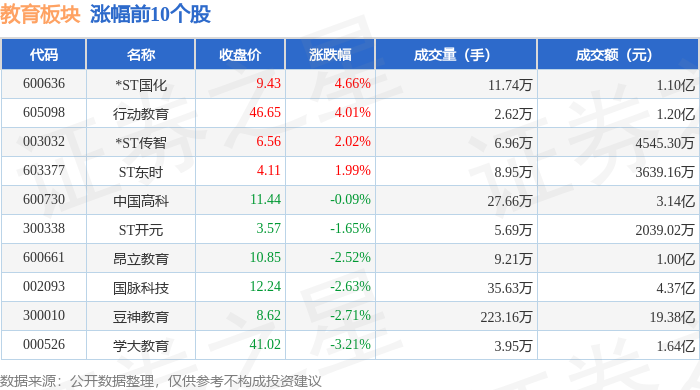
教育板块1月15日跌3.52%,博瑞传播领跌,主力资金净流出6.75亿元
Zheng Xing Xing Ye Ri Bao· 2026-01-15 08:59
Core Viewpoint - The education sector experienced a decline of 3.52% on January 15, with BoRui Communication leading the drop. The Shanghai Composite Index closed at 4112.6, down 0.33%, while the Shenzhen Component Index rose by 0.41% to 14306.73 [1]. Group 1: Market Performance - The education sector's stocks showed varied performance, with notable declines in several companies, including BoRui Communication, which fell by 10.04% to a closing price of 6.36 [2]. - Other significant declines included Kede Education at -6.78% and ZhongGong Education at -6.61% [2]. - The trading volume for BoRui Communication reached 1.19 million shares, with a transaction value of 7.81 billion [2]. Group 2: Capital Flow - The education sector saw a net outflow of 675 million from institutional investors, while retail investors contributed a net inflow of 650 million [2]. - The data indicates that retail investors were more active, with a net inflow of 24.56 million from speculative funds [2]. - Specific stocks like *ST Guohua and Action Education had mixed capital flows, with *ST Guohua seeing a net inflow of 9.84 million from institutional investors [3].



美联储褐皮书:经济、物价温和增长,通胀压力难以忽视
Sou Hu Cai Jing· 2026-01-15 01:20
Economic Activity - The Federal Reserve's Beige Book indicates that economic activity in most regions of the U.S. has recently grown, with employment conditions remaining stable, but inflationary pressures have not fully dissipated [1][2] - Economic activity has accelerated at a "slight to moderate" pace since mid-November 2025, with 8 out of 12 Federal Reserve districts reporting growth, 3 reporting no change, and 1 reporting a moderate decline [4] - The improvement in economic activity is characterized by significant "unevenness," with regions dependent on consumption and services benefiting from a slight rebound in consumer spending [5][6] Employment Conditions - The employment market shows a "mixed" result, with 8 out of 12 districts reporting stable employment levels and near stagnation in job growth, indicating a lack of growth momentum [11][12] - Employment conditions vary significantly by industry, with stable employment in healthcare and education, while manufacturing and retail sectors face challenges due to tariffs and economic cycles [13][14] - Wage growth is described as "moderate," with reports indicating that wage increases have returned to "normal" levels [15] Price Pressures - Most Federal Reserve districts report moderate price increases, with only 2 districts noting slight price rises, driven by ongoing cost pressures from tariffs [16] - Companies are beginning to pass on tariff-related costs to consumers, although some sectors, like retail and dining, are hesitant to do so due to price sensitivity [16] - Energy and insurance sectors continue to significantly impact profit margins, with expectations of some price relief in the future, but prices are anticipated to remain high due to rising costs [17] Regional Highlights - Boston: Economic activity shows slight improvement, with consumer spending increasing, particularly in high-end goods and services [18] - New York: Economic activity continues to decline slightly, with a decrease in employment and moderate wage growth [19] - Philadelphia: Economic activity has shown signs of recovery, with slight improvements in employment levels [19] - Chicago: Economic activity remains unchanged, with slight increases in consumer spending and construction demand [20] - Dallas: Economic activity remains stable, with growth in the banking sector and cautious outlook due to inflation concerns [20]
杨东莼对广西教育事业的贡献
Xin Lang Cai Jing· 2026-01-14 22:45
(来源:团结报) 转自:团结报 □ 白 云 杨东莼是我国早期以马克思主义为指导兴办教育的著名教育家之一,曾担任广西省立师范专科学校校 长、广西地方建设干部学校教育长、香港达德学院代理院长、广西大学校长、华中师范学院院长。1930 年至1953年,他三次到广西主办高等教育、师范教育和干部教育,为广西进步教育事业作出了重要贡 献。 由于封建社会根深蒂固的男尊女卑思想的影响,中国女子被剥夺了受教育的权利。中国共产党成立以 后,对女性教育有了较为深刻的认知,一些早期的代表人物如李大钊、毛泽东、恽代英等主张女子享有 和男子同等的教育权利,并以此作为衡量男女是否平等的重要方面。1922年通过的《中国共产党第二次 代表大会宣言》还明确指出:"废除一切束缚女子的法律,女子在政治上、经济上、社会上、教育上一 律享受平等权利。"此后,中国共产党一直致力于女性教育的实践,强调女性在社会中的需求和角色, 推动着中国教育体系的改革和发展。 推动女性教育 促进广西教育公平发展 青年时代的杨东莼在李大钊的影响下,投身五四运动,传播马克思主义,参加工人运动,后加入中国共 产党。他关注女性问题,研究女性问题,1931年在《妇女杂志》相继发表了 ...
2025 年 12 月美国非农数据点评:失业率回落:1月降息门槛仍高
Haitong Securities International· 2026-01-14 12:28
Employment Market Overview - The unemployment rate in the U.S. fell to 4.4% in December, better than the expected 4.5%[6] - The unemployment rate for November was revised down to 4.5%, interrupting the previous upward trend[6] - The U6 unemployment rate decreased by 0.3 percentage points to 8.4%, indicating reduced pressure on marginally employed groups[10] Job Creation and Market Conditions - Non-farm payrolls added only 50,000 jobs in December, falling short of the market expectation of 65,000[19] - Job additions for October and November were revised down by a total of 76,000, with October's figures adjusted from -105,000 to -173,000[19] - The average weekly hours worked decreased to 34.2 hours, while average hourly earnings increased by 0.3% month-over-month and 3.8% year-over-year, slightly above the expected 3.6%[13] Federal Reserve Outlook - The Federal Reserve has room to pause interest rate cuts in January, with a current market expectation of only a 5% probability for a rate cut[26] - The market anticipates two rate cuts in 2026, now pushed to June and September[26] Risks and Considerations - Political pressure from Trump could further threaten the independence of the Federal Reserve[27]