服务业

Search documents
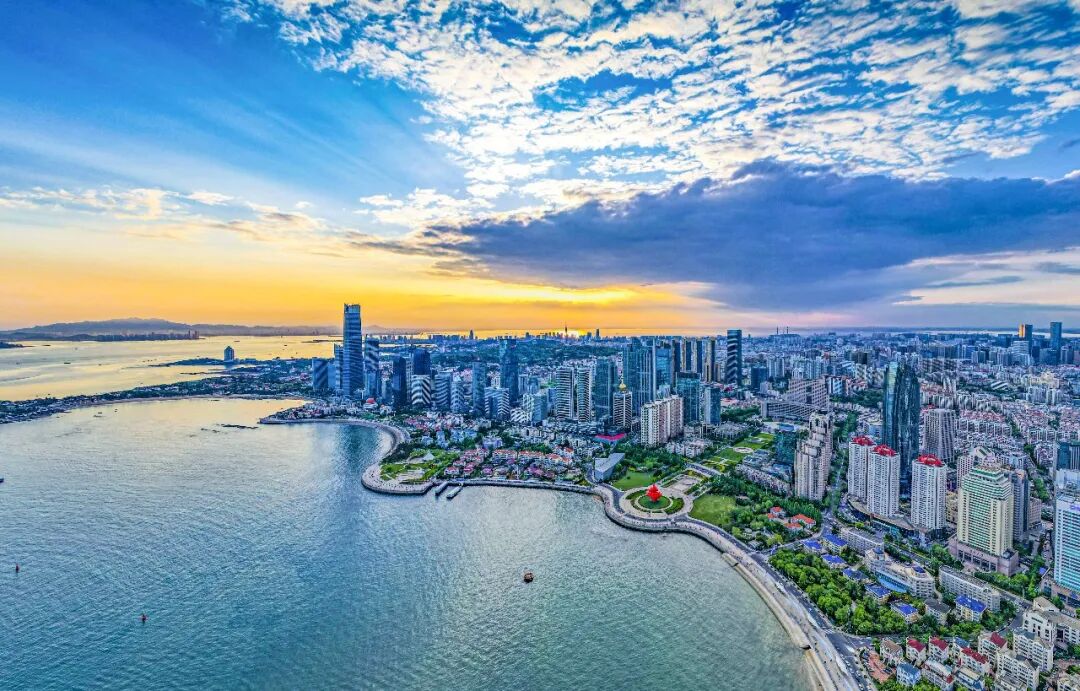
【微聚焦】山东“努力建设北方地区经济重要增长极”,瞄准2万亿的“青岛担当”!
Xin Lang Cai Jing· 2025-12-26 12:24
Core Viewpoint - Shandong province aims to establish itself as a significant economic growth pole in northern China, contributing to national development and regional coordination as outlined in the 14th Five-Year Plan [1][24][26]. Group 1: Economic Goals and Projections - Qingdao is set to achieve a GDP of 2 trillion yuan by 2028, requiring an increase of 300 billion yuan over the next three years, with a projected GDP of 1.7 trillion yuan by 2025 [5][28]. - Qingdao's economic growth during the 14th Five-Year Plan saw it cross five hundred billion yuan milestones, with an average annual growth rate of 5.9%, positioning it among the top cities in terms of growth [5][28]. Group 2: Industrial Development and Innovation - Qingdao is focusing on a "10+1" innovative industrial system, emphasizing the "4+4+2" modern marine industry and ten modern service sectors to reshape its industrial landscape [6][30]. - The city has identified 62 leading enterprises in key industries, with significant projects in semiconductor, micro-display modules, and energy storage set to launch, indicating a robust growth in emerging industries [8][32]. Group 3: Marine Economy and Service Sector - The marine economy is a key growth driver for Qingdao, with a marine GDP of 551.32 billion yuan in 2024, accounting for 33% of the city's total GDP [10][34]. - The service sector contributed 65% to economic growth in the first three quarters of 2025, with a notable increase in the value added by productive services [11][34]. Group 4: National Strategy and Open Economy - Qingdao plays a crucial role as a northern gateway for dual opening-up, leveraging its comprehensive industrial system and connectivity through Qingdao Port and Jiaodong International Airport [12][35]. - The city is enhancing its open economy by transitioning from a goods-based to a rules-based system, establishing platforms for international cooperation, particularly within the framework of the Belt and Road Initiative [14][37]. Group 5: Project Implementation and Investment - As of October, Qingdao has completed investments of 337.46 billion yuan across 1,073 key construction projects, exceeding its annual investment target [17][40]. - Major projects include the development of key port facilities and the establishment of an AI technology innovation center, which are expected to significantly contribute to the city's economic goals [18][42].

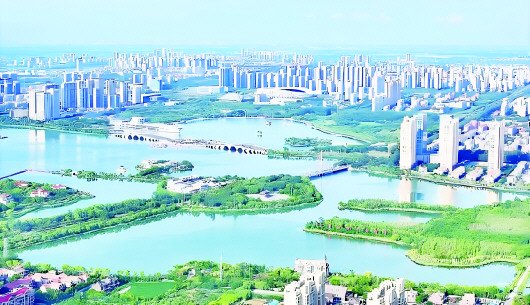
踔厉奋发破局跃升,全域攻坚筑就品质
Xin Lang Cai Jing· 2025-12-25 17:24
Core Viewpoint - The "14th Five-Year Plan" period marks a significant phase for Binzhou, characterized by resilience and growth despite a complex macroeconomic environment, focusing on high-quality development and structural optimization across various industries [2][12]. Economic Growth - The GDP of Binzhou is projected to grow from 261.43 billion yuan in 2020 to 340.47 billion yuan in 2024, with an average annual growth rate of 6.0% [2]. - Per capita GDP is expected to rise from 66,620 yuan in 2020 to 87,542 yuan in 2024, reflecting an annual growth of 6.3% [3]. Fiscal and Financial Support - General public budget revenue is anticipated to increase from 25.28 billion yuan in 2020 to 30.69 billion yuan in 2024, with an average annual growth of 5.0% [4]. - By the end of 2024, the balance of RMB loans and deposits in financial institutions is projected to reach 534.69 billion yuan and 435.25 billion yuan, respectively, marking increases of 55.3% and 49.9% since 2020 [4]. Industrial Development - The industrial sector's revenue is expected to exceed 1 trillion yuan for the first time in 2024, reaching 1,043.58 billion yuan, with an annual growth rate of 6.8% [5]. - Binzhou aims to establish five trillion-yuan industrial clusters and has been recognized as one of the top 100 advanced manufacturing cities in China for four consecutive years [5]. Agricultural Progress - The total output value of agriculture, forestry, animal husbandry, and fishery is projected to reach 62.43 billion yuan in 2024, with an annual growth of 6.6% [4]. - The number of agricultural industrialization leading enterprises is expected to grow from 396 in 2020 to 470 in 2024 [4]. Investment and Consumption - Fixed asset investment is projected to grow at an average annual rate of 10.3% from 2021 to 2024, with a growth of 6.4% in the first three quarters of 2025 [6]. - Retail sales of consumer goods are expected to exceed 100 billion yuan in 2024, reaching 109.50 billion yuan, which is 1.5 times that of 2020 [6]. Foreign Trade and Investment - The total import and export value is projected to reach 129.66 billion yuan in 2024, a 58.6% increase from 2020 [6]. - Cumulative actual foreign investment is expected to reach 3.11 billion USD by September 2025 [7]. Innovation and R&D - R&D expenditure is projected to increase from 8.42 billion yuan in 2020 to 12.23 billion yuan in 2024, with an average annual growth of 9.8% [8]. - The proportion of high-tech industry output value is expected to reach 46.0% of the total industrial output by 2024 [9]. Employment and Social Welfare - By the end of 2024, the number of new urban jobs is expected to reach 43,300, with an average annual growth of 4.4% [10]. - Per capita disposable income is projected to rise from 29,718 yuan in 2020 to 37,954 yuan in 2024, reflecting an annual growth of 6.3% [10]. Sustainable Development - The total grain output is expected to reach 3.88 million tons in 2024, with a steady annual growth of 1.2% [11]. - The energy consumption per unit of GDP is projected to decrease by 31.5% by 2024 [11].
【甘快看】甘肃着力构建体现甘肃特色和优势的现代化产业体系
Xin Lang Cai Jing· 2025-12-25 15:18
Core Viewpoint - The Gansu Provincial Committee of the Communist Party of China has approved the recommendations for the 15th Five-Year Plan, focusing on building a modern industrial system and enhancing the province's economic development over the next five years [1][2]. Group 1: Industrial Development - Gansu aims to establish a national regional modern manufacturing base, enhancing its industrial strength through traditional industry upgrades and the promotion of new technologies and products [1][2]. - The province plans to develop several national and provincial advanced manufacturing clusters, focusing on a modern industrial system centered around advanced manufacturing [1]. Group 2: Energy Sector - Gansu will leverage its abundant energy resources to build large-scale wind and solar power bases, improve energy transmission channels, and implement integrated renewable energy development projects [2]. - The province aims to transition from being an energy-rich province to an energy-strong province by expanding its wind, solar, thermal, hydrogen, and energy storage industries [2]. Group 3: Service Industry - Gansu will enhance its service sector by improving the integration of modern services with advanced manufacturing and modern agriculture, aiming for higher quality and diversified service offerings [2]. - The province will implement a plan to double the number of service enterprises, supporting their growth and development [2]. Group 4: Infrastructure Development - Gansu will address infrastructure shortcomings by advancing both traditional and new infrastructure projects, including optimizing the Lanzhou railway hub and developing major highway corridors [3]. - The province aims to establish a modern infrastructure system that is efficient, safe, and environmentally friendly [3].
利好仪器“外企”,官方解读《鼓励外商投资产业目录(2025年版)》
仪器信息网· 2025-12-25 09:03
Core Viewpoint - The release of the "Encouragement Directory for Foreign Investment Industries (2025 Edition)" aims to attract and utilize foreign investment more effectively, focusing on advanced manufacturing, modern services, high-tech, and energy-saving sectors, particularly in the central and northeastern regions of China [3][6]. Summary by Sections Background of the Revision - The revision of the 2025 edition of the "Encouragement Directory" is part of the government's strategy to enhance foreign investment, as emphasized in various national policies and reports [6][7]. Changes in the Directory - The 2025 edition includes a total of 1,679 entries, an increase of 205 from the 2022 version, with 303 modifications. The national directory has 619 entries (100 new, 131 modified), while the regional directory has 1,060 entries (105 new, 172 modified) [7][8]. Key Changes in Encouraged Sectors - The updated directory continues to prioritize advanced manufacturing, adding new categories such as the development of nucleic acid drugs, zero-magnetic medical equipment, and underwater robots for deep-sea operations [8][9]. - There is a strong emphasis on modern service industries, with new entries for high-end shipping services, virtual power plant operations, and various consumer service sectors [8][9]. Regional Focus - The directory encourages foreign investment in the central and northeastern regions by adding specific entries tailored to local resources and industrial strengths, such as cruise tourism in Liaoning and ice and snow equipment manufacturing in Heilongjiang [9][10]. Benefits for Foreign Investment - Industries listed in the "Encouragement Directory" can enjoy several benefits, including tax exemptions on imported equipment, preferential land supply, reduced corporate income tax rates in certain regions, and tax credits for reinvested profits [10]. Implementation Considerations - The Ministry of Commerce plans to promote the 2025 edition through outreach and support measures, ensuring that foreign enterprises are well-informed and can fully benefit from the directory [11].

博时市场点评12月25日:沪指继续上涨,军工板块活跃
Xin Lang Cai Jing· 2025-12-25 08:38
Market Overview - The Shanghai Composite Index recorded a seven-day consecutive rise, with a trading volume of 1.94 trillion yuan, indicating increased market activity [1][4][10] - The defense and military industry sector has shown strong performance, leading the market for two consecutive days [1][4] Monetary Policy - The People's Bank of China (PBOC) emphasized the need for continued implementation of a moderately loose monetary policy, with a focus on counter-cyclical and cross-cyclical adjustments to promote stable economic growth and reasonable price recovery [2][8] - The PBOC's new approach shifts from increasing the intensity of monetary policy control to leveraging the integrated effects of incremental and stock policies, utilizing various tools for enhanced monetary policy regulation [1][2][8] Real Estate Policy - Beijing has introduced new real estate policies effective from December 24, 2025, reducing the social security or tax payment duration for non-Beijing residents purchasing homes within the Fifth Ring Road from three years to two years, and from two years to one year for homes outside the Fifth Ring Road [2][3][9] - The policy also supports multi-child families, allowing them to purchase an additional property within the Fifth Ring Road [3][9] Foreign Investment - The National Development and Reform Commission and the Ministry of Commerce released the "Encouraged Foreign Investment Industry Catalog (2025 Edition)," effective from February 1, 2026, which adds 205 new items and modifies 303 items compared to the 2022 version [3][9] - The new catalog aims to attract foreign investment in advanced manufacturing, modern services, high-tech, and energy-saving sectors, particularly in the central and northeastern regions of China [3][9] Market Performance - As of December 25, 2025, the A-share market saw the Shanghai Composite Index close at 3959.62 points, up 0.47%, while the Shenzhen Component Index and the ChiNext Index also recorded gains [4][10] - The defense and military sector, along with light manufacturing and machinery equipment, led the gains among industry sectors, with increases of 2.91%, 1.59%, and 1.51% respectively [4][10]
山东数字经济撑起“半壁江山” 数实融合激活“强劲引擎”
Zhong Guo Xin Wen Wang· 2025-12-25 08:01
Group 1 - The core viewpoint of the article emphasizes that Shandong Province is leveraging digital industrialization and industrial digitalization as key breakthroughs to enhance its digital economy, which is projected to account for over 49% of the province's GDP by 2024 [1][2] - During the "14th Five-Year Plan" period, Shandong has established 50 national and provincial strategic emerging industry clusters, with a total scale exceeding 3.66 trillion yuan [1] - The province has over 1,100 artificial intelligence enterprises, with the scale of AI-related industries surpassing 100 billion yuan, and has registered 29 generative AI services [1] Group 2 - In the industrial sector, Shandong has built China's first national digital transformation promotion center for small and medium-sized enterprises, nurturing 18 national-level digital leading enterprises and 46 national industrial internet platforms, both ranking first in China [2] - The province has created over 760 smart agriculture application scenarios and has implemented full-chain digital transformation through platforms like "Qilu Agricultural Supermarket" [2] - Shandong's online retail sales reached 807.76 billion yuan from January to November 2025, showcasing strong vitality in the service sector [2] Group 3 - Shandong has significantly enhanced its data infrastructure, with the total computing power reaching 23.18 EFLOPS, nearly tripling since the beginning of the "14th Five-Year Plan" [2] - The province has implemented a "computing power voucher" policy to encourage high-level computing power construction and application, achieving a smart computing power scale of 11.83 EFLOPS, accounting for over 51% [2] Group 4 - The development of digital economy is deeply empowering the real economy, with examples such as the Shandong Energy Group deploying smart mining models and precision management in marine ranching [3] - Shandong has built over 7,000 digital application scenarios to address social and public concerns, including initiatives like "Mobile Enrollment" for education and mutual recognition of medical test results across over 1,000 healthcare institutions [3] - The province has established 6 national-level and 96 provincial-level digital rural pilot projects, extending digital benefits to rural areas [3]
净增205条、明年2月起实施!新版鼓励外商投资产业目录出炉 先进制造业与现代服务业成投资重点
Sou Hu Cai Jing· 2025-12-24 23:30
Core Viewpoint - The new version of the Encouragement Directory for Foreign Investment will be implemented on February 1, 2026, featuring a total of 1,679 entries, which is an increase of 205 entries and modifications to 303 entries compared to the 2022 version [1] Summary by Relevant Sections Encouragement of Foreign Investment - The revised directory emphasizes guiding foreign investment towards advanced manufacturing and modern service industries, aligning with China's industrial development direction [3][5] - The directory includes new entries for the development and production of nucleic acid drugs, smart detection equipment, and various advanced manufacturing technologies [4] Focus on Advanced Manufacturing - The national directory continues to prioritize manufacturing as a key area for foreign investment, with specific new entries aimed at enhancing competitiveness in advanced manufacturing [4][5] Modern Service Industry Development - The directory encourages investment in modern service industries, including new entries for high-end shipping services, virtual power plant operations, and various consumer service sectors [4][6] Regional Investment Opportunities - The directory maintains a structure that includes both a national encouragement directory and a regional directory, tailored to the specific advantages of different areas [7] - New regional entries include cruise tourism services in Liaoning, ice and snow equipment R&D in Heilongjiang, and various other industry-specific developments across different provinces [7] Incentives for Foreign Investment - The directory outlines four main incentives for foreign investors, including tax exemptions on imported equipment, preferential land supply, reduced corporate tax rates in specific regions, and tax credits for reinvested profits [8][9]
中东欧经济稳中有别
Jing Ji Ri Bao· 2025-12-24 22:37
Group 1: Economic Overview - In 2025, major Central and Eastern European (CEE) economies like Poland, Romania, Czech Republic, Hungary, Greece, and Bulgaria are experiencing a general decline in inflation and a stabilization of monetary conditions, with macroeconomic uncertainty significantly reduced compared to previous years [1] - The economic paths of CEE countries are increasingly differentiated, with domestic demand recovery becoming the core support for most nations, while external demand remains under pressure due to weak growth in the Eurozone and geopolitical uncertainties [1] Group 2: Country-Specific Insights - Poland, as the largest economy in CEE, is expected to maintain an average growth rate of around 3%, but faces significant fiscal pressure with a projected government deficit nearing 7% of GDP in 2025, which is substantially higher than pre-pandemic levels [2] - Romania is experiencing a challenging economic environment characterized by "low growth and high inflation," with fiscal tightening measures impacting domestic demand and ongoing high fiscal deficits [3] - The Czech Republic's economy is stable, with significant inflation decline and improved consumer spending, although external risks from weak growth in key trading partners like Germany pose challenges [3] - Hungary's economy remains weak, with low investment and external demand, while inflation is still above the regional average, leading to high financing costs that suppress corporate investment [4] - Bulgaria shows strong economic growth supported by rising wages and public investment driven by EU funds, with expectations of joining the Eurozone in early 2026 enhancing market confidence [4] - Greece's economy continues to grow above the Eurozone average, supported by improved employment and consumption, with fiscal improvements enhancing debt sustainability [5] Group 3: Challenges and Opportunities - CEE countries are facing multiple challenges, including the spillover effects of the Ukraine crisis, global trade tensions, and demographic issues like aging populations, which limit their long-term convergence with core EU member states [5][6] - Despite challenges, CEE countries have sustainable development advantages, such as proximity to the European market and ongoing EU support for digital and green transitions, which are crucial for enhancing infrastructure and industrial capabilities [6]
鼓励引导外商投资海南等地
Xin Lang Cai Jing· 2025-12-24 16:47
Core Viewpoint - The National Development and Reform Commission and the Ministry of Commerce have released the "Encouragement Directory for Foreign Investment Industries (2025 Edition)," effective from February 1, 2026, aimed at attracting and utilizing foreign investment more effectively [1]. Group 1: Policy Overview - The revised directory is a significant measure to attract foreign investment, aligning with the central government's decisions to stabilize foreign investment [1]. - The new directory includes a total of 1,679 entries, an increase of 205 entries and modifications to 303 entries compared to the 2022 version [1]. Group 2: Sector-Specific Changes - The national directory encourages foreign investment in advanced manufacturing, with new or expanded entries related to end products, components, and raw materials to enhance the development of the industrial and supply chains [2]. - The directory promotes foreign investment in modern service industries, adding or expanding entries in business services, technical services, scientific research, and consumer services to foster high-quality development in the service sector [2]. - There is a focus on encouraging foreign investment in the central and western regions, northeastern regions, and Hainan Province, expanding the directory's scope based on local resources, advantages, and industrial development [2]. Group 3: Implementation Strategy - The National Development and Reform Commission and the Ministry of Commerce will coordinate with relevant departments to ensure the effective implementation of the new measures [3].
《鼓励外商投资产业目录(2025年版)》发布
蓝色柳林财税室· 2025-12-24 13:35
Core Viewpoint - The release of the "Encouragement Directory for Foreign Investment Industries (2025 Edition)" aims to attract and utilize foreign investment more effectively, focusing on advanced manufacturing, modern services, high-tech, and energy-saving sectors, particularly in the central and northeastern regions of China [2][4][8]. Summary by Sections Overall Changes - The 2025 edition of the directory includes a total of 1,679 entries, an increase of 205 entries and 303 modifications compared to the 2022 edition [3][4]. - The directory is divided into two parts: a national directory applicable nationwide and a regional directory for the central and northeastern regions [3]. Encouragement of Foreign Investment - The national directory continues to prioritize advanced manufacturing, adding new categories such as the development and production of nucleic acid drugs, smart detection equipment, and underwater robots for deep-sea operations [4][6]. - The modern services sector is also emphasized, with new entries for platforms related to new materials, high-end shipping services, and pet care services [4][6]. Regional Focus - The directory aims to direct more foreign investment to the central and northeastern regions, with specific new entries for various provinces, including cruise tourism services in Liaoning and ice and snow equipment manufacturing in Heilongjiang [5][6]. Incentives for Foreign Investment - Foreign investment in the encouraged sectors can enjoy several benefits, including tax exemptions on imported self-use equipment and reduced corporate income tax rates in western regions and Hainan [7][8]. - The directory outlines four main incentives for foreign investors, including support for advanced manufacturing and modern services, as well as specific encouragement for investments in the central and northeastern regions [6][7]. Implementation and Future Steps - The 2025 edition will take effect on February 1, 2026, with the 2022 edition being abolished simultaneously [11]. - The National Development and Reform Commission plans to enhance the investment environment and improve foreign investor satisfaction through various initiatives, including establishing platforms for international investment cooperation [8][9].