
造船业

Search documents
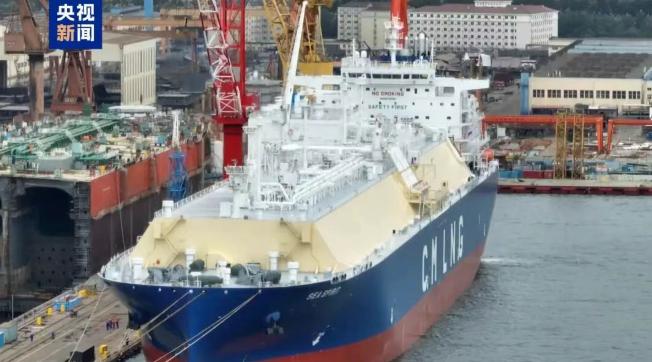
中国自研17.5万立方米液化天然气运输船正式交付
Yang Shi Xin Wen Ke Hu Duan· 2025-09-25 02:21
Core Insights - The delivery of a 175,000 cubic meter liquefied natural gas (LNG) carrier marks a significant achievement for China's shipbuilding industry, enhancing its capabilities in high-value ship construction [1][3] - The LNG carrier, measuring 295 meters in length, can meet the gas demand of Dalian city for one and a half months when fully loaded, indicating its substantial capacity for energy transport [3] - The successful construction of LNG carriers, known as the "crown jewel of the shipbuilding industry," is a complex task that only a few shipyards globally can accomplish, highlighting the advanced capabilities of China Shipbuilding Group [3] Company Insights - China Shipbuilding Group's Dalian Shipbuilding has secured a total of 17 LNG carrier orders, establishing a leading advantage in batch receiving and construction capacity within the industry [3] - The project manager of Dalian Shipbuilding emphasized that this achievement significantly enhances China's voice and autonomy in the global energy transportation system [3]

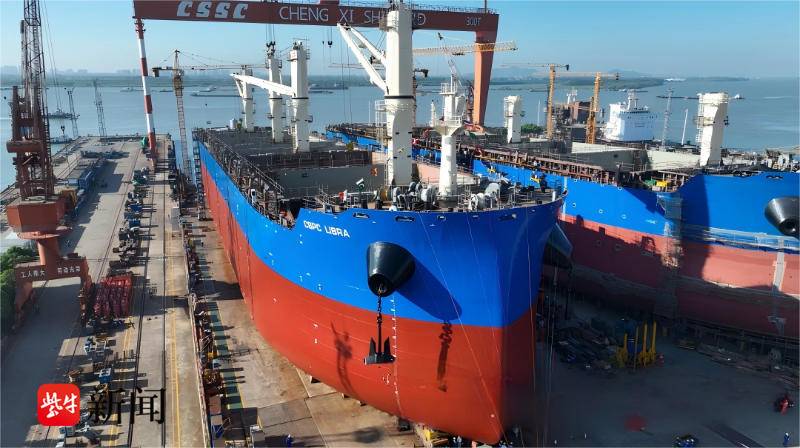
接龙下水和“试航” ,扬州造船业开启“加速度”
Yang Zi Wan Bao Wang· 2025-09-24 08:44
Group 1 - Three newly built vessels were safely launched on the same day in the Yangtze River section of Yangzhou, with one vessel successfully completing a full trial voyage across water areas from Jiangsu to east of Shanghai [2][4] - The newly launched heavy-lift vessel "CSPC LIBRA" measures 225 meters in length and has a total tonnage of 84,500 tons, being the sixth of ten vessels in its series [2] - The other two vessels launched by Hai Run Shipyard are deck barges, with "CSPC VIRGO" measuring 225 meters in length, 36 meters in width, and a total tonnage of 54,832 tons [2] Group 2 - The trial voyage for "CSPC VIRGO" was conducted under the supervision of Yangzhou Maritime, showcasing the department's cross-regional collaboration and professional support capabilities [4] - The trial voyage involved navigating through the South Channel exit of the Yangtze River to designated offshore testing areas, requiring two tidal passages with a maximum draft of 6.5 meters [5] - Yangzhou Maritime implemented a specialized regulatory system focusing on both inland navigation safety and offshore testing support, ensuring compliance and safety through thorough inspections and monitoring [5]

利空突袭!刚刚,盘中大跳水!
Zheng Quan Shi Bao Wang· 2025-09-23 11:04
Group 1: Currency and Market Impact - The Indian rupee has depreciated significantly, hitting a record low of 88.8025 against the US dollar, with a cumulative decline of nearly 3.7% since the beginning of the year [2][3] - The Indian stock market is also experiencing a downturn, with the SENSEX30 index showing a decline of 0.47% and 0.56% on consecutive days [1][2] - Analysts suggest that the increase in H-1B visa fees in the US will negatively impact the profitability of India's IT sector and reduce foreign exchange income, further pressuring the rupee [1][2][3] Group 2: H-1B Visa Fee Increase - The US has raised the annual fee for H-1B visa applicants to $100,000, which is expected to slow the deployment of Indian workers to US clients and negatively affect the IT industry's profitability [2][3] - Approximately 71% to 72% of all H-1B visas are issued to Indian nationals, making the fee increase particularly impactful for India's tech industry [4][3] - The timing of the fee increase coincides with existing external pressures, including high tariffs on Indian goods, which could further weaken India's export outlook [3][4] Group 3: Economic Self-Reliance - Indian Prime Minister Modi emphasized the need for India to reduce dependence on foreign countries and focus on self-reliance to ensure prosperity and stability [6][7] - Modi highlighted the importance of boosting domestic production in sectors like shipbuilding and high-tech industries, noting a significant decline in India's share of overseas trade conducted by domestically built ships [6][7] - The recent implementation of a new Goods and Services Tax (GST) reform aims to simplify tax rates and increase savings for households, which could positively impact the economy [6][7]
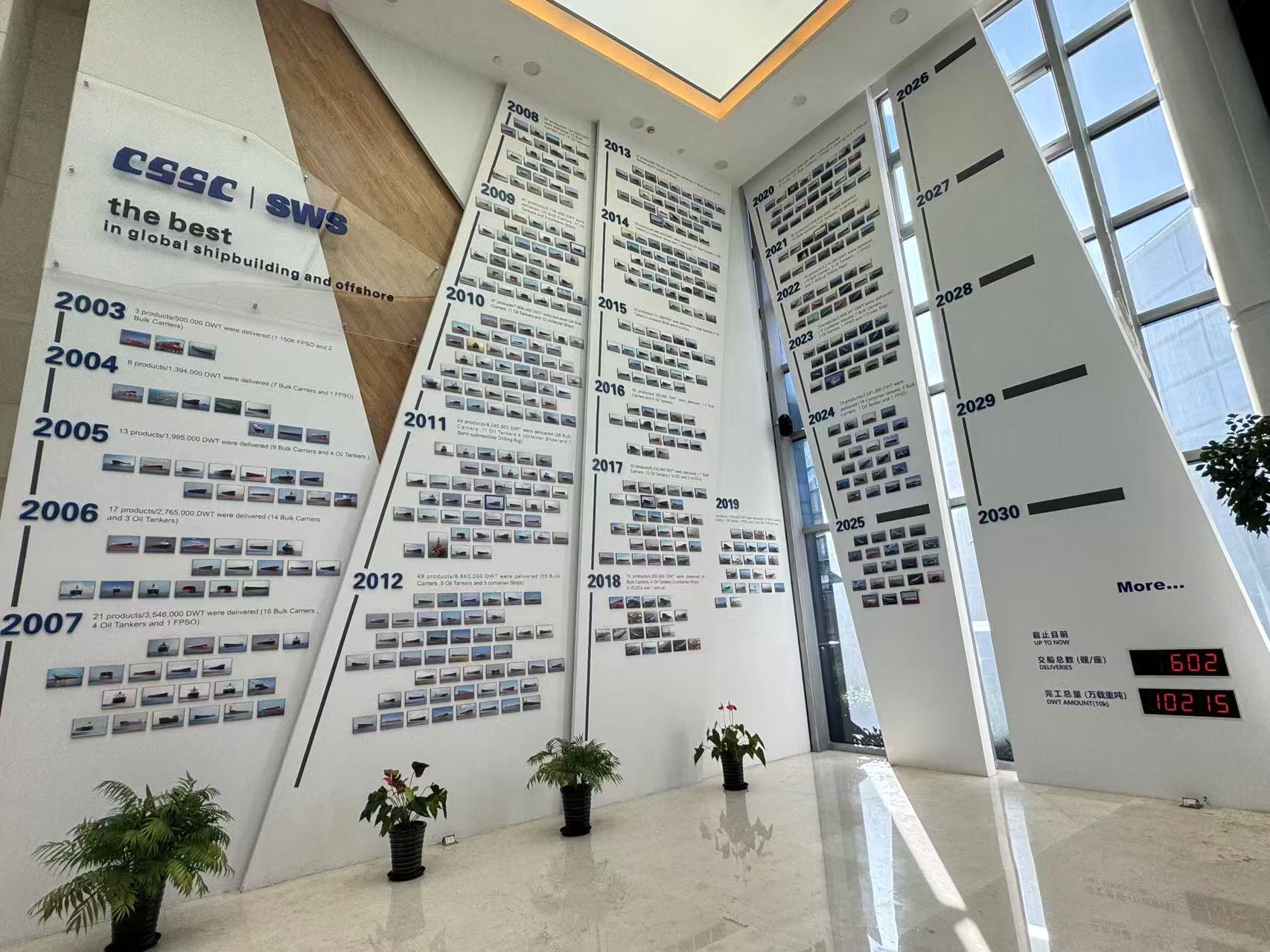
手持订单排到2029年!这家船企何以赢得全球客户青睐?|活力中国调研行
Di Yi Cai Jing· 2025-09-23 10:47
Core Viewpoint - The company is undergoing a transformation in its product structure, focusing on green and intelligent shipbuilding, while expanding its product offerings to include high-value vessels such as luxury cruise ships and large container ships [1][3][5]. Group 1: Product Structure Transformation - The company has evolved from primarily building bulk carriers and oil tankers to a diversified product range that includes luxury cruise ships, large container ships, and specialized vessels [3][5]. - The first domestically built large cruise ship, "Aida·Magic City," was successfully delivered on November 4, 2023, marking a significant milestone in China's cruise ship construction technology [3][5]. - The company has delivered a total of 602 vessels, amounting to 10.12 million deadweight tons [1]. Group 2: Green and Intelligent Shipbuilding - The company is transitioning from traditional single-fuel diesel engines to dual-fuel systems, incorporating ammonia and methanol fuels to meet stricter carbon emission regulations [5][6]. - The company has developed the "SWS-TIME" digital shipbuilding platform, which integrates various management processes and allows employees to track their tasks and progress via mobile devices [6][7]. Group 3: Export and Market Opportunities - The company's foreign trade export volume has exceeded $40 billion, with projections of $2 billion in annual exports for 2023, 2024, and 2025 [7]. - The current order book is heavily weighted towards container ships, which account for about half of the orders, alongside oil tankers and car carriers [7]. Group 4: Smart Warehouse Management - The company has implemented an intelligent warehouse system that automates the storage and retrieval of heavy materials, significantly improving efficiency [10][12]. - The intelligent warehouse, operational since October 2023, covers an area of 6,000 square meters and utilizes advanced technologies for real-time inventory management [10][12]. - The "cloud unpacking" method allows for remote inspection of materials, enhancing flexibility and efficiency in the verification process [11].

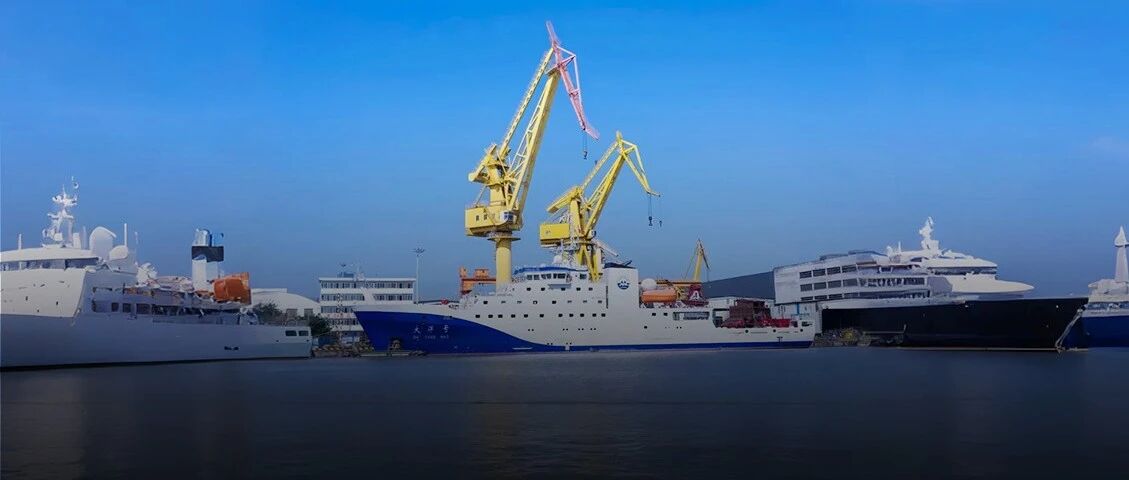
黄浦江畔,科技创新满弓劲发——跃升·“十四五”科技成就
Ke Ji Ri Bao· 2025-09-23 08:52
Group 1: Biopharmaceutical Industry - Shanghai is nurturing "global new" blockbuster drugs, with a focus on developing innovative medicines that exceed $1 billion in annual sales, termed "blockbuster drugs" [3] - The biopharmaceutical sector in Shanghai is expected to surpass 200 billion yuan in output value by 2024, with 7 first-class innovative drugs and 15 third-class innovative medical devices approved for market, accounting for 17.5% and 32.6% of the national share respectively [3] - Shanghai has a strong resource advantage in biopharmaceuticals, with 64 academicians in the field, 280,000 professionals, and significant scientific facilities supporting life sciences research [3] Group 2: Artificial Intelligence Industry - The artificial intelligence industry in Shanghai is rapidly forming, with significant developments in innovation hubs like "Mosu Space" and "Moli Community," which have attracted numerous AI enterprises [5][6] - By the end of 2024, the scale of Shanghai's artificial intelligence industry is projected to exceed 400 billion yuan, with a year-on-year growth of over 7%, achieving the goals set in the 14th Five-Year Plan ahead of schedule [6] - Shanghai has registered 60 generative AI service models, ranking second nationally, showcasing its commitment to integrating AI with various sectors [6] Group 3: Shipbuilding Industry - The successful construction of China's first large cruise ship, "Aida Magic City," marks a significant milestone in the domestic shipbuilding industry, completing a crucial part of China's shipbuilding capabilities [7][8] - The shipbuilding base in Shanghai has developed a comprehensive supply chain and value chain, with advanced techniques to address key challenges in cruise ship construction [8] - The domestic cruise ship industry is expected to grow, with the "Aida Magic City" and other vessels having served nearly 800,000 guests, indicating a strong market demand [8] Group 4: Technology Innovation Hubs - "Shanghai Silicon Alley" has revitalized 100,000 square meters of space, attracting over 500 tech innovation companies, including 42 specialized enterprises [9][10] - "D Zero Bay," a tech innovation zone near Shanghai Jiao Tong University, has gathered 13,000 companies, including over 4,300 hard tech firms, with a total financing exceeding 30 billion yuan [12] - The establishment of major scientific infrastructures like the Shanghai Synchrotron Radiation Facility has significantly contributed to the development of various scientific fields, supporting over 800 research institutions [13]


全球新船王!半年拿下全球30%新船订单,生产计划排期至2029年
市值风云· 2025-09-19 10:11
Group 1 - The core viewpoint of the article highlights the significant merger in the Chinese shipbuilding industry, where China Shipbuilding (600150.SH) announced a stock swap to absorb China State Shipbuilding Corporation (601989.SH) with a total restructuring amount of 115.15 billion yuan, marking the largest absorption merger in A-share history [3][4] - The merger is seen as a continuation of the 2019 "South-North Shipbuilding" consolidation, positioning China Shipbuilding as the sole listed platform under the new China Shipbuilding Group [4] - The value of the new shipbuilding leader extends beyond the merger itself, as both the company's inherent strength and the cyclical trends of the industry are viewed as highly competitive at this juncture [4]

日本计划2035年造船量翻倍,成本优势不如中国
日经中文网· 2025-09-18 07:15
Group 1 - The Japanese shipbuilding industry is facing intense competition from China and South Korea, leading to a decline in market presence [2][4] - The Japanese government aims to double shipbuilding volume to 18 million gross tons by 2035, increasing global market share from approximately 13% to 20% [4] - Cost challenges are critical, with Japanese bulk carrier construction costs being 100 compared to China's 80, necessitating measures to reduce material costs and improve production efficiency [5] Group 2 - A roadmap will be developed by the Japanese government before autumn to clarify policy content and investment scale, including quantitative indicators [4] - Specific support measures will be introduced in the supplementary budget for fiscal year 2025 and the budget for fiscal year 2026 [4] - The government will encourage inter-company collaboration and digital transformation within the shipbuilding sector [4]
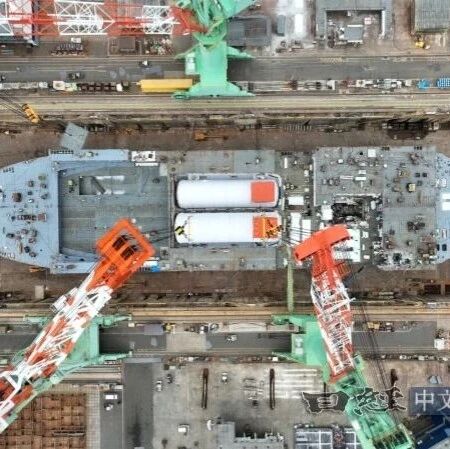
上半年造船企业收入创历史新高 替代燃料船已成全球新造船市场主角
Di Yi Cai Jing· 2025-09-17 09:49
Group 1 - The global new shipbuilding market has seen a significant decline in order indicators this year, while China's shipbuilding industry continues to demonstrate strong resilience and competitiveness, maintaining a leading position in completion volume, new orders, and backlog orders [1] - From 2021, the global shipbuilding market experienced five years of continuous growth, entering a critical phase of the current "super cycle," influenced by geopolitical factors, decarbonization pathways, and industry capacity [1] - In the first half of the year, China's shipbuilding completion volume, new orders, and backlog orders accounted for 51.7%, 68.3%, and 64.9% of the global total, respectively, with ship export value also increasing by 18.6% year-on-year [1] Group 2 - China's shipbuilding industry achieved historical highs in backlog orders, new ship price index, and operating revenue in the first half of the year, with a total profit of 38.74 billion yuan, a year-on-year increase of 72.6%, and an operating profit margin of 9.71% [2] - The acceleration of green low-carbon initiatives is evident, with rapid growth in orders for LNG and methanol-powered ships, and breakthroughs in zero-carbon ship orders, achieving a 68.8% market share in new green ship orders [2] - It is projected that China's shipbuilding completion volume will be around 51 million deadweight tons in 2025, with new orders slightly declining compared to the previous year, while backlog orders will remain above 230 million deadweight tons [2]
东吴证券:新造船价格指数维持高位 南北船合并步入收官
智通财经网· 2025-09-16 06:01
Core Viewpoint - The shipbuilding industry is experiencing a supply constraint that supports high global ship prices, despite a decline in new ship order volumes due to various factors [1][2][3] Group 1: Ship Price Index and Orders - As of the end of August 2025, the new ship price index stands at 186.3, reflecting a year-on-year decrease of 1.6% and a month-on-month decrease of 0.2% [2] - New ship orders in August 2025 totaled 422,000 deadweight tons, a significant year-on-year decline of 77.5% and a month-on-month decline of 57.9% [1][2] - Cumulative new ship orders from January to August 2025 reached 66.92 million deadweight tons, down 52.8% year-on-year, but still above the average investment level of the past decade by 27.2% [1][2] Group 2: Market Position and Competitive Landscape - As of August 2025, global shipyards hold orders totaling 397 million deadweight tons, with a year-on-year increase of 11.7%, indicating a strong backlog [3] - Chinese shipyards account for 68.3% of global orders, with 271 million deadweight tons in hand, maintaining a leading position despite a slight decline in market share due to external factors [3] - The modern shipbuilding industry is capital, technology, and labor-intensive, and China's advantages in supply chain completeness and cost are expected to stabilize its market share above 50% [3] Group 3: Company Performance and Mergers - In the first half of 2025, the company achieved revenue of 40.3 billion yuan, a year-on-year increase of 12%, and a net profit of 2.9 billion yuan, up 109% year-on-year [4] - The company has a backlog of 26.49 million deadweight tons in civil ship orders, valued at 233.5 billion yuan, indicating strong growth momentum [4] - The merger between China Shipbuilding and China Heavy Industry is nearing completion, which is expected to enhance the competitive landscape and operational quality of the industry [4] Group 4: Investment Recommendations - The company recommends focusing on China Shipbuilding (600150.SH) and China Power (600482.SH) as key investment targets in the shipbuilding sector [5]

丰田公司本土建厂意在逆转产业空洞化
Di Yi Cai Jing· 2025-09-14 13:01
Group 1: Core Insights - The impact of industrial hollowing and population decline on Japan's economy and society is significant and warrants attention [1][4] - Toyota's announcement to build a new factory in Aichi Prefecture, with an annual production capacity of 3 million vehicles by 2030, is seen as a potential catalyst to reverse industrial hollowing and rejuvenate the manufacturing sector [1][6] - The trend of Japanese companies increasing direct investment in the U.S. since 2018, particularly in response to U.S. tariffs, highlights a shift in investment strategies [3][8] Group 2: Industrial Hollowing - Industrial hollowing refers to the phenomenon where companies relocate domestic production activities overseas, leading to reduced domestic employment and economic growth [2] - Since the late 1980s, the appreciation of the yen has increased production costs in Japan, prompting many manufacturing firms to relocate abroad [2][3] - Japan's manufacturing sector has significantly shrunk, with the shipbuilding industry's global market share projected to drop to 3% by 2024, and semiconductor market share declining from 50.3% in 1988 to less than 10% in 2019 [3] Group 3: Population Decline - Japan's population has been declining for 15 consecutive years, with a record drop of 860,000 people in 2023, leading to labor shortages and reduced consumer spending [4][5] - As of January 2024, Japan's total population is approximately 121.56 million, with projections indicating a decrease in the labor force from 76 million in 2015 to 45 million by 2060 [4][5] - The labor shortage has resulted in increased wage pressures, particularly for small and medium-sized enterprises, which struggle to absorb rising labor costs [5][6] Group 4: Economic Implications - The combination of industrial hollowing and population decline has led to a fragile economic structure characterized by rising costs, shrinking markets, and declining competitiveness [6][7] - Japan's current account surplus reached a record 29.3 trillion yen in 2024, primarily driven by initial income surplus from overseas investments, while trade and service balances showed deficits [6][7] - The depreciation of the yen, while beneficial for exports, has increased import costs, further straining domestic businesses and consumer purchasing power [7] Group 5: Future Outlook - The challenges posed by industrial hollowing and population decline are not unique to Japan and may offer lessons for other countries facing similar issues [8] - Collaborative efforts among government, industry, and society are essential to address the structural economic challenges and revitalize the manufacturing sector [7][8]
