可再生能源

Search documents
新思想引领新征程丨加快绿色低碳转型 全面推进美丽中国建设
Yang Guang Wang· 2025-12-19 05:04
生态环境部部长黄润秋:近年来,我们围绕以高水平保护促进新质生产力发展,构建了一套行之有 效的政策体系,涉及标准规范、精准监管、环评改革、市场机制、绿色金融等方方面面。我们积极培育 和壮大绿色生产力,不断塑造发展的新动能、新优势。 今年是中国提出"双碳"目标五周年。五年来,我国建成了全球最大、发展最快的可再生能源体系, 形成了全球最大、最完整的新能源产业链,风电、太阳能发电装机总量已提前完成2030年国家自主贡献 目标。在二氧化碳排放强度持续下降的同时,我国建成了全球覆盖温室气体排放量最大的碳排放权交易 市场,覆盖范围还在进一步扩大。 央广网北京12月19日消息 据中央广播电视总台中国之声《新闻和报纸摘要》报道,习近平总书记 强调,我国经济社会发展已进入加快绿色化、低碳化的高质量发展阶段,必须以更高站位、更宽视野、 更大力度来谋划和推进新征程生态环境保护工作,谱写新时代生态文明建设新篇章。 "十四五"期间,我国构建了全球最大、发展最快的可再生能源体系,建成了全球最大、最完整的新 能源产业链,贡献了全球四分之一的新增绿色面积,绿色低碳发展全面推进,美丽中国建设迈出重大步 伐。 位于辽宁鞍山的鞍钢股份有限公司烧结厂 ...
《科学》杂志发布2025年度十大科学突破
Xin Hua She· 2025-12-19 03:59
Group 1 - The core viewpoint of the article is that global renewable energy growth is unstoppable, with significant advancements expected by 2025, primarily led by China [1] - In 2025, global renewable energy generation is projected to surpass traditional energy sources, marking a major transition in the energy sector [1] - In 2023, global renewable energy generation exceeded coal for the first time, with solar and wind energy growth rates sufficient to meet the new electricity demand for the first half of the year [1] Group 2 - China is expanding its presence in solar cells, wind turbines, and lithium battery storage, solidifying its leadership in global renewable energy production and related technologies [1] - Approximately 80% of solar cells, 70% of wind turbines, and 70% of lithium batteries are produced in China, which holds a significant cost advantage [1] - China's thriving green technology exports are transforming other regions, including Europe and countries in the Global South [1]
【科技日报】《科学》杂志评出2025年度十大突破
Ke Ji Ri Bao· 2025-12-19 03:14
Group 1: Renewable Energy Development - Global renewable energy, led by China, is rapidly growing, with solar and wind energy dominating the increase in power generation, surpassing fossil fuels in total output [2] - China is a key player in this transition, significantly expanding solar panel, wind turbine, and lithium battery storage systems, solidifying its global leadership [2] - The low-cost manufacturing in China has facilitated the rapid adoption of small rooftop photovoltaic systems, providing reliable and economical energy for millions of households in Europe, South Asia, and the Global South [2] Group 2: Genetic Research and Medical Advances - Customized gene editing has been successfully applied in treating a rare genetic disease in a human patient, marking a significant milestone for personalized gene therapy [3] - Two new drugs for gonorrhea have been approved by the FDA, representing the first new treatments for the disease in decades, with significant efficacy and safety profiles [4] - A key gene, QT12, has been identified by Chinese researchers to help rice withstand high nighttime temperatures, leading to a 78% increase in yield under such conditions [13] Group 3: Archaeological and Scientific Discoveries - The discovery of the Harbin ancient human remains has confirmed them as Denisovans, providing insights into their appearance and lineage [9] - The construction of the Vera C. Rubin Observatory in Chile will enable unprecedented astronomical observations, potentially leading to discoveries of new celestial bodies and insights into dark matter and energy [8] Group 4: Advances in Physics and Transplantation - The final measurement of the muon magnetic anomaly has achieved unprecedented precision, enhancing the understanding of particle physics [11] - Significant breakthroughs in xenotransplantation have been made, with genetically engineered pig organs showing extended viability in human patients, moving closer to clinical application [12] Group 5: AI in Scientific Research - Large language models (LLMs) have demonstrated remarkable capabilities in scientific research, achieving breakthroughs in mathematics, chemistry, and biology, thus enhancing research efficiency and discovery [10]


果下科技盘中涨超7% 公司前瞻性布局AI机器人安全赛道
Zhi Tong Cai Jing· 2025-12-19 02:39
Core Viewpoint - Guoxia Technology (02655) has seen a significant stock price increase, reflecting strong market interest and confidence in its innovative renewable energy solutions and AI-driven safety systems [1] Company Overview - Guoxia Technology is a provider of renewable energy solutions and products driven by platform technology and AI, with applications in large power generation, grid-side, commercial, and residential sectors in both China and overseas markets [1] - The company is the first globally to venture into the "AI Robot Safety" sector, indicating a forward-looking strategy in a critical area for human civilization [1] Financial Performance - The company's main business revenue has shown consistent growth over the past three years, with 2022 revenue at 142 million RMB, which surged to 314 million RMB in 2023, marking a year-on-year increase of 121% [1] - Projected revenue for 2024 is expected to reach 1.026 billion RMB, with an expanded year-on-year growth rate of 227% [1] - In the first half of this year, the company achieved a revenue of 691 million RMB, a staggering increase of 663% compared to 90.26 million RMB in the same period last year, with half-year revenue already exceeding the total revenue for 2023 by more than double [1]

港股异动 | 果下科技(02655)盘中涨超7% 公司前瞻性布局AI机器人安全赛道
智通财经网· 2025-12-19 02:35
Core Viewpoint - Guoxia Technology (02655) has seen a significant stock price increase, with a rise of over 7% during trading and currently up 4.43% at HKD 37.7, with a trading volume of HKD 6.6002 million [1] Company Overview - Guoxia Technology is a provider of renewable energy solutions and products driven by platform technology and AI, with applications in large power and grid sectors as well as commercial and residential scenarios in both China and overseas markets [1] - The company is the first globally to venture into the "AI Robot Safety" sector, which is crucial for human civilization, strategically migrating its core technologies from the energy storage field to develop intelligent safety protection systems for human-machine collaborative environments [1] Financial Performance - The company's main business revenue has consistently increased over the past three years, with revenue rising from RMB 142 million in 2022 to RMB 314 million in 2023, representing a year-on-year growth of 121% [1] - For 2024, the projected annual revenue is expected to reach RMB 1.026 billion, with an expanded year-on-year growth rate of 227% [1] - In the first half of this year, the company achieved a revenue of RMB 691 million, a staggering increase of 663% compared to RMB 90.26 million in the same period last year, with the half-year revenue already exceeding double the total revenue for 2023 [1]
可再生能源增长获评美《科学》杂志年度头号突破 中国引领全球能源转型
Xin Hua She· 2025-12-18 22:49
Core Viewpoint - The major breakthrough in 2025 is the unstoppable growth of global renewable energy, which is expected to surpass traditional energy production in multiple sectors, primarily led by China [1] Group 1: Renewable Energy Growth - In 2025, global renewable energy production is projected to exceed traditional energy in various fields [1] - China is recognized as the leader in this significant transition, expanding its presence in solar panels, wind turbines, and lithium battery storage [1] - The country has solidified its position in global renewable energy production and related technologies [1]
可再生能源增长获评美《科学》杂志年度头号突破
Xin Hua She· 2025-12-18 22:48
新华社洛杉矶12月18日电(记者 谭晶晶)美国《科学》杂志18日公布其评选的2025年度十大科学 突破,"全球可再生能源增长势不可当"获评年度头号突破。该杂志认为,2025年,全球可再生能源生产 开始在多个领域超过传统能源,这一重大转型主要由中国引领。中国在太阳能电池板、风力涡轮机以及 锂电池储能等领域持续扩大布局,巩固了其在全球可再生能源生产和相关技术方面的引领地位。 ...
全球能源投资大转向,未来每年5.6万亿元将涌入这两大领域
Sou Hu Cai Jing· 2025-12-18 11:26
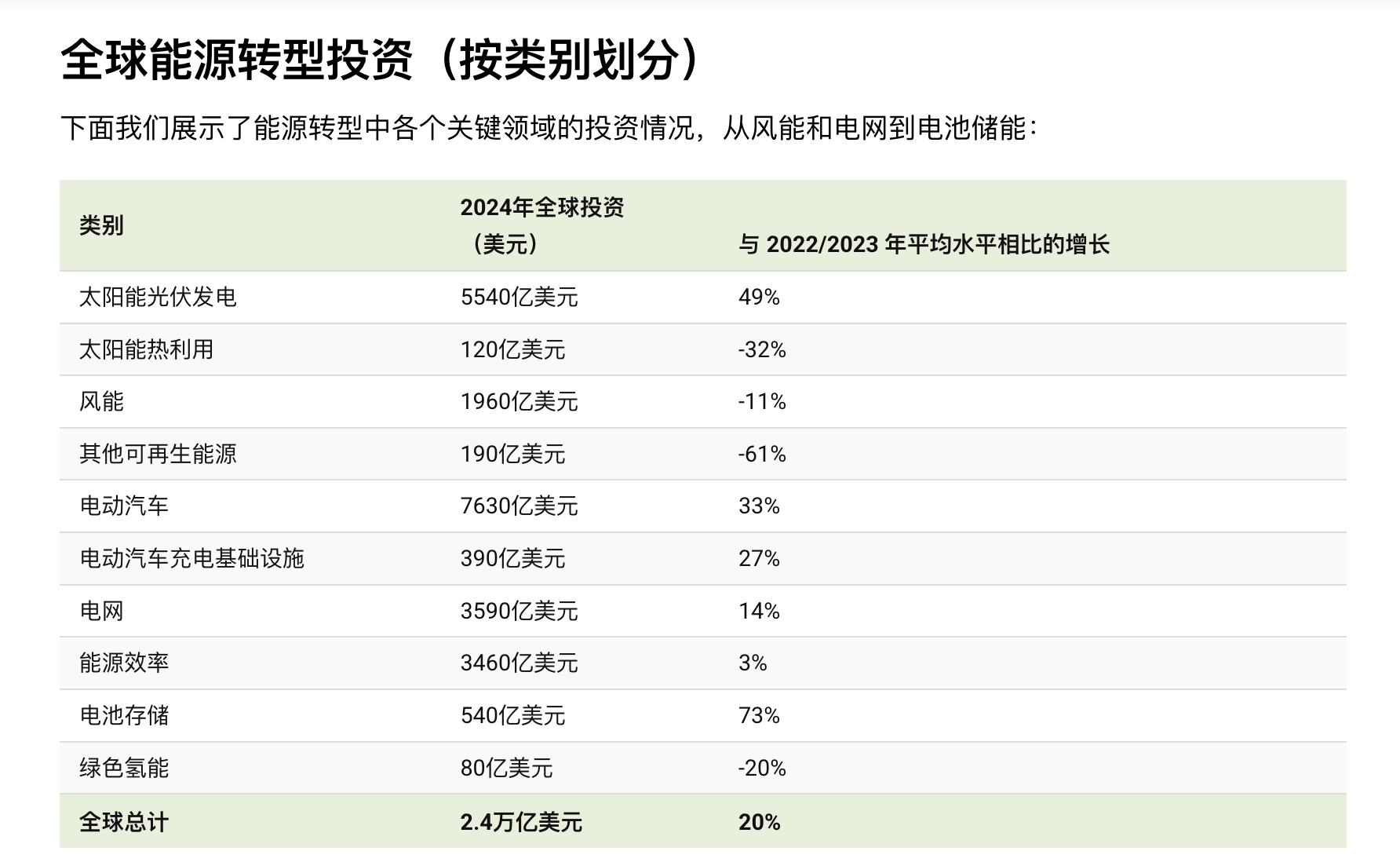
Core Insights - The focus of energy investment is shifting from power generation to grid and energy storage, with global annual investments in grid upgrades and energy storage expected to exceed $800 billion (approximately 5.6 trillion RMB) by 2030, representing a significant increase of over 50% from current levels [1] Investment Trends - Global investment in solar photovoltaic power is projected to reach $554 billion in 2024, a 49% increase compared to 2022 [2] - Investment in electric vehicles is expected to be $763 billion, marking a 33% increase [2] - Battery storage investments are anticipated to grow by 73% to $54 billion in 2024, which is 11 times the average level from 2019-2020 [3] Energy Transition Characteristics - The energy transition is characterized by three main trends: 1. Divergence in transition paths influenced by political and economic factors, with the U.S. and EU showing contrasting approaches [6] 2. China emerging as a leader in green low-carbon development, with significant advancements in wind and solar capacity [6] 3. Electrification becoming a common pathway for global energy transition, with electricity demand projected to grow by 32% over the next decade [6] Future Energy Consumption - Global energy consumption growth is expected to slow, with a projected increase of 1.7% during the "15th Five-Year Plan" period, down 1.1 percentage points from the previous period [7] - China's non-fossil energy is predicted to become the dominant energy source, with its share of total power generation expected to reach 50% by 2035 and 91% by 2060 [7][8] Carbon Emissions Outlook - Global carbon emissions from energy combustion are projected to reach 36.1 billion tons by 2030, with a plateau phase expected [11] - China's energy-related carbon emissions are anticipated to stabilize around 1.06 billion tons, with a potential reduction of 10% from peak levels by 2035 [11] Hydrogen Energy Potential - The hydrogen industry is expected to play a significant role in achieving carbon neutrality, with green hydrogen demand projected to reach 1.2 million tons by 2030 [12] - By 2060, the hydrogen sector could contribute to a reduction of 600 million tons of carbon emissions, accounting for approximately 10% of China's carbon neutrality goals [12]

瑞银2026年投资策略:聚焦AI应用、科技股需精选,超配电气化主题
智通财经网· 2025-12-18 09:09
Group 1: Core Themes and Investment Strategies - UBS emphasizes selective overweights in growth themes while balancing valuation protection and risk defense strategies amid moderate economic growth, persistent inflation, and geopolitical and technological changes [1] - The report identifies seven key themes for investment, focusing on technology stocks, artificial intelligence, electrification, European consumer potential, European and Japanese bank stocks, defensive stocks, and gold-related stocks [1][2][3][4] Group 2: Technology and AI Focus - UBS adopts a cautious stance on technology stocks, highlighting Microsoft, Amazon, TSMC, Tencent, and strategically SAP, while being cautious on Apple, Tesla, and ad-based business models [1] - The report underscores the importance of reasonably valued pure data center stocks and emphasizes application scenarios benefiting various sectors, including food retail and financial institutions [2] Group 3: Electrification and European Consumer Insights - UBS believes electrification is still in its early stages, with only 20% of global energy consumption coming from electricity, which needs to rise to 55%-70% by 2050 [2] - The report highlights potential surprises from European consumers in 2026, focusing on banks, retail, and consumer-centric companies like Ryanair and Accor [2][3] Group 4: Banking Sector Outlook - UBS remains optimistic about European and Japanese bank stocks for the third consecutive year, citing strong macroeconomic fundamentals and valuation support [3] - The report suggests that bank stock valuations should adjust to reflect their superior fundamentals and potential earnings compared to historical averages [3] Group 5: Defensive Stock Recommendations - UBS recommends buying undervalued defensive stocks, including household products, medical devices, and food retail, due to concerns over high valuations in cyclical stocks [4] - The report highlights a preference for gold mining equipment companies over gold equities as a hedge against currency devaluation and sovereign credit rating risks [4] Group 6: Investment Style Preferences - UBS continues to overweight low PEG, low leverage, and upward earnings revision factors, while also favoring quality stocks with reasonable valuations [4] - The report suggests a slight overweight in small-cap stocks relative to large-cap stocks in Europe and the UK due to their lower valuations [4]
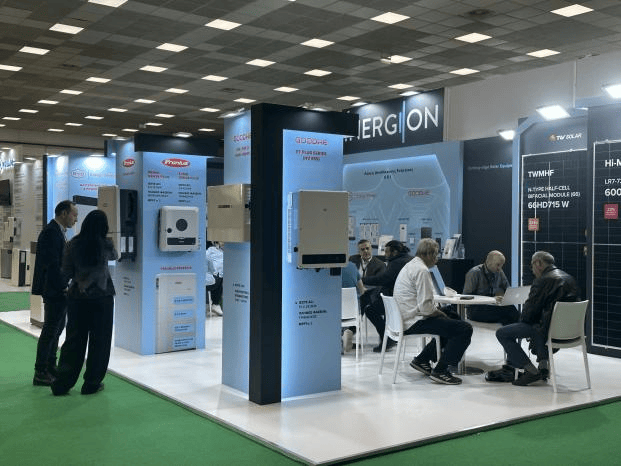
2026年希腊塞萨洛尼国际可再生能源展
Sou Hu Cai Jing· 2025-12-18 09:08
Core Viewpoint - The upcoming 2026 Thessaloniki International Renewable Energy Exhibition in Greece reflects the growing importance of renewable energy in the region, driven by ongoing energy structure adjustments across Europe [2][3]. Group 1: Exhibition Overview - The exhibition is scheduled to take place from March 19 to 21, 2026, at the Thessaloniki International Exhibition Center, organized by the Greek national exhibition agency Helexpo [3]. - This event is held annually and has established a significant influence within the local energy sector, with coordination for related affairs in China managed by Hong Kong Exhibition International Group [3]. Group 2: Exhibition Content Focus - The exhibition will focus on renewable energy and related technologies, including solar photovoltaic, energy storage systems, wind energy equipment, and energy management solutions [5]. - It will showcase not only generation equipment but also technologies related to energy transmission, storage, and application, reflecting the overall development trends of the European renewable energy industry [5]. Group 3: Regional Energy Development Context - Greece, located at the southern tip of the Balkan Peninsula, serves as a crucial node for regional energy interconnections in Southeast Europe and the Mediterranean [6]. - The Greek government has implemented various supportive policies for renewable energy, facilitating the construction of clean energy projects and gradually releasing market demand [6]. - Thessaloniki has become an important city for regional energy exchanges, maintaining close energy cooperation with neighboring countries such as Bulgaria, Romania, and North Macedonia [6]. Group 4: Industry Networking and Information Platform - The exhibition serves as a professional platform for industry practitioners to understand policy trends, market changes, and technological developments [7]. - It typically includes forums or specialized discussions on topics such as European energy transition and renewable energy applications, providing insights into industry trends and regional dynamics [7]. - As the 2026 exhibition date approaches, more information will be released, enhancing its role as a window for observing the Southeast European and Mediterranean energy markets [7].