
跨境支付

Search documents
收评:创业板指低开低走跌1.91% 全市场超3800只个股下跌
news flash· 2025-05-15 07:06
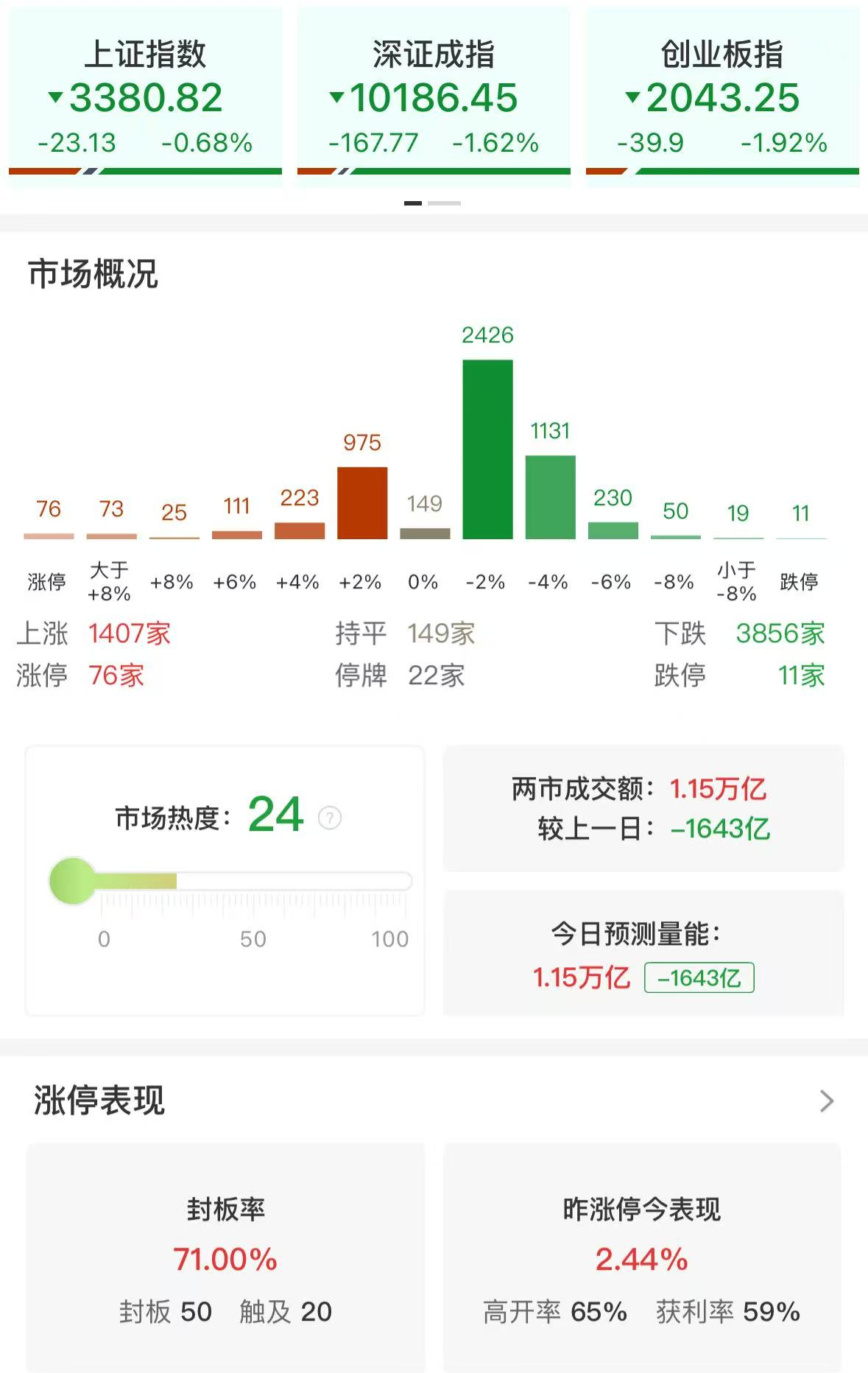
收评:创业板指低开低走跌1.91% 全市场超3800只个股下跌 智通财经5月15日电,市场全天震荡调整,创业板指领跌。沪深两市全天成交额1.15万亿,较上个交易日缩量1643亿。盘面上,市场热点较为杂乱,个股跌 多涨少,全市场超3800只个股下跌。从板块来看,合成生物概念股逆势大涨,金达威等多股涨停。食品等消费股一度反弹,西王食品涨停。ST板块再度走 强,*ST建艺等20余股涨停。下跌方面,算力概念股展开调整,宏景科技跌近10%。板块方面,合成生物、食品、ST板块、港口等板块涨幅居前,软件开 发、跨境支付、算力、鸿蒙概念等板块跌幅居前。截至收盘,沪指跌0.68%,深成指跌1.62%,创业板指跌1.91%。 | 上证指数 | | 深证成指 | 创业板指 | | --- | --- | --- | --- | | -3380.82 | | -10186.45 | -2043.25 | | -23.13 | -0.68% | -167.77 -1.62% | -39.9 -1.92 | | THE LEAST OF A LEASE OF A BEACH AND AN | 2 / 1 / 1 | | | 浙停表现 封 ...


Payoneer Global (PAYO) FY Conference Transcript
2025-05-14 13:00
Payoneer Global (PAYO) FY Conference Summary Company Overview - **Company**: Payoneer Global - **Industry**: Financial Technology (FinTech) - **Focus**: Empowering small and medium-sized businesses (SMBs) for global transactions - **Global Reach**: Customers in 190 countries and territories [4][5] Core Points and Arguments - **Mission**: To simplify cross-border payments and accounts for businesses globally [5] - **Revenue Growth**: Achieved 42% revenue growth over the last two years and turned the core business profitable [5][17] - **Customer Base**: 2 million active customers with 11 million applications annually [14] - **Market Opportunity**: Positioned in a $300 billion marketplace payouts business, with significant potential in cross-border B2B payments for SMBs and emerging markets [12][24] - **Strategic Focus**: Shifted from a one-size-fits-all approach to a targeted strategy focusing on larger B2B customers [14][54] - **Financial Performance**: Delivered 20% revenue growth in 2024, exceeding medium-term targets [17] Industry Dynamics - **Competitive Landscape**: Competes with PayPal but also collaborates with them; primarily disrupts traditional banks that lack modern technology [26][30] - **Emerging Markets**: Actively expanding in India, with a new partnership with Alibaba.com to onboard Indian exporters [25][43] - **Cross-Border Payments**: Significant growth in the SMB economy, with a focus on underserved markets [24][30] Product and Service Innovations - **Financial Stack**: A comprehensive suite of services for accounts receivable (AR) and accounts payable (AP) [46] - **Card Product Growth**: 30% growth in card usage over the last six quarters, indicating strong customer loyalty [46][48] - **Customer-Centric Approach**: Focus on understanding and meeting the unique needs of SMBs globally [30][32] Macro Environment and Challenges - **Resilience**: Despite macroeconomic disruptions (e.g., Ukraine war, SVB collapse), the business remains strong and resilient [19][40] - **Trade Dynamics**: No significant deterioration in financials due to trade disruptions; sellers are adapting to changing tariff environments [40][41] Future Outlook - **Growth Trajectory**: Early stages of a multi-year growth journey with strong momentum and opportunities ahead [20][21] - **Stablecoins**: Exploring the potential of stablecoins as a payment rail, leveraging existing customer trust [36][37] - **Customer Retention**: Focus on high-value customers and expanding product offerings to drive revenue growth [54][55] Additional Insights - **Cultural Impact**: Payoneer is viewed as synonymous with entrepreneurship in many regions, particularly in emerging markets [10] - **Customer Engagement**: Strong emphasis on building relationships and community with customers [30][32] - **Adaptability**: The company is well-positioned to adapt to changing market conditions and customer needs [39][60]

新增付款至27个本地电子钱包,PhotonPay光子易让跨境交易如同本土般便捷高效
Jin Tou Wang· 2025-05-14 04:44
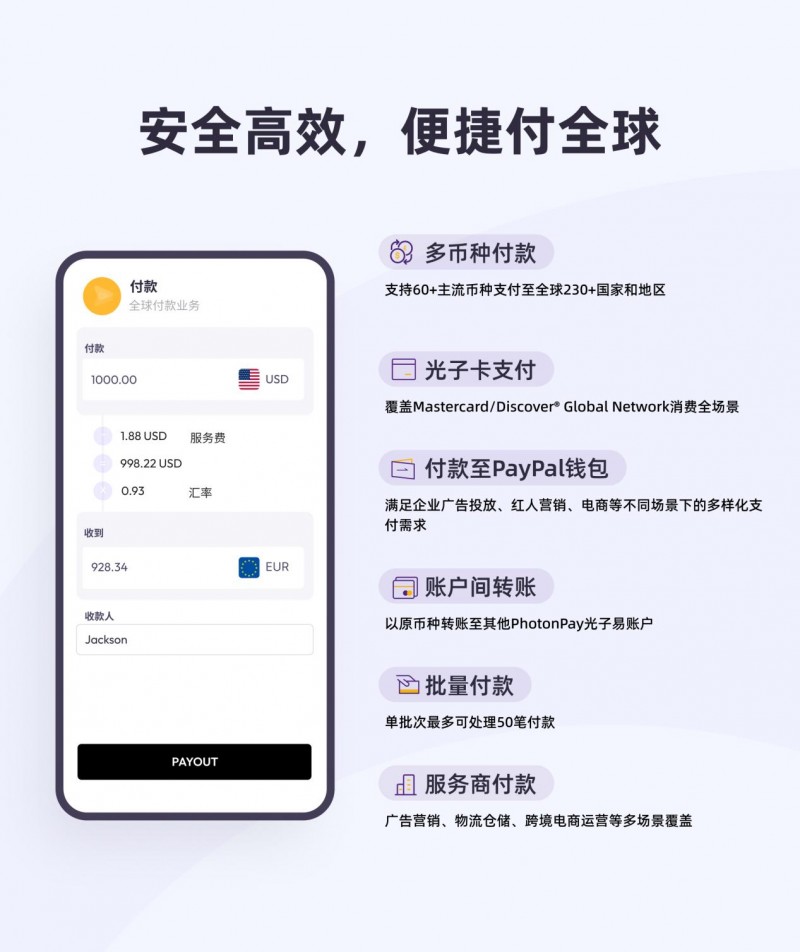
Core Insights - The article highlights the challenges faced by businesses in cross-border payments as they expand into new markets, particularly in Latin America and Southeast Asia, where local currency payment requirements and unfamiliar payment methods complicate transactions [1][2] - PhotonPay has upgraded its global distribution capabilities by adding payment channels to over 73 countries and regions, supporting 11 local currencies and 27 popular local e-wallets, enhancing the efficiency of cross-border transactions [1][2][4] Group 1: Market Expansion Challenges - Businesses are experiencing difficulties with local currency payment demands and unfamiliar payment methods in new markets, which hinder their global expansion efforts [1][2] - The complexity of cross-border payments creates a "blind box" situation for companies, making it difficult to predict transaction outcomes and manage cash flow effectively [1] Group 2: PhotonPay's Solutions - PhotonPay has expanded its payment options to over 230 countries and regions, supporting more than 60 mainstream currencies, which facilitates easier market entry for businesses [2][3] - The company holds multiple financial licenses across various countries, allowing businesses to operate compliantly without building their own payment networks from scratch [3] Group 3: Local Payment Methods - PhotonPay supports 27 mainstream e-wallets, such as GCash and MoMo, which are preferred by local users in Southeast Asia, enhancing acceptance and trust in transactions [4][5][6] - The use of local e-wallets allows for faster transactions, with real-time processing capabilities that significantly reduce payment costs and improve the overall payment experience [6][7] Group 4: Efficiency in Cross-Border Payments - Traditional cross-border payments often take 3 to 7 business days, which can hinder cash flow and supply chain stability; PhotonPay aims to address these issues through technological innovations [7][8] - By partnering with major banks and local payment institutions, PhotonPay enhances payment efficiency and stability, enabling businesses to respond quickly to market demands [7][8] Group 5: Conclusion and Vision - PhotonPay's recent upgrades represent a significant advancement in digital financial infrastructure, offering tailored payment solutions that meet diverse business needs in various market stages [8][9] - The company's goal is to eliminate geographical barriers in cross-border payments, providing a localized payment experience for global commerce [9]
区块链技术在金融领域大显神通?跨境支付与证券交易全解析
Sou Hu Cai Jing· 2025-05-13 07:25
金融领域应用 区块链技术在金融行业的应用已经取得了明显的成效。这种技术能够提升跨境支付效率,显著缩短交易过程中的中间环节和所需时间,从而有效降低成本。 通过分布式账本,交易双方可以自行完成清算,无需经过银行等机构的复杂流程。以国际贸易为例,使用区块链支付可以让资金快速到账,极大地提高了结 算速度。 同时,在证券交易领域,通过运用区块链技术的智能合约功能,可以自动完成交易,这大大减少了人为失误和欺诈行为的风险。众多大型金融机构已经主动 开展相关研究和实践,全力推进金融交易方式的创新。 在信贷行业,区块链技术凭借其独有的优势同样扮演着关键角色。它具备强大的功能,能够实现信用信息的共享以及不可篡改,这一特性让银行等金融机构 在评估借款人信用状况时能获取更准确、更可靠的数据。因此,许多中小微企业得以更轻松地获得贷款支持,从而有效推动了实体经济的增长。而且,区块 链技术中的智能合约能够有效维护借贷双方的合法权益;只要还款条件得到满足,合约便会自动启动;这样的机制显著降低了借贷过程中可能出现的争议。 供应链管理落地 区块链技术的实际应用成为当前科技界的热点讨论,这一技术以其去中心化、不可篡改等特点,在多个行业领域显现出强 ...

企业出海应对汇率波动调查:从“押宝”到“锁汇”,小币种兑换与资金快速到账需求高涨
Mei Ri Jing Ji Xin Wen· 2025-05-13 04:16
Core Viewpoint - The article highlights the increasing exchange rate risks faced by companies engaged in cross-border e-commerce, particularly in emerging markets like Africa, due to significant currency fluctuations and the need for effective hedging strategies [1][2][8]. Group 1: Exchange Rate Risks in Cross-Border E-commerce - Companies are experiencing substantial profit losses due to currency depreciation, with some African currencies dropping over 5% in just a few days, leading to a profit reduction of over 70% for exporters [1][2]. - The traditional USD-centered global trade settlement system is shifting towards a more diversified model involving local currencies, complicating the exchange rate risk landscape for Chinese companies [1][8]. - A significant portion of cross-border e-commerce transactions now involves local currencies, increasing the complexity of exchange rate risks for Chinese exporters [1][8]. Group 2: Hedging Strategies - Companies are adopting forward foreign exchange swap transactions to lock in exchange rates and mitigate risks associated with currency fluctuations [1][6]. - The hedging strategies include locking in exchange rates for local currencies against USD and subsequently against RMB, which helps stabilize profits despite currency volatility [6][8]. - The effectiveness of these hedging strategies is contingent on accurately predicting currency trends, as misjudgments can lead to losses [6][8]. Group 3: Industry Trends and Challenges - The demand for foreign exchange risk management tools is increasing, with over 1.1 trillion USD utilized in foreign exchange derivatives for risk management in the first three quarters of the previous year [17]. - Financial institutions are enhancing their offerings of foreign exchange risk management products, including forward contracts and options, to support companies in managing their exposure [17][18]. - There is a growing recognition among companies of the need for a "neutral" approach to exchange rate risk management, focusing on cost and profit stabilization rather than speculative gains [17][22]. Group 4: Operational Pain Points - Companies face operational challenges in executing foreign exchange transactions due to lengthy processes involving multiple banks, which can take several days and expose them to currency fluctuations [3][6]. - Many companies lack clarity on which foreign exchange hedging tools are suitable for their specific needs, leading to ineffective risk management practices [18][19]. - Financial institutions are working to address these operational pain points by providing tailored solutions and educating companies on effective hedging strategies [18][23].
五一“China Travel”强势输出,政策、消费、社媒共筑旅游"超级周期"
3 6 Ke· 2025-05-06 11:28
Core Insights - The "China Travel" phenomenon has seen significant growth, particularly during the recent May Day holiday, with inbound tourism orders surging by 130% year-on-year [4][6][9] - The implementation of policies such as the 240-hour visa-free transit and the new "buy and refund" tax refund policy has stimulated this growth [2][8] - The tourism market in China is projected to enter a "super cycle" by 2025, with domestic travel expected to reach 314 million trips during the May Day holiday, a 6.4% increase from the previous year [3][10] Policy Impact - The 240-hour visa-free transit policy has led to 9.215 million inbound visitors, a 40.2% increase compared to the previous year, with 71.3% of these being visa-free entries [1][8] - The "buy and refund" tax refund policy has lowered the threshold for refunds, further encouraging spending among foreign tourists [8][9] Market Trends - The tourism and hotel indices have shown positive momentum in the stock market, with significant increases following the holiday [6][9] - The influx of high-spending tourists is expected to enhance the contribution of inbound tourism to China's GDP, which currently stands at 0.5% compared to 1%-2% in developed countries [9][10] Future Projections - Morgan Stanley and other international research institutions predict that China's inbound tourism market could grow by 4 to 8 times over the next decade [7][9] - The Asia-Pacific region is expected to be a key growth area for global tourism, with China's role being crucial in this expansion [11][12] Consumer Behavior - The rise of social media has significantly influenced travel trends, with platforms driving a 200% increase in hotel search indices during the holiday [6] - The appeal of cultural experiences and diverse activities has attracted a large number of foreign tourists, particularly in cities like Shenzhen and Beijing [4][5][9]
双融日报-20250506
Huaxin Securities· 2025-05-06 01:35
Market Sentiment - The current market sentiment score is 60, indicating a "relatively hot" market condition, which suggests a gradual upward trend supported by recent improvements in market sentiment and policy support [6][10]. Hot Topics Tracking - **Cross-Border Payment**: The People's Bank of China has issued a plan to enhance cross-border financial services, aiming to improve service levels for enterprises going abroad and expand the CIPS network. Related stocks include Cross-Border Communication (002640) and Qingdao Kingking (002094) [7]. - **Virtual Power Plants**: The National Development and Reform Commission and the National Energy Administration have released guidelines to promote the development of virtual power plants, targeting a national adjustment capacity of over 20 million kilowatts by 2027 and over 50 million kilowatts by 2030. Related stocks include Guoneng Rixin (301162) and Kehua Data (002335) [7]. - **Duty-Free Theme**: The Ministry of Commerce and other departments have announced measures to optimize the departure tax refund policy, aiming to enhance the supply of refund goods and expand the number of duty-free stores. Related stocks include China Duty Free (601888) and Wangfujing (600859) [7]. Major Capital Inflows and Outflows - The top ten stocks with the highest net inflows include Changshan Beiming (000158.SZ) with a net inflow of 1.036 billion, Ruixin Micro (603893.SH) with 613 million, and Southern Precision (002553.SZ) with 366 million [11]. - The top ten stocks with the highest net outflows include Leo Group (002131.SZ) with a net outflow of 544 million, Industrial and Commercial Bank of China (601398.SH) with 498 million, and Sanqi Interactive Entertainment (002555.SZ) with 419 million [13]. - The top ten stocks with the highest net short selling include Kweichow Moutai (600519.SH) with 16 million, Yili Group (600887.SH) with 837 thousand, and Haiguang Information (688041.SH) with 462 thousand [14]. Industry Overview - The top ten industries with the highest net inflows include SW Computer with 210 million, SW Automotive with 194 million, and SW Machinery Equipment with 189 million [16][17]. - The top ten industries with the highest net outflows include SW Banking with -141 million, SW Non-Bank Financials with -91 million, and SW Basic Chemicals with -155 million [18].
招商证券:5月重点关注国产算力链及AI Agent机遇
智通财经网· 2025-05-06 01:25
Group 1 - The core investment focus for April is on three sectors: robotics, semiconductor self-sufficiency, and cross-border payments, with robotics being the best-performing technology sector due to advancements in Tesla's Optimus production and emerging domestic commercialization cases [1] - The semiconductor sector is benefiting from changes in "integrated circuit" origin regulations in China, which may impact US IDM manufacturers due to tariff implications, while domestic semiconductor companies, particularly in analog and RF chips, are expected to gain advantages [1] - The importance of cross-border payments is increasing, reflecting a shift in investment priorities [1] Group 2 - Uncertainties surrounding overseas AI chip exports are rising, with Nvidia announcing that it must obtain export licenses for certain integrated circuits to China and other regions, potentially incurring costs up to $5.5 billion related to inventory write-downs and procurement commitments [2] Group 3 - Google and Microsoft are significantly increasing their capital expenditures on AI infrastructure, with Google's Q1 capital spending reaching $17.2 billion, up from $12 billion year-on-year, and Microsoft projecting its FY2025 capital expenditures to exceed $80 billion [3] Group 4 - Major advancements in AI models are being made, with Alibaba releasing the Qwen3 model, ByteDance launching the Doubao 1.5 model, and Xiaomi introducing the MiMo model, which demonstrates superior reasoning capabilities compared to larger models from competitors [4]

中信建投:关税博弈下 CIPS、数字人民币与货币桥支付或将迎来新机遇
智通财经网· 2025-05-05 04:09
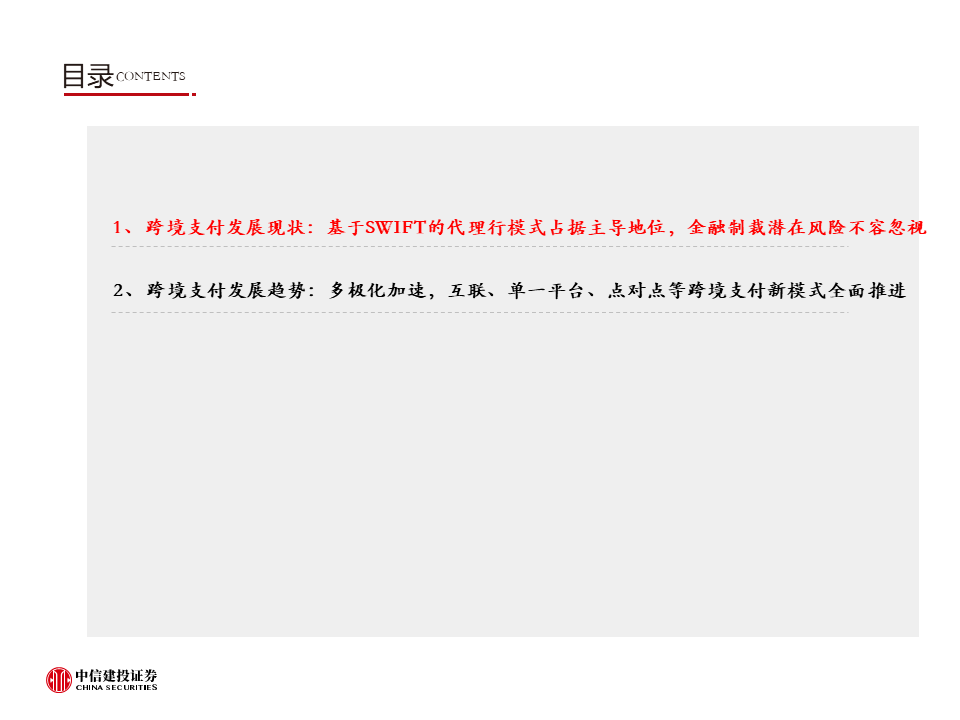
Group 1 - The core payment models for cross-border transactions include agency model, interconnected model, single platform model, and peer-to-peer model, with the SWIFT-based agency model dominating the landscape [2][20][39] - The SWIFT system is the most widely used financial communication infrastructure globally, but its governance structure has led to a centralized weakness, making it susceptible to being used as a tool for U.S. financial sanctions [2][10][17] - Future development paths for cross-border payments include creating payment systems based on local currencies, expanding coverage through national payment systems, building independent payment networks via third-party payments, and utilizing blockchain technology for new payment systems [2][20][21] Group 2 - The CIPS (Cross-Border Interbank Payment System) has been established as a crucial infrastructure for the internationalization of the Renminbi, with increasing business volume and participant engagement since its inception in 2015 [23][39] - As of March 2025, CIPS had 170 direct participants and 1,497 indirect participants, covering 119 countries and regions, with a total transaction volume of 175.49 trillion yuan in 2024, reflecting a year-on-year growth of 42.60% [39][26] - The digital Renminbi and the currency bridge project aim to enhance the internationalization of the Renminbi and facilitate cross-border transactions, with significant progress in pilot programs and real transactions [40][41][35] Group 3 - The SWIFT system's reliance on the U.S. dollar as the primary settlement currency poses challenges, as the dollar's dominance is expected to continue despite increasing calls for a multipolar payment system [16][19] - The governance structure of SWIFT has raised concerns about its ability to protect member countries' monetary sovereignty, leading to questions about its credibility [17][19] - The ongoing U.S.-China trade tensions and tariff escalations are driving the urgency for China to develop alternative payment systems to mitigate reliance on SWIFT and the dollar [38][39]

连续上涨后跨境支付概念股回调,2000万亿元市场将迎变局
Di Yi Cai Jing· 2025-04-30 13:53
在这场2000万亿元市场的竞赛中,合规是入场券,技术是加速器,而全球化视野是最终胜出的密码。 跨境支付概念近期坐上"过山车"。Wind数据显示,跨境支付指数自4月8日~4月22日迅速上涨,从1269 点上涨至1500点上方,区间涨幅超15%。4月24日开始至今,又回调至1445点附近。 热门概念股表现也震荡。以拉卡拉(300773.SZ)为例,该股4月8日股价最低下挫至13.95元/股,随后震 荡上行,4月22日一度触及29.99元/股高点。截至4月30日收盘,拉卡拉报收21.21元/股。此外,新晨科 技(300542.SZ)、高伟达(300465.SZ)、信雅达(600571.SH)、海联金汇(002537.SZ)等多只"跨 境支付概念股"也高度活跃。 跨境支付指数14天暴涨超15%又迅速回调背后,一场关税冲击下的跨境支付行业变局正在上演。短期来 看,跨境支付行业面临关税政策带来的压力——合规成本增加、短期内跨境支付笔数和金额可能减少。 中长期来看,人民币国际化进程加速与全球供应链重构或为跨境支付企业打开新的增长空间,行业洗牌 已悄然开启。 跨境支付指数大幅波动 跨境支付板块的行情波动绝非偶然,其背后是政策 ...