
乳制品

Search documents
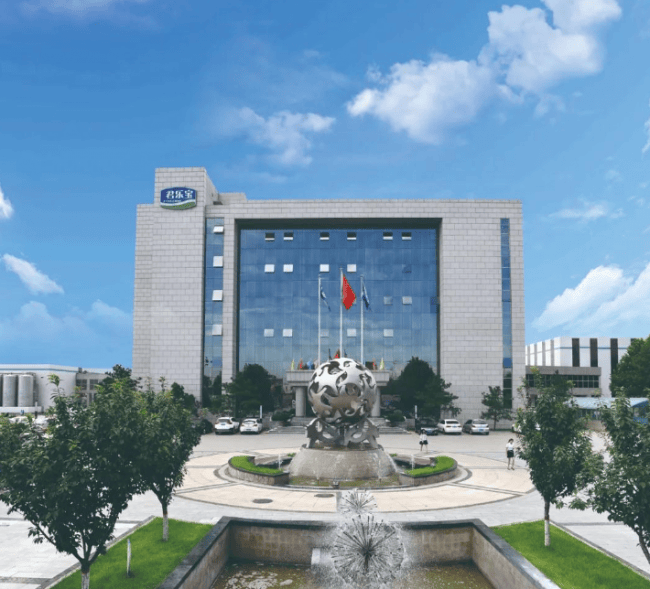
君乐宝IPO进程正式启动,创新驱动引领乳制品行业转型升级
Sou Hu Cai Jing· 2026-02-05 04:36
Core Viewpoint - Junlebao Dairy Group has officially submitted its application for a main board listing, marking a significant step in its growth as a leading comprehensive dairy enterprise in China, driven by innovation [1][4] Company Overview - Junlebao is recognized as one of the most influential dairy brands in China, ranking third among comprehensive dairy enterprises with a market share of 4.3% as of 2024 [1][3] - The company has experienced a revenue growth of 13.0% year-on-year, significantly outpacing the industry average [1] Industry Positioning - Junlebao has established a robust development foundation by building dairy product R&D and production bases, as well as dairy cattle farms across various regions in China, including North, East, Central, South, Southwest, Northwest, and Northeast [3] - The product matrix is diverse, including infant formula, yogurt, low-temperature fresh milk, and ambient milk, catering to various consumer needs [3] - Junlebao's brands, such as Jianchun yogurt and Yuexianhuo high-end fresh milk, lead their respective categories, with the infant formula ranking among the top three in the domestic market for five consecutive years [3] Strategic Initiatives - The company has initiated a scientific strategy to integrate cutting-edge technology across the entire dairy industry chain, enhancing areas such as cattle breeding, product production, and quality upgrades [3] - This strategic move aims to create a scientific product matrix that provides health upgrade solutions for all age groups [3] IPO Significance - The IPO process is strategically important for Junlebao, as it aims to enhance corporate governance and operational management quality through capital market engagement [4] - The advancement of the IPO also signals a new phase of high-quality development in the dairy industry, emphasizing technology-driven innovation and deep integration across the industry chain [4] - Junlebao's approach illustrates that future industry competition will focus not only on scale but also on technological empowerment and efficiency improvements through industry collaboration [4]

李佳琪带货的新疆网红奶,要破产了
3 6 Ke· 2026-02-05 04:17
Core Viewpoint - The article discusses the dramatic fall of Maqiu'er, a once-prominent dairy company in China, which faced bankruptcy due to a small debt of 595.49 million yuan, exposing deeper financial issues and mismanagement within the company [1][7][12]. Company Overview - Maqiu'er was celebrated for its high-quality dairy products, often referred to as "the Moutai of milk" and "the light of Xinjiang" [1]. - The company reached a market value of 50 billion yuan at its peak, but has now faced severe financial distress [1][15]. Financial Crisis - A recent court application for bankruptcy was triggered by a 595.49 million yuan equipment payment dispute, revealing the company's precarious financial state [7][8]. - As of September 2025, Maqiu'er had only 19 million yuan in cash, a significant drop from 370 million yuan, and an alarming debt ratio of 83%, far exceeding the industry average [8][14]. Historical Context - Founded by Li Yuhu, Maqiu'er began as a small food workshop in 1988 and grew into a major player in the dairy industry, capitalizing on Xinjiang's advantageous geographical conditions for dairy production [2][4]. - The company achieved rapid growth, becoming the first dairy company in Xinjiang to earn the "China Famous Brand" title by 2005 [5]. Marketing and Brand Development - Maqiu'er gained significant market presence through innovative marketing strategies, including a partnership with singer Dao Lang for advertising [3][5]. - The brand was propelled to fame in the late 2010s, becoming a "internet celebrity milk" through social media and influencer marketing [9][10]. Decline Factors - The company's decline began with a food safety scandal in 2022, where its products were found to contain prohibited substances, leading to substantial fines and loss of consumer trust [10][13]. - Financial mismanagement, including excessive marketing spending and neglect of product quality, contributed to its downfall [12][16]. Legacy and Lessons - The story of Maqiu'er serves as a cautionary tale about the risks of aggressive expansion and the importance of maintaining quality and financial prudence in business [15][16].

白酒专家及乳品交流
2026-02-05 02:21
Summary of Key Points from the Conference Call Industry Overview - The conference call primarily discusses the **Chinese liquor industry**, focusing on major brands such as **Moutai**, **Wuliangye**, **Luzhou Laojiao**, and **Fenjiu**. Additionally, there is a brief mention of the **dairy industry**, particularly **Yili** and **Mengniu**. Key Insights and Arguments Moutai - Moutai initiated a promotional activity on the "Love Moutai" platform at **1,499 RMB**, leading to a price increase from **1,480-1,490 RMB** to around **1,700 RMB**, stimulating consumer demand and expected sales growth of **5%** to **40%** in Q1 2026 [1][3][4]. - The sales performance of Moutai during the Spring Festival was strong, with a repayment rate of approximately **30%-31%** and expectations of a **5%** increase in sales volume compared to previous years [4]. - Moutai's non-standard products saw a reduction in quantity, but the price for premium vintage wines remained stable at around **1,800 RMB** for purchase and **2,000-2,200 RMB** for wholesale [9]. Wuliangye - Wuliangye's payment progress is slower, with a repayment rate of about **40%**. However, due to low inventory, the expected completion rate for Q1 is around **45%** [5]. - The price of Wuliangye remains stable at **780-785 RMB** [5]. Luzhou Laojiao - Luzhou Laojiao is facing challenges, with a repayment rate of only **10%** for its premium product, the **Height Guojiao 1,573**, which is priced at **850-855 RMB**. High inventory levels and lack of market support are contributing factors [6]. - Sales are expected to decline by over **40%** compared to previous years [11]. Fenjiu - Fenjiu's repayment rate is approximately **20%**, with a slower progress compared to previous years. The prices for its products have decreased, impacting distributor profits [7]. - Sales are anticipated to improve in the coming months as market demand recovers [7]. Market Conditions - The overall white liquor market is experiencing a price recovery, with inventory levels around **20 days**, lower than previous years [8]. - The repayment target for Q1 2026 is set at over **35%**, which is lower than the **50%** target in 2024 and 2025, but completion is expected to be achievable [8]. Additional Insights - The white liquor market is showing signs of differentiation, with Moutai performing exceptionally well compared to other brands. It is recommended to gradually increase allocation in the liquor sector, particularly favoring Moutai [2][16]. - The dairy market is showing marginal improvement, with Yili and Mengniu expected to achieve positive growth targets of **3%-10%** in various regions [17]. - New Dairy is projected to achieve double-digit growth in low-temperature products, while the overall dairy sector is expected to benefit from improved profit margins and reduced inventory impairments [17][18]. Investment Recommendations - For the liquor industry, it is advised to focus on Moutai and consider other resilient brands like Luzhou Laojiao, Gujing, and Fenjiu in the second half of the year [16]. - In the dairy sector, New Dairy is highlighted as a valuable investment opportunity, while Yili is recommended for its stable growth potential [18].

君乐宝勇闯港交所申请主板上市,多元产品矩阵筑牢根基
Sou Hu Cai Jing· 2026-02-05 01:24
Core Viewpoint - Junlebao Dairy Group has officially submitted its main board listing application, aiming to leverage capital markets for further growth and industry innovation [1][4]. Group 1: Company Overview - Junlebao is a leading comprehensive dairy enterprise in China, driven by innovation and has built a nationwide dairy layout over thirty years [1][3]. - The company has established a robust development foundation, with production and research bases across various regions in China, including North, East, Central, South, Southwest, Northwest, and Northeast [3]. - Junlebao's product matrix includes infant formula, yogurt, low-temperature fresh milk, and ambient milk, catering to diverse consumer needs [3]. Group 2: Market Position and Achievements - Junlebao's Jianchun yogurt is the leading brand in the low-temperature yogurt segment, while Yueshenghuo is the top brand in high-end fresh milk [3]. - The company has ranked among the top three in domestic infant formula for five consecutive years and has a significant number of dairy cows, placing it among the industry leaders [3]. Group 3: Strategic Initiatives - In February 2023, Junlebao launched a scientific strategy to integrate cutting-edge technology across the entire dairy industry chain, enhancing various aspects such as dairy farming, production, and quality upgrades [3]. - The IPO process is strategically significant for Junlebao, as it aims to improve corporate governance and operational quality while providing new insights for the dairy industry [4]. Group 4: Industry Implications - Junlebao's approach of combining scientific strategy with deep industry chain integration may serve as a model for other companies in the dairy sector, promoting healthier, more efficient, and innovative industry practices [5]. - The initiation of the Hong Kong IPO marks the beginning of a new journey for Junlebao, emphasizing the integration of production and finance, and offering a replicable framework for the transformation of the dairy industry [5].
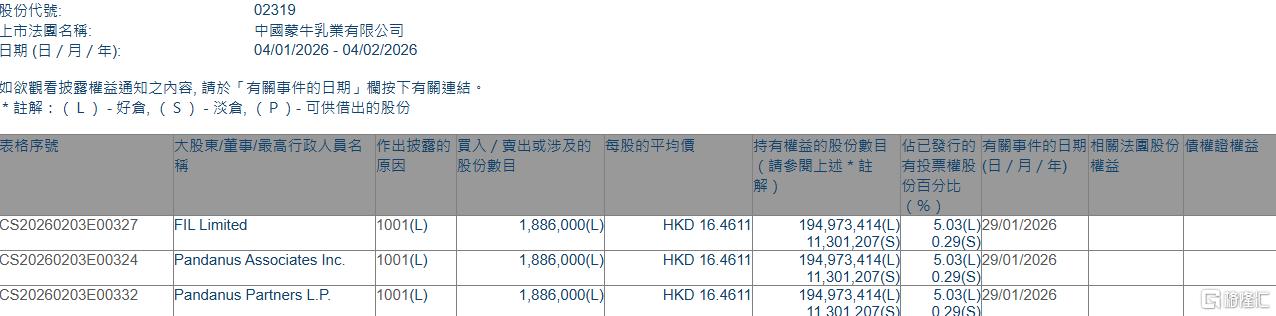
蒙牛乳业(02319.HK)获FIL Limited增持188.6万股
Ge Long Hui· 2026-02-04 13:49
Group 1 - FIL Limited increased its stake in Mengniu Dairy (02319.HK) by purchasing 1,886,000 shares at an average price of HKD 16.4611 per share, totaling approximately HKD 31.0456 million [1] - Following the acquisition, FIL Limited's total shareholding in Mengniu Dairy reached 194,973,414 shares, raising its ownership percentage from 4.98% to 5.03% [1]

Synlait Milk shares curdle after profit warning
Yahoo Finance· 2026-02-04 12:11
Core Viewpoint - Synlait Milk has issued a profit warning, projecting a first-half loss of up to NZ$82 million (US$49.4 million) due to ongoing operational and cost impacts from previous manufacturing disruptions and weaker commodity returns [1][2]. Financial Performance - The company forecasts a net loss after tax of between NZ$77 million and NZ$82 million for the six months ending January, compared to a net profit after tax of NZ$4.8 million in the same period last year [2]. - Synlait Milk anticipates a half-year EBITDA loss of between NZ$28 million and NZ$33 million, a significant decline from the EBITDA of NZ$63.1 million recorded in the previous year [3]. - The company projects an underlying net loss of NZ$33 million to NZ$38 million, with an underlying EBITDA forecast of break-even to NZ$5 million [3]. Operational Challenges - Manufacturing issues at the Dunsandel site have largely been resolved, but the company continues to face related cost and operational impacts [2]. - The rebuilding of inventory across multiple product areas has required significant adjustments to manufacturing plans, impacting margins and increasing operating costs [4][5]. Strategic Outlook - Synlait Milk views the current financial year (2025/2026) as a "valuable reset" for the business, with a planned divestment of its North Island assets expected to strengthen its financial position through debt reduction [3][4]. - The company intends to focus on its operations in Canterbury post-transaction, acknowledging that recovery will take time [4]. - The CEO expressed disappointment with the six-month results but noted progress in operations and leadership, emphasizing a strategy reset aimed at returning to success within at least 12 months [6][7].
百菲乳业IPO折戟:一个水牛奶"隐形冠军"的资本迷途
Guan Cha Zhe Wang· 2026-02-04 10:53
Core Viewpoint - The company, Baifei Dairy, has officially withdrawn its IPO application after four years of attempts across various capital markets, highlighting the challenges faced by regional dairy enterprises in China [1][18][21]. Company Overview - Baifei Dairy, known for its buffalo milk products, reported annual revenue exceeding 1.4 billion yuan, positioning itself as a "hidden champion" in the industry [1][17]. - The company primarily focuses on buffalo milk, which has higher nutritional content compared to traditional cow's milk, making it suitable for high-end dairy products [5][6]. Financial Performance - In 2024, Baifei's revenue reached 1.423 billion yuan, with a net profit of approximately 300 million yuan, reflecting a compound annual growth rate of 35% in revenue and 61% in net profit from 2022 to 2024 [27][17]. - The company's main revenue source is sterilized milk, contributing 1.087 billion yuan, accounting for 70% of total revenue [6]. Market Position and Challenges - Baifei Dairy's market presence is primarily concentrated in Guangxi and surrounding areas, with a market share of less than 1% in the buffalo milk category nationally [21][25]. - The company faces significant challenges in sourcing raw materials, relying on external purchases for over 90% of its fresh milk, which limits its cost control capabilities [26][27]. IPO Attempts and Industry Context - The company has made multiple attempts to list on different stock exchanges, including the Shanghai Stock Exchange and the Beijing Stock Exchange, but has faced repeated setbacks due to its size and innovation capabilities [18][20]. - The withdrawal of the IPO application reflects broader structural issues within the buffalo milk industry in China, including limited resources and high production costs [24][25]. Future Prospects - Despite the challenges, there is potential for Baifei Dairy to capitalize on the unique value of buffalo milk within the context of China's rural revitalization strategy and health policies [30][31]. - The company aims to build a sustainable business model by focusing on regional market development and enhancing its core competencies in buffalo milk production [31].
A股IPO月报|国信证券踩中年内首家暂缓审议项目 4家终止企业中两家是华泰联合保荐
Xin Lang Cai Jing· 2026-02-04 10:01
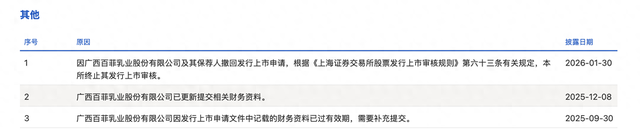
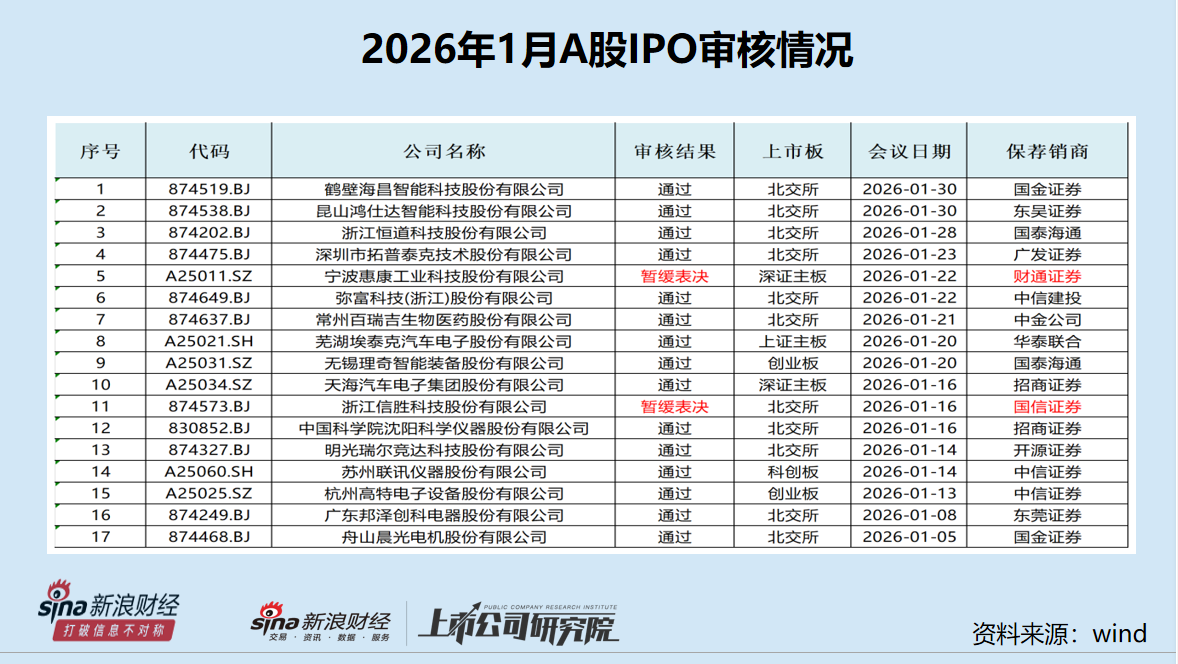
Group 1 - In January 2026, a total of 17 companies were reviewed for A-share IPOs, with 15 approved, resulting in an approval rate of 88.24% [1][6][28] - Two companies, Ningbo Huikang Industrial Technology Co., Ltd. and Zhejiang Xingsheng Technology Co., Ltd., were deferred for review [1][6][28] - Four companies terminated their A-share IPO processes in January, continuing the trend of single-digit terminations per month [11][33] Group 2 - The total amount raised from the 9 companies that went public in January 2026 was 9.053 billion yuan, a significant decrease compared to the previous month [1][39][44] - Among these, Zhenstone Co., Ltd. raised the highest amount at 2.919 billion yuan, while Guoliang New Materials raised the least at 194 million yuan [1][39][44] - The leading underwriter was China International Capital Corporation, which handled 2 IPOs with a total underwriting amount of 4.474 billion yuan [1][22][44] Group 3 - Xingsheng Technology was the first company in 2026 to fail to pass the IPO review, with issues raised regarding the authenticity of its sales revenue [6][28][30] - The company has a significant portion of its revenue (over 50%) coming from overseas markets, making compliance and verification of cross-border fund flows critical [7][29][30] - The underwriter, Guoxin Securities, faced scrutiny over its diligence in the review process, particularly regarding third-party payments [30][31] Group 4 - Huikang Technology was also deferred for review, with questions raised about its competitive position in the ice-making industry and the sustainability of its future performance [8][30][31] - The company must clarify the relationships with its main suppliers and ensure the accuracy of its disclosures [9][31] - Huikang Technology's main suppliers were established shortly before they began collaborating with the company, raising potential concerns about their relationships [10][31] Group 5 - In January, four companies withdrew their IPO applications, with two of them sponsored by Huatai United Securities, indicating a high withdrawal rate for this underwriter [11][14][38] - The companies that withdrew included Guangxi Baifei Dairy Co., Ltd., Nanjing Qinheng Microelectronics Co., Ltd., Jiangsu Yadian Technology Co., Ltd., and Zhuhai Saiwei Electronic Materials Co., Ltd. [11][33] - Zhuhai Saiwei had previously faced rejection in its first IPO attempt and withdrew its application after being approved in a second attempt [13][36] Group 6 - The issuance and underwriting situation showed that the average underwriting fee rate for the companies was relatively high, with Hengyun Chang's fee rate at 7.50%, which is above the industry average [19][42] - Hengyun Chang was the only company with an issuance price-to-earnings ratio exceeding the industry average, raising 1.561 billion yuan [19][42] - The underwriting fees for other companies were significantly lower, indicating a disparity in costs among different IPOs [19][42]



印度对美关税大松绑?莫迪政府留有后手,不做“赔本买卖”
Sou Hu Cai Jing· 2026-02-04 09:01
Group 1 - The core point of the article is that India has agreed to reduce tariffs on U.S. exports, specifically cutting industrial tariffs from 13.5% to zero, while maintaining some protective measures on agricultural products [1][5][9] - The reduction in tariffs is driven by India's economic pressures, including a significant drop in foreign investment from $7.8 billion to $1.2 billion and a struggling domestic market, which has led to a need to maintain exports to the U.S., its largest export market [5][7] - The U.S. has employed a "carrot and stick" approach, suggesting that tariff reductions could lead to fewer trade issues, particularly regarding India's purchases of Russian oil, which the U.S. has previously threatened with penalties [7][10] Group 2 - India's decision to lower tariffs is strategic, allowing it to satisfy U.S. demands while preserving its political base by keeping agricultural protections intact, crucial for the upcoming elections [9][10] - The tariff reduction aligns with India's "Make in India" initiative, potentially lowering costs for domestic manufacturers and attracting foreign investment [9] - India's silence on the agreement may indicate a cautious approach, allowing it to gauge public reaction and retain negotiation leverage with the U.S. [10]

南非口蹄疫疫情致其牛肉出口严重受损
Xin Hua She· 2026-02-04 08:17
Core Insights - The ongoing foot-and-mouth disease outbreak has caused significant losses to South Africa's beef export and dairy industries [1] Industry Impact - The South African food and agriculture policy agency has reported severe damage to the beef export sector due to the persistent foot-and-mouth disease [1] - The dairy industry is also facing substantial challenges as a result of the same outbreak [1]