生猪养殖

Search documents
豫企扬帆香江秀出自信范儿
Sou Hu Cai Jing· 2026-01-18 23:14
Group 1 - The pace of Henan enterprises planning to list in Hong Kong has significantly accelerated, with three companies advancing their listing processes within a week, which is rare in the history of Henan's capital market [1] - Muyuan Foods, the world's largest pig farming company, has successfully passed the Hong Kong Stock Exchange listing hearing, moving closer to its listing [1] - Hanwei Technology announced its plan to list in Hong Kong, aiming to leverage the platform for international expansion [1] - Jinxing Beer submitted its main board listing application to the Hong Kong Stock Exchange, marking the beginning of local beer companies' engagement with international capital markets [1] Group 2 - The recent wave of listings is driven by a synergy of policies, market conditions, and corporate needs, with the Henan government promoting high-quality development of the private economy and establishing a "green channel" for companies seeking to list [1] - Listing in Hong Kong not only injects capital into enterprises but also encourages them to improve governance structures and management standards according to international norms [2] - Leading companies are utilizing A-shares for high valuation financing while expanding international capital channels through Hong Kong listings, creating a dual empowerment effect in the capital market [2] - The recent surge in Henan enterprises planning to list reflects the province's deeper integration into domestic and international dual circulation, showcasing a transformation of key variables into significant growth for high-quality development [2]


2026年年度策略:“误解”的消费,农业食品中的健康、快乐、划算
AVIC Securities· 2026-01-18 14:55
Core Insights - The report emphasizes the misunderstanding of consumption trends in the agricultural food industry, highlighting three key aspects: "health," "happiness," and "value" [3][5]. Group 1: Consumption Trends - China's final consumption expenditure accounts for approximately 55% of GDP, significantly lower than developed countries like the US, UK, and Japan, which hover around 80% [6][8]. - The Consumer Price Index (CPI) in China has shown a downward trend since September 2022, with a slight increase in November 2025, reaching a year-on-year growth of 0.7%, still below that of developed economies [6][8]. - The report indicates a shift in consumer behavior towards health-related investments, with a growing focus on proactive health management rather than reactive treatment [17][18]. Group 2: Health Consumption - The health sector is driven by the "Healthy China" strategy, with increasing consumer awareness leading to a rise in health-related products and services [17][79]. - The market for health-related products is expanding across all age groups, with younger consumers becoming a significant force in health consumption [79]. - The report suggests that the health supplement market in China has substantial growth potential compared to developed countries, where penetration rates are higher [79]. Group 3: Happiness Consumption - The report identifies a growing trend in emotional consumption, particularly in the pet economy, where consumers are willing to spend on experiences and emotional satisfaction [80]. - The emotional economy in China is projected to reach approximately 23,077.67 billion yuan in 2024, reflecting an 18.5% year-on-year increase [17][80]. - Domestic pet food companies are expected to benefit from the ongoing growth in the pet economy, with a focus on brand marketing and channel development [80]. Group 4: Value Consumption - Chinese consumers are becoming more pragmatic, focusing on value and price rather than brand prestige, with over 55% of consumers comparing prices across platforms before purchasing [18][17]. - The report highlights the importance of promotional activities in attracting consumers to new brands, with nearly half of consumers influenced by significant discounts [18][17]. - The agricultural sector is expected to see a rational adjustment in production capacity, particularly in the pig farming industry, which is under pressure from high supply and seasonal demand fluctuations [65][81]. Group 5: Investment Recommendations - The report recommends focusing on health-related companies such as Jin Dawei, Tang Chen Bei Jian, and Kang Bi Te, which have strong brand advantages in the health supplement market [79]. - In the pet food sector, companies like Guai Bao Pet, Zhong Chong, and Pei Di are highlighted as leaders poised to capitalize on the growing pet economy [80]. - For the pork industry, the report suggests investing in leading companies like Mu Yuan and Wen's, which are expected to maintain profitability and shareholder returns despite market fluctuations [81].
生猪周报:多空博弈加剧,盘面宽幅震荡-20260118
Hua Lian Qi Huo· 2026-01-18 14:34
1. Report Industry Investment Rating - No information provided in the report 2. Core Views of the Report - The current pig industry is in a critical game period between short - term price pressure and long - term capacity clearance. The pattern of increasing supply and weak demand in the national pig market is difficult to change in the short term. The spot price of live pigs will remain at a low level even in the peak season. The futures market trend depends on market sentiment, and attention should be paid to factors such as the inventory of breeding sows, the slaughter rhythm of farmers, the scale of secondary fattening, and the realization of seasonal demand [12] - The pressure on the supply side of live pigs remains high, the progress of sow capacity reduction is slow, and the winter demand improvement has limited pulling effect. The medium - term spot price of live pigs lacks continuous upward drive and may be weakly adjusted after a short - term rebound [10][23] - The supply of commercial pigs is expected to continue to increase until the first half of 2026. The lowest price of this cycle is expected to be in the first quarter of 2026 [10][12] - The main contract pressure level is 12300 - 13000. In terms of options, you can buy call options of far - month contracts with a light position [13] 3. Summary According to the Directory 3.1. Weekly Views and Strategies 3.1.1. Fundamental Views - Spot: The weekly average price of live pig spot has increased. The national average live pig slaughter price is 12.61 yuan/kg, a week - on - week increase of 1.61% and a year - on - year decrease of 19.48%. The supply - side pressure remains high, the sow capacity reduction is slow, the winter demand improvement is limited, and the spot price may be weakly adjusted after a short - term rebound [10][23] - Capacity: In October 2025, the inventory of breeding sows was 39.9 million, a month - on - month decrease of 1.1%, falling below 40 million again. The capacity regulation has achieved initial results. However, the inventory is still in the green area of capacity regulation, and it does not mean the beginning of a new cycle of soaring pig prices. From April 2024 to November 2025, the inventory of breeding sows showed a fluctuating upward trend, and the sow capacity was basically stable in 2025. It is expected that the national live pig slaughter volume will continue to increase until May 2026, and the lowest price of this cycle is expected to be in the first quarter of 2026 [10] 3.1.2. Strategy Views and Outlook - Outlook: The industry is in a game period between short - term price pressure and long - term capacity clearance. The capacity reduction progress is slow, the supply of commercial pigs will continue to increase in the first half of 2026, and the long - term supply pressure is difficult to relieve fundamentally. The total domestic pork consumption shows a steady decline trend, and the pattern of increasing supply and weak demand is difficult to change in the short term. The supply pressure may further increase before the Spring Festival, and the spot price will remain low. Pay attention to factors such as the inventory of breeding sows, the slaughter rhythm of farmers, the scale of secondary fattening, and the realization of seasonal demand, and track the position dynamics of main funds [12] - Strategy: The main contract pressure level is 12300 - 13000. In terms of options, you can buy call options of far - month contracts with a light position [13] 3.2. Spot and Futures Markets - Spot price: The weekly average price of live pig spot has increased. The national average live pig slaughter price is 12.61 yuan/kg, a week - on - week increase of 1.61% and a year - on - year decrease of 19.48%. The supply - side pressure remains high, the sow capacity reduction is slow, the winter demand improvement is limited, and the spot price may be weakly adjusted after a short - term rebound [10][23] - Spot - futures basis: No specific analysis conclusion provided - Futures spread: No specific analysis conclusion provided - Standard - fat and hair - white price difference: The demand support for fat pigs is relatively strong, and the price increase of fat pigs is greater than that of standard pigs. The national standard - fat price difference has widened to - 0.64 yuan/kg this week [42] - Piglet and binary sow price: The weekly average price of 7kg piglets is 309.05 yuan/head, a week - on - week increase of 22.00% and a year - on - year decrease of 31.03%. The current national piglet profit is about 30 yuan/head [46] - Culled sow price: The price of culled sows has adjusted narrowly following the live pig price. It is expected that the price of culled sows of multiple parities may fluctuate and adjust next week [49] 3.3. Capacity - Inventory of breeding sows: In October 2025, the inventory of breeding sows was 39.9 million, a month - on - month decrease of 1.1%, falling below 40 million again. The capacity regulation has achieved initial results, and the inventory is still in the green area of capacity regulation. In December, the inventory continued to decline slowly. It is expected that the inventory will slightly decline in January [54][57] - Culled volume of breeding sows: In December, the culled volume of breeding sows in 123 large - scale farms was 115,814, a month - on - month increase of 3.06% and a year - on - year increase of 18.80%. The culled volume in 85 small and medium - sized farms was 11,518, a month - on - month decrease of 0.75% and a year - on - year increase of 5.47%. It is expected that the culled volume may increase easily and decrease difficultly in January [61] - Inventory proportion of breeding sows: No specific analysis conclusion provided 3.4. Supply Side - Inventory of commercial pigs: In December, the inventory of commercial pigs in 123 large - scale farms was 36.9216 million, a month - on - month decrease of 0.23% and a year - on - year increase of 4.72%. The inventory in 85 small and medium - sized farms was 1.5558 million, a month - on - month decrease of 0.09% and a year - on - year increase of 8.17%. It is expected that the inventory will increase in January [69] - Slaughter volume of commercial pigs: In November, the slaughter volume of commercial pigs in 123 large - scale farms was 11.3649 million, a month - on - month decrease of 0.65% and a year - on - year increase of 15.59%. The slaughter volume in 85 small and medium - sized farms was 0.5151 million, a month - on - month decrease of 2.03% and a year - on - year increase of 29.75%. It is expected that the slaughter volume may increase in December [72] - Slaughter average weight of commercial pigs: The weekly average slaughter weight of live pigs has adjusted narrowly and the center of gravity has slightly moved down. It is difficult to drive the increase of the slaughter weight [78] 3.5. Demand Side - Slaughter volume of live pigs: The purchase cost of slaughtering enterprises has increased, the terminal reception is average, and the weekly average operating rate is weakly running. The slaughtering enterprises have reduced production to maintain prices, increased the fresh - sales ratio, and the frozen product inventory is in the stage of slow digestion [83] - Cold storage rate of slaughtering enterprises: After the festival, the market demand has declined, the purchase cost pressure of slaughtering enterprises is high, and they have reduced production to maintain prices. The frozen product inventory level has continued to decline [86] - Operating rate and fresh - sales rate of slaughtering enterprises: This week, the operating rate of slaughtering enterprises is 35.91%, a decrease of 0.72 percentage points from last week and a decrease of 1.14 percentage points from the same period last year. It is expected that the operating rate will maintain a weak and narrow - range shock next week [89] - Substitute price: No specific analysis conclusion provided 3.6. Cost and Profit - Pig breeding and slaughtering profit: This week, the overall loss of the domestic pig breeding industry has continued to narrow. The average profit per head in the self - breeding and self - raising mode is 63.5 yuan. The average loss per head in the mode of purchasing piglets is 39.11 yuan, a significant narrowing of 35.78 yuan from last week. It is expected that the breeding profit may be under pressure in the middle and late ten days [102] - Slaughtering gross profit and feed - to - meat ratio: No specific analysis conclusion provided - Pig - to - grain ratio: This week, the pig - to - grain ratio is 5.44, a week - on - week increase of 1.26%. The market is still in the state of excessive decline warning. It is expected that the pig - to - grain ratio will continue to slightly expand next week [108]
出栏进度偏慢,助推猪价反弹:农林牧渔
Huafu Securities· 2026-01-18 13:24
Investment Rating - The industry rating is "Outperform the Market" [4] Core Insights - The pig farming sector is experiencing a slow pace of market release, leading to a rebound in pig prices. As of January 16, the pig price is 12.77 CNY/kg, with a week-on-week increase of 0.19 CNY/kg. The average monthly release completion rate is 31%, lower than the same period last year [2][9] - In the beef sector, calf prices are rising due to increased replenishment enthusiasm following the implementation of import beef restrictions. As of January 16, calf prices are 33.03 CNY/kg, up 1.91% week-on-week, indicating a long-term upward trend in beef prices [3][29] - The poultry sector is seeing a decline in chick prices as the market transitions out of a vaccination pause. As of January 16, the price for white feather broiler chicks is 2.74 CNY/chick, down 0.85 CNY/chick from before the pause [3][38] Summary by Sections Pig Farming - The slow release pace in pig farming is pushing prices up, with profits for self-bred and purchased piglets at 7.39 CNY/head and 48.35 CNY/head respectively, both showing week-on-week increases [2][9] - The average weight of pigs being released has increased to 128.85 kg, with a week-on-week rise of 0.31 kg [12][17] - The number of breeding sows has decreased to 39.9 million, down 1.12% from the previous month, indicating a gradual reduction in production capacity [27][28] Beef Sector - The implementation of import beef restrictions is expected to benefit domestic beef prices, with a forecasted upward trend in prices from 2026 to 2027 [29] - The current price for fattened bulls is 25.66 CNY/kg, reflecting a week-on-week increase of 0.59% [29] Poultry Sector - The egg price has increased to 7.29 CNY/kg, up 0.69% week-on-week, driven by pre-holiday stocking [3][42] - The profit margins for broiler chickens and parent stock are showing mixed results, with broiler chicken farming profit at 0.3 CNY/chick and slaughter profit at -0.51 CNY/chick [3][38] Seed Industry - The seed industry is seeing strengthened intellectual property protection, which is expected to enhance market order and accelerate the commercialization of genetically modified organisms [49]
募资超33亿,四川首富“背水一战”
Sou Hu Cai Jing· 2026-01-18 00:44
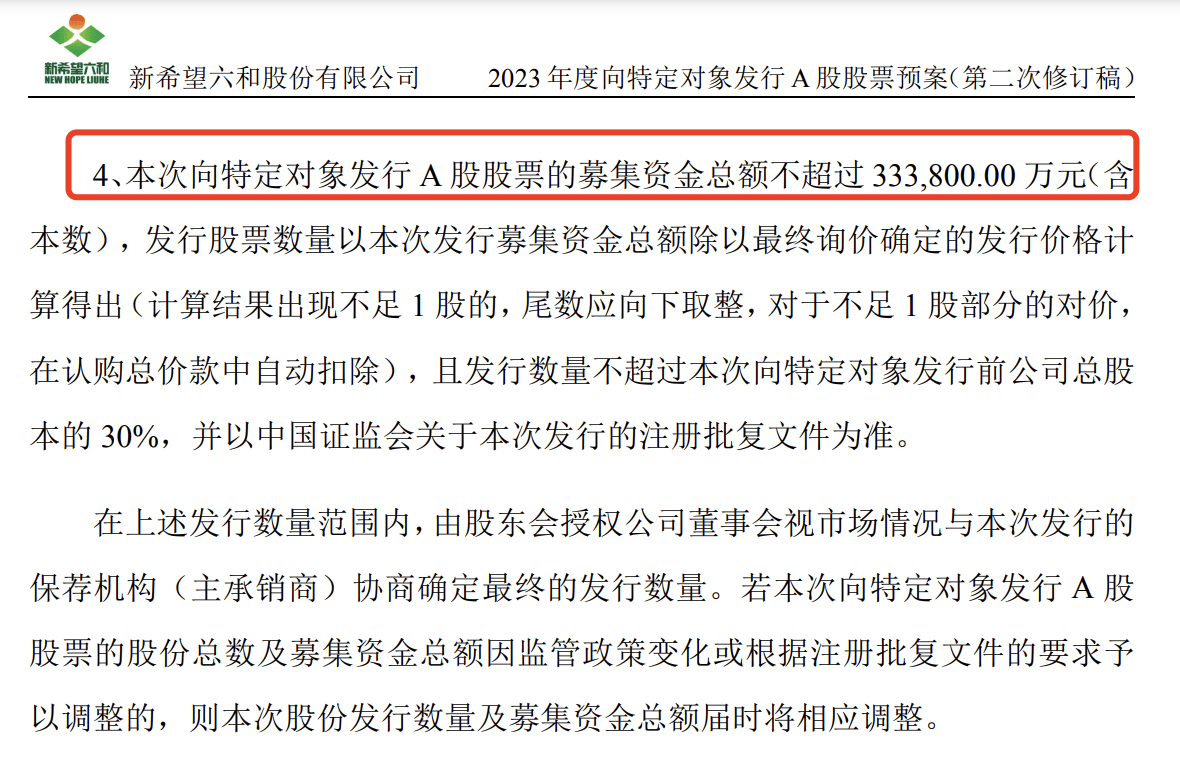
刘永好父女的大动作。 近日,A股农牧巨头新希望(000876.SZ)发布定增预案修订公告,将原本不超过73.50亿元的募资规模大幅下调至33.38亿元,资金将集中投向猪场生物安全 防控及数智化升级项目与偿还银行债务。 这一调整距首次披露定增计划已过去两年有余,截至最新收盘,新希望股价报8.84元/股,总市值为398亿元,相较于2023年定增预案初披露时的市值已缩水 超20%。如果将时间周期拉长,目前股价相较于2020年9月的高点,累计跌幅超78%,总市值累计蒸发接近1500亿元。 定增规模"腰斩"背后 回顾此次定增项目的推进历程,2023年11月,新希望首次披露定增预案,拟募资不超过73.50亿元用于生猪养殖等项目。时隔两年,新希望对募资规模进行 大幅调整,缩减幅度超过54%。 对于调整原因,新希望董秘赵亮在接受媒体采访时直言,主要是应对资本市场环境变化、监管审批节奏及公司经营趋于稳健的现状,"更契合当前行业发展 阶段与实际资金需求"。 本次发行完成后,新希望的控股股东和实际控制人不会发生变更。 根据公告显示,本次定增的重要用途之一是偿还银行债务,10亿元募资将直接缓解公司的短期财务压力。 截至2025年9月 ...


还在涨!13元猪价稳了?
Sou Hu Cai Jing· 2026-01-17 14:57
Core Viewpoint - The article discusses the current controversies in the pig market, particularly focusing on the supply-demand dynamics and the potential for pig prices to rise before the Chinese New Year, despite an overall supply surplus [2]. Group 1: Supply Dynamics - There is a notable shortage of medium and large pigs due to previous reductions in the number of large pigs being raised [4]. - The continuous decline in pig prices since October last year has led to a decrease in the proportion of large pigs, as they are less cost-effective to sell [4]. - Significant outflows of medium and large pigs occurred during the winter solstice and New Year, contributing to the current supply gap [4][5]. Group 2: Price Trends - Current pig prices have risen to approximately 12.7 yuan per kilogram, with the likelihood of reaching 13 yuan increasing due to the supply shortage [7]. - The price of piglets has surged recently, indicating a market expectation of higher future pig prices, which contributes to bullish sentiment among farmers [8]. - The overall affordability of pork this year is expected to stimulate some increase in consumption, further supporting pig prices [9]. Group 3: Market Sentiment and External Factors - There is a growing bullish sentiment in the market, driven by rising piglet prices and the anticipation of increased demand as the Chinese New Year approaches [8]. - The northern pig prices have remained strong, suggesting a balanced supply-demand situation, which could lead to increased demand for southern pigs if northern prices continue to rise [11]. - Various minor factors are contributing to the potential for pig prices to rise, although significant upward pressure is limited due to high overall supply and frozen product inventories [11].

豫企赴港上市潮起!一周3家企业冲刺港交所,还有多家在推进
Sou Hu Cai Jing· 2026-01-17 13:07
Group 1 - The core viewpoint of the article highlights the increasing trend of Henan enterprises pursuing listings in Hong Kong, with companies like Muyuan Foods, Hanwei Technology, and Jinxing Beer announcing their latest progress in just one week [1][2][3] - The listing activities are driven by multiple factors including financing for expansion, brand upgrades, and governance optimization, marking a significant integration of the Central Plains economy with global capital [1][2] - Hanwei Technology plans to issue H-shares not exceeding 15% of its total share capital post-issue, with funds directed towards R&D, mergers and acquisitions, and production expansion [2][4] Group 2 - Jinxing Beer aims to become the "first Chinese craft beer" by enhancing production capacity, global sales channels, and brand marketing through its upcoming IPO [3][4] - The appeal of the Hong Kong stock market is bolstered by supportive policies, market advantages, and the development needs of enterprises, creating a conducive environment for listings [4][5] - The China Securities Regulatory Commission has introduced measures to facilitate the listing of mainland enterprises in Hong Kong, including streamlining the approval process and reducing costs [5][6] Group 3 - The global pig farming industry presents significant growth opportunities, and Muyuan Foods intends to leverage its technological advantages and cost control to capture overseas market potential [6] - The differentiation in listing paths for Henan enterprises reflects their specific development needs, with A-shares being more suitable for domestic-focused companies and Hong Kong listings appealing to those with international expansion plans [7][8] - The dual listing strategy ("A+H") allows leading enterprises to achieve high valuations in A-shares while expanding their international capital channels through Hong Kong [7][8]

“猪王”牧原股份闯港股:负债千亿,董事长秦英林年薪年涨近六成
新浪财经· 2026-01-17 07:34
Core Viewpoint - The article discusses the financial performance and challenges faced by Muyuan Foods, highlighting its significant revenue growth alongside concerns about declining profits and rising executive compensation as it prepares for a secondary listing in Hong Kong [3][4][5]. Financial Performance - Muyuan Foods has achieved annual revenues exceeding 100 billion yuan since 2022, marking a growth of approximately 50 times since its initial public offering [3]. - The company forecasts a net profit for 2025 between 14.7 billion and 15.7 billion yuan, representing a year-on-year decline of 12.2% to 17.79% [4][14]. - The net profit excluding non-recurring items is expected to be between 15.1 billion and 16.1 billion yuan, down 14.12% to 19.45% from the previous year [14]. Business Operations - Muyuan Foods operates through two main segments: pig farming and meat processing, with a focus on breeding, selling pigs, and processing meat products [7]. - The company has been the world's largest pig farming enterprise since 2021, with its market share increasing from 2.6% in 2021 to 5.6% in 2024 [9]. Financial Structure and Debt - As of September 2025, Muyuan Foods reported a debt-to-asset ratio of 55.5%, with total liabilities exceeding 100 billion yuan [5][21]. - The company's total liabilities were reported at 1,045.2 billion yuan, with a significant portion being short-term borrowings [21]. Executive Compensation - The compensation for Chairman Qin Yinglin rose to 3.7219 million yuan in 2024, a nearly 60% increase from the previous year [5][16]. - The total compensation for key management personnel doubled to approximately 18.15 million yuan compared to the previous year [19]. Market Conditions - The average selling price of pigs is expected to decline by approximately 17.3% year-on-year, impacting overall profitability [15]. - The company's financial performance has shown significant volatility, reflecting the cyclical nature of the pig farming industry [12].

“猪王”牧原股份闯港股:负债千亿,董事长秦英林年薪年涨近六成
Xin Lang Cai Jing· 2026-01-17 07:23
Core Viewpoint - Muyuan Foods Co., Ltd. is preparing for a listing on the Hong Kong Stock Exchange, which will create an "A+H" share structure. The company has become a global leader in the pig farming industry, with annual revenues exceeding 100 billion yuan since 2022, marking a growth of approximately 50 times since its initial public offering. However, concerns about its financial performance and management compensation have emerged, indicating potential challenges ahead [2][3][20]. Financial Performance - Muyuan Foods has reported a projected net profit for 2025 of between 14.7 billion and 15.7 billion yuan, representing a decline of 12.2% to 17.79% compared to the previous year. The adjusted net profit is expected to be between 15.1 billion and 16.1 billion yuan, down 14.12% to 19.45% year-on-year [3][9][27]. - The company's revenue for the third quarter of 2025 was 35.33 billion yuan, a decrease of 11.48% year-on-year, with a net profit of 4.25 billion yuan, down 55.98% [9][27]. Business Operations - Muyuan Foods operates through two main business segments: pig farming and meat processing. The company has maintained its position as the world's largest pig farming enterprise since 2021, with a market share increasing from 2.6% in 2021 to 5.6% in 2024 [4][24]. - The company's revenue figures for 2022, 2023, and 2024 were 124.83 billion yuan, 110.86 billion yuan, and 137.95 billion yuan, respectively, showcasing significant fluctuations in performance [4][24][25]. Debt and Financial Structure - As of September 2025, Muyuan Foods had a debt level exceeding 100 billion yuan, with an asset-liability ratio of 55.5%. The total liabilities were reported at 1,003 billion yuan, although this represented a decrease of 9.8 billion yuan from the beginning of the year [21][35]. - The company has indicated plans to reduce its overall debt levels and optimize its financial structure while maintaining a focus on stable operations [18][36]. Management Compensation - There has been a notable increase in executive compensation, with the chairman's salary rising from 2.35 million yuan in 2023 to 3.72 million yuan in 2024, an increase of nearly 60% [10][29][30]. - The total compensation for key management personnel has more than doubled, reaching approximately 18.15 million yuan in the first half of 2025 compared to about 9.03 million yuan in the same period the previous year [31][32]. Shareholder Returns - Muyuan Foods announced a significant dividend distribution plan, proposing a cash dividend of 9.275214 yuan per 10 shares, totaling 5 billion yuan, which will benefit major shareholders, including the chairman and his spouse [14][32].

牧原股份通过港交所聆讯
Zheng Quan Ri Bao· 2026-01-17 03:39
Group 1 - The core viewpoint of the article is that Muyuan Foods Co., Ltd. is advancing its internationalization strategy through its H-share listing on the Hong Kong Stock Exchange, aiming to raise funds for smart breeding and overseas operations [2][3] - Muyuan Foods plans to issue up to 546 million H-shares, with the raised funds primarily allocated for research and development in smart breeding technologies and the construction of overseas breeding and slaughtering bases, explicitly stating that it will not be used for new domestic production capacity [2] - The company expects to achieve a net profit attributable to shareholders of between 14.7 billion and 15.7 billion yuan by 2025, with its A-share market capitalization reaching 258.6 billion yuan as of January 16 [3]