
医疗保健

Search documents
机构最新调研路线图出炉 帝科股份最获关注
Di Yi Cai Jing· 2025-10-19 11:14
Group 1 - A total of 185 listed companies were investigated by institutions this week, with Dike Co., Ltd. receiving the most attention from 107 participating institutions [1] - Jiuzhou Pharmaceutical and Aipeng Medical also attracted over 90 institutional investigations each [1] - From the perspective of total investigation frequency, Oke Yi was investigated 4 times, while Weisheng Information, Boshi Jie, and Xizi Clean Energy were each investigated 3 times [1] Group 2 - Institutions continue to focus on sectors such as industrial machinery, electrical equipment, healthcare, and electronic components [1]
英科医疗股价跌5.05%,易方达基金旗下1只基金位居十大流通股东,持有1062.44万股浮亏损失2443.62万元
Xin Lang Cai Jing· 2025-10-17 05:51
Group 1 - In October 17, 2023, Yingke Medical's stock price dropped by 5.05%, closing at 43.20 CNY per share, with a trading volume of 1.434 billion CNY and a turnover rate of 6.69%, resulting in a total market capitalization of 28.287 billion CNY [1] - Yingke Medical Technology Co., Ltd. was established on July 20, 2009, and listed on July 21, 2017. The company operates in three main business segments: personal protection (91.47% of revenue), rehabilitation care (4.75%), and other products (3.77%) [1] Group 2 - Among the top ten circulating shareholders of Yingke Medical, a fund under E Fund Management holds a significant position. The E Fund ChiNext ETF (159915) reduced its holdings by 272,900 shares in the second quarter, now holding 10.6244 million shares, which accounts for 2.26% of the circulating shares. The estimated floating loss today is approximately 24.4362 million CNY [2] - The E Fund ChiNext ETF (159915) was established on September 20, 2011, with a current scale of 85.537 billion CNY. Year-to-date, it has achieved a return of 43.58%, ranking 745 out of 4,218 in its category; over the past year, it has returned 50.61%, ranking 856 out of 3,865; and since inception, it has returned 245.57% [2]
恒生指数早盘跌1.61% 燃气股逆市走高
Zhi Tong Cai Jing· 2025-10-17 04:06
Group 1: Market Overview - The Hang Seng Index fell by 1.61%, down 415 points, closing at 25,472 points, while the Hang Seng Tech Index dropped by 2.81% [1] - The early trading volume in the Hong Kong stock market reached HKD 153.2 billion [1] Group 2: Sector Performances - Gas stocks rose, with Zhongyu Energy (03633) increasing by over 10% due to the early start of winter heating in Gansu and other regions, leading to a peak in natural gas demand [1] - Newly listed stock Xuan Bamboo Biotechnology-B (02575) surged over 13%, reaching a new high, and has increased over 190% from its IPO price [1] - Medical stocks showed mixed performance, with Yaojie Ankang-B (02617.HK) rising over 21%, Baize Medical (02609) up over 5%, while Kangfang Biotech (09926) fell by 2% [1] - Kangning Jereh Pharmaceutical-B (09966) increased by over 13% after announcing a share buyback plan, with market attention on significant data from the ESMO conference [1] - Old Puhuang Gold (06181) rose over 4% due to enhanced channel development and an upgrade strategy, benefiting from rising gold prices [1] - Wanda Hotel Development (00169) increased by over 10% after completing a sale and announcing a special dividend of HKD 0.462 [1] - Delin Holdings (01709) rose over 3% after entering a strategic cooperation agreement with Antalpha to promote digital asset business [1] Group 3: Declining Stocks - Changfei Optical Fiber (601869) and Optical Cable (06869) fell over 6%, with a 40% drop from September highs due to declining fiber prices and shareholder sell-offs [2] - Cryptocurrency-related stocks collectively declined, with Bitcoin experiencing significant volatility and issues in the stablecoin market, leading to declines in stocks like Mi Strategy (02440) down 4.36% and OSL Group (00863) down 3.99% [2] - Chip stocks continued to decline, with SMIC (00981) down over 5% and Huahong (01347) down over 3%, impacted by accelerated semiconductor domestic substitution due to U.S. export controls [2]
英国经济靠制造业“单引擎”飞行 8月勉强实现增长
智通财经网· 2025-10-16 07:59
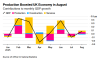
Economic Growth - The UK economy experienced a slight recovery in August, with GDP increasing by 0.1% after a 0.1% decline in July, aligning with economists' median expectations [1][3] - Manufacturing output rose by 0.7%, exceeding expectations, while the services sector remained stagnant for two consecutive months [1][3] Sector Performance - In the three months leading up to August, the UK GDP grew by 0.3%, indicating potential growth for the third quarter [3] - The manufacturing sector saw growth in 8 out of 13 sub-sectors, with the pharmaceutical manufacturing sector contributing the most at a growth rate of 3% [6] - Despite an increase in retail sales, the services sector failed to expand, with declines noted in wholesale, entertainment, and transportation sectors [6] Trade Dynamics - In August, UK goods imports remained flat, while exports decreased, with a notable decline of approximately £700 million in exports to the United States [7]

科创板收盘播报:科创50指数跌0.94% 医药股涨幅居前
Xin Hua Cai Jing· 2025-10-16 07:43
Core Points - The Sci-Tech Innovation 50 Index experienced a decline of 0.94% on October 16, closing at 1416.58 points, with a trading volume of approximately 741.7 billion yuan [1] - The majority of stocks on the Sci-Tech board fell, with only 106 stocks rising, indicating a bearish market sentiment [1] - In terms of sector performance, biopharmaceuticals and healthcare stocks saw gains, while software services, components, and semiconductors faced significant declines [1] Trading Activity - The average decline for the 588 stocks on the Sci-Tech board, excluding one suspended stock, was 1.23%, with an average turnover rate of 2.74% and a total trading volume of 197.9 billion yuan [1] - The average volatility for the stocks was 4.28%, reflecting a relatively active trading environment [1] Individual Stock Performance - The top-performing stock was Yingjixin, which increased by 14.24%, while Huana Pharmaceutical saw the largest drop at 9.22% [1] - In terms of trading volume, Hanwujing led with a turnover of 12.41 billion yuan, while ST Guandian had the lowest turnover at 651.3 million yuan [1] Turnover Rates - The highest turnover rate was recorded by Saifen Technology at 31.31%, while Longteng Optoelectronics had the lowest at 0.17% [2]
甲骨文20251015
2025-10-15 14:57
Summary of Oracle Conference Call Company and Industry Overview - **Company**: Oracle Corporation - **Industry**: Technology, specifically focusing on Artificial Intelligence (AI) applications across various sectors including finance, human resources, sales, supply chain, customer support, and energy. Key Points and Arguments AI Efficiency and Transformation - Oracle AI significantly enhances efficiency in finance, HR, sales, supply chain, and customer support by optimizing processes, automating tasks, and enabling intelligent matching, allowing employees to focus on strategic tasks [2][4][8] - In the finance sector, AI reduces expense processing and forecasting cycles, saving several days each quarter [4][8] - AI-driven recruitment in HR shortens hiring times, freeing up substantial work hours for employees and managers [4][8] - Sales processes are accelerated through AI guidance, improving forecast accuracy and closing rates [4][8] - Customer support benefits from AI by halving the time required to resolve issues through automated ticket handling and self-service solutions [4][8] Energy Sector Applications - Oracle AI aids energy companies in upgrading infrastructure and building smarter grids, facilitating a transition to more economical, reliable, and sustainable energy sources [2][5][6] - A specific energy company in the Mid-Atlantic and Chicago serves over 10 million customers, leveraging advanced data technologies to enhance operational efficiency and meet growing energy demands [6] - Collaboration between technology and energy suppliers is essential to address challenges such as increasing electricity demand and system security [6] Customer Experience Enhancement - During power outages, proactive maintenance and timely communication improve customer experiences, with investments ensuring power restoration within 12 hours [9] - Data collection helps understand customer needs, enhancing service convenience [9] AI in Healthcare - A biopharmaceutical company utilizes Oracle AI for vector searches to identify bacterial resistance, reducing detection time from 5 days to 4 hours, significantly lowering infection mortality rates [3][24] - The technology enables rapid identification of antibiotic resistance, potentially saving 2,000 lives in Brazil by 2025 [24] Internal Applications and Organizational Impact - Oracle's internal use of AI has led to significant operational improvements, including reduced recruitment times and enhanced supply chain management [7][8] - AI is seen as a tool to empower employees, allowing them to focus on strategic tasks rather than routine operations [8][12] Collaboration and Partnership - The partnership between Oracle and Avis has shown strong cohesion, leading to rapid progress and shared success in achieving business goals [17] AI in Hospitality - Marriott employs AI to streamline employee tasks and enhance customer experiences, focusing on reducing friction for staff and providing personalized services to guests [18][19] - AI helps create a seamless experience for guests by integrating multiple systems during check-in processes [20] Future of AI in Healthcare - The expansion of Oracle's AI database is expected to facilitate the development of new antibiotics against superbugs, potentially reducing the time for drug development from 10 years to 2 years [27] - AI's role in healthcare is anticipated to grow, particularly in infectious disease management and personalized medicine [28][30] Additional Important Insights - Regulatory caution poses challenges for AI adoption in consumer and grid applications, necessitating pilot projects to demonstrate value [11] - Training employees to adapt to new technologies is crucial for ensuring safety and efficiency in utility companies [12] - AI is viewed as a means to enhance human interaction rather than replace it, particularly in customer service settings [23]

S&P 500 Gains 1%; Bank of America Posts Upbeat Earnings - Bank of America (NYSE:BAC), Aqua Metals (NASDAQ:AQMS)
Benzinga· 2025-10-15 14:17
Market Overview - U.S. stocks experienced an upward trend, with the S&P 500 increasing by 1% on Wednesday, while the Dow rose by 0.84% to 46,657.52 and the NASDAQ climbed 1.19% to 22,788.69 [1] - Real estate shares saw a notable increase of 1.7%, and health care stocks rose by 0.4% on the same day [1] Company Financials - Bank of America reported a net income of $8.5 billion for Q3 fiscal 2025, up from $6.9 billion a year ago, with an EPS of $1.06, surpassing the analyst consensus estimate of $0.94 [2] - The bank's revenue, net of interest expense, increased by 11% year-over-year to $28.24 billion, exceeding the analyst consensus estimate of $27.50 billion [2] Commodity Market - Oil prices increased by 0.4% to $58.96, while gold rose by 1.3% to $4,217.50 [5] - Silver traded up 1.6% to $51.410, whereas copper experienced a slight decline of 0.1% to $5.0225 [5] Stock Movements - Australian Oilseeds Holdings Limited shares surged by 270% to $3.6200 following comments from President Trump regarding potential business terminations with China [8] - Genprex, Inc. saw its shares increase by 173% to $0.6910 due to upcoming presentations at a major cancer therapeutics conference [8] - Omeros Corporation's shares rose by 144% to $10.02 after Novo Nordisk acquired its global rights to Zaltenibart [8] - Conversely, Yueda Digital Holding shares plummeted by 84% to $0.2259 after announcing a $28 million registered direct offering [8] - Largo Inc. shares fell by 45% to $1.39 following the announcement of a $23.4 million registered direct offering and private placement [8] - Aqua Metals, Inc. shares decreased by 37% to $18.72 after raising $13 million from an institutional investor [8] International Markets - European shares were generally higher, with the eurozone's STOXX 600 rising by 0.6% and France's CAC 40 surging by 2.2% [6] - Asian markets closed positively, with Japan's Nikkei 225 increasing by 1.76% and Hong Kong's Hang Seng index jumping by 1.84% [9] Economic Indicators - The NY Empire State Manufacturing Index rose by 19.4 points to a reading of 10.7 in October, surpassing market expectations of -1.0 [10]


科创板收盘播报:科创50指数探底回升涨1.40% 469只个股上涨
Xin Hua Cai Jing· 2025-10-15 07:56
Core Points - The Sci-Tech Innovation 50 Index rebounded on October 15, closing at 1430 points with a gain of 1.40% and a trading range of 2.79% [1] - A total of 469 stocks in the Sci-Tech Innovation Board rose, with active performance in software services, components, biopharmaceuticals, and healthcare sectors, while some semiconductor stocks declined [1] - The average increase for 588 stocks on the Sci-Tech Board, excluding one suspended stock, was 1.59%, with an average turnover rate of 2.79% and a total trading volume of 208.5 billion yuan, averaging a volatility of 4.60% [1] Individual Stock Performance - Jinpan Technology led the component stocks with a rise of 20%, while Guangda Special Materials experienced the largest decline at 9.95% [2] Trading Volume - SMIC had the highest trading volume at 10.28 billion yuan, while ST Pava had the lowest at 890.3 thousand yuan [3] Turnover Rate - Canxin Technology had the highest turnover rate at 22.50%, while Longteng Optoelectronics had the lowest at 0.23% [4]
四大证券报精华摘要:10月15日
Xin Hua Cai Jing· 2025-10-15 00:21
Group 1 - Southbound capital has seen a cumulative net inflow of 11,985.67 billion HKD this year, setting a new historical high for annual net inflows [1] - The Hang Seng Index has increased by over 26% and the Hang Seng Tech Index by over 32% year-to-date, with stocks having a market capitalization exceeding 1 trillion HKD showing an average increase of over 30% [1] - Despite recent market adjustments due to short-term factors affecting investor risk appetite, the long-term upward trend of the Hong Kong stock market is expected to continue [1] Group 2 - As of June 2023, China's banking sector total assets reached nearly 470 trillion CNY, ranking first globally, with stock and bond market sizes ranking second [2] - The "14th Five-Year Plan" period has seen significant achievements in China's financial sector, with a solid foundation for high-quality financial development and progress in building a financial powerhouse [2] Group 3 - Qiyunshan Food, a leading brand in the domestic South Jujube snack market, has submitted an application for listing on the Hong Kong Stock Exchange, showcasing impressive financial metrics [3] - The company's gross profit margins over the past three years were 47.2%, 48.8%, and 48.6%, significantly higher than its competitor, Liuliu Guoyuan, which is projected to have a gross profit margin of 36% in 2024 [3] Group 4 - Multiple listed companies have announced share repurchase plans, indicating a focus on market capitalization management [4] - Companies like COSCO Shipping Holdings and Jiuan Medical have expressed intentions to repurchase shares to enhance investor confidence and align market prices with intrinsic values [4] Group 5 - The People's Bank of China announced a 6,000 billion CNY reverse repurchase operation to maintain liquidity stability, reflecting a continued moderate easing monetary policy [5] - This operation aims to smooth out short-term funding fluctuations as 8,000 billion CNY in three-month reverse repos are set to mature [5] Group 6 - The third-quarter earnings reports from companies like Xiaogoods City and Wo Le Home have shown stable growth, marking the beginning of the third-quarter reporting season for Shanghai-listed companies [6] Group 7 - The Hong Kong IPO market has rebounded significantly, leading global fundraising in the first three quarters of 2025, with new listing performance improving markedly [8] - The new share allocation mechanism has made it increasingly difficult for retail investors to secure shares, resulting in a situation where demand far exceeds supply [8] Group 8 - Starting January 1, 2026, the full exemption of vehicle purchase tax for new energy vehicles will shift to a 50% reduction, impacting consumer purchasing decisions [9] - Automakers are accelerating new model launches to capitalize on the policy transition, focusing on technology, brand, and user experience as key competitive factors [9] Group 9 - Prices of certain minor metals have surged, with cobalt exceeding 350,000 CNY/ton and tungsten reaching 266,000 CNY/ton, reflecting significant year-to-date increases [10] - Strategic minor metal stocks have seen average price increases of over 90% this year, with several stocks exceeding 100% growth [10] Group 10 - Capital market-related tax revenues have maintained a high growth rate, indicating active trading in the stock market, with A-share total market capitalization surpassing 100 trillion CNY for the first time [11] - The average daily trading volume in August and September reached 2.3 trillion CNY and 2.4 trillion CNY, respectively, reflecting robust market activity [11] Group 11 - Companies are increasingly exploring the Real World Assets (RWA) sector, integrating physical assets with digital economies through blockchain technology [12] - The RWA sector is gaining traction as firms seek to unlock asset value in the digital age, driven by regulatory guidance and technological advancements [12] Group 12 - In the first three quarters of 2023, China's automobile production and sales exceeded 24 million units, with a year-on-year growth rate of over 12% [13] - New energy vehicle sales reached 11 million units, approaching a penetration rate of 50%, with September marking the first month where production and sales surpassed 3 million units [13]
发展最快、最有活力、牛股频出,瞄准这一板块,港交所推出新指数期货
Zheng Quan Shi Bao· 2025-10-14 09:26
Group 1 - Hong Kong Stock Exchange plans to launch the Hang Seng Biotechnology Index Futures on November 28, 2023, to enhance its derivatives product ecosystem [1] - The new futures contract will be based on the Hang Seng Biotechnology Index, which tracks the performance of the 30 largest biotechnology, pharmaceutical, and medical device companies listed in Hong Kong [1] - The biotechnology sector has become one of the hottest industries in the capital market, driven by technological innovation and global healthcare demand [1] Group 2 - Since the introduction of Chapter 18A in 2018, which allows unprofitable biotechnology companies to list in Hong Kong, 78 companies have successfully gone public, raising approximately 131.64 billion HKD [2] - The total market capitalization of these 18A companies has reached nearly 1.5 trillion HKD, covering key areas such as antibodies, small molecules, vaccines, and innovative medical devices [2] - Institutional investors' holdings in the top 30 Hong Kong-listed healthcare companies have increased from 13.3 billion USD in 2017 to 43 billion USD by June 30, 2025, with the biotechnology sector particularly favored [2] Group 3 - In the first half of 2025, the healthcare sector in Hong Kong completed 27 refinancing activities, raising a total of 3.9 billion USD, surpassing the total refinancing amounts for 2022, 2023, and 2024 [3] - The Hong Kong stock market has seen significant performance from healthcare stocks, especially 18A companies, with 27 out of 260 healthcare companies experiencing over 200% increase in stock prices this year [3] - Among the top 20 companies with the highest first-day stock price increases in the Hong Kong IPO market this year, 9 are healthcare companies, with 6 of them seeing increases over 100% [3]