
消费品

Search documents
避暑消费激活夏日经济
Xiao Fei Ri Bao Wang· 2025-08-27 03:49
Group 1 - The "cool economy" has emerged as a significant driver of summer consumption, transforming the way consumers engage with various industries such as transportation, accommodation, dining, and retail [1][2] - The search volume for "cooling" related keywords increased by over 300% since July, indicating a strong consumer interest in summer vacation destinations known for their cooler climates [1] - Cities like Guiyang, Liupanshui, and Weining have successfully leveraged their unique climate resources to attract tourists, leading to a surge in bookings and occupancy rates [2] Group 2 - The integration of climate resources with cultural and tourism initiatives has created new economic opportunities, exemplified by Weining's high occupancy rates and significant sales growth in local products [2] - The summer economy is viewed as a "golden period" for consumption, with the potential for growth in the cooling consumption sector, driven by the demand for health, leisure, and quality living [2] - The shift from summer cooling to a year-round "cool economy" reflects an evolution in consumer behavior and industry innovation, emphasizing the need for improved industry chains and enhanced consumer experiences [3]
上半年GDP增长5.7%,江苏经济增量居全国首位
Yang Zi Wan Bao Wang· 2025-08-26 07:37
Core Viewpoint - Jiangsu Province is committed to taking on the responsibility of being a major economic province, achieving significant economic growth and high-level openness through deep reforms and effective investment strategies [1][3]. Economic Performance - In the first half of the year, Jiangsu's GDP reached 6.7 trillion yuan, with a year-on-year growth of 5.7%, surpassing the national average by 0.4 percentage points, maintaining the highest economic increment in the country [1][3]. - The province's total foreign trade import and export amounted to 2.81 trillion yuan, marking a year-on-year increase of 5.2%, setting a historical record for the same period [1][3]. - Actual foreign investment reached 11.54 billion USD, maintaining the top position in the country [1]. Key Development Areas - Jiangsu has focused on five key areas: building a unified national market, expanding effective investment, optimizing the business environment, promoting urban-rural integration, and enhancing high-level openness [3][4]. - The province has made progress in breaking local protectionism and promoting efficient resource circulation, including the introduction of the Jiangsu Data Regulation and the establishment of a provincial data group [3][4]. Investment and Consumption - Major project investments totaled 423.2 billion yuan in the first half of the year, with significant contributions from equipment upgrades and consumption initiatives, leading to a retail sales growth of 5% [3][4]. - The "old-for-new" consumption initiative generated over 170 billion yuan in sales [3]. Business Environment - Jiangsu has been recognized as the best province for business reputation for five consecutive years, with a total of 14.61 million business entities registered [4]. - The industrial output value of private enterprises increased by 8.7% year-on-year [4]. Urban-Rural Integration - The income ratio between urban and rural residents decreased to 1.98, lower than the national average by 0.44 percentage points [4]. High-Level Openness - Jiangsu has fully removed restrictions on foreign investment in the manufacturing sector, with 400 Fortune 500 companies already invested in the province [4]. - The province's trade with countries involved in the Belt and Road Initiative reached 1.39 trillion yuan, a year-on-year increase of 9.5%, accounting for nearly half of the province's total foreign trade [4].

美论坛:如果贸易战失败,美国会不会选择用武力摧毁中国?
Sou Hu Cai Jing· 2025-08-25 09:35
Group 1: Trade War Overview - The U.S.-China trade war began in 2018, with both sides imposing tariffs on a wide range of goods, aiming to limit Chinese products in the U.S. market and weaken China's manufacturing advantages [1][3] - China responded with "reciprocal countermeasures," focusing on enhancing domestic demand and diversifying foreign trade markets, which has led to a growing market presence [1][3] Group 2: Impact of Tariffs - Tariffs have a dual impact; while intended to punish China, they also harm U.S. consumers who face rising prices on imported goods such as electronics and clothing [4][5] - The burden of tariffs primarily falls on U.S. consumers, as the increased costs are passed down from retailers [5][7] Group 3: Resilience of Chinese Industry - China's industrial chain has shown resilience due to its tightly integrated supply chain, allowing for adjustments in response to external shocks [11][12] - The trade war has accelerated China's industrial upgrades, enhancing overall competitiveness through technological advancements [12] Group 4: Military Considerations - The discussion of military action in response to trade war losses is deemed unrealistic due to the high costs and complexities involved, including legal and institutional constraints [14][16] - Modern warfare requires strong industrial and financial support, making military solutions less viable [16][18] Group 5: Economic Cooperation - Economic cooperation between the U.S. and China is presented as the optimal solution to trade disputes, emphasizing the importance of stable expectations for multinational companies [20][22] - Reducing tariffs through negotiations could reignite capital spending and market activity, benefiting both economies [22][24] Group 6: Long-term Implications - The trade war has resulted in a "lose-lose" scenario, with U.S. consumers and small businesses bearing the brunt of the costs while China has made significant advancements in market diversification and industrial capabilities [24][26] - The notion of military action is viewed as an emotional response rather than a practical solution, highlighting the need for rule-based negotiations to manage uncertainties [25][26]

调研速递|稳健医疗用品股份有限公司接受[机构名称1]等X家机构调研,上半年业绩亮点纷呈
Xin Lang Zheng Quan· 2025-08-25 04:16
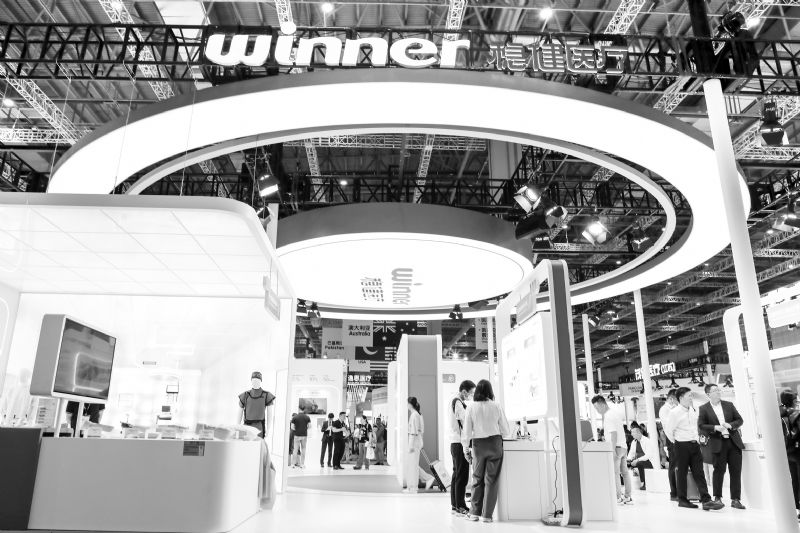
Core Insights - The company has conducted investor relations activities, attracting significant institutional interest [1] - In the first half of the year, the company demonstrated strong performance with a net profit of 490 million yuan, representing a year-on-year increase of 28.1% [1] - The company maintains a product leadership strategy with a steady increase in patent and medical product registration certificates [1] Financial Performance - The net profit attributable to shareholders reached 490 million yuan, with a net profit of 460 million yuan after deducting non-recurring gains, marking year-on-year growth of 28.1% and 40.9% respectively [1] - Cumulative cash dividends amount to 2.88 billion yuan, with share buybacks totaling 690 million yuan, together accounting for 100.3% of the net proceeds from the initial public offering [1] Business Segments - The medical consumables business saw a year-on-year increase of 13.2%, with the second quarter's revenue growing by 15.3% compared to the previous year [2] - The consumer goods segment, particularly the "All Cotton Era" brand, achieved revenue of 2.75 billion yuan, reflecting a year-on-year growth of 20.3% [2] - The company has expanded its offline stores to 484, with 16 new openings in the first half of the year, and the total membership has grown to nearly 67 million, a 7.7% increase from the end of last year [2] Market Activities - The company actively participated in exhibitions and promotional activities, including the 91st China International Medical Equipment Expo and the third China International Supply Chain Promotion Expo [2] - A special program was launched in collaboration with CCTV to enhance brand image in the consumer healthcare sector [2]

稳健医疗(300888) - 2025年半年度业绩推介材料
2025-08-25 03:42
Financial Performance - In the first half of 2025, the company achieved a total revenue of 5.3 billion yuan, representing a year-on-year growth of 31.3% [11] - The revenue for Q1 and Q2 was 1.9 billion yuan and 2.6 billion yuan respectively, showing a steady increase [12] - The overall gross profit margin remained stable, with the operating profit margin increasing by 0.7 percentage points compared to the same period last year [16] Profitability - The net profit attributable to shareholders was 490 million yuan, with a year-on-year growth of 28.1% [16] - The net profit excluding non-recurring gains and losses was 460 million yuan, reflecting a growth of 40.9% [16] - The company's asset-liability ratio decreased to 32%, indicating improved asset quality [18] Business Segments Medical Consumables - The medical segment generated a revenue of 2.52 billion yuan, with a year-on-year increase of 46.4% [29] - Excluding the contribution from the newly acquired GRI, the revenue was 1.95 billion yuan, up 13.2% year-on-year [29] - Key product categories such as surgical consumables and high-end dressings showed strong growth [29] Consumer Products - The consumer segment achieved a revenue of 2.75 billion yuan, growing by 20.3% year-on-year [40] - The core product, the Nai Si Princess sanitary napkin, significantly contributed to the overall growth [40] - The online sales channel generated 1.71 billion yuan, with a year-on-year increase of 23.6% [45] R&D and Innovation - The company emphasized R&D investment, with a steady increase in the number of patents and medical product registrations [18] - The focus on product innovation led to the development of high-end materials and improved product offerings [25][35] Shareholder Returns - The mid-term profit distribution plan for 2025 includes a cash dividend of 4.5 yuan per 10 shares, totaling 260 million yuan, which is 53% of the net profit attributable to shareholders [23] - Cumulatively, the company has distributed 2.88 billion yuan in cash dividends since its listing [23]
稳健医疗(300888):消费品业务快速增长,品牌势能持续向上
NORTHEAST SECURITIES· 2025-08-25 03:28
Investment Rating - The report initiates coverage with a "Buy" rating for the company [6]. Core Insights - The company reported a 31.3% year-on-year increase in revenue for H1 2025, reaching 5.3 billion yuan, and a 28.1% increase in net profit attributable to shareholders, amounting to 490 million yuan [2]. - The medical business showed robust growth, with H1 2025 revenue up 46% to 2.52 billion yuan, while the consumer goods segment grew 20.3% to 2.75 billion yuan [3][4]. - The company maintains stable profitability, with a slight decline in gross margin to 48.3% and a net profit margin of 9.8% for H1 2025 [4]. Revenue and Profit Forecast - Projected revenue growth for 2025-2027 is 24.3%, 14.9%, and 12.8%, reaching 11.16 billion, 12.82 billion, and 14.46 billion yuan respectively [4]. - Expected net profit growth for the same period is 44.2%, 23.9%, and 19.1%, resulting in net profits of 1 billion, 1.24 billion, and 1.48 billion yuan [4]. Financial Metrics - The company’s gross margin for the medical and consumer goods segments is 37.4% and 58.6% respectively, with the consumer goods margin benefiting from lower cotton prices and improved product mix [4]. - The company plans to distribute a cash dividend of 4.5 yuan per 10 shares, with a payout ratio of 53.3% [4]. Market Performance - The stock closed at 42.09 yuan, with a 12-month price range of 23.45 to 53.75 yuan [6]. - The company has a total market capitalization of approximately 24.51 billion yuan [6].
稳健医疗多措并举净利提升28% 分红及回购35.7亿超IPO募资净额
Chang Jiang Shang Bao· 2025-08-25 00:38
Core Viewpoint - The company, Steady Medical, has shown a significant recovery in profitability through both internal growth and acquisitions, with a notable increase in revenue and net profit in the first half of 2025 compared to the previous year [2][4]. Financial Performance - In the first half of 2025, Steady Medical achieved operating revenue of 5.296 billion yuan, a year-on-year increase of 31.31% [2][4]. - The net profit attributable to shareholders was 492 million yuan, up 28.07% year-on-year, while the net profit excluding non-recurring gains and losses was 461 million yuan, reflecting a growth of 40.9% [2][4]. - The company’s total expenses for the period were 1.874 billion yuan, an increase of approximately 27.4% year-on-year, with a period expense ratio of 35.39%, down about 1.08 percentage points from the previous year [9]. Business Segments - The medical segment generated operating revenue of 2.52 billion yuan, a year-on-year increase of 46.4%, while the consumer segment, represented by All Cotton Era, achieved revenue of 2.75 billion yuan, up 20.3% [5][6]. - The medical segment's operating profit margin reached 8.6%, an increase of 0.9 percentage points year-on-year, while the consumer segment's profit margin was 14%, up 1.2 percentage points [8]. Strategic Initiatives - The company has focused on controlling costs and enhancing operational efficiency, which has contributed to the recovery of profitability [8]. - The acquisition of Global Resources International, Inc. (GRI) for approximately 120 million USD has played a crucial role in the company's performance recovery since the fourth quarter of 2024 [4][5]. Dividend Policy - Steady Medical plans to distribute a cash dividend of 262 million yuan, accounting for 53.26% of the net profit for the period [3][9]. - Since its listing, the total cash dividends and buybacks will amount to 3.57 billion yuan, representing 100.33% of the net funds raised during the IPO [3][9].
全球市场10倍股的特征
Sou Hu Cai Jing· 2025-08-22 23:17
Core Insights - The concept of "Tenbagger" stocks, which can appreciate tenfold, is primarily discussed in Western markets, but there are significant opportunities globally [1] - Dede Eyesan's research identified over 900 stocks worldwide that have the potential to become Tenbaggers, emphasizing profit growth and strong business fundamentals as key characteristics [1][2] - Many high-performing companies are not necessarily long-term compound growth firms but can also be turnaround stories [4] Characteristics of Global Tenbagger Companies - Key traits of Tenbagger companies include profit growth, strong business models, and often a founder-led mentality, although not exclusively [1][3] - Successful companies tend to focus on a simple business model and excel in providing excellent products or services [1][3] - Profit margin expansion is a significant driver for many high-performing companies, influenced by both internal and external factors [4][5] Industry Characteristics of Tenbagger Stocks - Industries with limited supply and growing demand, such as the salmon industry, present good investment opportunities [5][6] - Companies that can effectively manage costs and have room for growth are more likely to succeed [5][6] - Understanding the operational aspects of a business is crucial for assessing its potential for profit margin improvement [6][7] Investment Strategies and Insights - Investors should focus on companies with a clear understanding of their business operations and sustainable pricing power [6][7] - The research highlights the importance of understanding local cultures and business practices when investing in foreign markets [10][11] - A significant portion of Tenbagger stocks comes from India, indicating the need for investors to broaden their geographical focus [10] Future Industry Trends and Themes - Certain industries, such as utilities and insurance, face challenges in achieving high growth rates, making them less likely to produce Tenbagger stocks [27][28] - The technology and healthcare materials sectors have shown strong potential for growth, with many companies achieving significant returns [28][29] - The semiconductor industry has seen a surge in Tenbagger stocks, but investors must remain cautious of cyclical fluctuations [28][29] Qualitative Analysis in Investment Processes - Incorporating qualitative factors into investment decisions can enhance risk assessment and potential returns [42][43] - Understanding the competitive landscape and the unique advantages of companies is essential for determining investment size and strategy [43][44] - Investors should focus on companies with a proven track record of profitability and growth, avoiding those with stagnant earnings [46][47]
PLM系统:解锁企业产品创新与高效管理的金钥匙
Sou Hu Cai Jing· 2025-08-22 20:19
Group 1: Core Insights - PLM systems serve as accelerators for innovation by connecting design, manufacturing, and market feedback into a closed-loop ecosystem [3] - The implementation of PLM systems enhances product lifecycle management, leading to improved efficiency and innovation capabilities [4][6] Group 2: Data Integration and Collaboration - PLM systems centralize data management across the entire product lifecycle, improving data accuracy and traceability [4] - They facilitate cross-departmental collaboration, reducing communication costs and repetitive work [4][5] Group 3: Process Optimization and Cost Reduction - PLM systems standardize and automate R&D processes, increasing efficiency and ensuring compliance with industry standards [4][6] - Effective management through PLM systems can lower operational costs by minimizing errors and improving resource utilization [7] Group 4: Implementation Strategies - Companies must clearly define their needs and goals before implementing a PLM system to ensure targeted selection and planning [8] - A phased implementation approach is recommended to manage the complexity and ensure smooth progress [9] - Employee training and promotion of the PLM system are crucial for successful adoption and optimization [10] Group 5: Industry Applications and Evaluation - PLM systems are applicable across various industries, including automotive, aerospace, electronics, and medical devices [11] - The effectiveness of PLM system implementation can be evaluated through metrics such as R&D efficiency, product quality, and operational cost reduction [13]

稳健医疗股价微跌0.14% 上半年净利润同比增长28.1%
Jin Rong Jie· 2025-08-22 17:33
Core Insights - The stock price of the company, Steady Medical, was reported at 42.09 yuan as of August 22, 2025, with a slight decrease of 0.14% from the previous trading day [1] - The company operates in two main business segments: medical consumables and consumer products, with brands including "Steady Medical" and "All Cotton Era" [1] - For the first half of 2025, the company reported total revenue of 52.96 billion yuan, representing a year-on-year growth of 31.31%, and a net profit attributable to shareholders of 4.92 billion yuan, up 28.07% [1] Financial Performance - Revenue from the medical consumables segment reached 25.2 billion yuan, while the consumer products segment generated 27.5 billion yuan in revenue [1] - The sanitary napkin category showed remarkable performance, with revenue increasing by 67.6% to 5.32 billion yuan [1] - The company plans to distribute a cash dividend of 4.5 yuan per 10 shares to all shareholders, totaling 2.62 billion yuan [1] Market Activity - On August 22, 2025, the net outflow of main funds was 35.93 million yuan, with a cumulative net outflow of 37.78 million yuan over the past five days [2]