
可控核聚变

Search documents
探底回升,多空博弈,权重蓝筹持续回撤,何时到头?
Ge Long Hui· 2025-09-25 19:10
Market Performance - The Shenzhen Component Index and the ChiNext Index both reached new short-term highs, rising by 1.14% and 2.22% respectively by midday, while the Shanghai Composite Index saw a slight increase of 0.16% due to pressure from banking, precious metals, and real estate sectors [1] - Over 3,300 stocks declined across the two markets, with a total trading volume of 1.54 trillion [1] Sector Performance - Precious metals experienced a decline, dropping by 2.43% at midday, with companies like Shandong Gold and Xiaocheng Technology seeing average declines exceeding 4% [3] - The port and shipping sector collectively fell, with Ningbo Port dropping over 8% and Nanjing Port down 7.93% [3] - Other sectors such as jewelry, real estate, banking, and automotive services also followed suit with declines [3] Emerging Trends - AI hardware and application sectors saw a collective surge, with Inspur Information hitting a historical high and Huqin Technology reaching its limit up [3] - Non-ferrous metal stocks were active, with companies like Northern Copper achieving limit up [3] - Controlled nuclear fusion concept stocks experienced fluctuations, with Hezhan Intelligent achieving two limit ups in four days and Hahuan Huaton hitting limit up [3] News Highlights - China Fusion Company plans to build a high-temperature superconducting fusion device named Circulation No. 4 in Shanghai [3] - The world's largest coal-fired carbon capture demonstration project at Huaneng Gansu Zhengning Power Plant has completed a 72-hour trial run and is officially operational [3] - In September, 156 games were approved, including 145 domestic and 11 imported titles [3] - The Ministry of Commerce and seven other departments jointly issued guidelines to promote digital consumption and create a better life in the digital age [3]


尾盘爆发!603083 涨停!
Zheng Quan Shi Bao· 2025-09-25 09:55
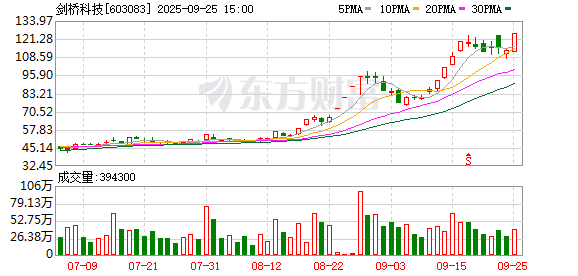
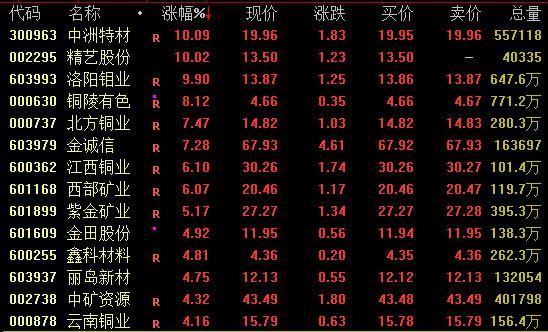
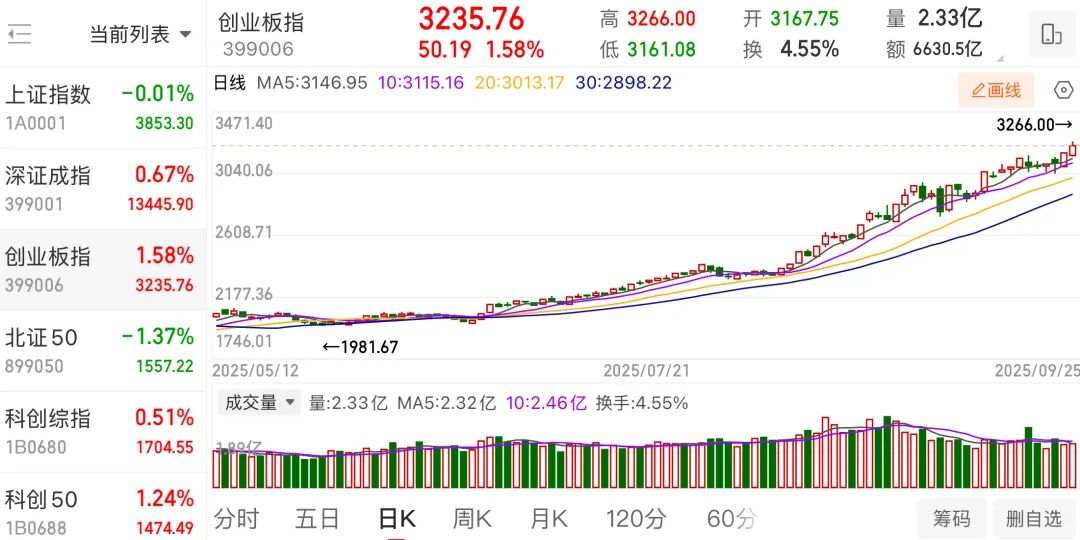
Market Overview - The A-share market continued its strong performance on September 25, with the Shanghai Composite Index slightly down by 0.01% to 3853.3 points, while the Shenzhen Component Index rose by 0.67% to 13445.9 points, and the ChiNext Index increased by 1.58% to 3235.76 points [2] - The total trading volume in the Shanghai and Shenzhen markets reached 239.2 billion yuan, an increase of 44.5 billion yuan compared to the previous day [2] Sector Performance - The real estate sector faced declines, with major stocks like Dalong Real Estate hitting the limit down [2] - The metals sector saw significant gains, with Luoyang Molybdenum nearing the limit up, and other companies like Tongling Nonferrous Metals and Northern Copper rising over 7% [2][5] - AI application concepts were active, with stocks like Pinming Technology and Langchao Information hitting the limit up [2][9] - The controllable nuclear fusion concept gained traction, with stocks like Hahuan Huadong and Shanghai Electric hitting the limit up [2][13] Notable Stock Movements - Cambridge Technology (603083) hit the limit up at the end of the trading session [2] - Luoyang Molybdenum rose nearly 12% to reach a historical high, while other companies like Minmetals Resources and Ningde Times also saw significant increases [3][5] - Newly listed companies such as Jianfa Zhixin and United Power saw substantial gains, with increases of 418.6%, 147.6%, and 133% respectively [2] Copper and Cobalt Market Dynamics - A fatal landslide at Freeport McMoRan's Grasberg mine in Indonesia has led to a significant rise in global copper prices and raised supply chain concerns, with production expected to be disrupted until at least 2027 [7] - The Democratic Republic of Congo extended its cobalt export ban until October 15, 2023, with a quota system set to be implemented thereafter, potentially leading to a significant reduction in global cobalt supply [7] AI Industry Developments - The AI sector is experiencing heightened activity, with major companies like JD.com and Alibaba making significant advancements in AI technology and infrastructure investments [11] - The global investment in AI infrastructure by major tech companies is projected to exceed $350 billion this year, with expectations to surpass $400 billion by 2026 [11] Controllable Nuclear Fusion Advancements - The controllable nuclear fusion industry is entering a rapid development phase, with various countries racing to advance their technologies [15] - China is set to establish a new fusion experimental facility in Shanghai, showcasing its commitment to advancing fusion energy technology [13][15]



尾盘爆发!603083,涨停!
Zheng Quan Shi Bao· 2025-09-25 09:50
Market Overview - The A-share market continued its strong performance on September 25, with the Shanghai Composite Index experiencing slight fluctuations, while the ChiNext Index rose over 2%, reaching a new high in over three years [1][2] - The Shanghai Composite Index closed at 3853.3 points, down 0.01%, while the Shenzhen Component Index rose 0.67% to 13445.9 points, and the ChiNext Index increased by 1.58% to 3235.76 points [1] Sector Performance - The real estate sector faced declines, with major stocks like Longfor Group hitting the daily limit down [2] - The metals sector saw significant gains, particularly in copper and cobalt stocks, with companies like Luoyang Molybdenum and Tongling Nonferrous Metals rising over 7% [3][4] - AI application stocks were active, with companies like Pinming Technology and Inspur Information hitting the daily limit up [2][7] Copper and Cobalt Market Dynamics - A significant incident at Freeport McMoRan's Grasberg mine in Indonesia has led to a substantial increase in global copper prices, with production expected to be disrupted until at least 2027 [5] - The Democratic Republic of Congo has extended its cobalt export ban until October 15, 2023, implementing a quota system that will limit exports to 44% of annual production from 2026 to 2027, which is expected to drive cobalt prices higher [6] AI Industry Developments - The AI sector is witnessing robust growth, with major companies like JD.com and Alibaba making significant investments in AI infrastructure, projected to exceed $350 billion in 2023 [9] - The AI application concept stocks are experiencing heightened activity, with several companies reaching new highs [7][9] Controlled Nuclear Fusion Sector - The controlled nuclear fusion sector is gaining momentum, with companies like Hanhua Huatong and Shanghai Electric seeing substantial stock price increases [10][12] - The global race for fusion energy is intensifying, with various countries advancing their fusion energy strategies and commercial agreements being established [12]

尾盘爆发!603083,涨停!
证券时报· 2025-09-25 09:32
Market Overview - A-shares continued to show strength on September 25, with the Shanghai Composite Index experiencing slight fluctuations, while the ChiNext Index rose over 2%, reaching a new high in over three years [2] - The total trading volume in the Shanghai and Shenzhen markets reached 23.92 billion yuan, an increase of 44.5 billion yuan from the previous day [2] - The real estate sector faced declines, with major stocks like Longfor Properties hitting the daily limit down [2] Sector Performance - The non-ferrous metals sector saw significant gains, with companies like Luoyang Molybdenum nearing the daily limit up, and others like Tongling Nonferrous Metals and Northern Copper rising over 7% [5][4] - AI application stocks were active, with companies such as Pinming Technology and Inspur Information hitting the daily limit up [10][12] - The controllable nuclear fusion concept gained traction, with stocks like Haheng Huadong and Shanghai Electric also hitting the daily limit up [15][14] Copper Market Dynamics - A fatal landslide at Freeport McMoRan's Grasberg mine in Indonesia has led to a significant rise in global copper prices and raised supply chain concerns, with production expected to be disrupted until 2027 [7] - The mine accounts for 50% of the company's proven reserves and 70% of its expected production before 2029, indicating a long-term impact on global copper supply [7] Cobalt Market Developments - The Democratic Republic of Congo has extended its cobalt export ban until October 15, with a quota system set to be implemented thereafter, limiting exports to 44% of annual production from 2026 to 2027 [8] - This quota system is expected to stabilize cobalt prices and lead to a significant supply shortage in the coming years [8] AI Industry Insights - Major tech companies like Google, Microsoft, Meta, and Amazon are projected to invest over $350 billion in AI infrastructure this year, with expectations to exceed $400 billion by 2026 [13] - The AI industry continues to show strong growth potential, particularly in domestic sectors related to servers and cooling technologies [12][13] Nuclear Fusion Developments - The Chinese fusion energy company showcased its technology at the China International Industry Fair, indicating a competitive global landscape for fusion energy [17] - The commercial viability of controllable nuclear fusion is being recognized, with ongoing projects in various countries accelerating their development [17]


创业板指涨1.58%,AI应用概念领涨
Guo Ji Jin Rong Bao· 2025-09-25 08:13
Market Overview - As of September 25, the three major A-share indices showed mixed results, with the Shanghai Composite Index down 0.01%, the Shenzhen Component Index up 0.67%, and the ChiNext Index up 1.58% [4] - The total trading volume in the Shanghai and Shenzhen markets reached 239.18 billion yuan, an increase of 44.6 billion yuan compared to the previous day [4] Sector Performance - The gaming, copper cable high-speed connection, controllable nuclear fusion, metal copper, film and television, and wind power equipment sectors saw significant gains [3] - Conversely, the precious metals, gas, port shipping, oil and gas extraction and services, engineering machinery, and logistics sectors experienced notable declines [3] Notable Stocks - In the gaming sector, companies like Kunlun Wanwei and Huanyu Century showed strong performance, with Kunlun Wanwei rising by 2.46% and Huanyu Century by 1.08% [5] - The copper sector also performed well, with companies such as Jingyi Co. and Luoyang Molybdenum Co. achieving significant gains [8] - The controllable nuclear fusion sector was active, with stocks like Hezhan Intelligent and Shanghai Electric hitting the daily limit [8] Policy Impact - On September 24, the Ministry of Commerce and other departments released guidelines to promote digital consumption, which includes 14 tasks aimed at supporting vertical e-commerce development and expanding specialized consumption channels [8]

A股三大指数早盘震荡上行,A500ETF易方达(159361)、沪深300ETF易方达(510310)等助力布局核心资产
Mei Ri Jing Ji Xin Wen· 2025-09-25 05:48
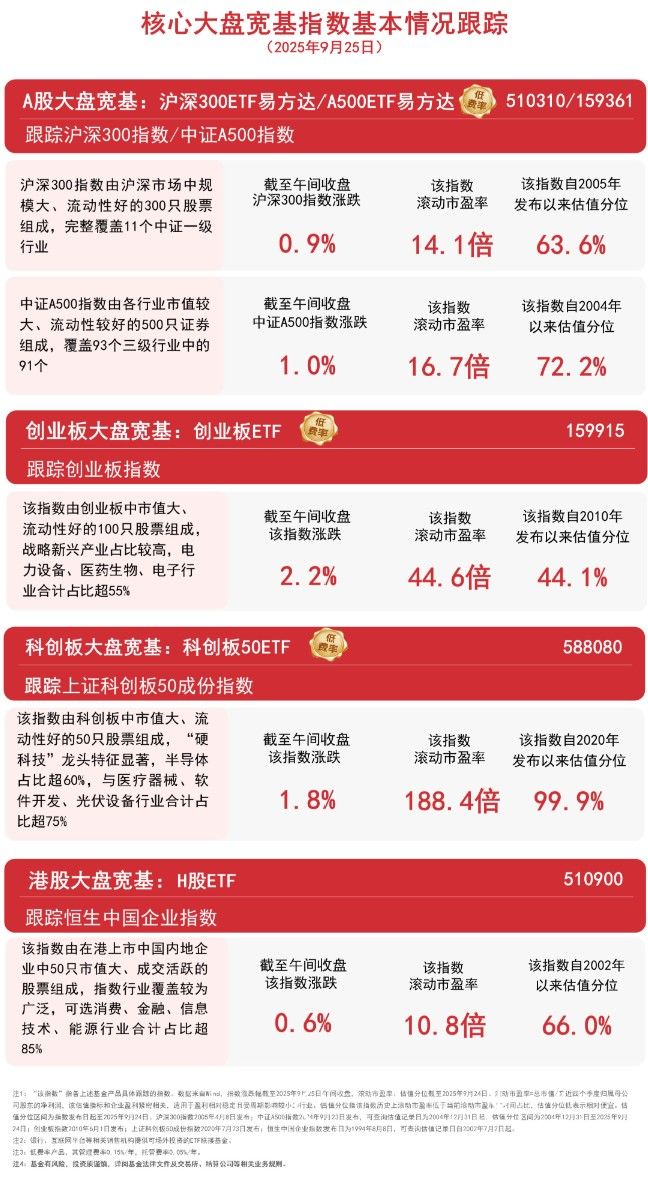
Market Overview - The A-share market experienced a volatile upward trend in the morning session, with a total trading volume of 15,558 billion yuan, an increase of 1,355 billion yuan compared to the previous day [1] - The major indices showed positive performance, with the CSI A500 index rising by 1.0%, the CSI 300 index increasing by 0.9%, the ChiNext index up by 2.2%, and the STAR Market 50 index gaining 1.8% [1] Sector Performance - Leading sectors included AI applications, controllable nuclear fusion, and non-ferrous metals, while sectors such as precious metals, port shipping, real estate, logistics, and banking faced declines [1] - In the Hong Kong market, there was also an upward trend, with non-ferrous metals and lithium battery sectors performing well, while the liquor and home appliance sectors saw declines [1] Index Details - The Hang Seng China Enterprises Index, which consists of 50 large-cap and actively traded stocks listed in Hong Kong, showed a rise of 0.6% at midday [4] - The index covers a wide range of industries, with consumer discretionary, financials, information technology, and energy sectors accounting for over 85% of its composition [4]
A股可控核聚变概念股强势,合锻智能涨停
Ge Long Hui· 2025-09-25 01:44
Core Viewpoint - The A-share market is witnessing strong performance in controllable nuclear fusion concept stocks, driven by the announcement of a new high-temperature superconducting fusion device named "Circulation No. 4" to be built in Shanghai by the national team in nuclear fusion [1] Group 1: Stock Performance - Hezhong Intelligent has reached the daily limit increase [1] - Changfu Co., Ltd. has increased by over 9% [1] - Jintian Co., Ltd. has increased by over 7% [1] - Gaolan Co., Ltd. has increased by over 6% [1] - Xuguang Electronics, Lianchuang Optoelectronics, and Hongwei Technology have all increased by over 5% [1] - Baili Electric, Western Superconducting, Tianli Composite, Aikesibo, and Antai Technology have all increased by over 4% [1]


A股早评:三大指数低开,铜价大涨带动工业金属板块走强
Ge Long Hui· 2025-09-25 01:35
A股开盘,三大指数集体低开,沪指低开0.03%,深证成指低开0.17%,创业板指低开0.56%。盘面上, 工业金属板块高开,电工合金涨超12%,精艺股份、北方铜业涨停,全球第二大的铜矿印尼Grasberg铜 矿因事故停产引发铜价大涨;可控核聚变板块盘初拉升,合锻智能涨停,哈焊华通、常辅股份涨超 7%;建材股局部活跃,中国巨石涨超4%,上峰水泥、海螺水泥涨超2%,水泥玻璃反内卷方案落地;部 分半导体股回调,德明利、江波龙、佰维存储跌约4%;港口航运板块低开,南京港跌超6%,宁波海运 跌近3%。(格隆汇) ...
可控核聚变板块盘初拉升,合锻智能涨停
Xin Lang Cai Jing· 2025-09-25 01:33
可控核聚变板块盘初拉升,合锻智能涨停,哈焊华通、常辅股份、久盛电气、中洲特材、百利电气跟 涨。 ...
合锻智能(603011):深度报告:高端成形机床单项冠军,前瞻布局聚变堆核心部件
ZHESHANG SECURITIES· 2025-09-24 09:35
Investment Rating - The report initiates coverage with a "Buy" rating for the company [5] Core Insights - The company is a leading player in high-end forming machine tools and ranks second in the domestic color sorting machine market, with a revenue CAGR of 24% from 2019 to 2024 [2][20] - The company has a significant first-mover advantage in the nuclear fusion sector, particularly in the manufacturing of vacuum chambers, and is well-positioned to benefit from the burgeoning fusion industry [4][5] - The company’s revenue forecast for 2025-2027 is projected at 2.4 billion, 3.0 billion, and 3.8 billion yuan respectively, with net profits of 113 million, 156 million, and 208 million yuan [5][12] Summary by Sections Company Overview - The company specializes in high-end forming machine tools and intelligent sorting equipment, with a revenue breakdown in 2024 of approximately 57% from color sorting machines, 29% from hydraulic machines, and 13% from mechanical presses [2][26] - The company has been recognized as a "National Manufacturing Single Champion Demonstration Enterprise" and is a key player in the automotive hot forming equipment sector, competing with global leaders [20][63] Industry Position - The high-end forming machine tool market is expected to grow at a CAGR of 5-7% from 2024 to 2030, with the total market size projected to reach approximately 1.59 to 1.96 trillion yuan by 2030 [2][63] - The color sorting machine market is anticipated to grow at a CAGR of 4% from 2024 to 2031, with a market size of 7.17 billion yuan in 2024 [3] Nuclear Fusion Sector - The company is strategically positioned in the nuclear fusion industry, having participated in the preliminary research of vacuum chambers since 2021, and has secured contracts worth 209 million yuan for the BEST vacuum chamber project [4][5] - The total market space for global Tokamak devices is estimated to exceed 250 billion yuan, with significant demand expected to materialize in the next 3-5 years [4][59] Financial Projections - The company’s revenue is projected to increase from 2.07 billion yuan in 2024 to 3.76 billion yuan in 2027, with a corresponding improvement in net profit from a loss of 89 million yuan in 2024 to a profit of 208 million yuan in 2027 [5][12] - The company’s P/E ratios are forecasted to decrease from 82 in 2025 to 44 in 2027, indicating an improving valuation as profitability increases [5][12]