
石油天然气

Search documents
中国石油获得发明专利授权:“采用三甘醇去除二氧化碳流体中的水的方法、系统及其应用”
Sou Hu Cai Jing· 2026-01-24 02:00
证券之星消息,根据天眼查APP数据显示中国石油(601857)新获得一项发明专利授权,专利名为"采 用三甘醇去除二氧化碳流体中的水的方法、系统及其应用",专利申请号为CN202310809073.4,授权日 为2026年1月23日。 以上内容为证券之星据公开信息整理,由AI算法生成(网信算备310104345710301240019号),不构成 投资建议。 专利摘要:本申请涉及一种采用三甘醇去除二氧化碳流体中的水的方法和系统,以及该方法在输送超临 界二氧化碳流体中的应用。该方法包括计算修正系数:根据公式(I)得到基于所述二氧化碳流体的临界压 力的修正系数R:R=0.7195‑0.02729Pc+0.0118T(I),其中Pc为所述二氧化碳流体的临界压力,T为 20℃‑30℃范围内的温度;计算修正压力:根据公式(II)得到修正压力Pb:Pb=Pc*R(II);增压脱水:通 过多级增压冷却将所述二氧化碳流体的压力增加到修正压力Pb并冷却以去除所述二氧化碳流体中的一 部分水,每一级增压冷却后的温度控制在20℃‑30℃的范围内;三甘醇脱水:采用三甘醇吸收剂进一步 去除增压脱水后的所述二氧化碳流体中的水。本申请的方法和 ...

【人民日报】把学习贯彻党的二十届四中全会精神不断引向深入——省部级专题研讨班学员深入学习领会习近平总书记重要讲话
Ren Min Ri Bao· 2026-01-24 00:54
Group 1 - The importance of studying and implementing the spirit of the 20th Central Committee's Fourth Plenary Session is emphasized, aiming to unify thoughts and efforts under the strong leadership of the Party Central Committee to achieve a good start for the "14th Five-Year Plan" [1] - Achievements during the "14th Five-Year Plan" period are attributed to the leadership of General Secretary Xi Jinping and the scientific guidance of Xi Jinping's Thought on Socialism with Chinese Characteristics for a New Era [2][3] - The "14th Five-Year Plan" has led to significant advancements in technology, including the establishment of the world's largest and most advanced information and communication network, showcasing the superiority of the socialist system with Chinese characteristics [2] Group 2 - The "15th Five-Year Plan" period is seen as a critical time for achieving socialist modernization, requiring a focus on practical actions and unity in thought and action based on Xi Jinping's important speech [3][4] - The need for a correct view of political achievements is highlighted, with an emphasis on serving and integrating into the domestic cycle, expanding domestic demand, and promoting consumption [4] - The energy sector is tasked with developing a new energy system and ensuring energy supply, with a commitment to high-quality development and green transformation [6]
中曼石油(603619)1月23日主力资金净买入4749.36万元
Sou Hu Cai Jing· 2026-01-24 00:35
证券之星消息,截至2026年1月23日收盘,中曼石油(603619)报收于28.23元,下跌1.95%,换手率 5.29%,成交量24.44万手,成交额6.85亿元。 1月23日的资金流向数据方面,主力资金净流入4749.36万元,占总成交额6.93%,游资资金净流入22.41 万元,占总成交额0.03%,散户资金净流出4771.77万元,占总成交额6.97%。 近5日资金流向一览见下表: 中曼石油融资融券信息显示,融资方面,当日融资买入8117.87万元,融资偿还6609.31万元,融资净买 入1508.56万元。融券方面,融券卖出2.21万股,融券偿还6000.0股,融券余量6.53万股,融券余额 184.34万元。融资融券余额5.02亿元。 近5日融资融券数据一览见下表: 该股主要指标及行业内排名如下: 中曼石油2025年三季报显示,前三季度公司主营收入29.85亿元,同比下降2.18%;归母净利润4.53亿 元,同比下降32.18%;扣非净利润4.32亿元,同比下降31.78%;其中2025年第三季度,公司单季度主营 收入10.03亿元,同比下降11.44%;单季度归母净利润1.53亿元,同比下降36 ...


中国石油(601857)1月23日主力资金净卖出1.90亿元
Sou Hu Cai Jing· 2026-01-24 00:35
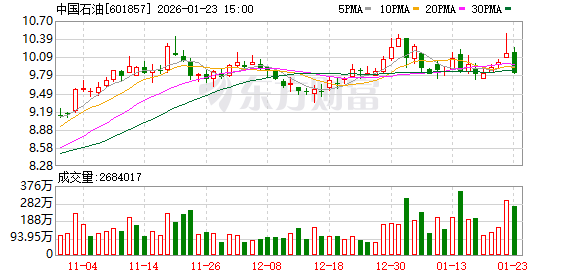
证券之星消息,截至2026年1月23日收盘,中国石油(601857)报收于9.83元,下跌3.15%,换手率 0.17%,成交量268.4万手,成交额26.67亿元。 1月23日的资金流向数据方面,主力资金净流出1.9亿元,占总成交额7.12%,游资资金净流入1.43亿 元,占总成交额5.35%,散户资金净流入4729.46万元,占总成交额1.77%。 近5日资金流向一览见下表: 近5日融资融券数据一览见下表: 以上内容为证券之星据公开信息整理,由AI算法生成(网信算备310104345710301240019号),不构成 投资建议。 该股主要指标及行业内排名如下: 中国石油2025年三季报显示,前三季度公司主营收入21692.56亿元,同比下降3.92%;归母净利润 1262.79亿元,同比下降4.9%;扣非净利润1268.74亿元,同比下降6.36%;其中2025年第三季度,公司 单季度主营收入7191.57亿元,同比上升2.34%;单季度归母净利润422.86亿元,同比下降3.86%;单季 度扣非净利润427.58亿元,同比下降2.16%;负债率38.38%,投资收益127.32亿元,财务费用89.29 ...
中国石油自主创新破解开发难题——非常规油气拿稳增产“接力棒”
Jing Ji Ri Bao· 2026-01-23 22:10
Core Viewpoint - China National Petroleum Corporation (CNPC) is actively addressing challenges in the global energy landscape by focusing on unconventional oil and gas resources, innovation, and green energy solutions, aiming to ensure energy security and sustainable development [1][9]. Unconventional Oil and Gas Development - Unconventional oil and gas, including shale oil, shale gas, and coalbed methane, require new technologies for economic extraction due to their unique geological characteristics [2]. - China has significant reserves of unconventional resources, with shale oil recoverable reserves ranking third globally and shale gas reserves being among the highest in the world [2]. - The strategic focus on unconventional resources has been emphasized in China's 14th Five-Year Plan, particularly as conventional oil fields face production challenges [2][3]. Production Milestones - CNPC announced that shale oil production has surpassed 7 million tons annually, marking a significant step towards large-scale development of unconventional resources [3]. - The contribution of unconventional oil and gas to national energy security is increasing, transitioning from potential resources to actual production capacity [3]. Technological Innovations - CNPC has made substantial advancements in technology for unconventional oil and gas extraction, with successful projects reported in various basins such as Ordos and Sichuan [4][6]. - The Longqing Oilfield has achieved a production milestone of over 20 million tons of shale oil, becoming the first large-scale producer of continental shale oil globally [4]. - Innovative techniques, such as the "multi-stage, fewer clusters" fracturing method, have been developed to suit China's geological conditions, enhancing production efficiency [6][7]. Green Energy Initiatives - CNPC is committed to integrating green and low-carbon principles into its unconventional oil and gas operations, achieving significant reductions in land use and emissions [9][10]. - The company has implemented advanced technologies for water conservation and carbon dioxide management, contributing to both production efficiency and environmental sustainability [9][10]. - The development of solar energy systems at oil fields has further enhanced CNPC's green transformation efforts, with substantial reductions in carbon emissions reported [10]. Future Outlook - Looking ahead, CNPC plans to deepen research into the characteristics of unconventional resources and enhance management practices through digital transformation [11].
中国石油获得实用新型专利授权:“井口填砂封堵装置”
Sou Hu Cai Jing· 2026-01-23 21:52
数据来源:天眼查APP 专利摘要:本实用新型公开的井口填砂封堵装置,包括打散组件,打散组件的底部固接有混合组件,混 合组件的输出端固接有排料管,打散组件一侧固接有喷水组件,打散组件另一侧固接有喷气组件。本实 用新型的井口填砂封堵装置,解决了砂子下料过程中的打散及流畅度不高的问题,同时解决了砂子与水 的配比及填砂效率不高的问题;此外,在填砂完成后,通过喷水组件对打散叶片进行清洗,避免砂子粘 连在打散箱的内壁和打散叶片的外壁上。 以上内容为证券之星据公开信息整理,由AI算法生成(网信算备310104345710301240019号),不构成 投资建议。 证券之星消息,根据天眼查APP数据显示中国石油(601857)新获得一项实用新型专利授权,专利名 为"井口填砂封堵装置",专利申请号为CN202520318008.6,授权日为2026年1月23日。 通过天眼查大数据分析,中国石油天然气股份有限公司共对外投资了1297家企业,参与招投标项目443 次;财产线索方面有商标信息105条,专利信息48144条;此外企业还拥有行政许可168个。 今年以来中国石油新获得专利授权152个,较去年同期增加了210.2%。结合公司 ...
中国石油获得发明专利授权:“一种有水气藏井采出过程中水侵量识别方法、系统、设备及介质”
Sou Hu Cai Jing· 2026-01-23 21:52
数据来源:天眼查APP 证券之星消息,根据天眼查APP数据显示中国石油(601857)新获得一项发明专利授权,专利名为"一 种有水气藏井采出过程中水侵量识别方法、系统、设备及介质",专利申请号为CN202311451382.5,授 权日为2026年1月23日。 以上内容为证券之星据公开信息整理,由AI算法生成(网信算备310104345710301240019号),不构成 投资建议。 专利摘要:本发明提供一种有水气藏井采出过程中水侵量识别方法、系统、设备及介质,包括以下步 骤:基于藏井的水区和气区相对位置关系建立对应的等效水侵模型;根据等效水侵模型与历年测压时间 点划分阶段建立水侵物质平衡模型;基于阶段水区压力按照阶段水侵量呈线性递减的原理迭代水侵物质 平衡模型;基于迭代后的水侵物质平衡模型评价水体可排行和指导藏井的排水采气;本申请通过选择不 同井采出地质模型对应的等效水侵模型,建立满足气水流动物质平衡方程的迭代算法,获取井历史压力 参数和储层参数,计算得到当前水侵量,进而用于评价水体和指导气田井的排水采气,本申请可以简化 参数,避免现有技术中裂缝水侵模型无法准确刻画和多参数表征困难情况。 今年以来中国石油新 ...
中国石油获得发明专利授权:“烟炱高效捕集方法”
Sou Hu Cai Jing· 2026-01-23 21:52
通过天眼查大数据分析,中国石油天然气股份有限公司共对外投资了1297家企业,参与招投标项目443 次;财产线索方面有商标信息105条,专利信息48144条;此外企业还拥有行政许可168个。 数据来源:天眼查APP 以上内容为证券之星据公开信息整理,由AI算法生成(网信算备310104345710301240019号),不构成 投资建议。 证券之星消息,根据天眼查APP数据显示中国石油(601857)新获得一项发明专利授权,专利名为"烟 炱高效捕集方法",专利申请号为CN202310399617.4,授权日为2026年1月23日。 专利摘要:本发明公开了烟炱高效捕集方法,具体为:通过蠕动泵向注油箱内注入燃料油,当烟炱发生 器的燃料油淹没过油管刻度线处,启动电子点火器开关,喷油嘴开始点火燃烧,启动真空泵,处于负压 状态,烟炱发生器产生的烟炱进入一级捕集器和二级捕集器中进行收集,待二级捕集器的压力超 过‑1800Pa或者真空泵的压力超过‑2000Pa时,捕集结束,将一级捕集器和二级捕集器内的烟炱清扫并收 集。本发明的方法,将燃料油在烟炱发生器中燃烧后产生的产物作为烟炱,最大程度还原了发动机在工 作状态下燃烧室生成烟 ...
中国石油获得发明专利授权:“一种气井全生命周期完井采气装置及工艺方法”
Sou Hu Cai Jing· 2026-01-23 21:52
通过天眼查大数据分析,中国石油天然气股份有限公司共对外投资了1297家企业,参与招投标项目443 次;财产线索方面有商标信息105条,专利信息48144条;此外企业还拥有行政许可168个。 证券之星消息,根据天眼查APP数据显示中国石油(601857)新获得一项发明专利授权,专利名为"一 种气井全生命周期完井采气装置及工艺方法",专利申请号为CN202310706368.9,授权日为2026年1月 23日。 专利摘要:本发明属于气田完井技术领域,尤其涉及一种气井全生命周期完井采气装置及工艺方法,所 述装置包括依次通过丝扣连接的上接头、下接头、第一外筒、第一连接管、第二外筒、第二连接管、第 三外筒和气嘴座,丝扣连接处均设置有O型圈密封,第一外筒的内壁设置有第一连通结构,第一连通结 构用于根据气井生命周期连通或分隔第一外筒的筒内外空间;第二外筒的内壁设置有第二连通结构,第 二连通结构用于根据气井生命周期连通或分隔第二外筒的筒内外空间。本发明设置第一连通结构和第二 连通结构实现了气井从最初的完井至废弃的全生命周期完井采气,节省了预置式节流器和卡瓦节流器投 捞作业费用,避免了这两种节流器投捞失败造成的井下事故发生。 ...
中国石油获得发明专利授权:“固井水泥石自愈合能力分析方法及装置”
Sou Hu Cai Jing· 2026-01-23 21:40
证券之星消息,根据天眼查APP数据显示中国石油(601857)新获得一项发明专利授权,专利名为"固 井水泥石自愈合能力分析方法及装置",专利申请号为CN202310748476.2,授权日为2026年1月23日。 专利摘要:本发明公开了一种固井水泥石自愈合能力分析方法及装置,涉及石油天然气勘探开发技术领 域,其中该装置包括:水泥环养护造缝模块、CT扫描模块、数据处理模块、模拟套管内压加压系统、 原油加压泵、气体瓶;其中,水泥环养护造缝模块内设双层模拟水泥环;模拟套管内压加压系统与气体 瓶配合用于对双层模拟水泥环进行造缝处理;原油加压泵与气体瓶配合用于对造缝处理后的双层模拟水 泥环进行自愈合养护测试;CT扫描模块用于在双层模拟水泥环的自愈合养护测试过程中,对双层模拟 水泥环进行无损扫描,将扫描数据传输到数据处理模块;数据处理模块用于确定固井水泥石自愈合能力 分析结果。本发明可以提高水泥石自愈合能力分析结果的可靠性和合理性。 今年以来中国石油新获得专利授权152个,较去年同期增加了210.2%。结合公司2025年中报财务数据, 2025上半年公司在研发方面投入了98.99亿元,同比增2.51%。 以上内容为证券之 ...