
家电制造

Search documents
海口首届“鲜”吃文化节启幕,以味为媒激活自贸港消费活力
Sou Hu Cai Jing· 2025-11-30 15:57
活动现场特别设置海口经济圈"鲜"吃美食展,广邀海岛永芳糟粕醋、铺前三婆糟粕醋、陈符林糟粕醋、海尔冰箱冷柜、海南省水稻协会等10余家海澄文定屯 海口经济圈城市的糟粕醋产业链企业现场展销,"糟粕醋关东煮、糟粕醋烤鱼、糟粕醋小吃碗、糟粕醋小火锅",以"糟粕醋"为口味底料开发出的特色餐食, 吸引了不少市民游客驻足品尝,全方位构建的一条龙尝"鲜"场景,深度感受糟粕醋"鲜"魅力。 值得一提的是,即日起至11月30日,海口市商务局携手抖音生活服务,发放80万元海口餐饮消费券,最高立减150元,覆盖商家门店130余家,汇集海口众多 高人气糟粕醋特色店,火热开启糟粕醋火锅盛宴。 11月28日晚,海口首届"鲜"吃文化节暨糟粕醋VS新鲜味"出圈宴"在海口高兴里潮酷文化街区火热开席,逛潮街、吃鲜味,几百名市民游客齐聚一堂,共品 这场糟粕醋盛宴。恰逢海口即将迎来Katy Perry《THE LIFETIMES TOUR》中国巡演收官之站演唱会、2025华晨宇火星演唱会乐园场海口收官站,活动也以 特色美食为媒,向赴琼参加的演唱会粉丝发出邀约,邀请大家在感受音乐狂欢之余,品尝地道海南味。 "3吃3逛,99不忘",本次"鲜"吃文化节活动紧紧 ...


长虹美菱:将利用自有闲置资金不超过82亿元投资理财
Xin Jing Bao· 2025-11-29 09:01
Core Viewpoint - Changhong Meiling (000521) announced plans to invest up to 8.2 billion yuan in high-safety, liquid, low-risk, and stable bank wealth management products with a maturity of one year, which will enhance the efficiency and returns of its idle funds [1] Group 1 - The investment will utilize the company's own idle funds, excluding subsidiaries Zhongke Meiling and its subsidiaries [1] - The authorization period for this investment is valid for one year from the date of approval by the shareholders' meeting [1] - This investment will not affect the funds required for the company's daily production and operations [1]

2025年10月中国电视机进出口数量分别为2万台和1014万台
Chan Ye Xin Xi Wang· 2025-11-29 06:42
Core Insights - The report by Zhiyan Consulting analyzes the current market status and future prospects of the smart TV industry in China from 2026 to 2032 [1] Import and Export Data - In October 2025, China imported 20,000 TVs, representing a year-on-year decrease of 18.6%, with an import value of 0.16 million USD, down 19.6% year-on-year [1] - In the same month, China exported 10.14 million TVs, which is a year-on-year decline of 3.2%, with an export value of 1.448 billion USD, down 4.6% year-on-year [1] Industry Analysis - Zhiyan Consulting is recognized as a leading industry consulting firm in China, specializing in in-depth industry research reports, business plans, feasibility studies, and customized services [1] - The firm emphasizes its professional approach, quality services, and keen market insights to provide comprehensive industry solutions that empower investment decisions [1]

长虹美菱:公司及下属子公司将利用自有闲置资金不超过82亿元投资理财
Mei Ri Jing Ji Xin Wen· 2025-11-28 12:28
Core Viewpoint - Changhong Meiling (000521.SZ) announced plans to invest up to 8.2 billion yuan in low-risk, high-liquidity bank wealth management products with a maturity of one year, aiming to enhance fund efficiency and returns [1] Investment Details - The investment will utilize the company's idle funds, excluding those from its subsidiary Zhongke Meiling and its subsidiaries [1] - The authorization for this investment is valid for one year from the date of approval by the shareholders' meeting [1] Financial Impact - The investment is not expected to affect the company's daily operational funds, ensuring that normal business activities remain unaffected [1] - The move is intended to improve the efficiency and yield of the company's capital [1]
深康佳A:11月28日召开董事会会议
Mei Ri Jing Ji Xin Wen· 2025-11-28 12:02
每经AI快讯,深康佳A11月28日晚间发布公告称,公司第十一届第六次董事会会议于2025年11月28日以 现场加通讯表决的方式召开。会议审议了《关于公司向控股股东磐石润创(深圳)信息管理有限公司进 行永续债权融资的议案》等文件。 每经头条(nbdtoutiao)——已有75人遇难,1名死者为消防员,还有10名消防员受伤!记者现场直击香 港大埔火灾:燃烧的宏福苑,五级大火的五个谜团 (记者 王晓波) 截至发稿,深康佳A市值为125亿元。 ...


海尔两项成果获国家级认可
Xin Hua She· 2025-11-28 09:40
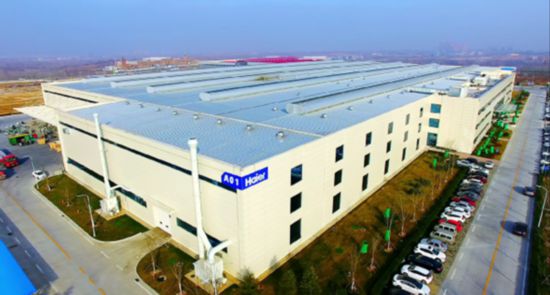
Core Viewpoint - Haier has achieved national recognition for its advancements in smart manufacturing, with its smart building project included in the Ministry of Industry and Information Technology's first batch of leading smart factory projects, and its agile flexible manufacturing technology recognized as one of the top ten technological advancements in China's smart manufacturing [1][6]. Group 1: Recognition and Achievements - Haier's smart building was selected as one of the first leading smart factory projects by the Ministry of Industry and Information Technology, marking the highest level in the national smart manufacturing cultivation system [1][2]. - The "large-scale personalized custom agile flexible manufacturing technology" from Haier's Kaos Industrial Internet platform was recognized as one of the top ten technological advancements in China's smart manufacturing [1][6]. Group 2: Technological Innovations - The central air conditioning interconnected factory in Qingdao exemplifies Haier's smart manufacturing capabilities, achieving an average energy saving of 50% and a cumulative electricity saving of over 3.3 billion kWh through AI simulation and precision processing technologies [4]. - Haier's factory utilizes AI for intelligent selection, production scheduling, and visualization systems, allowing for the efficient combination of 3.16 million design modules, reducing design cycles by 62% to better meet personalized customer needs [4]. - The factory integrates 49 major systems and 4,256 devices through its self-developed HIMOS platform, achieving a 15% reduction in energy costs and a 32% increase in production efficiency [4]. Group 3: Global Impact and Future Directions - The standard model from Haier's smart factory has been successfully replicated in 122 factories worldwide, with products and services reaching 126 countries and regions, maintaining a leading position in the global market for magnetic levitation central air conditioning for seven consecutive years [4][5]. - The "Leading Action Plan" was jointly initiated by representatives of the 15 companies recognized as leading smart factories, aiming to accelerate the integration of AI and advanced manufacturing technologies [5]. - Haier's Kaos platform has developed 4,700 industry mechanism models and over 200 expert algorithms, supporting digital transformation across 20 industries and connecting 900,000 enterprises globally [11].

投资策略专题:开源金股,12月推荐
KAIYUAN SECURITIES· 2025-11-28 09:12
Group 1 - The report suggests that after the recent market adjustment, growth stocks are expected to continue to outperform, with a focus on sectors such as military, media (gaming), AI applications, Hong Kong internet, and power equipment [3][12] - The financial engineering team has developed a sector rotation model, recommending a December industry portfolio that includes beauty care, social services, home appliances, oil and petrochemicals, retail, communication, transportation, automotive, media, and food and beverage [4][15] - Alibaba (9988.HK) is highlighted for its significant investment in AI infrastructure, which is expected to accelerate cloud business growth, alongside increased user traffic and revenue from e-commerce technology services [4][17] Group 2 - Zhongji Xuchuang (300308.SZ) is recognized as a global leader in optical modules, with a strong focus on cutting-edge research and commercial applications, gaining wide recognition from clients [4][20] - Yuekang Pharmaceutical (688658.SH) has several innovative drugs entering critical clinical or approval stages, indicating potential breakthroughs from research to commercialization [4][22] - Ximai Co., Ltd. (002956.SZ) continues to focus on the oat category, driving high growth through product structure adjustments and category innovations, benefiting from falling raw material prices [4][24] Group 3 - China Life Insurance (601628.SH) is expected to exceed expectations in its life insurance segment, with ongoing high growth in the bancassurance channel and improved investment returns [4][27] - Shangmei Co., Ltd. (2145.HK) is leveraging a multi-brand strategy and strong operational capabilities, with promising performance during the Double Eleven shopping festival [4][30] - Giant Network (002558.SZ) is anticipated to achieve new highs in key metrics due to seasonal events and successful game titles, indicating strong growth potential [4][33] Group 4 - Northern Huachuang (002371.SZ) is positioned to benefit from the growth of domestic semiconductor equipment and is expected to see significant order growth in 2026 [4][35] - Zhuoyi Information (688258.SH) is focusing on AI programming and related trends, with promising commercial prospects for its new products [4][37] - Midea Group (000333.SZ) is experiencing high growth in its ToB business and significant retail sales increases in its high-end brand strategy, contributing to sustained performance [4][40]






策略快评:2025 年 12 月各行业金股推荐汇总
Guoxin Securities· 2025-11-28 03:08
Core Insights - The report provides a summary of recommended stocks across various industries for December 2025, highlighting investment logic and potential growth opportunities for each company [2]. Industry Summaries Construction - Shenghui Integrated (603163.SH) is a Taiwanese cleanroom engineering service provider and a core engineering supplier for Google's TPU, poised to benefit from TSMC's expansion in the U.S. with potential orders from TSMC Arizona and multiple North American data centers [2]. Banking - China Merchants Bank (600036.SH) is expected to attract investors due to its stable operations and a projected dividend yield of 4.62% for the 2024 annual report, with increased demand for low-volatility stocks as market fluctuations rise [2]. Electronics - Aojie Technology (688220.SH) is positioned to benefit from the AI trend, with its unique 2-5G full-standard cellular communication capabilities and strong ASIC customization experience, which are expected to drive growth in wearable technology and other applications [2]. Power Equipment and New Energy - Delijia (603092.SH) maintains a leading market share in wind power main gearboxes, with a projected global market size of $11.563 billion by 2030 and a compound annual growth rate of 5.10% from 2024 to 2030, indicating stable growth prospects [2]. Basic Chemicals - Yaqi International (000893) is set to increase its potash fertilizer production capacity significantly, benefiting from a rising global potash market [2]. Agriculture, Forestry, Animal Husbandry, and Fishery - Youran Dairy (9858.HK), a leading global dairy farming company, is expected to benefit from rising milk prices and beef prices, leading to improved performance [2]. Internet - Alibaba (9988.HK) is experiencing accelerated growth in cloud revenue, with a 34% year-on-year increase in FY26Q2, and is expected to continue improving profitability through enhanced user engagement and AI integration [2]. Pharmaceuticals - Yifeng Pharmacy (603939.SH) is anticipated to see profit improvements due to ongoing optimization of its store structure and a clear plan for non-pharmaceutical profit growth [2]. Home Appliances - Midea Group (000333.SZ) is focusing on dual-driven strategies in domestic and international markets, with strong cash flow and a favorable dividend yield, despite facing some pressure in Q4 [2]. Non-Bank Financials - Ping An Insurance (601318.SH) is increasing investments in high-quality long-term assets, with potential for valuation improvement as market conditions shift [2].



策略快评: 2025 年 12 月各行业金股推荐汇总
Guoxin Securities· 2025-11-28 01:32
Core Insights - The report provides a summary of recommended stocks across various industries for December 2025, highlighting investment logic and potential growth opportunities for each company [2]. Industry Summaries Construction - Shenghui Integrated (603163.SH) is a Taiwanese cleanroom engineering service provider and a core engineering supplier for Google's TPU, poised to benefit from TSMC's expansion in the U.S. with potential orders from TSMC Arizona and multiple North American data centers [2]. Banking - China Merchants Bank (600036.SH) is expected to attract investors due to its stable operations and a projected dividend yield of 4.62% for the 2024 annual report, with increased demand for low-volatility stocks as market fluctuations rise [2]. Electronics - Aojie Technology (688220.SH) is positioned to benefit from the AI trend, with its unique 2-5G full-standard cellular communication capabilities and strong ASIC customization experience, which is expected to drive growth in wearable technology [2]. Power Equipment and New Energy - Delijia (603092.SH) maintains a leading market share in wind power main gearboxes, with a projected global market size of $11.563 billion by 2030 and a compound annual growth rate of 5.10% from 2024 to 2030 [2]. Basic Chemicals - Yaqi International (000893) is set to increase its potash fertilizer production capacity significantly, benefiting from a rising global potash market [2]. Agriculture, Forestry, Animal Husbandry, and Fishery - Youran Dairy (9858.HK), a leading global dairy farming company, is expected to benefit from rising milk prices and beef price increases, leading to improved performance [2]. Internet - Alibaba (9988.HK) is experiencing accelerated growth in cloud revenue, with a 34% year-on-year increase in FY26Q2, and is expected to continue improving profitability [2]. Pharmaceuticals - Yifeng Pharmacy (603939.SH) is anticipated to see profit improvements due to ongoing optimization of its store structure and a clear planning rhythm for non-pharmaceutical profit increments [2]. Home Appliances - Midea Group (000333.SZ) is advancing its dual-driven strategy, focusing on both B2B and B2C markets, with strong cash flow and a favorable dividend yield, making it an attractive investment [2]. Non-Banking Financials - Ping An Insurance (601318.SH) is increasing investments in high-quality long-term assets, with potential for valuation improvement as market conditions shift [2].