
大宗商品交易

Search documents
香港金发局:香港大宗商品展现显著潜力 进一步拓展大宗商品市场
Zhi Tong Cai Jing· 2025-11-10 05:52
Core Insights - The Hong Kong Financial Development Council (HKFDC) released a report titled "Unlocking Hong Kong's Potential: Growth Prospects for Expanding the Commodity Market," emphasizing Hong Kong's position as a leading international financial center and its potential to enhance economic resilience through the expansion of its commodity market [1] Group 1: Market Development - The report suggests that strengthening the commodity market ecosystem in Hong Kong is essential for enhancing market efficiency and stimulating trading activities [1] - Key recommendations include focusing on the development of major commodities that align with regional advantages and strategic goals, particularly in gold, iron ore, copper, and aluminum [2] Group 2: Strategic Importance - The report highlights the importance of establishing a robust physical commodity trading foundation before expanding into futures trading, as a strong spot market can significantly activate futures trading [2] - The ongoing global energy transition and the Belt and Road Initiative present new opportunities for commodity trading in Hong Kong [2] Group 3: Role of HKEX - The HKFDC identifies the Hong Kong Stock Exchange (HKEX) as an ideal candidate to drive further development in the commodity sector [1] - The report emphasizes the need for enhanced connectivity between mainland China and Hong Kong's commodity markets to facilitate growth [1]
许正宇:今年以来香港金融市场“质”与“量”均展现良好势头
智通财经网· 2025-10-27 07:45
Core Insights - Hong Kong's financial market has shown significant growth in both quality and quantity in 2023, with average daily trading volume reaching HKD 256.4 billion, a year-on-year increase of 126% [1] - The total fundraising amount in the IPO market reached HKD 182.9 billion, marking a substantial increase of 229% [1] - Hong Kong continues to rank third globally and first in the Asia-Pacific region in the Global Financial Centres Index, reflecting growing international confidence in the market [1] Group 1 - The approval of the first company relocation application signals a positive trend for businesses optimizing their structures and enhancing operational efficiency in Hong Kong [1] - The Hong Kong government aims to attract more mainland enterprises to use Hong Kong as an "outbound" platform, creating business opportunities and economic benefits [1][2] - The establishment of dedicated personnel in the company registry to streamline the registration process for state-owned enterprises is expected to enhance cross-border settlement and financing services [2] Group 2 - The Hong Kong Stock Exchange has issued consultation documents to optimize the listing rules for structured products, aiming to enhance market competitiveness and efficiency [2] - Hong Kong's bond issuance hub accounts for nearly 30% of the Asian market, with the Securities and Futures Commission and the Monetary Authority releasing a roadmap to attract issuers [2] - The People's Bank of China has announced measures to support foreign institutional investors in the mainland bond market, enhancing market connectivity and liquidity [3] Group 3 - The demand for gold as a safe-haven asset has surged, with global demand projected to rise by 45% year-on-year by Q2 2025, reaching USD 132 billion [3] - The Hong Kong government is working to establish an international gold trading market and improve storage facilities, reinforcing its position as a financial and trading hub [3] - Upcoming international financial events in Hong Kong aim to enhance the city's global influence and promote investment opportunities [3][4] Group 4 - The Financial Secretary's office will continue to implement measures from the Policy Address to maintain Hong Kong's leadership as an international financial center [4] - The focus will be on policy innovation and resource investment to explore emerging financial sectors and drive economic growth [4]
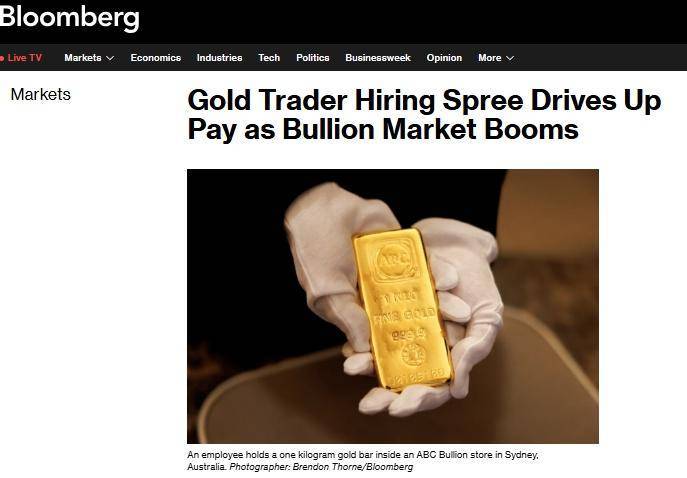
黄金热推动黄金交易员薪资大涨
Sou Hu Cai Jing· 2025-10-27 04:44
Core Insights - The demand for gold traders is surging as commodity traders, hedge funds, and banks are actively recruiting professionals in this field due to the rising interest in gold [1][3] - The gold market has traditionally been dominated by a few major banks, such as JPMorgan Chase, HSBC, and UBS, but new entrants are struggling to find experienced talent as they attempt to enter the market [1] - The shortage of skilled gold traders is exacerbated by years of neglect in the banking sector, leading to a scarcity of professionals who understand both macroeconomic factors affecting gold prices and the practicalities of gold storage and transportation [3] Industry Trends - Major commodity trading firms like Trafigura and Glencore have begun hiring multiple precious metals traders, indicating a competitive landscape for talent acquisition [1] - The rising recruitment activity has resulted in a talent shortage, which in turn has driven up salary levels for gold traders [3] - Bonuses for physical trading gold traders may now reach two to three times the salaries offered by banks, highlighting the lucrative nature of this profession in the current market environment [3]

突发!受避险需求降温等因素驱动,黄金、白银21日晚间突然崩盘
Sou Hu Cai Jing· 2025-10-21 23:39
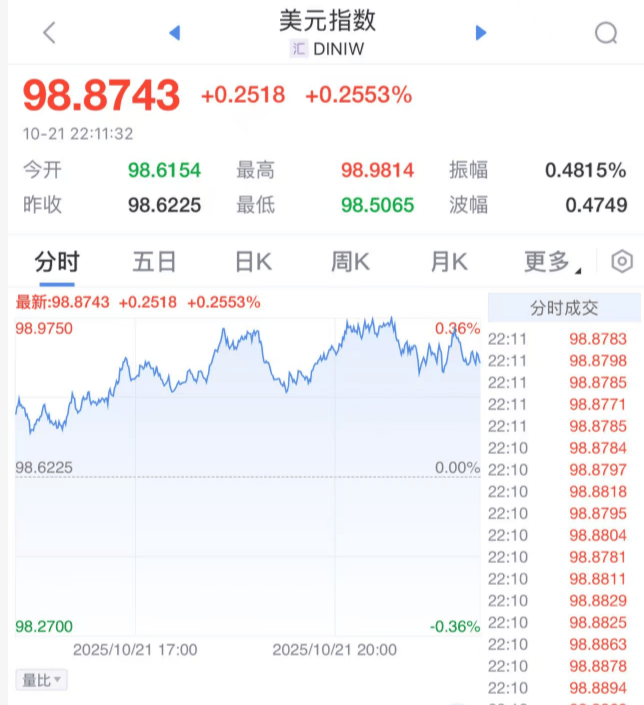
Group 1 - The core viewpoint of the articles highlights a significant decline in precious metals, with gold dropping over 4% and silver over 6%, attributed to reduced safe-haven demand and seasonal buying in India coming to an end [1][4] - Analysts suggest that the recent volatility in precious metals is leading traders to hedge against potential price declines or speculate on price drops for profit [4] - The strong US dollar is increasing the cost of purchasing gold for buyers holding other currencies, further pressuring gold prices [1] Group 2 - The ongoing US government shutdown has resulted in the loss of critical data from the CFTC, which tracks hedge fund positions in gold and silver futures, potentially leading to abnormal large positions in one direction by speculators [3] - Record trading volumes in options related to the largest gold ETF have been observed, indicating heightened activity and speculation in the market [4] - Historical trends suggest that while gold holdings in ETFs have not reached previous peaks, momentum typically wanes, and buying may eventually turn to selling, especially if US economic data proves stronger than expected [4]
美债利率下行引担忧,各国银行为何竞购零利率黄金
Sou Hu Cai Jing· 2025-10-08 18:41
Group 1 - The core issue is the growing distrust in the US dollar, leading central banks to sell US Treasuries and invest in gold as a safer asset [1][5][15] - In April, gold prices reached a historic high, indicating a shift in investment preferences as central banks express anxiety over the stability of the dollar [3][9] - The trend of central banks redeeming US Treasuries early reflects a broader sentiment of fear regarding potential dollar devaluation and a desire to diversify assets [5][11] Group 2 - The increase in gold reserves among emerging markets is significant, with the net increase in global gold reserves in the first half of the year being twice that of 2018 [7] - The market's cold response to rising US Treasury yields, which reached 4.7%, highlights a stark contrast to previous demand for these securities [9][11] - The ongoing transformation of the global monetary system is creating both risks and opportunities, with central banks acting swiftly to adapt to changing conditions [13][15]
美经济数据及股市扰动,金价高位震荡,黄金回调不影响牛市架构
Mei Ri Jing Ji Xin Wen· 2025-09-26 01:40
Core Viewpoint - Gold prices experienced fluctuations, initially dropping to $3751.9 per ounce before closing at $3780.5 per ounce, influenced by stronger-than-expected U.S. GDP growth and declining unemployment claims [1] Economic Indicators - The final annualized GDP growth rate for the U.S. in Q2 was revised up to 3.8%, significantly higher than the previous estimate of 3.3%, marking the fastest growth in nearly two years [1] - The core PCE price index was adjusted from 2.5% to 2.6% [1] - Initial jobless claims fell by 14,000 to 218,000, the lowest level since mid-July, and well below the market expectation of 235,000 [1] Gold Market Analysis - Gold has seen a year-to-date increase of approximately 42%, currently in a consolidation phase around $3780 per ounce [1] - According to Ole Hansen, head of commodity strategy at Saxo Bank, the recent pause in gold's upward trend is considered a healthy correction, and even a drop to $3600 per ounce would not significantly disrupt the overall bullish market structure [1] - Large institutional investors are reportedly still underweight in their gold holdings [1]
伦敦金属交易所批伦敦金属交易所批准在香港新增3个认可仓库准在香港新增3个认可仓库
Zhong Guo Xin Wen Wang· 2025-09-23 09:29
Core Viewpoint - The Hong Kong government welcomes the approval of three warehouses in Yuen Long by the London Metal Exchange (LME) as recognized warehouses, enhancing Hong Kong's position as a key hub for international metal trading [1] Group 1: Government and Regulatory Actions - The Financial Secretary of the Hong Kong Special Administrative Region, Xu Zhengyu, expressed support for the LME's expansion of storage facilities in Hong Kong, aligning with the Chief Executive's 2025 policy direction [1] - The total number of recognized warehouses by the LME in Hong Kong has increased to 11, including the three newly approved warehouses [1] Group 2: Industry Impact - The addition of the three warehouses will provide efficient delivery options for participants in international metal trading, contributing to the development of Hong Kong's shipping and other related services [1] - The LME included Hong Kong in its global warehouse network as a licensed delivery point in January of this year, allowing warehouse operators to apply for licenses to store metals registered with the LME [1]

大宗商品资金流入激增,通胀“交易员”拉响警报:全球通胀或将在6-9个月内重新抬头
Hua Er Jie Jian Wen· 2025-09-18 13:41
Core Insights - The article highlights a contrasting narrative between mainstream market optimism regarding inflation and the warnings from commodity traders about potential inflationary pressures ahead [1][2][3] Commodity Market Insights - Commodity markets are seen as a closer indicator of inflation, with rising raw material prices typically signaling broader price increases [2] - Historical data suggests that metal prices lead global Consumer Price Index (CPI) by approximately 6-9 months, indicating that current increases in metal prices may foreshadow rising inflation [2][3] Inflation Leading Indicators - Multiple inflation leading indicators are showing strong signals of impending price pressure, with a composite indicator based on manufacturing, monetary, and commodity data remaining above 2% and accelerating [3] - Rising freight and fertilizer prices are also noted as indicators that precede increases in food CPI [3] Market Sentiment - There is a notable overconfidence in the stock and bond markets, with significant inflows into major U.S. stock and bond ETFs, showing no signs of decline [4] - Current inflows into stocks and bonds do not reflect expectations of a scenario similar to the inflationary period of the 1970s, where commodities provided significant positive real returns [5]
格林大华期货副总经理、首席专家王骏:香港有望成为连接内地与国际市场的核心枢纽
Qi Huo Ri Bao Wang· 2025-09-18 03:17
Core Viewpoint - The establishment of the "Commodity Strategy Committee" by the Hong Kong government marks a significant shift towards a government-led approach in developing the commodity trading ecosystem, enhancing Hong Kong's role as an international financial center and supporting China's broader economic strategies [2][3]. Group 1: Establishment of the Commodity Strategy Committee - The committee will be led by the Financial Secretary and aims to strengthen the top-level design and long-term strategy formulation for commodity policies [1]. - This initiative signifies a transition from a market-driven approach to one that is coordinated by government leadership, indicating a commitment to elevate the importance of commodity trading alongside stock and bond markets [2][3]. Group 2: Development of the Commodity Trading Ecosystem - The Hong Kong government plans to continue developing the commodity trading ecosystem, including supporting the establishment of more recognized warehouses and providing tax incentives for commodity traders [1]. - The committee's focus on long-term strategy development suggests a shift towards creating a sustainable 10 to 20-year development blueprint, aiming to compete with established markets like Singapore and Chicago [3]. Group 3: Strategic Importance and Future Outlook - The initiative is expected to enhance China's pricing power in the global commodity market and align with the national "Belt and Road" initiative [2]. - As the committee operates and the network of recognized warehouses expands, Hong Kong is poised to become a key hub connecting domestic and international markets, facilitating the implementation of the national dual circulation strategy [4].
李家超:加强大宗商品政顶层设计,将成立“大宗商品策略委员会”
Zheng Quan Shi Bao Wang· 2025-09-17 04:16
Core Viewpoint - The Hong Kong government is establishing a "Commodity Strategy Committee" to enhance the top-level design and long-term strategy formulation for commodity policies [1] Group 1: Government Initiatives - The committee will be led by the Financial Secretary and will gather industry representatives to strengthen commodity policy [1] - Hong Kong will continue to promote the development of a commodity trading ecosystem, following the direction set in last year's policy report [1] Group 2: Infrastructure and Support - The London Metal Exchange, a wholly-owned subsidiary of the Hong Kong Stock Exchange, has approved eight delivery warehouses in Hong Kong, with plans to support the establishment of more recognized warehouses [1] - The government will provide half-tax incentives for commodity traders to set up in Hong Kong, which is expected to boost demand for shipping and professional maritime services [1] Group 3: Financial Innovation - Financial innovations will be utilized to optimize international commodity trading processes, including a collaboration between the Hong Kong Monetary Authority and the Central Bank of Brazil to test electronic bills of lading and deposit tokenization [1] - There will be a deepening of connections with the Guangzhou Futures Exchange and other domestic commodity markets to support the internationalization of the national commodity market [1]