
工业母机

Search documents
中小微企业贷款贴息来了!新能源、医药等重点领域产业链迎针对性支持
Sou Hu Cai Jing· 2026-01-20 11:45
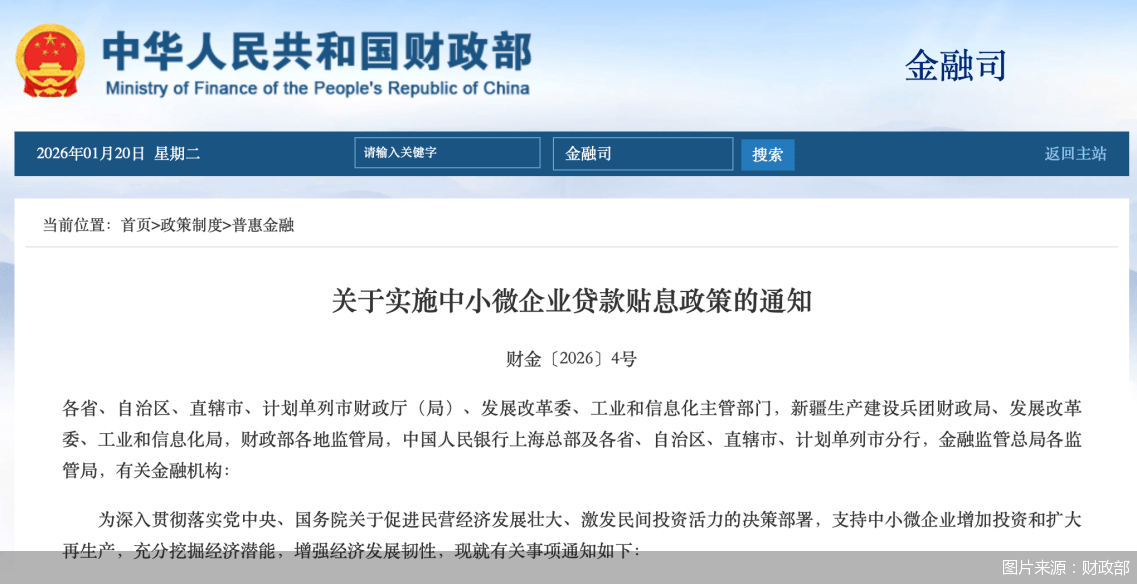
北京商报讯(记者 董晗萱)中小微企业贷款也有真金白银支持!1月20日,财政部等部门连发多条通知,在优化个人消费贷款、经营贷贴息政策的同时,明 确实施中小微企业贷款贴息政策。 政策要求,对2026年1月1日起经办银行发放的、符合条件的中小微民营企业固定资产贷款和中小微民营企业参与项目使用的新型政策性金融工具资金,中央 财政按照贷款本金给予年化1.5个百分点、期限不超过2年的贴息支持,单户贴息贷款规模上限5000万元。政策实施期限暂定1年,后续可视情况延长。 适用对象为,投向相关重点领域产业链及其上下游产业的全部中小微民营企业(包括但不限于由支持小微企业融资协调工作机制推荐或由工业和信息化部共 享的优质中小微民营企业)固定资产贷款,中小微民营企业参与项目使用的新型政策性金融工具资金。 投向领域包括,支持新能源汽车、工业母机、医药工业、医疗装备、基础软件和工业软件、民用大飞机、服务器、移动通信设备、新型显示、仪器仪表、工 业机器人、轨道交通装备、船舶与海洋工程装备、农机装备等相关重点产业链及上下游产业,科技服务、物流服务、信息和软件服务、节能环保服务、生产 性租赁服务、商务服务等生产性服务业领域,农、林、牧、渔、农 ...

《“人工智能+制造”专项行动实施意见》点评:AI赋能制造业,打造新质生产力
Lian He Zi Xin· 2026-01-20 11:01
Investment Rating - The report does not explicitly provide an investment rating for the industry Core Insights - The issuance of the "AI + Manufacturing" action plan aligns with global industrial competition and domestic manufacturing transformation needs, aiming to empower the manufacturing sector with AI technology and establish a new quality productivity base [2][4] - The plan emphasizes the integration of AI into manufacturing processes, which is seen as a critical driver for enhancing China's competitive advantage in core technologies and industrial scale [4][10] - The report outlines a comprehensive development system that includes technical support, scenario empowerment, product innovation, ecological activation, and safety assurance [7][9] Summary by Sections Background and Core Positioning - The deep integration of AI and manufacturing is essential for reshaping industrial advantages and seizing development opportunities amid global competition [4] - The plan aims to accelerate the application of AI in manufacturing, addressing the long-standing issues of "large but not strong" in China's manufacturing sector [4][6] Key Policy Interpretations - The action plan focuses on precise implementation and deep advancement from "AI+" to "manufacturing empowerment," targeting specific sectors and processes within the manufacturing industry [5][6] - It sets a goal for China to achieve reliable supply of key AI technologies and maintain a leading position in industrial scale and empowerment levels by 2027 [6][10] Core Measures - The report identifies five core measures to build a comprehensive development system, including: - **Innovation Foundation**: Establishing a full-chain technical support system for AI in manufacturing [7] - **Intelligent Upgrade**: Promoting deep empowerment of AI across all processes and industries [8] - **Product Breakthrough**: Encouraging the iteration and upgrade of intelligent equipment and new business models [8] - **Ecological Cultivation**: Activating collaborative innovation among market entities [9] - **Safety Assurance**: Building a multi-dimensional safety protection system [9] Practical Implications - The action plan addresses the mismatch between computing power supply and manufacturing demand, emphasizing the need for practical applications of AI technologies [10] - It aims to facilitate a fundamental shift in manufacturing from factor-driven to innovation-driven growth, enhancing quality and efficiency [10][13] Challenges and Outlook - The report acknowledges challenges in the deep integration of AI and manufacturing, including performance limitations of industrial models and data fragmentation [11][12] - It anticipates that by 2027, 500 typical application scenarios will be established, leading to scalable implementations in key areas [13]
财政部等5部门:明确实施中小微企业贷款贴息政策|政策与监管
清华金融评论· 2026-01-20 10:44
Group 1 - The article discusses the implementation of a loan interest subsidy policy for small and micro enterprises in China, aimed at helping them overcome difficulties and promote high-quality economic development [2][3] - The policy will support fixed asset loans and new policy financial tools for eligible small and micro private enterprises starting from January 1, 2026, with a subsidy rate of 1.5% per year for up to two years [3] - The maximum loan amount eligible for the subsidy is 50 million yuan, with a maximum subsidy of 1.5 million yuan per enterprise [3] Group 2 - The supported sectors include key industrial chains, production service industries, and emerging fields such as artificial intelligence, with specific focus areas like new energy vehicles, medical equipment, and industrial software [3] - The Ministry of Finance and the financial regulatory authority will conduct joint inspections to ensure compliance, with strict penalties for serious violations by enterprises or banks involved in fraudulent subsidy operations [3]
一揽子支持政策缓解中小微企业“融资难融资贵”
Sou Hu Cai Jing· 2026-01-20 06:52
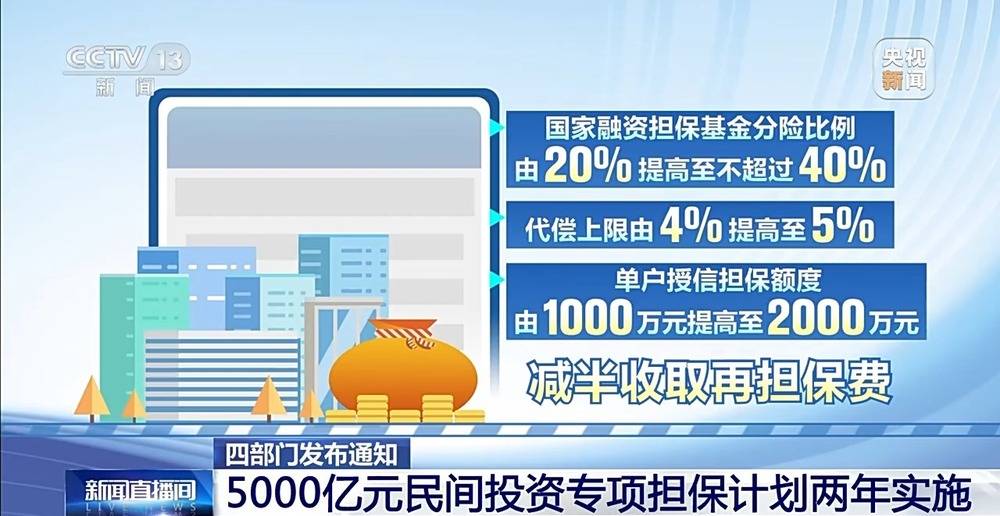
Core Viewpoint - The Ministry of Finance and other departments have announced a special guarantee plan for private investment, which will provide 500 billion yuan in funding support to the market [1][2]. Group 1: Special Guarantee Plan - The special guarantee plan will be implemented over two years, aiming to guide banks to increase lending of 500 billion yuan for fixed asset loans to small and micro enterprises [2]. - The risk-sharing ratio of the National Financing Guarantee Fund will be increased from 20% to a maximum of 40%, and the compensation cap will rise from 4% to 5% [2][8]. - The single credit guarantee limit will be raised from 10 million yuan to 20 million yuan, and the re-guarantee fee will be halved [2]. Group 2: Impact on Private Investment - The investment guarantee plan is expected to leverage a total of nearly 900 billion yuan in private investment through a three-tier government financing guarantee mechanism [4]. - The plan is crucial for stabilizing and promoting private investment in the current economic climate [4]. Group 3: Targeted Support Areas - The policy will support small and micro enterprises engaged in purchasing equipment and raw materials, technological transformation, and various production and operational activities [5]. - It will also cover sectors such as catering, health, elderly care, childcare, culture, entertainment, tourism, and green and digital industries [5]. Group 4: Loan Interest Subsidy Policy - Starting this year, a loan interest subsidy policy for small and micro enterprises will be implemented, focusing on key industries such as new energy vehicles, medical equipment, and high-end manufacturing [9][11]. - The subsidy will provide a 1.5 percentage point interest reduction for eligible fixed asset loans, with a maximum loan amount of 50 million yuan and a cap of 150,000 yuan per borrower [13]. Group 5: Coordination of Fiscal and Financial Policies - Experts believe that these policies are part of a coordinated effort between fiscal and financial sectors to alleviate the challenges of financing for market entities [14]. - The special guarantee plan is seen as an innovative mechanism that will contribute to increasing investment, creating jobs, and stabilizing economic growth [16].
财政部、国家发改委、工信部、央行、金融监管总局,发布通知
券商中国· 2026-01-20 06:10
据新华社消息,1月20日,财政部、国家发展改革委、工业和信息化部、中国人民银行、金融监管总局等 5部门对外发布通知, 明确实施中小微企业贷款贴息政策 。 政策支持范围为2026年1月1日起经办银行发放的、符合条件的中小微民营企业固定资产贷款和中小微企业参与 项目使用的新型政策性金融工具资金,支持领域包括重点产业链及上下游产业、生产性服务业等。 据介绍, 贴息方案为每年贴息1.5个百分点 ,最长贴息2年,单户贴息贷款规模上限5000万元,单户最多可享 受贴息150万元。政策实施期暂定1年,后续可视情延长。 具体来说,投向领域为支持新能源汽车、工业母机、医药工业、医疗装备、基础软件和工业软件、民用大飞 机、服务器、移动通信设备、新型显示、仪器仪表、工业机器人、轨道交通装备、船舶与海洋工程装备、农机 装备等相关重点产业链及上下游产业,科技服务、物流服务、信息和软件服务、节能环保服务、生产性租赁服 务、商务服务等生产性服务业领域,农、林、牧、渔、农副产品加工业领域,以人工智能等为代表的新兴领 域。 通知还表示,财政部会同金融监管总局酌情组织财政部各地监管局、金融监管总局各监管局开展联合抽查, 发现被贴息企业有严重违规 ...
重磅利好!财政部最新发布
中国基金报· 2026-01-20 05:28
Core Viewpoint - The Ministry of Finance has announced several significant policies aimed at stimulating consumption and supporting small and micro enterprises, including the extension of the personal consumption loan interest subsidy policy until the end of 2026 [1][3]. Group 1: Personal Consumption Loan Subsidy Policy - The implementation period for the personal consumption loan interest subsidy policy has been extended to December 31, 2026, with eligible consumption occurring between September 1, 2025, and December 31, 2026, qualifying for subsidies [3]. - The new policy expands the support scope to include credit card installment payments with an annual subsidy rate of 1% [4]. - The subsidy standards have been improved by removing the previous limits on single transaction subsidies and cumulative subsidies for individual borrowers, while maintaining an annual cap of 3,000 yuan per borrower at a single institution [4]. Group 2: Equipment Update Loan Subsidy Policy - The equipment update loan interest subsidy policy has been optimized, providing a subsidy of 1.5% on the principal of fixed asset loans for equipment updates, applicable for up to 2 years [6]. - The policy now includes support for various sectors such as construction, aviation, and digitalization, with a focus on high-end, intelligent, green, and digital equipment updates [6]. - The number of banks eligible to process these loans has been increased to 26, with an emphasis on improving the subsidy process and monitoring fund flows [6][7]. Group 3: Small and Micro Enterprises Loan Subsidy Policy - A new loan interest subsidy policy for small and micro enterprises has been introduced, offering a 1.5% subsidy on fixed asset loans for eligible enterprises, with a maximum loan size of 50 million yuan [9][10]. - The policy supports various key industries, including new energy vehicles, medical equipment, and artificial intelligence, and is set to be reviewed for potential extension after one year [10]. Group 4: Service Industry Loan Subsidy Policy - The service industry loan interest subsidy policy has been extended to December 31, 2026, with a maximum loan size of 10 million yuan per borrower and a subsidy rate of 1% [12]. - The policy now includes additional sectors such as digital, green, and retail consumption, encouraging flexible loan usage [12]. Group 5: Private Investment Guarantee Plan - A private investment guarantee plan has been launched with a total quota of 500 billion yuan over two years, aimed at supporting loans for small and micro enterprises [14][15]. - The plan includes risk-sharing mechanisms where banks bear at least 20% of the loan risk, while government-backed financing guarantees cover up to 80% [15]. - The central government will inject 5 billion yuan into the guarantee fund to support the initiative and encourage innovative financing models [16].
五部门实施中小微企业贷款贴息政策,单户贴息贷款规模上限5000万元
Bei Jing Shang Bao· 2026-01-20 05:08
Core Viewpoint - The Chinese government has announced a loan interest subsidy policy aimed at supporting small and micro enterprises, effective from January 1, 2026, with a focus on specific industries and sectors [1][2]. Group 1: Policy Details - The policy provides a subsidy of 1.5% per annum on the principal amount of eligible fixed asset loans for small and micro private enterprises, with a maximum loan amount of 50 million yuan per enterprise [1]. - The implementation period for this policy is initially set for one year, with the possibility of extension based on circumstances [1]. - Loans that benefit from this subsidy cannot simultaneously receive other central financial interest subsidy policies [1]. Group 2: Eligible Sectors - The policy targets key industries including but not limited to new energy vehicles, industrial mother machines, pharmaceuticals, medical equipment, basic and industrial software, civil aircraft, servers, mobile communication devices, new displays, instruments, industrial robots, rail transit equipment, marine engineering equipment, agricultural machinery, and related upstream and downstream industries [2]. - It also encompasses productive service sectors such as technology services, logistics services, information and software services, energy-saving and environmental protection services, productive leasing services, and business services [2]. - Emerging fields represented by artificial intelligence are included in the eligible sectors for this policy [2].
财政部:支持新能源汽车、工业母机、医药工业等相关重点产业链及上下游产业 以人工智能等为代表的新兴领域
Sou Hu Cai Jing· 2026-01-20 04:21
Core Viewpoint - The Ministry of Finance has issued a notice to implement a loan interest subsidy policy for small and micro enterprises, focusing on key industry chains and their upstream and downstream sectors [1] Group 1: Supported Industries - The policy supports fixed asset loans for small and micro private enterprises involved in key industry chains, including new energy vehicles, industrial mother machines, pharmaceutical industry, medical equipment, basic software, industrial software, civil aircraft, servers, mobile communication devices, new displays, instruments, industrial robots, rail transit equipment, marine engineering equipment, agricultural machinery, and more [1] - It also covers production service sectors such as technology services, logistics services, information and software services, energy-saving and environmental protection services, productive leasing services, and business services [1] Group 2: Emerging Fields - The policy emphasizes support for emerging fields represented by artificial intelligence and other innovative sectors [1]
我省将加快工业母机机器人等产业高质量发展
Da Zhong Ri Bao· 2026-01-20 00:59
Core Insights - Shandong Province has launched a "Work Plan for Steady Growth in the Machinery and Power Equipment Industry," targeting six key areas: industrial mother machines, agricultural machinery, construction machinery, robots, instruments, and power equipment, aiming for a revenue target of over 400 billion yuan by the end of 2026 [1][2] Group 1: Key Areas of Focus - The plan emphasizes collaboration between enterprises and educational institutions to establish innovation centers and key laboratories, focusing on critical technologies such as high-precision spindles and intelligent control systems [1] - Shandong aims to build pilot testing platforms in areas like industrial mother machines and robots to facilitate the conversion of technological achievements [1] Group 2: Industry Development Strategies - The province will enhance collaboration between main engine manufacturers and application units to stabilize the existing industry, while targeting weak links in high-end bearings and precision sensors [1] - Shandong plans to promote advanced agricultural machinery and intelligent medical equipment, while accelerating major projects in renewable energy and smart logistics [2]

统筹推进财税改革 助力经济高质量发展
Jin Rong Shi Bao· 2026-01-19 01:49
Core Viewpoint - The 2025 Central Economic Work Conference emphasizes the need for proactive fiscal policies to stabilize and enhance economic growth, focusing on optimizing fiscal management and tax policies to support consumption and investment [1][2]. Fiscal Policy and Economic Growth - The conference highlights the importance of maintaining necessary fiscal deficits and optimizing the structure of fiscal expenditures to enhance macroeconomic governance [1]. - In 2024, China's GDP is projected to reach 134.9 trillion yuan, with a growth rate of 5%, driven by final consumption, capital formation, and net exports [1]. - Domestic demand contributed 70% to economic growth, serving as a stabilizing force [1]. Tax Policy and Consumption - The 2025 conference prioritizes domestic demand and plans to implement actions to boost consumption, including optimizing tax structures and enhancing income distribution [2]. - Tax policies can stimulate household consumption by increasing disposable income, particularly for low- and middle-income groups, who have a higher marginal propensity to consume [2][3]. - Reducing specific goods' tax rates can lower final prices, thereby stimulating consumer demand [4]. Investment and Economic Capacity - The conference calls for measures to stabilize and increase investment, which is crucial for both current demand and future production capacity [5][6]. - Increased investment leads to higher capital stock, enhancing productivity and economic potential [6]. - Tax policies that lower corporate tax burdens can encourage investment by improving after-tax returns [7][8]. Export and International Competitiveness - The conference emphasizes the role of exports in driving economic growth and improving international competitiveness through tax incentives [9][11]. - Export tax rebates and reductions in corporate income tax for export-oriented enterprises can enhance profitability and reinvestment capabilities [11][12]. - Recent improvements in export tax rebate processing times have positively impacted export sales revenue [12]. Structural Reforms and Future Directions - The focus is shifting from broad tax reductions to structural tax optimization, aiming to enhance consumer purchasing power and reduce business costs [16]. - The government plans to implement targeted tax incentives to support innovation and high-tech industries, promoting sustainable economic growth [15][16].