新消费

Search documents
财信证券宏观策略周报(1.26-1.30):市场上行斜率放缓,重视业绩基本面-20260125
Caixin Securities· 2026-01-25 13:32
Group 1 - The report suggests a strategic bullish outlook with tactical flexibility, emphasizing the importance of performance fundamentals in investment decisions [4][7][13] - It identifies a favorable investment window from mid-December 2025 to early March 2026, while cautioning against rapid upward trends in indices [4][7] - Key sectors to watch include commercial aerospace, satellite industries, AI applications, and sectors driven by price increases such as non-ferrous metals and chemicals [4][13] Group 2 - Economic growth is projected at 5.0% for 2025, with a focus on high-quality development and a potential GDP growth target of around 5% for 2026 [7][10] - The real estate market is still in a deep adjustment phase, with new housing sales expected to decline by 8.7% in 2025, indicating a need for careful observation of stabilization points [8][9] - Fiscal policy is expected to maintain a "only increase, not decrease" approach, with significant spending in key areas to support economic growth [10] Group 3 - The public fund industry is anticipated to solidify its high-quality development framework, with new guidelines enhancing the accountability of performance benchmarks for funds [11] - Precious metals are expected to retain investment value due to increasing global instability and ongoing central bank gold purchases, with gold prices nearing $5,000 per ounce [12][13] - The report highlights the importance of monitoring industry-specific data, such as cement price indices and industrial production growth rates, to gauge market trends [19][20]
"新旧消费"龙头股,基金经理现操作分歧
Zheng Quan Shi Bao· 2026-01-25 01:17
某大幅加仓该股的基金在季报中分析认为,新消费行业标的有望从潮玩公司发展为IP生态运营者,通过 IP多元开发、海外市场深化及产品线拓宽,构建更稳健的增长模式,2026年或进入规模化盈利与结构成 长新阶段。 2025年四季度,"科技牛"继续担纲行情主线,在此期间,"新旧消费"集体表现不振。以泡泡玛特为代表 的新消费板块在上半年的异军突起后趋于沉寂,而以白酒为代表的传统消费的行情走软则贯穿了全年。 基金经理对不同个股的重仓操作也走出了分化。一方面,对于已经积累一定涨幅的泡泡玛特,2025年四 季度内基金整体呈减持态势,而对于毛戈平、蜜雪集团、布鲁可等个股选择增持;另一方面,在白酒股 拥挤度逐渐下降的季度里,基金对五粮液、山西汾酒、泸州老窖等个股选择减持,却在四季度内对贵州 茅台增持了超20万股。 "新消费"去年四季度走势不振 去年四季度内,港股市场中多只新消费个股表现一般,未能延续上半年昂扬的势头。 其中,泡泡玛特下跌29.65%,接近三成,毛戈平下跌21.22%,老铺黄金下跌11.79%,蜜雪集团震荡涨 超5%,其余个股在一众科技股中也较为逊色。 基金持仓方面,作为颇具代表性的个股,泡泡玛特在去年四季度内依旧被1 ...

“新旧消费”龙头股,基金经理现操作分歧
券商中国· 2026-01-24 15:29
Core Viewpoint - The "technology bull" continues to lead the market in Q4 2025, while both "new consumption" and traditional consumption sectors, represented by brands like Bubble Mart and liquor companies, show weak performance throughout the year [1]. New Consumption Sector - In Q4 2025, the new consumption sector, particularly represented by Bubble Mart, experienced a significant decline, with Bubble Mart's stock dropping by 29.65% [2]. - Despite the downturn, Bubble Mart remained a key holding for 123 funds, with a total of approximately 37.587 million shares held, although it was reduced by 8.7591 million shares in the quarter [2]. - Other new consumption stocks like Mao Geping and Mixue Group also saw increased fund interest, with Mao Geping being increased by 575.93 million shares and Mixue Group by 1.0322 million shares [3]. - Analysts suggest that the new consumption sector has potential for growth due to low penetration rates, despite volatility in some companies [3]. Traditional Consumption Sector (Liquor) - The traditional consumption sector, particularly the liquor industry, has shown disappointing profit results, with many stocks experiencing declines [4]. - Major liquor companies like Kweichow Moutai, Wuliangye, and Luzhou Laojiao faced reductions in holdings by funds, with Wuliangye being reduced by approximately 15.9 million shares [5]. - Despite the overall decline, Kweichow Moutai saw an increase in holdings by over 20,000 shares in Q4, indicating continued investor confidence [5]. - Analysts believe that the liquor industry is currently in a bottoming phase, with expectations for stabilization in the future, although the bottom for prices and financial reports has yet to be seen [5].




A股“躁动”与港股“失速”——公募基金缘何减配港股?
Zhi Tong Cai Jing· 2026-01-23 14:11
Group 1 - The overall positioning of public funds has become clearer with the completion of the 2025 Q4 reports, showing a notable shift towards cyclical and small-cap growth stocks, while the allocation to Hong Kong stocks has decreased significantly from 19.26% to 16.23% [1] - The decline in the strategic position of Hong Kong stocks within active equity funds contrasts with the upward trend in the A-share market, raising concerns about the future performance of Hong Kong stocks [1] - The A-share market has shown a strong growth style, with significant thematic investment in sectors like commercial aerospace and artificial intelligence hardware, which are less represented in the Hong Kong market [2] Group 2 - Hong Kong stocks are facing dual pressures on liquidity, both from external factors and southbound capital, making them more sensitive to liquidity changes compared to A-shares [3] - Despite a record inflow of 1.4 trillion RMB from southbound capital in 2025, the pace has slowed significantly in Q4, with daily average inflows dropping to 10.9 million HKD in December [3] - The IPO market in Hong Kong has thrived, with 117 IPOs raising 285.9 billion HKD in 2025, marking a return to the top globally, but a potential wave of lock-up expirations could pose challenges [4][5] Group 3 - The upcoming lock-up expirations for major companies listed in the first half of 2025 could lead to significant selling pressure, with an estimated 120 billion HKD in potential unlocks by December [4] - Historical patterns indicate that lock-up expirations have coincided with declines in the Hong Kong market, although strong-performing companies may still attract new investments [5] - The market's current dynamics suggest that while there may be selling pressure from lock-up expirations, the presence of new buying forces could offset this impact [5]
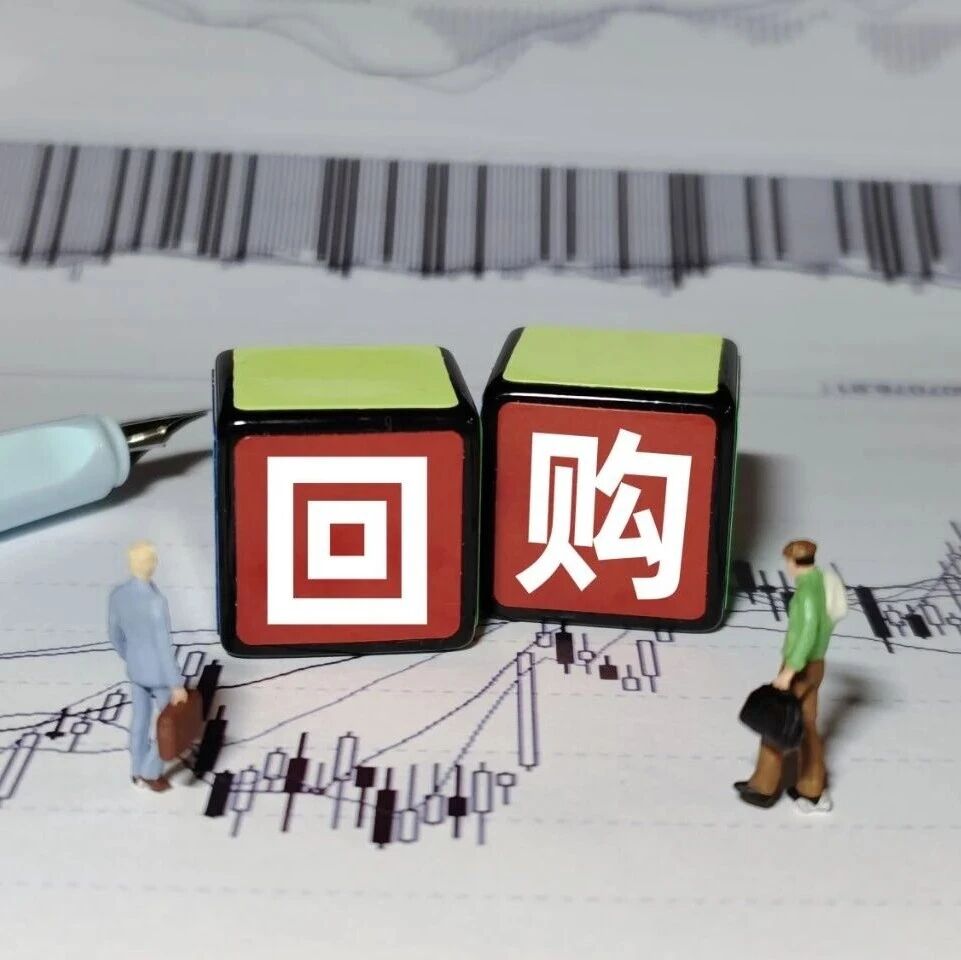
超110亿港元!港股龙头公司积极回购
证券时报· 2026-01-23 11:22
Core Viewpoint - The article discusses the active share buyback activities of leading companies in the Hong Kong stock market, highlighting the ongoing trend despite a decrease in the number of companies participating in buybacks compared to the previous year [2][3]. Group 1: Share Buyback Activities - Xiaomi Group announced a plan to repurchase up to 2.5 billion HKD of its Class B shares, starting on January 23 [2][8]. - Since 2026, the Hong Kong stock market has seen a total buyback amount exceeding 11 billion HKD, with Tencent Holdings leading with over 6 billion HKD in buybacks this year [2][5]. - A total of 108 Hong Kong-listed companies have engaged in buybacks this year, a decrease from 121 companies in the same period last year, with a significant reduction in total buyback amounts [3][5]. Group 2: Notable Companies and Their Buybacks - Tencent Holdings has repurchased 10.2 million shares for a total of 6.36 billion HKD, while Xiaomi Group has repurchased 60.56 million shares for 2.25 billion HKD [5]. - Pop Mart conducted its first buyback in nearly two years, repurchasing shares at prices ranging from 177.7 to 194.9 HKD, which led to a rebound in its stock price [6]. - Kunlun Energy plans to buy back up to 8.659 million shares, potentially exceeding 600 million HKD, while Haier Smart Home announced a buyback plan for up to 200,000 euros [9]. Group 3: Market Context and Investor Sentiment - The article notes that share buybacks are often seen as a signal that companies believe their stock is undervalued, which can help stabilize investor confidence and stock prices [5][10]. - There is a growing trend of foreign capital returning to the Chinese market, with significant inflows noted, indicating renewed investor confidence in Chinese assets [11]. - Goldman Sachs has recommended overweighting Chinese stocks for 2026, citing significant undervaluation compared to global peers and predicting annual growth rates of 15% to 20% for the Chinese stock market [13].
私募大佬胡建平,重磅发声!
Zhong Guo Ji Jin Bao· 2026-01-23 06:57
【导读】拾贝投资投委会主席胡建平:努力在确定的市场中把握节奏,将优势转化为胜势 中国基金报记者任子青 1月21日,拾贝投资举办投资者交流会,拾贝投资投委会主席胡建平以"努力把确定的趋势转化成收 益"为题,回顾2025年的投资得失并展望未来市场机会。 胡建平认为,全球的经济格局正在或者已经发生深刻的变化,但市场定价尚不充分。物价端,PPI、CPI 均存向好趋势,统一大市场建设助力产业提质增效。出海是兼具时代机遇与历史使命的长期投资主线, 医药行业的成长才刚起步,AI领域仍是今年最大的机会所在。 在后续的投资中将始终坚守价值投资的核心逻辑,同时积极拥抱AI技术,努力在确定的市场中把握节 奏,把优势转化成胜势。 全球经济格局已发生深刻变化 市场并未充分反应 过去一年,拾贝投资在全球视野的构建上有所进步,在多空维度的布局上积极探索实践,在周期视角的 研判上不断深耕打磨,同时始终坚守价值投资的核心逻辑。在此基础上,将进一步融入AI工具与技 术,以智能化能力赋能投资决策,让专业判断与科技力量深度结合,AI可以改变投研覆盖的宽度、速 度和深度,进而改变投资的胜率和赔率分布,最后改变投资的模式。 胡建平表示,全球的经济格局正 ...
基金创始人彭杰艾媒盛典分享:双维思维锚定红利,资本破局新消费
Sou Hu Cai Jing· 2026-01-22 04:14
"你们赚的每一分钱,本质上都是时代的红利" 2026年1月19日,以"逆势而上,破局增长"为主题的艾媒新消费盛典暨"预见2026"张毅年度演讲在广州 圆满举办。 在新消费市场迭代加速、资本布局更趋理性的当下,如何精准捕捉赛道机遇、穿越行业周期,成为企业 家与投资者共同关注的核心命题。作为投资圈的资深前辈,彭杰身兼深圳海之源私募投资基金、广东知 源悦纳私募基金两大机构创始人,投资版图从天使轮延伸至二级市场,众多不同层级的投资人皆与他建 立了深度合作关系,其对消费赛道的判断极具行业参考价值。活动现场,彭杰结合自身数十年投资经 验,分享了资本视角下新消费的生存逻辑与增长密码,以下是采访实录。 除了未来性思维,空性思维也不可或缺。我今年已经50岁了,二十多岁时,我觉得做软件行业前景无 限;到了30岁,却意识到自己不该局限于做软件,而应该去创业。这种认知转变,就源于空性思维—— 不困在自己固有的认知里,愿意主动接纳新观点、新输入。就像有人说的,你身边的人决定了你是谁。 如果周遭都是消极懈怠的人,自己也容易受影响;若想追求幸福,就多和幸福的人同行;若想变得优 秀,就主动向行业顶尖者靠拢。具备了这种 "愿意被新事物注入" ...

港股午评:恒指跌0.15%,恒生科指涨0.14%,半导体板块涨幅居前,黄金股普涨,内房股普跌
Jin Rong Jie· 2026-01-21 04:18
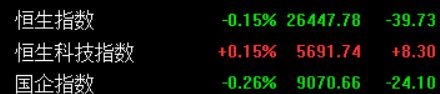
Market Performance - The Hang Seng Index decreased by 0.15% to 26,449.1 points, while the Hang Seng Tech Index increased by 0.14% to 5,691.65 points [1] - The National Enterprises Index fell by 0.26% to 9,071.33 points, and the Red Chip Index dropped by 0.44% to 4,170.27 points [1] Technology Sector - Among major tech stocks, Alibaba rose by 1.06%, Tencent fell by 0.17%, JD.com increased by 0.27%, Xiaomi dropped by 2.31%, NetEase fell by 3.43%, Meituan decreased by 0.77%, Kuaishou rose by 0.66%, and Bilibili fell by 0.08% [2] - The semiconductor sector saw significant gains, with Hua Hong Semiconductor rising over 4% [2] - Micron Technology indicated that the slow expansion of wafer fabs and complex customer certification processes will likely prolong the current memory shortage until 2028 [2] Gold and Silver Market - Gold stocks experienced a broad increase, with Lingbao Gold rising over 7% due to heightened demand for safe-haven assets amid escalating geopolitical tensions [3] - Spot silver reached a historical high of $95.89 per ounce, while spot gold surpassed $4,830 per ounce, also setting a new record [3] Real Estate Sector - Domestic property stocks generally declined, with Sunac China falling over 3% [3] - CICC's report suggested that despite weak demand, there are signs of positive changes on the supply side in the real estate sector, recommending increased attention to the sector in the short term [3] Consumer Sector - The new consumption concept saw a pullback, with Hu Shang A Yi dropping over 6% [3] - China Galaxy emphasized the importance of the "14th Five-Year Plan" for medium- to long-term consumption goals and the rollout of specific policies by 2026 [3]
瑞银财富:预计2026年港股和A股有15%上升空间
Zhi Tong Cai Jing· 2026-01-20 07:20
Core Viewpoint - UBS Wealth Management's Chief Investment Officer for Asia Pacific, Chen Minlan, anticipates a 15% upside potential for Hong Kong and A-shares this year [1] Group 1: Market Outlook - The firm is optimistic about European, Chinese, and Japanese stock markets, with a preference for H-shares over A-shares due to a positive outlook on Chinese tech stocks listed in Hong Kong [1] - The expected average earnings growth for Chinese tech stocks over the next few years is projected to reach 25% or more [1] Group 2: Investment Themes - There are interesting "bottom-up" investment themes within Chinese stocks, particularly in areas such as technology autonomy, which includes companies related to artificial intelligence, automation, and robotics [1] - The firm also expresses optimism for sectors such as healthcare, new consumption, and high-yield financial stocks [1]
2026开年洞察:全球资产重估与政策博弈下的投资新坐标
Sou Hu Cai Jing· 2026-01-20 04:06
Macro Changes - The market's rise at the beginning of 2026 is fundamentally a continuation of the global "easing consensus" from 2025, but three marginal changes are disrupting this trend [3] - The U.S. political cycle is intensifying the clash with monetary policy, as Trump pressures the Federal Reserve to lower interest rates, leading to heightened market expectations for a rate cut [3][7] - The expansion of "shadow banking" in the U.S. has shifted from a hidden concern to a significant variable, with money market funds and private credit rapidly growing, which could amplify liquidity and asset bubbles [4] Policy Dynamics - The Federal Reserve faces three constraints: persistent inflation, political pressure, and the balance between shrinking and expanding its balance sheet [7] - The European Central Bank and other global central banks are signaling potential policy shifts in response to U.S. monetary policy changes, indicating a global interconnectedness in policy decisions [8] Asset Implications - U.S. Treasury yields may steepen if rate cuts occur, but long-term rates could remain suppressed due to fiscal deficits [9] - The U.S. stock market is supported by liquidity expectations, but shadow banking could increase volatility through retail leverage [9] - Gold prices are expected to rise due to declining real interest rates and increased demand for safe-haven assets [9] Investment Shifts - China's "deposit migration" reflects a shift in asset allocation from risk-free to risk-return matching, impacting A-shares, Hong Kong stocks, and the bond market [11] - A-shares are transitioning from "stock game" to "incremental drive," with significant capital moving into equity markets, benefiting high-dividend and growth sectors [11] - Hong Kong stocks are experiencing dual elasticity, attracting both domestic and foreign investments due to improving fundamentals and lower financing costs [12] Conclusion - The global market in 2026 represents a struggle between normalized policy interventions and spontaneous market dynamics, with shadow banking and deposit migration indicating a new era for emerging market assets [13] - Investors should focus on policy-sensitive assets, growth-oriented investments, and safe-haven assets to navigate the evolving landscape [13]