
科技服务业

Search documents
中共海南省委关于制定国民经济和社会发展第十五个五年规划的建议
Hai Nan Ri Bao· 2025-12-10 01:00
中共海南省委关于制定国民经济 和社会发展第十五个五年规划的建议 (2025年11月30日中国共产党海南省第八届委员会第八次全体会议通过) "十五五"时期是我国基本实现社会主义现代化夯实基础、全面发力的关键时期,也是海南自由贸易 港在封关运作新起点上全面深化改革开放、实现高质量发展的关键五年。中国共产党海南省第八届委员 会第八次全体会议认真学习贯彻党的二十届四中全会精神和习近平总书记关于海南工作的系列重要讲话 和指示批示精神,深入分析国际国内形势,就制定海南省国民经济和社会发展"十五五"规划提出以下建 议。 一、"十五五"时期是奋力谱写中国式现代化海南篇章、高标准建设自由贸易港的关键时期 1."十四五"时期经济社会发展取得重大成就。习近平总书记亲自谋划、亲自部署、亲自推动海南自 由贸易港建设,多次亲临海南并发表重要讲话,为海南发展指明了前进方向、提供了根本遵循。"十四 五"时期我省发展历程极不寻常、极不平凡。面对错综复杂的国际形势和国内省内多重超预期因素影 响,经受住世纪疫情和超强台风考验,全省上下坚持以习近平新时代中国特色社会主义思想为指导,深 入贯彻习近平总书记关于海南工作的系列重要讲话和指示批示精神,紧紧 ...
市人大常委会听取北京城市总规实施情况报告
Xin Jing Bao· 2025-11-26 10:22
Core Insights - The report highlights the significant progress made in implementing the Beijing Urban Master Plan (2016-2035) and the core area control regulations, emphasizing the importance of urban planning and construction for the capital's development [1][2] Urban Development and Planning - By 2025, the urban construction land scale has reached the phased target set for 2035, supporting high-quality development and advanced manufacturing land needs [2] - The "Four Centers" functional construction is advancing, with the release of the "Beijing Central Axis Protection and Inheritance Three-Year Action Plan (2025-2027)" [2] - The population in Beijing remains stable, and the spatial structure is continuously optimized, contributing to urban renewal and development [2] Environmental and Ecological Initiatives - Beijing has achieved a total of 1,100 parks, earning the title of "City of a Thousand Gardens," while also promoting the construction of garden cities [3] - The city has seen a 15% year-on-year decrease in PM2.5 concentration, with 226 days classified as good air quality in the first three quarters of 2025 [4] - The ecological protection and green development are being advanced, with ongoing projects like the Capital West Mountain Water Project [3] Infrastructure and Public Services - The comprehensive transportation system is being enhanced, with a focus on optimizing traffic in key areas such as the CBD and Olympic Center [4] - The report indicates an increase in educational and healthcare resources, along with improved living conditions through better housing quality [4] - The city is implementing a resilient urban construction mechanism to ensure safety and reliability in municipal infrastructure [4] Cultural and Heritage Preservation - The report emphasizes the importance of cultural heritage, with plans to accelerate the return and protection of cultural relics, enhancing the area's cultural charm [7][8] - The integration of traditional aesthetics into urban planning is being prioritized, with efforts to maintain the historical character of old neighborhoods [8] Regional Collaboration - The overall strength of the Beijing-Tianjin-Hebei region is increasing, with enhanced collaborative mechanisms and spatial planning [5] - Key cross-border areas are seeing significant progress, with major companies establishing headquarters in Xiong'an, indicating deepening cooperation between Beijing and Tianjin [5]
发展新质生产力 扎实推进中国式现代化建设
Ren Min Ri Bao· 2025-11-24 22:31
Group 1 - The forum emphasized the importance of improving people's quality of life as a central goal of China's modernization efforts, aligning with the directives from the 20th Central Committee [2][3] - The forum provided a platform for various stakeholders, including government officials, experts, and entrepreneurs, to share experiences and discuss strategies for enhancing public welfare [2][3] - Key topics discussed included high-quality employment, income distribution, education, social security, and sustainable urban development, all aimed at ensuring that the public benefits from economic growth [3][4] Group 2 - The integration of technology and finance was highlighted as a crucial factor for innovation and economic development, particularly in the Guangdong-Hong Kong-Macao Greater Bay Area [8][9] - The forum showcased various innovative practices in financial services that aim to enhance public welfare, including the development of financial products that support green and low-carbon transitions [9][10] - The role of local governments in implementing effective policies and practices to improve living standards was underscored, with examples from different regions demonstrating successful initiatives [5][6] Group 3 - The event featured discussions on the significance of technological innovation in driving sustainable economic growth, with a focus on the role of AI and digital technologies in various sectors [12][16] - The forum also addressed the need for a collaborative approach among financial institutions, technology companies, and government bodies to foster an ecosystem conducive to innovation [10][11] - The importance of international cooperation in advancing technological capabilities and achieving mutual benefits was emphasized as a key strategy for building a strong technological foundation [13][14]


全力打造“智造高地”,上海奉贤2024年规上工业产值突破2775亿元
Di Yi Cai Jing· 2025-11-21 08:42
Core Insights - In 2024, the industrial output value of Shanghai's Fengxian District is projected to exceed 277.5 billion yuan, with an average annual growth rate of 9.9% [2] - The district is focusing on "energy conversion" to achieve new economic growth, with fixed asset investment in industrial sectors reaching 17.96 billion yuan in 2024, up from 11.4 billion yuan in 2020, reflecting an annual growth rate of 12% [2] - The service sector is also expanding, with revenue from regulated service industries expected to reach 48.49 billion yuan in 2024, nearly doubling since the end of the 13th Five-Year Plan [2] Industrial Development - The four key industries of beautiful health, green new energy, general new materials, and intelligent new equipment now account for over 80% of the district's total industrial output [2] - The industrial output value in the Fengxian area has increased from 25.97 billion yuan in 2020 to 83.05 billion yuan, with an impressive annual growth rate of 33.7% [3] Innovation and Ecosystem - Fengxian has cultivated 56 national-level specialized and innovative small giant enterprises and 1,860 national high-tech enterprises, with 68 enterprises recognized as technology centers at the municipal level or above [3] - The district is actively integrating into the Lingang New Area, enhancing policy collaboration and promoting industrial synergy [3] Infrastructure and Urban Development - Significant improvements in public services and transportation infrastructure have been made, including the opening of major hospitals and cultural landmarks, as well as the completion of key transportation projects [4] - The district is developing a "smart manufacturing highland" and has established a comprehensive investment system covering various types of funds [4] Future Plans - Looking ahead to the 15th Five-Year Plan, Fengxian aims to transition from an "industrial district" to a "strong industrial district" by enhancing manufacturing capabilities and focusing on advanced manufacturing and modern services [5] - The district plans to create a spatial layout that promotes differentiated development across its eastern, central, and western regions, with a focus on collaboration with the Lingang New Area [5]
奉贤“十四五”年均增速领跑,剑指南上海重要增长极
Guo Ji Jin Rong Bao· 2025-11-21 07:13
Core Insights - The Shanghai government held a press conference to discuss the achievements of the "14th Five-Year Plan" in the Fengxian District, emphasizing its role as a significant growth engine in southern Shanghai [1] Economic Development - Fengxian District aims to achieve an industrial output value exceeding 277.5 billion yuan by 2024, with an average annual growth rate of 9.9% [3] - Industrial fixed asset investment is projected to rise from 11.4 billion yuan in 2020 to 17.96 billion yuan in 2024, reflecting an average annual growth rate of 12% [3] - The district focuses on four key industries: health, green energy, new materials, and intelligent equipment, which together account for over 80% of the district's industrial output [3] Service Sector Growth - The revenue from the service sector is expected to reach 48.49 billion yuan in 2024, nearly doubling since the end of the "13th Five-Year Plan" [3] - The proportion of revenue from emerging service industries has increased from 15.6% to 23.2% [3] - Retail sales of consumer goods are projected to reach 59.36 billion yuan, with an annual growth rate of 11.8%, ranking among the highest in the city [3] Innovation and Technology - The district has introduced policies like the "16 Innovation Policies for Southern Shanghai," resulting in the cultivation of 56 national-level specialized and innovative small giant enterprises and 1,860 national high-tech enterprises [4] - The establishment of the "Returnee Town" aims to attract global talent and enhance regional innovation capabilities [4] Infrastructure and Public Services - Significant improvements in public services include the opening of major hospitals and cultural landmarks, enhancing urban functionality [5] - A comprehensive transportation network is being developed, including the extension of metro lines and new highways, facilitating better connectivity [5] - The district has added 488 hectares of green space and built 223 parks, achieving a per capita green space of 17.3 square meters [5] Agricultural Development - The district has introduced 50 high-tech agricultural projects, focusing on modern green agriculture, with a notable achievement in establishing a "5G+AI" smart farm [6] - The income of farmers is steadily increasing, with the average disposable income projected to exceed 47,000 yuan in 2024 [7] Future Outlook - The district plans to focus on becoming an open innovation demonstration hub, integrating with the free trade zone and enhancing its policy advantages [8] - It aims to develop a comprehensive modern city with an advanced transportation network and improved urban quality [9] - The district will promote new industrialization and strive for its four key industries to reach a scale of 100 billion yuan [10] - Efforts will be made to establish a center for technological innovation and create a collaborative innovation community among local universities [11] - The district is committed to creating a world-class business environment, optimizing government services, and ensuring efficient policy implementation [12]
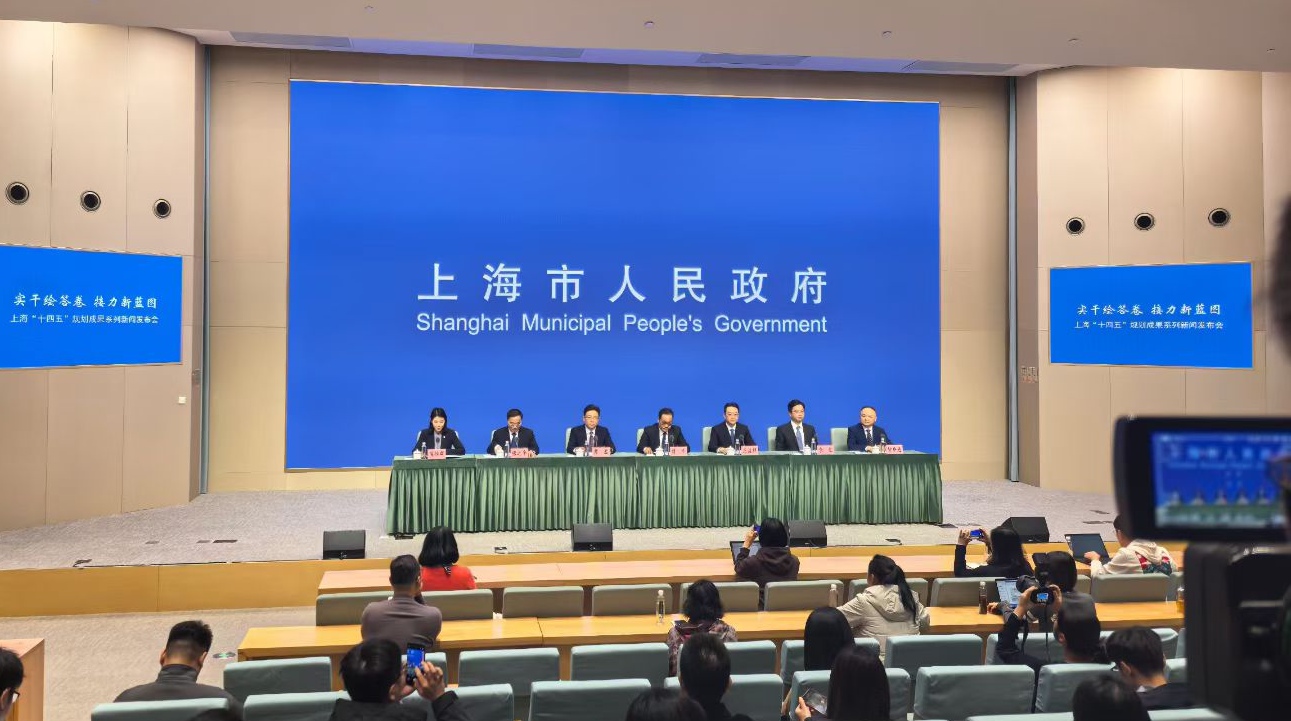
规上工业年均增速9.9%,奉贤如何打造“南上海重要增长极”?
Xin Lang Cai Jing· 2025-11-21 03:57
Core Viewpoint - The Shanghai government is promoting the development of the Fengxian District as a significant growth engine in southern Shanghai, focusing on economic, social, and environmental advancements during the 14th Five-Year Plan period [1]. Economic Development - The industrial output value in Fengxian is projected to exceed 277.5 billion yuan by 2024, with an average annual growth rate of 9.9% [3]. - Industrial fixed asset investment is expected to rise from 11.4 billion yuan in 2020 to 17.96 billion yuan in 2024, with an average annual growth rate of 12% [3]. - The service sector's revenue is anticipated to reach 48.49 billion yuan in 2024, nearly doubling from the end of the 13th Five-Year Plan [3]. Innovation and Technology - Fengxian has nurtured 56 national-level specialized and innovative small giant enterprises and 1,860 national high-tech enterprises [5]. - The establishment of the "Returnee Town" aims to attract global talent and enhance regional innovation capabilities [5]. Infrastructure and Transportation - Significant improvements in public services include the opening of major hospitals and cultural landmarks, enhancing urban functionality [6]. - A comprehensive transportation network is being developed, including the extension of metro lines and new highways, facilitating better connectivity [8]. Environmental Sustainability - The district has added 4,880 hectares of green space and built 223 parks, achieving an average of 17.3 square meters of park space per person [9]. - The promotion of non-fossil energy sources has led to the installation of 305,000 kilowatts of solar power capacity, exceeding the targets set for the 14th Five-Year Plan [9]. Rural Development - The introduction of 50 high-tech agricultural projects has improved rural industries, with a focus on modern green agriculture [10]. - The average disposable income for rural residents is projected to exceed 47,000 yuan in 2024, reflecting steady income growth [10]. Social Welfare - The district has achieved national recognition for its education and health initiatives, including the establishment of a national-level health promotion zone [11]. - A robust social security network has been developed, with 27 community employment service stations established to address housing needs [11]. Future Outlook - The district aims to become an open innovation demonstration hub and a comprehensive modern city, enhancing its urban functions and quality [12]. - Fengxian plans to advance its industrial clusters towards a scale of 100 billion yuan and foster a collaborative innovation ecosystem among local universities [12].
金融赋能科技服务 打通创新转化“最后一公里”
Jin Rong Shi Bao· 2025-11-17 01:47
Core Viewpoint - The article emphasizes the importance of the technology service industry in China, highlighting its role as a bridge between innovation supply and industrial demand, and the need for enhanced collaboration between technology services and financial support to drive high-quality development. Technology Service Industry - The technology service industry focuses on the efficient transformation and industrialization of scientific achievements, providing comprehensive intellectual support through various segments such as R&D consulting, intellectual property agency, testing and certification, and technology financial services [1]. - It serves as a natural link between the innovation chain and the industrial chain, characterized by high talent density, technological content, and significant industrial added value [1]. Policy Support - The Chinese government is actively promoting the high-quality development of the technology service industry through comprehensive policies, including the issuance of implementation opinions by nine departments in May 2025, focusing on technology finance and technology transfer [2]. - Local governments, such as Beijing, Shanghai, and Shenzhen, have introduced specific policies to enhance the technology service industry, with Shanghai aiming for significant transformation achievements by 2027 [3]. Financial Support - Financial support is crucial for the innovation and development of the technology service industry, with Beijing's VC/PE investment reaching 103.8 billion yuan in the first eight months of the year, a 19.4% increase year-on-year [4]. - The relationship between finance and technology services is symbiotic, where financial capital aids technology companies in overcoming challenges, while the development of technology services provides new opportunities for financial innovation [4]. Future Development - Strengthening financial services for technology enterprises throughout their lifecycle is essential for implementing innovation-driven development strategies and achieving high-level technological self-reliance [6]. - The Ministry of Industry and Information Technology outlines key reforms to enhance the technology service industry, including building a unified technology transaction service platform and fostering specialized technical managers [6].
鼓励民企进入附加值更高科技服务业
Sou Hu Cai Jing· 2025-11-11 21:18
Core Viewpoint - The National Development and Reform Commission (NDRC) has introduced measures to promote private investment, particularly in key sectors such as low-altitude economy and commercial aerospace, while addressing market access challenges for private capital [1][2][3]. Group 1: Private Investment Trends - Private investment has slowed down this year due to changes in the international environment and adjustments in the real estate market, but private project investment excluding real estate has seen a year-on-year growth of 2.1% in the first three quarters [2]. - Infrastructure private investment has increased by 7% year-on-year, while manufacturing private investment has grown by 3.2%, indicating a stable growth trend [2]. Group 2: Policy Measures - The new measures include 13 policy initiatives aimed at encouraging private capital participation in urban infrastructure projects with profit potential, particularly in smaller cities [2]. - The measures emphasize the need for feasibility studies for projects requiring national approval, such as railways and nuclear power, to assess the viability of private capital involvement [2][3]. Group 3: Support for Productive Services - The measures encourage private capital to invest more in productive service industries, which are seen as crucial for industrial development, focusing on areas like industrial design and quality certification [4]. - The NDRC plans to enhance support for private enterprises in high-value-added technology services and ensure the protection of their rights in infrastructure operations [4]. Group 4: Government Procurement and Financial Support - The NDRC will utilize central budget investments to support eligible private investment projects, effectively guiding social investments [5]. - Government procurement policies will reserve over 40% of the budget for engineering projects suitable for small and medium-sized enterprises (SMEs), encouraging local governments to increase this share [6]. - Financial services for SMEs will be improved through streamlined bank approval processes and direct funding channels [6].
国家发展改革委: 支持民间资本有序流向高价值服务行业
Zhong Guo Zheng Quan Bao· 2025-11-11 20:12
Core Viewpoint - The National Development and Reform Commission (NDRC) is promoting private investment development by detailing requirements for private capital participation in project construction and encouraging investments in high-value service industries [1][2]. Group 1: Encouragement of Private Investment - The NDRC has introduced measures to encourage private capital participation in key projects, allowing for a shareholding ratio of over 10% in certain qualified projects, with some nuclear power projects reaching up to 20% [2][6]. - The NDRC aims to support various types of economic entities in project construction, promoting complementary advantages among different ownership types [2][3]. Group 2: Focus on Productive Service Industries - The NDRC is directing private capital towards high-value service sectors, including industrial design and quality certification, to enhance participation in productive service projects [2][4]. - There is an emphasis on the integration of advanced manufacturing and modern service industries, encouraging regions to innovate policies that support the service-oriented transformation of manufacturing [3][5]. Group 3: Support for Major Pilot Platforms - The NDRC is advocating for the establishment of significant pilot platforms by private enterprises, which are crucial for linking innovation with industry [4]. - The NDRC encourages collaboration between state-owned enterprises, universities, and research institutions to provide market-oriented pilot services to private companies [4][5]. Group 4: Expansion of Financing Channels - The NDRC is actively supporting the issuance of infrastructure REITs for qualified private investment projects, with 14 out of 18 recommended projects already listed, raising nearly 30 billion yuan [6]. - Future efforts will focus on expanding the market for private investment projects, facilitating the listing of new asset types, and establishing a supportive coordination mechanism for REITs [6].
支持民间资本有序流向高价值服务行业
Zhong Guo Zheng Quan Bao· 2025-11-11 20:09
Group 1 - The National Development and Reform Commission (NDRC) is promoting private investment development by detailing requirements for private capital participation in project construction and encouraging investment in high-value service industries [1][2] - The NDRC has introduced measures to support private enterprises in building significant pilot platforms that have strong industry driving capabilities, particularly in advanced manufacturing clusters [2][3] - The NDRC is actively supporting the issuance of infrastructure REITs for eligible private investment projects, with 14 out of 18 recommended projects already listed, raising nearly 30 billion yuan [4][5] Group 2 - The NDRC emphasizes the importance of integrating innovation and industry through pilot platforms, which serve as a crucial link between the innovation chain and the industrial chain [3] - The NDRC encourages state-owned enterprises, universities, and research institutions to provide market-oriented pilot services to private enterprises, fostering an open and shared pilot ecosystem [3] - The NDRC plans to enhance collaboration with the China Securities Regulatory Commission to expand financing channels for private enterprises and promote a virtuous cycle of investment and financing [5][6]