
聚氨酯

Search documents
基础化工周报:万华新疆、韩国韩华TDI临时停车,国内TDI价格上行-20260111
Soochow Securities· 2026-01-11 15:39
Investment Rating - The industry investment rating is "Overweight," indicating an expected outperformance of the industry index relative to the benchmark by more than 5% over the next six months [70]. Core Insights - The average prices for pure MDI, polymer MDI, and TDI are reported at 18,043, 14,171, and 14,478 CNY/ton respectively, with TDI showing a week-on-week increase of 59 CNY/ton [2]. - The average prices for ethane, propane, and coal are 1,165, 4,172, and 520 CNY/ton respectively, with ethane decreasing by 85 CNY/ton and propane increasing by 45 CNY/ton [2]. - The average prices for synthetic ammonia, urea, DMF, and acetic acid are 2,213, 1,724, 3,787, and 2,546 CNY/ton respectively, with synthetic ammonia decreasing by 34 CNY/ton and urea increasing by 12 CNY/ton [2]. - The average prices for animal nutrition products such as VA and VE are 62.5 and 54.9 CNY/kg respectively, with no significant changes [2]. Summary by Sections Polyurethane Sector - The average prices for pure MDI, polymer MDI, and TDI are 18,043, 14,171, and 14,478 CNY/ton respectively, with TDI showing a week-on-week increase of 59 CNY/ton [2][16][20]. Oil, Coal, and Olefins Sector - Ethane and propane average prices are 1,165 and 4,172 CNY/ton respectively, with ethane decreasing by 85 CNY/ton and propane increasing by 45 CNY/ton [2][24][31]. - The average price for polyethylene is 6,800 CNY/ton, reflecting a week-on-week increase of 30 CNY/ton [2]. Coal Chemical Sector - The average prices for synthetic ammonia, urea, DMF, and acetic acid are 2,213, 1,724, 3,787, and 2,546 CNY/ton respectively, with synthetic ammonia decreasing by 34 CNY/ton and urea increasing by 12 CNY/ton [2][40][48][49]. Animal Nutrition Sector - The average prices for VA, VE, solid egg amino acid, and liquid egg amino acid are 62.5, 54.9, 17.6, and 14.2 CNY/kg respectively, with no significant changes [2][56][62].



A股策略周报20260111:趋势仍在,结构再平衡-20260111
SINOLINK SECURITIES· 2026-01-11 13:41
Group 1: Market Liquidity and A-Share Performance - The improvement in market liquidity has been a direct catalyst for the recent rise in A-shares, with margin trading balances increasing by over 125 billion yuan in just half a month, leading to a more than 35% increase in trading volume across the A-share market [3][13][22] - Historical data shows that similar situations, where the A-share market rose by nearly 10% over 16 trading days with trading volume expanding by over 30%, have occurred six times in the past decade, predominantly at the beginning of the year [3][18][22] - The recent surge in the commercial aerospace index has led to a significant increase in turnover rates and trading volume proportions, indicating a potential structural overheating in the market [3][22] Group 2: AI Impact on Employment and Economic Policy - The U.S. job market continues to face pressure, with December's non-farm payrolls adding only 50,000 jobs, below expectations, and a downward revision of 76,000 jobs for October and November [4][26][33] - The adoption of AI by large U.S. companies has significantly suppressed employment growth, particularly in the information, finance, and professional services sectors, which have collectively lost 344,000 jobs over the past three years [4][26][33] - The Federal Reserve's extended rate-cutting cycle is expected to benefit commodity markets, as inflation concerns related to AI investments are easing [4][40][41] Group 3: Domestic Economic Recovery and Policy Optimization - The Producer Price Index (PPI) for industrial enterprises in December showed a year-on-year increase, indicating a shift from price drag to price support for corporate revenues [5][56] - The Consumer Price Index (CPI) has also risen, with the core CPI maintaining its highest level in five years, reflecting a smoother transmission of prices from enterprises to consumers [5][56] - The ongoing anti-involution policies are expected to enhance corporate profitability, with regulatory measures aimed at preventing monopolistic practices and promoting fair competition [5][62] Group 4: Rebalancing and Investment Recommendations - The report suggests a positive outlook for A-shares, driven by improved liquidity and favorable domestic and international economic conditions [6][63] - Recommended investment areas include industrial resource products like copper, aluminum, and lithium, as well as sectors benefiting from the recovery of domestic manufacturing and consumer spending [6][63] - The report emphasizes the importance of capturing opportunities in sectors such as aviation, duty-free, and food and beverage, which are expected to benefit from increased consumer income and tourism recovery [6][63]
净利润1.7亿,江苏聚氨酯软质泡沫制造商IPO换道北交所!
Sou Hu Cai Jing· 2026-01-11 13:24
Core Viewpoint - Chengfeng New Materials (874801) has announced a change in its plan to go public, shifting from an IPO on the Shanghai Stock Exchange to a public offering on the Beijing Stock Exchange aimed at unspecified qualified investors [1][3]. Company Overview - Chengfeng New Materials was established in 2002 and specializes in the research, production, and sales of technology-based polyurethane soft foam, with applications in transportation equipment, high-performance porous materials, and daily consumer goods [3]. Financial Performance - Projected revenues for 2023 and 2024 are 729.64 million yuan and 832.77 million yuan, respectively, with net profits of 127.28 million yuan and 171.41 million yuan [4]. - The company’s gross profit margin improved from 34.57% in 2023 to 37.47% in 2024 [5]. - The total assets are expected to increase from 1.19 billion yuan in 2023 to 1.40 billion yuan in 2024, while shareholders' equity is projected to rise from 883.74 million yuan to 1.04 billion yuan [5]. Key Financial Ratios - The asset-liability ratio decreased slightly from 25.82% in 2023 to 25.35% in 2024 [5]. - The current ratio improved from 2.00 to 2.07, and the quick ratio increased from 1.65 to 1.67 [5]. Accounts Receivable and Inventory - Accounts receivable balances were 313.09 million yuan and 368.03 million yuan at the end of the reporting periods, representing 42.91% and 44.19% of revenue, respectively [6]. - Inventory values were 97.89 million yuan and 130.58 million yuan, accounting for 17.60% and 19.10% of current assets [6]. Supplier Information - Major suppliers include China National Offshore Oil Corporation, BASF, and Coim Asia Pacific, with the top five suppliers accounting for 70.72% and 64.16% of total purchases in 2023 and 2024, respectively [6][7]. Shareholder Structure - The company has no controlling shareholder, with the largest shareholders being Changzhou Xushun and Changzhou Qiaoshun, each holding 23.06% of shares [9]. - The actual controller of the company is identified as the couple Ruan Guoqiao and Shi Ruhui, who collectively control 82.46% of the voting rights [9].

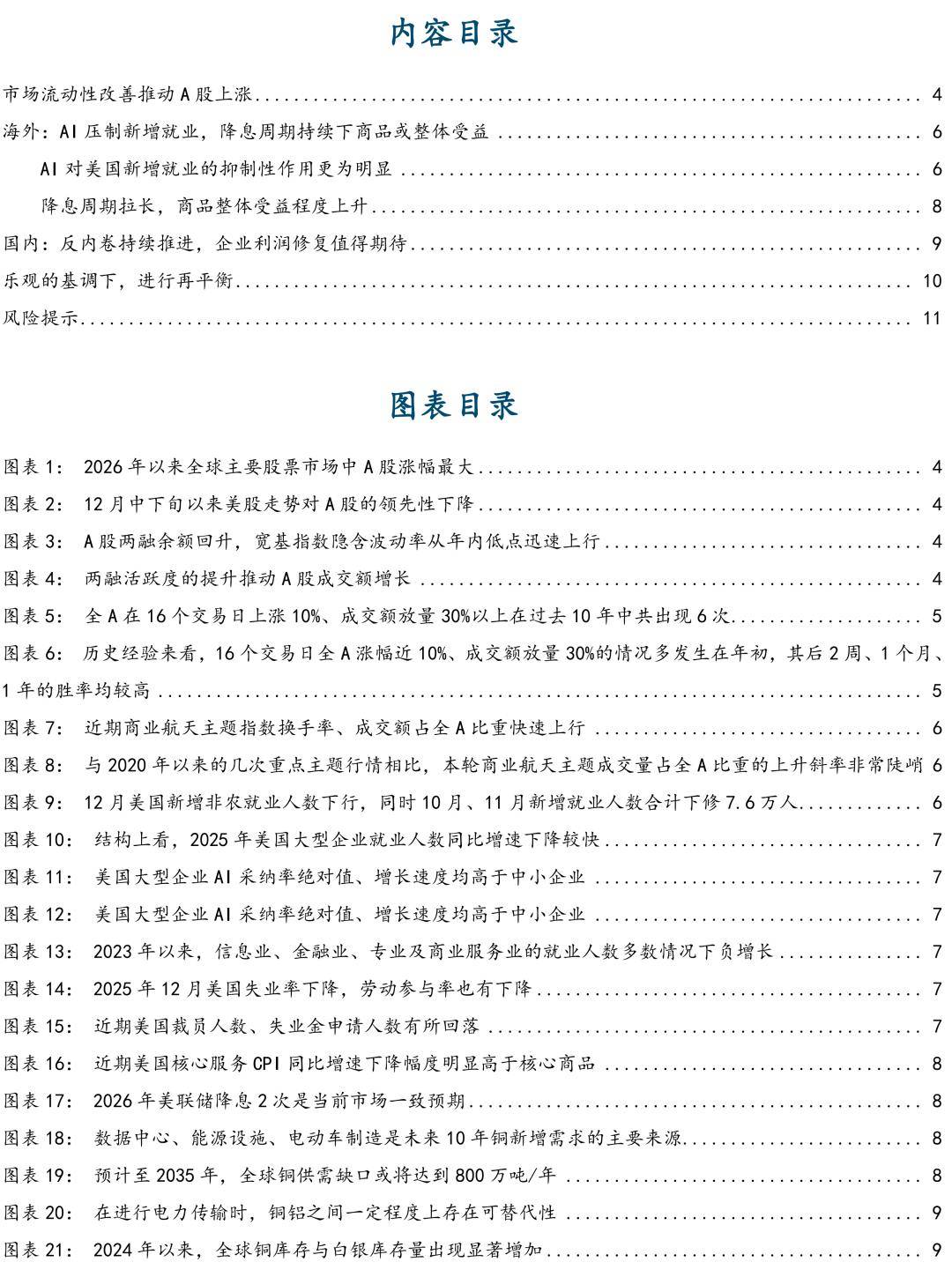
国金策略:趋势仍在,结构再平衡
Sou Hu Cai Jing· 2026-01-11 10:59
Group 1 - The recent improvement in market liquidity has driven the A-share market's rise, with historical patterns suggesting a strong performance in the upcoming period [1][5] - The A-share market has seen a significant increase in trading volume, with a 35% growth in total trading volume and a 10% rise in the overall A-share index over the past 16 trading days [2][14] - There is a notable structural overheating in the market, particularly in the commercial aerospace index, which has seen a sharp increase in turnover and trading volume [2][14] Group 2 - AI's negative impact on the U.S. employment market is becoming evident, with December's non-farm payrolls falling short of expectations and a downward revision of previous months' data [3][20] - The prolonged interest rate cut cycle by the Federal Reserve is expected to benefit commodity markets, as the demand for resources related to AI and new energy industries is increasing [3][33] - Geopolitical tensions are altering inventory behaviors among market participants, leading to increased stockpiling and a rise in copper and silver inventories [3][35] Group 3 - Domestic policies aimed at reducing "involution" are being implemented, with industrial prices showing signs of recovery, leading to improved corporate profitability [4][43] - The recent regulatory focus on the photovoltaic industry has raised concerns about the commitment to anti-involution policies, but the overall direction remains focused on improving corporate fundamentals [4][49] - The government is actively working on regulatory frameworks to support innovation while preventing monopolistic practices, which is expected to enhance corporate profitability in the long run [4][51] Group 4 - The report maintains an optimistic outlook for the A-share market, suggesting that the combination of improved liquidity, AI investments, and domestic policy support will lead to a favorable investment environment [5][52] - Recommended sectors include industrial resource products like copper, aluminum, and lithium, as well as equipment exports and consumer sectors benefiting from recovery trends [5][52]
聚氨酯:全面构筑产业新优势
Zhong Guo Hua Gong Bao· 2026-01-09 02:44
Core Insights - The polyurethane industry in China is focusing on innovation and green low-carbon development during the 14th Five-Year Plan, solidifying its global leadership in scale while achieving improvements in quality, efficiency, technological innovation, structural optimization, and sustainable development capabilities [1] Group 1: Industry Scale and Self-Sufficiency - The polyurethane industry in China continues to expand, maintaining its position as the largest producer and consumer globally, with over 40% of the world's core raw material capacity [2] - By 2025, China's production capacity for MDI is expected to reach 4.99 million tons, and TDI capacity is projected to be 1.99 million tons, reinforcing its status as the largest producer and supplier of isocyanates [2] - Epoxy propane capacity is anticipated to grow from 3.37 million tons in 2020 to 8.15 million tons by 2025, while polyether polyol production is expected to exceed 10 million tons, with an increasing proportion of high-end products [2] Group 2: Application Expansion and Emerging Dynamics - China's polyurethane product consumption remains the highest globally, with an expected total consumption of 14.19 million tons by 2025, supporting various downstream industries such as home furnishings, energy-efficient construction, transportation, and new energy [3] - Traditional foam products maintain a solid market presence while upgrading towards greener, high-performance solutions, with environmentally friendly products in the CASE (coatings, adhesives, sealants, elastomers) sector becoming mainstream [3] - The penetration of polyurethane materials in strategic emerging industries like new energy vehicles, wind power, photovoltaics, and biomedical applications is rapidly increasing, contributing significantly to industry growth [3] Group 3: Technological Innovation and Core Competencies - The industry emphasizes technological innovation as a core driver of development, achieving breakthroughs in key processes, green technologies, and high-end product development [4] - Companies like Wanhua Chemical are leading in isocyanate manufacturing technology, with significant advancements in green circular technologies [4] - Progress in continuous polyether polyol processes and new catalysts has been made by companies such as Sinochem Dongda and Ennovate, while research on bio-based and CO₂-based polyols is accelerating [4] Group 4: Structural Optimization and Quality Improvement - The industry is increasingly focused on quality and structural optimization, with rising industry concentration leading to the emergence of competitive leading enterprises and specialized small and medium-sized enterprises [5] - The establishment of national-level manufacturing champions indicates that the industry has reached a global leading level in specific product areas [5] - The industry layout is becoming more scientific, forming distinctive and efficient polyurethane industry clusters that promote resource optimization and regional economic development [5] Group 5: Environmental and Intelligent Development - The industry actively responds to the national "dual carbon" strategy, integrating green development and digital transformation to enhance sustainable development capabilities [6] - Significant achievements in green manufacturing include the widespread application of environmentally friendly foaming agents and the large-scale industrialization of solvent-free and water-based polyurethane technologies [6] - The implementation of production execution systems and enterprise resource planning systems has improved operational efficiency, while the construction of automated production lines and intelligent logistics systems is accelerating [7]
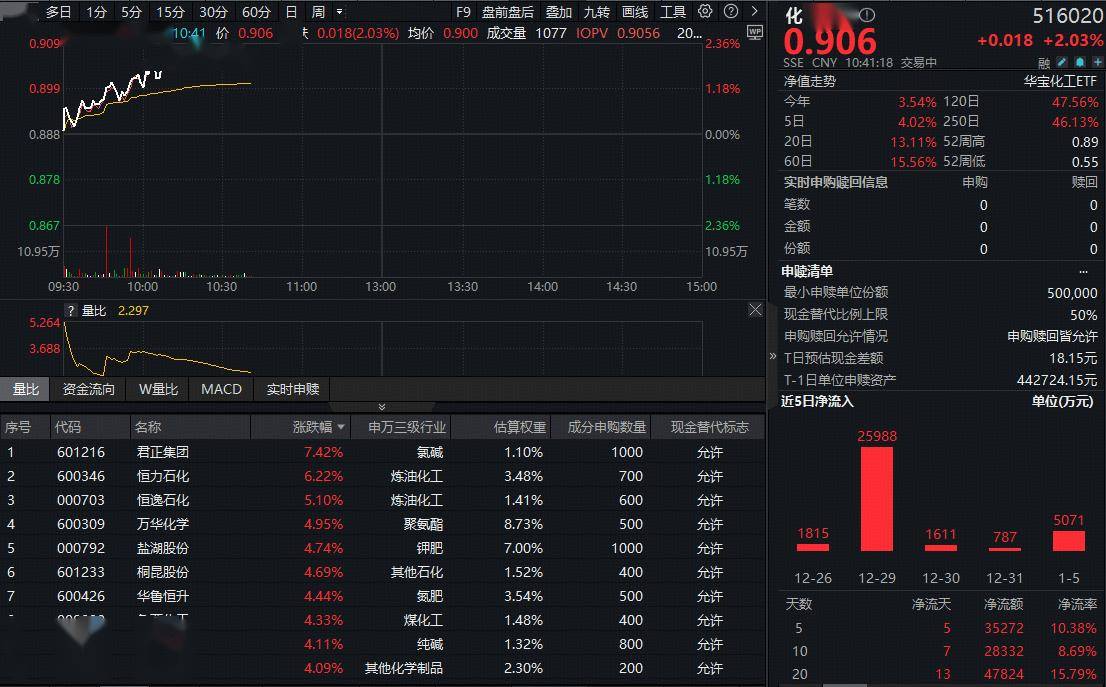
ETF盘中资讯|万华化学调价!化工板块狂飙,化工ETF(516020)盘中涨超2%! 机构:化工板块有望迎来业绩、估值双重抬升
Sou Hu Cai Jing· 2026-01-06 03:07
Group 1 - The chemical sector continues to show strong performance, with the chemical ETF (516020) rising by 2.03% as of the latest report, reflecting a robust market trend [1] - Key stocks in the sector include Junzheng Group, which surged over 7%, Hengli Petrochemical up over 6%, and Hengyi Petrochemical increasing by over 5% [1][2] - The overall market sentiment is positive, driven by price increases in core products like MDI/TDI by Wanhua Chemical, which plans to raise prices in line with international giants [1][3] Group 2 - The chemical industry is expected to experience a dual uplift in performance and valuation due to the "anti-involution" policy, with a 10% year-on-year decrease in construction projects among basic chemical companies [3] - Demand is being supported by domestic consumption and resilient exports, indicating a recovery in the supply-demand balance [3] - Analysts predict that the chemical industry may reach a cyclical turning point by 2026, driven by policy expectations and a potential increase in demand as the U.S. enters a rate-cutting phase [3] Group 3 - The chemical ETF (516020) tracks the CSI sub-sector chemical industry index, with nearly 50% of its holdings in large-cap leading stocks like Wanhua Chemical and Salt Lake Shares, providing investors with strong investment opportunities [4] - The ETF also diversifies its holdings across various sub-sectors, including phosphate and nitrogen fertilizers, fluorochemicals, and other chemical leaders [4]
MDI王者万华化学点评:业绩短期承压,稳坐全球龙头
市值风云· 2026-01-05 10:05
Core Viewpoint - The article discusses the investment value of Wanhua Chemical, emphasizing its leading position in the global MDI industry and its resilience against market fluctuations despite short-term price pressures [3][4]. Group 1: MDI as the Core Business - Wanhua Chemical's business is divided into three main segments: polyurethane (core products MDI and TDI), petrochemicals, and fine chemicals and new materials [5]. - In the first half of 2025, the gross profit from polyurethane products accounted for approximately 75% of the company's total profit, highlighting its significance as the main profit source [5]. - As of September 2025, Wanhua's total MDI production capacity reached 3.05 million tons per year, maintaining the largest market share globally at 27.2%, an increase of 1.2 percentage points from 2024 [5][11]. Group 2: Market Demand and Pricing Trends - The global demand for MDI in the first nine months of 2025 was approximately 7.85 million tons, with China accounting for 3.9 million tons, or 49.7% of the total demand [8]. - Demand growth rates for MDI in various sectors from January to September 2025 were 3.5% in home appliances, 4.8% in automotive manufacturing, while the construction insulation sector saw a decline of 2.0% due to a sluggish real estate market [9]. - MDI prices in China exhibited a "first suppressed, then rebounded, and finally declined" trend in 2025, influenced by global overcapacity [9][11]. Group 3: Financial Performance and Challenges - For the first three quarters of 2025, Wanhua reported revenue of 144.2 billion yuan, a decrease of 2.3% year-on-year, and a net profit attributable to shareholders of 9.16 billion yuan, down 17% [12]. - The gross margin for the polyurethane business in Q3 2025 was 25.7%, a slight decline from 26.2% in 2024, primarily due to falling MDI prices and high raw material costs [14]. - Despite short-term price pressures, Wanhua's strong production capacity, cost advantages, and diversified business layout provide significant resilience against market cycles [11]. Group 4: Future Growth Opportunities - Wanhua is cultivating its battery materials business as a second growth curve, focusing on lithium iron phosphate and continuous graphite negative electrode products, with plans to achieve a capacity of 1 million tons of lithium iron phosphate by 2027 [18]. - In fine chemicals, Wanhua's ADI business is expanding globally to enhance risk resilience, and its MS resin facility has begun large-scale production, filling a domestic gap in high-end optical-grade materials [19]. - The company is committed to a differentiated product strategy, benefiting from new production capabilities and the demand from the new energy sector, which supports its high-value product matrix for long-term growth [19].
2400亿化工茅宣布涨价
2 1 Shi Ji Jing Ji Bao Dao· 2026-01-04 16:11
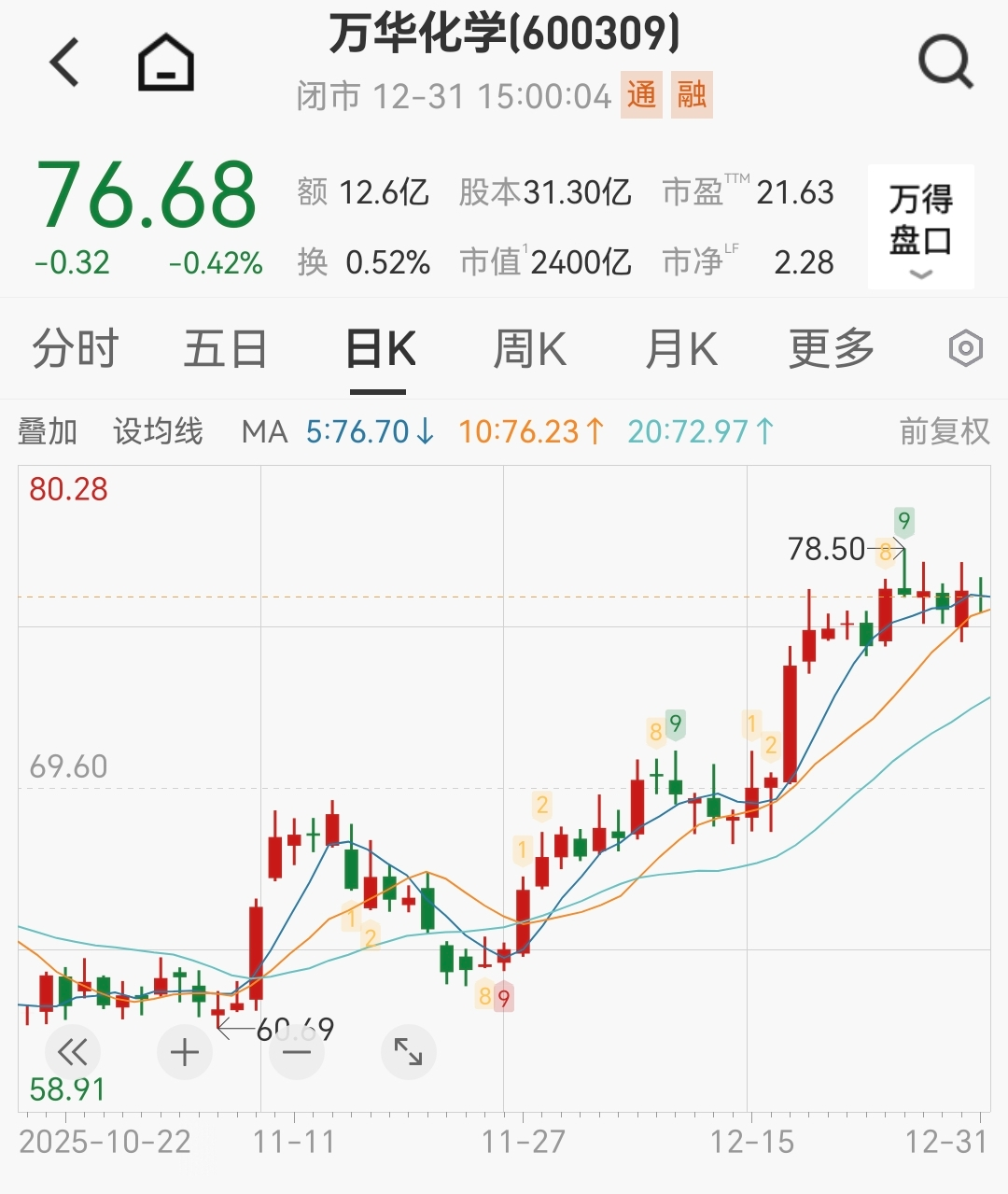
Core Viewpoint - Wanhua Chemical's price increases for MDI and TDI products are part of a broader global trend, driven by supply disruptions and rising raw material costs, amidst a high concentration of industry players [1][4][5]. Price Adjustments - Wanhua Chemical has announced multiple price hikes since December 2025, with increases of $200/ton for MDI in Southeast Asia and South Asia, and €300/ton in Europe [4]. - Other major companies like BASF and Dow have also raised prices, indicating a strong market adjustment across the polyurethane sector [4]. Supply Chain Disruptions - The price increases are attributed to unexpected production halts and geopolitical tensions affecting raw material costs [5]. - Notable production disruptions include a month-long shutdown of Hunstman’s MDI facility in the Netherlands and Wanhua's 100,000-ton MDI capacity in Ningbo, which is undergoing maintenance for 55 days [5][7]. Industry Dynamics - The polyurethane industry is characterized by high concentration, with major players like Wanhua, BASF, and Hunstman dominating the market, which limits the impact of domestic competition [1][5]. - The ongoing supply issues in Europe, particularly concerning ethylene, are expected to persist, affecting the overall production landscape [7][8]. Market Performance - Wanhua Chemical's stock has seen a rise of over 12% in the past 20 days, with a market capitalization of 240 billion yuan as of December 31, 2025 [1][2]. - The company's revenue for the first three quarters of the year was 144.23 billion yuan, a slight decline of 2.29% year-on-year, while net profit showed a smaller decline of 17.45% [10]. Future Outlook - Analysts suggest that the recovery of downstream demand is crucial for the overall improvement of the chemical sector, with expectations of a gradual recovery in Wanhua's operational performance [10][11]. - The ongoing capital investments in China's chemical industry and the exit of overseas capacities may stabilize the market in the coming years [11].
2400亿化工茅宣布涨价
21世纪经济报道· 2026-01-04 16:07
Core Viewpoint - The article discusses the recent price increases in the polyurethane industry, particularly focusing on Wanhua Chemical's price adjustments for MDI and TDI products, which are part of a broader trend influenced by supply disruptions and geopolitical factors [1][4][5]. Price Adjustments - Wanhua Chemical has announced multiple price increases for its core products, including MDI and TDI, starting from December 1, 2025, with increases of $200/ton in Southeast Asia and South Asia, and €300/ton in Europe [4]. - Following Wanhua, other major players like BASF and Dow also raised their MDI prices, indicating a synchronized market response [4][5]. - The price adjustments are attributed to unexpected production halts and rising raw material costs due to geopolitical tensions [5][6]. Supply Chain Disruptions - The polyurethane industry is experiencing significant supply chain disruptions due to unexpected maintenance and production halts at major facilities, including Wanhua's and BASF's plants [6]. - Notably, Hunstman’s MDI facility in the Netherlands faced an unexpected shutdown, exacerbating supply shortages [5][6]. - The article highlights that the European ethylene supply is under pressure, with several plants expected to close or reduce output, further tightening the market [8][9]. Market Dynamics - The article notes that the polyurethane industry has a high concentration of major global players, which limits the impact of domestic competition on pricing [1]. - Analysts suggest that the current price increases are part of a normal market adjustment rather than a reaction to domestic competition [1]. - The overall market sentiment is shifting towards a more optimistic outlook, with expectations of recovery in downstream demand being crucial for the industry's long-term health [12][13]. Future Outlook - The article indicates that while the current price increases are beneficial, the recovery of downstream demand is essential for sustained growth in the chemical sector [12]. - Analysts from UBS believe that the capital expenditure in China's chemical industry is beginning to decline, which may stabilize the industry's performance in the coming years [13]. - The article concludes that Wanhua Chemical's strategic positioning and the ongoing global supply adjustments could enhance its market share and profitability in the future [13].
机器人TPU材料交流
2026-01-04 15:35
Summary of TPU Materials in Robotics Industry Conference Call Industry Overview - The conference call focused on the TPU (Thermoplastic Polyurethane) materials industry, particularly its applications in the robotics sector [2][3][10]. Key Characteristics of TPU - TPU combines the elasticity of rubber with the processability of plastics, offering excellent wear resistance, tear strength, and a tensile strength typically above 60 MPa [2][3]. - It remains stable in extreme temperatures ranging from -40°C to 120°C, making it suitable for various applications in robotics [4][10]. Applications in Robotics - TPU is widely used in four key areas within robotics: 1. **Safety Protection Components**: Flexible joint covers and protective shells, valued at approximately 6,000 RMB per robot [6]. 2. **Lightweight Composite Structures**: Used in non-load-bearing parts to reduce weight while maintaining rigidity, valued at around 2,000 RMB [6]. 3. **Transmission Sealing Systems**: Includes wear-resistant components like joint seals, valued at about 1,500 RMB [6]. 4. **Sensor and Cable Protection**: For flexible sensor packaging and high-bend cables, valued at approximately 500 RMB [6]. Market Dynamics - The global TPU production capacity is expected to reach 1.3 million tons by 2025, with China accounting for 46.2% of this capacity [3][4]. - Major international producers include BASF and Covestro, while leading domestic companies are Wanhua Chemical, Huafeng Chemical, Meirui New Materials, and Innovate [9][10]. Pricing Trends - The average price of TPU materials for robotics ranges from 23,000 to 28,000 RMB per ton, significantly higher than the average price of general-purpose TPU at around 15,000 RMB per ton [12][19]. - The price is influenced by the complexity of the production process and the specific properties required for robotics applications [12][19]. Challenges in Production - Key challenges in TPU production include material modification, mold opening, and injection molding processes, which require precise temperature control and specific conditions [15][18]. - The production of high-performance TPU involves complex chemical reactions and careful selection of raw materials, which can create barriers to entry for new competitors [13][14]. Environmental Regulations - Future environmental regulations, such as the EU REACH regulation, will significantly impact the TPU industry, pushing for the development of bio-based TPU to reduce harmful substances and carbon emissions [22]. - Companies like BASF and Wanhua are actively working on bio-based TPU, with production lines being established to increase bio-content in their products [22]. Future Outlook - The demand for TPU in the robotics sector is expected to grow, with projections indicating that the market value could exceed 10 billion RMB by 2030 [20]. - As the number of robots increases, the average TPU usage per robot is anticipated to rise, potentially leading to limited price decreases despite increased production [19][20]. Conclusion - The TPU materials market in the robotics industry is characterized by strong growth potential, driven by technological advancements and increasing applications in various robotic components. The focus on sustainability and compliance with environmental regulations will shape the future landscape of the industry [22].
