
美妆

Search documents
日本人听到海南封关,左右为难,日本企业都琢磨这钱敢赚吗?
Sou Hu Cai Jing· 2025-12-30 04:41
Group 1 - The core impact of Hainan's zero-tariff policy is significantly altering Japan's long-standing position as the Asian processing center, with a 30% value-added processing exemption directly challenging Japan's core trade model [3] - Japanese companies are rapidly adjusting their strategies in response to Hainan's opening, with many exploring new opportunities in cold chain, healthcare, and high-end consumer goods [2][3] - The average labor age in Hainan is ten years younger than in Japan, and the capped personal income tax rate for high-end talent is 15%, making Hainan an attractive destination for Japanese firms [2] Group 2 - The first day of zero-tariff goods saw a value exceeding 3.6 billion yuan, with significant sales growth in high-end beauty products, indicating strong market potential for Japanese brands [2] - Major Japanese companies like Toyota and Takeda Pharmaceutical are establishing operations in Hainan, leveraging local advantages to reduce costs and enhance supply chain efficiency [2] - The Japanese aviation industry is facing significant challenges, with the cancellation of 12 routes to China, leading to a chain reaction affecting travel agencies and related sectors [3]


林清轩上市成功,国货美妆十强变天
Sou Hu Cai Jing· 2025-12-30 04:31
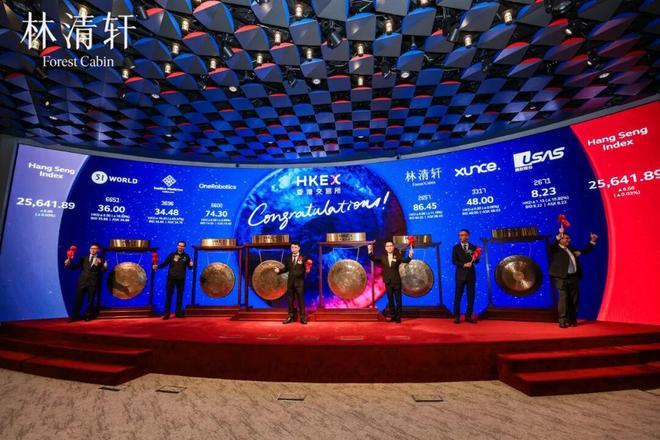
Core Viewpoint - Lin Qingxuan has officially listed on the Hong Kong Stock Exchange, becoming the first high-end domestic skincare stock, with an opening price of 85 HKD per share, reflecting a market capitalization of approximately 12.6 billion HKD [2][4]. Company Overview - The stock price increased by about 9.3% from the issue price of 77.77 HKD, reaching a peak of 91.65 HKD on the first trading day, maintaining a high valuation for beauty stocks in Hong Kong [4][6]. - Lin Qingxuan's global offering consisted of approximately 13.97 million shares, raising over 1 billion HKD, with significant backing from cornerstone investors [6][10]. Financial Performance - Revenue grew from 691.15 million RMB in 2022 to 1.21 billion RMB in 2024, with a compound annual growth rate exceeding 30% [8][22]. - The company achieved a net profit of approximately 1.87 billion RMB in 2024, reversing previous losses, and reported a revenue of 10.52 billion RMB in the first half of 2025, nearly matching the entire revenue of 2024 [8][11]. Market Position - Lin Qingxuan ranks among the top fifteen high-end skincare brands in China by retail sales, being the only domestic brand in this category [10][11]. - The company has established over 554 stores nationwide, with online sales accounting for more than 60% of its revenue [10][11]. Competitive Landscape - The listing has reshuffled the ranking of domestic beauty companies, pushing Lin Qingxuan into the top ten by revenue, surpassing competitors like Shuiyang [11][12]. - The competitive environment is intensifying, with other brands like Shuiyang and Naturals poised to challenge Lin Qingxuan's position [13][14]. Investment Appeal - Investors are attracted to Lin Qingxuan due to its strong brand recognition, high gross margins, and rapid revenue growth, which suggest a promising financial outlook [20][21]. - The company's reliance on a single flagship product, the Camellia Oil, has raised questions about sustainability and the need for diversification in its product offerings [21][23].

刚刚!林清轩正式上市
Xin Lang Cai Jing· 2025-12-30 03:45
Core Viewpoint - Lin Qingxuan, known as the "first high-end skincare stock of domestic goods" in Hong Kong, officially listed on the Hong Kong Stock Exchange on December 30, 2023, marking a significant milestone in its multi-brand and global expansion strategy [1][10]. Company Overview - Lin Qingxuan was established in 2003 and gained prominence with its core product, Camellia Oil, launched in 2014, solidifying its position in the high-end skincare segment [3]. - The company aimed to enter the capital market within five years, a goal achieved in approximately seven months from its initial filing in May 2023 to its listing [3]. Financial Highlights - The company raised approximately HKD 9.97 billion (about RMB 8.98 billion) through its IPO, with notable institutional investors subscribing to 44.43% of the total shares [4]. - Revenue projections show a continuous increase from RMB 6.91 billion in 2022 to an expected RMB 20 billion by the end of 2025, with a significant 98.3% revenue growth in the first half of 2025 [4][10]. - Lin Qingxuan turned a profit in 2023 with a net profit of RMB 84.5 million, expected to rise to RMB 187 million in 2024, and reached RMB 182 million in the first half of 2025 [5]. Market Position - Lin Qingxuan is projected to rank first among domestic high-end skincare brands in China by retail sales in 2024, and it is the only domestic brand among the top 15 high-end skincare brands [5]. - The company's gross margin has consistently remained around 80%, with figures of 78%, 81.2%, 82.5%, and 82.4% from 2022 to the first half of 2025 [5]. Product and Brand Development - The Camellia Oil product line is a key driver of revenue growth, with its revenue share increasing from 31.5% in 2022 to 45.5% in the first half of 2025 [5]. - Lin Qingxuan has expanded its brand portfolio to include two new brands, Xiaoxinxuan and Huaiyizhuang, targeting younger consumers and community beauty services, respectively [9]. Distribution and Sales Channels - The company has experienced growth in both online and offline channels, with offline revenue increasing steadily and online revenue growing at a compound annual growth rate of 51.2% [6][7]. - As of June 30, 2025, Lin Qingxuan operated 554 stores, ranking first among domestic and international high-end skincare brands in terms of store count [6]. Future Outlook - The successful listing is seen as a new starting point for Lin Qingxuan, with expectations to join the ranks of the top ten domestic beauty companies [10]. - The recent supportive policies from the China Securities Regulatory Commission and the Hong Kong Stock Exchange are likely to encourage more beauty companies to pursue dual listings [11].
美妆行业唯一殊荣!福瑞达获评2025年全国质量典型标杆
Xin Lang Cai Jing· 2025-12-29 13:44
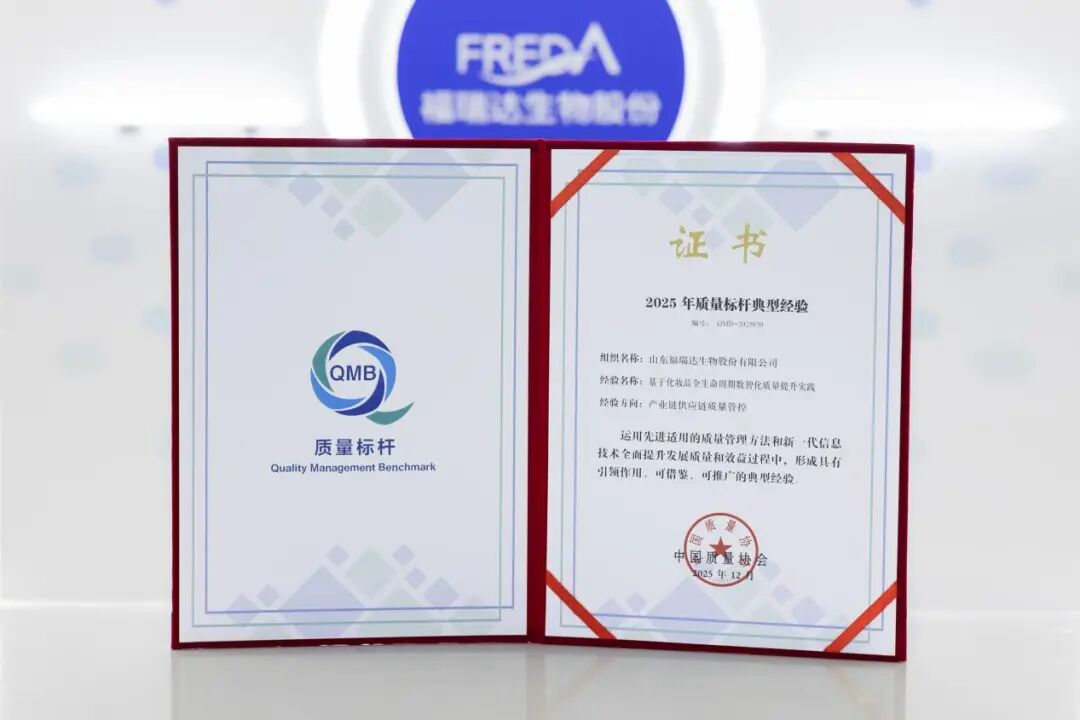
Core Insights - Shandong Furuida Biological Co., Ltd. is the only beauty industry company recognized as a national quality benchmark, highlighting its authority in intelligent quality management throughout the product lifecycle [1][24][27] - The company's success aligns with China's goal of transitioning from a "manufacturing powerhouse" to a "quality powerhouse" in the cosmetics industry [3][26] Group 1: Quality Management Achievements - Furuida Biological has established a comprehensive traceable quality management system covering the entire product lifecycle, with over 1,000 quality control documents totaling more than 2.1 million words [30] - The company has received multiple authoritative certifications, including ISO22716/GMPC and CNAS, and has been recognized as a model enterprise for cosmetic production quality in Shandong Province [30][28] - Furuida's management philosophy incorporates a PDCA (Plan-Do-Check-Act) cycle, fostering a culture of quality participation among all employees [30][28] Group 2: Digital Transformation and Innovation - The company has transitioned its quality control from manual to a combination of technical and digital defenses, creating a comprehensive quality traceability loop across research and development, production, supply chain, and marketing [8][10] - Furuida has developed four major digital collaborative platforms, including transparent, green, and intelligent factories, to ensure a closed-loop management system focused on prevention and process control [33][10] - The establishment of a PLM (Product Lifecycle Management) system has improved research efficiency and resource reuse by over 30%, while on-time order fulfillment rates have increased by 19% [34][35] Group 3: Supply Chain and Marketing Strategies - The ERP-based supply chain platform allows for digital grading and management of suppliers, ensuring traceability from supplier admission to product delivery [38] - A unique traceability system assigns a unique code to each product, enabling consumers to verify authenticity and creating a "quality responsibility community" across the supply chain [38] - Furuida's marketing strategy integrates user feedback through a CRM system, enhancing service experience and driving product improvement based on real-time data analysis [39][40] Group 4: Industry Impact and Future Directions - Furuida's practices set a high standard for the beauty industry, providing a replicable and scalable path for quality enhancement in Chinese cosmetics [43][20] - The company aims to deepen the application of quality benchmark experiences and empower the industry, focusing on brand culture, technological innovation, and digital ecosystem reconstruction [44][45]

以“长期主义”践行社会责任,珀莱雅在新消费浪潮中构筑价值共生样本
Cai Jing Wang· 2025-12-29 13:33
Core Viewpoint - The article emphasizes that new consumer brands, particularly in the beauty sector, are not only symbols of commercial success but also play a crucial role in driving social progress and building a better life, with Proya (603605) exemplifying this integration of business success and social responsibility [1] Group 1: Social Responsibility Practices - Proya's social responsibility initiatives are rooted in long-term commitment rather than short-term marketing strategies, having invested nearly 2 million yuan over 18 years to improve educational resources in rural areas [2] - The company has expanded its educational support to border regions, launching the "Love in the Border, Illuminate the National Gate" project in 2023, with an investment of 3.4 million yuan to enhance school sports facilities and organize sports events [2] - Proya has a history of emergency disaster relief, providing 5 million yuan in aid during the 2008 Wenchuan earthquake and participating in subsequent disaster relief efforts [2] Group 2: Recognition and Impact - Proya's philanthropic efforts have been recognized, joining the "Guangcai 100" private enterprise public welfare foundation alliance and being rated as one of the "Pioneer 20" enterprises for ESG charitable influence in Hangzhou [3] Group 3: Focus on Social Issues - The Proya Public Welfare Foundation has strategically focused on the deep social issue of "mental health for new mothers," launching the "Proya Love Mom" project in 2025, which addresses the psychological challenges faced by women during the transition to motherhood [4] - The project includes the release of a report based on 2,481 valid samples, transforming individual narratives into public discourse and fostering widespread discussion on the complexities of motherhood [4] - Proya collaborates with various stakeholders to provide a comprehensive support network for new mothers through workshops that promote mental well-being and social advocacy [4] Group 4: Long-term Vision and Ecosystem Thinking - Proya's philanthropic model reflects a clear commitment to long-termism and ecological thinking, with a focus on sustainable and systemic empowerment in education and women's welfare [5] - The company has developed a multi-dimensional and sustainable women's welfare system, addressing issues from employment equality to mental health for new mothers [5] Group 5: Business and Social Value Integration - Proya demonstrates that true leaders in the new consumer landscape are creators of user value, drivers of industrial upgrades, and partners in social progress [6] - The integration of commercial resources with social needs enhances brand reputation and consumer recognition, achieving a symbiotic growth of corporate and social value [6]

华源晨会精粹20251229-20251229
Hua Yuan Zheng Quan· 2025-12-29 13:07
Fixed Income - The bond market in 2026 is expected to perform better than anticipated, driven by a continuation of weak economic recovery and a divergence of new and old growth drivers, with infrastructure and real estate continuing to drag on the economy [9][12] - The central bank's monetary policy remains moderately accommodative, which is expected to keep social financing costs low and promote a reasonable recovery in prices [9][12] - The credit spreads for various sectors have shown mixed movements, with significant compression in the AA+ textile and apparel sector, while AAA real estate and AA+ pharmaceutical sectors have seen notable expansions [13][17] Construction and Building Materials - The construction sector is expected to experience a "spring surge" as the "14th Five-Year Plan" approaches, with significant government signals indicating a focus on urban renewal and housing security [20][21] - Key investment themes for 2026 include major national projects like the canal system and the Tibet railway, high-dividend low-valuation state-owned enterprises, and private construction firms leveraging cash flow in new sectors such as clean rooms and AI infrastructure [22][24] Pharmaceutical Industry - The pharmaceutical sector is anticipated to see concentrated catalysts in 2026, particularly in areas like brain-machine interfaces and AI medical technologies, with a focus on companies that have shown strong fundamentals and potential for recovery [25][27] - The brain-machine interface industry is highlighted as a key growth area, supported by government policies and clinical trials, with companies like Mai Lande and Meihua Medical recommended for investment [26][27] Commercial Aerospace - The commercial aerospace industry is poised for significant developments, with new listing standards for commercial rocket companies and a series of supportive government measures aimed at enhancing the sector's growth [31][32] - The cost competitiveness of China's commercial aerospace has improved, with private rockets nearing international standards, although there remains a gap compared to established players like SpaceX [31][32] New Consumption - The expansion of new consumption brands like Mixue Ice City and Huaxizi into international markets signifies a strategic move towards global brand recognition, with ongoing store openings in the Americas [4][5] - The pet market is also expanding, with companies like Lusi focusing on high-value product lines and stable relationships with core customers, indicating growth potential in both domestic and export markets [6]
深度丨不止PDRN,十大热门科研赛道即将引爆2026
FBeauty未来迹· 2025-12-29 12:14
Core Insights - The article discusses the transformative impact of longevity science and AI on the beauty industry, emphasizing the shift in research and product development towards enhancing the quality of life rather than merely extending lifespan [5][6][10]. Group 1: Longevity Science in Beauty - Longevity science is redefining the foundational logic of beauty research, focusing on long-term skin health and preventive solutions rather than just immediate cosmetic needs [5][6]. - L'Oréal's integration of longevity science aims to transition from symptom treatment to root cause intervention, creating a comprehensive research framework that connects various aging markers to skin health [6][7]. - Companies are encouraged to develop their own longevity science theories based on their brand positioning, focusing on specific research areas like mitochondrial energy and chronic inflammation [8]. Group 2: AI's Role in Beauty Research - AI is significantly accelerating research processes in the beauty industry, with companies like L'Oréal and Unilever reporting dramatic increases in the number of molecules evaluated within shorter timeframes [11][14]. - The efficiency of AI in research is contingent upon the availability of high-quality data, necessitating the digitalization of research outcomes and the development of proprietary AI models [14]. - AI's application in ingredient discovery and development is becoming a competitive edge, with companies leveraging AI to enhance research accuracy and speed [11][14]. Group 3: PDRN and New Ingredient Trends - PDRN has emerged as a highly sought-after ingredient, with major brands like L'Oréal and Lancôme entering the market, indicating a potential surge in new product launches by 2026 [21][22]. - The development of PDRN is diversifying, with companies exploring various sources, including plant and microbial origins, to enhance efficacy and differentiate their products [22][23]. - Despite its popularity, PDRN's application in beauty products is still in its early stages, with concerns regarding its performance and safety yet to be fully validated [24]. Group 4: Advances in Peptide Technology - The beauty industry is witnessing a "technological iteration period" for recombinant collagen and functional proteins, focusing on precise structural design to address specific skin issues [25][26]. - Innovations in peptide technology include the development of multi-peptide matrices and targeted delivery systems, enhancing the effectiveness of these ingredients [26][35]. - The trend towards functionalized proteins reflects a broader industry consensus on the importance of efficacy-driven ingredient development [25][26]. Group 5: Integration of Aesthetic and Medical Approaches - The convergence of aesthetic and medical beauty is becoming a prominent trend, with brands increasingly seeking to provide scientifically validated, high-efficacy skincare solutions [30][32]. - This integration is reflected in the migration of medical-grade ingredients into consumer products, enhancing their appeal to consumers seeking immediate results [32][33]. - Brands are exploring new applications for established medical ingredients, such as PDRN and hyaluronic acid, in their product lines [32][33]. Group 6: Sensory Science and Consumer Experience - Sensory science is gaining traction in beauty research, focusing on the emotional and experiential aspects of product use, which are critical for consumer satisfaction [44][48]. - Companies are investing in technologies to quantify sensory experiences and their impact on consumer emotions, aiming to create products that resonate on a deeper level [47][48]. - The emphasis on sensory value in product development reflects a shift towards a more holistic understanding of consumer needs and preferences [44][48]. Group 7: Future Directions in Beauty Research - The article concludes that the beauty industry is entering a phase of unprecedented innovation driven by scientific advancements and consumer demand for effective, emotionally resonant products [56]. - Companies that successfully integrate rigorous scientific research with emotional engagement are likely to lead the market in the coming years [56].


传奇今生两款产品分获“粤妆甄品”“粤妆名品”认证
Zhong Guo Jing Ji Wang· 2025-12-29 08:47
Core Insights - The competitive landscape of the domestic beauty market is intensifying, making product quality and market reputation the cornerstone of brand development [1] - The brand Legend of Today has received two significant certifications for its iconic products, marking it as one of the few companies recognized in both categories [1][2] Group 1: Certifications and Standards - The "Yue Zhuang Zhen Pin" certification focuses on product safety, efficacy, and quality, requiring companies to have complete production qualifications and a good compliance record over the past two years [2] - The "Yue Zhuang Ming Pin" certification emphasizes market influence and consumer recognition, aiming to select representative products with popularity and strength [2] - Legend of Today has established a comprehensive quality management system at its production base, which is recognized as a high-tech enterprise, ensuring product quality [2][3] Group 2: Product Development and Market Reach - The Legend of Today lipstick has undergone over 18 years of market testing, showcasing its differentiated design and effectiveness [3] - The brand collaborates with universities and research institutions, having completed FDA registration and other international certifications, with products available in over 70 countries and regions [3] - The recent certifications are part of the brand's ongoing commitment to product development and quality control, aiming to provide safe and effective beauty products [3][4] Group 3: Industry Trends and Brand Strategy - The establishment of authoritative evaluation systems like "Yue Zhuang Zhen Pin" and "Yue Zhuang Ming Pin" indicates a shift in the beauty industry towards high-quality development based on core quality and genuine reputation [3] - In a tightening regulatory environment, building a trustworthy brand image through authoritative endorsements is crucial for domestic beauty brands to achieve sustainable competitive advantage [4] - The brand emphasizes the integration of research investment, comprehensive quality control, and user value to transform recognition into sustainable brand assets [4]
财通证券:维持毛戈平“买入”评级 美妆教育体系加速完善
Zhi Tong Cai Jing· 2025-12-29 07:40
Group 1 - The core viewpoint is that 毛戈平 is a rare high-end domestic brand, with expectations of net profit growth from 12.04 billion to 20.25 billion yuan from 2025 to 2027, corresponding to PE ratios of 32.9, 25.0, and 19.6 times respectively, indicating a strong long-term potential in high-end brand expansion and product innovation [1] - 毛戈平 is gradually stepping onto the global stage, with the recent opening of its first store in Hong Kong and a launch event that combines Eastern aesthetics with modern art, enhancing its international brand image and deepening global channel layout [1] - The establishment of 毛戈平 (Hainan) Trading Co., Ltd. in Haikou is seen as a strategic move for global expansion, supported by plans for a headquarters R&D base and overseas R&D centers to enhance product efficacy through proprietary formulas and collaboration with foreign research institutions [1] Group 2 - 毛戈平 Beauty Education has opened its tenth campus in Guangzhou, marking a significant step in the brand's strategic expansion in Southern China and strengthening regional resource integration and industrial collaboration [2] - A strategic agreement was signed with Zhejiang Arts to establish the 毛戈平 Industry College, merging the brand's mission of enhancing beauty for Chinese women with a commitment to local community development, adding a cultural dimension to its growth [2]

财通证券:维持毛戈平(01318)“买入”评级 美妆教育体系加速完善
智通财经网· 2025-12-29 07:40
Group 1 - The core viewpoint of the report is that 毛戈平 (Mao Ge Ping) is a rare high-end domestic brand, with a successful entry into premium channels and an increase in brand repurchase rates, validating its high-end image upgrade [1] - The company is expected to achieve net profits attributable to shareholders of 1.204 billion, 1.583 billion, and 2.025 billion yuan for the years 2025-2027, corresponding to price-to-earnings ratios of 32.9, 25.0, and 19.6 times respectively [1] - The company maintains a long-term perspective and is optimistic about the potential for continuous expansion of quality channels and new product categories under the high-end brand barrier, maintaining a "buy" rating [1] Group 2 - 毛戈平 is gradually stepping onto the global stage, with the recent opening of its first store in Hong Kong and the launch of the "美承东方·光影无界" event, which integrates Eastern aesthetics with modern light and shadow art [2] - The establishment of 毛戈平 (Hainan) Trading Co., Ltd. in Haikou is seen as another strategic point for global expansion, with plans for a headquarters R&D base and overseas R&D center to enhance product efficacy [2] - The company has opened its tenth beauty education campus in Guangzhou, which is a key step in its brand strategy and resource integration in the South China economic center [3]