软件

Search documents
AI颠覆性担忧发酵,美股三大指数均跌超1%,中概股集体下跌
Feng Huang Wang· 2026-02-12 22:23
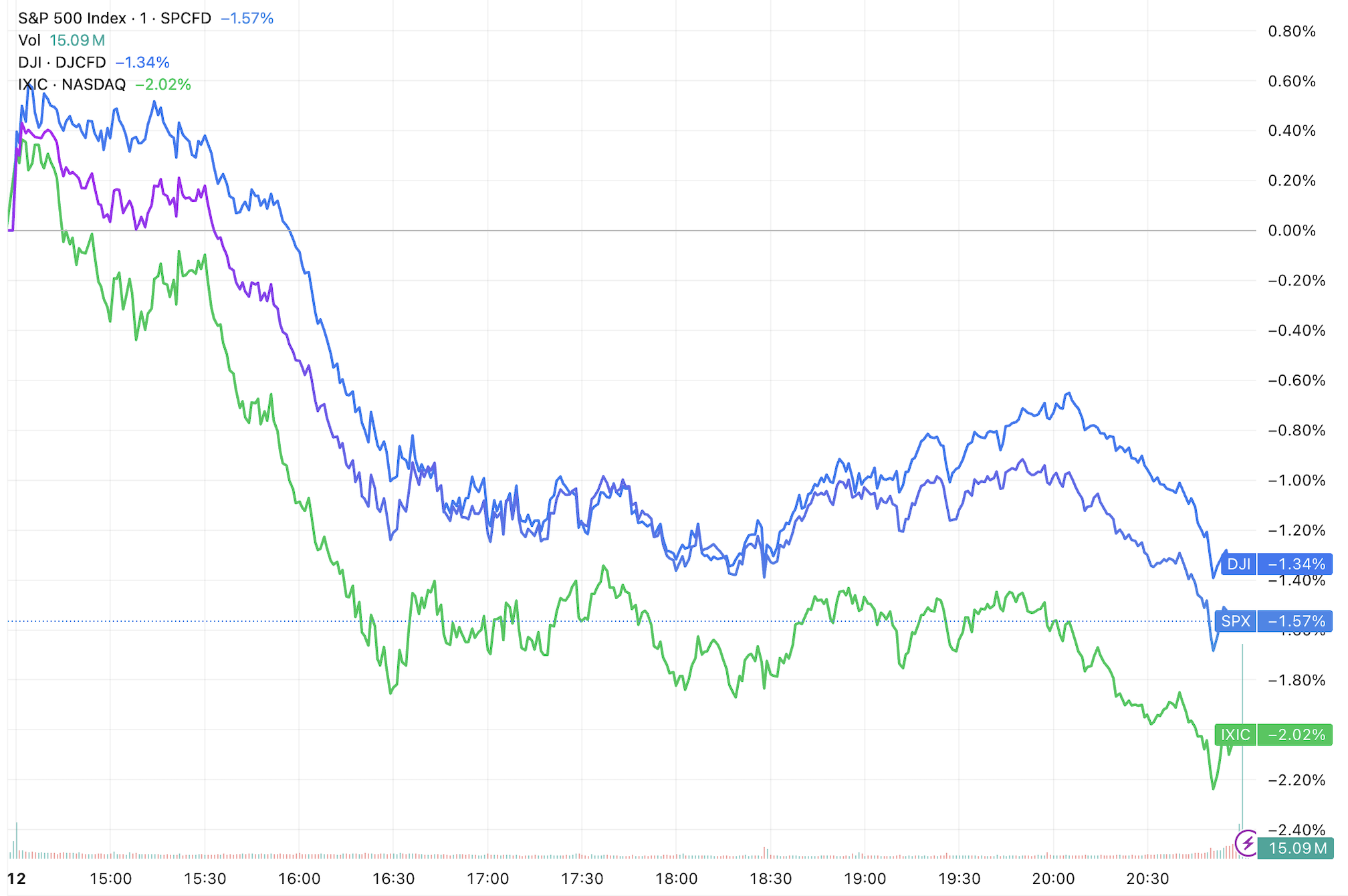
Market Overview - The three major indices closed lower, with the Dow Jones down 1.34% at 49,451.98 points, the S&P 500 down 1.57% at 6,832.76 points, and the Nasdaq down 2.03% at 22,597.15 points [2] - Concerns over AI tools disrupting various sectors, including software companies, publishers, and financial services, have led to significant market volatility [2] Sector Performance - Financial stocks, including Morgan Stanley, faced pressure due to fears that AI could disrupt wealth management [2] - Trucking and logistics companies, such as C.H. Robinson, saw a 14% drop in stock price amid concerns that AI could optimize freight operations and reduce revenue sources [2] - The real estate sector is also affected, with stocks like CBRE and SL Green Realty declining due to anticipated higher unemployment impacting office space demand [3] - Defensive sectors saw gains, with Walmart and Coca-Cola rising 3.8% and 0.5%, respectively [3] Stock Movements - Major tech stocks experienced declines, with Nvidia down 1.64%, Apple down 5.00%, and Microsoft down 0.63% [5] - Chinese stocks listed in the U.S. also fell, with the Nasdaq Golden Dragon China Index down 3.00% [5] Company News - The European Union has initiated another antitrust investigation into Google, focusing on potential illegal manipulation of search engine advertising pricing [6][7] - OpenAI launched its first AI model based on Cerebras Systems chips, aiming to compete in the AI programming assistant market [8] - AI company Anthropic raised $30 billion in funding, reaching a valuation of $380 billion, with investments from Coatue and GIC among others [9][10] - Google released an updated version of its Gemini 3 model, targeting applications in science and engineering [11] - Intel was fined 273.8 million rupees by India's Competition Commission for violating competition laws [12]


尾盘:美股继续下滑 思科领跌科技股
Xin Lang Cai Jing· 2026-02-12 19:57
Core Viewpoint - The U.S. stock market experienced a decline, primarily driven by concerns over the negative impacts of artificial intelligence on various industries, potentially disrupting business models and increasing unemployment rates [1][6]. Market Performance - The Dow Jones Industrial Average fell by 364.68 points, a decrease of 0.73%, closing at 49,756.72 points; the Nasdaq dropped by 351.67 points, down 1.52%, ending at 22,714.79 points; the S&P 500 index decreased by 66.44 points, a decline of 0.96%, closing at 6,875.03 points [3][8]. - Cisco Systems led the technology sector decline with a significant drop of 11.8% following disappointing quarterly guidance [3][8]. Sector-Specific Impacts - Financial stocks, including Morgan Stanley, faced pressure due to fears that AI could disrupt wealth management services [3][8]. - C.H. Robinson and other trucking and logistics companies saw stock prices plummet by 22% amid concerns that AI could optimize freight operations, negatively affecting specific revenue lines [3][8]. - The real estate sector was also affected, with companies like CBRE and SL Green Realty facing declines due to anticipated rising unemployment impacting demand for office space [3][8]. Software Sector Trends - The software sector, already troubled by disruptive concerns, saw further declines, with Salesforce shares dropping by 2% and a year-to-date decline exceeding 31%. Autodesk shares fell over 5%, with a year-to-date drop of 26% [3][8]. - The iShares Expanded Tech-Software Sector ETF (IGV) decreased by 3%, currently down approximately 32% from recent highs [4][9]. Investor Behavior - Increased selling pressure in silver, a popular trading commodity among retail investors, contributed to heightened risk-averse sentiment, with silver futures plummeting by 9% [4][9]. - Defensive sectors attracted investors, with Walmart and Coca-Cola shares rising by 3% and 2%, respectively, leading the S&P 500 sectors, both gaining over 1% [4][9]. Economic Indicators - Following a strong employment report, market enthusiasm waned, with economists questioning whether it would signal a trend in job growth, especially given revisions indicating zero job growth in the second half of 2025 [4][9]. - Traders are preparing for a key inflation report, with economists from Dow Jones expecting a 0.3% month-over-month increase in both the overall Consumer Price Index (CPI) and the core index (excluding food and energy) for January [4][9].


现货黄金短线暴跌 分析师:原因不明
Xin Lang Cai Jing· 2026-02-12 17:18
美国财经网站investinglive分析师Adam Button表示,黄金价格瞬间暴跌,原因不明。此举带动了美元的 全面上涨。黄金价格下跌和美元走强可能是由整体避险情绪引发的。美股开盘基本持平后,随后大幅下 跌。黄金价格下跌也引发了人们对CPI报告泄露的猜测,这种下跌可能会在热门报告发布后出现,但我 对此表示怀疑。无论此举背后的驱动因素是什么,都加剧了人们"一切都不安全"的担忧。我认为导火索 是微软股价一天内下跌了12%。自那以后,我们看到了持续不断的对行业动荡的担忧。软件行业持续受 到冲击,但如今物流和运输行业也受到了冲击。有可能是某个担任软件工程师的人被迫抛售了黄金头 寸。 来源:滚动播报 ...
深夜巨震!美股三大指数高开低走,芯片股却逆势大涨,美光科技暴涨近10%,黄金白银原油价格同步飙升!
Sou Hu Cai Jing· 2026-02-12 17:02
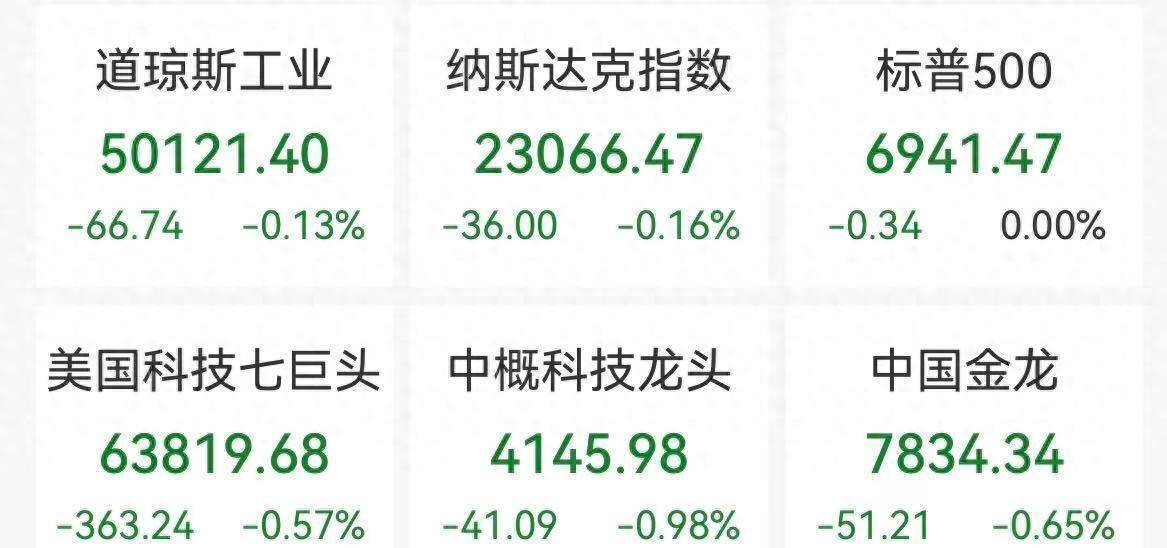
Economic Data and Market Reaction - The U.S. non-farm payrolls increased by 130,000 in January, significantly exceeding the market expectation of 55,000, marking the largest increase in over a year [1][2] - The unemployment rate slightly decreased from 4.4% in December to 4.3%, the lowest since August 2025 [2] - Despite the strong employment report, U.S. stock markets experienced volatility, with the Dow Jones Industrial Average down 0.13%, S&P 500 nearly flat, and Nasdaq Composite down 0.16% [1][4] Sector Performance - Semiconductor stocks performed exceptionally well, with the Philadelphia Semiconductor Index rising by 2.28% and Micron Technology's stock surging nearly 10% [1][5] - The healthcare sector added 124,000 jobs, double the normal level for January 2025, indicating strong growth in this industry [2] - Large tech stocks showed mixed results, with Google and Microsoft down over 2%, while Nvidia and Tesla saw gains of 0.78% and 0.8%, respectively [5] Commodity Market Movements - Gold and silver prices surged due to increased risk aversion, with spot gold rising over 1% to $5,083.7 per ounce and silver up over 4% to $84.3 per ounce [7] - International oil prices also increased, with WTI crude oil futures up 1.05% to $64.63 per barrel, driven by geopolitical tensions [8] Geopolitical Developments - U.S. President Trump emphasized the need for continued negotiations with Iran after a meeting with Israeli Prime Minister Netanyahu, indicating a preference for diplomatic solutions [9][10] - The geopolitical climate remains tense, with military deployments in the Middle East and ongoing sanctions against Iran, which could impact market stability [11][12] Semiconductor Industry Insights - South Korea's semiconductor exports reached $6.73 billion in the first ten days of February, a year-on-year increase of 137.6%, reflecting strong global demand [13] - Micron Technology's stock price target was raised significantly by Morgan Stanley, indicating confidence in the company's future performance amid supply shortages [6][13] - The semiconductor industry is transitioning from quarterly business to long-term collaborative agreements, driven by increasing demand for advanced memory chips [14]
思科重挫9%,深夜美股软件股遭抛售,存储芯片走强,希捷科技涨11%,金银油集体下跌
2 1 Shi Ji Jing Ji Bao Dao· 2026-02-12 16:08
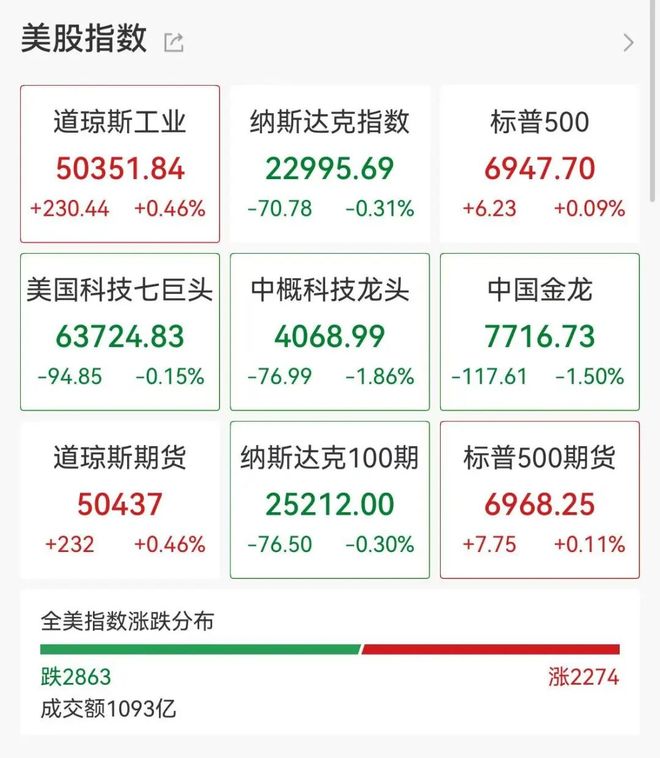
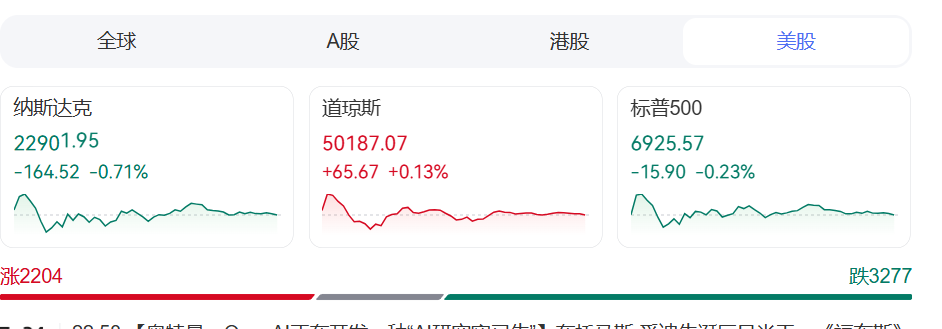
Market Overview - The U.S. stock market showed mixed results with the Dow Jones up by 0.46%, while the Nasdaq fell by 0.31% and the S&P 500 increased by 0.09% [1] - Major tech stocks experienced varied performance, with Nvidia rising by 0.7% and Amazon and Apple both declining by over 1% [3] Semiconductor Sector - Storage concept stocks continued to perform well, with Seagate Technology rising by 11%, Western Digital by over 8%, SanDisk by over 8%, and Micron Technology by over 3% [3] - Micron Technology announced that its new NAND flash wafer plant is on track to begin shipments in the second half of 2028, with HBM4 customer shipments expected to increase in the first quarter of 2028, one quarter ahead of schedule. The CFO indicated that market demand exceeds supply, and this tight supply situation is expected to persist until after 2026 [3] Retail Sector - Major U.S. retailers saw collective gains, with Walmart rising over 2% to reach a historical high, Macy's up nearly 4%, Kohl's up nearly 3%, and Ross Stores up over 2% [4] - McDonald's reported a 9.5% year-over-year revenue increase to $7 billion for the fourth quarter, with adjusted earnings per share of $3.12, exceeding expectations [4] Software Sector - Software stocks faced significant sell-offs, with Cisco's stock plummeting over 9%, marking its largest drop in 2023. Despite an increase in AI demand leading to an upward revision of annual guidance, the gross margin guidance for the current quarter fell short of expectations [4] - Other software stocks showed mixed results post-earnings, with Fastly surging over 60%, HubSpot up over 10%, and Applovin dropping over 14% [4][5] Chinese Stocks - Chinese stocks listed in the U.S. experienced a collective decline, with the Nasdaq Golden Dragon China Index falling by 1.4%. Tencent Music dropped nearly 6%, while other companies like Huya, Boss Zhipin, and Beike fell over 4% [6] Commodity Market - Precious metals saw a decline, with spot gold down by 0.37% at $5065 per ounce and spot silver down by 1.43% at $83 per ounce [8] - International oil prices also fell, with Brent crude futures down about 1% to $68.75 per barrel and WTI crude futures down about 1% to $63.99 per barrel [8] Cryptocurrency Market - The majority of cryptocurrencies saw an increase, with Bitcoin rising by 0.96%, remaining below $68,000. In the last 24 hours, 118,000 individuals experienced liquidations [10][11]




深夜,美股风云突变,大型中概股普跌,存储概念股冲高回落!大量散户涌入股市,高盛:对冲基金正大举卖出
Mei Ri Jing Ji Xin Wen· 2026-02-12 16:08
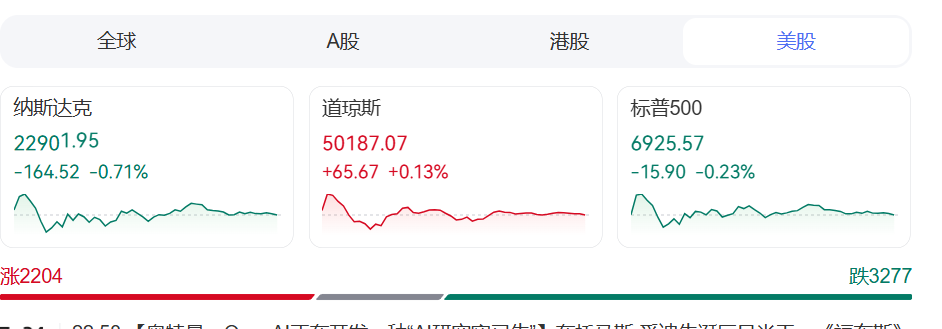
Market Overview - The U.S. stock market opened higher but then retreated, with the Nasdaq down 0.71%, the Dow Jones up 0.13%, and the S&P 500 also turning negative, with over 3,200 stocks declining [1] - Last week, initial jobless claims in the U.S. were reported at 227,000, higher than the forecast of 224,000 and the previous value of 231,000 [3] Technology Sector Performance - The performance of the "Magnificent Seven" tech stocks was mixed, with Nvidia and Google slightly up by 0.1%, while Tesla, Microsoft, Meta, Amazon, and Apple saw declines, with Apple nearing a 2% drop and its market cap falling below $4 trillion [3] - Semiconductor stocks experienced volatility, with SanDisk rising over 5% and Micron Technology up over 2% [3] Chinese Stocks - Chinese stocks listed in the U.S. faced widespread declines, with the Nasdaq Golden Dragon China Index dropping nearly 2%. Notable declines included Huya down over 7%, Tencent Music down over 6%, and Beike down over 4% [5] Trading Volume and Market Dynamics - The average daily trading volume in the U.S. stock market reached a record $1.03 trillion in January, a 50% increase compared to the same period in 2025, with over 19 billion shares traded daily, marking the second-highest in history [8] - The rise in trading volume is attributed to increased retail participation, the popularity of "zero-day-to-expiration" options, and a significant shift in investor focus from tech giants to underperforming sectors like energy and industrials [8] Hedge Fund Activity - Hedge funds have significantly increased their short positions in U.S. stocks, with the nominal short selling of individual stocks reaching the highest level since 2016. Short positions are now double the long positions [9] - Concerns over the disruptive impact of artificial intelligence on business models have led to a tumultuous week on Wall Street, with a total market value loss of $611 billion across 164 stocks in software, financial services, and asset management [9] Sector Rotation - The semiconductor and IT services sectors were among the few to see net buying last week, with semiconductor stocks rising, highlighting a divergence between chip stocks and software stocks [10] - Hedge funds are rotating into defensive sectors, with healthcare becoming the most favored sector for fund inflows, surpassing industrials [10]




深夜,美股风云突变,大型中概股普跌,存储概念股冲高回落!大量散户涌入股市,高盛:对冲基金正大举卖出 | 美股开盘
Mei Ri Jing Ji Xin Wen· 2026-02-12 16:02
Market Overview - The U.S. stock market opened higher but later declined, with the Nasdaq down 0.71%, the Dow Jones up 0.13%, and the S&P 500 also turning negative, with over 3,200 stocks declining [1] - The average daily trading volume in the U.S. stock market reached a record $1.03 trillion in January, a 50% increase compared to the same period in 2025, with over 19 billion shares traded daily, marking the second-highest in history [8] Employment Data - The number of initial jobless claims in the U.S. last week was reported at 227,000, slightly above the forecast of 224,000 and down from the previous week's 231,000 [3] Technology Sector Performance - The performance of the "Magnificent Seven" tech stocks was mixed, with Nvidia and Google slightly up by 0.1%, while Tesla, Microsoft, Meta, Amazon, and Apple saw declines, with Apple dropping nearly 2% and its market capitalization falling below $4 trillion [3] - The semiconductor sector showed volatility, with stocks like SanDisk rising over 5% and Micron Technology up over 2%, while other tech stocks faced declines [3][4] Hedge Fund Activity - Hedge funds have significantly increased their short positions in U.S. stocks, with the nominal short selling of individual stocks reaching the highest level since 2016, as concerns over AI's disruptive potential have led to market volatility [9] - The technology sector, particularly software stocks, experienced the most significant sell-off, with net outflows reaching the second-highest level in five years, while semiconductor stocks saw some net buying [10][11] Defensive Sector Rotation - Hedge funds are rotating into defensive sectors, with healthcare becoming the most net bought sector last week, surpassing industrials as the preferred destination for fund inflows this year [11]
思科重挫9%,深夜美股软件股遭抛售,存储芯片走强,希捷科技涨11%,金银油集体下跌
21世纪经济报道· 2026-02-12 15:59
Market Overview - The US stock market showed mixed results with the Dow Jones up by 0.46%, while the Nasdaq fell by 0.31% and the S&P 500 increased by 0.09% [1] - Major tech stocks had varied performances, with Nvidia rising by 0.7% and Amazon and Apple both declining by over 1% [3] Semiconductor Sector - Micron Technology reported that its new NAND flash wafer factory is on track to begin shipments in the second half of 2028, with HBM4 customer shipments expected to increase in the first quarter of 2028, one quarter ahead of schedule [4] - The CFO of Micron indicated that market demand significantly exceeds supply, predicting that supply constraints will persist until after 2026 [4] Retail Sector - Notable gains were observed in major US retailers, with Walmart rising over 2% to reach a historical high, and Macy's, Kohl's, and Ross Stores also seeing increases [4] - McDonald's reported a 9.5% year-over-year revenue growth in Q4, reaching $7 billion, with adjusted earnings per share of $3.12, exceeding expectations [4] Software Sector - Cisco experienced a significant drop of over 9%, marking its largest decline in 2023, due to disappointing gross margin guidance despite raising its annual forecast based on AI demand [4] - Other software stocks showed mixed results, with Fastly surging over 60% post-earnings, while Applovin plummeted over 14% [4][5] Chinese Stocks - Chinese stocks listed in the US faced collective declines, with the Nasdaq Golden Dragon China Index falling by 1.4%, and major companies like Tencent Music and Pinduoduo dropping by nearly 6% and 2.5% respectively [4][6] Commodity Market - Precious metals saw a decline, with spot gold down by 0.37% at $5065 per ounce and silver down by 1.43% at $83 per ounce [6][7] - International oil prices also fell, with Brent crude futures down about 1% to $68.75 per barrel and WTI crude futures down about 1% to $63.99 per barrel [7] Cryptocurrency Market - The majority of cryptocurrencies experienced gains, with Bitcoin rising by 0.96%, remaining below $68,000, while over 118,000 individuals faced liquidation in the past 24 hours [9][10]


美股前瞻02.12:超预期非农打压降息预期,AI恐慌蔓延至房地产服务
East Money Securities· 2026-02-12 13:11
Market Overview - The U.S. non-farm payroll data for January showed an addition of 130,000 jobs, significantly exceeding the market expectation of 65,000, with the unemployment rate unexpectedly dropping to 4.3% [1] - The strong job growth, particularly in healthcare, has dampened market expectations for an early interest rate cut by the Federal Reserve, pushing the anticipated timing for the first rate cut of the year to July [1] - Following the data release, major indices experienced volatility, with the Nasdaq down 0.16% and the S&P 500 closing nearly flat [1] Economic Trends - The January employment rebound is viewed as a response to the previous year's significant slowdown in job growth, with the total employment growth for the previous year revised down from 584,000 to 181,000 [4] - The current strong data may not indicate a stable long-term trend, as concerns about the labor market's rapid weakening persist [4] - The probability of the Federal Reserve maintaining rates in March has risen to over 94%, indicating a shift in market sentiment regarding interest rate cuts [4] Sector Analysis - The technology sector, particularly AI-related stocks, is facing significant selling pressure, with concerns about "AI disruption" spreading from software to real estate and financial services [4] - Despite the overall market weakness, sectors such as energy, materials, and consumer staples have shown relative strength, indicating a rotation of funds from high-valuation growth stocks to value and hard asset stocks [4] - Micron's stock surged by 10% due to expectations of increased capacity for HBM4, highlighting a renewed focus on the certainty of AI hardware investments [4]

全球市场“巨变”:“实体”回归,“科技”分化
Hua Er Jie Jian Wen· 2026-02-12 12:57
Core Insights - The narrative of "US tech dominance" is being challenged as Goldman Sachs reveals a paradigm shift in its global strategy report, indicating that the era of "financial assets" outperforming "real assets" is reversing, with emerging markets making a strong comeback by 2025 [1][4][7] Group 1: Market Trends - The US market is projected to lag behind other major markets for the first time in 2025, with indices like the European STOXX 600, Japan's Topix, and MSCI Asia-Pacific (excluding Japan) showing better performance than the S&P 500 [4][7] - Emerging markets are experiencing a significant revaluation, with the MSCI Emerging Markets Index rising from 100 to nearly 120 relative to developed markets since the beginning of 2025, driven by both macro and micro factors [7] Group 2: Corporate Earnings and Performance - Despite geopolitical uncertainties, corporate earnings in the US remain strong, with a growth rate exceeding 12% in the current quarter, surpassing market consensus by 5 percentage points [8] - The median year-on-year growth for S&P 500 companies is 9%, with 59% of companies exceeding earnings expectations, indicating a broadening source of growth beyond large tech stocks [9] Group 3: Technology Sector Dynamics - AI capital expenditure is projected to reach $659 billion, a 60% increase from 2025, but concerns about return on investment are rising, leading to a divergence in performance among the "Magnificent Seven" tech companies [10] - The software sector is facing a crisis as AI innovations threaten traditional SaaS models, resulting in a significant drop in software valuations, with a recent 15% decline reflecting a fundamental reassessment of growth prospects [11] Group 4: Shift Towards Real Assets - There is a notable shift towards physical assets, with capital expenditures in utilities and capital-intensive industries surging, as the growth of tech giants increasingly relies on infrastructure investments [12] - The valuation premium of capital-light companies over capital-intensive firms is decreasing, indicating a renewed focus on tangible assets [12] Group 5: Value Stocks Revival - The reevaluation of growth rates in certain tech sectors, combined with persistent inflation and higher real interest rates, has led to renewed interest in value stocks, which are transitioning from being seen as "value traps" to "value creators" [13] - The performance of financial assets has reversed significantly since early 2025, with gold, emerging markets, and value stocks outperforming tech-heavy indices like the Nasdaq and S&P 500 [13] Group 6: Diversification Opportunities - The current market environment, characterized by strong corporate earnings and a shift in growth sources, presents new diversification opportunities for investors, necessitating a reassessment of long-standing allocation habits across regions, sectors, and styles [16]