
软件和信息技术服务

Search documents
剖析当下的外贸主流开发渠道,如何用工具改变出口格局
Sou Hu Cai Jing· 2025-11-17 11:46
Core Insights - The foreign trade development channels in China have evolved significantly since joining the WTO, transitioning from traditional offline methods to a variety of online platforms and tools [1][3][8] - The current competitive landscape in the foreign trade market highlights the limitations of traditional development channels, necessitating the integration of multiple resources and intelligent tools to reshape export dynamics [3][8] Group 1: Platform Advantages - The core advantage of the Teyi platform lies in its ability to streamline the entire process from "data - leads - outreach - management," utilizing vast trade and business data to automatically filter potential customers with genuine purchasing needs [5][7] - Teyi's supply chain penetration feature allows businesses to uncover collaboration resources from peers, creating new growth opportunities [5][7] - The platform enhances event participation by integrating exhibition data to help businesses identify target customers in advance, thereby increasing the success rate of event invitations [5][7] Group 2: Customer Engagement Solutions - Teyi provides diverse solutions for customer outreach, including the ability to discover key decision-makers' contact information and match social media accounts to meet multi-channel engagement needs [7] - The built-in AI email generation tool personalizes outreach based on customer profiles, facilitating continuous follow-up and reducing manual labor costs [7] - Teyi's CRM tool tracks the entire lifecycle of leads, from acquisition to order tracking, ensuring all data flows within a single platform to enhance efficiency and team collaboration [7] Group 3: Future Outlook - As digital transformation accelerates, foreign trade development is shifting from a "scattergun" approach to "precision targeting," with Teyi offering comprehensive solutions to help businesses overcome traditional channel limitations [8] - The integration of AI technology with foreign trade scenarios is expected to further optimize export dynamics, making foreign trade development more efficient and targeted, thus injecting new momentum into Chinese foreign trade enterprises [8]


10月份国民经济总体平稳、稳中有进
Ren Min Ri Bao· 2025-11-14 22:03
Economic Overview - The national economy maintains a stable and progressive development trend, with steady production supply, overall employment stability, improved prices, and the cultivation of new growth drivers [1] Industrial Production - In October, the industrial added value of large-scale enterprises increased by 4.9% year-on-year, with the equipment manufacturing sector growing by 8.0% and high-tech manufacturing increasing by 7.2% [1] Service Sector Performance - The service industry production index rose by 4.6% year-on-year in October. Notably, the information transmission, software, and IT services sector grew by 13.0%, the leasing and business services sector by 8.2%, and the financial sector by 5.6% [1] Market Sales - In October, the total retail sales of consumer goods reached 46,291 billion yuan, marking a year-on-year increase of 2.9%. From January to October, the total retail sales amounted to 412,169 billion yuan, reflecting a year-on-year growth of 4.3% [1]
10月国民经济保持稳中有进发展态势
Yang Shi Wang· 2025-11-14 12:03
Economic Growth - In October, China's industrial added value above designated size grew by 4.9% year-on-year, indicating stable overall growth [1] - The added value of high-tech manufacturing and digital product manufacturing increased by 7.2% and 6.7% year-on-year, respectively [1] - The production of industrial robots and integrated circuits rose by 17.9% and 17.7% year-on-year [1] Manufacturing Sector - From January to October, the added value of the equipment manufacturing industry increased by 9.5%, accounting for 36.1% of the total industrial output [1] Service Sector - The service production index grew by 4.6% year-on-year in October, with modern service industries such as information transmission, software, and IT services performing well [1] Consumer Market - The total retail sales of consumer goods in October increased by 2.9% year-on-year, driven by policies to boost consumption [1] - Retail sales of high-efficiency appliances and new energy vehicles maintained rapid growth, while retail sales in cultural, sports, and leisure services, as well as tourism consulting and leasing services, experienced double-digit growth [1] Employment Situation - The national urban survey unemployment rate was 5.1% in October, a decrease of 0.1 percentage points from the previous month, indicating overall stability in the employment situation [2]
视频丨10月份国民经济运行基本平稳 稳中有进态势持续
Yang Shi Xin Wen Ke Hu Duan· 2025-11-14 07:25
Industrial Production - In October, the industrial added value above designated size increased by 4.9% year-on-year and 0.17% month-on-month [3] - The mining industry saw a year-on-year increase of 4.5%, manufacturing grew by 4.9%, and the production and supply of electricity, heat, gas, and water increased by 5.4% [3] - Equipment manufacturing and high-tech manufacturing grew by 8.0% and 7.2% year-on-year, respectively, outpacing the overall industrial growth by 3.1 and 2.3 percentage points [3] - From January to October, the industrial added value increased by 6.1% year-on-year [3] Service Sector - The service production index increased by 4.6% year-on-year in October [6] - Key sectors such as information transmission, software, and IT services grew by 13.0%, while leasing and business services and finance grew by 8.2% and 5.6%, respectively [6] - From January to October, the service production index increased by 5.7% year-on-year [6] Retail Sales - In October, the total retail sales of consumer goods reached 46,291 billion yuan, a year-on-year increase of 2.9% [9] - Online retail sales reached 127,916 billion yuan, growing by 9.6% year-on-year, with physical goods online retail sales accounting for 25.2% of total retail sales [9] - From January to October, the total retail sales of consumer goods increased by 4.3% year-on-year [9] Fixed Asset Investment - From January to October, fixed asset investment (excluding rural households) was 408,914 billion yuan, a year-on-year decrease of 1.7% [10] - Manufacturing investment grew by 2.7%, while real estate development investment fell by 14.7% [10] - High-tech industries such as information services and aerospace manufacturing saw significant investment growth of 32.7% and 19.7%, respectively [10] Trade and Exports - In October, the total import and export value reached 37,028 billion yuan, a year-on-year increase of 0.1% [11] - Exports decreased by 0.8% to 21,716 billion yuan, while imports increased by 1.4% to 15,311 billion yuan [11] - From January to October, general trade grew by 2.3%, accounting for 63.4% of total trade [11] Employment - The urban survey unemployment rate averaged 5.2% from January to October, with a slight decrease to 5.1% in October [14] - The unemployment rate for local registered labor was 5.3%, while for migrant labor it was 4.7% [14] Consumer Prices - In October, the Consumer Price Index (CPI) rose by 0.2% year-on-year, reversing a previous decline [16] - The core CPI, excluding food and energy, increased by 1.2% year-on-year [16] - The Producer Price Index (PPI) decreased by 2.1% year-on-year, with a narrowing decline compared to the previous month [16]
国家统计局发布重要数据
新华网财经· 2025-11-14 04:15
Economic Overview - In October, the national economy maintained a stable and progressive development trend, with industrial added value increasing by 4.9% year-on-year, service production index rising by 4.6%, and retail sales of consumer goods growing by 2.9% [1][10]. Industrial Production - The industrial added value for October increased by 4.9% year-on-year and 0.17% month-on-month. The mining industry grew by 4.5%, manufacturing by 4.9%, and electricity, heat, gas, and water production and supply by 5.4% [3]. - Equipment manufacturing and high-tech manufacturing sectors showed strong growth, with increases of 8.0% and 7.2% respectively, outpacing the overall industrial growth by 3.1 and 2.3 percentage points [3]. - The profit of industrial enterprises from January to September reached 53,732 billion yuan, a year-on-year increase of 3.2% [3]. Service Sector - The service production index rose by 4.6% year-on-year in October, with significant growth in information transmission, software, and IT services (13.0%), leasing and business services (8.2%), and finance (5.6%) [4]. - The business activity index for the service sector was at 50.2%, indicating stable activity levels [4]. Retail Sales - In October, the total retail sales of consumer goods reached 46,291 billion yuan, a year-on-year increase of 2.9% [5]. - Online retail sales amounted to 127,916 billion yuan, growing by 9.6% year-on-year, with physical goods online retail accounting for 25.2% of total retail sales [5]. Fixed Asset Investment - From January to October, fixed asset investment (excluding rural households) was 408,914 billion yuan, a year-on-year decrease of 1.7%. However, manufacturing investment grew by 2.7% [6]. - Real estate development investment saw a significant decline of 14.7% [6]. Trade and Exports - In October, the total import and export value was 37,028 billion yuan, a slight increase of 0.1% year-on-year, with exports decreasing by 0.8% and imports increasing by 1.4% [7]. - From January to October, the total import and export value reached 373,090 billion yuan, a year-on-year increase of 3.6% [7]. Employment and Prices - The urban surveyed unemployment rate in October was 5.1%, showing a slight decrease from the previous month [8]. - The Consumer Price Index (CPI) rose by 0.2% year-on-year in October, reversing from a decline of 0.3% in the previous month [9]. - The Producer Price Index (PPI) for industrial producers decreased by 2.1% year-on-year, with the decline narrowing compared to the previous month [9]. Conclusion - Overall, the national economy in October showed stability and progress, with ongoing structural adjustments and challenges ahead. The focus remains on expanding domestic demand and stabilizing employment and market expectations [10].

黑龙江:“十五五”四大新引擎产业力争总规模达万亿元
Zhong Guo Xin Wen Wang· 2025-11-13 16:29
Group 1 - The core viewpoint of the article emphasizes the importance of a modern industrial system as the material and technological foundation for Chinese-style modernization and high-quality revitalization and development [1] - The "15th Five-Year Plan" proposed by the Heilongjiang Provincial Committee aims to accelerate the development of digital economy, bio-economy, ice and snow economy, and creative design industries, targeting a total scale of 1 trillion yuan for these four new engine industries [1] - Heilongjiang has a strong industrial foundation, with the revitalization and development rooted in the real economy and focused on industrial upgrading [1] Group 2 - The plan aims to create emerging pillar industries and expand high-end equipment, aerospace, and new materials into billion-level industrial clusters, with a goal of achieving a total scale of 500 billion yuan for strategic emerging industries such as aerospace, electronic information, new materials, high-end equipment, and intelligent agricultural machinery [1] - The proposal also emphasizes the need to promote traditional industries from primary processing to deep processing, developing intelligent and green manufacturing, and strengthening the national energy and raw materials base, with a target of exceeding 1 trillion yuan for traditional advantageous industries like energy, chemicals, food, pharmaceuticals, automobiles, and light industry [2] - The plan includes actions to enhance the capacity and quality of the service industry, promoting specialized and high-value-added production services such as technology services, software and information technology services, and e-commerce, aiming for a total scale of 800 billion yuan for service industries like information services, modern logistics, and modern finance [2]
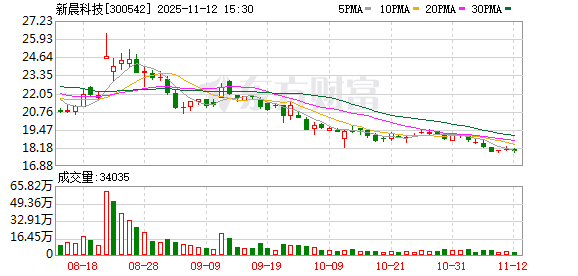
新晨科技:取得发明专利证书
Zheng Quan Ri Bao· 2025-11-12 13:17
Core Points - The company has recently obtained an invention patent certificate from the National Intellectual Property Administration for a method, device, and storage medium for high-frequency privacy queries on the blockchain [2] Group 1 - The invention is aimed at enhancing privacy in high-frequency queries on blockchain technology [2] - The patent acquisition signifies the company's commitment to innovation in the blockchain sector [2] - This development may position the company favorably within the competitive landscape of blockchain technology [2]

麦迪科技:股东汪建华已通过集中竞价交易方式减持公司股份约71万股
Mei Ri Jing Ji Xin Wen· 2025-11-11 10:39
Group 1 - The core point of the article is that Madi Technology (SH 603990) announced a share reduction by Mr. Wang Jianhua, who sold approximately 710,000 shares, accounting for 0.232% of the company's total share capital, between August 12, 2025, and November 11, 2025 [1] - As of the report, Madi Technology has a market capitalization of 5.2 billion yuan [1] Group 2 - For the fiscal year 2024, Madi Technology's revenue composition is as follows: software and information technology services account for 49.97%, the photovoltaic industry for 36.18%, medical services for 13.27%, and other businesses for 0.58% [1]

核心条款未协商一致 德固特重大资产重组或终止
Zhong Guo Jing Ying Bao· 2025-11-11 06:25
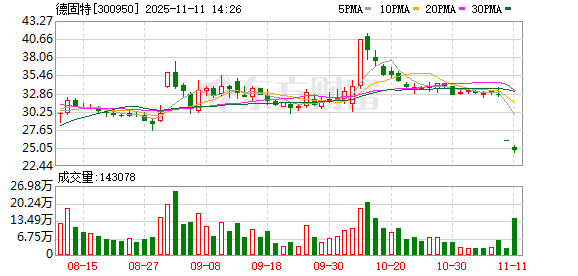
Core Viewpoint - The proposed "elephant swallowing snake" acquisition by Degute (300950.SZ) is likely to be terminated due to the inability to reach an agreement on key terms with the target company, Haowei Cloud Computing Technology Co., Ltd. [2][6] Group 1: Acquisition Details - Degute plans to terminate the acquisition of 100% equity in Haowei Technology and the associated fundraising due to challenges in meeting the demands of all parties involved [2][6] - The revenue difference between Degute and Haowei Technology is over 6 times, and the net asset difference is over 3 times for the year 2024 [3][4] - Degute's current main business is energy-saving and environmental protection equipment manufacturing, while Haowei Technology provides digital and intelligent solutions to global telecom operators and enterprise clients [3][4] Group 2: Strategic Intentions - Degute aims to build a "second growth curve" through this acquisition, seeking strategic synergy and effective integration with Haowei Technology [2][3] - The company has expressed that horizontal integration has been challenging due to market competition and fragmentation, thus it is looking to acquire quality assets that align with national industrial policies and have strong growth prospects [3][4] Group 3: Negotiation Challenges - The termination of the acquisition is attributed to a lack of consensus on the valuation and performance commitments between Degute and Haowei Technology's major shareholders [6][7] - Despite multiple rounds of discussions, key terms such as transaction price and scheme have not been agreed upon, leading to the decision to terminate the deal [6][7] Group 4: Future Outlook - Following the termination of the acquisition, Degute's main business remains stable, although there has been a downward trend in performance since 2025, attributed to revenue recognition and rising management costs [7] - The company maintains an open attitude towards constructing a "second growth curve" despite the current challenges [7]
5亿吞36亿,告吹!德固特“蛇吞象”并购百日梦碎
Zhong Guo Neng Yuan Wang· 2025-11-09 17:03
Core Viewpoint - The company Deguote (300950.SZ) announced the termination of its major asset restructuring plan to acquire 100% equity of Haowei Cloud Computing Technology Co., Ltd. due to the inability to reach a consensus on key commercial terms within the effective time window [1][2] Group 1: Acquisition Details - The acquisition was initiated on June 29, 2025, with plans to pay 70% in shares and 30% in cash, along with raising supporting funds [2] - The strategic rationale for the acquisition was to enhance Deguote's competitive edge in the digitalization field, as the company faced challenges in its core business due to market limitations and increased competition [2] - The acquisition was referred to as a "snake swallowing an elephant" due to the significant size difference between the two companies [3] Group 2: Company Profiles - Deguote, established in 2004, is a high-tech enterprise focused on energy-saving and environmental protection equipment manufacturing, with a revenue of just over 500 million yuan in 2024 [4] - In contrast, Haowei Technology, a software and IT service provider, reported revenues exceeding 3.6 billion yuan, making it approximately seven times larger than Deguote [4] - Haowei Technology has a more international presence, with subsidiaries in 20 countries and recognized as a global benchmark supplier in various sectors by Gartner [4] Group 3: Shareholding Structure - Haowei Technology has a dispersed shareholding structure with no controlling shareholder, comprising 14 shareholders, with the top three holding approximately 69.3% of the shares [5] - The largest shareholders include Nanjing Xiruang Enterprise Management Partnership (27.83%), ZTE Corporation (27.62%), and Nanjing Jiayuteng Enterprise Management Partnership (13.85%) [5] Group 4: Financial Performance - Deguote's financial performance has been declining, with a 9.29% year-on-year decrease in total revenue for the first three quarters of 2025, and a 26.39% drop in net profit [6] - Despite the decline in revenue and profit, the company reported a significant increase of 1447.22% in net cash flow from operating activities [6] - The company has committed not to plan any major asset restructuring for at least one month following the termination announcement [6]