量子科技

Search documents
量子科技概念下跌0.97%,主力资金净流出64股
Zheng Quan Shi Bao Wang· 2025-11-05 08:50
截至11月5日收盘,量子科技概念下跌0.97%,位居概念板块跌幅榜前列,板块内,科大国创、格尔软 件、天融信等跌幅居前,股价上涨的有29只,涨幅居前的有中国西电、*ST星光、科华数据等,分别上 涨7.24%、4.93%、3.85%。 今日涨跌幅居前的概念板块 | 概念 | 今日涨跌幅(%) | 概念 | 今日涨跌幅(%) | | --- | --- | --- | --- | | 海南自贸区 | 4.61 | MLOps概念 | -1.57 | | 柔性直流输电 | 4.13 | 华为欧拉 | -1.16 | | 特高压 | 3.36 | 重组蛋白 | -1.06 | | 钛白粉概念 | 3.15 | 数字货币 | -1.02 | | 智能电网 | 3.02 | 量子科技 | -0.97 | | 虚拟电厂 | 2.92 | EDR概念 | -0.97 | | 抽水蓄能 | 2.56 | 国家大基金持股 | -0.89 | | 光伏建筑一体化 | 2.53 | 数字水印 | -0.88 | | 华为数字能源 | 2.52 | 财税数字化 | -0.86 | | 高压快充 | 2.44 | 华为昇腾 | -0.8 ...
帮主郑重收评:创业板低开高走涨1%!电网光伏掀涨停潮,明日这么操作更稳
Sou Hu Cai Jing· 2025-11-05 08:09
Core Viewpoint - The A-share market showed a strong performance with the ChiNext index rising by 1%, driven by significant gains in the electric grid and photovoltaic sectors, indicating solid underlying logic rather than speculative trading [1][3]. Market Performance - Over 3,300 stocks in the market closed in the green, with electric grid equipment and photovoltaic storage stocks experiencing a surge, leading to nearly 20 stocks hitting the daily limit up [1][3]. - The total trading volume in the Shanghai, Shenzhen, and Beijing markets reached 1.89 trillion yuan, slightly lower than the previous day, but funds remained concentrated in key sectors [3]. Sector Analysis - Recent policies on electric grid renovation and energy storage have provided substantial support for the performance of related stocks, such as Tongrun Equipment, which hit the daily limit up [3]. - The Hainan Free Trade Zone also saw activity, with stocks like Intercontinental Oil and Caesar Travel hitting the limit up, while the coal sector remained stable with companies like Antai Group achieving three consecutive limit ups [3]. Investment Strategy - Investors are advised to avoid blindly chasing stocks that have already hit the limit up, especially those that have been on consecutive limit ups, to prevent potential losses [3][4]. - For those holding stocks in key sectors, it is recommended to maintain positions as long as they do not break below the 5-day moving average, while new investors should consider stocks with stable orders and reasonable valuations in the electric grid equipment sector [3][4]. - Caution is advised for sectors like semiconductors and quantum technology, which are currently showing weakness, and investors should wait for stabilization signals before considering entry [3][4].


今天!A股,奇迹日!
中国基金报· 2025-11-05 08:01
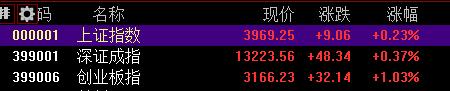
Core Viewpoint - The A-share market showed resilience and performed well despite a global downturn, with major indices recovering from initial losses and closing in positive territory [1][4]. Market Performance - On November 5, A-shares opened lower but rebounded, with the Shanghai Composite Index rising by 0.23%, the Shenzhen Component by 0.37%, and the ChiNext Index by 1.03% [4]. - A total of 3,380 stocks rose, with 83 hitting the daily limit up, while 1,905 stocks declined [4]. - The total trading volume reached 18,943.40 billion, with 132,682.2 million shares traded [5]. Sector Highlights - The electric power equipment sector saw a collective surge, with nearly 20 stocks, including Shuangjie Electric and Jinguang Electric, hitting the daily limit up [5]. - The Hainan sector continued to strengthen, with stocks like Haima Automobile and Haixia Shares reaching the daily limit up [6]. - The photovoltaic and energy storage sectors also experienced gains, with stocks such as Aters and Dongfang Risheng showing significant increases [8]. Declines and Risks - Quantum technology stocks faced declines, with Keda Guochuang dropping over 7% [9]. - Analysts noted that after a strong rally in tech stocks, a correction was expected, driven by concerns over valuations and market sentiment shifting from euphoria to a focus on profitability [9][11]. International Context - The Singapore Monetary Authority issued warnings about high valuations in the tech sector, particularly in AI, indicating potential for significant market corrections if optimism wanes [11]. - A recent announcement from the Chinese government regarding the suspension of additional tariffs on U.S. imports may have positively influenced market sentiment [10].



A股收评:创业板指涨超1%,电网设备、海南板块爆发
Ge Long Hui· 2025-11-05 07:27
Market Overview - The Asian stock markets collectively declined due to the impact of the U.S. stock market's "Black Tuesday," but the A-shares exhibited independent performance, with the Shanghai Composite Index rising by 0.23% to 3969 points, the Shenzhen Component Index increasing by 0.37%, and the ChiNext Index gaining 1.03% [1] - The total market turnover was 1.89 trillion yuan, a decrease of 441 billion yuan compared to the previous trading day, with nearly 3400 stocks rising [1] Sector Performance - The Hainan sector was notably active, with stocks like Haima Automobile and Haixia Shares hitting the daily limit [2] - The State Grid completed fixed asset investments exceeding 420 billion yuan, leading to significant gains in the electric grid equipment, ultra-high voltage, and smart grid sectors, with stocks like Jinguang Electric and TBEA also hitting the daily limit [2][4] - The titanium dioxide and photovoltaic equipment sectors showed strength, while the recombinant protein sector declined, with Sanofi falling over 8% [2] Notable Stocks - Electric grid equipment stocks saw widespread gains, with Saneng Electric hitting the daily limit with a 29.96% increase, and other stocks like YN Electric and Shuangjie Electric also experiencing significant rises [4][5] - Hainan and duty-free store sectors were strong, with Jinguang Technology rising over 18%, and several other stocks in the sector hitting the daily limit [6][7] - Coal stocks also performed well, with Antai Group and TBEA hitting the daily limit, and other stocks like Dayou Energy and Blue Flame Holdings following suit [8][9] - The titanium dioxide sector surged, with stocks like Vanadium Titanium and Guocheng Mining seeing substantial increases [10] Declining Sectors - The quantum technology sector experienced a pullback, with stocks like Fujida and Keda Guochuang dropping over 7% [11][12] - Semiconductor stocks also fell, with Zhongjing Technology declining over 6%, along with other notable declines in the sector [13] Future Outlook - Guotai Junan believes that the "transformation bull" in China is far from over, with expectations for the market to challenge ten-year highs due to economic transformation and capital market reforms [13]


电网设备板块掀涨停潮
财联社· 2025-11-05 07:19
Market Overview - The A-share market experienced a rebound with all three major indices closing in the green, with the Shanghai Composite Index rising by 0.23%, the Shenzhen Component Index by 0.37%, and the ChiNext Index by 1.03% [3][4] - The total trading volume in the Shanghai and Shenzhen markets was 1.87 trillion yuan, a decrease of 453 billion yuan compared to the previous trading day [1][5] Sector Performance - The electric grid equipment sector showed significant strength, with multiple stocks such as Jingquanhua and Moen Electric hitting the daily limit [1][2] - The Hainan sector also performed well, with stocks like Haima Automobile reaching the daily limit [1] - The battery storage sector was among the leaders, with Tongrun Equipment hitting a new high and Arters also reaching the daily limit [1] - Conversely, the quantum technology sector faced adjustments, with stocks like Keda Guochuang and Geer Software declining [1][2] Stock Movement - A total of 3,380 stocks rose, while 1,905 stocks fell, indicating a broad market rally [5] - There were 83 stocks that hit the daily limit up, while only 7 stocks hit the daily limit down [5]

【图解】谋篇布局“十五五”|“十五五”规划建议中,这些产业被重点提及
Zhong Guo Jing Ji Wang· 2025-11-05 07:17
Core Viewpoint - The article emphasizes the importance of developing a modern industrial system focused on strengthening the real economy, with a commitment to intelligent, green, and integrated development, while maintaining a reasonable proportion of manufacturing [3][5]. Group 1: Modern Industrial System - The focus is on consolidating and expanding the foundation of the real economy by prioritizing the development of the real economy [3]. - There is a commitment to maintaining a reasonable proportion of manufacturing and constructing a modern industrial system centered on advanced manufacturing [3]. Group 2: Traditional Industry Optimization - The article discusses the need to enhance traditional industries such as mining, metallurgy, chemicals, light industry, textiles, machinery, shipping, and construction to improve their global competitiveness [5]. - An estimated market space of around 10 trillion yuan is expected to be added over the next five years, releasing significant development momentum and benefits for people's livelihoods [5]. Group 3: Emerging Pillar Industries - There is a push to accelerate the development of strategic emerging industries such as new energy, new materials, aerospace, and low-altitude economy [6]. - This initiative is expected to create several trillion-level markets or even larger scales [7]. Group 4: Future Industry Layout - The article highlights the importance of forward-looking layouts for future industries, promoting quantum technology, biomanufacturing, hydrogen energy, nuclear fusion energy, brain-computer interfaces, embodied intelligence, and sixth-generation mobile communication as new economic growth points [8]. - The anticipated scale of new high-tech industries over the next decade is comparable to recreating an entire high-tech industry in China [8].

市场全天震荡反弹,创业板指涨超1%,电网设备板块近20股涨停
Feng Huang Wang Cai Jing· 2025-11-05 07:15
Core Viewpoint - The market experienced a rebound with all major indices closing in the green, indicating a positive sentiment among investors [1] Market Performance - The Shanghai Composite Index rose by 0.23% to close at 3969.25, while the Shenzhen Component Index increased by 0.37% to 13223.56, and the ChiNext Index saw a gain of 1.03% to 3166.23 [2] - The total trading volume in the Shanghai and Shenzhen markets was 1.87 trillion, a decrease of 45.3 billion compared to the previous trading day [1] Sector Performance - The electric grid equipment sector showed significant strength, with multiple stocks hitting the daily limit, including Jingquanhua and Moen Electric [2][3] - The Hainan sector also performed well, with stocks like Haima Automobile reaching their daily limit [2] - The battery sector was among the top gainers, with Tongrun Equipment and Aters both hitting their daily limit [2] - Conversely, the quantum technology sector faced adjustments, with stocks like Keda Guochuang and Geer Software declining [3]

北京未来企业家实训营二期开营,首期促成20余个意向合作项目
Xin Jing Bao· 2025-11-05 07:05
据了解,自2025年7月25日首期实训营开班以来,已有6家企业落户丰台,注册资金累计2.4亿元,另有5 家意向企业正在洽谈,首期学员间已促成20余个意向合作项目。 编辑 刘梦婕 二期实训营以"丰聚英才 企航未来"为主题,由中共丰台区委、丰台区人民政府主办,100名企业管理者 将共同开启为期3个月的系统化培育之旅。 相较于首期实训营,本次实训的100名成员来自不同区域,除丰台区的90名学员外,还有来自河北雄安 新区、湖北十堰的学员。实训营二期延续"百人一季""三平台(大咖会客厅、标杆研习会、场景模拟 舱)五步走(政策解码、破界对话、智行研学、实战领航、成果共享)"体系,新增3天军事课堂,锤炼 企业家决策韧性与执行基因。 本期实训营将持续至明年3月,设计杭州-上海(AI+机器人)、合肥-武汉(量子科技+生物医药)、深 圳-东莞(智能制造)三条线路,学员将走进云深处科技、科大讯飞、大疆创新等企业参观学习。同 时,还将组织学员走进丽泽金融商务区、天坛智能医工产业园等丰台区重点功能区。 新京报讯(记者姜慧梓)11月4日,丰台区主办的北京未来企业家实训营二期在北京大学开营。首期实 训营已于10月底结束,6家企业落户丰台, ...
收评:创业板指低开高走涨1%,电网设备、光伏储能板块多股大涨
Xin Lang Cai Jing· 2025-11-05 07:03
Core Viewpoint - The A-share market experienced a collective rise in the three major indices, with the Shanghai Composite Index up by 0.23%, the Shenzhen Component Index up by 0.37%, and the ChiNext Index up by 1.03%, while the Northbound 50 Index fell by 0.21% [1] Market Performance - The total trading volume in the Shanghai and Shenzhen markets reached 1,894.3 billion yuan, a decrease of 44.1 billion yuan compared to the previous day [1] - Over 3,300 stocks in the market saw an increase in their prices [1] Sector Performance - The top-performing sectors included: - Power grid equipment - Hainan Free Trade Zone - Photovoltaic energy storage - Duty-free shops - Phosphate chemical industry - Coal mining and processing [1] - Notable stocks that hit the daily limit included Wang Bian Electric, Shunma Power, Canadian Solar, Tongrun Equipment, and Sanbian Technology, among nearly 20 others in the power grid equipment and photovoltaic energy storage sectors [1] - The Hainan Free Trade Zone sector saw significant gains with stocks like Intercontinental Oil and Gas, Caesar Travel, Haima Automobile, and Hainan Development reaching their daily limits [1] - The coal sector continued its upward trend, with Antai Group achieving three consecutive daily limits and Baotailong hitting the daily limit [1] - Other sectors such as solid-state batteries, phosphate chemicals, and duty-free shops also performed well [1] Declining Sectors - The quantum technology sector saw most stocks adjust downwards, with Fujida, Keda Guochuang, and Guodun Quantum experiencing declines [1] - The storage chip sector faced localized pullbacks, with stocks like Yunhan Chip City, Zhaoyi Innovation, and Fudan Microelectronics declining [1]
四中全会精神在基层丨科创与产业同频 合肥培育发展新动能
Xin Hua Wang· 2025-11-05 05:28
记者:幸培瑜、徐中哲、白斌 新华社音视频部制作 【纠错】 【责任编辑:刘子丫】 量子科技突破领跑全球,人工智能、新能源汽车等产业集群加速壮大……走进安徽合肥,这座崛起的科创名城正以高水平科技自立自强为笔,绘就新 质生产力发展的生动图景。 ...