充电桩

Search documents
理想超充站商业价值分析
理想TOP2· 2025-06-30 14:35
Core Viewpoint - The key factors for the success of charging stations are site resources and transaction volume, which are essential for ensuring stable long-term cash flow and preventing sudden rent increases [1][2]. Group 1: Charging Station Economics - Charging stations can be highly profitable if they are located in good sites with sufficient operational volume, potentially achieving a return on investment within three years [2]. - The cost structure of charging stations is relatively low, with significant components being the site and the cost of individual transformers [1][2]. - The depreciation of charging station equipment varies, with transformers having a long lifespan of 20 years, while charging piles require maintenance every five years [1]. Group 2: Market Dynamics - The current market for charging stations is becoming more competitive, making it challenging to secure good locations, especially for new entrants [1][2]. - The profitability of charging stations is heavily dependent on the number of electric vehicles in operation, which remains a variable factor [2]. - For private enterprises, a strict evaluation of operational volume and site lease terms is crucial to avoid financial losses due to rising rental costs before recovering initial investments [2].


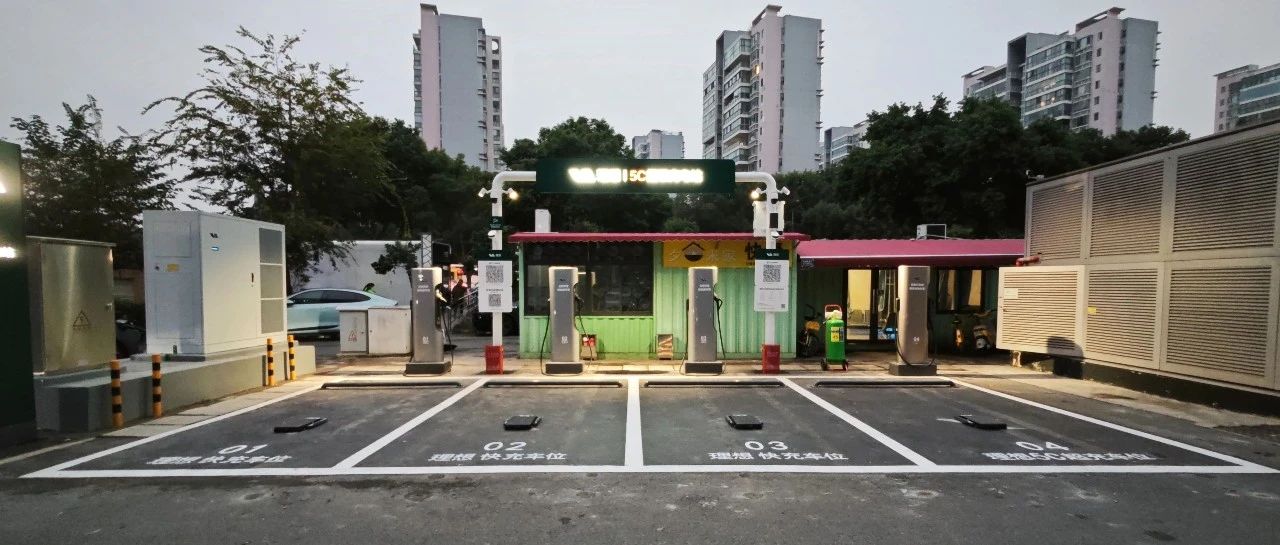
多地数量不足体验不佳,欧洲充电桩建设为何推进难?
Zhong Guo Qi Che Bao Wang· 2025-06-30 02:50
Core Viewpoint - The construction of charging stations in Europe is lagging behind the rapid growth of electric vehicles, leading to a potential "charging station crisis" by 2030 if current trends continue [3][4]. Group 1: Current Status of Charging Infrastructure - Norway leads Europe with over 27,000 public charging stations, equating to nearly 500 stations per 100,000 people, while the UK has only 89 stations per 100,000 people despite having a population 12 times larger [2]. - The overall car-to-charging station ratio in Europe is over 15:1, while China's ratio is approximately 3:1 [2]. - The European Automobile Manufacturers Association (ACEA) warns that by 2030, the EU will need about 8.8 million charging stations, but only 1.6 million are expected to be built at the current pace [3][4]. Group 2: Challenges in Charging Station Development - The slow progress in charging station construction is attributed to complex policies, outdated electrical grid infrastructure, and uneven investment distribution [5][6][7]. - Different countries and regions have their own regulations and approval processes, leading to lengthy delays in project implementation [5]. - Many areas face outdated electrical grids that cannot support the demand for charging stations, necessitating costly and time-consuming upgrades [6]. Group 3: Investment and Infrastructure Disparities - Investment in charging infrastructure is currently fragmented, lacking sufficient funding for large-scale development [7]. - Approximately 70% of public charging stations in the EU are concentrated in a few countries like the Netherlands, Germany, and France, leaving other regions underserved [7]. Group 4: Efforts to Address the Challenges - European governments are increasing policy support and funding for charging station construction, with initiatives like the Alternative Fuels Infrastructure Regulation (AFIR) [8]. - Germany plans to increase its number of charging stations fourteenfold within three years, while the UK aims to expand its network tenfold by 2030 [8]. - Technological advancements in fast charging and the exploration of wireless charging are being pursued to enhance user experience and reduce charging times [9]. Group 5: Future Outlook - The ongoing policy support and innovative business models are expected to attract more private investment, potentially accelerating the construction of charging stations [10]. - Industry experts believe that despite current challenges, the future of charging station development in Europe remains promising as various strategies are implemented [10].

得力入局充电桩 文具巨头跨界新能源前景几何
经济观察报· 2025-06-27 10:30
Core Viewpoint - Deli, a leading stationery brand, has entered the new energy charging pile industry, attracting significant attention in the electric vehicle sector. This move is seen as a strategic diversification to mitigate reliance on its core stationery business, which is facing declining demand due to a shrinking student population [1][6]. Group 1: Deli's Entry into the Charging Pile Market - Deli launched its first home-use new energy charging pile on June 22, offering various versions with a rated power of 7kW, compatible with major electric vehicle brands. The starting price is 979 yuan, with installation packages starting at 1669 yuan [2][4]. - The company has a significant retail advantage with over 100,000 retail outlets nationwide, allowing it to offer competitive pricing compared to other brands [9]. Group 2: Market Dynamics and Challenges - The home charging pile market is limited, with an estimated market size of around 60 billion yuan based on a 30% installation rate of over 20 million electric vehicles in China [10]. - Profit margins in the charging pile industry are not as high as expected, with basic equipment costs around 300-400 yuan, and additional smart features increasing overall costs [10]. - The competition is intense, with established players like State Grid and various small manufacturers already in the market, making it challenging for new entrants like Deli to gain market share [10][11]. Group 3: Future Outlook - Despite the challenges, the rapid growth of the new energy vehicle market presents significant opportunities for the charging pile industry, with predictions of 15.7 million new energy passenger vehicles sold in 2025, indicating a potential acceleration in the entire industry chain [11]. - Deli's future development in the charging pile sector remains to be seen, especially as it focuses solely on home charging piles, unlike competitors like Bull Group, which also engages in public charging solutions [12].

深圳官宣“超充之城2.0”充电枪数量已超加油枪
2 1 Shi Ji Jing Ji Bao Dao· 2025-06-27 08:18
Core Insights - Shenzhen is launching the "Super Charging City 2.0" initiative to accelerate the application of high-power charging technologies for heavy-duty trucks and passenger vehicles [1][2] - The city has already established 1,055 super charging stations and over 420,000 charging piles, surpassing the number of gas stations and pumps globally [1][3] - By the end of 2024, the number of new energy vehicles in Shenzhen is expected to exceed 1.269 million, accounting for 28.6% of the total vehicle ownership, with a penetration rate of 76.9% for new energy vehicles [1][2] Infrastructure Development - Shenzhen's charging infrastructure is rapidly expanding to match the growth of new energy vehicles, with the "Super Charging City" initiative first announced in June 2023 [2] - The establishment of a global heavy-duty truck battery swap operation center by CATL's subsidiary in Shenzhen aims to create a leading global ecosystem for battery swapping [2] - Shenzhen plans to set local standards for battery swapping systems and charging stations by December 31, 2026 [2] Industry Standards and Collaborations - BYD announced a collaboration with Xiaojuchongdian and Xin Electric Road to build 15,000 megawatt fast charging piles [3] - Shenzhen's government report indicated the establishment of 1,030 super charging stations and 151 interactive charging stations by 2024, with a focus on maintaining its status as a world-class "Super Charging City" [3] - Shenzhen has introduced six leading local standards for electric vehicle charging stations, covering site selection, layout, and power quality requirements [3] Regional Developments - Other regions, such as Chongqing and Beijing, are also planning their own "Super Charging City" initiatives, with Chongqing aiming for over 2,000 super charging stations by the end of 2025 [4] - Beijing has reported a total of 1.009 million new energy vehicles and 404,000 charging piles, with ongoing construction of super charging stations in key areas [4]
得力入局充电桩 文具巨头跨界新能源前景几何
Jing Ji Guan Cha Wang· 2025-06-26 10:24
Core Viewpoint - Deli has launched its first home-use new energy charging pile, marking its entry into the charging pile industry, which has attracted significant attention in the electric vehicle sector [2][3]. Group 1: Product Launch and Specifications - Deli's charging pile has a rated power of 7kW and is compatible with mainstream electric vehicle brands such as Xiaomi, Tesla, BYD, and NIO [2]. - The initial price for the Deli 7kW charging pile starts at 979 yuan, with a package price including 30 meters of installation service starting at 1669 yuan [2]. - The product is currently available for sale on JD.com [2]. Group 2: Industry Context and Market Dynamics - The charging methods for electric vehicles are categorized into direct current (DC) and alternating current (AC), with 7kW being the most common power for home charging piles [3][4]. - The market for home charging piles is limited, with an estimated 600,000 units needed based on a 30% installation rate of over 20 million electric vehicles in China, leading to a market size of approximately 6 billion yuan [6][7]. - The competition in the home charging pile market is intense, with established players like State Grid and BYD dominating the market, making it challenging for new entrants like Deli to gain market share [7]. Group 3: Strategic Rationale for Diversification - Deli has been seeking diversification to reduce its reliance on its core stationery business, which has seen a decline in demand due to a decrease in the number of school-age children [5][6]. - The company's stationery business revenue has dropped from 80% to less than 60% of its total revenue, prompting a shift towards new growth areas such as charging piles [5][6]. - Deli's existing technical capabilities in electrical products provide a foundation for its entry into the charging pile market, similar to Bull's previous entry into the industry [5][6]. Group 4: Financial Performance and Future Outlook - Bull Group reported a revenue of 777 million yuan from its new energy business in 2024, reflecting a year-on-year growth of 104.75%, although specific revenue from charging piles was not disclosed [8]. - The rapid growth of the new energy vehicle market is expected to drive demand for charging piles, with predictions indicating that wholesale sales of new energy passenger vehicles in China could reach 15.7 million units by 2025, representing a 28% year-on-year increase [7][8].

充电桩下乡点燃绿色旅游新引擎,前五月相关企业注册超6万家
Qi Cha Cha· 2025-06-25 06:30
Core Insights - The Chinese government is promoting the construction of charging infrastructure in rural areas to support the growing demand for electric vehicles (EVs) and enhance green tourism [1][2] Group 1: Industry Growth - The number of existing charging-related enterprises in China has reached 602,300, with a significant increase in registrations over the past decade [2][3] - In 2021, the registration of charging-related enterprises saw a year-on-year growth of 75.63%, reaching a peak of 67,300, and projections indicate that registrations will exceed 150,000 by 2024 [3] Group 2: Geographic Distribution - The majority of charging-related enterprises are concentrated in the East China region, accounting for 32.82% of the total, followed by South China at 17.63% [4] Group 3: Industry Composition - Over 30% of the existing charging-related enterprises belong to the wholesale and retail sector, while 26.94% are in scientific research and technical services [5]
欧洲意大利光伏储能充电桩市场
Sou Hu Cai Jing· 2025-06-24 08:46
Core Insights - The European Photovoltaic Association has released forecasts for solar energy storage installations in EU countries, with a specific focus on Italy's renewable energy sector by 2026 [1] - Italy's new energy policies are expected to significantly boost solar energy installations and storage capacity [3] Policy Incentives - Tax incentives include a "super bonus" plan offering 110% tax credits for residential and commercial solar + storage installations, along with mandatory solar installations for new buildings [3] - Special funding includes €1 billion for agricultural solar projects (1.04GW by June 2026), €5.7 billion for 1GW distributed energy projects, and €17.7 billion for 9GW/71GWh storage facilities [3] Market Segmentation - The "solar + storage" market is projected to see a surge, with Italy aiming for 3 million charging points by 2030, peaking in construction by 2026 [5] - The agricultural solar policy promotes a "solar + agriculture" land use model, with initial projects expected to connect to the grid by 2026 [5] - Industrial rooftops have a potential installation capacity of 30GW, with commercial installations expected to account for 49% by 2024 due to declining costs [5] Market Size and Growth Forecast - Italy's new solar installations are projected to reach 6.79GW in 2024, a 30% year-on-year increase, with continued high growth expected through 2026 [7] - Distributed solar (residential + commercial) is anticipated to grow by 25% due to policy support, maintaining over 70% market share [7] - Utility-scale installations are expected to exceed 4GW by 2026, driven by a 163% growth rate for projects over 1MW and agricultural solar integration [7] Cumulative Installation Targets - By 2030, renewable energy is expected to account for 55% of total energy generation, with solar being the primary contributor [8] - Cumulative installations are projected to exceed 45GW by 2026, based on a baseline of 37.08GW at the end of 2024 [8]
优优绿能20250620
2025-06-23 02:09
Summary of the Conference Call for 优优绿能 Company Overview - 优优绿能 focuses on the new energy vehicle ecosystem, covering both ToB (business-to-business) and ToC (business-to-consumer) segments. ToB includes DC charging equipment and core components, while ToC specializes in portable power products like vehicle-mounted power supplies [2][3] Key Points and Arguments - **Market Share and Growth**: In 2023, the company held approximately 11% to 12% market share in the domestic charging module market. The industry is expected to consolidate, with the top three companies potentially capturing 50% to 60% of the market [4][15] - **Profit Margin Trends**: The overall gross margin is on an upward trend from 2022 to 2024, with higher integration levels leading to higher margins. The 40 kW module has the highest margin, followed by 30 kW, while the 15 kW product has limited impact due to lower sales volume [2][6] - **Cost Control and Product Optimization**: The company aims to maintain and enhance charging module gross margins through market share adjustments, product structure optimization, and cost control measures, including raw material price reductions [9][10] - **Revenue Projections**: For 2025, it is anticipated that the revenue share of the 40 kW charging module will exceed 50% of the total, while the shares of 30 kW and 20 kW modules will decline [10] - **Light Asset Model**: The company operates a light asset model, outsourcing most assembly processes. It has localized manufacturing in Southeast Asia and the U.S. and is expanding into emerging markets like Latin America and Africa [11][12] Additional Important Insights - **Technological Advancements**: Continuous technological iteration is crucial for maintaining competitive advantages in the market [4][15] - **Market Dynamics**: The European market is seeing an increase in electric vehicle sales, which supports the demand for charging modules, although recovery in the market remains to be observed [16] - **Customer Diversification**: The company has diversified its customer base, increasing the number of global industry clients from 500 in 2023 to 1,000 in 2024, reducing reliance on any single customer [15] - **Regulatory Considerations**: The company is prepared to adapt to potential localization manufacturing requirements in Europe, similar to those in the U.S., but currently sees no strong push for such policies in Europe [12][13] - **Future Expansion Plans**: The company is open to exploring new fields such as AI data centers and other high-cost tolerance scenarios for promoting energy storage systems [23] This summary encapsulates the key aspects of the conference call, highlighting the company's strategic focus, market positioning, and future outlook in the new energy vehicle ecosystem.
推动车网互动加速跑(新知)
Ren Min Ri Bao· 2025-06-19 21:51
Core Viewpoint - The implementation of vehicle-to-grid (V2G) technology in China is entering a new phase with the launch of pilot projects in nine cities, showcasing the potential for electric vehicles to interact with the power grid and contribute to energy management [1][2]. Group 1: Vehicle-to-Grid Technology - Vehicle-to-grid (V2G) technology allows electric vehicles to act as mobile energy storage units, charging during off-peak hours and discharging during peak hours, thus aiding in energy consumption and alleviating grid pressure [1]. - In Shanghai, a smart charging network with a capacity of 300,000 kW and V2G discharge capability of 20,000 kW has been established, demonstrating the practical value and potential of V2G technology [1]. Group 2: Challenges and Solutions - Many electric vehicles currently lack reverse charging capabilities, and the high cost of V2G charging station construction limits widespread adoption [2]. - Addressing concerns about battery safety and lifespan due to frequent charging and discharging is crucial for encouraging participation from electric vehicle owners [2]. - Innovative solutions, such as a new control module for retrofitting old charging stations, have been implemented in 19 locations in Shenzhen, saving hundreds of thousands of yuan in renovation costs [2]. Group 3: Growth of Charging Infrastructure - By the end of 2024, the total number of charging facilities in China is expected to reach 12.818 million, a year-on-year increase of 49.1% [3]. - The average utilization rate of public charging stations remains low, highlighting the urgency to optimize resource allocation and ensure that the growing number of charging stations is effectively utilized [3]. - Projections indicate that by 2030, the number of electric vehicles in China could exceed 100 million, potentially providing around 1 billion kW of grid adjustment capacity [3].
现实世界资产(RWA):与稳定币形成正循环、重塑企业跨境融资
Haitong Securities International· 2025-06-16 13:17
Investment Rating - The report does not explicitly provide an investment rating for the industry. Core Insights - The development of Real World Assets (RWA) is accelerating, supported by the regulatory framework for stablecoins, which enhances the liquidity and efficiency of asset financing [3][29]. - The Hong Kong Monetary Authority (HKMA) launched the Ensemble Project Sandbox in August 2024 to promote tokenization experiments for traditional securities and RWAs, indicating a significant step towards modernizing financing methods [28][29]. - The market value of RWAs has reached $23.9 billion, reflecting a growth of over 51% from $15.8 billion at the beginning of the year, showcasing increasing interest in RWAs as a new investment tool [10]. Summary by Sections Definition and Scale of RWA - RWA refers to the tokenization of real-world assets such as real estate, gold, and financial assets, allowing these assets to be split, traded, and circulated across borders [10][26]. - The advantages of RWA include increased asset liquidity, lower investment thresholds, reduced financing costs, improved financing efficiency, and enhanced asset transparency [10][26]. Comparison with Stablecoins - Stablecoins are blockchain-based digital currencies pegged to fiat currencies or commodities, focusing on maintaining stable value, while RWAs focus on tokenizing real-world assets [12][14]. - Stablecoins serve as a stable and trustworthy tool for purchasing RWAs, facilitating international transactions and enhancing liquidity in the RWA market [15][27]. Regulatory Framework and Projects - The HKMA's Ensemble Project Sandbox supports institutions in tokenization experiments, covering themes such as fixed income, liquidity management, green finance, and trade finance [28][29]. - Major cross-border RWA financing projects include Longshine Group's charging station project, GCL Energy Technology's photovoltaic project, and Xunying Travel's battery swapping project, with financing amounts ranging from CNY 100 million to over CNY 200 million [29][30]. Advantages of RWA Financing - RWA financing addresses traditional asset financing challenges by enabling the digitization and tokenization of assets, thus improving liquidity and reducing costs [10][9]. - The flexibility of RWA financing allows enterprises to customize transaction structures according to market demands, enhancing the likelihood of successful fundraising [9][10].