
石油

Search documents
能源早新闻丨6个上榜,创建国家新型工业化示范区首批城市名单公布
中国能源报· 2026-03-17 22:33
News Focus - In January and February, the total electricity consumption in China increased by 6.1% year-on-year, reaching 165.46 billion kilowatt-hours. The first industry consumed 22.3 billion kilowatt-hours, up 7.4%, while the second industry consumed 1,027.9 billion kilowatt-hours, up 6.3%. Industrial electricity consumption grew by 6.4%, and high-tech and equipment manufacturing electricity consumption rose by 10.6%. The third industry consumed 323.1 billion kilowatt-hours, up 8.3%, with the charging and swapping service industry and internet data service industry growing by 55.1% and 46.2%, respectively. Urban and rural residents' electricity consumption was 281.3 billion kilowatt-hours, up 2.7% [2]. Domestic News - Six cities were listed in the first batch of national new-type industrialization demonstration zones, including Beijing Daxing District and Tianjin Binhai New Area [3]. - By 2025, electrical faults are expected to cause 30.8% of all fire incidents in China, with a projected total of 841,000 fire reports nationwide [3]. - China's geothermal industry remains the largest in the world, with a projected growth rate of around 7% in geothermal heating and cooling areas over the next decade, reaching a cumulative area of 3 billion square meters by 2035 [3]. Corporate News - A new international standard for pipeline geological disaster monitoring in the oil and gas industry was released, led by a Chinese state-owned enterprise. This standard integrates various technologies, including satellite remote sensing and intelligent sensing, creating a comprehensive monitoring system [7].


Oil pares gains as doubts linger over U.S.-backed plan to protect Strait of Hormuz shipping
Youtube· 2026-03-17 17:00
Group 1 - Oil prices are rising due to recent Iranian attacks on UAE energy infrastructure and a tanker incident in the Gulf of Oman, raising concerns about military escorts for tankers in the Strait of Hormuz [1] - The liquefied natural gas (LNG) market may face more significant long-term impacts from the blockade compared to the oil market, as LNG production is more concentrated [1] - Qatar supplies approximately 20% of global LNG, with the Ras Laffan facility offline since March 2nd, making it increasingly difficult to restart the facility [2] Group 2 - Nearly 90% of LNG that passes through the Strait of Hormuz is directed towards Asia, where buyers are urgently trying to compensate for lost cargoes [3] - JKM pricing has exceeded $20 per MMBTU, prompting some ships originally destined for Europe to redirect to Asia for better prices, coinciding with the start of the European gas injection season [3]

Bitcoin, XRP surge ahead of FOMC meeting
Yahoo Finance· 2026-03-17 15:59
Market Overview - Crypto markets experienced a slight increase on March 17, 2026, as investors navigated rising geopolitical tensions in the Middle East alongside uncertainty before the Federal Open Market Committee (FOMC) meeting [1] - U.S. equity futures indicated a cautious market sentiment, with Nasdaq 100 futures initially trending down before rising by 0.16% and S&P 500 futures slipping before rebounding by 0.24% [1] Oil Prices and Impact - The market sentiment was muted following a positive start to the week, where equities rallied due to easing oil prices, but crude oil prices resumed their upward trend [2] - West Texas Intermediate (WTI) crude increased by 3.7% to nearly $97 per barrel, while Brent crude rose by 3.2% to $103.50 [2] Cryptocurrency Performance - Bitcoin (BTC) rose by 1.09% over the past 24 hours, trading around $74,038, briefly approaching $76,000 before retracing [2] - Ethereum (ETH) gained 2.2%, and XRP (XRP) climbed 2.9%, while Solana (SOL) saw a slight decrease of 0.1% [3] - Digital assets have demonstrated greater resilience compared to traditional assets like gold and silver amid escalating geopolitical tensions since February 28 [3] Geopolitical Hedge Narrative - Some market participants are increasingly viewing cryptocurrencies as a hedge against geopolitical instability, although analysts caution that crypto remains closely linked to macroeconomic signals, particularly U.S. monetary policy [3] Interest Rate Expectations - Risk appetite in both traditional and digital markets is heavily influenced by expectations surrounding interest rates and liquidity conditions [4] - The FOMC meeting on March 17–18 is critical, with investors previously anticipating multiple rate cuts in 2026, but renewed inflation risks from rising energy prices and conflict-related disruptions have complicated this outlook [5] - Markets are now pricing in a high likelihood that the Federal Reserve will maintain rates within the 3.5%–3.75% range, with potential cuts postponed until at least September [6] - Recent economic data, including a consumer price index showing inflation steady at 2.4% year-over-year, adds to the uncertainty, as it does not fully reflect the recent spike in oil prices [6]
Oil prices climb on ‘mixed signals' as Iran conflict drags on
MarketWatch· 2026-03-17 15:58
Core Viewpoint - Global oil prices are expected to remain above $100 a barrel for the fourth consecutive session, influenced by geopolitical tensions and mixed signals from the Middle East [1] Group 1: Oil Prices - Oil prices are poised to end above $100 a barrel for four sessions in a row [1] - The current pricing trend reflects ongoing geopolitical tensions, particularly in the Middle East [1] Group 2: Geopolitical Factors - U.S. requests for assistance in securing the crucial waterway have not received a favorable response [1] - Reports indicate that Iran is permitting some crude tankers to pass through the Strait of Hormuz, creating mixed signals for the market [1]
步步惊心!油价狂飙美股震荡,英伟达4万亿蓄力,黄金坑悄然形成
Sou Hu Cai Jing· 2026-03-17 15:45
Group 1: Market Overview - The global capital markets are currently influenced by geopolitical tensions, particularly the Iran situation, which has led to fluctuations in oil prices and impacted inflation expectations and Federal Reserve policies [1][9][13] - The U.S. stock market is experiencing a narrow range of fluctuations, with the S&P index showing strong support at 6521 points and potential resistance at 6850 points [4][6] - The market is characterized by a "bounce and drop" pattern, with fear persisting but not leading to extreme sell-offs, indicating a relatively stable environment despite geopolitical uncertainties [6][23] Group 2: Technology Sector Developments - Nvidia's GTC conference introduced significant new products, including the Vira Rubin platform, which enhances AI capabilities, reflecting a strong growth trajectory in the AI and storage chip sectors [3][17] - Micron Technology is expected to report a quarterly revenue of $1.92 billion, a 138% year-over-year increase, driven by high demand in the storage chip market [19] - Qualcomm faces challenges due to declining smartphone demand, with a projected 10% to 15% decrease in global smartphone production in 2026, impacting its processor orders [21] Group 3: Geopolitical Impact on Energy Prices - The ongoing U.S.-Iran conflict, particularly around the strategic location of Hark Island, is a critical factor affecting oil prices, with Brent crude remaining above $100 per barrel [9][11] - The U.S. is attempting to form a coalition to secure shipping routes, highlighting the geopolitical stakes involved in oil supply and pricing [11] - Market expectations suggest that oil prices may retreat below $80 after the conflict, indicating a potential easing of inflationary pressures globally [13]


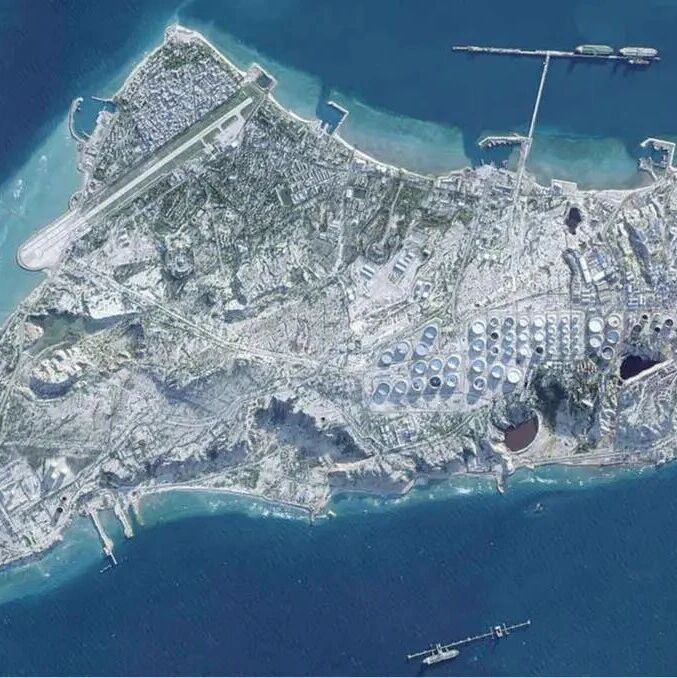
伊朗:哈尔克岛局势平稳,国家石油出口持续进行,美以及其盟友船只已被禁止通过霍尔木兹海峡;此前特朗普称该岛军事设施已被“完全摧毁”
中国能源报· 2026-03-17 14:22
Core Viewpoint - The situation on Hark Island is stable, and Iran's national oil exports are ongoing despite geopolitical tensions [3]. Group 1: Current Situation - Iran's parliamentary energy committee spokesperson stated that life on Hark Island is normal, and oil exports are uninterrupted [3]. - The U.S., Israel, and their allies' vessels have been banned from passing through the Strait of Hormuz, a critical shipping route for oil [3]. Group 2: Strategic Importance - Hark Island is a strategic location for Iran's energy exports, previously described by former President Trump as having its military facilities "completely destroyed" [3]. - Trump warned that any interference with the safe passage of vessels through the Strait of Hormuz would lead him to reconsider his decision not to attack the island's oil facilities [3]. Group 3: Military Response - The Iranian military has stated that if the oil facilities on Hark Island are attacked, all oil and energy infrastructure owned by companies cooperating with the U.S. will be "immediately destroyed" [3].
机构资金最近在撤退?
表舅是养基大户· 2026-03-17 14:12
Core Viewpoint - The article discusses the significant impact of overseas uncertainties on the A-share technology sector, highlighting the correlation between institutional fund redemption trends and geopolitical risks [1][9]. Group 1: Market Reactions and Fund Flows - The fixed income + funds, which are sensitive to market fluctuations, experienced substantial net redemptions, marking the second-largest single-day sell-off since the onset of the current conflict [1]. - In January, fixed income + funds saw record inflows, driven by a bullish equity market, leading to increased participation from both retail and institutional investors [1]. - As market uncertainties arise, risk-averse funds, particularly those with lower stability in liabilities, are the first to withdraw, leading to a chain reaction of selling pressure on public funds [2][3]. Group 2: Performance of Convertible Bonds and ETFs - The convertible bond market has shown extreme volatility, with the high-priced convertible bond index experiencing a maximum drawdown of 15.54%, significantly higher than the drawdowns of small-cap stocks [3][4]. - The largest convertible bond ETF saw a net outflow of 1.26 billion, indicating a strong trend of institutional selling, which reflects broader market sentiment [4][6]. - The chemical ETF, which grew from under 2 billion to over 37 billion, also faced significant net outflows recently, suggesting that institutional selling is impacting market performance [6]. Group 3: Geopolitical and Economic Implications - The ongoing geopolitical tensions, particularly in the Middle East, are creating a complex environment that affects global oil supply and economic growth, with a significant oil shortfall projected [12][18]. - High oil prices are expected to influence inflation and interest rate expectations, potentially limiting the room for central banks to lower rates, which could suppress stock market valuations [26][27]. - The article emphasizes the need for caution in investment strategies, particularly in light of the current geopolitical landscape and its potential economic repercussions [32][35].

Oil Surged 33% in a Week: 3 Commodity ETFs to Buy as the Hormuz Crisis Deepens
247Wallst· 2026-03-17 12:44
Core Point - Iran has announced the closure of the Strait of Hormuz starting March 4, 2026, and has begun attacking ships that attempt to transit oil and other commodities [1] Group 1 - The closure of the Strait of Hormuz is a significant geopolitical event that could impact global oil supply and shipping routes [1] - The attacks on ships indicate a heightened level of military aggression from Iran, which may escalate tensions in the region [1]
Stock Futures Drop as Oil Prices Surge Again. Trump's Call for Hormuz Help Falters.
Barrons· 2026-03-17 10:24
Group 1 - Oil prices have surged again, leading to a drop in stock futures [1] - S&P 500 futures decreased by 0.4%, Nasdaq 100 futures also fell, and Dow Jones Industrial Average futures dropped by 0.3% ahead of the market opening [2] - The major indexes had previously climbed on Monday when oil prices had fallen from their highs [2]
Rate Hike Fails to Lift Aussie as RBA’s 5–4 Split Felt Like a Hold
Yahoo Finance· 2026-03-17 09:59
Group 1 - The central bank has implemented two rate hikes since January, with the latest increase on March 17 bringing the cash rate to 4.10%, the highest level since April 2025, due to renewed inflation concerns [1] - The decision to raise rates did not lead to a sustained increase in the Australian Dollar (AUD), attributed to a narrow voting split among board members, indicating a lack of strong conviction in the decision [3] - The AUD/USD exchange rate initially spiked above 0.7090 but quickly retraced, highlighting the volatility and uncertainty in currency movements amid divided forward guidance [4] Group 2 - The escalation of the conflict in Iran has created significant external shocks, particularly affecting energy markets and leading to a sharp increase in oil prices [5] - Brent crude oil prices have surged approximately 65% since the beginning of the year, reaching over $100 per barrel, which poses a direct inflationary threat to Australia as a net importer of refined energy products [6] - The Australian government has responded by releasing part of its strategic fuel reserves and relaxing fuel quality standards to increase supply, although logistical constraints may delay the effectiveness of these measures [7]