软件和信息技术服务

Search documents
前三季度深圳用电量增4.39%
Shen Zhen Shang Bao· 2025-10-28 07:08
Group 1: Overall Electricity Consumption in Shenzhen - Shenzhen's total electricity consumption reached 96.85 billion kWh in the first three quarters of the year, reflecting a year-on-year growth of 4.39% [1] - The electricity consumption from the secondary and tertiary industries was 44.37 billion kWh and 35.42 billion kWh, respectively, with growth rates of 2.48% and 6.25% [1] - The Deep-Shan Special Cooperation Zone led the growth with a remarkable 26.4% increase in electricity consumption, achieving a historical monthly high of over 200 million kWh in September [1] Group 2: Industrial Electricity Consumption - Industrial electricity consumption in Shenzhen was 42.75 billion kWh, marking a year-on-year increase of 3.12%, accounting for 44.1% of total electricity consumption [1] - The manufacturing sector consumed 34.45 billion kWh, with a growth rate of 2.9% [1] - High-tech and equipment manufacturing saw a consumption of 3.062 billion kWh, growing by 5.81%, indicating Shenzhen's push to become a global leader in advanced manufacturing [1] Group 3: Growth in the Tertiary Industry - The tertiary industry's electricity consumption growth was significantly driven by the information transmission, software, and IT services sector, which grew by 23.12% [2] - Other sectors such as wholesale and retail, and leasing and business services also showed strong growth rates of 18.82% and 9.60%, respectively [2] - The increase in electricity demand reflects the rapid growth of data centers, charging services, and large commercial areas in Shenzhen [2] Group 4: Electric Vehicle Charging Infrastructure - The total electricity consumption for charging stations in Shenzhen reached 5.129 billion kWh in the first three quarters, with a monthly growth rate exceeding 14% [3] - The Sha Bao International Innovation Park supercharging station has become essential for many ride-hailing and new energy vehicles, with a cumulative charging volume of over 716,900 kWh this year [3] - The rapid expansion of electric vehicle ownership and charging demand highlights the progress in building a comprehensive energy supply network in Shenzhen [3]

运达科技:10月27日召开董事会会议
Mei Ri Jing Ji Xin Wen· 2025-10-27 16:50
Core Viewpoint - Yunda Technology (SZ 300440) announced its third quarter report for 2025 during the board meeting held on October 27, 2025, highlighting its revenue structure and current market valuation [1]. Company Summary - Yunda Technology's revenue for the first half of 2025 was primarily derived from software and information technology services, accounting for 99.65% of total revenue, while other business segments contributed only 0.35% [1]. - As of the report, Yunda Technology's market capitalization stands at 6.4 billion yuan [1].

一揽子增量政策实施效果如何?税收数据揭示经济向好态势
Yang Shi Xin Wen· 2025-10-26 03:57
Core Insights - The implementation of a comprehensive set of incremental policies since September 26 last year has led to a steady recovery in both invoice sales and tax revenue, indicating a strengthening economic outlook in China [1][2] Group 1: Tax Revenue and Invoice Sales - The growth rate of national enterprise sales revenue has shown a steady increase, with quarterly growth rates from Q3 last year to Q3 this year recorded at 0.4%, 2.6%, 2.1%, 3.1%, and 4.4% respectively [2] - Tax revenue has turned positive after seven months of negative growth, with a cumulative increase in tax revenue since February this year, showing month-on-month growth of 2.6% and 6.9% in Q2 and Q3 respectively [2][6] Group 2: Capital Market Tax Revenue - Tax revenue related to the capital market has maintained a high growth rate, with a year-on-year increase of 56.8% in capital market service tax revenue, and a 110.5% increase in securities transaction stamp duty [3] - The total market value of A-share companies surpassed 100 trillion yuan in August, and the Shanghai Composite Index reached a ten-year high in September, with average daily stock trading volumes of 2.3 trillion yuan and 2.4 trillion yuan in August and September respectively [3] Group 3: Improvement in Business Conditions - The manufacturing sector has seen a year-on-year tax revenue growth of 5.4%, accounting for 31% of total tax revenue, with high-end manufacturing sectors like railway, shipbuilding, and aerospace experiencing a tax revenue increase of 31.5% [4] - In Dalian, the automotive manufacturing sector reported a sales revenue of 68.69 billion yuan, a year-on-year increase of 21%, while equipment and raw material purchases grew by 33.6% [5] Group 4: Emerging Industries and Consumption - The information transmission, software, and IT services sectors have seen tax revenue growth of 15.3%, while scientific research and technical services have grown by 13.2% [5] - Consumer goods sectors, particularly home appliances, have experienced significant sales growth, with retail sales of refrigerators and televisions increasing by 55.4% and 35.3% respectively [7]
广东经济三季报:“稳”与“升”交织中释放新结构性潜能
2 1 Shi Ji Jing Ji Bao Dao· 2025-10-24 14:15
Economic Overview - Guangdong's GDP for the first three quarters reached 10,517.698 billion yuan, with a year-on-year growth of 4.1%, showing a stable economic performance [2] - The primary industry added value was 383.85 billion yuan (4.5% growth), the secondary industry 3,927.075 billion yuan (2.7% growth), and the tertiary industry 6,206.773 billion yuan (4.9% growth) [2] Industrial Growth - Guangdong's industrial production growth rate increased to 3.5% year-on-year, up 1.3 percentage points from January to August [4] - Advanced manufacturing and high-tech manufacturing sectors saw value-added growth of 5.4% and 6.4%, respectively, accounting for 55.5% and 33.8% of total industrial value-added [4] - Notable increases in production for industrial robots (33.7%), service robots (15.2%), civilian drones (44.8%), and 3D printing equipment (40.3%) were reported [4] New Product Development - New products such as robots, drones, 3D printing equipment, and electric vehicles maintained double-digit growth rates in production [3] - Investment in research and experimental development, internet services, and software and IT services grew by 12.7%, 81.2%, and 23.5%, respectively [3][7] Service Sector Performance - The service sector's value-added increased by 4.9%, with financial services growing by 9.8% [5] - Key service industries such as information transmission, software and IT services, and transportation saw revenue growth of 9.5%, 6.6%, and 8.3%, respectively [5] Consumption and Investment Trends - Retail sales of consumer goods grew by 2.8%, with online sales increasing by 16.2%, indicating a shift towards e-commerce [7] - Fixed asset investment decreased by 14.1%, with real estate development investment down by 20.6% [7] Foreign Trade Dynamics - Guangdong's foreign trade reached 7.02 trillion yuan, accounting for 20.9% of the national total, with a year-on-year growth of 3.8% [9] - The province is diversifying its trade markets and enhancing support for enterprises to maintain export growth amid global uncertainties [9] Future Outlook - The Guangdong provincial government emphasizes the need for confidence and proactive measures to address economic challenges and ensure a strong finish to the year [10]

5.5%!上海经济展现强大韧性活力
Jie Fang Ri Bao· 2025-10-23 09:21
Core Insights - Shanghai's economy demonstrated strong resilience and vitality with a GDP growth rate of 5.5% in the first three quarters, surpassing the national average by 0.3 percentage points [1][2] - The industrial sector showed significant improvement, with industrial value-added increasing by 5.2% year-on-year and the output of strategic emerging industries contributing to 44.1% of the total industrial output [2] - The financial and information services sectors experienced robust growth, with the information transmission and software services growing by 15.5% and the financial sector by 9.8% [2] Economic Performance - Shanghai's GDP reached 40,721.17 billion yuan, with the primary industry growing by 0.9%, the secondary industry by 3.9%, and the tertiary industry by 5.9% [1] - Fixed asset investment increased by 6.0%, while the total retail sales of consumer goods amounted to 12,302.77 billion yuan, reflecting a year-on-year growth of 4.3% [2] Consumer and Price Trends - The Consumer Price Index (CPI) remained stable compared to the previous year, with a core CPI increase of 0.6% when excluding food and energy prices [3] - The average disposable income for residents reached 69,220 yuan, marking a 4.3% increase year-on-year, while the urban unemployment rate averaged 4.2% [3]
上海经济展现强大韧性活力 前三季度多个行业指标明显改善 经济结构调整升级成果显现
Jie Fang Ri Bao· 2025-10-23 01:30
Economic Performance - Shanghai's GDP growth rate for the first three quarters is 5.5%, surpassing the national average by 0.3 percentage points, indicating strong economic resilience and vitality [1][2] - The total GDP for Shanghai reached 40,721.17 billion yuan, showing a year-on-year increase of 5.5% [1] Sector Analysis - The primary industry added value is 64.26 billion yuan, growing by 0.9%; the secondary industry added value is 8,448.67 billion yuan, growing by 3.9%; and the tertiary industry added value is 32,208.24 billion yuan, growing by 5.9% [1] - The industrial added value in Shanghai increased by 5.2% year-on-year, with the total industrial output value for large-scale enterprises growing by 5.7% [1] - The three leading industries in Shanghai saw manufacturing output value increase by 8.5%, outpacing the overall industrial output growth by 2.8 percentage points [1] Investment and Consumption - Fixed asset investment in Shanghai grew by 6.0% year-on-year, while the total retail sales of consumer goods reached 12,302.77 billion yuan, increasing by 4.3% [2] - The major financial market transaction volume in Shanghai increased by 12.7% year-on-year [2] Financial Indicators - The local general public budget revenue for Shanghai was 6,555.68 billion yuan, a year-on-year increase of 1.0%, while expenditures rose by 8.0% to 6,876.39 billion yuan [2] - The average urban survey unemployment rate in Shanghai was 4.2% [2]
锐评|这张成绩单,“含金量”与“含新量”都足足的
Sou Hu Cai Jing· 2025-10-22 10:42
Core Insights - Beijing's GDP grew by 5.6% year-on-year in the first three quarters, showing a slight increase of 0.1 percentage points compared to the first half of the year, indicating a stable and improving economic performance [1] - Key industries such as information transmission, software and IT services, finance, and manufacturing contributed over 80% to the city's economic growth [1] - High-end manufacturing led the growth, with the added value of strategic emerging industries and high-tech manufacturing increasing by 17.9% and 9.9% respectively [1] - New consumption trends are emerging, with significant growth in the cultural and tourism sectors, including double-digit increases in box office revenues and over 10% growth in travel agency and related services [1] Industry Analysis - The transformation of innovation potential into economic momentum is crucial for sustainable development, with Beijing focusing on becoming a major global scientific center and innovation hub [1] - Policies such as the trade-in program for consumer goods have stimulated rapid growth in the sales of household appliances [2] - The integration of diverse business models in the cultural, commercial, and tourism sectors has led to double-digit growth in the number of large events and attendees in Beijing this year [2] - The current economic environment is characterized by external uncertainties and insufficient domestic demand, necessitating a focus on reform and policy support to ensure equitable distribution of development benefits [2]
上海前三季度GDP同比增长5.5%,金融市场活跃财政收支增长
Bei Ke Cai Jing· 2025-10-22 06:02
Economic Overview - Shanghai's GDP for the first three quarters reached 40,721.17 billion yuan, with a year-on-year growth of 5.5% at constant prices [1] - The primary industry added value was 64.26 billion yuan, growing by 0.9%; the secondary industry added value was 8,448.67 billion yuan, growing by 3.9%; and the tertiary industry added value was 32,208.24 billion yuan, growing by 5.9% [1] Industrial Performance - The industrial added value in Shanghai increased by 5.2% year-on-year, with the total output value of industrial enterprises above designated size growing by 5.7% [2] - Key manufacturing sectors showed significant growth: railway, shipbuilding, aerospace, and other transport equipment manufacturing grew by 15.9%; electrical machinery and equipment manufacturing grew by 14.3%; and computer, communication, and other electronic equipment manufacturing grew by 12.1% [2] - The three leading manufacturing industries saw an 8.5% increase in output value, outpacing the overall industrial growth by 2.8 percentage points [2] - Strategic emerging industries in manufacturing grew by 7.3%, with the new energy sector growing by 19.6% and the new generation information technology sector growing by 10.9% [2] Tertiary Sector Growth - The tertiary sector's added value increased by 5.9%, with information transmission, software, and IT services growing by 15.5% [2] - The financial sector's added value was 6,965.27 billion yuan, reflecting a growth of 9.8% [2] - The transportation, warehousing, and postal services sector grew by 5.2%, while leasing and business services grew by 3.2% [2] Investment Trends - Fixed asset investment in Shanghai grew by 6.0%, with industrial investment surging by 20.3% [3] - Urban infrastructure investment increased by 11.7%, while real estate development investment grew by 2.2% [3] Consumer Market - The total retail sales of consumer goods reached 12,302.77 billion yuan, with a year-on-year growth of 4.3% [3] - Categories such as sports and entertainment goods, furniture, and home appliances saw significant retail growth, with increases of 27.7%, 22.1%, and 28.2% respectively [3] Financial Market Activity - Major financial market transaction volumes increased by 12.7%, with the Shanghai Stock Exchange's securities transaction volume growing by 38.4% [3] - By the end of September, the balance of deposits in financial institutions reached 23.84 trillion yuan, growing by 8.4% year-on-year [3] Consumer Prices and Income - The consumer price index (CPI) remained stable year-on-year, with a slight decrease of 0.1% in September [4] - The average disposable income per capita in Shanghai was 69,220 yuan, reflecting a year-on-year growth of 4.3% [5] - The average urban unemployment rate was 4.2% [5]
上海前三季度GDP增速跑赢全国,逆势而进靠什么?
第一财经· 2025-10-22 03:13
Core Viewpoint - Shanghai's economy demonstrated resilience and growth in the first three quarters of the year, achieving a GDP of 40,721.17 billion yuan, a year-on-year increase of 5.5%, surpassing the national growth rate of 5.2% [3][4]. Economic Growth and New Drivers - The growth in Shanghai's economy is attributed to the continuous expansion of new industries, new business formats, and new models, which have become significant driving forces [5]. - The manufacturing sector saw an 8.5% increase in output value, with key industries such as artificial intelligence, integrated circuits, and biomedicine growing by 12.8%, 11.3%, and 3.6% respectively [6][7]. - Strategic emerging industries in Shanghai experienced a 7.3% increase in output value, accounting for 44.1% of the city's total industrial output [6][7]. Industrial Performance - High-tech manufacturing output grew by 10.3%, with aerospace and electronic equipment manufacturing increasing by 20.6% and 13.4% respectively [6]. - Industrial investment in Shanghai rose by 20.3%, significantly outpacing the overall fixed asset investment growth of 6.0% [9]. Service Sector Growth - The tertiary sector, which constitutes nearly 80% of GDP, saw a value-added increase of 5.9%, with the financial sector growing by 9.8% [10]. - The information transmission, software, and IT services sector grew by 15.5%, reflecting the ongoing transformation and upgrading of Shanghai's industrial structure [10][12]. Consumer Market Dynamics - Shanghai's total retail sales of consumer goods reached 12,302.77 billion yuan, with a year-on-year growth of 4.3% in the first three quarters [15]. - The hospitality and catering sectors showed improvement, with significant increases in revenue due to promotional activities and events [16][17]. Future Outlook - The ongoing development of emerging industries and the enhancement of the innovation ecosystem are expected to further strengthen Shanghai's economic resilience [7][12]. - The city's focus on technology innovation and consumer market activation is crucial for maintaining stable economic growth amid global uncertainties [17].
同辉信息被实控人戴福昊玩坏了?北交所上市材料造假 董事会“搅局”小股民最受伤?
Xin Lang Zheng Quan· 2025-10-21 11:04
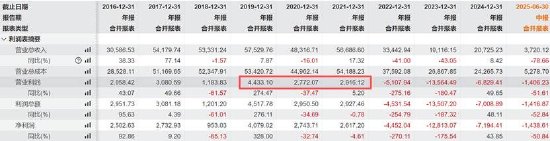
Core Viewpoint - Tonghui Information has been found to have engaged in financial fraud for several years prior to its listing on the Beijing Stock Exchange, with its actual controller, Dai Fuhao, being criticized for the severity of the misconduct. Following its listing, the company has faced continuous losses, and funds have been misappropriated by Dai Fuhao. The company is now facing withdrawal of investment from strategic partner Nantian Shujin, raising concerns about the future of the company and the protection of minority shareholders' interests [1][3][8]. Group 1: Financial Fraud and Penalties - On October 17, Tonghui Information announced that it received an administrative penalty from the China Securities Regulatory Commission (CSRC) for financial fraud committed from 2018 to 2021, resulting in fines totaling 35.5 million yuan. The company was ordered to correct its actions and received a warning, while Dai Fuhao was fined 11.5 million yuan and banned from the market for ten years [1][5]. - The company inflated its revenue and profits through fictitious business contracts and premature or delayed revenue recognition, leading to false disclosures in its annual reports from 2018 to 2021. The inflated revenues were 20.17 million yuan, 9.617 million yuan, 14.976 million yuan, and 18.065 million yuan for the respective years, with corresponding profit inflation of 10.4643 million yuan, 8.1486 million yuan, 7.3748 million yuan, and 5.8782 million yuan [5][6]. Group 2: Financial Performance Post-Listing - After its listing on the Beijing Stock Exchange, Tonghui Information's financial performance deteriorated significantly, with revenues dropping from 567 million yuan in 2021 to 20.72 million yuan in 2024, and net profits turning from a profit of 26.17 million yuan in 2021 to losses of 71.94 million yuan in 2024. The first half of 2025 saw revenues decline by 78.66% year-on-year [3][4]. - The company reported a net loss of 14.39 million yuan and a non-recurring net loss of 14.30 million yuan in the first half of 2025, indicating a continued downward trend in financial performance [3][4]. Group 3: Management and Governance Issues - Dai Fuhao has been implicated in misappropriating company funds, with an average daily fund occupation of 38.27 million yuan in 2022, which was fully repaid by the end of the year. Additionally, the company faced a legal investigation by the CSRC for information disclosure violations [7][8]. - Following the company's financial troubles, strategic partner Nantian Shujin decided to withdraw its financial support of 41.95 million yuan due to ongoing interference in company operations by Dai Fuhao. The company currently has only 19.09 million yuan in available funds, facing significant financial pressure [8][12]. Group 4: Future Outlook and Shareholder Concerns - The ongoing conflict between Dai Fuhao and Nantian Shujin raises questions about the protection of minority shareholders' interests. The company is working on a plan to communicate with its actual controller and Nantian Shujin to negotiate payment extensions and avoid litigation risks [12][11]. - The company is also undergoing management changes and restructuring efforts to stabilize operations, but the internal conflicts and governance issues may hinder recovery efforts [11][12].