
支付

Search documents
AI不是万能药!对话唐彬:支付玩AI,先过数字化这关
Bei Jing Shang Bao· 2025-10-31 14:37
Core Insights - The payment industry is undergoing a structural transformation from "payment tools" to "transaction services" as domestic competition intensifies and overseas opportunities emerge [1][6] - The future of payment methods is expected to evolve significantly, potentially leading to the disappearance of the "payment" phase, while the value of transaction services will be amplified [1][6] Domestic Market Dynamics - The domestic payment market has entered a phase of "refined cultivation" after years of rapid expansion, with a saturation in mobile payment penetration [2] - Companies are increasingly focusing on "intelligent solutions" to drive growth, with risk control being a critical area for efficiency improvements [2][4] - AI-driven risk control systems are seen as essential for cost reduction and efficiency enhancement, with significant financial implications for transaction volumes [2] AI and Digital Transformation - AI is viewed as an extension of digital upgrades, and its effective application requires a solid digital foundation within companies [2][3] - The impact of AI varies across different roles, with traditional entry-level programming jobs at risk of replacement, while experienced and creative talents will be empowered [3] International Expansion Strategies - The overseas strategy of payment companies like Yibao Payment is to follow Chinese enterprises as they expand globally, providing comprehensive payment and value-added services [4][5] - Local market adaptation is crucial for successful international operations, with a dual strategy of obtaining licenses and forming partnerships to meet regulatory requirements [4][5] Future Outlook - The payment industry is expected to transition from being payment companies to transaction service providers, driven by technological advancements such as AI and blockchain [6] - The evolution of the industry will focus on integrating transaction services into global industrial ecosystems, emphasizing safety, convenience, and equality in global transactions [6]
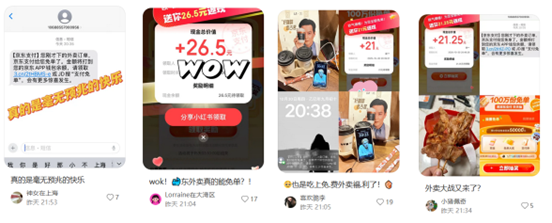
京东支付请网友吃外卖 11.11百万份免单福利持续开启
Zhong Jin Zai Xian· 2025-10-31 12:50
Core Insights - JD.com is offering a promotional campaign where users can receive free meals through its payment platform, enhancing user engagement and promoting its payment services [3][11] - The campaign includes 1 million free meal opportunities, with users able to participate by using JD Pay for their orders [6][11] - The initiative aims to simplify the shopping experience during the 11.11 shopping festival while encouraging the adoption of JD Pay [12] Group 1: Promotional Campaign Details - Users who successfully pay for their orders using JD Pay will receive a refund for their meal, with a cap of 50 yuan for the first 60 seconds of the promotion [7] - The campaign runs from now until November 14, allowing each user to enter the draw for free meals twice a day [6][11] - The promotion is available across various platforms, including JD.com, 12306, KFC, and other offline stores [8][11] Group 2: User Engagement and Payment Adoption - The integration of meal promotions with payment services is designed to cultivate user habits around JD Pay, making transactions more convenient [12] - Additional incentives include chances to win luxury items like gold and branded products for users who make multiple transactions [12] - JD Pay is collaborating with multiple banks to offer discounts and rewards, enhancing the overall shopping experience for consumers [12]


Mastercard(MA) - 2025 Q3 - Earnings Call Transcript
2025-10-30 14:02
Financial Data and Key Metrics Changes - Net revenues increased by 15% overall, with Value Added Services and Solutions net revenue up 22% year-over-year on a non-GAAP currency-neutral basis [4][24] - Operating income rose by 15%, while net income and EPS increased by 8% and 11%, respectively, with EPS at $4.38, including a $0.10 contribution from share repurchases [24][25] - Worldwide gross dollar volume (GDV) grew by 9% year-over-year, with U.S. GDV increasing by 7% and international volume up by 10% [25][26] Business Line Data and Key Metrics Changes - Payment network net revenue increased by 10%, driven by domestic and cross-border transaction growth, while Value Added Services and Solutions net revenue increased by 22% [27][28] - Domestic assessments rose by 6%, and cross-border assessments increased by 16%, reflecting strong transaction processing [28] Market Data and Key Metrics Changes - Cross-border volume increased by 15% globally, indicating continued growth in both travel and non-travel related spending [25] - Contactless penetration in Q3 stood at 77% of all in-person switched purchase transactions, up 6 percentage points from the previous year [26] Company Strategy and Development Direction - The company is focused on three strategic priorities: consumer payments, agentic commerce, and services, aiming to unlock long-term growth [6][18] - The company is expanding its acceptance footprint across underpenetrated verticals and enhancing its product offerings, including partnerships with various banks and retailers [6][7][10] Management's Comments on Operating Environment and Future Outlook - Management noted a generally supportive macroeconomic environment with steady inflation and balanced labor markets, contributing to healthy consumer and business spending [4][30] - The company expects year-over-year net revenue growth to be at the high end of a low double digits range for Q4, with continued healthy consumer and business spending anticipated [31][32] Other Important Information - The company repurchased $3.3 billion worth of stock during the quarter, with an additional $1.2 billion repurchased through October 27, 2025 [25] - The company is actively pursuing M&A opportunities, focusing on strategic acquisitions that align with its growth objectives [68] Q&A Session Summary Question: Insights on U.S. payment volume growth and holiday spending outlook - Management indicated steady growth across affluent and mass market segments, with no significant evidence of trade-down behavior [36][37] Question: Sustainability of Value Added Services (VAS) growth - Management highlighted that VAS growth of 22% was supported by acquisitions and strong underlying demand for cybersecurity and data insights [41][46] Question: Evolution of agentic commerce and associated risks - Management discussed the complexities of agentic commerce, including legal and security considerations, and emphasized the importance of trust and safety in this evolving space [53][56] Question: New acceptance channels and M&A pipeline - Management acknowledged progress in underpenetrated verticals like rent payments and reiterated a strategy-led approach to M&A, focusing on services [63][68]

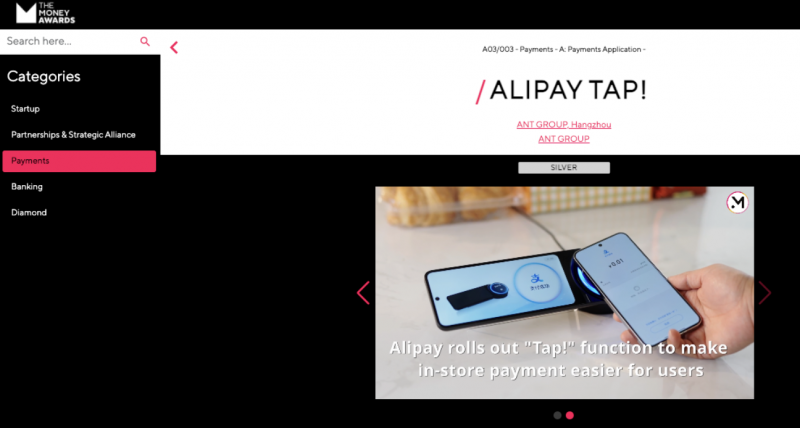
“支付宝碰一下”斩获Money20/20创新大奖,唯一获奖中国企业
Sou Hu Wang· 2025-10-30 13:07
Core Insights - Alipay's "Tap to Pay" innovative interaction technology has received international recognition, winning the "Payment" category award at the inaugural The Money Awards during the Money20/20 fintech conference in the U.S. [1][4] - This marks the third international award for "Tap to Pay" within just two months, highlighting its rapid acceptance and impact in the fintech space [1][5]. Group 1: Awards and Recognition - The Money Awards, established by Money20/20, is a prestigious platform that showcases leading innovations in the fintech sector, with participation from top banks, payment institutions, and venture capitalists globally [4]. - Alipay is the only Chinese company among the award winners, emphasizing China's growing influence in global innovation [4][5]. - The awards aim to recognize outstanding achievements that redefine the possibilities of fintech, with winners demonstrating forward-thinking ideas and impactful practices [4]. Group 2: User Adoption and Technology Features - "Tap to Pay" was launched in July 2024 and allows users to make payments or access services without opening any app, simply by tapping their phones after unlocking them [5][6]. - The technology has gained significant user traction, reaching over 100 million users within 321 days and climbing to 200 million users by September [5][6]. - Unlike NFC payment systems popular in Europe and the U.S., "Tap to Pay" offers diverse services beyond payments, including ordering food, picking up packages, and more, with over 1,000 different scenarios available [6].
三季报透视跨境支付热潮:外资深潜、本土“出海”
Di Yi Cai Jing Zi Xun· 2025-10-30 12:40
Core Insights - The third quarter financial reports reveal a significant divergence among payment institutions, with cross-border payments emerging as a high-growth area amidst slowing growth in traditional sectors [1][2][4] Group 1: Cross-Border Payment Growth - Companies like Lakala, New Guodu, and Newland reported double to triple-digit growth in cross-border transaction volumes, merchant numbers, and overseas revenues [1][2] - Lakala's cross-border payment business saw a 71.91% increase in merchant scale and a 77.56% rise in transaction amounts, reaching 60.2 billion yuan [2] - New Guodu's cross-border brand PayKKa experienced a 169% increase in merchant numbers and a 272% rise in transaction volumes in Q2 2025 [2] Group 2: Foreign Investment and Market Entry - Foreign payment institutions are accelerating their entry into the Chinese market, with companies like Payoneer and SUNRATE acquiring payment licenses through mergers [1][7] - The trend of foreign institutions obtaining licenses is driven by the need for local compliance and cost savings in fund clearing [7] - Airwallex has significantly increased its annual transaction volume to over 200 billion USD after acquiring a local company [7] Group 3: Industry Challenges and Strategic Shifts - The domestic payment market is facing intense competition, leading to reduced profit margins and a shift towards cross-border payments as a survival strategy [4][5] - The total import and export volume in China reached 43 trillion yuan in 2024, with cross-border e-commerce accounting for 2.63 trillion yuan, indicating a growing demand for cross-border payment solutions [4] - Regulatory changes and the push for RMB internationalization are providing a supportive framework for cross-border payment growth [4][5] Group 4: Compliance and Risk Management - Compliance remains a significant challenge in the cross-border payment market, with several institutions facing penalties for inadequate anti-money laundering practices [8] - The macroeconomic environment, including tariff adjustments and geopolitical factors, may impact the growth rate of cross-border internet payment transactions [8] - The development of cross-border payments must balance compliance and risk control with the adoption of new technologies like digital currencies and AI [8]
从兼职工程师直接跳到CTO,他用两个月让一款 Agent 干掉60%复杂工作并放话:“代码质量与产品成功没有直接关系”!
AI前线· 2025-10-30 07:23
Core Insights - Block has successfully deployed AI agents to all 12,000 employees within eight weeks, showcasing its commitment to integrating AI into its operations [2] - The company, originally known as Square, Inc., has evolved from a payment service provider to a broader financial and blockchain ecosystem, rebranding as Block, Inc. in December 2021 [2] - The introduction of the open-source AI agent framework "Goose" aims to connect large language model outputs with actual system behaviors, enhancing productivity and automation [3][14] Company Background - Block was founded in 2009 by Jack Dorsey and Jim McKelvey, initially focusing on a mobile card reader to help small merchants accept credit cards [2] - The company went public in 2015 and has since expanded its services to approximately 57 million users and 4 million merchants in the U.S. by 2024 [2] AI Integration and Transformation - The CTO, Dhanji R. Prasanna, led a team of over 4,000 engineers to transform Block into one of the most AI-native large enterprises globally, driven by an "AI declaration" he wrote to the CEO [4][7] - The organizational shift from a General Manager structure to a functional structure was crucial for focusing on technology and AI development [10][11] - The changes have resulted in a unified technical focus, allowing engineers to collaborate more effectively and enhancing the overall technological depth of the company [12][13] Productivity Gains from AI - Teams utilizing Goose have reported saving an average of 8 to 10 hours of manual work per week, with an estimated overall labor savings of 20% to 25% across the company [14][17] - Goose serves as a cultural signal, enabling all employees to leverage AI for building and creating, thus integrating AI into the company's operational fabric [16] Goose AI Agent - Goose is a general-purpose AI agent that can perform various tasks, including organizing files, writing code, and generating reports, by connecting with existing enterprise tools [22][23] - The framework is built on the Model Context Protocol (MCP), allowing it to execute tasks in the digital realm, thus enhancing productivity [24][25] - Goose is open-source, enabling other companies to adopt and adapt the technology, promoting a collaborative ecosystem [27] Future of AI in Engineering - The future of AI in engineering is expected to enhance autonomy, allowing AI to work independently on tasks, potentially transforming how engineers approach coding and project management [31][32] - AI's role in automating processes is anticipated to evolve, with the possibility of AI optimizing growth and revenue generation, although human oversight will remain essential [34][35] Hiring and Organizational Strategy - The company is focusing on hiring individuals who embrace AI tools, fostering a culture of continuous learning and adaptation [36][37] - The integration of AI has led to a strategic shift in hiring practices, emphasizing structural optimization over mere expansion of the engineering team [39][40]

多渠道广覆盖的人民币跨境支付体系基本建成
Guo Ji Jin Rong Bao· 2025-10-30 02:31
Group 1 - The total assets of financial institutions in China exceeded 520 trillion yuan as of September 2025, with commercial banks' capital adequacy ratio at 15.36% and non-performing loan ratio at 1.52% [1] - The comprehensive solvency adequacy ratio for insurance companies is 186%, while the average risk coverage ratios for securities and futures companies are 295% and 226% respectively [1] - A multi-channel and widely covered cross-border payment system for the renminbi has been established, with significant roles played by the CIPS and various non-bank payment institutions [1] Group 2 - Cross-border payment businesses face three main challenges: complex regulations, settlement and exchange rate risks, and difficulties in local operations due to cultural and institutional differences [2] - Recommendations for overcoming these challenges include establishing local compliance capabilities, collaborating with local banks, and optimizing payment processes to manage currency risks [2] - The demand for flexible settlement and local payments is driven by the growth of cross-border e-commerce, SMEs, and digital trade, with technological innovations providing opportunities for cost reduction and efficiency improvement [3] Group 3 - The trend of strengthening cooperation among cross-border payment institutions is emerging, with a focus on achieving synergy between capital flow, logistics, and information flow [3] - Key factors for Chinese enterprises going global include market selection and layout capabilities, cross-border payment and fund management abilities, local compliance and operational support, as well as risk control and exchange rate management [3]
欧洲央行加速数字欧元计划,2029年或正式启用
Hua Er Jie Jian Wen· 2025-10-29 13:35
Core Points - The European Central Bank (ECB) is preparing to accelerate its digital euro project, aiming for a formal launch in 2029, contingent on timely legal frameworks [1][2] - ECB officials will decide on continuing the foundational work for the digital euro at a meeting in Florence, following the end of the current two-year preparation phase [1] - ECB President Christine Lagarde and other officials emphasize the importance of this project for enhancing Europe's strategic autonomy in the current environment [1] Group 1 - The ECB's push for the digital euro is driven by concerns over the current retail payment market's heavy reliance on American companies like Visa, MasterCard, and PayPal [1] - There is urgency surrounding the digital euro due to fears that US-backed stablecoins could gain a foothold in Europe [1] - The ECB's two-year preparation phase was initiated in 2023, with hopes that necessary regulations for the digital currency could be established during this period [2] Group 2 - Political obstacles remain a significant challenge for the digital euro's implementation, with the European People's Party (EPP) advocating for private sector-led alternatives [2] - Despite these challenges, the pressure to break the legislative deadlock is increasing due to the risks associated with external dependencies in the payment sector [2] - ECB Executive Board member Piero Cipollone indicated that mid-2029 could be a reasonable estimate for the digital euro's launch, setting a clear benchmark for market expectations [2]
美国支付巨头试水稳定币结算!西联汇款宣布明年推出USDPT,而VISA支持现有稳定币
Hua Er Jie Jian Wen· 2025-10-29 12:44
Core Insights - Traditional payment giants in the U.S. are embracing stablecoin settlement systems, with Western Union announcing the launch of USDPT based on the Solana blockchain in the first half of 2026, while Visa expands support for stablecoins across four blockchains [1][2][3] Group 1: Western Union's Stablecoin Initiative - Western Union's upcoming stablecoin settlement system will consist of the USDPT and a digital asset network, built on the Solana blockchain [2] - CEO Devin McGranahan noted that the passage of the GENIUS Act has shifted the company's cautious stance on cryptocurrencies due to previous concerns over market volatility and regulatory uncertainty [2] - The USDPT is expected to be accessible through partner exchanges, similar to the listing of PayPal's USD stablecoin on Binance [2] Group 2: Visa's Expansion in Stablecoin Services - Visa is significantly expanding its stablecoin support, planning to add four new stablecoins across four different blockchains, although specific details were not disclosed [3] - The company has facilitated $140 billion in cryptocurrency and stablecoin flows since 2020, with monthly transaction volumes now exceeding an annualized scale of $25 billion [3] - Visa aims to enhance its services for banks and traditional financial institutions, promoting cross-border transactions using stablecoins [3] Group 3: Broader Industry Trends - Other U.S. payment platforms are also advancing stablecoin strategies, with Zelle's parent company announcing a stablecoin launch to accelerate cross-border payments [4] - MoneyGram is integrating its crypto application in Colombia to provide local users with USDC wallets [4] - Traditional payment platforms increasingly view blockchain technology as a solution for cross-border remittances, offering faster, cheaper, and more transparent transactions [4] Group 4: Additional Developments - Walmart's fintech company OnePay plans to add Bitcoin and Ethereum trading features through a partnership with Zerohash, enhancing its platform's capabilities [5] - OnePay has become a leading free finance app in the Apple App Store, competing with major fintech players like PayPal and Venmo [5]


美股前瞻 | 三大股指期货齐涨,美联储利率决议来袭,微软、谷歌、Meta盘后公布财报
智通财经网· 2025-10-29 12:14
Market Overview - US stock index futures are all up, with Dow futures rising by 0.25%, S&P 500 futures up by 0.31%, and Nasdaq futures increasing by 0.47% [1] - European indices show mixed results, with Germany's DAX down by 0.02%, UK's FTSE 100 up by 0.80%, France's CAC40 up by 0.04%, and Europe's Stoxx 50 up by 0.43% [2] - WTI crude oil prices increased by 0.42% to $60.40 per barrel, while Brent crude rose by 0.38% to $64.07 per barrel [2] Federal Reserve Insights - The Federal Reserve is expected to lower interest rates by 25 basis points, with Chairman Powell likely to provide limited forward guidance due to increasing divisions among policymakers [3] - Recent CPI data indicated weaker-than-expected inflation, which may temporarily suppress hawkish sentiments within the Fed [3] Semiconductor Industry - SK Hynix reported a 62% increase in profits for Q3, achieving a record operating profit of 11.4 trillion KRW (approximately $8 billion), driven by surging demand for AI infrastructure [4] - The company has sold out its entire range of memory chip orders for next year, indicating a significant boost in industry demand [4] AI and Technology Sector - Concerns about a potential bubble in AI-driven stock market gains are alleviated by stronger-than-expected earnings from companies like SK Hynix and Advanced Micro Devices [5] - Major US tech giants, including Microsoft, Amazon, Apple, Alphabet, and Meta, are set to report earnings this week, which will provide insights into the capital expenditure trends in the AI sector [5] Inflation-Linked Securities - The US government shutdown has created a "data vacuum," affecting the pricing of inflation-linked securities as there is a lack of consumer price index (CPI) data [6] - Traders are resorting to emergency mechanisms embedded in legal documents for inflation-linked bonds and derivatives due to the absence of critical economic data [6] Banking Sector Performance - Deutsche Bank reported a 7% increase in Q3 profits, driven by strong performance in its investment banking division, with total revenue reaching €8.04 billion [14] - UBS also saw a 74% increase in net profit for Q3, attributed to significant growth in investment banking and stock trading revenues [14] Chip Equipment Manufacturing - ASM International's Q3 orders fell short of expectations, with a 17% year-over-year decline to €636.8 million (approximately $743 million), primarily due to decreased demand from advanced chip manufacturers and reduced orders from China [15] Healthcare Sector - GlaxoSmithKline raised its full-year earnings guidance due to strong demand for its HIV and immunology drugs, reporting Q3 revenue of £8.55 billion, a 4.9% year-over-year increase [13] Consumer Spending and Financial Services - Visa's Q4 revenue grew nearly 12% year-over-year to $10.7 billion, exceeding market expectations, with strong consumer spending noted in both luxury and essential goods [11] - Booking Holdings reported a 13% increase in sales for the quarter, reaching $9.01 billion, with an optimistic outlook for room night growth [12]
