核电

Search documents
日本民众集会反对重启核电站 广岛市长重申“无核”立场
Xin Jing Bao· 2025-12-28 04:04
12月26日,日本民众在日本首相官邸前举行抗议集会,反对重启柏崎刈羽核电站。22日日本新潟县议会 批准有关补充预算,将重启该国最大核电站柏崎刈羽核电站。日本民众批评称,日本面临核设施老化、 管理混乱、监管不力的种种乱象。24日,日本广岛市市长松井一实前往核爆幸存者疗养院进行慰问。26 日松井一实还表示,"无核三原则"是国家方针,不可动摇。 ...
中泰证券:如何看待本周市场持续上涨?
智通财经网· 2025-12-28 02:39
Core Viewpoint - The recent market rally is primarily driven by a phase of risk appetite recovery led by cyclical sectors, with a lack of new positive external factors impacting the market [1][3]. Market Performance - Major indices such as the Wind All A, CSI 300, and CSI 2000 rose by 2.78%, 1.95%, and 3.06% respectively this week [2]. - The average daily trading volume for Wind All A increased from 1.76 trillion yuan to 1.97 trillion yuan, surpassing 2 trillion yuan on Friday [2]. - Approximately 52.20% of stocks in Wind All A saw price increases this week, indicating a confirmation of the upward trend in indices, albeit with a change in the manner of the rise [2]. Sector Analysis - The upward movement in indices was primarily driven by cyclical sectors, particularly non-ferrous metals, as industrial metal commodity prices strengthened significantly [3]. - The recovery in risk appetite is evident, supported by a temporary appreciation of the RMB and improved expectations for overseas capital inflow into the A-share market [3]. Future Outlook - The market is expected to maintain upward potential before the Spring Festival, with opportunities for low-level positioning in the short term [4]. - Current risk factors have weakened compared to previous periods, and high levels of risk appetite are likely to persist [4]. - The market is characterized by a phase of preparation for the pre-Spring Festival rally rather than a formal initiation of a major upward trend, with a focus on low-level positioning and structural adjustments [4]. Investment Recommendations - Focus on technology themes, particularly in robotics, commercial aerospace, and nuclear power sectors, as they are expected to be resilient during the spring market [5]. - Consider overseas computing and semiconductor-related sectors for medium-term investment strategies [5]. - Non-bank financial sectors hold certain allocation value at this stage [5]. - In the consumer sector, it is advisable to seize thematic trading opportunities, especially in areas related to service consumption and aging, such as sports consumption and medical devices [5].

中岩大地:战略布局可控核聚变领域
Zhong Guo Zheng Quan Bao· 2025-12-27 04:01
"核电作为清洁低碳、稳定可靠的基荷电源,在能源转型与'双碳'目标推进过程中扮演着重要角色。"中 岩大地方面表示,公司在核电领域已积累丰富的行业经验与稳定的客户资源,在企业管理、商务拓展等 方面具备优势。此次战略布局,既是公司依托自身核心能力对可控核聚变产业发展趋势的长期洞察与协 同价值判断,也是为股东创造长期价值的坚定实践。 中证报中证网讯(记者 刘杨)记者12月26日了解到,中岩大地近日与四川束研聚创科技有限公司(以 下简称"束研聚创")签署战略合作协议。公司计划通过"投资+合资"双重模式战略布局可控核聚变领 域,携手开拓可控核聚变产业新蓝海。 在国家能源转型的大背景下,中岩大地主业聚焦核电、水利水电等领域。公司始终秉持战略前瞻性,积 极探索第二成长曲线,并基于自身核心能力、产业趋势及资源优势,将可控核聚变列为能源领域的重点 战略布局方向之一。 中岩大地表示,未来将与束研聚创携手,积极发挥产业协同优势,以技术创新为核心驱动力,以产业落 地为核心目标,共同助力我国可控核聚变产业实现创新突破。 ...
日本给特朗普的5500亿“大礼包”第一笔要落地了,财务省拨460亿支持投资及核电
Hua Er Jie Jian Wen· 2025-12-26 19:18
Core Viewpoint - The Trump administration is set to receive a $550 billion investment package from Japan, aimed at mitigating higher tariff threats from the U.S. government [1][2]. Group 1: Investment Details - Japan's Ministry of Finance announced a plan to allocate 7.18 trillion yen (approximately $45.9 billion) through the Japan Bank for International Cooperation (JBIC) to support investments in the U.S. [1]. - The investment plan is part of Japan's financing strategy for the fiscal year 2026, which also includes funding for nuclear power plants and investments in Japan's power grid [1]. - The investment will focus on energy-related projects, with a total value exceeding $400 billion across 21 strategic projects, including nuclear energy and AI infrastructure [3]. Group 2: Project Focus and Financial Structure - Major investments in nuclear energy include projects with Westinghouse, Mitsubishi Heavy Industries, and Toshiba, each with a total investment of up to $100 billion [3]. - Other energy projects involve Bechtel and GE Vernova, with potential investments reaching $250 million for large-scale power infrastructure [3]. - The investment framework will be overseen by an investment committee led by U.S. Secretary of Commerce Wilbur Ross, with the U.S. retaining final decision-making authority on funded projects [4]. Group 3: Economic Implications - If Japan fails to provide funding for selected projects within 45 days after a decision by Trump, it may face increased tariffs, which were previously threatened to be as high as 25% [2]. - The agreement reached in July reduced tariffs on most Japanese goods to 15% following Japan's commitment to increase investments in the U.S. [2]. - The investment strategy is expected to focus on sectors critical to national security, including semiconductors, pharmaceuticals, and energy, with a completion deadline set for January 19, 2029 [4].
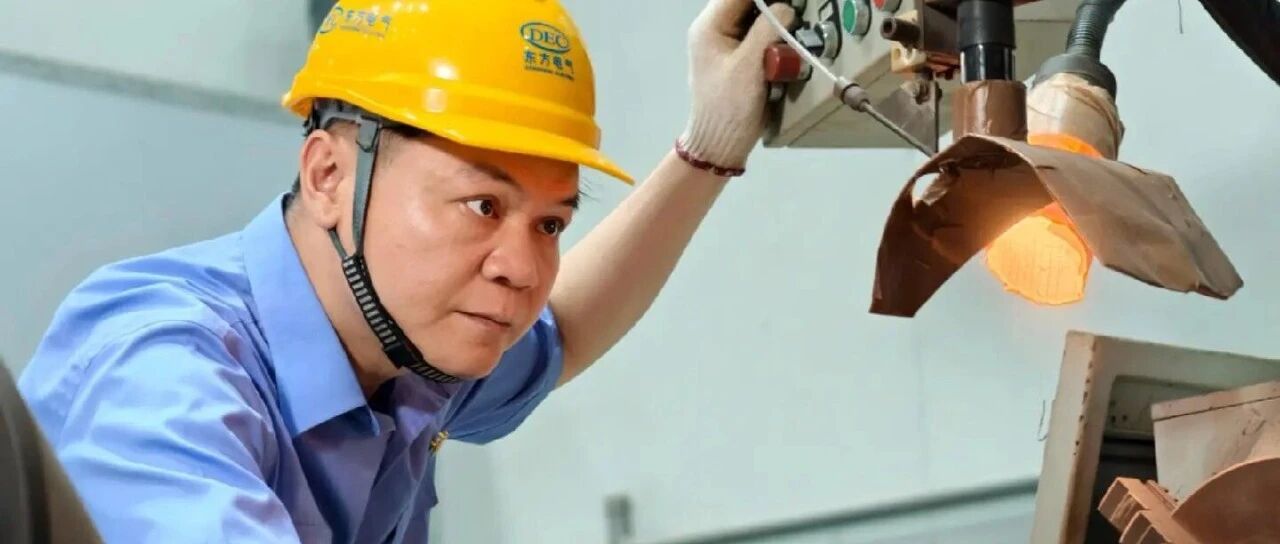
“核电焊工”王育忠:在“人造太阳”项目中学习与世界接轨的技术|我们的四分之一世纪
经济观察报· 2025-12-26 09:00
Core Viewpoint - The article highlights the journey of Wang Yuzhong, who has dedicated 28 years to welding work and has become a leading figure in China's nuclear power industry, particularly in automatic TIG welding technology [1][2]. Group 1: Career Development - Wang Yuzhong started his career in welding after graduating from a technical school in 1997 and was assigned to Guangzhou Boiler Factory, where he became a technical backbone over ten years [2][5]. - In 2010, he joined Dongfang Heavy Machinery Company and quickly transitioned from manual to automatic welding, mastering the skills required for nuclear power projects [5][7]. - He played a significant role in the ITER project, which is a major international nuclear fusion initiative, contributing to the development of key components [6][8]. Group 2: Technical Expertise - As a technical expert and chief technician, Wang has led welding technology research and work for various nuclear reactor designs, including CPR1000, CAP1000, and Hualong One [3][4]. - The welding process for nuclear equipment is highly demanding, requiring strict quality control at every stage, from material procurement to weld seam inspection [7][10]. - The ITER project involves complex welding tasks, such as the fabrication of the blanket shielding module and magnetic support structures, which require high precision and quality [6][8]. Group 3: Challenges and Innovations - The transition from manual to automatic welding has reduced risks associated with traditional welding methods, although challenges such as eye protection from UV light remain [10][11]. - Wang emphasizes the importance of passing down traditional skills while encouraging innovation among younger technicians to adapt to modern demands [12]. - The company has implemented a structured training approach for new technicians, focusing on hands-on practice and knowledge sharing to enhance welding quality [12].

中泰证券:居民资金会否缺席明春行情?
Xin Lang Cai Jing· 2025-12-26 05:22
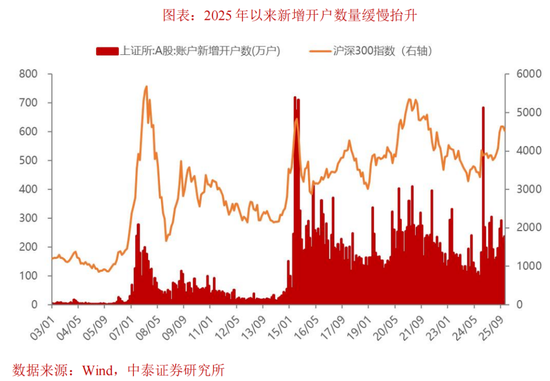
Core Viewpoint - The current investment behavior of residents in the stock market is characterized by a "de-leveraging" trend, reflecting a cautious approach to asset allocation amid macroeconomic changes, contrasting sharply with previous market exuberance periods [1][41]. Group 1: Resident Investment Behavior - The number of new account openings in November 2025 was 2.38 million, showing a recovery from the July low but still significantly lower than previous bull market levels, indicating a slow entry of retail investors [2][41]. - The current market activity is primarily driven by the activation of dormant accounts rather than new retail investors entering the market, with a focus on systematic investment rather than speculative trading [4][44]. - The financing net buying ratio has returned to positive territory, indicating a slight recovery in leveraged funds, but the intensity remains weaker compared to the strong net buying phases of 2019-2020 [5][47]. Group 2: Changes in Fund Flows - The structure of resident fund flows is changing, with a significant shift towards passive investment products like ETFs, which accounted for approximately 72% of new fund issuance in 2025, reflecting a preference for lower-cost investment options [7][49]. - The total issuance of new funds from January to November 2025 was about 530.8 billion yuan, with a monthly average of 48.3 billion yuan, indicating a lack of enthusiasm in the fund issuance market [7][47]. - The net subscription of stock ETFs remained strong, with a single-month net subscription reaching 177.2 billion yuan in April, highlighting the attractiveness of low-cost investment tools for residents [9][49]. Group 3: Economic Context and Implications - The slow entry of resident funds is primarily due to the negative feedback from the wealth effect caused by declining real estate prices, which has led to a cautious outlook on future income and increased preference for savings [10][52]. - As of November 2025, cumulative new resident savings deposits reached 12.06 trillion yuan, continuing a trend of high savings since 2022, with a significant portion in fixed-term deposits reflecting risk aversion [12][52]. - The decline in real estate values has resulted in a substantial reduction in household wealth, leading to a defensive accumulation of cash and deposits among residents [13][53]. Group 4: Future Capital Inflows - Insurance funds saw a significant increase in stock and securities investments, with a quarterly growth of 863.9 billion yuan in Q3 2025, indicating a strong entry of institutional capital into the market [22][61]. - The projected incremental capital from insurance funds for 2026 is estimated to be around 620 billion yuan, driven by regulatory changes and the need for higher returns in a low-interest-rate environment [24][63]. - The upcoming maturity of high-yield deposits from 2025 to 2026 is expected to create a significant shift in capital flows, potentially leading to increased investment in equity markets as residents seek better returns [25][68]. Group 5: Seasonal Market Trends - The spring season historically shows a significant increase in market activity, with a notable rise in retail investor participation and liquidity, driven by seasonal effects and credit expansion [30][69]. - The financing net buying ratio typically peaks in January, indicating a period of heightened activity and potential for thematic investments during the spring [32][71].
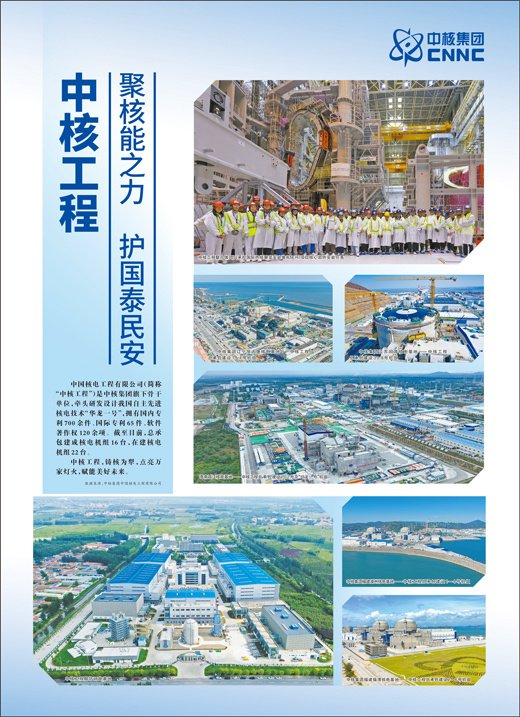
中核工程 聚核能之力 护国泰民安
Ren Min Wang· 2025-12-26 01:16
中核工程,铸核为犁,点亮万家灯火,赋能美好未来。 中国核电工程有限公司(简称"中核工程")是中核集团旗下骨干单位,牵头研发设计我国自主先进核电技 术"华龙一号",拥有国内专利700余件、国际专利65件、软件著作权120余项。截至目前,总承包建成核 电机组16台,在建核电机组22台。 数据来源:中核集团中国核电工程有限公司 ...
质疑声中,日本加速重启核电
Huan Qiu Shi Bao· 2025-12-25 23:01
Core Viewpoint - Japan's nuclear power sector is facing renewed scrutiny and public concern following a radioactive water leak incident at the "Puxian" reactor, coinciding with the government's plan to restart the Kashiwazaki-Kariwa nuclear power plant, the largest in the country, amid ongoing safety debates [1][2]. Group 1: Nuclear Power Restart Plans - The Kashiwazaki-Kariwa nuclear power plant is set to restart on January 20, 2024, with commercial operations expected to begin on February 26, 2024, marking the first restart of a nuclear unit since the Fukushima disaster in 2011 [1]. - The Japanese government is accelerating the nationwide push for nuclear power restarts to enhance energy security and manage rising living costs, driven by a significant increase in electricity demand from AI data centers [2]. Group 2: Economic Implications - Japan's reliance on fossil fuels has surged, with these sources accounting for 70% of the country's electricity needs, leading to a substantial import expenditure of 10.7 trillion yen (approximately 100 billion USD) on liquefied natural gas and coal last year [2]. - The high costs of fossil fuel imports are contributing to domestic inflation and posing challenges to the ruling Liberal Democratic Party's public support [2]. Group 3: Safety Concerns and Geographical Risks - Experts warn of significant geological risks associated with the Kashiwazaki-Kariwa nuclear power plant, which is located on a seismic fault line, raising concerns about the suitability of the site for nuclear facilities [3]. - There are unresolved issues regarding earthquake risks and the lack of credible evacuation plans, which remain critical challenges for Japan's nuclear safety management [3].
惠州这个大项目有了新进展,1号机组首次核燃料装载工作启动
Nan Fang Du Shi Bao· 2025-12-25 11:29
Core Viewpoint - The commencement of the first nuclear fuel loading at the Guangdong Taipingling Nuclear Power Plant marks a significant transition from construction to commissioning for the first "Hualong One" nuclear power project in the Guangdong-Hong Kong-Macao Greater Bay Area [1][2]. Group 1: Project Overview - The Guangdong Taipingling Nuclear Power Project plans to construct six "Hualong One" units with a total investment of approximately 120 billion yuan [2]. - The first two units are part of the initial phase, with the second unit currently at its peak construction stage [2]. - Once fully operational, the project is expected to generate over 50 billion kilowatt-hours annually, contributing more than 20 billion yuan to green GDP [2]. Group 2: Environmental Impact - The project is anticipated to reduce standard coal consumption by approximately 15.12 million tons annually and decrease carbon dioxide emissions by about 41.6 million tons [2]. - The environmental benefits are equivalent to planting nearly 113,000 hectares of forest in Huizhou, significantly enhancing the energy structure and ecological protection in the Greater Bay Area [2]. Group 3: Technological Achievements - The "Hualong One" technology, which has independent intellectual property rights, is one of the most accepted mainstream reactor types in the nuclear power market [3]. - The Taipingling project is not only the first "Hualong One" construction base in the Greater Bay Area but also serves as a flagship for the batch construction and operation of "Hualong One" by China General Nuclear Power Group [3]. - The construction team has overcome multiple technical challenges, earning over 60 awards for innovation, which has improved construction safety and efficiency [3].
中广核广东太平岭核电厂1号机组启动首次核燃料装载
Xin Hua Wang· 2025-12-25 10:55
Core Viewpoint - The loading of nuclear fuel into Unit 1 of the Taipingling Nuclear Power Plant marks a significant transition from construction to the nuclear commissioning phase, which is crucial for achieving grid connection and power generation [1]. Group 1: Project Overview - The Taipingling Nuclear Power Plant utilizes China's self-developed third-generation nuclear technology, "Hualong One," and is the first "Hualong One" nuclear power base in the Guangdong-Hong Kong-Macao Greater Bay Area [1]. - The project plans to construct a total of six "Hualong One" units, with a total investment of approximately 120 billion yuan [1].