智能硬件

Search documents
【投融资动态】亦方创新Pre-A轮融资,融资额数千万人民币,投资方为高瓴创投、经纬创投等
Sou Hu Cai Jing· 2025-11-13 11:35
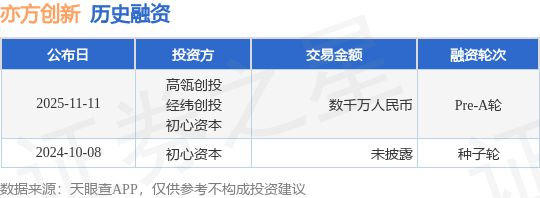
Core Insights - Hangzhou Yifang Intelligent Technology Co., Ltd. has completed a Pre-A round financing, raising several tens of millions of RMB, with participation from investors including Hillhouse Capital, Matrix Partners, and Chuxin Capital [1][2]. Financing Details - The financing round took place on November 11, 2025, with the amount being several tens of millions of RMB [2]. - Chuxin Capital also participated in a seed round on October 8, 2024, although the amount for that round was not disclosed [2]. Company Overview - Yifang Innovation (Vastnaut) was established in Shenzhen in 2024, with a core team comprising experienced experts from the fields of smart hardware, algorithms, and supply chain [2]. - The company leverages its deep expertise in power systems, motor, and structural technology, utilizing self-developed AI bionic algorithms to enable exoskeletons to perceive user intentions and environmental changes in real-time [2]. - The exoskeletons are designed to provide precise and natural assistance, featuring industry-leading self-developed motor systems and new lightweight materials, enhancing both support strength and user comfort during movement [2].

(进博故事)初创企业借进博舞台“破圈”前行
Zhong Guo Xin Wen Wang· 2025-11-13 08:20
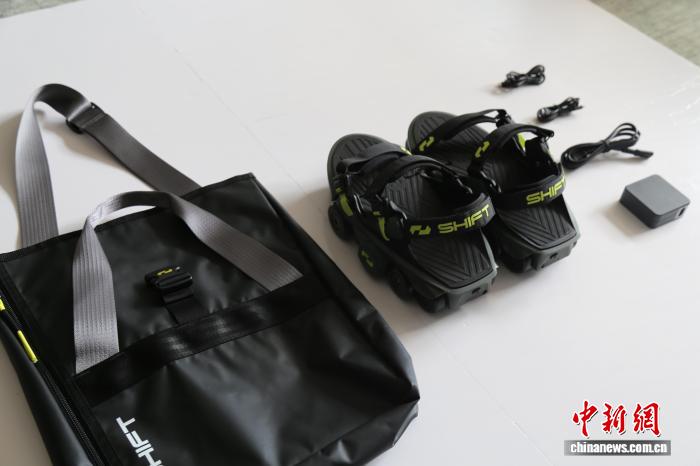
(进博故事)初创企业借进博舞台"破圈"前行 中新网上海11月13日电 (谢梦圆)在第七届进博会现场,创新孵化专区的展厅里不时有体验者脚蹬"风火 轮"飞驰而过。这双被称作"风火轮"的鞋子学名"踏月者"(Moonwalker),是世界上首款能让人以跑步速度 行走的智能动力鞋,由来自美国的初创企业瞬动科技带入进博会,进行亚洲首秀。 从海外热销到进博"圈粉" 如何提高行走效率?瞬动科技推出了能将用户步行最高速度提至11公里/小时的动力鞋"踏月者",可适 用于遛狗、出差或日常锻炼等场景。 "踏月者"2023年在海外市场一经发售就获得了不俗的成绩,发货范围涵盖22个国家,但当时并未进入中 国市场,直到2024年参加进博会才在中国打开知名度。 "踏月者"产品实拍图。受访者供图 近日,俞程允在沪接受采访。周孙榆摄 瞬动科技生产总监俞程允早就对进博会有所耳闻,将其看作中国与世界经贸交流的桥梁。当被主动邀请 参展时,俞程允感到十分惊喜。"进博会的工作人员在网上看到了我们的产品,然后联系我们参会,公 司创始人也觉得这是非常好的机会,机缘巧合之下我们就来了。" 带着为今后市场拓展打下良好基础的愿望,瞬动科技创始人张恂杰将进博会作为产 ...
科大讯飞回应学习机识别错误,科大讯飞学习机误判答案 客服回应:引擎识别波动,行业内也难以100%避免
Xin Lang Cai Jing· 2025-11-13 05:08
Core Viewpoint - The company Keda Xunfei has acknowledged issues with the accuracy of its AI learning machine, specifically the T30pro model, in recognizing answers, attributing these inaccuracies to various factors including engine performance fluctuations and environmental conditions [1] Group 1: Product Issues - Users have reported that the Keda Xunfei AI learning machine misjudged answers, with one instance where a user intentionally mispronounced a word, yet the machine still recognized it as correct [1] - The company has processed a return for the affected user, indicating a willingness to address customer concerns [1] Group 2: Industry Context - Keda Xunfei's customer service stated that no product in the industry currently achieves 100% accuracy in grading, highlighting a common challenge faced by similar technologies [1] - Factors such as lighting conditions, image clarity, and individual handwriting styles can all contribute to recognition errors, which are difficult to eliminate entirely [1] Group 3: Future Improvements - The company emphasized its commitment to continuously optimize and iterate on the relevant features to enhance recognition accuracy in future updates [1]

新消费图鉴 | 情感搭子、随身翻译官……“科技+”激发消费“新”风尚
Yang Shi Wang· 2025-11-13 03:09
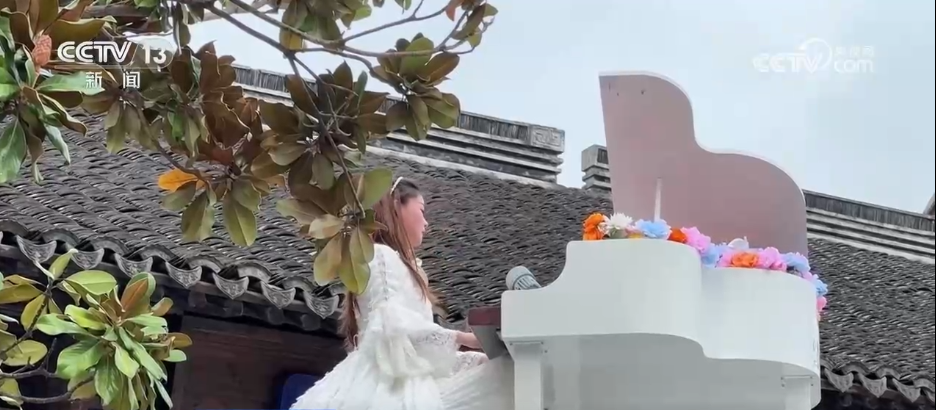
Core Insights - China's vast market advantage is driving economic development through continuous internal momentum from both supply and demand sides. The integration of technology and consumption is creating new products and experiences in the consumer sector [1] Group 1: Technology and Consumer Experience - Innovative consumer experiences are emerging, such as a floating piano concert and robotic baristas, showcasing the seamless integration of technology into daily life [3] - Consumers are increasingly drawn to "black technology" products, as evidenced by a 65-year-old customer who actively seeks out new tech experiences [5] - Retail environments are evolving, with stores featuring interactive experiences like robotic pets and DIY workshops, enhancing consumer engagement with technology [7] Group 2: AI and Emotional Consumption - AI pets are becoming emotional companions, transcending traditional toy boundaries and catering to growing consumer demand for emotional connection [9] - Companies are adapting their R&D approaches to better capture emotional needs, incorporating diverse expertise such as animation design and psychology into their teams [14][17] Group 3: Smart Glasses Market Growth - The smart glasses market in China is projected to experience explosive growth by 2025, with significant increases in both shipment volume and sales [19] - A specific company is focusing on creating lightweight AI glasses capable of real-time translation across over 100 languages, addressing language barriers in international trade [19][22] - The smart glasses industry is witnessing a collective advancement across the supply chain, with partnerships enhancing product performance while reducing costs [24][27] Group 4: Market Statistics - In the first half of this year, China's smart glasses market retail volume reached 468,000 units, marking a 148% year-on-year increase [26] - Over 80% of global smart glasses suppliers are based in China, highlighting the country's comprehensive supply chain capabilities and competitive advantages [26]
上市公司集群崛起,大湾区跃迁“ C位担当”!
Sou Hu Cai Jing· 2025-11-13 01:16
Core Insights - The Guangdong-Hong Kong-Macao Greater Bay Area (GBA) is one of the most open and economically vibrant regions in China, contributing approximately 1/9 of the national economic output with only 0.6% of the country's land area [1] - The GBA has a high density of listed companies, with 813 A-share listed companies in the nine mainland cities [1] - GBA-listed companies have shown robust growth in recent years, particularly in technological innovation and emerging sectors, contributing to high-quality development [1] R&D Investment - In the first three quarters of this year, GBA-listed companies invested a total of 237.3 billion yuan in R&D, a year-on-year increase of 9.69%, accounting for 20.69% of the total R&D expenditure of all A-share companies [3] - BYD led all A-share companies with 43.7 billion yuan in R&D expenses, focusing on innovations such as fast-charging batteries and advanced driving algorithms [3] Industry Upgrades - The GBA is becoming a leader in new productivity through breakthroughs in emerging sectors like autonomous driving, low-altitude economy, and robotics [6] - Companies like WeRide and Pony.ai have recently listed on the Hong Kong Stock Exchange, with WeRide being the only company holding autonomous driving licenses in seven countries [6] - The establishment of the "Air-Ground Integrated Cluster Smart AI Ecological Alliance" indicates a growing market for AI solutions, projected to exceed one trillion yuan in the next five years [6] Global Expansion - GBA-listed companies are increasingly focusing on international markets, with total overseas revenue reaching 955.6 billion yuan in the first half of 2025, accounting for 19.5% of all A-share companies' overseas revenue [10] - BYD achieved 135.4 billion yuan in overseas revenue, marking a 50.49% year-on-year increase, while Midea Group reported 107.2 billion yuan in overseas revenue [10][11] - Transsion Holdings has captured over 40% of the African smartphone market, leveraging its position to expand into mobile internet and software collaborations [11] Strategic Advantages - The GBA possesses strong foundational research capabilities, a robust industrial base, and a unique financial environment, making it well-positioned for technological advancements [5][8] - The region's integration of traditional industries with emerging technologies is expected to drive new productivity and economic growth [7][8]

专访时空壶CEO:不惧苹果入局 AI翻译耳机远未到终局
3 6 Ke· 2025-11-13 00:32
Core Insights - The rise of AI translation technology is expected to disrupt the hardware market, particularly in the TWS (True Wireless Stereo) earphone segment, where major companies like Apple dominate with a 23% market share [1][2] - The translation industry is still in its early stages, with many companies, including Timekettle, striving to differentiate themselves in a crowded market [2][5] - Timekettle's founder emphasizes the importance of understanding cultural context in translation, suggesting that current AI capabilities only achieve 10-20% accuracy in this regard [3][16] Industry Overview - The demand for translation technology is evident, and it is anticipated that all major brands will eventually incorporate translation features into their earphones [2] - The market has seen an influx of white-label products since AI translation software became free around 2023, leading to increased competition [2] - Timekettle aims to maintain a hardware-first approach, focusing on delivering a natural conversation experience through its translation earphones priced around 1,000 yuan [2][10] Competitive Landscape - Timekettle's strategy contrasts with that of larger companies, which tend to add translation features to existing ecosystems rather than rethinking the entire communication system [8][9] - The founder of Timekettle believes that the current competition is not particularly intense, as the industry is still maturing [6][8] - Timekettle has achieved profitability and prioritizes sustainable growth over rapid revenue increases [10] Technological Development - The company is exploring "edge AI" to enhance performance in areas with poor network conditions, which is crucial for effective communication [10] - Timekettle is also researching multi-modal interaction methods, such as understanding tone and gestures, to improve user experience [11] - The goal is to elevate AI translation capabilities from L3 to L4 within the next 2-3 years, focusing on empathy and nuanced understanding in translations [15][18] Future Outlook - The translation industry is expected to evolve significantly, with advancements in AI technology leading to better cultural understanding and more natural communication [16][18] - Timekettle plans to leverage its expertise in specific cultural contexts to enhance its product offerings, while larger companies may focus on foundational technology [16][18]
百度正式加入!“百镜大战”再升级
Guo Ji Jin Rong Bao· 2025-11-12 15:19
Core Insights - Baidu has officially launched its AI glasses, marking its entry into the competitive smart glasses market alongside other major tech companies [2][3] - The sales performance of smart glasses during the recent "Double Eleven" shopping festival indicates a significant surge in demand, with smart glasses sales on Tmall increasing by 25 times year-on-year and on JD.com by 346% [2][3] Product Overview - The newly launched Baidu AI glasses Pro features a camera and supports various AI functionalities, but lacks AR display technology [4][5] - The product is available in two styles and offers customizable lenses, with a retail price of 2299 yuan, discounted to 2199 yuan during the sales event [2][4] Market Context - Baidu is the second major internet company to sell AI glasses in China, following Alibaba, but the overall market penetration for smart glasses remains low [3][6] - Despite the competitive landscape, no single brand has emerged as a clear market leader in the smart glasses sector [12] Sales Performance - Initial sales figures for Baidu's AI glasses Pro have been underwhelming, with fewer than 100 units sold on JD.com and over 2000 views on Tmall, indicating a need for improvement in market traction [8][9] Industry Trends - The global smart glasses market is projected to grow significantly, with sales expected to reach 298.3 million units by 2024 and 1.3 billion units by 2029 [12] - The industry is currently facing challenges in production scale and cost management, which may hinder competitive pricing and market penetration [12][13] Future Outlook - Analysts suggest that the future success of AI glasses may depend on focusing on niche functionalities rather than attempting to be all-encompassing products [13] - The introduction of eSIM technology could enhance the capabilities of smart glasses, allowing them to operate independently from smartphones [13]

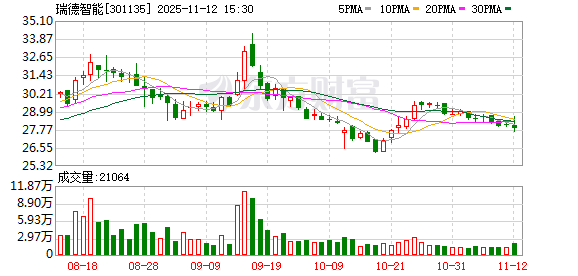
瑞德智能:公司为“移动爱家桌面机器人”提供了其核心控制中枢——高性能智能控制器
Mei Ri Jing Ji Xin Wen· 2025-11-12 13:06
Core Viewpoint - The "Mobile Love Home Desktop Robot" will debut at the China Mobile Global Partner Conference from October 11 to 13, 2025, with key control components provided by Ruide Intelligent [2]. Group 1: Company Information - Ruide Intelligent confirmed its role in providing the core control hub, a high-performance intelligent controller, for the upcoming desktop robot [2]. - The controller integrates several self-developed technologies, including high-precision motion control, low-latency communication, and multi-device collaborative scheduling algorithms, ensuring smooth execution of complex tasks and seamless integration into the smart home ecosystem [2]. - The collaboration highlights market recognition of the company's technological capabilities, with plans to further deepen the integration of "AI + hardware" innovation and expand the application of intelligent controllers in broader fields [2].

AI硬件敲开大众消费之门,难在哪里?
3 6 Ke· 2025-11-12 11:51
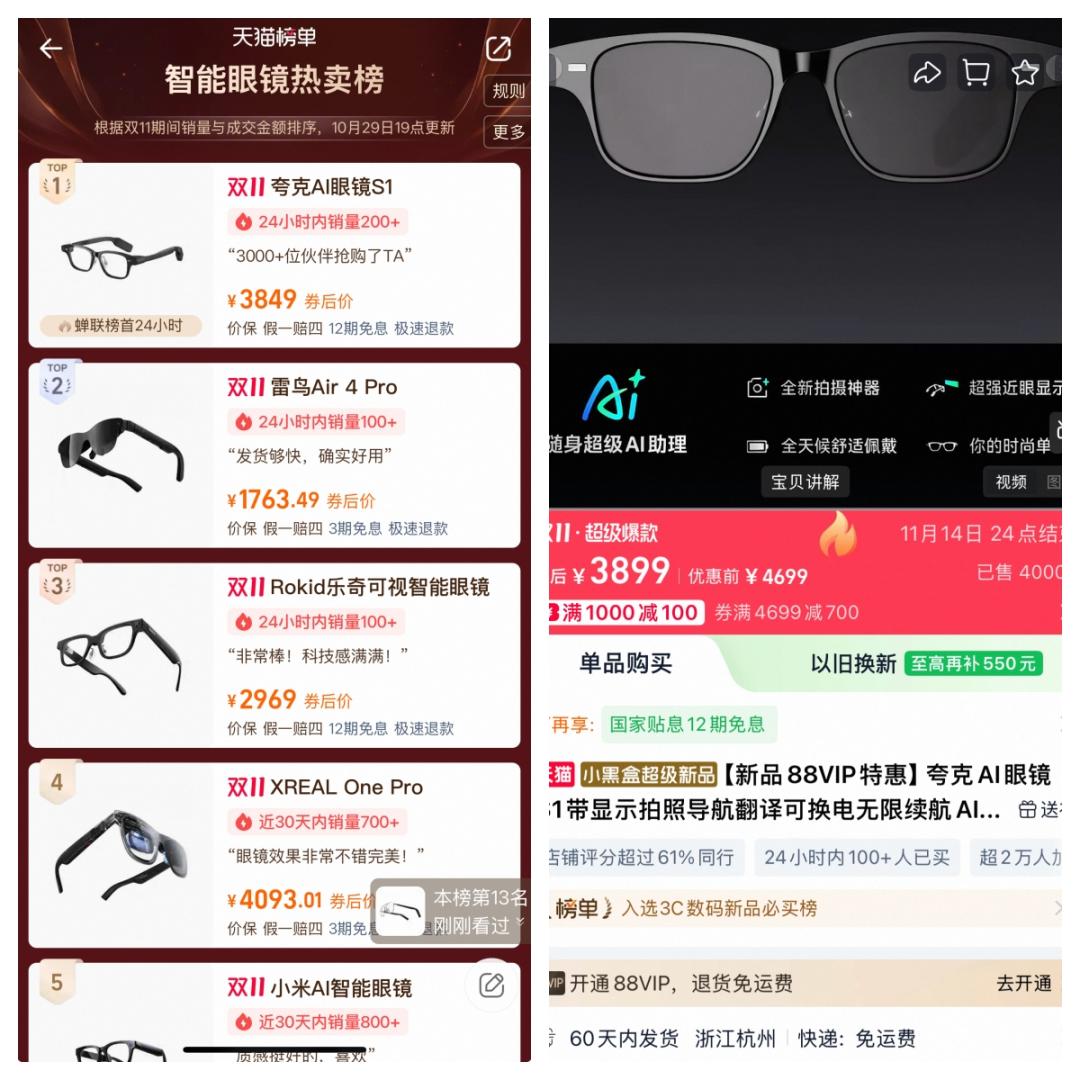
Core Insights - The application of AI is maturing, leading to a rise in AI hardware investments, with over 114 financing rounds and a total amount exceeding 14.5 billion yuan by mid-2025 [1] - AI glasses, toys, and learning machines are transitioning from niche markets to mainstream visibility, with significant sales during events like Double 11 [1][28] - Despite high prices, consumer acceptance of AI glasses is increasing, with a notable rise in sales and interest in AI functionalities [7][9] AI Glasses - AI glasses are priced comparably to smartphones but lack the same energy and functionality, leading to mixed sales results [2][10] - Quark AI glasses achieved top sales on Tmall, with a pre-sale price of 4,699 yuan, dropping to 3,899 yuan during promotions [2] - Rokid Glasses, priced at 3,299 yuan, saw a 7-fold increase in sales compared to the previous year [4] - Xiaomi's AI glasses, priced at 1,999 yuan, sold over 50,000 units on JD, indicating a strong market presence despite lower sales compared to smartphones [5][10] - The market for AI glasses is expected to grow significantly, with a projected shipment of 290.7 million units by 2025, reflecting a 121.1% year-on-year increase [7][11] AI Toys - AI toys are gaining traction, with products like "Furball" and "Listening Cow" achieving notable sales during promotional events [12][15] - The price sensitivity of consumers is high, with many preferring to stay within a budget of 300-1,000 yuan [17] - The market for AI toys is characterized by a lack of differentiation, leading to high return rates and challenges in consumer acceptance [18] AI Learning Machines - AI learning machines are positioned as the most mature AI hardware category, directly addressing user pain points [19] - Popular models from Xueersi and iFLYTEK are priced between 5,499 and 10,959 yuan, with strong sales figures reported [21][23] - The market for learning machines is expected to grow, with a low penetration rate among the K12 student population, indicating significant future potential [26] - The sales strategy combines online and offline channels, with online sales accounting for 70.1% of total sales in the learning tablet market [24][25] Market Trends - The surge in AI hardware sales during promotional events signals a shift from niche to mainstream consumer products [28] - The challenge remains for AI hardware to meet consumer needs and provide clear value propositions to drive broader adoption [28]
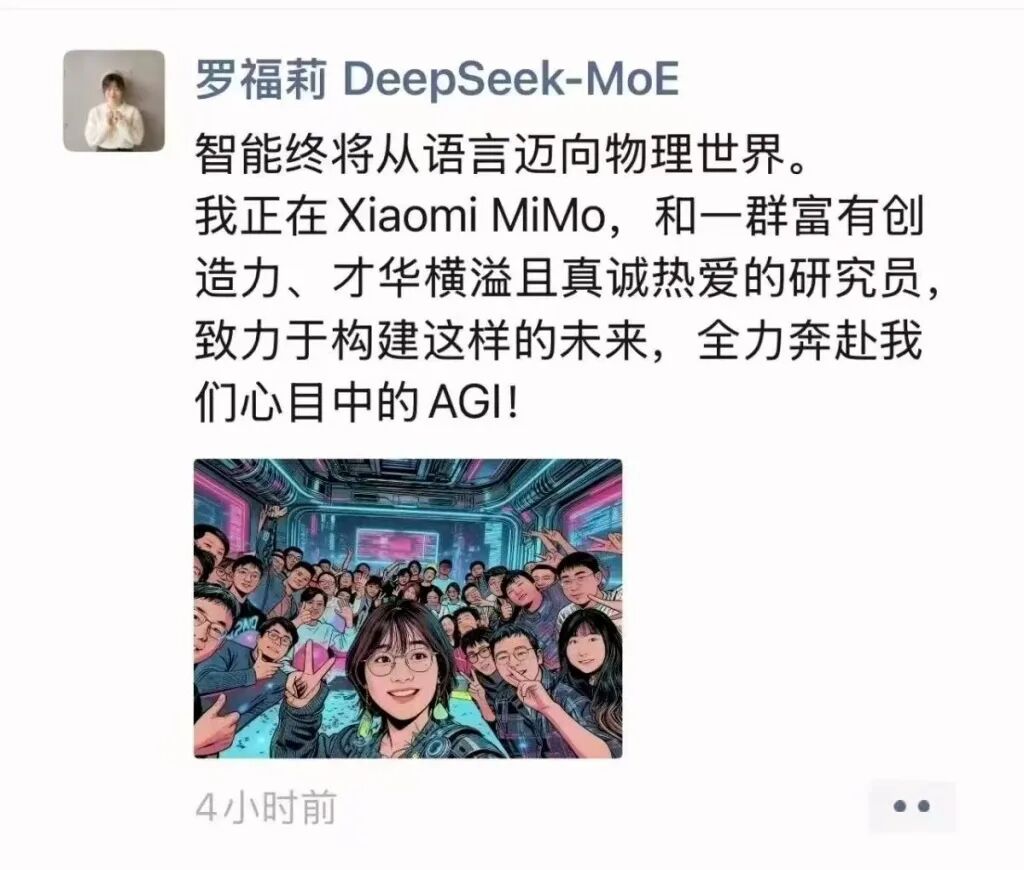
95后“AI才女”罗福莉,宣布加入小米!曾被雷军千万元年薪挖角,是DeepSeek关键开发者!她出身农村普通家庭,“是家族骄傲”
Mei Ri Jing Ji Xin Wen· 2025-11-12 07:58
Core Insights - The news highlights the announcement of AI prodigy Luo Fuli joining Xiaomi, emphasizing her role in advancing AI technology within the company [1][4]. Group 1: Company Developments - Luo Fuli, known for her significant contributions to AI, particularly as a key developer for the DeepSeek model, has been recruited by Xiaomi to lead its AI large model team [5][6]. - Xiaomi is actively building a GPU cluster to enhance its AI model research capabilities, with an initial resource of 6,500 GPUs, indicating a strong commitment to AI development [6]. - The company reported a revenue of RMB 21.3 billion from its smart electric vehicle and AI innovation segment in Q2 2025, with smart electric vehicle revenue at RMB 20.6 billion and a gross margin of 26.4% [8]. Group 2: Strategic Vision - Xiaomi's founder Lei Jun has articulated that AI large models are crucial for the future of smart connected vehicles, presenting significant innovation opportunities [7]. - The company's core strategy revolves around an integrated ecosystem of "people, vehicles, and homes," with vehicles serving as a critical node for AI applications [8]. Group 3: Individual Background - Luo Fuli, who has a strong academic background, including a degree from Beijing Normal University and further studies at Peking University, has gained recognition as an AI talent [11][13]. - Her upbringing in a rural family with a strong educational emphasis has contributed to her achievements, making her a source of pride for her community [11][13].