
玩具

Search documents
华伦天奴中国员工举报大中华CEO,“经常说脏话侮辱员工、腐败还独裁”
Sou Hu Cai Jing· 2025-12-01 06:41
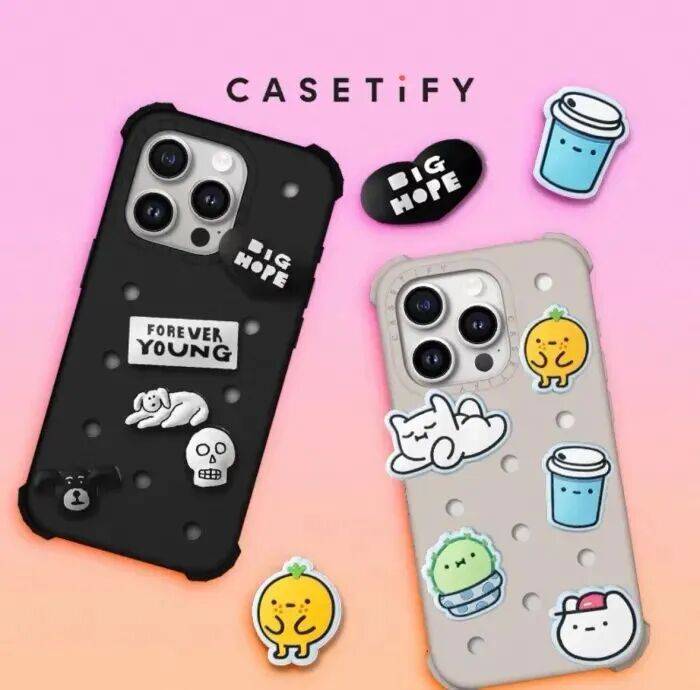
Group 1 - Casetify, a mobile phone case brand, reported an annual revenue of 3.6 billion yuan, attracting young consumers to its high-priced accessories [1][4] - The price range for Casetify's products includes phone cases priced between 289 yuan and 729 yuan, with some collaborative designs already sold out [2][4] - The average replacement cycle for phone cases is 4.3 months, significantly shorter than the average smartphone replacement cycle of 15 months, indicating a lucrative market for phone cases [4] Group 2 - Xiaomi announced that it will open "immediate vehicle selection" for its cars, allowing customers to purchase vehicles that have passed strict quality checks [5][7] - In November, Xiaomi's car delivery volume exceeded 40,000 units, indicating strong demand [7] Group 3 - Huawei's AI emotional companion toy, priced at 399 yuan, sold out quickly after its launch, highlighting strong consumer interest in AI-driven products [9][10] - The toy features voice interaction and a memory system, designed to provide emotional companionship [9] Group 4 - The fashion brand Valentino is facing allegations of corruption and exploitation from its employees in the Greater China region, targeting CEO Janice Lam [33][34] - The brand's revenue has faced challenges, with a reported annual revenue of 1.31 billion euros for 2024, showing a nearly flat performance compared to 2023 [35] Group 5 - The Shanghai Lego Park has welcomed over 1 million visitors, setting a record for the fastest Lego park to reach this milestone globally [27][29] - The park is set to undergo expansion in the coming years, indicating growth potential in the family entertainment sector [27] Group 6 - The world's first AI-driven fashion show is scheduled to take place in Manchester, UK, in February 2026, showcasing a new retail model that allows for immediate shopping [30][32] - The event aims to set a new global standard for fashion experiences through interactive technology [32]


《疯狂动物城》70+联名品牌战,瑞幸、52TOYS凭什么霸榜?
3 6 Ke· 2025-12-01 00:31
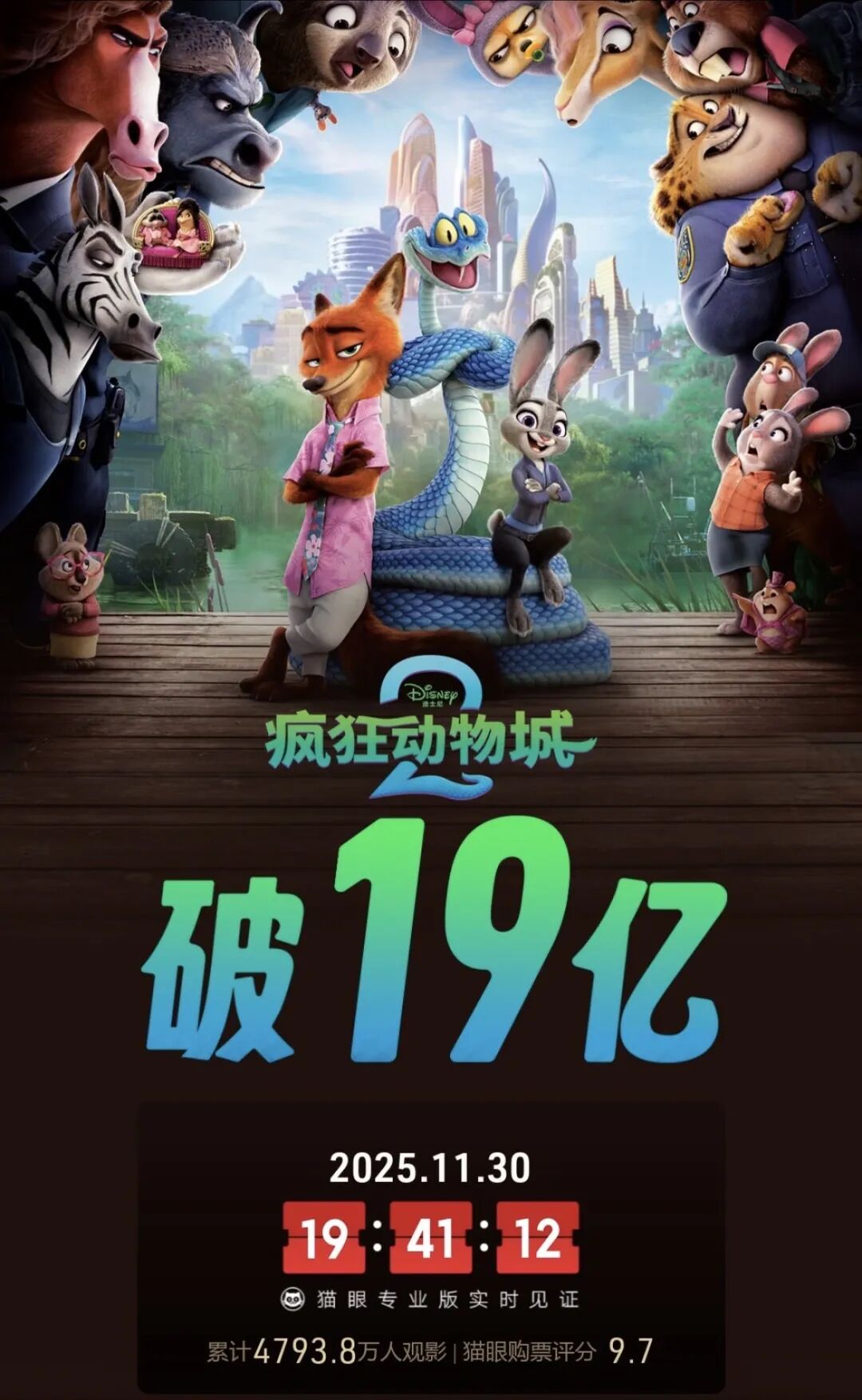
Core Insights - "Zootopia 2" has achieved significant box office success in China, surpassing 7 billion in single-day box office and over 19 billion in total, making it the highest-grossing imported film in Chinese history [1][4] - The film's IP has generated over 70 collaborations across various sectors, including fast fashion, dining, and personal care, appealing to a wide demographic from children to adults [4][6] - The emotional connection and nostalgia associated with the characters have driven audience engagement and merchandise sales, particularly among the 20-29 age group [11][14] Box Office Performance - "Zootopia 2" set a record with a single-day box office of 7 billion, surpassing the previous record held by its predecessor [1] - The total box office has exceeded 19 billion, significantly higher than the first film's 15.4 billion [1] IP Collaboration and Marketing - The film has seen over 70 collaborations since June, covering a wide range of consumer products and services [4] - Successful collaborations include popular brands like Starbucks, McDonald's, and various fashion retailers, indicating a broad market appeal [38][40] - The "Fox and Bunny" couple has become a major marketing focus, generating significant social media engagement and discussions [24][31] Audience Engagement - The film has successfully tapped into nostalgia, with many viewers reflecting on their personal growth since the first film's release nine years ago [8][11] - The emotional resonance of the characters has led to a strong connection with audiences, particularly among those who grew up with the original film [14][56] Merchandise Success - 52TOYS has emerged as a leading brand in merchandise sales, with its "Best Partners" series becoming a top seller on platforms like Tmall and Douyin [49][51] - The emotional appeal of the products, such as plush toys and collectibles, has resonated with consumers, turning them into "emotional containers" for fans [56][58] - The collaboration with 52TOYS highlights the importance of understanding the IP's core audience and emotional needs [51][61]

中国货物供应遇阻,商品涨价影响支出,关税令美国人迎来更昂贵“黑五”
Huan Qiu Shi Bao· 2025-11-30 22:48
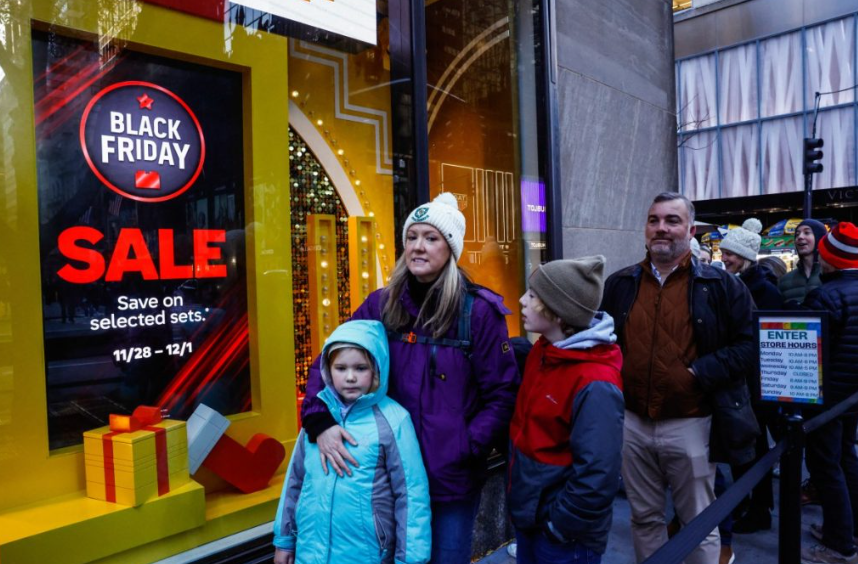
Core Insights - The "Black Friday" shopping season in the U.S. has seen record online sales of $11.8 billion, but rising prices and tariffs are dampening consumer demand [1][3] - The average online price of consumer goods has increased by 8% year-over-year, primarily due to tariffs on Chinese imports [4][5] - Consumer sentiment has shifted, with many shoppers prioritizing value and planning to reduce holiday spending due to economic uncertainty [6] Group 1: Sales and Pricing Trends - On "Black Friday," online sales reached a historic $11.8 billion, but the number of items purchased per transaction has decreased compared to last year [1] - Tariffs on Chinese goods have led to significant price increases, with toy prices rising from $20 to several dollars more due to a tax rate increase from 0% to 22% [3] - Despite apparent discounts during "Black Friday," many prices have merely returned to previous levels after earlier increases [3] Group 2: Consumer Behavior and Sentiment - A Deloitte survey indicates that holiday spending in Los Angeles is expected to decrease by 14% compared to last year, driven by pessimism about the economy [6] - Approximately 62% of surveyed consumers believe the economy will worsen in the next year, up from 34% the previous year [6] - Nearly 80% of respondents reported that almost all goods are experiencing price increases, leading to a reduction in planned holiday spending [6] Group 3: Retailer Challenges - Many small retailers are facing inventory shortages during the holiday season due to the impact of tariffs, with some companies opting to stick with Chinese suppliers despite high tariffs [4][5] - The uncertainty surrounding U.S.-China trade policies is forcing retailers to make difficult decisions between paying high tariffs or seeking more expensive alternatives [5] - The National Retail Federation forecasts a slowdown in holiday sales growth to between 3.7% and 4.2%, lower than the previous year's 4.3% [6]
晚报 | 12月1日主题前瞻
Xuan Gu Bao· 2025-11-30 14:35
Silver Market - Silver prices surged significantly on November 28, with COMEX silver futures reaching a high of $57.245 per ounce and London spot silver hitting $56.78 per ounce, while domestic futures peaked at 13,239 yuan per kilogram. The year-to-date increase has reached 90%, making it one of the strongest performers this year [1] - The strong performance of silver is driven by macro monetary policy expectations and supply-demand dynamics. The market now anticipates an 85% probability of a 25 basis point rate cut by the Federal Reserve in December, up from about 40% a week prior. This easing expectation has weakened the dollar index, reducing the holding cost of silver and attracting significant capital inflows into precious metals [1] - The global silver market has experienced a supply deficit for the fifth consecutive year, estimated at 95 million ounces. High photovoltaic installation levels and increased penetration of electric vehicles are expected to sustain industrial demand for silver, with projections indicating continued supply shortages through 2026, providing strong support for silver prices [1] Quantum Computing - On November 28, the University of Science and Technology of China achieved a significant breakthrough in quantum simulation by detecting high-order non-equilibrium topological phases using the programmable superconducting quantum processor "Zuchongzhi No. 2." This marks an important advancement in exploring complex topological states [2] - The experiment demonstrates the significant advantages of superconducting quantum processors in programmability and control precision, reinforcing the leading position of this technology route. The findings are expected to facilitate applications in condensed matter physics, quantum chemistry, and materials science, potentially addressing challenges in high-temperature superconductivity and complex molecular structures [2] Cybersecurity - The Political Bureau of the Central Committee of the Communist Party of China emphasized the importance of strengthening network ecological governance during a collective study session on November 28. This governance is crucial for national development and security, as well as for the interests of the people [3] - The meeting highlighted the challenges posed by emerging technologies such as artificial intelligence and big data, while also recognizing the new support conditions they provide for network governance. It called for the encouragement of new technology development in the internet and information sectors, and the establishment of a tiered and classified security regulatory mechanism [3] Tantalum Capacitors - Amid the rapid expansion of AI server data centers, the supply of tantalum capacitors is tightening, with Panasonic announcing price increases of 15% to 30% for certain models. This price hike follows similar actions by American manufacturers, indicating a hot market for tantalum capacitors [4] - The tantalum supply chain is characterized by oligopoly and long delivery times, suggesting a potential wave of price increases in 2026. Tantalum capacitors are critical electronic components used in power management, signal coupling, and filtering, with demand surging due to the rapid growth of AI and other high-tech applications [4] IP Economy - The film "Zootopia 2" achieved a single-day box office of over 700 million yuan on November 30, surpassing "Avengers: Endgame" to become the highest single-day box office for an imported film in China's history. The film's total box office has exceeded 2 billion yuan, making it the highest-grossing imported animated film in China [5] - The surge in demand for "Zootopia 2" has led to a significant increase in the prices of related merchandise, such as blind boxes, reflecting a trend of emotional consumption among young people [5] Copper Market - LME copper futures surged over 4% on Friday, breaking the $11,200 mark and reaching a historical high for the first time in four weeks. This increase is attributed to expectations of a Federal Reserve rate cut and a focus on supply shortages, with miners pricing commodities significantly above buyer expectations [6] - The global copper market is experiencing its tightest supply chain ever, driven by weak supply growth and frequent disruptions, alongside strong demand from emerging sectors and stable demand from traditional core areas [6] AI Toys - The AI emotional companion toy "Smart Hanhai" launched by Huawei sold out immediately upon release, indicating strong market demand. Additionally, Honor announced a strategic partnership with Aofei Entertainment to develop AI interactive toys targeting young consumers [7] - The AI toy market is expected to expand rapidly, with projections indicating that by 2030, the market size in China will exceed 100 billion yuan. The high gross margins of over 70% for mid-to-high-end AI toys are attracting significant investment [7] Energy Storage - On November 28, the Ministry of Industry and Information Technology held a meeting to discuss the battery industry, focusing on regulating competition and promoting high-quality development in the power and energy storage battery sectors. The meeting emphasized the need for targeted policy measures and monitoring of production capacity [9] - By 2025, the Chinese energy storage industry is expected to undergo a significant transition, with independent energy storage becoming mainstream as mandatory storage policies are phased out. The global market is experiencing rapid growth, particularly in the U.S. and Europe, leading to increased orders for domestic energy storage cell manufacturers [9]
临沂麦乐多玩具有限公司成立 注册资本10万人民币
Sou Hu Cai Jing· 2025-11-29 01:49
Core Viewpoint - Recently, Linyi Maileduo Toy Co., Ltd. was established with a registered capital of 100,000 RMB, indicating a new player in the toy and mother-baby products industry [1] Company Summary - The legal representative of Linyi Maileduo Toy Co., Ltd. is Wang Junren [1] - The company has a registered capital of 100,000 RMB [1] - The business scope includes toy sales, toy manufacturing, mother-baby product sales, and manufacturing, among other activities [1] Industry Summary - The company operates in various sectors including general toy sales, mother-baby products, and internet sales [1] - The business activities also encompass the retail of arts and crafts, daily necessities, and specialized chemical products (excluding hazardous chemicals) [1]
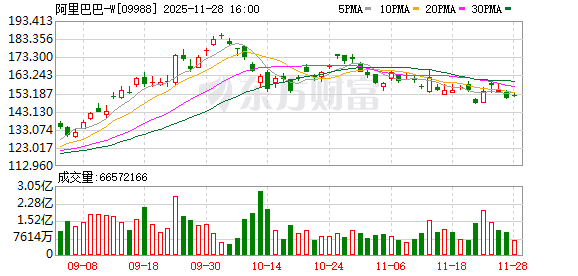
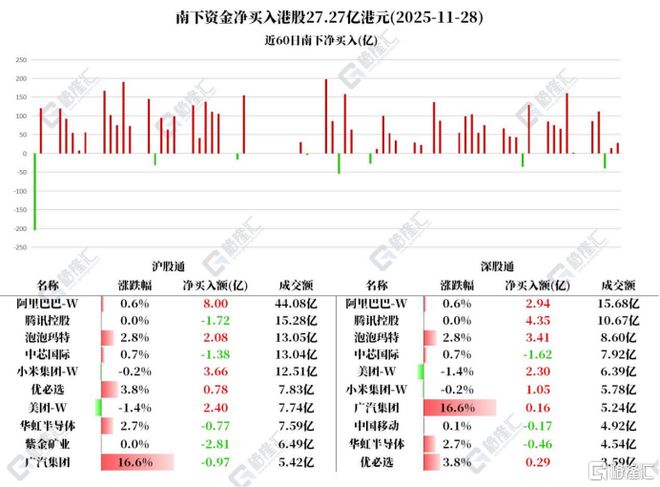
南向资金今日净买入27.27亿港元,阿里巴巴-W净买入10.94亿港元
Zheng Quan Shi Bao Wang· 2025-11-28 15:33
Group 1 - The Hang Seng Index fell by 0.34% on November 28, with total southbound trading amounting to HKD 602.38 billion, including HKD 314.82 billion in buying and HKD 287.55 billion in selling, resulting in a net buying amount of HKD 27.27 billion [2] - The southbound trading through Stock Connect (Shenzhen) had a total trading amount of HKD 223.39 billion, with net buying of HKD 17.94 billion, while Stock Connect (Shanghai) had a total trading amount of HKD 378.98 billion, with net buying of HKD 9.33 billion [2] - Alibaba-W was the most actively traded stock among southbound funds, with a total trading amount of HKD 59.76 billion and a net buying amount of HKD 10.94 billion, closing up by 0.60% [2][3] Group 2 - Other notable stocks included Pop Mart with a total trading amount of HKD 21.66 billion and a net buying amount of HKD 5.49 billion, and Xiaomi Group-W with a net buying amount of HKD 4.70 billion [3] - Semiconductor company SMIC had a total trading amount of HKD 20.96 billion with a net selling of HKD 3.00 billion, while Huahong Semiconductor had a net selling of HKD 1.24 billion [3][4] - Alibaba-W has seen continuous net buying for 12 days, with a total net buying amount of HKD 265.44 billion during this period, while SMIC and Huahong Semiconductor have experienced significant net selling [3]

3天票房破6亿!《疯狂动物城2》联名盲盒溢价4.8倍、“痛金”刷新联名价格上限
第一财经· 2025-11-28 12:58
Core Insights - The release of "Zootopia 2" has led to a significant surge in box office revenue, surpassing 600 million yuan within three days, showcasing the film's strong market appeal and consumer interest [1][3] - The film's success has triggered a buying frenzy for related merchandise, with prices for collaborative blind boxes soaring up to 4.8 times their original price, indicating the powerful "carrying" ability of the IP [1][6] Box Office Performance - "Zootopia 2" achieved a record-breaking single-day box office of 228 million yuan, making it the highest-grossing day for an imported animated film in Chinese history [1][5] - As of the report, the cumulative box office reached 620 million yuan, reflecting strong audience turnout and engagement [1] Merchandise Sales - The release has driven consumers to e-commerce platforms, leading to a spike in searches for related products, with a 60% increase in keyword searches on the day of release [6] - Notable merchandise includes blind boxes from Pop Mart, with prices for certain items increasing from 69 yuan to 399 yuan, representing a maximum premium of 4.8 times [6] - The average transaction price for Pop Mart's "Continuation Series" blind boxes rose from 516 yuan to 604 yuan within a month [6] Collaborative Products - High-end collaborations include Chow Tai Fook's "Pain Gold" series, with products priced as high as 3,280 yuan, setting new price records for merchandise related to "Zootopia" [7] - The film's promotional strategy included interactive elements at cinemas, enhancing the audience's experience and connection to the IP [7] Industry Insights - Industry expert Zhang Shule noted that the success of merchandise sales alongside the film's release marks a significant achievement for China's animation and merchandise sector, aligning with practices seen in Western markets [7]

资金动向 | 北水连续12日净买入阿里,加仓共计265亿港元
Ge Long Hui· 2025-11-28 12:45
阿里巴巴:消息面上,11月27日,阿里巴巴正式发布了其重磅AI智能硬件新品——夸克AI眼镜S1。从 功能上来看,夸克AI眼镜S1是"全家桶"式的功能配齐。核心的AI能力方面,夸克AI眼镜S1支持语音或 拍照AI问答,自研的MasterAgent大模型中控系统可以自主分解复杂指令,实现多意图、多轮对话。 据统计,南下资金已连续12日净买入阿里,共计265.4442亿港元;连续7日净卖出中芯国际,共计21.929 亿港元。 11月28日,南下资金买入港股27.27亿港元。 广汽集团:集团董事长冯兴亚在第二十三届广州国际汽车展览会上宣布,广汽集团于广州番禺建设的全 固态电池中试产线近期已正式建成并投产。作为国内首条具备60Ah以上车规级量产条件的产线,其在 能量密度、安全性能等方面实现关键突破,并计划于2026年装车测试,为下一代动力电池产业化奠定基 础。 其中:净买入阿里巴巴-W 10.94亿、泡泡玛特5.49亿、小米集团-W 4.7亿、美团-W 4.7亿、腾讯控股2.62 亿、优必选1.07亿;净卖出中芯国际3亿、紫金矿业2.81亿、华虹半导体1.23亿。 泡泡玛特:摩根士丹利研报指,泡泡玛特(09992.HK ...
港股收盘 | 恒指收跌0.34% 黄金股多数走高 机器人概念表现活跃
Zhi Tong Cai Jing· 2025-11-28 08:43
Market Overview - The Hong Kong stock market showed mixed performance, with the Hang Seng Index down 0.34% to 25,858.89 points, and a total trading volume of 146.2 billion HKD. The Hang Seng China Enterprises Index fell 0.38%, while the Hang Seng Tech Index rose 0.02% [1] - For the month, the Hang Seng Index declined 0.18%, the China Enterprises Index fell 0.42%, and the Tech Index dropped 5.23% [1] - Everbright Securities suggests that there is still significant upside potential compared to previous bull markets, but the duration of the bull market may be more important than the magnitude of the increase under the government's "slow bull" policy [1] Blue Chip Performance - Pop Mart (09992) rose 2.84% to 224.8 HKD, contributing 7.21 points to the Hang Seng Index, supported by strong performance during the Thanksgiving period [2] - Other blue chips like Sands China (01928) and Galaxy Entertainment (00027) also saw gains, while WuXi AppTec (02359) and Alibaba Health (00241) experienced declines [2] Sector Highlights - Technology stocks had mixed results, with Tencent flat, Alibaba up 0.6%, and Baidu up nearly 1%. Gold stocks generally rose due to expectations of a Fed rate cut, while the robotics sector saw active performance with significant orders [3][4] - Gold stocks saw notable increases, with Zhenfeng Gold (01815) up 12.56% and China Silver Group (00815) up 5.97% [3] - The robotics sector was buoyed by recent positive developments, including major contracts for companies like UBTECH [5] Gaming Sector Insights - Macau's gaming revenue for the first 23 days of the month reached 15.6 billion MOP, indicating a year-on-year growth of over 10% [6] - Major gaming stocks like MGM China (02282) and Sands China (01928) saw price increases, reflecting optimism in the sector [5][6] Notable Stock Movements - Haiwei Co. (09609) saw a significant drop of 22.97% on its first trading day, while GAC Group (02238) surged 16.62% following positive developments in electric vehicle production [7][8] - Bole Technology (02592) rose 14.05% after securing patents in Japan and Europe, indicating potential for collaboration with major pharmaceutical companies [9] - Tianyue Advanced (02631) and Dongyue Group (00189) also showed strong performance, driven by advancements in AI technology and rising prices in the PVDF market, respectively [10][11]

港股收盘(11.28) | 恒指收跌0.34% 黄金股多数走高 机器人概念表现活跃
智通财经网· 2025-11-28 08:39
Market Overview - The Hong Kong stock market showed mixed performance with the Hang Seng Index down 0.34% to 25,858.89 points, while the Hang Seng Tech Index rose 0.02% to 5,599.11 points. The total trading volume for the day was HKD 146.2 billion [1] - For the month, the Hang Seng Index fell 0.18%, the Hang Seng China Enterprises Index decreased by 0.42%, and the Hang Seng Tech Index dropped 5.23% [1] Blue Chip Performance - Pop Mart (09992) rose 2.84% to HKD 224.8, contributing 7.21 points to the Hang Seng Index, supported by strong performance during the Thanksgiving period [2] - Other blue chips like Sands China (01928) and Galaxy Entertainment (00027) also saw gains, while WuXi AppTec (02359) and Alibaba Health (00241) experienced declines [2] Sector Highlights Gold Stocks - Gold stocks generally performed well, with notable increases in shares such as Everest Gold (01815) up 12.56% and China Gold International (02099) up 5.17% [3] - The rise in gold prices was driven by expectations of a rate cut by the Federal Reserve, with a probability of 86.9% for a 25 basis point cut in December [3] Robotics Sector - The robotics sector showed strong activity, with companies like UBTECH (09880) rising 3.76% after securing significant contracts [4] - The sector is expected to see further growth as major players receive large orders, marking 2025 as a critical year for commercialization [4] Gaming Sector - The gaming sector saw a general upward trend, with companies like MGM China (02282) and Sands China (01928) reporting gains [5] - Morgan Stanley noted that Macau's gaming revenue for the month was up over 10% year-on-year, indicating potential for growth in the sector [5] Company-Specific Developments - Hawei Co. (09609) saw its shares drop 22.97% on its first trading day after an IPO priced at HKD 14.28 [6] - GAC Group (02238) experienced a strong performance, rising 16.62% following the launch of a new vehicle model [7] - Bole Technology (02592) surged 14.05% after receiving patents for its core product, indicating potential for future collaborations [8] - Tianyue Advanced (02631) and Dongyue Group (00189) also reported positive stock performance, driven by developments in AI and material prices respectively [9][10]