
AI

Search documents
境外权益(港美股)周度策略报告-20260111
Guo Tai Jun An Qi Huo· 2026-01-11 11:55
Report Overview - The report is a weekly strategy report on overseas equity (Hong Kong and US stocks) by Guotai Junan Futures, dated January 11, 2026 [1][2] 1. Investment Ratings - No specific industry investment ratings are provided in the report 2. Core Views - For US stocks, maintain an optimistic outlook, continue with the technology + cyclical allocation strategy, and expect a more balanced market style in 2026 with a "shrinking circle" structure in the technology sector [3] - For Chinese stocks, in the short term, A-shares have better profit - making effects than Hong Kong stocks, and attention should be paid to the subsequent catch - up opportunities in Hong Kong stocks. In the medium term, Hong Kong stocks maintain a barbell strategy [4][7] 3. Summary by Sections US Stocks - **Market Performance and Outlook**: This week, cyclical sectors led the rise in US stocks, and the technology sector continued its "shrinking circle" structure. Next week, the US stock market will face earnings season and inflation data. The outlook remains optimistic, and the technology + cyclical allocation strategy continues [3] - **2026 Allocation Ideas**: The market style will be more balanced, and the K - shaped divergence between technology and non - technology, large - cap and small - cap stocks is expected to converge. Focus on AI technology, healthcare, utilities, finance, materials, and consumer sectors. Prioritize upstream infrastructure in AI technology over downstream software, and pay attention to theme investment opportunities in physical AI [3] - **Valuation**: US stock valuations are still relatively high overall [14] - **AI Bubble**: It is a local rather than a systematic bubble. The market is punishing individual companies with aggressive capital expenditures. Currently, it may be close to the 1997 position from the perspective of the technology industry's ROIC. Monitor the "ROIC - WACC" convergence trend and the divergence between "financing growth" and "profit growth" [20][22] Chinese Stocks - **Market Performance and Outlook**: This week, A - shares outperformed Hong Kong stocks. A - shares' performance was strong in some sectors with high performance certainty and theme - concept sectors. Southbound funds' entry momentum increased, and the pattern may be A - shares leading and Hong Kong stocks catching up. February is the month with the highest winning rate for A - shares historically [4][6][7] - **Short - term Allocation**: Defensively allocate sectors with high performance certainty (AI hardware, new energy leaders, and non - ferrous metals), and offensively allocate valuation - driven sectors (Hang Seng Technology, Hong Kong innovative drugs, commercial aerospace, and robotics) [7] - **Medium - term Allocation for Hong Kong Stocks**: Adopt a barbell strategy, focusing on technology assets with clear industrial trends supported by policies, some new energy sectors with supply - side clearance and demand - side improvement, and non - ferrous sectors benefiting from supply shortages, strong structural demand, and interest rate cuts [7] Odds Analysis - **Hong Kong Stocks**: The forward PE of the Hang Seng Index is 11.8 times, approaching the mean + 1STD since 2015. The forward PE of the Hang Seng Tech Index is 21.4 times, approaching the mean of the past 5 years. The Hang Seng Index ERP is 4.9%, and the Hang Seng Tech Index ERP is 1.1% [9][10]
ETF热点周报丨上证指数开门红,国产存储龙头启动上市
Sou Hu Cai Jing· 2026-01-11 09:49
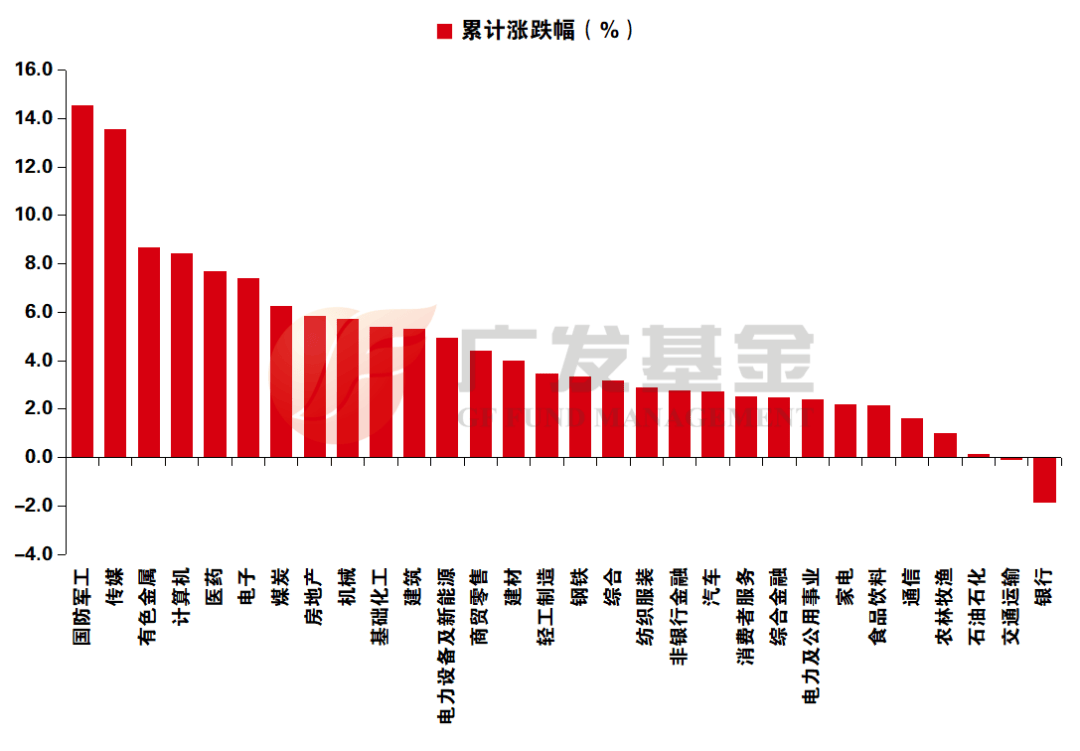
Core Insights - The CES exhibition in the US catalyzed developments in the AI sector, while China's manufacturing PMI unexpectedly rebounded to 50.1% in December 2025, indicating a return to growth [1] - The A-share market experienced a strong start to the year, with the Shanghai Composite Index breaking the 4000-point mark and reaching a ten-year high of over 4100 points by the end of the week [1][2] - The defense, military, and media sectors performed well, while the banking and transportation sectors lagged behind [1] Weekly Market Review - All three major indices in the A-share market rose, with the Shanghai Composite Index increasing by 3.82%, the Shenzhen Component Index by 4.4%, and the ChiNext Index by 3.89% during the week from January 5 to 9 [2] - The average daily trading volume in the A-share market was approximately 2.85 trillion yuan, reflecting a 33.7% increase compared to the previous week [3] Sector Performance - The defense, military, media, non-ferrous metals, computer, and pharmaceutical sectors led the market with cumulative returns of 14.56%, 13.55%, 8.66%, 8.42%, and 7.7% respectively [3] - Conversely, the banking, transportation, oil and petrochemicals, agriculture, forestry, animal husbandry, and telecommunications sectors showed weaker performance, with cumulative returns of -1.88%, -0.03%, 0.17%, 0.99%, and 1.61% respectively [3] ETF Fund Flows - Over the last five trading days (December 31, 2025, to January 8, 2026), there was a cumulative net outflow of approximately 14.48 billion yuan from ETFs, with broad-based ETFs experiencing overall net outflows [3] - However, products related to the CSI 500 saw significant net inflows, indicating a divergence in industry-specific ETF subscriptions and redemptions [3] Future Outlook - Short-term opportunities may arise for consensus stocks that have adjusted, while long-term focus should be on sectors with lower heat and concentration but increasing attention and catalysts, along with potential improvements in long-term ROE [8] Industry Insights - In the rare metals sector, demand for copper is expected to grow due to monetary easing and accelerated AI and power grid infrastructure [9] - The domestic AI industry and semiconductor localization remain strong, with expectations for a new wave of high-end AI computing chip releases by 2026 [10] - The commercial aerospace sector in China is advancing, with improvements in reusable rocket technology and potential IPOs for core companies [11] - Chinese engineering machinery companies are increasing their overseas market share, with over 40% of revenue from international markets expected by 2024 [12]

Guggenheim Analyst is Bullish on Guardant Health, Inc. (GH)
Insider Monkey· 2026-01-11 06:10
Core Insights - Artificial intelligence (AI) is identified as the greatest investment opportunity of the current era, with a strong emphasis on the urgency to invest now [1][13] - The energy demands of AI technologies are significant, with data centers consuming as much energy as small cities, leading to concerns about power grid strain and rising electricity prices [2][3] Investment Opportunity - A specific company is highlighted as a critical player in the AI energy sector, owning essential energy infrastructure assets that are poised to benefit from the increasing energy demands of AI [3][7] - This company is not a chipmaker or cloud platform but is positioned as a "toll booth" operator in the AI energy boom, collecting fees from energy exports [5][6] Financial Position - The company is noted for being debt-free and holding a substantial cash reserve, amounting to nearly one-third of its market capitalization, which provides a strong financial foundation [8][10] - It is trading at less than 7 times earnings, making it an attractive investment compared to other firms in the energy and utility sectors [10][12] Market Trends - The company is strategically aligned with several market trends, including the onshoring boom driven by tariffs, a surge in U.S. LNG exports, and a focus on nuclear energy as a clean power source [14][7] - The influx of talent into the AI sector is expected to drive continuous innovation and advancements, further solidifying the importance of investing in AI-related companies [12][11] Future Outlook - The potential for significant returns is emphasized, with projections suggesting a possible 100% return within 12 to 24 months for investors who act quickly [15][19] - The overall narrative suggests that AI is a disruptive force that will reshape traditional industries, and companies that adapt will thrive [11][12]


UBS Beleives Centrus Energy Corp. (LEU) Positioned for ‘Significant’ DOE Funding
Insider Monkey· 2026-01-11 06:07
Core Insights - Artificial intelligence (AI) is identified as the greatest investment opportunity of the current era, with a strong emphasis on the urgency to invest now [1][13] - The energy demands of AI technologies are significant, with data centers consuming as much energy as small cities, leading to concerns about power grid capacity and rising electricity prices [2][3] Investment Opportunity - A specific company is highlighted as a critical player in the AI energy sector, owning essential energy infrastructure assets that are poised to benefit from the increasing energy demands of AI [3][7] - This company is not a chipmaker or cloud platform but is positioned as a "toll booth" operator in the AI energy boom, collecting fees from energy exports [5][6] Financial Position - The company is noted for being debt-free and holding a substantial cash reserve, amounting to nearly one-third of its market capitalization, which provides a strong financial foundation [8][10] - It is trading at less than 7 times earnings, making it an attractive investment compared to other firms in the energy and utility sectors [10][11] Market Trends - The company is strategically aligned with several market trends, including the onshoring boom driven by tariffs, a surge in U.S. LNG exports, and a unique position in nuclear energy [14][7] - The influx of talent into the AI sector is expected to drive continuous innovation and advancements, further solidifying the importance of investing in AI-related companies [12][11] Future Outlook - The potential for significant returns is emphasized, with projections of over 100% return within 12 to 24 months for investors who act now [15][19] - The company is positioned to capitalize on the disruption caused by AI, which is reshaping traditional industries and creating new opportunities for growth [11][12]


申万宏源服务业投资机会梳理专题报告:中国服务业含“科”量持续提升-20260110
Shenwan Hongyuan Securities· 2026-01-10 14:55
Group 1 - The report highlights that the service industry is increasingly merging with technology, leading to the emergence of top-tier listed companies in sectors such as fintech, logistics, enterprise services, and healthcare [2][10] - Countries are exploring unique paths to develop their service industries, with examples including the U.S. focusing on fintech innovation, Germany emphasizing industrial design, and Singapore building digital infrastructure [2][10] - China's national strategy aims to enhance service industry capacity and quality through targeted policies, including the removal of entry barriers in key sectors like telecommunications and healthcare [2][39] Group 2 - The report identifies three main investment directions in the service industry: productive services, lifestyle services, and emerging services [2][45] - Productive services are seen as a core engine, with sectors like testing, industrial software, and financial services highlighted for their growth potential [2][3][45] - Lifestyle services are focused on improving living standards and consumption upgrades, with high growth observed in areas such as gaming, aviation, and tourism [3][45] Group 3 - Emerging services are positioned as key to cultivating new productive forces, with rapid developments in AI and the integration of healthcare and pharmaceutical services [4][45] - The report emphasizes the importance of cross-border e-commerce as a new growth driver for foreign trade, leveraging China's supply chain advantages [4][45] - Specific companies such as Cintas and CVS Health are cited as examples of successful service firms in the U.S., showcasing effective business models and market strategies [1][15][18]
4年半亏了165亿,百亿基金经理被告上法庭
凤凰网财经· 2026-01-10 13:50
Core Viewpoint - The article discusses a significant legal case involving Guotou Ruijin Fund and its star fund manager Shi Cheng, highlighting issues of investment style deviation and potential breaches of fiduciary duty in the public fund industry [2][5][13]. Group 1: Legal Case Overview - A court hearing is scheduled for January 13, 2026, where investor Li Zhihua has filed a lawsuit against Guotou Ruijin Fund and Shi Cheng for a "financial trust contract dispute" [2][5]. - It is rare for a fund manager to be named as a co-defendant in such cases, indicating the seriousness of the allegations against Shi Cheng [5][4]. Group 2: Investment Style and Performance Issues - The case centers on two main issues: whether the suitability obligations were adequately fulfilled and whether there was a significant deviation from the agreed investment style [5]. - Shi Cheng's management of the Guotou Ruijin New Energy Fund has come under scrutiny for drastically reducing its investment in renewable energy stocks from a contractual commitment of at least 80% to only 5.95% by Q3 2025, shifting focus to AI and robotics [5][6]. - Despite the fund's significant shift in investment strategy, it achieved a 72.24% return in 2025, raising questions about the appropriateness of the strategy and the implications for investors who expected a focus on renewable energy [5][6]. Group 3: Shi Cheng's Career Trajectory - Shi Cheng's career has seen dramatic highs and lows, with his rise closely tied to the booming renewable energy sector, achieving returns of 101.52% and 60.03% in 2020 and 2021, respectively [9][10]. - However, since 2022, the renewable energy sector has faced severe downturns, leading to significant losses for the funds he managed, with cumulative losses reaching 164.72 billion yuan from 2021 to mid-2025 [10][12]. - The management scale of his funds plummeted from over 200 billion yuan to below 100 billion yuan due to poor performance, despite continued management fee collection [12][13]. Group 4: Industry Implications - The case serves as a warning for the public fund industry regarding the boundaries of fund managers' fiduciary duties and the implications of deviating from established investment strategies [13]. - Following this case, the Asset Management Association of China issued guidelines to regulate theme-based investment styles, aiming to prevent similar issues in the future [13][16]. - The outcome of the trial could set a precedent for defining the boundaries of "diligence and responsibility" for fund managers, influencing future compliance and investment decision-making in the industry [13].

月之暗面创始人:未来中国技术不仅要好用,还要参与制定规则
Xin Lang Cai Jing· 2026-01-10 12:16
Core Viewpoint - The CEO of Kimi, a unicorn in AI large models, emphasizes the importance of Chinese technology not only being user-friendly but also participating in setting industry standards [1] Group 1: Company Development Plans - Kimi has multiple Chinese open-source models that have become industry testing standards [1] - The company plans to launch a series of models from K4 to K100 over the next ten to twenty years [1] Group 2: AI Safety and Potential - The CEO addresses public concerns regarding AI safety, stating that AI could be the key to exploring the unknown, helping to tackle cancer, solve energy crises, and explore the universe [1] - While acknowledging the risks associated with AI, the CEO argues that abandoning development equates to relinquishing the potential of human civilization [1]
投资大家谈 | 摩根资产管理中国权益投资团队2026展望
Sou Hu Cai Jing· 2026-01-10 11:13
Core Viewpoint - Morgan Asset Management's China equity investment team anticipates structural opportunities in the market for 2026, driven by the transition of old and new growth dynamics and the development of industries such as AI, high-end manufacturing, new energy, and new consumption [2][3]. Group 1: Market Outlook - The Chinese equity market is at a critical juncture for transitioning growth dynamics, with structural opportunities emerging from macroeconomic volatility and industry trends [2]. - Morgan Asset Management emphasizes long-term investment value and aims to provide insights into macro policy, market trends, and sector-specific strategies for investors [2]. Group 2: Investment Strategies - Investment Director Du Meng believes that the value of Chinese equity assets is set for re-evaluation, with a focus on stable growth in industry demand and cash flow sustainability [5]. - The AI sector is viewed as a significant trend, with expectations of transformative innovations, and investment strategies will involve active participation and dynamic adjustments [5][10]. - The lithium battery industry is highlighted as a promising sector for 2026, driven by a balanced supply-demand state, new demand from energy storage, and attractive valuations [7][8]. Group 3: Sector Focus - The AI industry is recognized as a major trend, with a focus on companies with technological barriers and high order visibility in the computing hardware segment [10][11]. - The consumption sector is expected to show potential, particularly in new consumption driven by younger demographics, while traditional sectors may face challenges [10][19]. - The financial sector is seen as having significant opportunities, supported by favorable policies and a shift towards institutional investment [26][29]. Group 4: ETF and Index Investment - The global ETF market continues to grow, with significant inflows and a focus on differentiated solutions, particularly in the Asia-Pacific region [30][32]. - Morgan Asset Management's strategy in the ETF space emphasizes a "boutique buyer" model, aiming to provide unique value and long-term viability in its offerings [33].

白银迎史诗逼空,中国严控出口,全球供需被已经打败
Sou Hu Cai Jing· 2026-01-10 04:46
Core Viewpoint - Silver has been designated as a strategic material by the Chinese government, leading to tighter export controls that favor large producers over small traders and individuals [1]. Group 1: Market Dynamics - The demand for silver is driven by its essential roles in various industries, including photovoltaic applications, AI connections, and electric vehicle batteries [3]. - By 2025, a global supply deficit of 3,660 tons is anticipated, which could double by 2026, indicating a critical need for silver in the market [3]. - The price of silver has already surged by 170% in 2025 due to supply constraints, reflecting market reactions to the tightening of export policies [7]. Group 2: Strategic Implications - The policy reflects a blend of trade strategy and resource nationalism, aiming to reclaim control over industrial materials and pricing power from foreign entities [5]. - The U.S. has recognized silver as a critical mineral, but lacks sufficient refining capacity, with China controlling approximately 65% of the global refining market [5]. - The shift in silver export policy is part of a broader trend of resource nationalism, aligning with global movements towards securing national resources [11]. Group 3: Domestic and International Impact - Domestically, the policy is expected to benefit high-end manufacturing by ensuring access to quality silver, thus supporting industrial upgrades [9]. - Internationally, the pricing dynamics traditionally set by London and New York may be challenged as China gains more control over physical silver supply [9]. - The policy aims to stabilize domestic supply and pricing while promoting the development of refining and alternative technologies to reduce dependency on single materials [13]. Group 4: Investment Perspective - Investors are advised to reconsider silver's role, recognizing it as a critical industrial material rather than merely a companion to gold, necessitating a shift from speculative to strategic investment approaches [14]. - The elevation of silver to a strategic material signifies a declaration of industrial sovereignty and foreshadows a reconfiguration of global supply chains [15].

Is the AI Bubble Bursting or Is the Sector Just Catching Its Breath?
Yahoo Finance· 2026-01-09 18:38
Key Points The investment thesis for AI is still intact and growing, despite the recent short-term correction in the sector. AI is already delivering tangible financial results while allowing companies to improve their products and services. Chipmakers will continue to win, but looking at all the other bottlenecks limiting the pace of the AI buildout reveals a host of other companies that could be big winners from the trend. 10 stocks we like better than Nvidia › Many AI stocks struggled in Dece ...
