
交通运输

Search documents
强化节约优先战略 持续提升能源利用效率
Xin Hua Wang· 2025-12-29 05:22
新华社北京12月26日电 题:强化节约优先战略 持续提升能源利用效率——来自全国人大常委会专题询 问现场的声音 据郑栅洁介绍,当前,"绿水青山就是金山银山"的理念已经深入人心,节能从意识到行动形成良好生 态。 聚焦重点领域精准施策 "十四五"时期,算力设施用电量增长每年近20%,年用电量超过2500亿千瓦时,成为快速增长的重点用 能领域。孙泽洲委员询问,如何推进算力设施节能降碳? 郑栅洁表示,加强新建项目源头把关,强化新上项目节能降碳审查评价,从源头提升算力设施绿色低碳 水平;加大存量设施改造力度,优化算力设施结构;强化余热资源回收利用,推动"应收尽收、能用尽 用"。 新华社记者王悦阳 十四届全国人大常委会第十九次会议24日举行联组会议,就节约能源法执法检查报告进行专题询问。 我国节能工作取得哪些成效?如何推进重点领域节能?怎样增强居民节能意识?……全国人大常委会委 员、专门委员会委员和全国人大代表等与会人员现场提出询问,国务院相关部门负责人予以坦诚回应。 节能降碳成效显著 我国是能源使用大国,节能非常重要。赵海英委员询问,我国在节能方面主要开展了哪些工作? 国家发展改革委主任郑栅洁说,我国节能工作成效显著, ...
攒足发展“硬支撑”底气!借助重大工程“拼图”看经济发展澎湃“硬核”动力
Yang Shi Wang· 2025-12-29 03:26
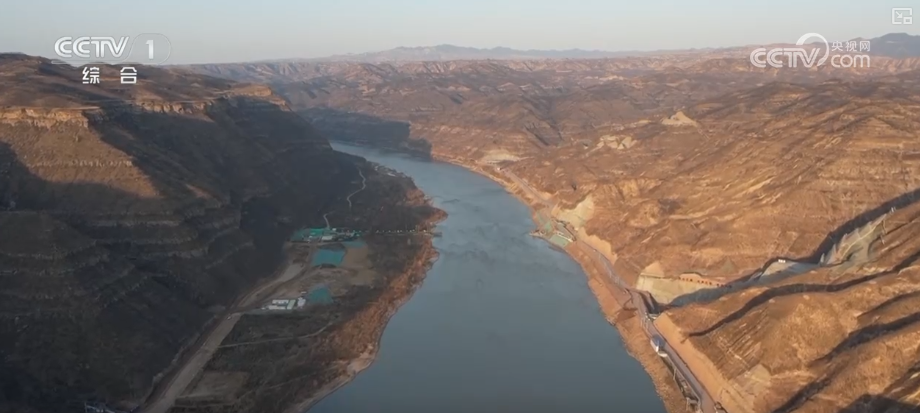
Core Viewpoint - Recent significant progress in major projects across water conservancy, energy, and transportation sectors in China highlights the country's economic vitality [1] Water Conservancy - The Yellow River Guxian Water Conservancy Hub's diversion tunnel successfully completed, marking a major milestone in the project aimed at enhancing flood control and disaster reduction capabilities [5] - The Nanning Pumped Storage Power Station, part of the "14th Five-Year Plan," has been fully operational, representing Guangxi's first pumped storage power station with a total investment of approximately 8 billion yuan and a capacity of 1.2 million kilowatts [19][22] Energy - The first domestically developed 30-megawatt pure hydrogen gas turbine has achieved pure hydrogen power generation, reducing carbon emissions by over 200,000 tons annually compared to conventional power generation [8][41] - The Xinjiang Oilfield's carbon capture and storage project has become China's first oilfield to inject over 1 million tons of carbon annually, marking a significant step in carbon capture and utilization [35][38] Transportation - The Guangdong Yangchun to Xinyi Expressway has officially opened, reducing travel time between the two cities from 4 hours to 1.5 hours, enhancing connectivity between the Guangdong-Hong Kong-Macao Greater Bay Area and the Guangxi Beibu Gulf Economic Zone [10] - The Nanjing Metro Line 4's second phase underwater tunnel has successfully completed, representing the deepest underwater metro tunnel in the Yangtze River Delta region [13] - The Dongyang Expressway has been completed, achieving "county-to-county" expressway connectivity in Liaocheng, Shandong Province [15] Natural Gas Infrastructure - The Sichuan section of the "West-to-East Gas Transmission" project has been fully operational, expanding the natural gas resource export channel from the Sichuan-Chongqing region [30][32]

消费维权该去哪里?除了12315,这些渠道也能帮你解决问题
Xin Lang Cai Jing· 2025-12-29 02:43
Group 1 - The article emphasizes the increasing diversity of complaint channels available to consumers beyond the well-known 12315 platform, which is managed by the State Administration for Market Regulation [1][9] - The 12315 platform is recognized for its authority and ability to escalate complaints to local market regulatory departments, particularly for clear-cut cases involving food safety, price fraud, and false advertising [2][10] - The article outlines the importance of industry-specific complaint channels, which are often more knowledgeable and efficient in handling disputes [3][11] Group 2 - Media and third-party platforms, such as Black Cat Complaints, have emerged as popular alternatives for consumers, especially younger demographics, due to their ability to exert social pressure on companies through public attention [4][14] - Black Cat Complaints operates as a neutral third-party platform, allowing users to submit complaints quickly and track their progress, significantly reducing the time and effort required for consumer advocacy [5][15] - The article highlights the role of consumer associations and legal avenues as additional resources for consumers, with associations providing mediation and legal routes serving as a last resort for significant disputes [6][16] Group 3 - Specific complaint channels are recommended for various sectors, such as telecommunications, finance, transportation, and internet platforms, each with designated regulatory bodies to address consumer issues effectively [12][19] - The article stresses the importance of gathering evidence, such as order records and communication screenshots, regardless of the chosen complaint channel, as this is crucial for successful advocacy [20]
京密高速新国展段正式通车
Xin Lang Cai Jing· 2025-12-28 21:31
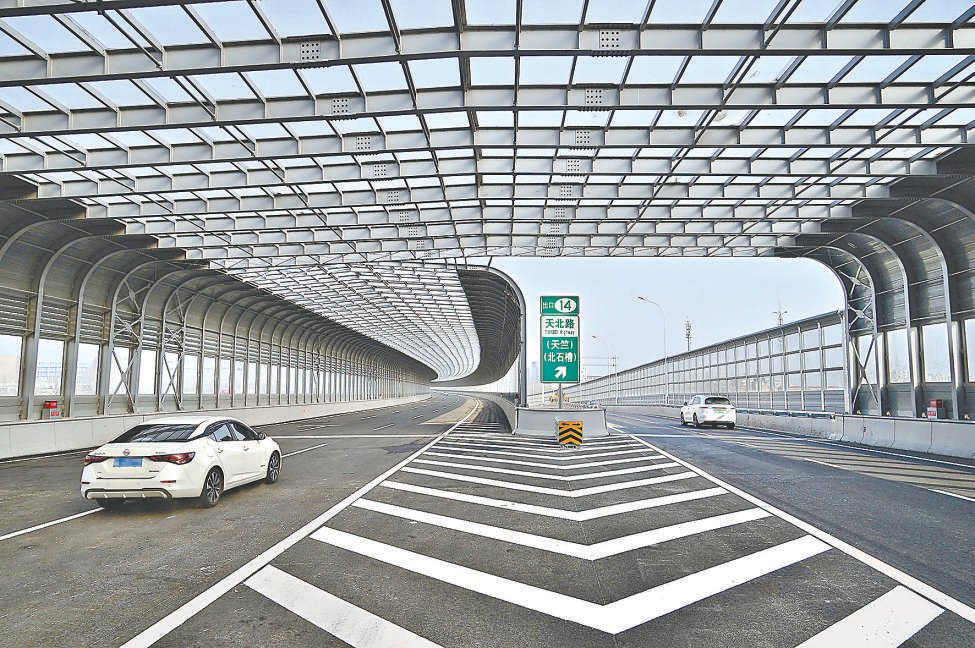
Group 1 - The Jingmi Expressway New National Exhibition section officially opened, significantly reducing travel time from the New National Exhibition to major ring roads in Beijing [2][3] - The new section of the expressway, approximately 1.7 kilometers long, enhances traffic capacity by upgrading from a dual four-lane to a dual six-lane configuration [3] - The project aims to alleviate traffic pressure during events at the New National Exhibition and improve logistics efficiency in the surrounding area [3] Group 2 - The construction of the Jingmi Expressway faced challenges due to its proximity to Metro Line 15, necessitating multiple optimizations of the construction plan [3] - The expressway will temporarily not charge tolls after the new section opens, with specific tolling details to be announced after the completion of the entire second phase [3] - Ongoing construction for the section from the New National Exhibition to the North Sixth Ring Road is underway, with plans for a fully interconnected interchange featuring nine ramps [3]
中国上市公司协会:2025中国上市公司ESG行业报告
Sou Hu Cai Jing· 2025-12-28 13:23
今天分享的是:中国上市公司协会:2025中国上市公司ESG行业报告 报告共计:144页 2025中国上市公司ESG行业报告核心总结 《2025中国上市公司ESG行业报告》由中国上市公司协会编写、中诚信绿金科技提供技术支持,聚焦电力、医药生物、交通运 输等七个重点行业,系统分析了上市公司ESG信息披露与管理实践现状。 报告显示,ESG信息披露整体呈稳步提升态势。截至2025年6月30日,A股和中资港股上市公司共6476家,3437家披露ESG相关 报告,披露比例达53.1%,较上年增长近5个百分点。其中银行业和非银金融业披露率位居前列,分别为100%和92.7%,22个行 业披露率超50%,行业覆盖范围持续扩大。在披露类型上,上市公司普遍偏好单独发布ESG报告,A股更倾向于发布社会责任报 告和可持续发展报告,中资港股则多采用年报ESG章节披露形式,91.9%的披露公司于4月30日前完成报告发布。 七大行业ESG实践各有特征。电力行业聚焦清洁能源投资与碳排放管理,披露率达82.3%,治理维度指标披露率最高;医药生物 行业披露率48.1%,在研发投入、产品质量与患者权益保障方面表现突出,研发投入披露比例达93.3% ...

我市国资国企“求新提质”实现新跨越
Xin Lang Cai Jing· 2025-12-28 13:10
国有企业积极落实京津冀交通一体化战略,廊运集团开通进京定制快巴、津廊通勤专线、进京快速通勤 公交专线,形成了"6+29"干支线的京津冀通勤体系,有效提高京廊、津廊人员通勤效率,公交集团累计 开通公交线路45条,为市民打造更便捷、舒适、安全的出行环境。 全面实现了国有企业集中统一监管改革,全市集中统一监管的国有资产占比从14.6%上升至100%,实现 了从"九龙治水"到"攥指成拳"的根本性变革;全面建立了现代企业制度,市、县两级共有29家全民所有 制企业完成公司制改革;我市国资委监管企业全面形成了外部董事占多数、董事会按照授权规范履职的 管理机制,国有企业"三项制度"改革全面破冰破局,以经理层成员任期制和契约化管理为核心的新型经 营责任制达到100%,末等调整和不胜任退出机制全面建立,国有企业活力更加充盈。 责任更实,功能作用和社会责任进一步增强。"十四五"时期,我市抢抓京津冀协同发展战略机遇,围绕 北京非首都功能疏解转移战略部署,全面建立了央企对接工作体系,市委、市政府主要领导亲自带队, 大力招引央企二、三级子公司和创新板块落户廊坊。目前,在廊央企子公司已超过260家,与全市产业 体系深度融合,有力促进了廊坊 ...
宏观量化指数经济周报20251228:12月出口增速预计将小幅回落-20251228
Soochow Securities· 2025-12-28 12:01
Economic Indicators - The ECI supply index for December is at 49.93%, down 0.02 percentage points from last week, while the demand index remains stable at 49.84%[6] - The ECI investment index is at 49.86%, up 0.01 percentage points from last week, and the consumption index is at 49.66%, unchanged from last week[6] - The ECI export index is at 50.20%, down 0.01 percentage points from last week, indicating a slight decline in export momentum[6] Consumer and Investment Trends - In the first 11 months of 2025, over 11.2 million vehicles were traded under the vehicle replacement policy, accounting for over 50% of total retail sales of passenger cars, with an expected annual growth rate of around 4%[8] - The real estate market shows signs of recovery, with a decrease in sales decline due to improved transaction volumes in major cities since late December[8] - Infrastructure investment shows a slight recovery, with the operating rate of asphalt plants rising to 31.30%, up 3.70 percentage points from the previous week[28] Export and Trade Insights - December export growth is expected to weaken compared to November, with a projected slight positive growth for the fourth quarter overall[9] - Port cargo throughput in December has decreased slightly compared to November, influenced by high base effects and reduced demand due to preemptive exports[8] Monetary Policy and Liquidity - The ELI index is at -0.39%, up 0.10 percentage points from last week, indicating stable liquidity conditions as the central bank continues to manage liquidity through open market operations[11] - The central bank has conducted a net injection of over 1 trillion yuan through MLF in 2025, supporting ample liquidity in the market[13] Risk Factors - Uncertainties remain regarding U.S. tariff policies and the potential for policy measures to fall short of market expectations[52]
盘点2025|地下穿行新动脉,地上舒展新画卷,北京城市立体生长
Bei Jing Ri Bao Ke Hu Duan· 2025-12-27 06:32
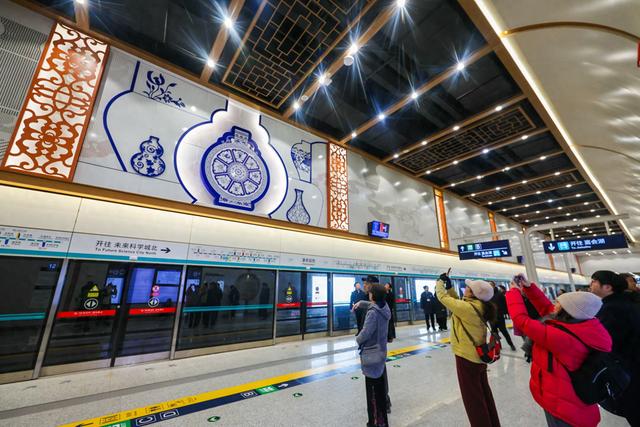
Group 1 - The opening of new subway lines in Beijing, including the 6th line south extension, 17th line middle section, and 18th line, enhances public transportation convenience for citizens [2][3] - The 22nd subway line (Pinggu Line) is under construction, which will connect Hebei and Beijing, reducing travel time from the northern counties of Hebei to Beijing's sub-center to just 9 minutes [3][16] - The completion of the Chengping Expressway, which spans 34.8 kilometers, will significantly shorten travel time between Pinggu and Chengde by half, improving the road network in the Beijing-Tianjin-Hebei region [3][5] Group 2 - The construction of the 108 New Line Expressway in the western mountainous area of Beijing is progressing, with all 16 sections underway, aimed at enhancing disaster resilience and network robustness [5][7] - The China Acrobatic Arts Center, a new cultural venue in Beijing, is nearing completion, featuring a unique design and aiming to fill the gap for medium-sized professional theaters in the city [7][8][10] - The "3 projects of 100" initiative in Beijing is advancing smoothly, with 92 projects having commenced and 24 projects completed as of November [10]
国家商贸物流中心,“五型”国家物流枢纽链接全球
Chang Jiang Ri Bao· 2025-12-27 03:10
Core Viewpoint - Wuhan is rapidly developing into a national trade and logistics center, leveraging its geographical advantages and enhancing its transportation network to boost domestic and international trade [1][8]. Group 1: Logistics and Transportation Development - On December 26, Wuhan set a new record by dispatching 11 China-Europe freight trains in a single day, reflecting the city's growing logistics capabilities [1]. - By June 2025, Wuhan will become the second city in China to have all five types of national logistics hubs, enhancing its transportation network across rail, road, air, water, and logistics [2]. - The construction of the Shuangliu Yangtze River Bridge aims to reduce travel time from 1.5 hours to just 5 minutes between specific districts, contributing to the development of a "one-hour commuting circle" [2]. - The expansion of highways from four to eight lanes is expected to improve traffic efficiency by 150% during peak hours [2]. - Wuhan's Tianhe Airport has entered a new phase with three runways, enhancing its cargo hub capabilities and global connectivity [3]. Group 2: Freight and Cargo Operations - As of December 16, 2023, Wuhan's China-Europe freight trains have operated 868 times this year, with a 21.6% increase in dispatches compared to the previous year [3]. - The port of Yangluo has seen a 53% increase in the number of inbound and outbound vessels, with container throughput expected to exceed 70,000 TEUs for the first time [3]. - Wuhan has opened 42 multimodal transport routes, significantly enhancing logistics efficiency through integrated transport methods [4][5]. Group 3: Consumer Market and Economic Growth - Wuhan has seen the opening of 398 new retail stores this year, contributing to a vibrant consumer market and reflecting a trend of consumption upgrades [6][8]. - The city has hosted over 1,600 promotional events, integrating consumption with culture, tourism, and sports, thereby enhancing its appeal as a shopping destination [7]. - In the first three quarters of 2023, Wuhan's total retail sales of consumer goods reached 629.97 billion yuan, marking a 5.5% year-on-year increase, the highest among 19 sub-provincial cities [8].
沪指八连阳成交放大 融资余额创历史新高
Zheng Quan Shi Bao· 2025-12-26 22:49
Group 1 - The A-share market continues to strengthen, with the Shanghai Composite Index rising for eight consecutive days, marking a significant trend similar to the one observed in April near the 3000-point level [1] - The total trading volume for the week reached 9.83 trillion yuan, the highest in nearly six weeks, with a daily trading volume surpassing 2 trillion yuan on Friday [1] - Margin financing saw a significant increase, with a net purchase of over 41.3 billion yuan, the highest in 11 weeks, bringing the financing balance to a historical high of 2.53 trillion yuan [1] Group 2 - The electronics sector received over 10.7 billion yuan in net financing, while the communication sector saw over 7.1 billion yuan, and the power equipment sector gained over 6.7 billion yuan in net financing [1] - Major sectors such as defense, machinery, and basic chemicals also experienced substantial net inflows, with power equipment receiving over 49.2 billion yuan and electronics over 47.1 billion yuan [1] - Only the banking and coal sectors experienced slight net outflows, indicating a strong preference for growth sectors [1] Group 3 - Looking ahead, the market is expected to follow a "cross-year market" pattern, with large-cap stocks leading the way, followed by small-cap stocks, as historical trends suggest [2] - The technology sector is anticipated to remain a key focus, with expectations of significant returns, while commodities are showing signs of a bullish trend [2] - The aerospace equipment sector has seen a remarkable increase, with the index rising 18.25% this week and 83.85% year-to-date, indicating strong investor interest [2] Group 4 - Recent developments in the aerospace sector include the launch of the Commercial Space Industry Alliance Innovation Fund and the successful launch of the Long March 8 rocket, which is expected to drive rapid expansion in the industry [3] - The upcoming measures to support the G60 Science and Technology Corridor in the Yangtze River Delta are set to take effect from January 1, 2026, further boosting the aerospace sector [3] - The commercial rocket sector is projected to undergo a transformation by 2026, marking a significant shift towards reusable rockets in China [3]