
水泥

Search documents
水泥板块12月15日涨0.52%,上峰水泥领涨,主力资金净流入3151.08万元
Zheng Xing Xing Ye Ri Bao· 2025-12-15 09:08
证券之星消息,12月15日水泥板块较上一交易日上涨0.52%,上峰水泥领涨。当日上证指数报收于 3867.92,下跌0.55%。深证成指报收于13112.09,下跌1.1%。水泥板块个股涨跌见下表: 从资金流向上来看,当日水泥板块主力资金净流入3151.08万元,游资资金净流出1201.84万元,散户资 金净流出1949.24万元。水泥板块个股资金流向见下表: 以上内容为证券之星据公开信息整理,由AI算法生成(网信算备310104345710301240019号),不构成投资建议。 ...


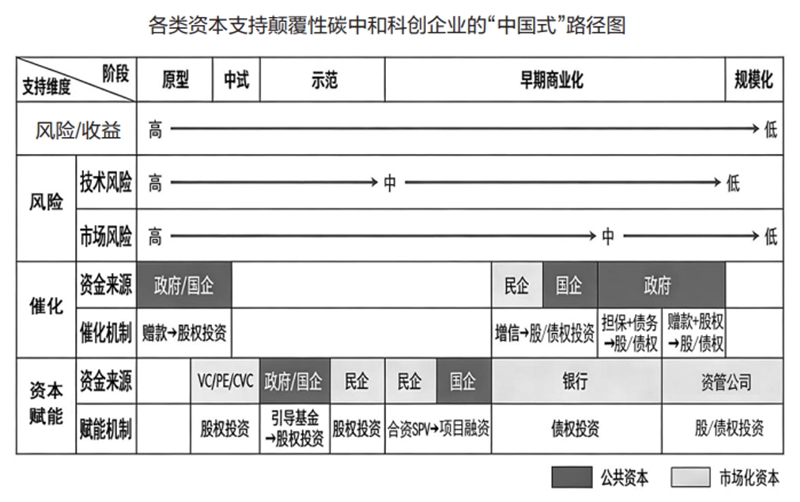
颠覆性碳中和技术创新:利用公共资本撬动市场化资本
Jin Rong Shi Bao· 2025-12-15 05:17
Core Viewpoint - The necessity of developing disruptive carbon-neutral technologies is emphasized as high-carbon industries in China, such as electricity, steel, cement, and aluminum smelting, have not yet achieved carbon neutrality through traditional methods, highlighting the need for significant investment and innovative approaches to reduce carbon emissions to near-zero levels [1][2]. Summary by Sections Disruptive Carbon Neutral Technology Investment - Approximately half of carbon-neutral technologies have not reached commercial scale, particularly in "hard tech" and "deep tech," which rely heavily on foundational scientific research [2]. - High-carbon industries face significant market investment challenges due to the high capital intensity and long investment cycles required for scaling up carbon-neutral technologies [2][3]. Public Capital to Leverage Market Capital - Public capital is essential for supporting the development of disruptive carbon-neutral technologies due to their dual positive externalities of technological spillover and carbon reduction [4]. - The key to attracting market capital lies in reducing perceived risks through public funding, which can help address both technological and market risks faced by investors [4][5]. Catalytic Mechanisms - Public capital can intervene in the early stages of technology development by providing catalytic funding to improve the risk-reward profile for investors, thus attracting more market capital [5]. - In early commercialization, public capital can enhance the investment appeal by offering guarantees and hybrid funding structures to mitigate the low returns associated with carbon-neutral technologies [5][6]. Capital Empowerment - Public capital can collaborate with market capital in the demonstration and early commercialization phases to fill funding gaps and empower the scaling of innovative technologies [6]. - Establishing venture capital funds focused on carbon-neutral technologies can signal to the market and attract additional investments [6]. Case Studies - Several international and domestic cases illustrate how public capital has successfully attracted market capital in the field of disruptive carbon-neutral technologies, with specific mechanisms and support structures detailed [7][9]. - Examples include Boston Metal and Sublime Systems, which received public grants to validate and scale their technologies, leading to successful market capital participation [10]. - Elysis and Zhongchu Guoneng are highlighted as cases where public capital effectively partnered with market capital to accelerate technology development [11]. Future Outlook - To further promote the innovation of disruptive carbon-neutral technologies, public capital should focus on incubating tech companies, establishing supportive financing policies, and exploring financing mechanisms that align with China's unique context [13][14][15].
Stock markets open lower on foreign fund outflows, weak global trends
BusinessLine· 2025-12-15 04:43
Market Overview - Equity benchmark indices Sensex and Nifty declined in early trade due to a weak trend in global markets and persistent foreign fund outflows, with Sensex down 384.39 points to 84,883.27 and Nifty down 122.9 points to 25,924.05 [1] - Foreign Institutional Investors (FIIs) offloaded equities worth ₹1,114.22 crore, while Domestic Institutional Investors (DIIs) bought stocks worth ₹3,868.94 crore [4] Sector Performance - Major laggards from Sensex firms included Mahindra & Mahindra, Bharti Airtel, Trent, NTPC, Bajaj Finserv, and Power Grid [2] - Gainers included Asian Paints, Hindustan Unilever, UltraTech Cement, Bharat Electronics, and Tata Steel [2] Global Market Influence - Asian markets are trading lower, led by declines in Japan and South Korea, as investors await key economic data releases from China and the US [3] - US markets ended lower on Friday, contributing to the cautious sentiment in Asian markets [3] Currency and Commodities - The Indian Rupee depreciated 9 paise to an all-time low of 90.58 against the US dollar [5] - Brent crude oil prices increased by 0.52% to $61.43 per barrel [5]

建筑材料行业跟踪周报:震荡期红利资产或受青睐-20251215
Soochow Securities· 2025-12-15 02:58
Investment Rating - The report maintains an "Accumulate" rating for the building materials industry [1] Core Views - The building materials sector is expected to attract attention during the current volatile period, with a focus on high-yield assets and companies such as Rabbit Baby, Shangfeng Cement, and Op Lighting [4][5] - The report highlights the importance of domestic demand chains and anticipates a rebound in the fiberglass and electronic fabric markets in 2026 [3] Summary by Sections 1. Bulk Building Materials Fundamentals and High-Frequency Data - **Cement**: The national average price for high-standard cement is 354.8 CNY/ton, up by 0.2 CNY/ton week-on-week, but down by 69.2 CNY/ton year-on-year. The average cement inventory ratio is 64.8%, down by 1.6 percentage points week-on-week, and the average daily shipment rate is 43.9%, down by 0.7 percentage points week-on-week [4][18][20] - **Glass**: The average price for float glass is 1165.1 CNY/ton, up by 1.2 CNY/ton week-on-week, but down by 247.0 CNY/ton year-on-year. The inventory of float glass stands at 5542 million heavy boxes, down by 133 million heavy boxes week-on-week [4][42][45] - **Fiberglass**: The market price for domestic alkali-free roving remains stable, with mainstream transaction prices around 3250-3700 CNY/ton. The effective production capacity for fiberglass is expected to reach 759.2 million tons in 2026, a year-on-year increase of 6.9% [4][8] 2. Industry Dynamics Tracking - The report notes that the cement industry is undergoing supply-side adjustments, with a focus on eliminating outdated capacity. The expected net capacity reduction is 40.49 million tons, equivalent to 6.8% of the national clinker design capacity by the end of 2024 [4][8] - The glass industry is experiencing an increase in the loss rate, prompting the closure of older production lines. The report anticipates a rebound in glass prices in the first half of 2026 due to supply contraction [4][8] 3. Weekly Market Review and Sector Valuation - The building materials sector saw a decline of 1.41% this week, underperforming the CSI 300 index, which fell by 0.08% [4] - The report emphasizes the need for strategic attention on companies with strong fundamentals and growth potential, particularly in the context of ongoing economic adjustments and international trade dynamics [4][5]
中国银河证券:反内卷+扩内需重塑格局 出海共振引领估值修复
智通财经网· 2025-12-15 02:00
消费、投资共同发力扩内需,消费升级推动建材高品质转型 消费端,中央经济工作会议提到,2026年要"深入实施提振消费专项行动,清理消费领域不合理限制措 施",与十五五规划建议稿中提到的"清理汽车、住房等消费不合理"相呼应,预计26年各地区居民住房 限购政策将逐步放开,家装市场回暖预期增强,有望带动消费建材需求恢复。投资端,中央经济工作会 议提到"推动投资止跌回稳,优化实施'两重'项目",与十五五规划建议稿对"扩大有效投资"的描述相契 合,水泥等传统建材需求与基建投资高度相关,"两重"项目建设将是缓解地产新开工疲软的主要对冲力 量,预计明年"两重"项目将托底传统建材市场需求。与此同时,近年我国居民消费水平不断提高,中央 经济工作会议提到"高质量推进城市更新"及"有序推动'好房子'建设",在地产进入存量时代背景下,城 市更新及高品质建设成为建材市场重要抓手,一方面,随着明年城市更新工作的推进与落地,城市基础 设施建设及城市综合管廊建设等相关的建材产品需求有望加速释放;另一方面,消费升级趋势下,具备 品牌属性及品质优势的龙头企业有望受益。 深化推进"反内卷",传统建材供需格局预期向好 中央经济工作会议提到"制定全国统 ...

壮大新动能,深入反内卷 - 中央经济工作会议学习体会
2025-12-15 01:55
Summary of Key Points from the Conference Call Industry or Company Involved - The conference call primarily discusses the macroeconomic policies and structural adjustments in China, focusing on the implications for various industries, particularly emerging sectors like technology and AI. Core Points and Arguments 1. **Macroeconomic Policy Direction**: The central economic work conference indicates a shift towards structural adjustments in macroeconomic policy, maintaining a fiscal deficit rate of 4% and a slight increase in the broad deficit, emphasizing service consumption [5][1][2]. 2. **Balance of New and Old Drivers**: The conference highlights the importance of balancing new and old economic drivers, with a focus on accelerating the transition between industries, expected to complete between 2027 and 2031 [2][3]. 3. **Structural Bull Market in Capital Markets**: The capital market is expected to continue a structural bull market, with technology innovation leading the A-share market. Investors are advised to focus on technology sectors and emerging industries to seize structural opportunities [6][1][3]. 4. **Debt Market Outlook**: The bond market may face a steepening yield curve, with long-term bonds under pressure. Attention should be paid to nominal GDP and price factors to reflect real supply-demand relationships [7][1][5]. 5. **Support for Emerging Industries**: The 2025 policy direction emphasizes active fiscal policies and support for domestic demand, technology innovation, and small and medium enterprises, with a focus on new quality productivity [8][1][3]. 6. **Historical Performance of Emerging Industries**: Emerging industries have historically performed well in the A-share market, with significant market capitalization growth driven by policy support during various economic waves [9][10]. 7. **Focus on AI and High-End Manufacturing**: Key emerging sectors to watch include AI applications, high-end manufacturing, and renewable energy, which are expected to show signs of price recovery and profit improvement [11][1][3]. 8. **Impact of Anti-Overwork Policies**: The anti-overwork policies are expected to significantly influence future economic performance and asset allocation, with a potential shift in PPI expected by mid-2026 [12][1][3]. 9. **Investment Opportunities in A-Share Market**: The current A-share market is characterized by a structural bull market, with new production industries like AI and high-end manufacturing presenting investment opportunities [13][1][3]. Other Important but Possibly Overlooked Content 1. **Challenges in Capacity Reduction**: The process of capacity reduction faces challenges such as insufficient downstream demand and inconsistent enforcement of administrative standards across regions [18][1][3]. 2. **Future Development of Anti-Overwork Policies**: The anti-overwork policy is seen as a critical economic strategy, with potential for further administrative intervention if current measures do not yield desired results [19][1][3]. 3. **Industry Self-Regulation in the Photovoltaic Sector**: A self-regulation agreement in the photovoltaic industry quickly collapsed due to lack of enforcement power, highlighting the challenges of maintaining industry standards [14][1][3].
中国宏观周报(2025年12月第2周):出口集装箱运价回升-20251215
Ping An Securities· 2025-12-15 01:49
Industrial Sector - The production of raw materials has shown seasonal adjustments, with steel and building materials output declining this week[2] - The operating rate of petroleum asphalt and cement clinker has decreased, while the float glass operating rate has increased[2] - The operating rates for polyester in textiles and weaving have weakened seasonally, while the operating rates for full steel and semi-steel tires in the automotive sector have increased[2] Real Estate - New home sales in 30 major cities decreased by 34.7% year-on-year as of December 12, with a slight improvement of 1.0 percentage point compared to last week[2] - The second-hand housing listing price index fell by 0.60% month-on-month as of December 1, indicating a narrowing decline[2] Domestic Demand - Movie box office revenue remains high, with an average daily income of 171.45 million yuan, up 192.3% year-on-year[2] - Retail sales of major home appliances decreased by 22.5% year-on-year as of December 5, but improved by 0.6 percentage points compared to the previous value[2] - The number of domestic flights increased by 2.1% year-on-year, while the Baidu migration index rose by 17.2% year-on-year[2] External Demand - The export container freight index increased by 0.3% week-on-week, with Shanghai and Ningbo's export container freight rates rising more rapidly[2] - Port cargo throughput grew by 2.9% year-on-year, while container throughput increased by 9.5% year-on-year[2] Price Trends - The South China industrial product index fell by 2.4%, with black raw material prices down by 2.6% and non-ferrous metal prices up by 0.5%[2] - The wholesale price index for agricultural products rose by 1.0% week-on-week, continuing to outperform the same period last year[2]
上峰水泥董事长俞锋:传统主业筑基 打造产业投资“第二曲线”
Zhong Guo Zheng Quan Bao· 2025-12-14 22:23
Core Viewpoint - The company has achieved industry-leading ROE for five consecutive years through operational efficiency rather than scale expansion, positioning its cement business as a cash flow fortress while strategically investing in new sectors like semiconductors [2][3][4]. Group 1: Main Business Foundation - The company has established a competitive advantage in the mature cement industry, achieving an average ROE of 17.83% over the past five years and maintaining high profit margins despite not being the largest player [3][4]. - The company controls over 900 million tons of limestone resources, ensuring cost efficiency and a robust national layout that enhances risk resilience [4]. Group 2: Strategic Transition - The company has initiated a systematic investment in the semiconductor industry since 2020, with over 2 billion yuan invested across nearly 30 projects, including 20 semiconductor companies [6][7]. - The investment strategy focuses on creating a chain ecosystem around leading enterprises, covering critical areas such as chip design, manufacturing, and materials [6][7]. Group 3: Future Growth Blueprint - The company aims to develop a synergistic model comprising traditional building materials, equity investment, and new material growth, with a target of over 3 billion yuan in equity assets [8]. - The governance structure, featuring a mix of private and state-owned stakeholders, is seen as a key factor in enhancing operational efficiency and supporting both traditional and emerging industry investments [8].
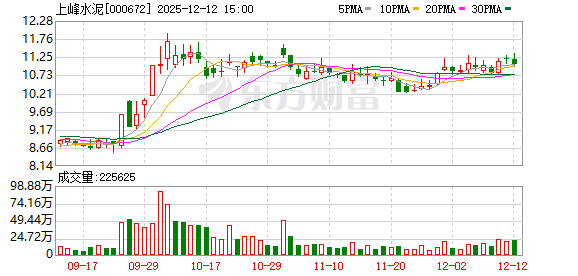
上峰水泥董事长俞锋: 传统主业筑基 打造产业投资“第二曲线”
Zhong Guo Zheng Quan Bao· 2025-12-14 21:29
Core Insights - The core viewpoint of the article emphasizes that Shangfeng Cement (000672) has achieved industry-leading ROE for five consecutive years, not through scale expansion but via a profound efficiency revolution [1][2]. Group 1: Main Business Foundation - Shangfeng Cement has established a competitive advantage in the mature cement industry, achieving an average ROE of 17.83% over the past five years and maintaining high sales gross margins [2][3]. - The company has implemented refined operational measures that have resulted in superior profitability and cash generation compared to peers, with key metrics like net profit margin and per capita operating profit consistently ranking in the top three of the industry [2]. Group 2: Strategic Transformation - The company views its cement business as a "cash flow fortress," focusing on optimizing resource allocation and enhancing product structure rather than blind expansion [3][4]. - In 2024, the company is projected to generate a net operating cash flow of 1.039 billion yuan, with a year-on-year growth of 23.99% in the first half of 2025, ensuring over 1 billion yuan in annual cash flow [3]. Group 3: Investment in Semiconductor Industry - Shangfeng Cement has made significant investments in the semiconductor sector, with over 2 billion yuan invested in nearly 30 projects, including 20 semiconductor companies [4][5]. - The company aims to create a chain ecosystem in the semiconductor field, covering key areas such as chip design, manufacturing, and packaging, with a focus on long-term strategic penetration rather than financial speculation [4][6]. Group 4: Future Growth Strategy - The company is restructuring its internal governance and strategic planning to create a "second growth curve," aiming for a collaborative development model involving traditional building materials, equity investment, and new material growth [7]. - The strategic plan includes continuing to enhance efficiency in the cement business while aiming to reserve over 3 billion yuan in equity assets for investment, with a goal to develop new growth businesses in semiconductor materials within five years [7].
传统主业筑基 打造产业投资“第二曲线”
Zhong Guo Zheng Quan Bao· 2025-12-14 20:19
Core Insights - The core viewpoint of the article emphasizes that Shangfeng Cement has achieved industry-leading ROE for five consecutive years through operational efficiency rather than scale expansion, positioning itself as a "cash cow" in the cement industry while strategically investing in new sectors like semiconductors [1][2]. Group 1: Main Business Foundation - Shangfeng Cement has established a competitive advantage in the mature cement industry, achieving an average ROE of 17.83% over the past five years and maintaining high profitability metrics despite not being the largest player [1][2]. - The company controls over 900 million tons of limestone resources, ensuring cost management and sustainability for 30 years, with a national layout that enhances risk resilience [2]. - The company has optimized resource allocation and product structure to ensure over 1 billion yuan in annual operating cash flow, which is crucial for strategic transformation [2]. Group 2: Transition to Semiconductor Industry - Since 2020, Shangfeng Cement has systematically invested in the semiconductor industry, with over 2 billion yuan allocated to nearly 30 projects, including 20 semiconductor companies [3]. - The company aims to create a chain ecosystem in the semiconductor sector, covering key areas such as chip design, manufacturing, and testing, with significant projects already yielding results [3][4]. - Recent investments include Jiangsu Xinhua Semiconductor, marking a shift from financial investment to deeper industrial collaboration in the core materials sector [4]. Group 3: Future Growth Strategy - The company is restructuring its governance and strategic planning to drive growth through a "three-horse carriage" model, focusing on cement, equity investment, and new material businesses [5]. - The strategic goal includes enhancing the cement business, accumulating over 3 billion yuan in equity assets, and launching new growth businesses in semiconductor materials within five years [5]. - Shangfeng Cement's transformation from an efficiency champion to an industrial enabler serves as a model for other companies seeking high-quality transitions between traditional and future industries [5].