
国际贸易

Search documents
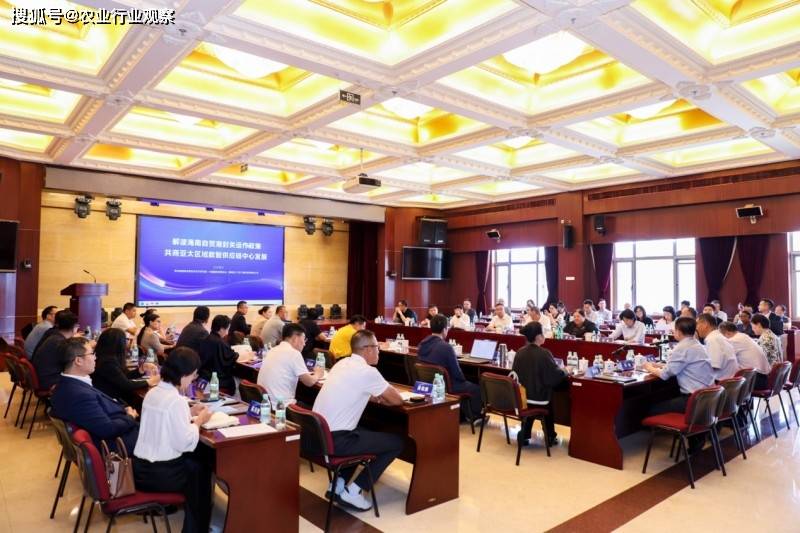
聚焦海南自贸区发展,共探数智供应链与可信体系建设
Sou Hu Cai Jing· 2025-09-15 10:23
Core Viewpoint - The seminar focused on the operational policies of Hainan Free Trade Port and the development of a digital supply chain center in the Asia-Pacific region, emphasizing the integration of digital technology and trade facilitation [1][3][13] Group 1: Hainan Free Trade Port - Hainan Free Trade Port is positioned as a frontier for China's institutional opening, aiming to enhance trade facilitation and promote regional digital economy connectivity [3] - The core value of Hainan Free Trade Port lies in integrating dispersed policies into an efficient collaborative system, significantly reducing cross-border operational costs for SMEs through digital supply chain solutions [5] - The phased implementation of the closure operation is expected to reach a certain scale by early 2025 and be fully mature by 2035, with private enterprises holding a 63.7% share in foreign trade [8] Group 2: Digital Supply Chain Development - The establishment of a credible trade system and full-chain traceability technology is crucial for enhancing the international reputation and bargaining power of agricultural products [8] - Recommendations include strengthening policy support, aligning with high-standard international rules like CPTPP and RCEP, and developing a regional logistics circle [6] - The goal is to create a transparent, reliable, and compliant credible mechanism supported by technologies such as blockchain and big data, enhancing supply chain resilience and efficiency [9] Group 3: Future Prospects - The construction of a competitive digital supply chain platform is essential for enabling two-way trade and creating a global trade network [13] - The successful hosting of the seminar is seen as a significant step towards outlining a grand blueprint for the future development of Hainan Free Trade Port [13]

2025年服贸会国际参展商:收获颇丰 明年再见
Yang Shi Xin Wen· 2025-09-14 06:44
Core Insights - The 2025 Service Trade Fair in Beijing has provided international exhibitors with valuable customer feedback and business collaboration opportunities, leading to a positive experience and anticipation for future participation [1][2]. Group 1: Event Overview - The Service Trade Fair has been described as a high-level international exhibition, with exhibitors expressing satisfaction with the reception of their products [1]. - The event has facilitated significant networking opportunities, allowing exhibitors to engage in fruitful discussions with potential clients [1]. Group 2: Company Experience - The Slovak international trade exhibitor, Krix, established a company in Hainan, leveraging China's policy advantages and the popularity of Chinese products in Slovakia [1]. - Krix emphasized that this was his first participation in the Service Trade Fair, and he found it to be an exceptional opportunity for immediate feedback from potential customers [1][2]. - Krix expressed a strong intention to return for the next year's event, highlighting the fair as the best platform to showcase Slovak products [2].
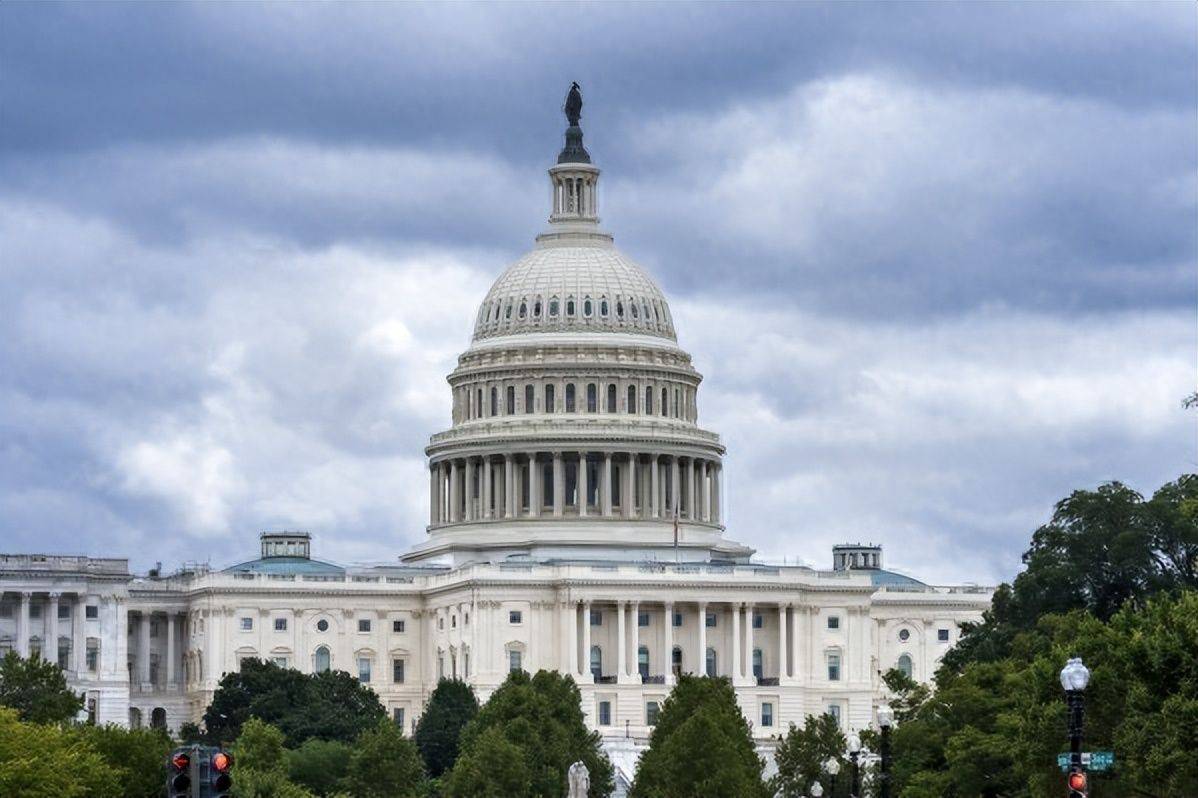
美国法院裁定,特朗普破防,2100亿美元还没捂热,先吐出去一半
Sou Hu Cai Jing· 2025-09-14 04:43
Core Viewpoint - The recent ruling by the U.S. Court of Appeals against the global tariff policy implemented by the Trump administration poses significant challenges, potentially leading to the return of over $1 trillion in tariffs already paid by U.S. companies [1][4]. Group 1: Legal and Economic Implications - The court ruled that Trump's tariff policy, justified by a national emergency, lacks legal basis and requires substantial evidence by October 14, or the tariffs will be terminated [3]. - If the Supreme Court does not rule in favor of the Trump administration, the U.S. government may have to refund at least half of the $210 billion in tariffs collected, severely impacting the already fragile fiscal situation [1][4]. - The potential delay in the Supreme Court's decision could result in U.S. companies facing up to $1 trillion in tax burdens, leading to significant economic turmoil [4]. Group 2: Trade Negotiation Consequences - The loss of tariff revenue could weaken the U.S. government's position in trade negotiations with the EU, Japan, and other economies, as most agreements remain non-binding [5]. - Japan and the EU may take advantage of the situation to renegotiate trade terms, which could further complicate the Trump administration's trade strategy [6]. - Conversely, India may benefit from the disruption, as it seeks to strengthen ties with China and Russia while negotiating more favorable terms with the U.S. [6]. Group 3: Broader Trade Policy Issues - The tariff dispute highlights deeper issues within U.S. trade policy, revealing flaws in the Trump administration's trade strategy that may ultimately harm the U.S. economy [8]. - The unilateral trade policies are increasingly facing challenges in the context of a reshaping global economic landscape [8].
云南部署五大专项行动 拓展中老铁路“黄金大通道”辐射效应
Zhong Guo Xin Wen Wang· 2025-09-14 03:29
Core Viewpoint - The Yunnan Provincial Government has launched a three-year action plan (2025-2027) to enhance the development along the China-Laos Railway, aiming to leverage its role as a "Golden Passage" for regional economic growth and cultural exchange [1] Summary by Sections Action Plan Overview - The action plan outlines five major initiatives to be implemented over the next three years, focusing on enhancing the development impact of the China-Laos Railway [1] - By 2027, the plan targets a cumulative freight volume of over 110 million tons, with aspirations to exceed 120 million tons, and a cumulative passenger volume of over 100 million [1] Key Initiatives - **Industrial Quality Improvement**: This initiative aims to optimize industrial layout, create competitive industrial clusters, deepen cross-border industrial cooperation, and enhance foreign trade quality, particularly in sectors like non-ferrous metals, chemicals, and highland specialty agriculture [2] - **Strengthening Park Capabilities**: Focused on enhancing the capacity of industrial parks, accelerating collaborative development, and increasing investment attraction to improve infrastructure and operational capabilities [2] - **Infrastructure Shortcomings**: This initiative will address infrastructure gaps by improving transport networks, expanding port capabilities, and developing logistics hubs, including smart customs and border inspection systems [2] - **Soft and Heart Connectivity**: Emphasizes aligning standards, deepening cultural cooperation, and balancing development with security, while promoting Chinese technology abroad and supporting neighboring countries in various fields [2] - **Freight Service Capability Enhancement**: Aims to improve freight service quality and efficiency at railway ports, establishing a unified, professional, and market-oriented operational platform for the China-Laos Railway [2]
海南创新驱动产业提质
Jing Ji Ri Bao· 2025-09-14 02:04
Group 1 - Hainan Province is focusing on tourism, modern services, high-tech industries, and tropical agriculture as its leading sectors, leveraging resource endowments and free trade port policies to drive innovation and industrial transformation [1] - In the first seven months of this year, Hainan's industrial added value above designated size grew by 10.4% year-on-year, while service import and export totaled 40.338 billion yuan, marking a 23.9% increase [1] - The Wenchang International Aerospace City aims to cultivate an aerospace industry cluster, targeting a revenue of 10 billion yuan by 2027, with plans for significant projects like a space-themed park [1] Group 2 - Sanya has achieved several "firsts" in various fields, including the province's first S fund and the first offshore international trade business, indicating a leap in industrial development [2] - Hainan's open policy framework and competitive business environment are highlighted as key factors for attracting investment and fostering opportunities [2]
立足资源禀赋 抢抓政策机遇 海南创新驱动产业提质
Jing Ji Ri Bao· 2025-09-13 22:09
Group 1 - Hainan Province is focusing on tourism, modern services, high-tech industries, and tropical agriculture as its leading sectors, leveraging its resource endowment and free trade port policies to drive innovation and structural transformation [1] - In the first seven months of this year, Hainan's industrial added value above designated size increased by 10.4% year-on-year, while the total service import and export value reached 40.338 billion yuan, a year-on-year growth of 23.9% [1] - The Wenchang International Aerospace City aims to cultivate an aerospace industry cluster, targeting a revenue of 10 billion yuan by 2027, with plans for significant projects like an aerospace theme park [1] Group 2 - Sanya has achieved several "firsts" in innovative offshore international trade and carbon trading, indicating a significant upgrade in industrial development through institutional innovation [2] - The Secretary of the Hainan Provincial Committee emphasized that Hainan's open policy framework and competitive business environment present substantial opportunities for investment [2]
大兴区国际商会正式揭牌,搭建国际经贸交流平台
Xin Jing Bao· 2025-09-13 10:50
Group 1 - The Daxing International Economic and Trade Cooperation Exchange Conference was held, resulting in the signing of contracts worth approximately 2.6 billion yuan, including six foreign investment projects totaling about 180 million USD [1] - The establishment of the Daxing International Chamber of Commerce aims to enhance connections between government and enterprises, facilitate international communication, and support businesses in expanding both domestically and internationally [1] - The China-Latin America Youth Innovation and Entrepreneurship Service Base will provide comprehensive support for young entrepreneurs, including free registration, office space, accommodation, and training services, thereby lowering the barriers to entrepreneurship [1] Group 2 - Daxing District has developed a new industrial structure termed "6+5+3," which includes six major industrial functional zones, five characteristic industrial clusters, and three new development areas, positioning itself as a gateway for enterprises and talent to the world [2]
枣庄汉特国际贸易有限公司成立 注册资本10万人民币
Sou Hu Cai Jing· 2025-09-13 03:46
Core Viewpoint - Recently, Zaozhuang Hante International Trade Co., Ltd. was established with a registered capital of 100,000 RMB, indicating a focus on various trade and service sectors [1] Company Overview - The legal representative of the company is Zhao Chunguang [1] - The registered capital is 100,000 RMB [1] Business Scope - The company engages in general projects including: - Import and export of goods - Import and export agency services - Supply chain management services - Technology import and export - Conference and exhibition services - Research and development of mechanical equipment - Installation services for general mechanical equipment - Leasing services (excluding licensed leasing services) - Park management services - Non-residential real estate leasing - Housing leasing - Digital cultural creative content application services - Business training (excluding licensed educational training and vocational skills training) - Enterprise management and consulting - Information consulting services (excluding licensed information consulting services) - Information technology consulting services - Network technology services - Technical services, development, consulting, exchange, transfer, and promotion - Corporate image planning - Marketing planning - Consulting planning services - Software development - Educational consulting services (excluding licensed educational training activities) - Graphic design - Internet security services - Sales of daily necessities, furniture parts, clothing, textiles, shoes, arts and crafts, office supplies, cosmetics, and more - Domestic trade agency and international cargo transportation agency - Internet sales (excluding sales of licensed goods) - Retail of auto parts, labor protection products, ship leasing, tire sales, ship sales, hardware products, construction machinery, and decorative materials [1]
中国连续16年成为东盟第一大贸易伙伴
Ren Min Ri Bao· 2025-09-12 19:49
Core Insights - The 22nd China-ASEAN Expo and the China-ASEAN Business and Investment Summit will be held in Nanning, Guangxi from September 17 to 21, focusing on economic and trade cooperation between China and ASEAN countries [1] Trade Cooperation - China has maintained its position as ASEAN's largest trading partner for 16 consecutive years, while ASEAN has been China's largest trading partner for the past 5 years [2] - In 2024, bilateral trade with five ASEAN countries (Vietnam, Malaysia, Indonesia, Thailand, Singapore) is expected to exceed $100 billion, with trade with Vietnam and Malaysia already surpassing $200 billion [2] - From January to July this year, trade between China and ASEAN reached $597 billion, a year-on-year increase of 8.2%, accounting for 16.7% of China's total foreign trade during the same period [2] Investment Cooperation - By July 2025, cumulative bilateral investment between China and ASEAN is projected to exceed $450 billion, with Chinese enterprises completing engineering contracts in ASEAN worth $480 billion [2] - There is a significant focus on expanding cooperation in emerging fields such as digital economy, e-commerce, and green development [2] Industrial Integration - In response to unilateralism and protectionism affecting global supply chains, China and ASEAN are committed to multilateral cooperation to maintain the stability of regional supply chains [2] - There is closer collaboration in upstream and downstream supply chains, with several parks and connectivity projects progressing steadily [2] Regional Economic Integration - The negotiations for the China-ASEAN Free Trade Area 3.0 have been completed, establishing a comprehensive cooperation framework that includes both "hard connectivity" in digital infrastructure and "soft connectivity" in rules and standards [3] - The implementation of the Regional Comprehensive Economic Partnership (RCEP) is enhancing the level of trade and investment liberalization and facilitation in the region [3] Expo Highlights - The upcoming expo will emphasize economic cooperation and artificial intelligence, featuring high levels of AI, business, innovation, and investment [3] - Over 3,500 enterprises have been organized to participate in 99 exhibition projects in ASEAN, with a total exhibition area of nearly 44,000 square meters [3] - Domestic AI leading companies will showcase their latest products and solutions, collaborating with international partners in the fields of smart cities, smart manufacturing, and smart agriculture [3] Commitment to Trade Development - China and ASEAN's cooperation in trade has achieved remarkable results, becoming a highlight in global trade development [4] - China is committed to advancing high-level opening-up and enhancing the quality and efficiency of China-ASEAN trade [4]
WTO总干事证实美国平均关税18.4% 全球贸易面临压力测试|全球贸易观察
Di Yi Cai Jing· 2025-09-12 12:12
Core Viewpoint - The WTO is facing unprecedented challenges due to unilateral actions by the U.S., leading to concerns about the future of the global trade system, with WTO Director-General Ngozi Okonjo-Iweala emphasizing the need for reform and resilience in the current trade framework [1][2]. Group 1: Global Trade Dynamics - The average U.S. tariff rate has increased from 2.4% at the beginning of the year to 18.4% following recent agreements [1]. - Approximately 72% of global goods trade is still operating under basic "Most-Favored-Nation" tariff conditions, a decrease from 80% at the start of the year [2]. - Despite the challenges, global goods trade is projected to grow by 0.9% this year, an improvement from earlier predictions of a 0.2% contraction [1]. Group 2: Economic Outlook - The U.S. is experiencing economic risks, with the average actual tariff rate reaching 17.4%, the highest since 1935 [3]. - Economic growth in the U.S. is expected to slow down, with annualized growth rates projected to drop from over 3% in Q2 to 1.2%-1.3% in Q3 and Q4 [3]. - The potential for further U.S. dollar depreciation exists, which could lead to prolonged high interest rates from the Federal Reserve [4]. Group 3: Trade Policy Implications - The new tariff policies are anticipated to reduce the openness of the U.S. economy, with a projected 1.7 percentage point decrease in the share of goods exports in GDP by 2030 [4]. - A decline in economic openness is generally associated with reduced productivity, raising concerns about the long-term impact of protectionist policies on global economic growth [4].