
资本市场

Search documents
中美元首通话;北京、上海同日宣布调整住房公积金缴存基数上下限|每周金融评论(2025.9.15-2025.9.21)
清华金融评论· 2025-09-22 11:08
Core Viewpoint - The article discusses recent developments in China-US relations, regulatory changes in the banking sector, adjustments in housing policies, and economic measures aimed at supporting families and the real estate market, highlighting the importance of cooperation between the two largest economies and the implications of domestic policies on economic stability and growth [4][6][8][12]. Group 1: China-US Relations - On September 19, Chinese President Xi Jinping and US President Trump held a phone call to discuss the current state of China-US relations, emphasizing the importance of cooperation for mutual prosperity and global stability [4]. - This call followed four rounds of economic talks, indicating a commitment to addressing outstanding issues and fostering a constructive relationship [5]. Group 2: Banking Sector Regulation - The State Council, led by Premier Li Qiang, approved the draft revision of the "Banking Supervision Law of the People's Republic of China," aimed at enhancing the regulatory framework for the banking sector [6]. - The revision is intended to address market irregularities and financial risks, ensuring the healthy development of the banking industry [6]. Group 3: Housing Policies - On September 18, new regulations for housing provident fund contributions were announced in Beijing and Shanghai, adjusting the contribution limits to support housing affordability [9][11]. - The adjustments include a maximum contribution base of 35,811 yuan in Beijing and 37,302 yuan in Shanghai, with minimums set at 2,540 yuan and 2,690 yuan respectively [9]. Group 4: Economic Measures - The introduction of a new childcare subsidy management regulation aims to streamline the application process and enhance support for families, indicating a shift towards a more structured national policy [7][8]. - The Federal Reserve's decision to lower interest rates by 25 basis points to a range of 4.00%-4.25% is seen as a response to economic concerns, potentially benefiting the Chinese market through increased foreign investment [12]. Group 5: Market Developments - Four A-share companies were flagged for financial misconduct, reflecting a stringent regulatory stance against fraud in the capital markets [13]. - The latest Loan Prime Rate (LPR) remains unchanged at 3.0% for one year and 3.5% for five years, indicating stability in lending rates amidst market expectations for potential future adjustments [14].



吴清:进一步完善发行上市、并购重组等制度安排
IPO日报· 2025-09-22 10:47
Core Viewpoint - The article emphasizes the achievements and future responsibilities of China's capital market development during the "14th Five-Year Plan" period, highlighting the need for continuous innovation and risk prevention in capital market construction [3]. Group 1: Achievements in Capital Market - Over the past five years, significant progress has been made in the capital market, with the A-share market's resilience and risk resistance notably enhanced, as evidenced by the Shanghai Composite Index's annualized volatility decreasing by 2.8 percentage points to 15.9% [3]. - The market capitalization of the technology sector now accounts for over 25% of the A-share market, with the number of technology companies in the top 50 by market capitalization increasing from 18 to 24 since the end of the "13th Five-Year Plan" [3]. Group 2: Regulatory Improvements - The transition from pilot to full implementation of the stock issuance registration system has been achieved, with various measures introduced to optimize the listing, merger, and investment processes, including the "Six Merger Rules" which have supported 230 major asset restructurings [4]. - The quality and investment value of listed companies have been enhanced, with a total of 10.6 trillion yuan distributed to investors through dividends and buybacks over the past five years, representing an increase of over 80% compared to the "13th Five-Year Plan" [5]. Group 3: Future Directions - The focus will be on improving the adaptability and inclusiveness of the capital market system, with reforms in the Sci-Tech Innovation Board and Growth Enterprise Market aimed at better supporting innovative enterprises [4]. - The next steps will involve deepening comprehensive reforms in investment and financing, enhancing the adaptability and inclusiveness of foundational systems, market functions, and regulatory enforcement to promote efficient resource allocation [6].
证监会:塑造既“放得活”又“管得住”的资本市场秩序
Sou Hu Cai Jing· 2025-09-22 10:44
Core Viewpoint - The China Securities Regulatory Commission (CSRC) aims to enhance the adaptability and inclusiveness of the capital market to promote efficient resource allocation and support high-quality enterprises in achieving growth and value realization [1][2]. Group 1: Market System Adaptability - The CSRC plans to enhance the multi-tiered market system's adaptability by reforming the Sci-Tech Innovation Board and the Growth Enterprise Market, focusing on issuance, listing, and mergers and acquisitions to better support innovative enterprises across various industries and stages [1]. - There is a need to further improve institutional inclusiveness to facilitate the growth of quality enterprises through the capital market [1]. Group 2: Long-term Capital Stability - The CSRC emphasizes the role of long-term capital as a stabilizer, aiming to strengthen long-cycle assessments and improve cross-border investment convenience to attract more global capital to invest in China [1]. - The goal is to enable more global capital to share in China's growth [1]. Group 3: Quality and Value of Listed Companies - Continuous improvement of the quality and investment value of listed companies is a priority, with support for companies to focus on their core businesses and enhance their professionalism [1]. - The CSRC aims to strengthen the responsibilities of key stakeholders, including directors, executives, and controlling shareholders, while improving information disclosure quality [1]. - There is a focus on cultivating a culture that respects and rewards investors, which is essential for stabilizing and invigorating the market [1]. Group 4: Regulatory Precision and Effectiveness - The CSRC intends to enhance the precision and effectiveness of regulation by strictly enforcing laws and focusing on significant issues, ensuring that the market is both dynamic and well-regulated [2]. - The goal is to create a capital market order that promotes high-quality development while maintaining effective oversight [2].
五年砥砺奋进,资本市场实现新跨越!证监会主席吴清最新发声
2 1 Shi Ji Jing Ji Bao Dao· 2025-09-22 10:32
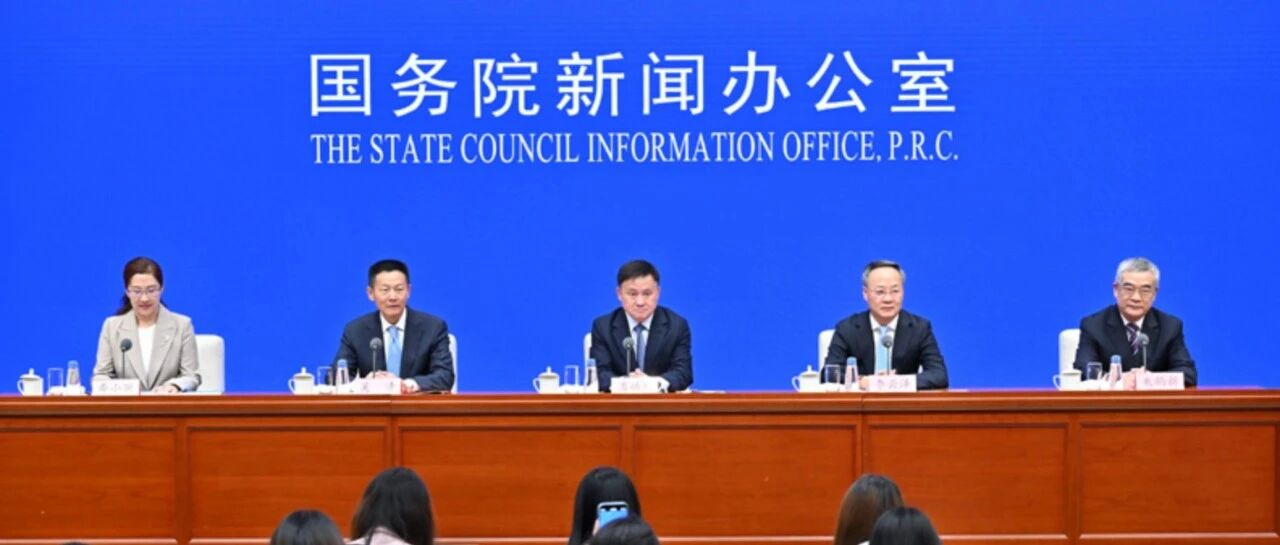
21世纪经济报道 记者 崔文静 实习生 张长荣 北京报道 9月22日下午,国新办举办"介绍'十四五'时期金融业发展成就"新闻发布会,证监会主席吴清做客发布会并演讲。 新"国九条"发布,配套规则持续完善,基础制度全方位夯实。 亮点二:多层次资本市场体系更趋完善 科创板、创业板改革深化,北交所成功设立并高效运行; A股总市值突破100万亿元,结构合理、功能互补的生态基本形成。 亮点三:投融资相协调的市场功能不断健全 近五年股债融资总额57.5万亿元,直接融资比重稳步提升,较"十三五"末提高2.8个百分点; A股科技企业市值占比超25%,上市公司通过分红回购向投资者派发的"红包"合计达10.6万亿元,较"十三五"增长超八成,相当于同期股票IPO和再融资金额 的2.07倍。 亮点四:协同发力的稳市机制逐步完善 2025年是"十四五"规划收官之年,五年以来,资本市场砥砺前行,顶住压力,稳中提质,交出一份亮眼答卷! 亮点一:"四梁八柱"的资本市场法律制度体系基本建成 新证券法落地实施,期货和衍生品法、私募投资基金监管条例等重磅法规出台; 上证综指年化波动率为15.9%,较"十三五"期间下降2.8个百分点; 协同稳市机制有 ...
吴清最新发声
中国基金报· 2025-09-22 10:24
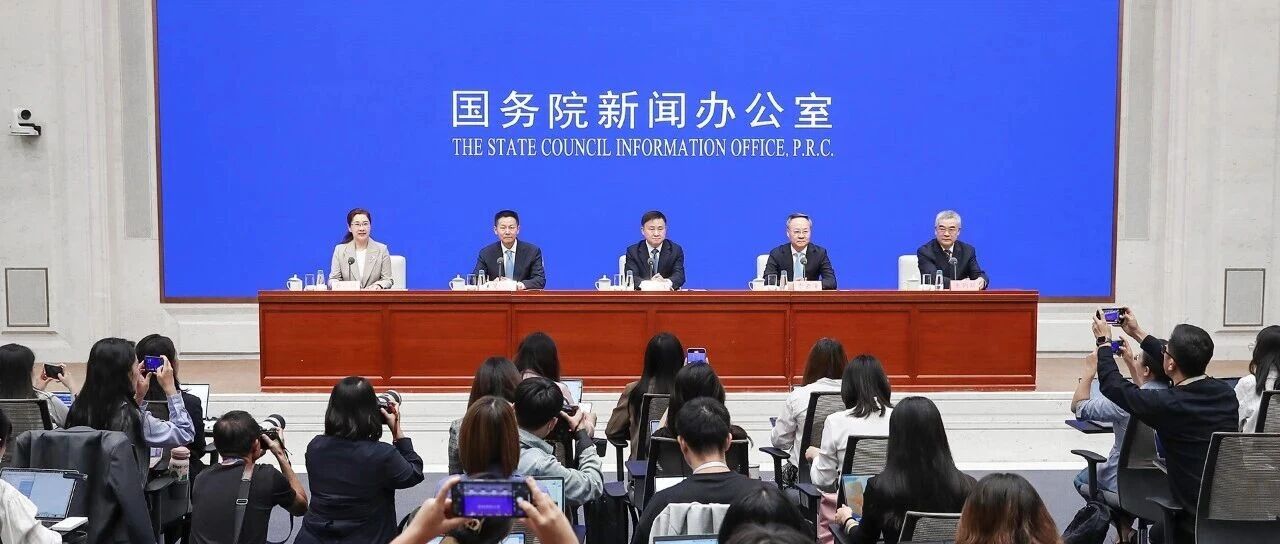
新闻发布会现场(刘健 摄) 发布会 现场信息量很大,以下是 吴清主席 现场金句: 亮点1:"四梁八柱"的法规制度体系建构成型 【导读】 证监会主席吴清 : 我国资本市场实现 了 量的稳步增长和质的有效提升 中国基金报记者 李树超 王思文 9月22日,证监会主席吴清在国新办举行的"高质量完成'十四五'规划"系列主题新闻发布会上 表示,"十四五"期间,我国资本市场实现了量的稳步增长和质的有效提升,为"十五五"高质 量发展打下了坚实基础。 3. 交易所债券市场产品日趋丰富,公募REITs、科创债、资产证券化等创新品种加快发展。 4. 全市场期货期权品种达到157个,广泛覆盖国民经济主要产业领域,同时还设立广期所, 更好促进绿色发展。 亮点3: 不断健全 投融资相协调的市场功能 1. 资本市场服务科技创新跑出"加速度",资本市场含"科"量进一步提升。目前A股科技板块 市值占比超过1/4,已明显高于银行、非银金融、房地产行业市值合计占比。 2. 这5年上市公司通过分红、回购派发"红包"合计10.6万亿元。 1 . "十四五"期间,"四 梁八柱"的法规制度体系建构成型。期货和衍生品法、私募基金监管 条例等"十年磨一剑" ...
吴清主席在国新办新闻发布会上答记者问
证监会发布· 2025-09-22 10:12
Core Viewpoint - The article discusses the achievements and developments of China's financial industry during the "14th Five-Year Plan" period, highlighting the progress in capital market reforms, regulatory frameworks, and the overall stability and growth of the market [2][3][4]. Regulatory Framework - A comprehensive regulatory framework has been established, with the implementation of the new Securities Law and the introduction of over 60 supporting rules, enhancing the legal system of the capital market [3][4]. - The "National Nine Articles" issued by the State Council has further strengthened regulatory measures to promote high-quality development in the capital market [3]. Market Structure - The multi-tiered market system has been improved, with significant advancements in the Sci-Tech Innovation Board, Growth Enterprise Market, and the establishment of the Beijing Stock Exchange [4]. - As of August, the total market capitalization of A-shares has surpassed 100 trillion yuan, indicating robust market growth [4]. Investment and Financing - In the past five years, the total financing through stock and bond markets reached 57.5 trillion yuan, with a direct financing ratio increasing by 2.8 percentage points to 31.6% [5]. - The technology sector has seen a significant increase in market capitalization, with over 90% of newly listed companies being tech-related, and the market cap of tech companies now exceeds 25% of the total A-share market [5]. Market Stability Mechanisms - A collaborative mechanism for market stability has been developed, enhancing the resilience and risk management capabilities of the A-share market, with the annualized volatility of the Shanghai Composite Index decreasing by 2.8 percentage points [6]. Fair Market Environment - A fair and just market environment has been fostered, with a significant increase in administrative penalties for financial misconduct, including a 58% rise in penalties for financial fraud [7]. Capital Market Reforms - Major breakthroughs in investment-side reforms have been achieved, including the implementation of a high-quality development action plan for public funds and the promotion of long-term capital market participation [8][9]. - The financing-side reforms have seen the full rollout of the stock issuance registration system, facilitating the listing of innovative companies [9][10]. Risk Management - The regulatory body has focused on maintaining market stability and preventing risks, with a low bond default rate of around 1% and the closure of numerous fraudulent financial institutions [12][13]. - Enhanced enforcement measures have been implemented to combat financial fraud, with significant penalties imposed on major offenders [13][14]. Future Outlook - The regulatory body aims to continue enhancing the adaptability and inclusiveness of the capital market, focusing on supporting high-quality enterprises and improving the overall market environment [16][17].
含“科”量、“朋友圈”越来越大、“长牙带刺” ……吴清在国新办发布会上还谈了啥
经济观察报· 2025-09-22 09:45
Core Viewpoint - The past five years have been unusual for the capital market, with a focus on risk prevention, strong regulation, and promoting high-quality development, leading to a stable and healthy market environment [2]. Group 1: Achievements in Financial Development - The regulatory framework has been significantly improved, with the implementation of the new Securities Law and over 60 supporting rules introduced, establishing a solid foundation for stable market development [4]. - The multi-tiered equity market has been developed, with the A-share market's total market value surpassing 100 trillion yuan for the first time, and a variety of innovative financial products being introduced [4]. - Direct financing has increased, with total financing through stock and bond markets reaching 57.5 trillion yuan, and the proportion of direct financing rising to 31.6% [5]. Group 2: Market Stability Mechanisms - A collaborative mechanism for market stability has been gradually improved, enhancing the resilience and risk resistance of the A-share market, with the annualized volatility of the Shanghai Composite Index decreasing by 2.8 percentage points [6]. - A fair and just market environment has been established, with a significant increase in administrative penalties for financial misconduct, reflecting a stronger enforcement and improved market transparency [6]. Group 3: Capital Market Reform and Opening Up - Major breakthroughs in investment-side reforms have been achieved, with a focus on investor interests and the introduction of measures to facilitate long-term capital inflow, resulting in a 32% increase in the market value held by various long-term funds [8]. - Continuous deepening of financing-side reforms has been observed, with the stock issuance registration system fully implemented and various measures introduced to support new production capacity [8]. - The high-level institutional opening of the capital market has been steadily expanded, with the cancellation of foreign ownership limits and the establishment of a more comprehensive overseas listing filing system [9]. Group 4: Regulatory Enhancements - The regulatory framework has been strengthened to maintain market stability, with a focus on early warning systems and cross-market risk prevention [11]. - Significant efforts have been made to reduce risks in key areas, with the bond default rate maintained at around 1% and the closure of numerous fraudulent financial institutions [12]. - The effectiveness and deterrence of regulatory enforcement have been greatly enhanced, with a comprehensive system established to combat financial fraud and protect investor rights [13][14].

吴清答新华财经提问:“并购六条”发布以来已披露230单重大资产重组
Xin Hua Cai Jing· 2025-09-22 09:43
Core Viewpoint - The Chairman of the China Securities Regulatory Commission (CSRC), Wu Qing, emphasized the significant reforms and opening-up measures in the capital market during the "14th Five-Year Plan" period, focusing on market-oriented, legal, and international approaches [1]. Investment Side Reform - Major breakthroughs have been achieved in investment-side reforms, with the effects of attracting long-term capital becoming evident. By the end of August this year, the market value of various long-term funds holding A-shares reached approximately 21.4 trillion yuan, representing a significant increase of 32% compared to the end of the "13th Five-Year Plan" [1]. Financing Side Reform - The financing-side reforms have continued to deepen, with the release of the "Six Guidelines for Mergers and Acquisitions" leading to the disclosure of 230 major asset restructuring cases, effectively supporting the industrial integration of listed companies [1]. High-Quality Development of Listed Companies - The institutional mechanisms promoting the high-quality development of listed companies are continuously improving. The focus remains on dual-driven information disclosure and corporate governance, expanding diverse exit channels, and strictly eliminating "bad apples" and "zombie companies." Wu Qing noted that during the "14th Five-Year Plan" period, 207 companies have exited the market smoothly [1]. High-Level Institutional Opening - The high-level institutional opening of the capital market is steadily expanding, with a cautious and orderly approach to the two-way opening of markets, products, and institutions. Wu Qing stated that the market value of A-shares held by foreign investors currently stands at 3.4 trillion yuan, and there are 269 companies listed overseas, indicating an expanding network for China's capital market [1].
“十四五”时期金融业发展成就—— 我国资本市场实现量的稳步增长和质的有效提升
Ren Min Wang· 2025-09-22 09:18
Core Viewpoint - During the "14th Five-Year Plan" period, China's capital market has achieved steady quantitative growth and effective qualitative improvement, laying a solid foundation for high-quality development in the "15th Five-Year Plan" period [1] Regulatory Framework - The regulatory framework has been significantly enhanced, with the implementation of the new Securities Law prompting a systematic overhaul of related regulations, including the introduction of the Futures and Derivatives Law and Private Fund Supervision Regulations [1] - Over 60 supporting rules have been issued following the State Council's opinions on strengthening regulation and preventing risks, fundamentally restructuring the basic system and regulatory logic of the capital market [1] Market Structure - The multi-layered and widely covered market system has been improved, with the successful establishment and high-quality development of the Beijing Stock Exchange and ongoing reforms in the Sci-Tech Innovation Board and Growth Enterprise Market [2] - As of August this year, the total market value of the A-share market has surpassed 100 trillion yuan, with a diverse range of bond market products and 157 futures and options varieties covering major sectors of the national economy [2] Investment and Financing Coordination - In the past five years, the total financing through the exchange market reached 57.5 trillion yuan, with the proportion of direct financing increasing to 31.6%, up by 2.8 percentage points from the end of the "13th Five-Year Plan" [3] - Over 90% of newly listed companies are technology-related, with the market capitalization of the technology sector now exceeding 25% of the total A-share market, significantly higher than the combined market capitalization of the banking, non-banking financial, and real estate sectors [3] Market Stability Mechanisms - A collaborative market stability mechanism has been gradually improved, with the China Securities Regulatory Commission (CSRC) working with various departments to strengthen policy, funding, and expectation hedging to effectively prevent significant market fluctuations and systemic risks [3] - The resilience and risk resistance of the A-share market have notably improved, with the annualized volatility of the Shanghai Composite Index at 15.9%, a decrease of 2.8 percentage points compared to the "13th Five-Year Plan" [3] Market Environment - A fair and just market environment has been further established, with the CSRC enhancing its regulatory framework and increasing penalties for financial fraud, market manipulation, and insider trading, resulting in 2,214 administrative penalties and 41.4 billion yuan in fines during the "14th Five-Year Plan" period [4] - The series of market stabilization policies have yielded positive results, with the A-share market demonstrating resilience against external shocks and maintaining stable performance of major stock indices [4]

证监会主席吴清:我国资本市场实现了量的稳步增长和质的有效提升
Zheng Quan Ri Bao Wang· 2025-09-22 08:46
二是多层次、广覆盖的市场体系更加完备。 纵深推进科创板、创业板改革,成功设立并高质量推进北交所建设,持续深化新三板改革,稳步发展结 构合理、功能互补的多层次股权市场。今年8月,A股市场总市值首次突破了100万亿元。交易所债券市 场产品日趋丰富,公募REITs、科创债、资产证券化等一些创新品种也在加快发展。全市场期货期权品 种达到157个,广泛覆盖了国民经济主要的产业领域,同时还设立了广期所,更好地促进绿色发展。 三是投资和融资相协调的市场功能不断健全。 近五年,交易所市场股债融资合计达到57.5万亿元,直接融资比重稳中有升,较"十三五"末提升了2.8个 百分点,达到了31.6%。资本市场服务科技创新跑出"加速度",资本市场含科量进一步提升。近年来, 新上市企业九成以上都是科技企业或者科技含量比较高的企业。目前A股科技板块市值占比超过1/4,已 明显高于银行、非银金融、房地产行业市值合计占比。市值前50名公司当中科技企业从"十三五"末的18 家提升到当前的24家。同时,上市公司主动回报投资者的意识也明显的增强。这五年,上市公司通过分 红回购派发红包,合计达到10.6万亿元,比"十三五"增长超过八成,相当于同期股 ...