扫地机器人

Search documents
对话追觅扫地机总裁孟佳:明年要继续以100%增速为目标
Hua Er Jie Jian Wen· 2025-12-22 14:35
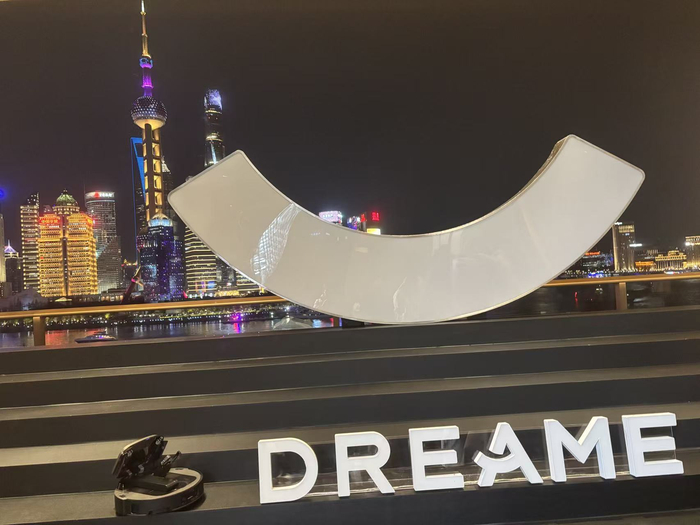
Core Insights - The article highlights the significant global expansion of the company, with the opening of its first physical store in Hong Kong marking a key milestone in its globalization strategy [2][6]. - The company has achieved a compound annual growth rate (CAGR) of over 100% for six consecutive years and aims to maintain this growth trajectory, particularly focusing on North America and emerging markets [2][4][14]. - The competitive landscape in the robotic vacuum industry is intensifying, with the company positioning itself to leverage technological innovation and local market adaptation as key strategies for future growth [3][8][10]. Global Expansion - The company has surpassed 6,500 overseas stores and aims to increase its flagship store presence in key global markets, including North America, Europe, and South Korea [2][7]. - The opening of the Hong Kong store is seen as a strategic move to enhance brand visibility in the Asia-Pacific region, serving as a critical showcase for its high-end brand image [2][11]. Market Position and Competition - The company currently holds a 12.4% market share in global shipments, ranking third overall and first in the European market [3]. - The competitive environment is becoming increasingly crowded, with new entrants in both domestic and international markets, which the company views positively as it encourages technological advancement [3][8]. Technological Innovation - The company emphasizes continuous investment in research and development, allocating over 7% of its revenue annually to R&D, with more than 70% of its workforce dedicated to this area [4][10]. - The focus on technological innovation is seen as essential to avoid price wars and to enhance product experience and iteration speed [4][10]. Future Growth Strategy - The company aims to achieve 100% growth in the coming year, with a strong emphasis on localizing its offerings in North America and other emerging markets [14]. - The strategy includes a commitment to product innovation and enhancing user experience, which are critical for maintaining competitive advantage in a rapidly evolving market [10][13]. Brand Localization - The company is adopting a "globalization + localization" strategy to better cater to local markets, ensuring that products and services are tailored to meet regional preferences [8][10]. - This approach is crucial for transitioning from merely exporting products to establishing a strong brand presence in international markets [3][8]. Industry Outlook - The robotic vacuum industry is undergoing a significant transformation, with the company positioned to capitalize on the shift from traditional players to emerging Chinese brands [5]. - The ability to maintain a high-end market position while appealing to the mass market will be pivotal for the company's future success [5].


美媒大肆炒作,美企CEO坐不住了:是我们求中企救命啊…
Sou Hu Cai Jing· 2025-12-20 14:27
Core Viewpoint - iRobot, once a leader in the global market for robotic vacuum cleaners, has filed for bankruptcy protection and is set to be acquired by Chinese company Picea, raising concerns in the U.S. about data privacy and security risks associated with the ownership change [1][2]. Group 1: Acquisition and Market Dynamics - Picea, iRobot's main creditor, will acquire the company, which has led to media speculation about potential data privacy issues due to the change in ownership to a Chinese firm [1][2]. - The global market for robotic vacuum cleaners is shifting, with Chinese companies projected to dominate the market by 2025, holding nearly 70% of the market share [6][7]. - iRobot's CEO Gary Cohen clarified that the acquisition is a rescue effort rather than a hostile takeover, emphasizing a positive partnership with Picea [2][8]. Group 2: Data Privacy Concerns - U.S. media have raised alarms about data privacy, suggesting that robotic vacuums can collect sensitive household data, but iRobot's privacy policy states that data is not transmitted to servers without user consent [4][5]. - Despite past incidents of data breaches, iRobot has maintained a strong security performance, although its privacy ratings have declined to average levels [4][5]. - The narrative in U.S. media appears to be more about geopolitical tensions rather than genuine concerns for consumer data security, as they call for government action against Chinese technology firms [5][6]. Group 3: Company Performance and Future Outlook - iRobot has faced declining sales and innovation gaps over the past four years, leading to its bankruptcy filing after three consecutive years of net losses [8][9]. - The restructuring process is expected to be completed by February 2024, with iRobot retaining its brand and operational structure in the U.S. [8][9]. - Cohen expressed optimism about the future, stating that the acquisition will preserve the brand and save over 500 jobs, marking a new chapter for iRobot [9][10].
280亿,扫地机器人鼻祖宣布破产
Sou Hu Cai Jing· 2025-12-20 04:17
Core Insights - The collapse of iRobot, a pioneer in the robotic vacuum industry, is attributed to regulatory failures, trade policy conflicts, and competition from Chinese firms, leading to its bankruptcy filing and subsequent acquisition by a Chinese supplier [2][6][9]. Company Overview - iRobot was founded in 1990 by three MIT roboticists and initially focused on defense and space applications before launching the Roomba vacuum in 2002, which became a household name [3][4]. - At its peak in 2021, iRobot's valuation reached $3.56 billion, with Roomba capturing 42% of the U.S. market and 65% in Japan, totaling over 50 million units sold [3][4]. Competitive Landscape - iRobot faced increasing competition from Chinese companies like Ecovacs and Roborock, which invested 2-3 times more in R&D and adopted aggressive pricing strategies, undermining iRobot's market position [4][5]. - The introduction of advanced technologies by competitors, such as laser navigation and AI visual recognition, rendered iRobot's existing technology outdated [4][5]. Financial Challenges - iRobot's reliance on manufacturing in Vietnam led to a significant cost increase when punitive tariffs were imposed, resulting in a $23 million rise in expenses [4]. - The cooling real estate market, exacerbated by rising interest rates, negatively impacted sales of home appliances, including robotic vacuums [4]. Acquisition Attempt and Regulatory Impact - In August 2022, Amazon announced a $1.7 billion acquisition of iRobot, which was seen as a lifeline for the struggling company [5]. - Regulatory bodies in the EU and the U.S. blocked the acquisition, citing potential anti-competitive concerns, which ultimately led to iRobot's stock plummeting by 80% and significant layoffs [5][7]. Bankruptcy and Acquisition - iRobot filed for Chapter 11 bankruptcy and sold its assets to Chinese supplier Picea Robotics for $190 million, marking a significant shift in ownership from a U.S. company to foreign control [6][9]. - The regulatory actions intended to protect competition inadvertently facilitated the loss of a key American technology firm to foreign ownership [6][9]. Industry Implications - iRobot's downfall highlights the structural flaws in Western regulatory frameworks, which focus on domestic competition while neglecting the competitive threats posed by foreign firms [9][10]. - The case serves as a cautionary tale for the smart home industry, indicating a shift from single-product success to the necessity of ecosystem integration for survival [11][12]. Future Outlook - The smart home market is transitioning from individual product sales to comprehensive smart home ecosystems, with companies needing to adapt or risk obsolescence [11][12]. - Firms must establish a clear position within the ecosystem, deepen their technological advantages, and maintain financial health to navigate the evolving landscape [15][16].

追觅创始人收购引嘉美包装三连板 公司否认主业将改变
Di Yi Cai Jing· 2025-12-19 06:50
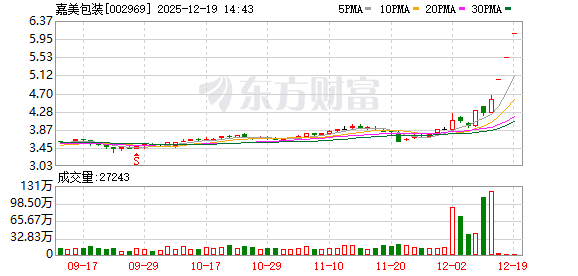
IDC数据显示,2025年前三季,全球智能扫地机器人出货量达1742.4万台,同比增长18.7%;追觅的份 额为12.4%,跻身前三位。排在全球扫地机器人行业前两位的石头科技、科沃斯均已是上市公司。 在国内,追觅线下份额承压。根据奥维云网(AVC)数据,今年截至12月14日,追觅在中国扫地机器人 市场的线下、线上份额分别为13.72%和9.19%,居第二和第五位,同比增加1.94个百分点和减少3.31个 百分点。 除了扫地机器人,追觅近年正在寻求"跨界"发展,业务从清洁电器延伸到白电、彩电,甚至到手机、智 能穿戴、汽车、航天等领域。除了苏州工厂,也在南京建设冰箱、洗衣机的生产基地。 伴随着急速的扩张,外界对于追觅的质疑声不断。自8 月官宣造车后,噪音主要集中在研发、建厂、供 应链锁价所需的数百亿级资金从何而来。 扫地机器人行业正处于向AI生态融合发展的关键期,新一轮资本竞争已开启。 12月19日,嘉美包装(002969.SZ)连续第三天涨停,连续3个交易日收盘价格涨幅偏离值累计超过 20%。消息层面上,扫地机器人企业追觅的创始人俞浩近日拟以20多亿元收购嘉美包装的控股权。 这是俞浩首次在国内A股市场进行资本操 ...

追觅创始人收购引嘉美包装三连板,公司否认主业将改变
第一财经网· 2025-12-19 06:41
Core Viewpoint - The sweeping robot industry is at a critical juncture of integrating with AI ecosystems, leading to a new round of capital competition [3][6] Group 1: Market Dynamics - The global smart sweeping robot shipment is projected to reach 17.424 million units in the first three quarters of 2025, representing a year-on-year growth of 18.7%, with the company holding a market share of 12.4% [4][6] - The top five global smart sweeping robot market shares are now entirely held by Chinese companies, marking the first time iRobot has been excluded from the top five [6] Group 2: Company Developments - The founder of the sweeping robot company, Yu Hao, plans to acquire a controlling stake in Jia Mei Packaging for over 2 billion yuan, marking his first capital operation in the domestic A-share market [3][4] - Jia Mei Packaging's major business remains focused on food and beverage packaging, with no plans to change its main business in the next 12 months [3] - The company reported a decline in revenue and net profit of 1.93% and 47.25% year-on-year, respectively, due to a decrease in orders [3] Group 3: Competitive Landscape - Competitors like Stone Technology and Ecovacs are also expanding into embodied intelligence and have announced plans for IPOs, indicating a highly competitive environment [6] - The sweeping robot industry is seeing a diversification into other areas such as lawn mowing and window cleaning robots, necessitating significant capital investment [6] Group 4: Financial Position - Yu Hao and his core team are funding the acquisition entirely through their own resources, with no financial impact on the normal operations of the sweeping robot company [4] - The company has maintained a strong cash flow, with approximately 5 billion yuan allocated for share buybacks in recent years [5]
扫地机鼻祖,一场出海大败局
Tai Mei Ti A P P· 2025-12-18 04:56
文 | 增长工厂,作者 | 嘉辛,编辑 | 赵元 扫地机器人行业的"开山鼻祖",倒下了。 2025年12月16日,iRobot公告称,由于公司自愿启动破产程序,纳斯达克已决定将公司普通股退市。此 前一天,iRobot在特拉华州法院提交了第11章破产保护申请。 在这份破产文件里,能看到iRobot当下的窘迫:账上现金仅剩2480万美元,总负债却飙升至5.08亿美 元,最大债权人是它的中国代工厂深圳杉川。 谁能想到,这个曾占据全球80%市场份额、市值巅峰近40亿美元的巨头,如今市值缩水至不足2500万美 元,彻底沦为中国企业的"接管对象"。 iRobot的倒下,不是单一因素的偶然,而是全球化战略全面失当的必然:技术上故步自封、市场上傲慢 轻敌、供应链上拱手让人,每一步都踩错了全球化的节奏。 与之形成鲜明对比的是,IDC 2025年三季度全球智能扫地机器人市场报告显示,中国品牌已包揽全球出 货量前五——石头、科沃斯、追觅、小米、云鲸,合计市占率超64%。 这场一衰一兴的较量,为所有出海企业写下最鲜活的教材:全球化从来不是"一套产品卖全球",而 是"跟着市场做本地"。 一、走进技术路线的死胡同 1990年,iRobo ...
杉川首次回应收购iRobot
Di Yi Cai Jing Zi Xun· 2025-12-17 14:00
Core Viewpoint - iRobot has filed for bankruptcy and will be acquired by Sijia, leading to a significant drop in its stock price and market value, marking a dramatic decline from its position as a leader in the robotic vacuum industry [2][3][4]. Group 1: Company History and Market Position - iRobot was founded in 1990 and gained fame with its Roomba vacuum cleaner, achieving over 60% market share globally and 80% in the U.S. at its peak [3][4]. - The company reported a revenue of $1.565 billion in 2021, but began to incur losses in 2022, leading to a failed acquisition by Amazon due to antitrust issues [3][4]. - By 2025, iRobot's market share in the global robotic vacuum market had fallen below 8%, with significant revenue declines reported across various regions [4][6]. Group 2: Financial Decline - iRobot's financial situation deteriorated, with a cash balance of only $24.8 million and a net loss of $240.4 million in 2022 [4][6]. - The company faced a 33% decline in U.S. revenue and a 13% decline in Europe, the Middle East, and Africa in the third quarter of 2023 [4][6]. - By the end of 2025, iRobot's revenue was reported at $375 million, a year-on-year decrease of 26.47%, with net losses increasing by 90% to $130 million [6]. Group 3: Reasons for Decline - iRobot's failure to integrate sweeping and mopping functions into a single product, while competitors adopted this approach, contributed to its decline [5][6]. - The company relied on visual navigation technology, while competitors in China advanced with laser navigation, leading to a competitive disadvantage [5][6]. - Increased operational costs due to U.S. tariffs on imports from China and Vietnam further strained iRobot's financial health [5][6]. Group 4: Acquisition and Future Prospects - Sijia, the acquiring company, aims to leverage iRobot's brand value and technological expertise to expand its market presence [7][8]. - Sijia has already secured the regional agency rights for iRobot in China and plans to enhance local operations to drive growth [7][8]. - The acquisition could reshape the competitive landscape in the North American robotic vacuum market, where iRobot still holds a 20%-30% market share [9].
杉川首次回应收购iRobot
第一财经· 2025-12-17 13:21
Core Viewpoint - iRobot, once a leader in the robotic vacuum industry, has filed for bankruptcy due to continuous losses and market share erosion, with its stock value plummeting significantly following the announcement of its acquisition by Sijia [3][6]. Group 1: Company History and Market Position - iRobot was founded in 1990 and gained fame with its Roomba vacuum cleaner, achieving over 60% market share globally and 80% in the U.S. by the mid-2010s [4][5]. - The company reported a revenue peak of $1.565 billion in 2021, but began to incur losses in 2022, leading to a failed acquisition by Amazon due to antitrust issues [5][6]. - By 2025, iRobot's market share fell below 8%, and its financial situation deteriorated, with a cash balance of only $24.8 million [5][6]. Group 2: Factors Leading to Decline - iRobot's failure to integrate sweeping and mopping functions into a single product, unlike competitors, contributed to its decline [8]. - The company relied on visual navigation technology while competitors adopted laser navigation, which became the industry standard [8]. - Increased operational costs due to U.S. tariffs on imports from China and later from Vietnam further exacerbated its financial struggles, leading to significant losses [9]. Group 3: Acquisition by Sijia - Sijia, iRobot's largest creditor, aims to leverage iRobot's brand and technology to expand its market presence, particularly in overseas markets [11][12]. - The acquisition is seen as an opportunity to revitalize iRobot's brand and technology, with Sijia planning to maintain operations in both China and international markets [11][12]. - Analysts suggest that if the acquisition is successful, it could reshape the competitive landscape of the North American robotic vacuum market, where iRobot still holds a 20%-30% market share [13].
杉川首次回应收购iRobot:将保留原有品牌,中国业务同步推进
Di Yi Cai Jing Zi Xun· 2025-12-17 11:57
Core Viewpoint - iRobot, once a leader in the robotic vacuum industry, has filed for bankruptcy and will be acquired by Sijia, leading to a significant drop in its stock price and market value [2][3][5]. Company History and Performance - Founded in 1990, iRobot initially developed technology for NASA and military applications before launching the Roomba vacuum in 2002, which dominated the market [3]. - iRobot's revenue peaked at $1.565 billion in 2021, but it began to incur losses in 2022, leading to a failed acquisition attempt by Amazon for $1.7 billion due to antitrust issues [3][4]. Market Dynamics - iRobot's market share has plummeted, with IDC reporting it fell out of the top five global robotic vacuum brands by Q3 2025, holding less than 8% market share [4]. - The company's revenue in the U.S. dropped by 33% year-over-year in Q3 2025, with significant declines in other regions as well [5]. Financial Struggles - iRobot's financial situation worsened, with a cash balance of only $24.8 million and liabilities exceeding assets, leading to its bankruptcy filing in December 2025 [5][6]. - The company reported a net loss of $130 million in the first three quarters of 2025, a 90% increase compared to the previous year [7]. Strategic Missteps - iRobot's failure to integrate sweeping and mopping functions into a single product, along with reliance on visual navigation technology, hindered its competitiveness against Chinese brands that adopted laser navigation and combined functionalities [6][7]. - Trade tariffs imposed by the U.S. increased operational costs, further straining iRobot's profitability [6]. Acquisition and Future Plans - Sijia, the acquiring company, aims to leverage iRobot's brand and technology to expand its market presence, particularly in overseas markets [8][9]. - Sijia has already secured the regional agency rights for iRobot in China and plans to enhance local operations to drive growth [8][9]. Market Outlook - If the acquisition is successful, Sijia could reshape the competitive landscape in the North American robotic vacuum market, where iRobot still holds a 20%-30% share [10]. - The integration of Sijia and iRobot is expected to create a new player in the global cleaning appliance market, combining Chinese manufacturing strength with an established brand [10].
素食者汪滔,困在千亿大疆王国里
3 6 Ke· 2025-12-17 04:17
Group 1: Company Performance and Valuation - DJI's revenue is projected to exceed 50 billion yuan in 2024, with a net profit margin approaching 40%, nearly double that of Apple [2] - Based on an average P/E ratio of 30 in the consumer electronics sector, DJI's valuation should be around 180 billion yuan, although its unique product and profit levels suggest it could be higher [2] - Despite holding over 70% of the global consumer drone market, DJI is experiencing a slowdown in revenue growth, indicating a shift from an incremental market to a saturated market phase [14][15] Group 2: Leadership and Company Culture - Founder Wang Tao is known for his strong personality and perfectionism, which has led to both the creation of DJI as a drone giant and controversies within the company [3] - DJI's early culture was characterized by a geek-driven, technology-focused environment, attracting many creative young talents, but management issues have emerged as the company has grown [9][10] - The company has faced challenges in retaining talent, with many former employees successfully starting their own ventures, indicating potential misjudgments in new market opportunities by Wang Tao [5][12] Group 3: Competitive Landscape - DJI has recently entered new markets, including 3D printing and robotic vacuum cleaners, in response to increasing competition from companies like影石 (Yingshi) and former employees' startups [15][19] - The competitive dynamics have intensified, with影石 actively recruiting DJI's core team members, leading to significant personnel shifts and strategic conflicts between the two companies [7][8][17] - DJI's recent pricing strategies, such as the significant price drop of the Pocket 3 camera, reflect its defensive measures against market share erosion and competition from new entrants [15] Group 4: Innovation and R&D Challenges - DJI's patent applications have significantly declined, from 3,318 in 2019 to only 76 in 2024, attributed to reduced incentives for innovation within the company [11] - The company is perceived to be focusing more on immediate competitive responses rather than long-term technological innovation, raising concerns about its future growth trajectory [16][19] - Despite its strong hardware capabilities, DJI faces challenges in breaking into new markets like robotic vacuums, where competition has become increasingly fierce [19]