
TMT

Search documents
20cm速递|科创综指ETF国泰(589630)涨超2.4%,科技行业中长期占优可期
Mei Ri Jing Ji Xin Wen· 2026-01-21 04:35
Group 1 - The core viewpoint is that the technology sector is expected to outperform in the medium to long term, supported by strong market logic [2] - The profitability growth rate of the TMT (Technology, Media, Telecommunications) sector is currently leading compared to the overall A-share market, resembling historical patterns before previous technology market rallies in 2013, 2015, and 2020-2021 [2] - The expansion of capital expenditure cycles by global technology giants continues to provide momentum, positively impacting domestic related industries [2] - The global semiconductor industry has entered a new upward cycle since the end of 2023, which is still in its early stages, contributing to sustained expectations for the overall prosperity of the technology sector [2] - The Science and Technology Innovation Index ETF (国泰, 589630) tracks the Science and Technology Innovation Index (000680), which includes high-tech and strategic emerging industries, reflecting the overall performance of listed companies in the Science and Technology Innovation Board [2]
快讯|MicroTouch借SPAC赴美上市 估值9000万美元
Sou Hu Cai Jing· 2026-01-21 04:02
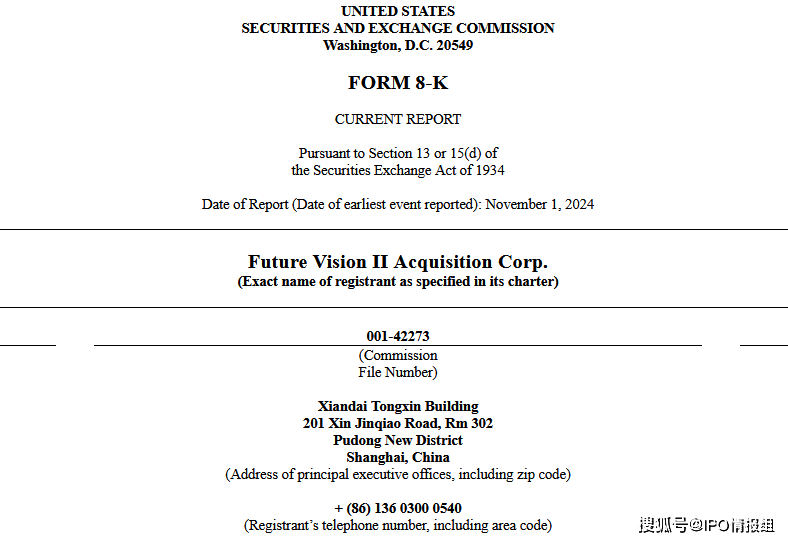
Group 1 - Future Vision II Acquisition Corp. has signed a merger agreement with MicroTouch Technology INC, valuing the latter at $90 million [1] - Post-merger, the company will be renamed MicroTouch Inc. and plans to list on NASDAQ under the ticker FVNNU; the agreement can be terminated if the deal is not completed by December 31, 2026 [1] - MicroTouch shareholders will receive shares based on the enterprise value and SPAC's redemption price per share, capped at $10.05; MicroTouch has the right to appoint 4 directors and all executives, while SPAC retains only 1 independent director [1] Group 2 - The merger is subject to shareholder approval and SEC review of the S-4 filing [1] - MicroTouch is registered in the Cayman Islands, but its business scope has not been disclosed; the SPAC is headquartered in Shanghai and previously terminated a merger with VIWO Technology [1] - The SPAC is focused on the TMT sector in the Greater China region and had a valuation of approximately $57 million prior to its NASDAQ listing in September 2024 [1]

“业绩浪”渐入佳境 这些科技股具备高增长潜力
Zheng Quan Shi Bao· 2026-01-20 18:24
Group 1 - The Shanghai Composite Index is fluctuating around 4100 points, with institutions suggesting a focus on performance catalysts in the upcoming earnings season [1] - Donghai Securities recommends paying attention to the performance of the chip and artificial intelligence sectors, as well as the capital expenditures of technology companies and domestic policy directions [1] - Companies in the non-ferrous resources sector are expected to show better performance sustainability compared to commodity price elasticity [1] Group 2 - Companies with positive earnings forecasts are gaining market attention, with significant stock price increases observed on January 20 [1] - Nanwang Energy (003035) expects a net profit of 300 million to 360 million yuan for 2025, marking a turnaround to profitability, leading to a stock price surge [1] - Runfeng Co. (301035) anticipates a net profit of 1.03 billion to 1.17 billion yuan for 2025, representing a year-on-year growth of 128.85% to 159.95%, resulting in an almost 11% stock price increase [1] Group 3 - A number of companies have reached historical stock price highs this year, including Baiwei Storage and Dazhu CNC [2] - High growth in earnings combined with technology themes is expected to result in greater stock price elasticity [2] - 23 stocks in the TMT sector are identified as having high earnings growth potential, with some already reporting doubled net profits for 2025 [2] Group 4 - New Yisheng (300502) has the highest institutional ratings, with 17 firms covering it, and is expected to achieve significant revenue and profit growth in Q4 2025 [3] - Runze Technology and Shijia Photon are also receiving attention, with predictions of high growth in revenue and net profit for 2026 [3] - Several stocks, including Shen Gong Co. and Nanya New Materials, are forecasted to have net profits that may double by 2026, with others expected to exceed 50% growth [3]


香港债券市场全景及投资价值分析
Huachuang Securities· 2026-01-20 12:08
1. Report Industry Investment Rating There is no information provided about the industry investment rating in the report. 2. Core Viewpoints of the Report - In 2026, the mainland bond market is expected to maintain a low - interest - rate environment. "Going outbound" to seek high - coupon bonds remains one of the main demands of non - bank institutions. The new "Southbound Connect" policy may be gradually implemented, so investors can actively focus on the Hong Kong bond market to further explore investment value [2]. - The expansion of the "Southbound Connect" mechanism will significantly broaden the channels for non - bank institutions such as securities firms, funds, insurance companies, and bank wealth management to participate in the Hong Kong bond market. It is recommended to focus on the investment opportunities of dim sum bonds, which have been continuously expanding in recent years, and Chinese - funded US dollar bonds with a large outstanding scale [8]. 3. Summary According to the Table of Contents 3.1 Hong Kong Bond Market Development History and Outstanding Structure Characteristics 3.1.1 Development History: From Dominated by US Dollar Bonds to the Rise of RMB Bonds - The Hong Kong bond market can be divided into three development stages. Before 2015, it was in a slow - development stage, with the issuance scale growing from $100 million in 1989 to $103.3 billion in 2014, mainly corporate bonds. After the launch of the "Government Bond Program" in 2009, the issuance scale of government bonds began to increase [3][15]. - From 2015 - 2021, it experienced rapid development, with the issuance scale growing from $188.5 billion to $499.4 billion. The proportion of government bonds increased, mainly due to the growth of Hong Kong government retail bonds. US dollar bonds also grew rapidly because of the relaxation of overseas debt issuance regulations by the mainland [3][16]. - Since 2022, the total market has been in a stable development stage, but the internal structure has changed. The scale of US dollar bonds has decreased significantly due to tightened mainland regulations and the Fed's interest - rate hikes, while RMB bonds have developed rapidly due to China's loose monetary environment and central government policies [4][17]. 3.1.2 Outstanding Structure Characteristics: Chinese Issuers Account for 80%, and the Financial Industry Dominates - As of the end of 2024, the outstanding scales of Hong Kong dollar bonds, offshore RMB bonds, and G3 currency bonds in the Hong Kong bond market were $195.5 billion, $173.2 billion, and $565.6 billion respectively, with corporate bonds accounting for over 70% in each category [24]. - Currently, the total outstanding bond scale in the Hong Kong market is about $1.05 trillion. About 80% of the issuers are from China, about 65% of the remaining maturities are within 3 years, the financial industry accounts for half of the market, and the currency is mainly US dollars [4][25]. 3.2 Hong Kong Bond Market Liquidity and Investor Participation - In terms of liquidity, before the end of 2020, the average daily trading volume of bonds托管 and settled by the CMU system was stable at around HK$5 billion. Since 2021, the launch of the "Southbound Connect" and the increase in the issuance of RMB bonds have promoted the trading volume to increase to HK$20 - 25 billion, and the average daily turnover rate has risen from about 0.5% to around 1% [5][37]. - In terms of investor structure, asset management institutions, banks, and hedge funds hold 75%, 9%, and 7% of the outstanding bond balances with available holder data respectively. Holders are mainly distributed in the United States, Luxembourg, and China, and foreign - funded enterprises such as BlackRock, Nomura, and HSBC have relatively large management scales [5][41][44]. 3.3 Participation Opportunities in the Hong Kong Bond Market under the Expansion of the Bond "Southbound Connect" Mechanism 3.3.1 Chinese - funded Overseas Bonds: There are Obvious Excess Spreads, with Priority Focused on - Dim sum bonds: There are opportunities for spread compression in various types of urban investment bonds and high - grade industrial bonds. The outstanding dim sum bonds in the Hong Kong market are 1,376, with a balance of about 1.47 trillion yuan. The excess spreads of high - grade urban investment and industrial bonds are mostly between 100 - 150BP, and the spreads of low - grade urban investment bonds are mostly between 200 - 400BP [50]. - Chinese - funded US dollar bonds: The excess spreads of all varieties compared with domestic bonds are over 200BP. There are 1,066 outstanding Chinese - funded US dollar bonds in the Hong Kong market, with a balance of about $352.7 billion. The excess spreads of high - grade urban investment and industrial bonds are mostly between 200 - 300BP, and those of low - grade bonds are over 300BP [53]. - Sub - varieties investment suggestions: For urban investment overseas bonds, select bonds with a maturity of less than 3 years, a yield of over 4%, a subject rating of AA+ or above, and a bond balance of over 300 million yuan/dollars. For industrial overseas bonds, focus on central and state - owned enterprise bonds, and be cautious about the real - estate industry. For financial overseas bonds, pay attention to the overseas bonds of industries such as banks and AMCs [9][57][58]. 3.3.2 Overseas Bonds of Hong Kong, Macao, Taiwan, and Foreign - funded Enterprises: Focus on High - Quality Entities with Large Outstanding Scales and High Coupons - Consider overseas bonds issued by Hong Kong, Macao, Taiwan, and foreign - funded enterprises with large outstanding scales and high coupon yields, such as Hong Kong Mortgage Corporation Limited, Hong Kong Airport Authority, and Qatar Petroleum. These bonds generally have an average yield or coupon rate of over 3% and have certain allocation value. However, credit research and risk screening of the issuers are required before investment [6][10][62].
2025年港股IPO市场回顾暨2026年展望:风起潮未落-申万宏源
Sou Hu Cai Jing· 2026-01-20 06:40
Group 1 - The Hong Kong IPO market performed exceptionally well in 2025, with a total financing amount of HKD 285.4 billion, representing a year-on-year increase of 224%, and the number of IPOs reached 114, an increase of 44 from the previous year [1][11] - The strong performance is attributed to continuous optimization of the listing system, including the establishment of SPAC mechanisms and the lowering of listing thresholds for specialized technology companies, alongside an accelerated process for domestic companies to list in Hong Kong [1][13] - New stock performance was robust, with an average first-day increase of 37% and a historical low first-day failure rate of 28%, indicating a significant recovery in IPO returns [1][22][29] Group 2 - Key drivers of the market's strength include an increase in secondary market valuations, with the Hang Seng Index rising 28% over the year, and the price-to-earnings (PE) ratio increasing from 9 times to 12 times, providing a valuation cushion for new stocks [2][25] - The proportion of AH stock IPOs accounted for 49% of total fundraising, with over 30% of companies in the queue being AH stocks, primarily from TMT and advanced manufacturing sectors [2][60] - The public offering structure changed significantly, with the public offering ratio dropping to 12% after new placement regulations were implemented in August 2025, leading to a high participation rate from cornerstone investors [2][34] Group 3 - Looking ahead to 2026, the IPO financing and investment climate in Hong Kong is expected to remain active, supported by global liquidity easing and improved corporate earnings expectations [2][47] - The number of IPO applications in the Hong Kong Stock Exchange exceeds 300, with enhanced review efficiency providing support for supply [2][52] - The market is anticipated to continue its transformation towards new economy sectors, with TMT and high-end manufacturing leading the restructuring of the industry [2][62]

早盘直击|今日行情关注
申万宏源证券上海北京西路营业部· 2026-01-19 02:28
Core Viewpoint - The spring market is entering a transitional phase, with increased volatility and a slowdown in the inflow of incremental capital, indicating that the rapid pace of the current rally is unsustainable [1] Market Performance - The market experienced a significant pullback after reaching a new high on Wednesday, with the Shanghai Composite Index closing below the ten-day moving average [1] - The Shenzhen Component Index outperformed the Shanghai market, maintaining a closing price above the five-day moving average [1] - Average daily trading volume exceeded 34 trillion yuan this week, continuing to increase compared to the previous week [1] Sector Focus - The main market hotspots this week were concentrated in the non-ferrous metals and TMT (Technology, Media, and Telecommunications) sectors [1] - The normalized ratio of the CSI 2000 to the CSI 300 rose to 1.44, indicating a continued recovery compared to last week [1] - Small-cap and technology stocks led the gains throughout the week [1] Technical Analysis - The Shanghai Composite Index faced technical resistance after a series of rebounds, with a notable decline in trading volume potentially impacting the upward trend [1] - The index began its upward trend in mid-December and encountered adjustments after reaching a new high on Wednesday, necessitating attention to the support levels of lower moving averages [1]

A股市场运行周报第76期:市场修斜率,慢牛更可期,两法可应对-20260117
ZHESHANG SECURITIES· 2026-01-17 11:40
Core Insights - The market experienced a surge followed by a pullback, with a general trend of "small strength and large weakness" observed. The major indices began to correct their upward slope, indicating a potential short-term consolidation after the spring rally initiated in mid-December last year. However, this correction does not alter the overall "systematic slow bull" nature of the market [1][4][55] - The report suggests that the technology growth sector is expected to outperform, and recommends two strategies for market participation: one is to balance mid-term positions in sectors with high prosperity and reasonable price levels, specifically in the "two electric and non-mechanical" sectors (electronics, new energy, chemicals, non-bank financials, machinery) to adopt an "offensive instead of defensive" approach; the second is to consider the relatively lower positions in the market, such as the CSI 1000 and National CSI 2000, to capture relative returns [1][5][56] Weekly Market Overview - The market saw a significant increase in trading volume followed by a decline, with the major indices showing a "small strength and large weakness" pattern. The Shanghai Composite, SSE 50, and CSI 300 indices fell by 0.45%, 1.74%, and 0.57% respectively, while growth indices like CSI 500, CSI 1000, and National CSI 2000 rose by 2.18%, 1.27%, and 1.31% respectively [2][12][54] - The technology sector is gaining momentum, with TMT sectors (Technology, Media, Telecommunications) showing strong performance, while other styles are generally weakening. The computer, electronics, media, and communication sectors rose by 3.82%, 3.77%, 2.04%, and 1.42% respectively [2][14][54] Market Sentiment and Fund Flows - The average daily trading volume in the Shanghai and Shenzhen markets increased to 3.43 trillion yuan, indicating heightened market activity. However, the financing buy-in ratio decreased to 10.85% [20][26] - The total margin financing balance rose significantly to 2.71 trillion yuan, with a notable inflow of funds into the margin financing sector, while stock ETFs experienced a net outflow of 675 million yuan [26][31] Market Attribution - Key events influencing the market included the increase in financing margin ratios by the Shanghai and Shenzhen stock exchanges, announcements from multiple listed companies urging rational decision-making, and a meeting by the China Securities Regulatory Commission emphasizing market stability [3][50][54]
万联证券:A股市场情绪稳步提高 科技创新景气度有望维持高位
智通财经网· 2026-01-17 10:46
Core Viewpoint - The A-share market is expected to continue a fluctuating upward trend towards 2026, driven by the inflow of medium to long-term funds and sustained high trading activity [1][6]. Group 1: Market Performance and Trends - In 2025, the A-share market showed an overall upward trend, with a year-end increase of 41.93%. The market experienced a pullback due to escalating US-China tariff disputes but rebounded with a series of policy measures and improved economic fundamentals [2]. - Key sectors that performed well in 2025 included non-ferrous metals, driven by geopolitical risks and supply chain disruptions, and TMT sectors like communication and electronics, benefiting from ongoing technological innovation [3]. Group 2: Liquidity and Policy Support - The liquidity environment in the A-share market is expected to improve, with policies encouraging medium to long-term funds to enter the market. The China Securities Regulatory Commission (CSRC) is focused on utilizing structural monetary policy tools to facilitate this [4]. - Increased policy support is anticipated, with measures to deepen public fund reforms and enhance the capital market's attractiveness and inclusivity. This is expected to lead to more mergers and acquisitions, particularly in technology and industry-leading companies [5]. Group 3: Economic and Structural Opportunities - The domestic economy is projected to maintain a stable upward trajectory, with policies aimed at expanding domestic demand and boosting confidence. The year 2026 marks the beginning of the "14th Five-Year Plan," with expectations for proactive fiscal and moderately loose monetary policies [6]. - The focus on technological innovation and advanced manufacturing is expected to create structural opportunities, particularly in sectors like artificial intelligence, high-end manufacturing, and green transformation [8][9]. Group 4: Investment Recommendations - Investment should focus on technology innovation, particularly in areas such as high-end chips, industrial software, and agricultural technology, as these are expected to lead industry transformations [8]. - Advanced manufacturing should be targeted, emphasizing smart manufacturing and green transitions, which are crucial for enhancing supply chain resilience [8]. - The expansion of domestic demand and consumption upgrades should be prioritized, with attention to service consumption and digital life innovations, which are likely to unlock significant growth potential [9].
万联晨会-20260116
Wanlian Securities· 2026-01-16 09:51
Core Insights - The A-share market showed mixed performance with the Shanghai Composite Index down by 0.33%, while the Shenzhen Component and ChiNext Index rose by 0.41% and 0.56% respectively, with a total trading volume of 29,052.75 billion yuan [2][7] - Key sectors leading the market included electronics, basic chemicals, and non-ferrous metals, while sectors such as comprehensive, defense, and media lagged behind [7] - The central bank implemented a series of monetary policy measures to support high-quality economic development, including a 0.25 percentage point reduction in re-lending and rediscount rates, and an increase in the re-lending quota for small and medium-sized enterprises by 500 billion yuan [3][8] Market Performance - The Shanghai Composite Index closed at 4,112.60, down 0.33%, while the Shenzhen Component closed at 14,306.73, up 0.41% [4] - The total trading volume in the A-share market reached 29,052.75 billion yuan, indicating active trading [7] - The Hang Seng Index in Hong Kong fell by 0.28%, while major U.S. indices saw collective gains, with the Dow Jones up 0.6% [4][7] Economic Policies - The central bank's measures included merging re-lending quotas for agricultural and small enterprises, increasing support for technology innovation and transformation, and lowering the minimum down payment ratio for commercial property loans to 30% [3][8] - The central bank indicated that there is still room for further interest rate cuts and reserve requirement ratio reductions this year [3][8] Investment Strategy - The report suggests that the A-share market is expected to continue its upward trend in 2026, driven by improved liquidity and supportive policies [9][10] - Key investment areas include technology innovation, advanced manufacturing, and domestic consumption upgrades, with a focus on sectors such as AI, high-end manufacturing, and service consumption [12][13]
上海写字楼市场需求回暖 2025年四季度净吸纳量环比增长9.3%
Xin Lang Cai Jing· 2026-01-16 04:40
Core Viewpoint - The Shanghai office market is showing strong resilience amid counter-cyclical adjustments, with signs of marginal improvement in demand in the fourth quarter of last year [1] Group 1: Market Performance - The net absorption in the Shanghai office market significantly increased quarter-on-quarter in the fourth quarter [1] - The financial, professional services, and TMT (Technology, Media, and Telecommunications) sectors are the main drivers supporting the market recovery [1]