
快餐

Search documents
本土化战略深耕见成效:汉堡王中国本土化创新驱动高增长
Cai Fu Zai Xian· 2025-09-11 04:54
Core Insights - Burger King China is undergoing a significant transformation in its 20th year in the Chinese market, with full ownership by Restaurant Brands International Inc. (RBI Group) announced in February [1] - The company has accelerated its localization efforts by appointing experienced local executives to its core management team, indicating a strategic commitment to enhance local operations [3][4] Performance and Strategy - Under the new local management team, Burger King China achieved better-than-expected performance in Q2, marking the end of several quarters of negative same-store sales growth, with a notable increase in single-store profitability [4] - The significant improvement in performance is attributed to targeted efforts in organizational development, store network optimization, operational upgrades, and marketing influence [4][6] - The company is implementing a "quality and efficiency" strategy to optimize its store network, focusing on expansion in key urban areas while closing underperforming locations, with plans to add 40-60 new stores [6] Market Position and Future Outlook - Currently, Burger King China operates approximately 1,300 stores and serves nearly 150 million customers annually, with ongoing strategic adjustments aimed at enhancing store profitability and brand competitiveness [8] - The company is actively seeking new local partners to strengthen its business model, with positive progress in negotiations, indicating a robust foundation for future growth [9] - Looking ahead to 2025, which marks the brand's 20th anniversary in China, the company sees significant long-term growth potential driven by strong local partnerships and increasing demand for dining out and delivery services [11]

打不垮俄,28多国枪口对准中方,欧盟外长首先出手,中方没有退路
Sou Hu Cai Jing· 2025-09-10 09:06
Group 1 - The global geopolitical landscape is rapidly reshaping, with 60% of EU member states expected to see an increase in fiscal deficits by mid-2025, as highlighted in a UNCTAD report [1] - The EU has placed China on a "secondary sanctions" list, targeting its energy cooperation with Russia, indicating a shift in its foreign policy stance [1][3] - The EU's energy imports from Russia are projected to increase by 8.2% in the first half of 2025, with significant contributions from Germany and Hungary [3] Group 2 - The U.S. Treasury Secretary acknowledged that China's oil purchases from Russia help stabilize global oil prices, while the U.S. does not currently consider direct energy sanctions against China [5] - The EU's approach to sanctions reflects internal political pressures and a desire to present a united front, despite economic challenges [5][10] - A report from the German Federal Police indicates rising political instability in Germany, which may affect the EU's cohesion [8] Group 3 - Despite sanctions, Western companies are maintaining limited operations in Russia, with 18% of Western firms choosing to keep some business activities [12] - The EU's energy imports from Russia have not decreased, with some member states increasing their dependency on Russian energy [12][14] - China's oil imports have increased by 5.8% year-on-year, with Russian oil maintaining a stable share of 18.4% [16] Group 4 - The EU's "secondary sanctions" against China may not significantly impact China's energy security but could affect global market sentiment [19] - China's strategy involves diversifying energy imports and enhancing resilience in its energy supply chain [16][21] - The ongoing geopolitical tensions present both risks and opportunities for China, necessitating a proactive approach to adjust its development pace [21]

迷你 Labubu 二手市场价格回落;雀巢中国与瑞幸共同研发新品;缺席“外卖大战”的霸王茶姬业绩受挫丨品牌周报
36氪未来消费· 2025-09-07 07:26
Group 1: Nestlé Leadership Change - Nestlé's former CEO Laurent Freixe was dismissed due to a violation of the company's code of conduct related to a romantic relationship with a subordinate [3] - Philipp Navratil, who has over 20 years of experience at Nestlé, has been appointed as the new CEO, effective immediately [3] - Navratil previously led Nestlé's coffee business, which generates nearly 200 billion yuan in sales and accounts for over 22% of the company's total revenue [3] Group 2: Challenges in Greater China - Nestlé's Greater China region reported a 6.5% decline in profits, amounting to a loss of 1.5 billion yuan, and a 1.8% drop in sales for the first half of 2025 [4] - The company's growth strategy in this region is shifting from channel-driven distribution to consumer demand-driven sales, while also reducing inventory [4] - The coffee business in China is a focal point, with ongoing collaboration with Luckin Coffee to enhance product development [4] Group 3: Bubble Mart's Mini Labubu Price Drop - The resale price of the Mini Labubu toy has decreased by 10% to 30% within a week of its launch, with the most popular "L" version dropping nearly 30% [7] - The rapid price decline is attributed to oversupply and consumer dissatisfaction with product quality [7][8] - Bubble Mart's production capacity has increased significantly, with plush product output exceeding ten times that of the previous year [8] Group 4: Bawang Tea's Performance - Bawang Tea reported a 23% decline in monthly GMV, the only negative growth among six listed tea brands [9] - The company is facing challenges from intensified price wars on delivery platforms, impacting customer retention [10] - Despite a strong expansion with 2042 new stores, the rapid growth has led to internal competition, diluting sales performance [10] Group 5: MaxMara's Pricing Strategy - MaxMara maintains prices in China that are over twice those in Europe, leading to consumer backlash and a thriving gray market [11] - The brand's pricing strategy aims to create a high-end image, but risks could arise from regulatory changes and increased competition [11][12] - Chinese consumers are increasingly price-sensitive, seeking value and transparency, which could challenge MaxMara's pricing model [12][13] Group 6: H&M's Expansion in China - H&M has opened two new stores in Shenzhen, including its largest flagship store in Southern China [19] - The brand is adapting to the Chinese market by enhancing its product offerings and entering new e-commerce platforms [20] - H&M's strategy focuses on maintaining affordability while transitioning towards a more fashionable and quality-oriented brand image [21] Group 7: Kweichow Moutai's Stock Performance - Kweichow Moutai regained its position as the highest-priced stock in A-shares, closing at 1476.1 yuan per share [23] - The stock's fluctuation was influenced by a brief surge in the price of another company, which was later corrected [23] Group 8: Elliott's Investment in PepsiCo - Elliott Investment Management has acquired a stake worth $4 billion in PepsiCo, becoming one of its largest investors [24] - The firm has proposed five major reform initiatives aimed at optimizing the beverage business and enhancing accountability [25] Group 9: GAP's Entry into Beauty Market - GAP announced its entry into the beauty market, testing products in 150 Old Navy stores [26] - The initiative aims to expand its product range and attract a broader customer base [26]
冷饮更贵,肯德基1元差价遭声讨,冰块刺客?
Hu Xiu· 2025-09-06 09:31
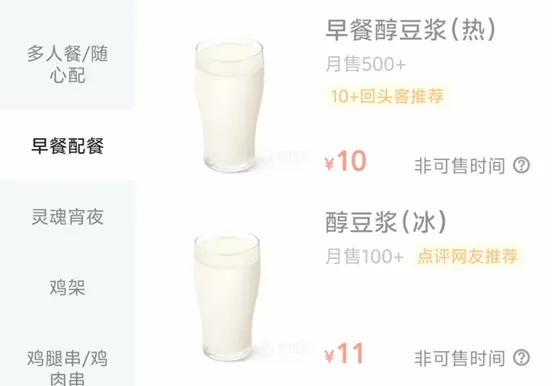
Core Viewpoint - The pricing discrepancy between iced and hot soy milk at KFC has sparked widespread consumer outrage and discussions on social media, questioning the rationale behind the higher price for iced soy milk [1][2][3] Pricing Discrepancy - Consumers are confused about the pricing, with some humorously questioning if ice is worth an extra yuan, while others seriously consider it as a form of hidden charges [2][3] - KFC staff confirmed that the price difference has always existed, attributing it to different cup sizes and capacities, although specific measurements were not provided [2][6] Customer Complaints - KFC has faced a surge in customer complaints, with over 20,000 complaints reported, primarily concerning food quality, service attitude, and after-sales service [6][7] - Issues reported include foreign objects in food, stale ingredients, incorrect orders, and poor service response, leading to a negative consumer experience [6][7] Sales Performance - Despite quality control issues, KFC continues to expand aggressively, with sales growth primarily driven by store openings rather than organic growth [8][9] - In the first half of 2025, KFC's sales increased by 4%, with total revenue reaching $4.342 billion, while same-store sales remained flat [8][9] Store Expansion - KFC's store count reached 12,238 by mid-2025, with a net addition of 295 stores in the second quarter [9] - The proportion of franchise stores among new openings has increased significantly, with a target of 40-50% for future new stores [10] New Brand Initiatives - KFC is diversifying its offerings by launching new sub-brands, including specialized fried chicken stores named "Fried Chicken Brothers" [11][12][13] - The company is adapting to market changes, although some consumers feel that KFC is lagging in innovation compared to its past product development successes [13]

冷饮更贵! 肯德基1元差价遭声讨,冰块刺客?
Xin Lang Ke Ji· 2025-09-06 08:52
Core Viewpoint - The pricing discrepancy between iced and hot soy milk at KFC has sparked widespread consumer debate, with many questioning the rationale behind the higher price for iced soy milk, leading to complaints and even product withdrawals in some locations [1][4][5]. Pricing Discrepancy - KFC has maintained that iced soy milk is priced higher than hot soy milk due to a difference in cup size and capacity, with iced soy milk being approximately 1/4 larger [3][4]. - Industry analysts suggest that the higher cost for iced drinks is justified by the increased energy consumption for refrigeration and the complexity of the ice-making process [4]. Customer Complaints - KFC has faced a significant number of customer complaints, totaling over 20,000, primarily related to food quality, service issues, and after-sales support [5]. - Specific complaints include the presence of foreign objects in food, unresponsive customer service, and complicated refund processes, indicating a gap between service quality and consumer expectations [5]. Sales Performance - KFC remains a crucial revenue source for Yum China, contributing approximately 70% of its total revenue. In the first half of 2025, KFC's sales grew by 4% year-on-year, with total revenue reaching $43.42 billion [6][7]. - The growth in sales is largely attributed to the expansion of store locations rather than organic growth, with KFC's store count reaching 12,238 by mid-2025 [7]. Store Expansion and New Ventures - KFC is accelerating its store expansion, with a net addition of 295 stores in the second quarter of 2025 and a significant increase in franchise stores, which accounted for 39% of new openings [7]. - The company is also diversifying its offerings by launching new sub-brands, such as "Fried Chicken Brothers," indicating a strategic move to capture more market segments [8].
魏家凉皮被顾客“联手做局”?警方通报:老鼠确系25岁男子故意放置
Guan Cha Zhe Wang· 2025-09-06 02:15
Core Viewpoint - The incident involving a well-known chain restaurant, Wei's Liangpi, where a dead mouse was placed in a beverage machine, has been confirmed as a deliberate act by a customer, leading to criminal charges against the individual involved. The restaurant claims it has no issues with food safety, despite ongoing complaints from consumers about food quality and hygiene [1][3][5]. Group 1: Incident Details - On August 31, 2025, a customer placed a dead mouse in the restaurant's beverage machine, causing public concern over food safety [1]. - The police confirmed the incident and detained the individual for disturbing public order, indicating that the restaurant was not at fault [1][5]. - The restaurant's staff conducted thorough checks and found no evidence of mice in the premises, asserting that their monitoring systems are effective [5]. Group 2: Brand Reputation and Consumer Complaints - Despite the incident being labeled as a "setup," Wei's Liangpi continues to face numerous complaints on consumer platforms regarding food safety, including reports of strange odors and foreign objects in food [5][6][14]. - The brand has a history of food safety issues, raising questions about its internal quality control systems [5][20]. Group 3: Business Strategy and Market Position - Wei's Liangpi, established in 1999, has expanded to over 400 locations, primarily known for its Liangpi dish but has gained popularity for its beef burgers and pizzas [15][19]. - The company has recently withdrawn from major food delivery platforms, becoming the first chain restaurant in China to do so, citing high commission fees as a significant burden [20][21]. - Experts suggest that while this move may improve profitability by reducing costs associated with delivery platforms, it risks losing a segment of customers who rely on delivery services [21].

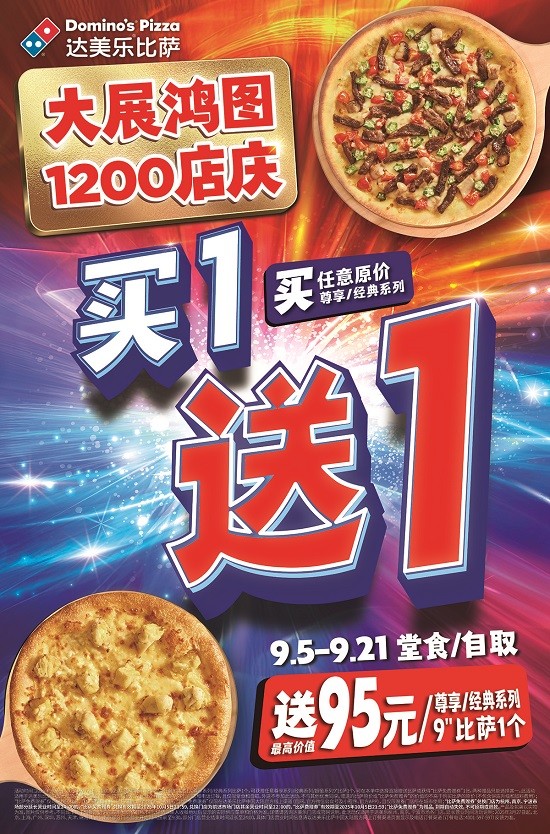
大展宏图!达美乐喜迎1200店庆,指定城市门店指定比萨限时买一送一,两个比萨59元起!
Sou Hu Wang· 2025-09-05 02:05
Group 1 - Domino's Pizza China has surpassed 1200 stores in mainland China, marking a significant milestone in its expansion [1][6] - To celebrate this achievement, Domino's Pizza China is launching a "Buy One Get One Free" promotion from September 5 to September 21, 2025, with pizzas starting at 59 yuan [1][3] - The promotion includes a selection of over 30 different pizza flavors, allowing customers to choose from various crust options [5][6] Group 2 - The "Buy One Get One Free" promotion allows customers to purchase any 9" or 12" pizza from the premium or classic series and receive a free 9" pizza of equal or lesser value [3][7] - The promotion is available through various ordering channels, including online, in-store, and phone orders, across 14 cities [4][8] - Domino's Pizza China guarantees delivery within 30 minutes, offering a free pizza voucher for delays, enhancing customer service [6][7]

美国人吃不起麦当劳了?麦当劳CEO称将恢复“超值套餐”,最低只要5美元
Sou Hu Cai Jing· 2025-09-05 01:34
Group 1 - McDonald's CEO Chris announced the return of "value meals" in the U.S. on September 8, with prices starting at $5 for a sausage McMuffin with egg and $8 for a Big Mac meal, following a strategy that was popular during the 2008 financial crisis [1] - Recent months have seen a significant decline in sales among low-income customers, with a nearly double-digit drop compared to the previous quarter [1] - The economic pressure on low-income consumers is reflected in their dining habits, with many skipping breakfast, indicating growing financial strain as of 2025 [1] Group 2 - McDonald's will offer eight meal options during breakfast, lunch, and dinner, with prices 15% lower than purchasing items separately [2] - The CFO Ian Borden emphasized the need to appeal to all consumers, including low-income individuals [2] - Economic experts warn that rising prices could lead to cautious consumer behavior, potentially creating a vicious cycle of layoffs and reduced spending power [2]

涪陵榨菜:榨菜销量下滑丨消费参考
2 1 Shi Ji Jing Ji Bao Dao· 2025-09-04 23:41
Group 1 - The core viewpoint is that Fuling Zhacai is reassessing its key pickled vegetable business due to changing market dynamics and consumer preferences [1][4] - In the first half of 2025, Fuling Zhacai reported a revenue increase of 0.5% year-on-year to 1.31 billion yuan, while net profit attributable to shareholders decreased by 1.7% to 440 million yuan [1] - Revenue from the pickled vegetable category was 1.12 billion yuan, with a year-on-year growth of 0.5%, while sales volume declined by 1.2% [1] Group 2 - The company is facing challenges in sales channels as consumer preferences shift towards alternative products, and urban population trends are affecting its market coverage [3] - Fuling Zhacai is implementing a strategy to expand product categories and market reach, focusing on new product development and channel expansion [3] - The company is adjusting its production plans by reducing conventional pickled vegetable production lines and increasing the production of multi-specification products and sauces [3] Group 3 - The stock price of Fuling Zhacai was reported at 13.24 yuan per share, with a slight increase of 0.76% [5] - The consumer index for the sector showed a decline, with the consumption index dropping by 2.21% [6]

魏家凉皮西安一门店被曝饮料机上有老鼠!客服称已报警处理
Nan Fang Du Shi Bao· 2025-09-03 11:07
Group 1 - A customer reported seeing a mouse in a beverage machine at a Wei Jia Liang Pi store in Xi'an, which has attracted significant attention [1] - The official customer service of Wei Jia Liang Pi confirmed the incident and stated that the police have been notified and an investigation is underway, suspecting it may be a deliberate act by a customer [1][1] - The company has stated that there have been no previous reports of mice in the store since its opening and that they work with a pest control company [1][1] Group 2 - Wei Jia Liang Pi was established in 1999 and is a brand under Shaanxi Wei Jia Catering Group Co., Ltd., which currently operates over 400 stores [1] - The Shaanxi Wei Jia Catering Group Co., Ltd. was founded in February 2023, with Wei Wenjun as the legal representative, and includes multiple brands such as Wei Jia Liang Pi, Wei Jia Convenience, Wei Ke Coffee, and Wei Si Li Hamburger [1]