化妆品

Search documents
化妆品“唯成分论”乱象 检测屡陷“罗生门”
Jing Ji Guan Cha Wang· 2026-01-19 05:52
Core Viewpoint - The ongoing disputes regarding cosmetic ingredient content highlight the complexities of ingredient testing and the challenges consumers face in discerning accurate information [1][2][3] Group 1: Disputes and Testing Challenges - Different testing institutions yield varying results for the same cosmetic ingredient, leading to consumer confusion and mistrust [2][4] - The complexity of cosmetic formulations, which often contain numerous ingredients, complicates the accuracy of testing results [4][5] - The lack of standardized testing methods contributes to discrepancies in results, as different institutions may use varying techniques and protocols [4][5][6] Group 2: Consumer Guidance and Industry Practices - Consumers are advised to prioritize testing institutions with recognized qualifications, such as CMA and CNAS, and to be cautious of unqualified third-party tests [7] - The impact of ingredient content variations can be significant, especially for active ingredients present in low concentrations, where small differences can affect efficacy [8][9] - The rise of ingredient-focused consumers has prompted brands to disclose more product information, making testing results a critical factor in product valuation [9][10] Group 3: Industry Development and Recommendations - The cosmetic industry is encouraged to adopt a foundation based on skin science and evidence-based practices to address the ongoing disputes and improve consumer communication [11][12][13] - Establishing a unified standard for ingredient testing that incorporates evidence-based data and involves diverse stakeholders is essential for enhancing credibility [12][13] - The industry must shift focus from mere ingredient content to the actual effects of ingredients on skin, ensuring that product efficacy and safety are prioritized [13]
玫莉蔻13年深耕,以玫瑰匠心获授泰国亲王御用产品荣誉
Jiang Nan Shi Bao· 2026-01-19 03:41
中泰建交50载的暖光里,大马士革玫瑰的芬芳成了无界的语言。泰国查猜亲王与王妃的成都之行,开启 了一场以美为桥、以匠心为契的跨国相遇,为玫莉蔻的13年深耕写下温润注脚,让东方玫瑰护肤的温 度,被世界温柔看见。 两场相遇,一宴一园,看似偶然,实则必然。这份跨越山海的认可,从来不是偶然的幸运,而是玫莉蔻 13年深耕玫瑰护肤的必然结果——是对自然的虔诚敬畏,是对工艺的执着,是让护肤成为愉悦体验的初 心坚守。它无关商业的喧嚣,只关乎品质的纯粹与文化的共鸣,源于彼此的真诚与懂得。 园访初心:匠心的切身体验 次日清晨,亲王与王妃如约走进玫莉蔻玫瑰庄园概念旗舰店。没有繁复的接待流程,只有如同老友介绍 自家小院的坦诚分享,每一处空间都在诉说"一玫一心"的匠心故事。原料展示区里,从甄选的玫瑰原材 到特定的萃取工艺,从无数次配方调试到"自然+科技"的理念,每一个细节都在诉说"产品为何不同"的 答案。亲王一行专注聆听,时而颔首赞许,这份对精益求精的认可,无关国籍,只源于对美好事物的共 同执着。产品体验区里,亲王王妃再次邂逅"发光肌",亲身体验后直言"欣赏这份健康通透的光泽";小 憩时分,清雅的玫瑰花茶、专属面部与手部护理,让远道而来 ...


港股异动 | 林清轩(02657)涨超12%创上市新高 公司深耕以油养肤赛道 产品渠道拓展加速
智通财经网· 2026-01-19 03:22
Core Viewpoint - Lin Qingxuan (02657) has seen a significant stock price increase, reaching a new high of 96 HKD, reflecting strong market performance and investor interest in the high-end skincare segment [1] Company Overview - Lin Qingxuan is a high-end domestic skincare brand in China, focusing on anti-wrinkle and firming skincare products, known for its use of natural camellia ingredients [1] - According to Zhi Shi Consulting, Lin Qingxuan ranks first among all high-end domestic skincare brands in China by retail sales, holding a 1.4% market share, and is the only domestic brand in the top 15 high-end skincare brands, which includes both domestic and international brands [1] Market Position and Growth Potential - Guotai Junan Securities reports that the company is well-positioned in the high-end skincare market and has entered a growth phase, particularly in the oil-based skincare segment, with expectations for continued high growth driven by flagship products and expansion on platforms like Douyin and offline channels [1] - Dongwu Securities suggests that Lin Qingxuan is in a growth phase characterized by brand momentum and channel benefits, recommending investors to pay close attention to the company [1]
林清轩:以油养肤开创者,产品渠道拓展加速-20260119
GUOTAI HAITONG SECURITIES· 2026-01-19 02:55
Investment Rating - The report assigns an "Accumulate" rating to the company [6][11]. Core Viewpoints - The company has established itself in the high-end skincare market, pioneering the oil-based skincare segment. It is expected to experience rapid growth driven by its flagship products and ongoing expansion in both online and offline channels [2][11]. Financial Summary - The company is projected to achieve total revenue of RMB 805 million in 2023, increasing to RMB 4.274 billion by 2027, reflecting a compound annual growth rate (CAGR) of 27.3% [4]. - Net profit is expected to grow from RMB 85 million in 2023 to RMB 767 million by 2027, with a significant increase of 121.1% in 2024 [4]. - The company’s price-to-earnings (PE) ratio is projected to decrease from 27.93 in 2025 to 13.98 in 2027, indicating improving valuation metrics [4]. Company Overview - The company has been deeply involved in the oil-based skincare segment for many years, showcasing strong growth and profitability. It was founded in 2003 and has evolved its product offerings to focus on high-end anti-aging solutions [23][11]. - The flagship product, Camellia Oil, has been a market leader in the facial oil category for 11 consecutive years, demonstrating its effectiveness and market acceptance [11][23]. Industry Insights - The oil-based skincare segment is experiencing high demand, with the market for facial oils expected to reach RMB 5.3 billion in 2024, growing at a rate of 43% year-on-year [45][48]. - The overall anti-aging skincare market is projected to reach RMB 119.9 billion in 2024, with a growth rate of 11% [45][46]. Growth Drivers - The company is leveraging social media platforms like Douyin to drive sales of its flagship products, with online revenue expected to grow significantly [11][35]. - The expansion of offline retail channels is also anticipated to contribute to revenue growth, with over 554 stores established by mid-2025 [11][35].
知行数据观察 乳液面霜品类行业宏观市场调研
知行合一集团· 2026-01-19 02:50
Investment Rating - The report does not explicitly state an investment rating for the industry Core Insights - The lotion and cream categories are fundamental in skincare, primarily used for moisturizing and nourishing the skin, with distinctions based on texture, oil content, and suitable skin types/seasons [7] - Moisturizing remains the core demand with a 31% share, but its growth rate is stable at 5%, indicating a mature stage with limited growth potential. Nourishing creams, although only 5% of the market, show the highest growth rate at 16%, indicating a rising demand for high-nutrition lotions and creams [9][10] - The market is experiencing a shift, with a notable decline in demand for soothing, firming, and anti-wrinkle products, suggesting a saturation of these categories [9][10] Market Trends - The online sales landscape is shifting, with Douyin's sales share increasing from 44% to 49% and volume share from 47% to 67% between 2023 and 2025, while Tmall's shares are declining [16][22] - The average price on Tmall has risen significantly, while Douyin's average price dropped sharply, indicating a strategy focused on volume through lower pricing [15][20] - The overall market growth is slowing, with a projected sales growth of only 4.3% from 2024 to 2025, suggesting that companies need to adapt to channel characteristics [22] Competitive Landscape - The top brands on Tmall are dominated by high-end products, with significant sales figures, while Douyin shows a more fragmented market with rapid growth among new brands [24][26] - Domestic brands are leading in low-price, high-volume segments, while international brands maintain a high-price, low-volume strategy [26] - The report highlights the importance of product differentiation and the need for brands to focus on emerging trends and consumer demands to capture market share [11][12] Consumer Behavior - There is a significant demand for products targeting sensitive skin and repair, which are identified as "blue ocean" opportunities due to supply shortages [11] - The report indicates that high-demand, low-supply segments present opportunities for growth, while high-supply, low-demand segments require careful evaluation [12] Brand Strategies - Brands are increasingly leveraging live streaming and influencer partnerships to enhance visibility and sales, with a notable shift towards using influencers to reach broader audiences [50][57] - The report emphasizes the importance of maintaining a balance between high-end positioning and market penetration through various pricing strategies [41][42]
大股东股权被冻结!又一美妆企业IPO失败
Sou Hu Cai Jing· 2026-01-19 02:40
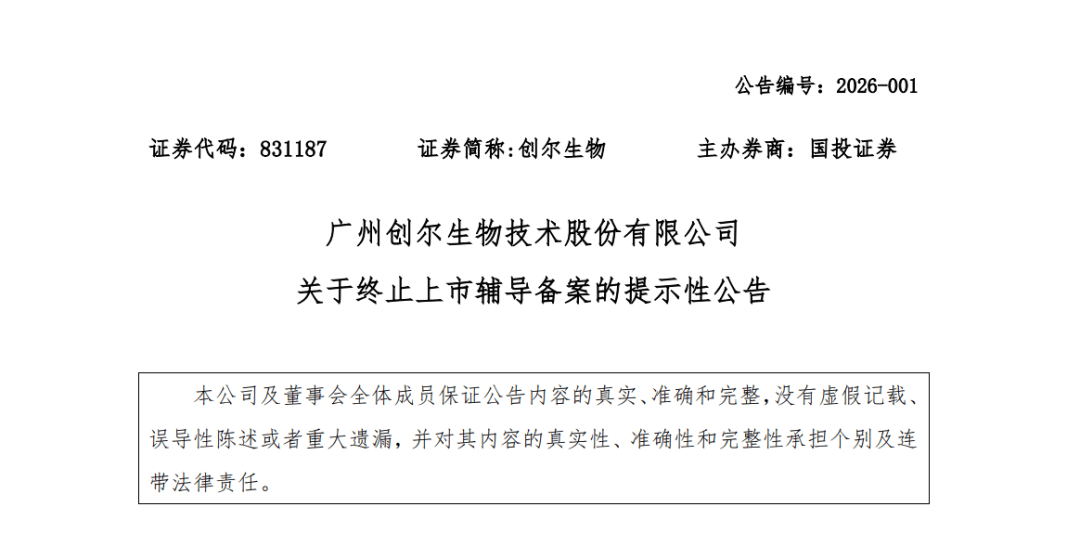
Core Viewpoint - The cosmetic industry faces its first IPO termination case in 2026, as Chuang'er Bio announces the cessation of its listing guidance due to unresolved shareholder equity freeze issues, marking its second failed IPO attempt [1][3][11]. Group 1: IPO Termination Reasons - The termination of the IPO guidance is attributed to the long-term unresolved issue of shareholder equity freeze, particularly involving the second-largest shareholder Ding Yumei, whose shares are frozen due to legal actions related to Evergrande's debt crisis [3][5][8]. - The company had previously attempted to go public, facing setbacks including two failed applications to the Sci-Tech Innovation Board and a subsequent shift to the Beijing Stock Exchange, which also did not yield results [10][11]. Group 2: Financial Performance and Challenges - Chuang'er Bio has struggled with fluctuating financial performance, with revenue consistently hovering between 240 million and 400 million RMB over the past six years, indicating a clear growth ceiling [12][14]. - The company's revenue for 2025 was reported at 214 million RMB for the first half, reflecting a year-on-year increase of 16.98%, but net profit plummeted by 55.99% to 13.21 million RMB, highlighting a trend of "increased revenue without increased profit" [13][14]. Group 3: Industry Context and Competitive Landscape - The collagen market is projected to surpass hyaluronic acid, becoming the leading ingredient in skincare by 2025, with a forecasted market size of 108.3 billion RMB by 2027, growing at a compound annual growth rate of 42.4% [16]. - Competitors like Juzhi Bio and Jinbo Bio have significantly outpaced Chuang'er Bio in both revenue and profitability, with Juzhi Bio's revenue soaring from 2.36 billion RMB in 2022 to 5.54 billion RMB in 2024, while Chuang'er Bio's growth remains stagnant [17][20]. Group 4: Regulatory and Technological Challenges - Regulatory tightening and the decline of the "medical device" business model have adversely affected Chuang'er Bio, which previously relied on its medical dressing products for competitive advantage [18]. - The shift in technology from animal-derived collagen to recombinant collagen has created a gap, with competitors advancing in this area while Chuang'er Bio remains focused on traditional collagen products [19][20]. Group 5: Future Outlook - The termination of the IPO is seen as a culmination of long-standing issues in industry competition, technological positioning, and capital utilization, suggesting that Chuang'er Bio must find a sustainable growth engine and differentiate itself in a competitive landscape to consider future IPO attempts [21].
从平阴玫瑰到港股IPO:半亩花田上市背后的“国潮崛起”真相
Sou Hu Cai Jing· 2026-01-19 02:06
Core Viewpoint - The domestic beauty brand "Banmu Huatian" has submitted its listing application to the Hong Kong Stock Exchange, aiming to become the first domestic personal care stock in Hong Kong, with CITIC Securities as its sponsor [2] Group 1: Company Overview - Banmu Huatian's parent company, Shandong Huawutang Cosmetics Co., Ltd., was established in 2018 and operates as a full industry chain brand focusing on body care, with R&D centers in Jinan, Shanghai, and Guangzhou [2] - The company has completed two rounds of financing, attracting attention from industry players like Marubi and Lin Qingxuan [2] - According to the prospectus, Huawutang is projected to achieve revenues of 1.199 billion yuan and 1.499 billion yuan in 2023 and 2024, respectively, with adjusted net profits of 23.7 million yuan and 82.8 million yuan [2] Group 2: Product Performance - Banmu Huatian's product lines include body care, hair care, and facial care, with body and facial care accounting for over 80% of revenue in 2024 [3] - Hair care products saw significant growth, with revenue increasing from 80.884 million yuan to 482 million yuan, a 496% increase, and their revenue share rising from 7.5% to 25.4% [3][9] Group 3: Market Trends - In 2023, domestic beauty brands captured 50.4% of the market share, surpassing foreign brands for the first time, and this is expected to rise to 55.2% in 2024 [4] - Over 90% of Gen Z consumers have chosen domestic beauty brands, with nearly all post-2000 consumers having tried domestic brands [4][5] Group 4: Brand Strategy - Banmu Huatian has effectively engaged with young consumers by signing influential celebrity endorsements, which has significantly boosted its brand recognition and sales [5] - The company has established a strong product ecosystem, with standout products like the "Whitening Body Lotion" and "Ice Cream Smooth Body Scrub" achieving substantial sales [8][9] Group 5: Supply Chain and Industry Position - The success of Banmu Huatian is attributed to its deep integration of the supply chain and industry chain, allowing for effective control over raw materials and production standards [6][7] - The company has established raw material plantations across more than 10 locations in China, enhancing its supply chain capabilities [6] Group 6: Future Outlook - The competitive landscape for domestic beauty brands is intensifying, with a focus on deepening supply chain collaboration as a core competitive advantage [7] - The ability to innovate in product development through supply chain synergy will be crucial for brands to succeed in the next market cycle [7][10]

国泰海通证券:首予林清轩“增持”评级 以油养肤开创者 产品渠道拓展加速
Zhi Tong Cai Jing· 2026-01-19 01:49
Core Viewpoint - Cathay Securities initiates coverage on Lin Qingxuan (02657) with a "Buy" rating, highlighting the company's long-standing focus on oil-based skincare and its potential for sustained rapid growth driven by Douyin and product expansion [1] Group 1: Company Overview - Lin Qingxuan, founded in 2003, initially focused on natural skincare products like handmade soaps and aloe vera gel, and launched its flagship product, camellia oil essence, in 2014, establishing itself as a pioneer in oil-based skincare [1] - The company has a stable and experienced management team, and has recently accelerated its online transformation, with significant growth in revenue and net profit in the first half of 2025, achieving 10.5 million and 1.8 million RMB respectively, representing year-on-year increases of 98% and 110% [1] Group 2: Market Position and Growth Potential - The oil-based skincare segment is experiencing high demand, with the market size projected to reach 5.3 billion RMB in 2024, reflecting a year-on-year growth of 43% and a CAGR of 42% from 2019 to 2024 [2] - Lin Qingxuan has maintained a leading position in the facial essence oil category, holding a 12.4% market share in 2024, significantly ahead of other brands [2] Group 3: Sales and Distribution Channels - The company's flagship product, the camellia oil essence, has seen rapid growth, with revenue from this category increasing by 176% year-on-year in the first half of 2025, accounting for 46% of total revenue [3] - Online sales have surged, with Douyin driving a 137% year-on-year increase in online revenue, which now constitutes 65% of total sales; the company also has over 554 physical stores, indicating substantial room for further expansion [3]

国泰海通证券:首予林清轩(02657)“增持”评级 以油养肤开创者 产品渠道拓展加速
智通财经网· 2026-01-19 01:44
Core Viewpoint - Cathay Securities initiates coverage on Lin Qingxuan (02657) with a "Buy" rating, highlighting the company's long-standing focus on oil-based skincare and the significant growth potential driven by Douyin and product expansion [1] Group 1: Company Overview - Lin Qingxuan, founded in 2003, initially focused on natural skincare products like handmade soaps and aloe vera gel, and launched its flagship product, camellia oil essence, in 2014, establishing itself as a pioneer in oil-based skincare [1] - The company has a stable and experienced management team, and its recent online transformation has led to accelerated growth, with H1 2025 revenue and net profit reaching 1.05 billion and 180 million RMB, respectively, representing year-on-year increases of 98% and 110% [1] Group 2: Market Position - The oil-based skincare segment is experiencing high demand, with the market size projected to reach 5.3 billion RMB in 2024, reflecting a year-on-year growth of 43% and a CAGR of 42% from 2019 to 2024 [2] - Lin Qingxuan has maintained a leading position in the facial essence oil category, holding a 12.4% market share in 2024, significantly ahead of other brands [2] Group 3: Growth Drivers - The company's flagship product, the camellia oil essence, has seen rapid growth, with H1 2025 revenue from this category increasing by 176%, accounting for 46% of total revenue [3] - Online sales have surged, with H1 2025 online revenue growing by 137%, making up 65% of total revenue, driven by Douyin's influence [3] - The company has a robust offline presence with over 554 stores as of H1 2025, indicating potential for further expansion and increased sales per store [3]
外资再投资中国:新政策与激励措施
Sou Hu Cai Jing· 2026-01-19 00:54
Core Viewpoint - China is enhancing its efforts to attract foreign investors through new policies that promote reinvestment of profits locally, offering tax breaks, expedited approvals, and improved business services [2][3]. Foreign Investment and Reinvestment - During the "14th Five-Year Plan," China attracted US$708.7 billion in foreign investment and established 229,000 new foreign enterprises [3]. - The "Measures to Encourage Foreign-Invested Enterprises to Reinvest in China" were introduced by the NDRC, Ministry of Finance, and Ministry of Commerce to support long-term investment growth [3]. Reinvestment Definition and Implications - Reinvestment involves foreign companies reinvesting their profits earned in China back into the local market for further growth [4]. - This can include launching new ventures, expanding existing operations, and acquiring shares or assets in Chinese companies [4]. Profit-Retention and Reinvestment Loop - The goal is to create a cycle where earnings remain in China, promoting expansion and unlocking benefits such as tax incentives and streamlined approvals [5]. Key Incentives for Foreign Investors - The new policy includes 12 measures to facilitate reinvestment, such as faster project approvals, simplified paperwork, flexible land-use options, tax credits of up to 10% for reinvested profits, easier foreign exchange and financing support, and priority access to high-tech industries [6][7][8][9][10]. Multinational Responses - Major multinationals are responding positively to these incentives, with examples including Lexus completing a new energy project in Shanghai in under five months, Vandewiele opening its largest manufacturing base in Jiangsu, and Weidmann Electrical Insulation launching a US$91 million plant in Wuhan [11][12][14]. - Executives express confidence in China's market prospects, highlighting the benefits of streamlined approvals and tax credits [15][16][17]. Focus on High-Tech and R&D - High-tech industries accounted for 34.6% of foreign investment in 2024, reflecting a six-point increase since 2020 [18]. - Multinationals are establishing R&D centers and regional headquarters to support local product development, with innovation clusters in cities like Shanghai, Shenzhen, and Wuhan driving growth in various sectors [19][20]. Financial Benefits and Policy Support - China's reinvestment framework offers financial benefits such as tax credits for reinvested profits, flexible land-use policies, and streamlined foreign exchange and financing services [22][23]. - Companies are leveraging these advantages to accelerate projects and drive sustainable growth, as seen in Otis's plans for elevator modernization and L'Oréal's investment in green manufacturing [24]. Strategic Timing for Reinvestment - With favorable tax incentives and support for key industries, China is positioning itself as a long-term growth hub for global companies [25]. - Reinvesting now allows businesses to reduce operational costs, access booming sectors, and establish local partnerships, thereby benefiting from China's evolving markets [26].