乳制品

Search documents
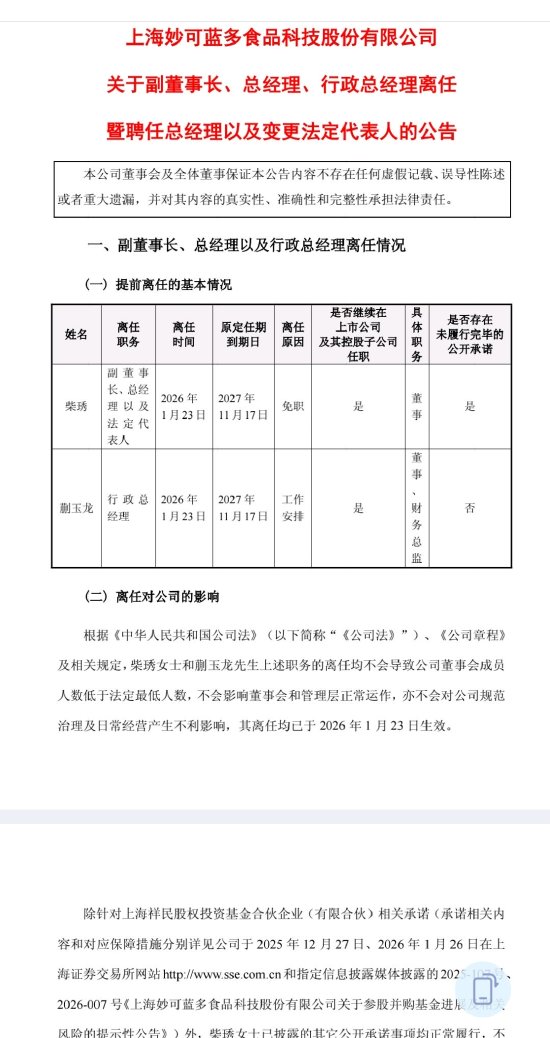
重磅!对赌失败出局?“蒙牛系”职业经理人正式接手妙可蓝多,柴琇时代结束!
Xin Lang Cai Jing· 2026-01-26 03:14
Core Viewpoint - The sudden dismissal of founder Chai Xiu from Miaokelando (600882.SH) marks a significant shift in the company's leadership and direction, transitioning from the "Chai Xiu era" to a more regulated management under Mengniu's influence [1][3][25]. Group 1: Leadership Changes - Chai Xiu was removed from her positions as Vice Chairman, General Manager, and legal representative, indicating a serious internal conflict rather than a voluntary resignation [1][2]. - The new CEO, Kuai Yulong, previously served as CFO and is seen as a professional manager from the Mengniu system, suggesting a shift towards a more structured corporate governance [2][24]. Group 2: Financial Implications - The dismissal was triggered by a significant debt issue involving a fund established by Chai Xiu, which has led to a projected net profit reduction of Miaokelando by 119 to 127 million yuan for 2025 [5][28]. - Kuai Yulong's strategy upon taking office involves clearing historical debts to start with a clean balance sheet, a common tactic among professional managers [6][28]. Group 3: Historical Context - Chai Xiu's entrepreneurial journey began with a bold bet on the cheese market, which was previously dominated by foreign brands, leading to a significant growth period for Miaokelando from 2018 to 2021 [9][10][33]. - The company's rapid expansion was supported by aggressive marketing strategies, including partnerships with popular children's brands, which significantly increased brand recognition and stock value [10][33]. Group 4: Challenges Ahead - The new leadership faces a declining revenue trend, with a reported 8.99% drop in revenue for 2024, marking the first negative growth since the company went public [16][38]. - The competitive landscape has intensified, with the cheese market becoming saturated and brand premiums diminishing, posing significant challenges for future growth [16][38]. Group 5: Future Strategies - Kuai Yulong is expected to implement strict compliance and risk management practices, leveraging Mengniu's supply chain to reduce costs and focusing on B2B channels to drive sales [40][41]. - The shift towards a more conservative and structured approach may lead to a less dynamic company culture, potentially stifling innovation and aggressive market strategies that characterized the previous leadership [42][43].


食品饮料周报(26年第4周):各品类春节备货有序进行,预制菜国标将征求意见-20260126
Guoxin Securities· 2026-01-26 02:59
Investment Rating - The report maintains an "Outperform the Market" rating for the food and beverage sector [4][5][11]. Core Views - The food and beverage sector is expected to perform well in 2026, driven by cost advantages, efficiency improvements, innovation, and potential recovery opportunities in the liquor segment [3][11][15]. - The report highlights a diversified performance across sub-sectors, with beverages outperforming food and liquor categories [2][11]. Summary by Relevant Sections 1. Sector Overview - The food and beverage sector saw a cumulative decline of 1.37% this week, with A-shares down 1.57% and H-shares up 1.21% [1]. - Key performers included companies like Hao Xiang Ni and Wei Zhi Xiang, with significant weekly gains [1]. 2. Sub-sector Insights - **Liquor**: - Moutai's price remains stable with an upward trend, and the focus is on sales momentum during the Spring Festival. Recommendations include Moutai, Shanxi Fenjiu, and Luzhou Laojiao [2][11]. - **Beverages**: - The dairy segment is seeing orderly preparations for the Spring Festival, with a focus on leading companies like Yili. Recommendations include Nongfu Spring and Dongpeng Beverage [2][15]. - **Snacks**: - The report emphasizes strong alpha stocks in the snack sector, particularly in konjac products, with companies like Weidong and Yanjinpuzi showing strong innovation [2][13]. - **Catering Supply Chain**: - The sector is entering a peak season for inventory and sales, with new standards for prepared dishes being solicited for public opinion [2][14]. 3. Investment Recommendations - The report suggests a focus on four main lines for investment: cost advantages, efficiency improvements, innovation-driven companies, and potential recovery in the liquor sector [3][11]. - Recommended stocks include Baba Foods, Dongpeng Beverage, Weidong, and Shanxi Fenjiu, which have shown resilience and growth potential [17][19]. 4. Earnings Forecasts - Key companies are projected to maintain strong earnings growth, with Moutai expected to achieve a stable performance and Yili showing significant recovery potential [4][15][19]. - The report provides detailed earnings forecasts for several companies, indicating a positive outlook for the food and beverage sector [4][19].




牛系列-一体化企业如何看奶价-看消费
2026-01-26 02:49
Summary of Key Points from Conference Call Records Industry Overview - The Chinese dairy industry is undergoing structural adjustments, with a projected elimination of approximately 200,000 cows in 2026 due to insufficient heifer supply, accelerating industry reshuffling [1][11] - The scale of dairy farms is increasing, although full costs remain in loss, the loss margin is narrowing, and group enterprises are enhancing their self-controlled milk source ratio [1][2] Core Insights and Arguments - The cash cost for large-scale dairy farms is around 2.8 RMB per kg, while the total cost is approximately 3.3-3.4 RMB per kg, including depreciation costs of about 0.6 RMB [2] - The loss rate among dairy farms has decreased from 95% to 65%, indicating an improvement in financial health [2] - Group enterprises like Mengniu and Yili have achieved a self-controlled milk source ratio of 50%-70%, focusing on cost reduction to gain market advantage [3] - The rapid expansion of deep processing enterprises in Ningxia is notable, although it poses risks of blind expansion [4][5] Market Trends - The Chinese dairy product market is experiencing structural changes driven by consumer preferences for high cost-performance products, with exports becoming increasingly competitive [1][6] - The average price of bulk fresh milk is expected to fluctuate between 3.2-3.6 RMB per kg over the next two years [6] - The demand for deep processing is pushing farms to focus on milk components, with major companies enhancing protein content to meet the needs of specialized foods and health products [1][7][9] Competitive Landscape - China's dairy industry is facing competition from international food companies like Nestlé and Danone, which are experiencing profit erosion due to China's decreasing production costs [14][23] - The average production cost of milk in China has dropped to around 1.7 RMB per kg, with some regions like Ningxia achieving costs as low as 1.5 RMB per kg, enhancing international competitiveness [13][16] Future Development and Strategies - To enhance competitiveness, Chinese dairy farms should focus on continuous cost reduction, improving breeding technologies, and embracing digital agriculture [15][18] - The solid milk sector is growing rapidly, with a projected annual growth rate of about 20%, driven by increasing consumer demand for high-quality dairy products [19][20] - The export of Chinese dairy products is supported by favorable policies and strong industrial capabilities, with significant potential in Southeast Asia and the Middle East markets [21][22] Additional Insights - The upcoming consumption peak around the Spring Festival may have varying impacts on milk prices across regions, with a general expectation of a smoother price cycle due to changing consumer perceptions [12] - The meat cattle industry is expected to experience a bullish cycle in the next two to three years due to tight supply and increasing domestic demand [24]
牛牧大周期-原奶及牛肉价格趋势更新
2026-01-26 02:49
Summary of Key Points from Conference Call Industry Overview - **Dairy Industry Trends**: The raw milk prices have increased due to the reduction of social pastures, leading to a tight supply-demand situation. Northern raw milk prices have reached CNY 3.3 to 3.4 per kilogram, while southern contract prices are higher, with spot milk prices at CNY 3.7 to 3.8 per kilogram. This trend is expected to continue post-Chinese New Year [1][2]. Company Performance - **Junlebao's Financial Performance**: Junlebao's revenue for 2024 is projected to be approximately CNY 20 billion, with profits exceeding CNY 1 billion. In the first three quarters of 2025, revenue is expected to show slight growth, while profits are anticipated to increase by about 30%. The gross margin is slightly down, but the net profit margin has improved, indicating enhanced profitability [3][4]. - **Market Position**: Junlebao ranks third among comprehensive dairy companies in China, holding a market share of 4.3%. It is the second-largest in low-temperature liquid milk market share and third in fresh milk market share. The company has a broad layout of pastures and production bases, with a high self-sufficiency rate in raw milk [7]. Market Dynamics - **Liquid Dairy Product Market**: In 2024, liquid dairy products account for 54.3% of the total dairy consumption in China, with a market size of CNY 355 billion. Although growth is expected to be under pressure in 2024 and 2025, a recovery to low single-digit growth is anticipated in the coming years. The per capita consumption of dairy products in China is significantly lower than in developed countries, indicating substantial room for growth [5]. - **Low-Temperature Products Growth**: The low-temperature product market is growing at a compound annual growth rate (CAGR) of about 3%, outpacing the overall growth of liquid milk. The penetration rate of low-temperature products is expected to increase to 30% in the coming years, with faster growth in lower-tier markets [6]. Price Trends in Beef Industry - **Beef Price Trends**: Since January, beef prices have been steadily rising across the country, with a national average price of CNY 12.4 to 14.2 per jin. The demand for quality beef is strong due to tight supply and pre-festival stocking needs, indicating a confirmed upward trend in the medium to long term [8]. - **Calf and Culling Cow Prices**: The prices for quality calves remain high due to strong demand, with prices for calves weighing around 400 jin at CNY 20 to 21 per jin. The prices for culling cows are also rising, with southern prices at CNY 12 to 13 per jin and northern prices between CNY 11.5 to 12.8 per jin [9][10]. Additional Insights - **Consumer Behavior**: The current per capita dairy consumption in China is below 50 kg annually, significantly lower than in Japan and South Korea, and far below over 200 kg in Western countries. This suggests a large potential for growth in dairy consumption in China [5]. - **Market Competition**: The competition in the dairy industry is becoming healthier, with leading companies regaining pricing power due to improved supply-demand dynamics [2].
当乳业巨头失速,君乐宝如何靠“鲜”战略冲击港股
Zhi Tong Cai Jing· 2026-01-26 02:41
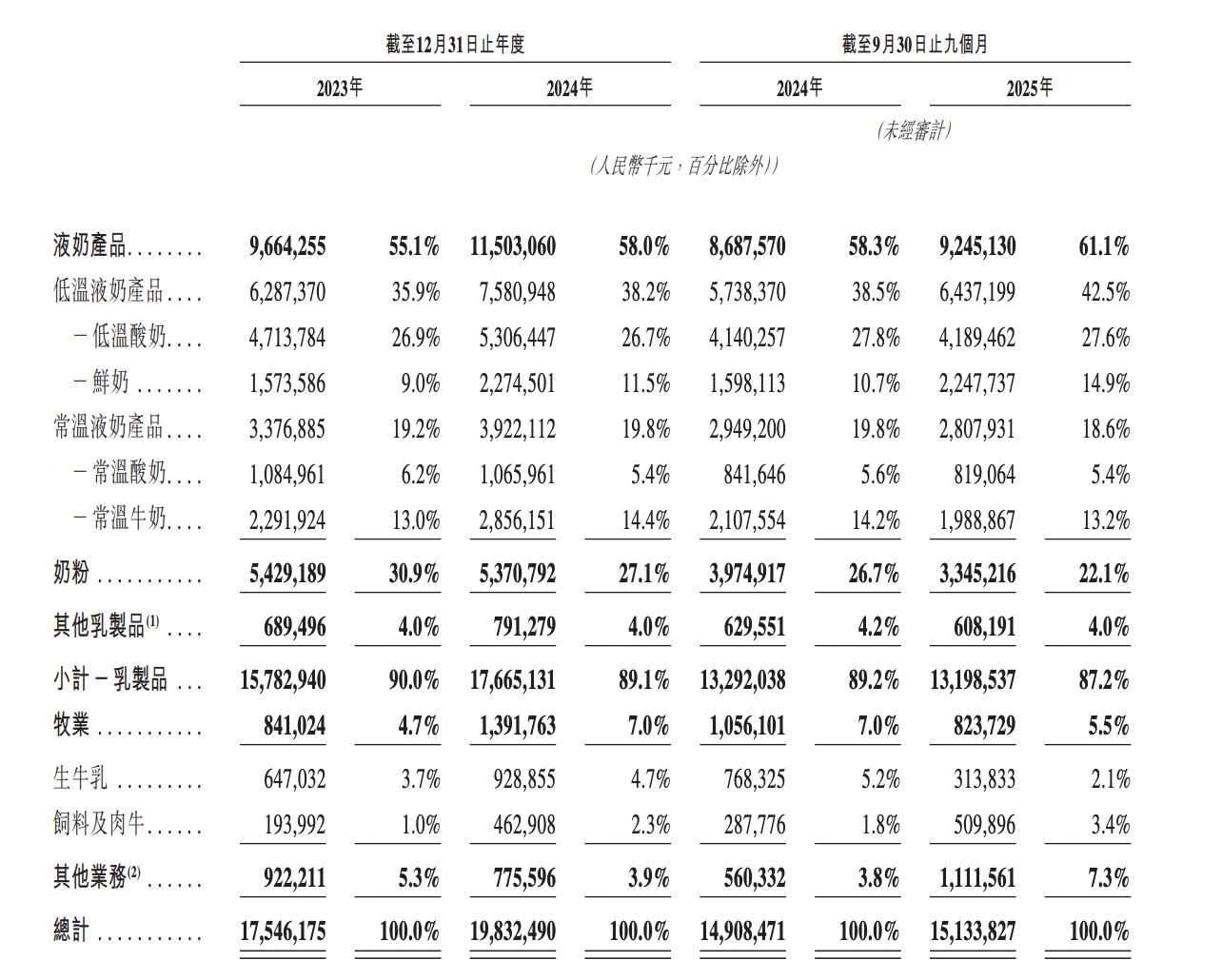
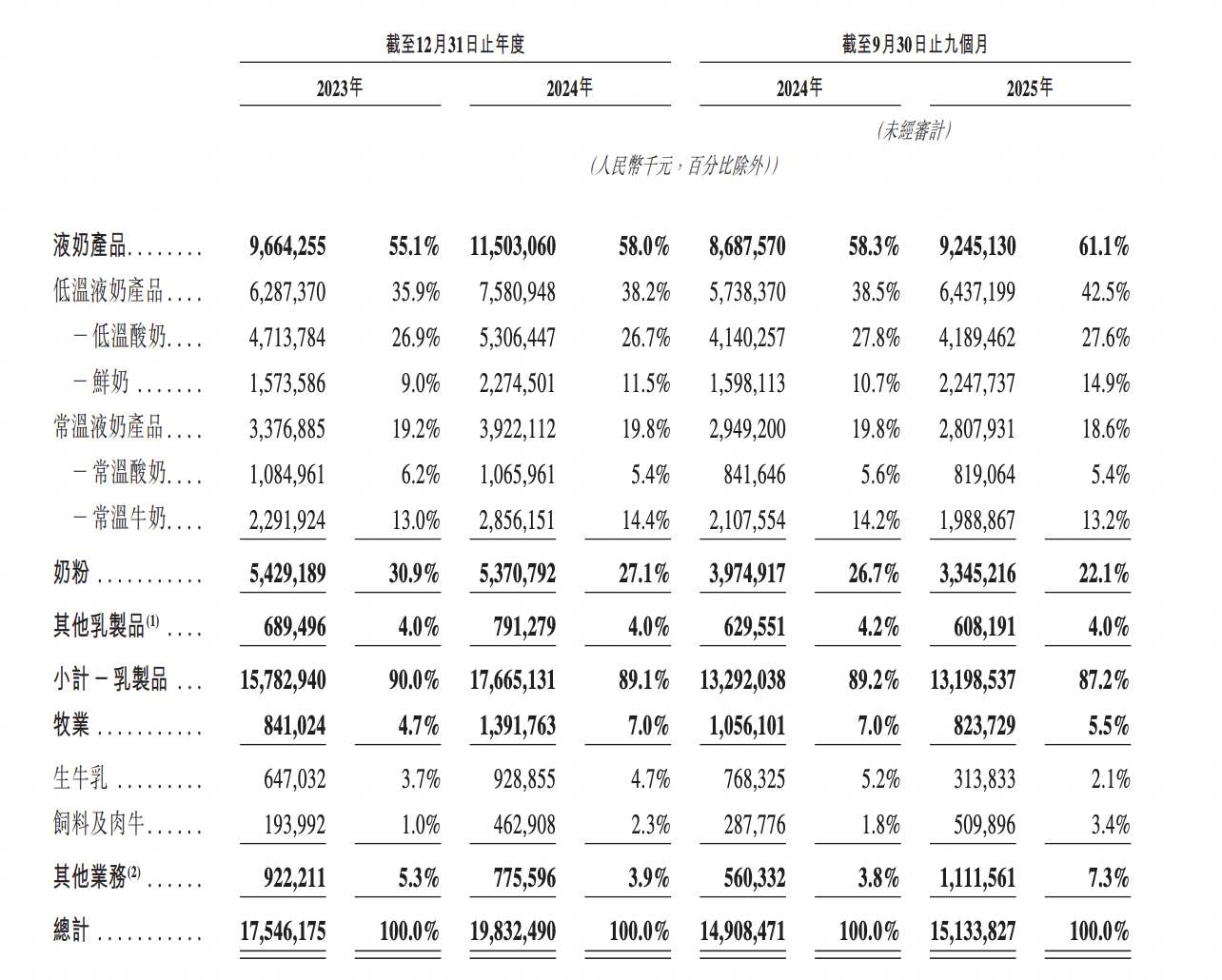
Core Viewpoint - The news highlights the significant transformation of the Chinese dairy industry following the 2008 melamine scandal, with Junlebao Dairy Group's upcoming IPO representing a pivotal moment in its strategic evolution and response to market dynamics [1]. Company Overview - Junlebao Dairy Group has submitted its IPO application to the Hong Kong Stock Exchange, with CICC and Morgan Stanley as joint sponsors, indicating a new phase in its development [1]. - The company ranks third in China's comprehensive dairy market with a market share of 4.3%, driven by a diversified product matrix and an integrated supply chain [2]. Market Position and Growth - Junlebao's growth is primarily attributed to its leading position in the rapidly growing low-temperature liquid milk sector, which is expected to maintain a compound annual growth rate (CAGR) of 7.2% over the next few years [2]. - The "Yuexianhuo" brand has captured 24.0% of the high-end liquid milk market, priced above 20 RMB per liter, marking a significant achievement in the company's high-end product strategy [2]. Revenue Structure - The revenue from low-temperature liquid milk products is projected to increase from 35.9% in 2023 to 38.5% in 2024, and further to 42.5% in the first nine months of 2025 [3]. - The low-temperature yogurt segment contributed significantly to growth, with a 27.6% share in the first nine months of 2025, while the fresh milk segment also showed rapid growth, reaching 10.7% [3]. Financial Performance - Junlebao's revenue for 2023 and 2024 is reported at 17.546 billion RMB and 19.833 billion RMB, respectively, with a notable increase in net profit from 5.58 million RMB in 2023 to 1.115 billion RMB in 2024 [4]. - In the first nine months of 2025, the company achieved a revenue of 15.134 billion RMB, with a net profit of 9.02 billion RMB, surpassing 80% of the total profit for 2024 [5]. Industry Dynamics - The Chinese dairy industry is experiencing stable growth driven by urbanization, health awareness, and product innovation, with the liquid dairy segment expected to account for 54.3% of retail sales in 2024, amounting to 355 billion RMB [6]. - The low-temperature liquid dairy market is projected to grow from 77.4 billion RMB in 2019 to 89.7 billion RMB in 2024, with a CAGR of 3.0%, indicating significant structural growth potential [6]. Competitive Landscape - The industry faces ongoing cost pressures from high prices of feed and energy, alongside intense competition across all price segments and channels [7]. - The market is shifting from a focus on volume growth to a more diversified and refined demand, emphasizing the need for companies to establish genuine brand value and consumer loyalty beyond short-term marketing efforts [8].
新股前瞻|当乳业巨头失速,君乐宝如何靠“鲜”战略冲击港股
智通财经网· 2026-01-26 02:14
Core Viewpoint - The news highlights the significant transformation of the Chinese dairy industry post the 2008 melamine scandal, focusing on Junlebao's strategic shift and its upcoming IPO as a response to market dynamics and internal adjustments [1]. Company Overview - Junlebao Dairy Group is positioned as the third-largest player in China's comprehensive dairy market, holding a market share of 4.3% [2]. - The company's growth is primarily driven by its leading position in the rapidly growing low-temperature liquid milk segment, which is expected to maintain a compound annual growth rate (CAGR) of 7.2% over the next few years [2]. - Junlebao's premium fresh milk brand "Yuexianhuo" has captured a 24.0% share in the high-end fresh milk market, priced above 20 RMB per liter, marking a significant milestone in the company's brand upgrade [2]. Financial Performance - Junlebao's revenue structure shows a clear trend, with low-temperature liquid milk products expected to increase their revenue share from 35.9% in 2023 to 42.5% by the first nine months of 2025 [3]. - The company reported revenues of 17.546 billion RMB in 2023 and 19.833 billion RMB in 2024, indicating stable growth [4]. - Net profit surged from 5.58 million RMB in 2023 to 1.115 billion RMB in 2024, with the first nine months of 2025 showing a net profit of 900.2 million RMB, surpassing 80% of the total profit for 2024 [5]. Industry Dynamics - The Chinese dairy industry is experiencing structural growth, with the low-temperature liquid dairy segment projected to grow from 77.4 billion RMB in 2019 to 89.7 billion RMB by 2024, reflecting a CAGR of 3.0% [6]. - Despite stable demand growth, the industry is shifting from a focus on volume to a more diversified and refined demand approach, indicating a new phase of "quality elevation" [6]. - The competitive landscape is intensifying, with pressures from rising costs and aggressive competition across all price segments, necessitating a focus on brand loyalty and supply chain efficiency [7]. Strategic Outlook - Junlebao's IPO is seen as a strategic move to solidify its market position and adapt to the new industry norms, showcasing its growth potential in niche markets and integrated supply chains [8]. - The company faces challenges in maintaining profitability amid high costs and competition, emphasizing the need for sustainable brand value and consumer loyalty beyond short-term marketing efforts [8].
白酒减仓至历史底部,餐饮链及节庆食品迎催化:食品饮料行业周报(20260119-20260125)-20260126
Huachuang Securities· 2026-01-26 00:15
Investment Rating - The report maintains a "Recommendation" rating for the food and beverage industry, expecting the industry index to outperform the benchmark index by over 5% in the next 3-6 months [28]. Core Insights - The report highlights a significant reduction in white liquor holdings, with a shift towards restaurant chains and festive food products as catalysts for growth [5]. - The upcoming listing of "Very Busy" is anticipated to catalyze the snack market, reinforcing a duopoly in the sector [5]. - The report notes a continuous decline in food and beverage fund holdings, with a 4.0% allocation in Q4 2025, marking a 0.7 percentage point decrease from the previous quarter [5]. - The report emphasizes the potential for improved sales performance in the white liquor sector during the upcoming Spring Festival, countering market pessimism [5]. Summary by Sections Industry Overview - The food and beverage sector comprises 126 listed companies with a total market capitalization of 43,237.19 billion yuan and a circulating market value of 42,155.69 billion yuan [2]. Market Performance - The absolute performance of the sector over the past 1 month, 6 months, and 12 months is -3.7%, -6.1%, and -2.0% respectively, while the relative performance is -5.5%, -20.2%, and -25.7% [3]. Key Trends - The report identifies a stabilization in demand for restaurant supply chains, with no inventory burdens and multiple catalysts from new products and store formats [5]. - The festive food sector is expected to benefit from accelerated stocking ahead of the Spring Festival, with traditional categories like dairy and snacks seeing positive momentum [5]. - The report suggests that the white liquor market may exceed market expectations during the Spring Festival due to strong seasonal effects and improved pricing strategies [5][6]. Investment Recommendations - The report advises focusing on restaurant chains and festive snacks, while also considering the recovery potential of undervalued white liquor stocks [5][6]. - Specific recommendations include prioritizing stocks with high dividend yields and strong certainty, such as Moutai and Gujing [6].
中信建投:强推零售连锁变革的投资机会
智通财经网· 2026-01-26 00:00
Group 1 - The core viewpoint of the report indicates that the liquor industry, particularly brands like Shui Jing Fang and Yanghe, is expected to experience significant performance declines in 2025 due to deep industry adjustments and proactive inventory control by companies [1] - The report suggests that the long-term performance improvement potential remains clear, supported by brand strength and channel barriers, despite short-term challenges [1][5] - The upcoming Q1 is anticipated to show a recovery in the liquor sector post-Spring Festival, with inventory adjustments and stable pricing beginning to manifest [2][5] Group 2 - Three main investment themes for Q1 are highlighted: the leading performance of consumer staples like snacks and dairy, the potential for profit surprises from leading brands in the consumer sector, and the positive impact of pre-Spring Festival inventory buildup [2][3] - The report emphasizes that the liquor sector is currently in a "bottoming out" phase, with expectations for a valuation recovery following the Spring Festival as consumer demand is expected to rebound [2][3] - The report notes that some liquor companies are maintaining stable profitability despite slowing revenue growth, with certain regional brands expected to outperform due to market penetration and improved sales dynamics [3][5] Group 3 - The report identifies multiple catalysts in late January that could lead to better-than-expected Q1 results, including the peak sales season for liquor companies and improved data from consumer staples due to pre-holiday stocking [4] - The liquor industry is undergoing a structural recovery cycle, with expectations for inventory reduction and price stabilization in the high-end and mass-market segments by 2026 [5][6] - Companies are advised to seize current low valuation opportunities, as leading liquor brands are expected to benefit from the recovery in business and gift consumption, providing stable returns [5][6] Group 4 - The beer industry is experiencing a continued inventory reduction, with production figures showing a decline in output, indicating a need for strategic planning for the upcoming year [7] - The dairy sector is seeing a slight increase in milk prices, with major dairy groups seeking mergers to enhance market share as they prepare for a cyclical recovery [8] - The condiment and frozen food sectors are expected to see a stabilization in pricing as the restaurant chain enters a peak season, with potential cost elasticity from raw material price reductions [9]

上海妙可蓝多食品科技股份有限公司 关于参股并购基金进展及相关风险的提示性公告
Zhong Guo Zheng Quan Bao - Zhong Zheng Wang· 2026-01-25 23:10
Group 1 - The company, Shanghai Miaokelan Duo Food Technology Co., Ltd., is facing challenges related to its investment in a merger and acquisition fund due to overdue debts from a related entity, Jilin Yaohua, which has affected the company's ability to recover its principal and returns from the fund [2][4] - The company has initiated arbitration against Ms. Chai Xiu for failing to fulfill her commitment to provide adequate compensation related to the fund, and has received a notice of acceptance for the arbitration application [2][4] - The company has invested a total of RMB 100 million in the merger and acquisition fund, with a cash distribution of RMB 14 million received in April 2020, and the current book value of the investment is approximately RMB 128.72 million as of December 31, 2024 [5][11] Group 2 - The company plans to recognize a fair value change loss for its non-current financial assets related to the merger and acquisition fund, which is expected to significantly impact its net profit for the year 2025 [15][16] - The fair value change loss is estimated to reduce the company's net profit attributable to shareholders by approximately RMB 119.11 million to RMB 126.61 million for the year 2025 [15] - The company has held board meetings to discuss and approve the recognition of fair value changes, ensuring compliance with accounting standards and reflecting the company's financial status accurately [16][17] Group 3 - The company has undergone management changes, with the resignation of the vice chairman and general manager, Ms. Chai Xiu, and the appointment of Mr. Kuai Yulong as the new general manager and legal representative [20][22] - The management transition is expected to maintain the normal operation of the board and management without adverse effects on corporate governance or daily operations [20][21] - Mr. Kuai Yulong, who has a background in finance and management, will oversee the company’s operations following his appointment [22]
突发,妙可蓝多创始人被免职
Xin Lang Cai Jing· 2026-01-25 14:37
Group 1 - The company announced the resignation of its Vice Chairman, General Manager, and legal representative, Chai Xiu, who will continue to serve as a board member. Kuai Yulong has been appointed as the new General Manager and legal representative [1][4] - Chai Xiu, the founder of the company, had a reported annual salary of 4.8663 million yuan for 2024. His departure was described as "dismissal" rather than "voluntary resignation," indicating potential unresolved issues [1][3] - The company is facing financial challenges due to debts owed by Jilin Yaohua, a company under the Shanghai Xiangmin Equity Investment Fund, which has not repaid its obligations to Inner Mongolia Mengniu Dairy [1][2] Group 2 - Inner Mongolia Mengniu Dairy has initiated arbitration against Jilin Yaohua and related parties for debt recovery, and has started asset takeover procedures for the overseas underlying assets of the merger fund [1][2] - The company holds priority rights to recover debts from the auction or sale of shares in Changchun Lianxin Investment Consulting Co., Ltd. and Jilin Zhiran Dairy Technology Co., Ltd. [2] - Chai Xiu had previously committed to compensate the company for any losses arising from the merger fund's guarantees, but has not fulfilled this commitment as of the announcement date [3][7]