新能源车

Search documents
碳酸锂持续上涨,新能源车ETF(515030)开盘拉升,恩捷股份涨停
Mei Ri Jing Ji Xin Wen· 2025-10-31 01:53
Group 1 - The A-share market opened with mixed performance on October 31, with the new energy sector experiencing a rally, particularly in the new energy vehicle ETF (515030), which rose by 1.9% [1] - Key stocks in the new energy vehicle ETF include Enjie, which hit the daily limit, along with other companies such as Xingyuan Material, Xinzhou Bang, Defang Nano, Hunan Youneng, Shangtai Technology, Duofluo, Zhongke Electric, and Tianci Materials [1] - Recent reports indicate a continuous rise in lithium carbonate prices, driven by strong overseas lithium mine pricing sentiment and limited available spot supply, leading to a strong holdback atmosphere [1] Group 2 - Downstream lithium salt manufacturers are maintaining a high purchasing willingness for raw materials due to good demand, resulting in active market trading [1] - The new energy vehicle ETF (515030) is currently the largest in the market, tracking the CSI New Energy Vehicle Index (399976) and includes stocks related to lithium batteries, charging piles, and new energy vehicles [1] - The top ten constituent stocks of the ETF include industry leaders such as CATL, BYD, Huayou Cobalt, Yiwei Lithium Energy, Ganfeng Lithium, and Tianqi Lithium, with battery weight accounting for 51.9% in the Shenwan secondary industry classification [1]

滚动更新丨A股三大指数集体低开,存储芯片、培育钻石等板块走弱
Di Yi Cai Jing· 2025-10-31 01:45
Market Overview - The A-share market opened lower with the Shanghai Composite Index down 0.05%, Shenzhen Component down 0.11%, and ChiNext down 0.08% [2][3] - The Hang Seng Index also opened lower, down 0.07%, with the Hang Seng Tech Index falling 0.65% [4] Sector Performance - Weak performance observed in sectors such as memory chips, cultivated diamonds, photovoltaics, and new energy vehicles [3] - Strong performance noted in sectors including duty-free shops, lithium batteries, and gold-related stocks [1][3] Company Specifics - Wuliangye (五粮液) opened down 2.59%, reporting a third-quarter net profit of 2.019 billion yuan, a year-on-year decline of 65.62% [1] - Hunan Gold (湖南黄金) opened up 7%, with other gold stocks like Hunan Silver (湖南白银), Zhongjin Gold (中金黄金), and Chifeng Gold (赤峰黄金) also rising [1]


午后,A股突变!发生了什么?
券商中国· 2025-10-30 08:12
Market Overview - A-shares experienced significant volatility on October 30, with major indices declining: Shanghai Composite down 0.73%, Shenzhen Component down 1.16%, and ChiNext down 1.84% [2] - The decline was led by previously strong sectors such as CPO, PCB, and controllable nuclear fusion, while rare earths and cultivated diamonds saw temporary gains before closing with reduced increases [2][4] Sector Performance - The steel sector maintained strength, with an overall increase of over 1%. Key stocks like Anyang Iron & Steel and Ordos hit the daily limit, while Fangda Special Steel rose by 6.5% [5] - Analysts suggest that the steel industry's supply-side reduction trend may lead to a balanced supply-demand situation, stabilizing steel prices and enhancing corporate profitability [5] Future Market Outlook - Most brokerages remain optimistic about the market's future, expecting a continued upward trend. The emphasis on high-quality development and technological self-reliance in the "14th Five-Year Plan" is expected to create a favorable policy environment for A-shares [7][8] - Key investment themes include technology-driven growth, advanced manufacturing, consumer assets supported by policy, and resource sectors benefiting from national energy security [8][9] Investment Opportunities - Focus areas for investment include: 1. Technology sectors represented by AI and TMT, with potential in quantum technology and 6G [8] 2. Advanced manufacturing sectors such as defense, machinery, and new energy vehicles [8] 3. Quality consumer assets driven by domestic demand [8] 4. Resource sectors benefiting from energy security and cyclical recovery [9]

恒生指数高开,哑铃策略成为四季度投资优选,科技扛鼎进攻端
Mei Ri Jing Ji Xin Wen· 2025-10-30 06:18
Core Viewpoint - The Hong Kong stock market is expected to experience a clear upward trend in the fourth quarter, with the "barbell strategy" being the optimal choice to navigate market fluctuations, particularly focusing on the technology sector as a key growth driver [1][2]. Group 1: Market Trends - The Hang Seng Index opened up by 0.76%, while the Hang Seng Tech Index rose by 0.53%, indicating positive momentum in the market [1]. - The technology sector is positioned to benefit from the AI revolution and new productivity paradigms, focusing on high-growth opportunities [1]. Group 2: Investment Strategy - The "barbell strategy" consists of two components: one focusing on high-growth technology stocks and the other on high-dividend stocks that provide stable cash flow to mitigate market risks [1]. - This strategy aligns with the current market environment characterized by "policy support + technological breakthroughs" and is favored by foreign institutional investors seeking growth leaders and high-dividend stocks [1]. Group 3: Relevant ETFs - The Hong Kong Stock Connect Technology ETF (159101) allows T+0 trading and selects 30 large-cap, high R&D investment technology leaders, covering major players like Tencent and Alibaba, as well as emerging companies in various sectors [3]. - The Hong Kong Central State-Owned Enterprises Dividend ETF (513910) also supports T+0 trading and focuses on high-dividend state-owned enterprises, providing a more secure dividend under the State-owned Assets Supervision and Administration Commission's "market value management" assessment [3].
西典新能20251029
2025-10-30 01:56
Company and Industry Summary Company: 奇点新能 (Singularity New Energy) Key Points - **Revenue Growth and Market Dynamics** In Q3 2025, the revenue growth rate of Singularity New Energy slowed down, primarily due to fluctuations in Tesla's sales and high customer concentration in the energy storage sector. However, the company expects to benefit from increased industry penetration, new customer acquisition, and the application of new technologies in Q4 and 2026 [2][3][4] - **Optimistic Outlook for Energy Storage Market** The company holds an optimistic view for the energy storage market in 2026, anticipating significant contributions from new clients such as Haibosi and Jinko. The growth rate of the energy storage business is expected to surpass that of the automotive sector, with a revenue target of 1-1.5 billion RMB for energy storage in 2026 [2][5][13] - **Volkswagen Demand Recovery** Volkswagen's demand is recovering, with quarterly sales reaching 200-250 million RMB in 2025, and an annual forecast exceeding 500 million RMB. The company expects a further growth of 20%-30% in 2026 [2][14] - **Self-Manufactured FCC Products** The company produces its own Flexible Copper Clad (FCC) products, eliminating reliance on external suppliers, which provides quality and yield advantages. Currently, competitors have not reached mass production stages, and the company has 16 FCC production lines with an estimated annual output value of approximately 160 million RMB [2][21][17] - **Automated Production Lines** The company utilizes fully automated production lines, which enhance production efficiency and cost control compared to competitors. This allows for rapid capacity expansion, with the value of each vehicle's FCC component estimated at around 1,000 RMB [2][22][23] - **Customer Expansion** The company is actively expanding its customer base, including partnerships with Hongqi, Changan, Great Wall, Xiaopeng, Jianghuai, Chery, and Geely, with expectations for gradual mass production in the second half of next year [2][18][25] - **Energy Storage Revenue Projections** The energy storage business is projected to generate approximately 900 million RMB in 2025, with a target of 1-1.5 billion RMB in 2026, contingent on the growth of existing clients and contributions from new customers [2][13] - **Market Penetration of CCS** The current penetration rate of Battery Connection Systems (CCS) in the energy storage sector is estimated to be around 34%-40%, indicating room for growth [2][29] - **Profitability Improvement** The company reported a quarter-on-quarter improvement in profitability in Q3, driven by increased energy storage shipments and a higher proportion of FCC products, which have a higher gross margin compared to traditional products [3][30][31] Additional Insights - **Challenges with New Technology Adoption** The adoption of new technologies in the automotive sector is influenced by the sales performance of specific models, with manufacturers more likely to switch to cost-saving technologies for high-selling models [15] - **International Expansion Efforts** The company is engaging with several overseas automakers and battery manufacturers, including Mercedes-Benz, BMW, Ford, and LG, to explore business opportunities [27] - **Production Capacity and Future Plans** The company plans to establish a factory in Thailand, with expectations for small-scale trial production by mid-2026 [26] This summary encapsulates the key insights and projections regarding Singularity New Energy's performance, market dynamics, and strategic initiatives in the energy storage and automotive sectors.

今年前三季度全国企业设备更新加快推进
Ke Ji Ri Bao· 2025-10-30 01:05
Group 1 - The core viewpoint of the articles highlights the significant growth in equipment procurement across various sectors, particularly in information technology and high-tech manufacturing, indicating increased investment in new productive forces [1][2] - In the first three quarters of this year, the procurement amount for machinery and equipment in the information transmission software and IT services industry increased by 26.8%, while the scientific research and technical services sector saw a 32.5% rise [1] - The overall machinery equipment procurement by industrial enterprises grew by 9.4%, with high-tech manufacturing showing a robust growth of 14% [1] - The implementation of policies aimed at boosting investment and consumption has played a crucial role in promoting equipment updates, particularly in the digitalization of enterprises, which saw an 18.6% increase in procurement [1] - Private enterprises have shown a significant role in equipment updates, with a 13% increase in machinery procurement, and specific sectors like internet and intelligent unmanned aerial vehicles experiencing growth rates of 32.8% and 70.5%, respectively [1] Group 2 - The sales data for motor vehicle invoices indicates a 30.1% year-on-year increase in new energy vehicle sales, reflecting the ongoing vitality of China's new energy vehicle industry [2] - The implementation of the vehicle trade-in policy has effectively stimulated consumer potential in the automotive sector [2]
阿维塔12新车抢拍:靠颜值吸粉年轻人,半数客户对比小米SU7
车fans· 2025-10-30 00:30
Core Viewpoint - The newly launched Avita 12 electric vehicle has generated significant interest, with a focus on its design, technology, and competitive pricing strategies [1][10][14]. Group 1: Vehicle Launch and Pricing - The Avita 12 was officially launched on October 28, with a starting price of 26.99 million for the range-extended version and 28.99 million for the pure electric version [5][21]. - The vehicle is available in two pure electric versions and two range-extended versions, with a total of four models [5]. - Customers who pre-order can benefit from a discount of 13,000 yuan, which includes various promotional offers [5][6]. Group 2: Customer Interest and Demographics - The average daily foot traffic for the Avita 12 is 3-4 customer groups, primarily targeting individuals aged 25-35, including government employees and general office workers [11]. - Customer feedback highlights the appeal of the vehicle's exterior and interior design, although some potential buyers express concerns about brand recognition and pricing [11][14]. Group 3: Competitive Landscape - Customers are comparing the Avita 12 with competitors such as Xiaomi SU7, Zeekr 001, and Zhijie S7, with a significant portion favoring the Xiaomi model due to perceived value [13][14]. - The Avita 12's advantages include a strong technological presence with four laser radars and the longest range among its peers, while its disadvantages include lower brand recognition and higher pricing [14][16]. Group 4: Financial and Subsidy Policies - The most frequently asked financial option is a two-year interest-free installment plan for five years [19]. - Local subsidies for electric vehicles are still available in some regions, which can influence customer purchasing decisions [9][22]. Group 5: Sales Performance and Expectations - The previous model (25 version) did not perform well, and there are hopes that the new features of the 26 version will attract more customers and stabilize sales [25].

国泰海通|海外策略:加仓零售半导体,减仓硬件新消费——25Q3基金港股持仓点评
国泰海通证券研究· 2025-10-29 13:20
Core Insights - The issuance of investable Hong Kong stock funds has significantly rebounded in Q3 2025, reaching the highest level since Q1 2021 [2] - The active public fund's allocation to Hong Kong stocks has slightly decreased, with the market value proportion of Hong Kong stocks in active equity funds dropping from 20.0% in Q2 2025 to 19.2% in Q3 2025 [2] Fund Issuance - In Q3 2025, the issuance of public funds that can invest in Hong Kong stocks through the Stock Connect has increased on a month-on-month basis, marking a new high since Q1 2021 [2] Fund Positioning - The active public funds have slightly reduced their positions in Hong Kong stocks, with the market value proportion of Hong Kong stocks in their portfolios decreasing from 20.0% in Q2 2025 to 19.2% in Q3 2025 [2] - The allocation to Hong Kong small-cap stocks and technology stocks has increased, with the market value proportion rising by 1.1 and 3.0 percentage points respectively [2] Sector Analysis - In Q3 2025, public funds primarily increased their holdings in the retail, pharmaceutical, and non-ferrous metal sectors, focusing on concepts such as internet retail, semiconductors, and innovative pharmaceuticals [2] - Conversely, there was a reduction in holdings in the communication, computer, social services, light industry, and automotive sectors, which include concepts like communication equipment, new consumption, and new energy vehicles [2]

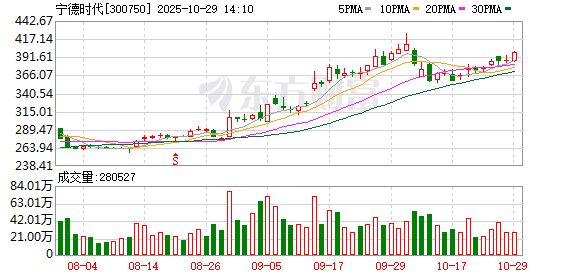
宁德时代业绩大增,三季度净利润超490亿元,新能源车ETF(515030)拉升涨超2.86%
Mei Ri Jing Ji Xin Wen· 2025-10-29 06:10
Core Viewpoint - The A-share market indices collectively rose, driven by a strong performance in the new energy sector, particularly in ETFs related to electric grid equipment and new energy vehicles [2] Group 1: Market Performance - As of 13:35, the electric grid equipment ETF (159326) increased by 4.98%, while the new energy vehicle ETF (515030) rose by 2.86% [2] - Key stocks in the new energy sector, including BETTERI, XianDao Intelligent, Shengxin Lithium Energy, Ganfeng Lithium, Yinlun Holdings, Shangtai Technology, and Xiamen Tungsten New Energy, showed significant gains [2] Group 2: Company Financials - CATL's Q3 report indicated a revenue of 283.072 billion yuan, representing a year-on-year growth of 9.28% [2] - The net profit for the same period was 49.034 billion yuan, marking a 36.2% increase year-on-year [2] - The non-recurring net profit was 43.619 billion yuan, reflecting a year-on-year growth of 35.56% [2] Group 3: Industry Insights - According to Changcheng Securities, the new energy vehicle market in China experienced healthy growth in September, driven by anti-involution policies, with significant year-on-year increases in production and sales data [2] - The rapid development of the new energy vehicle industry, combined with the surging demand for energy storage driven by artificial intelligence, is expected to further boost the lithium battery industry [2] - The new energy vehicle ETF (515030) is currently the largest in the market, tracking the CSI New Energy Vehicle Index (399976) and includes stocks related to lithium batteries, charging stations, and new energy vehicles, with batteries accounting for 46.6% of the components [2]

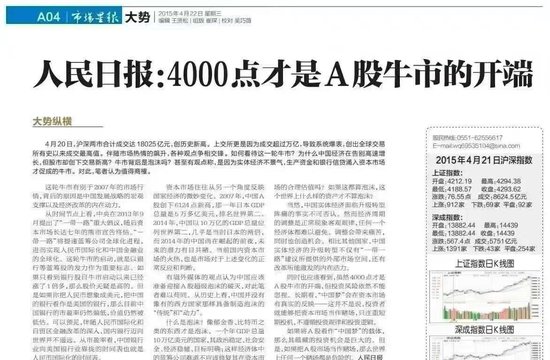
4000点得而复失,后市怎么看?
Xin Lang Ji Jin· 2025-10-29 02:56
Market Overview - The A-share market experienced a low opening but rose to surpass the 4000-point mark on the Shanghai Composite Index, which was last seen on August 18, 2015, marking a gap of 3723 days [1][4] - The index closed at 3988.22 points after a period of fluctuations [1] Market Sentiment - Market sentiment was optimistic, with the 4000-point level seen as a significant psychological barrier that could attract more retail investment [4] - However, there were cautious voices suggesting that after reaching 4000 points, short-term policy adjustments might occur to prevent overheating in the market [4] Fund Managers' Perspectives - Fund managers expressed a consensus that the overall bullish market framework would continue, despite potential short-term corrections due to profit-taking and high valuations in some sectors [5][10] - Key sectors to watch include leading companies in anti-involution industries such as photovoltaics, new energy vehicles, and chemicals, as well as consumer sectors like meat and dairy products [5] Economic Outlook - The macroeconomic environment is characterized by a transition from rapid growth to structural adjustments, with CPI remaining below 1% and PPI showing negative growth in several months [7] - The focus is on domestic circulation, with high-end manufacturing emerging as a structural highlight amid ongoing global trade tensions [7] Investment Strategy - The equity market is viewed as the optimal allocation direction, with a focus on technology growth sectors and a selective approach to undervalued companies [6][8] - The investment strategy emphasizes identifying companies with strong earnings growth and reasonable valuations, aiming for stable operations and enhanced returns [5][8] Future Market Trends - The market is expected to experience continued volatility after briefly surpassing the 4000-point mark, with divergent views on future trends [15] - Long-term optimism is supported by the "15th Five-Year Plan," which aims to optimize China's economic transformation and enhance market dynamics [15]