
高等教育

Search documents
AI时代人才价值重估:“做题家”失宠,教育与产业如何突围?
2 1 Shi Ji Jing Ji Bao Dao· 2025-12-12 03:29
Core Insights - Artificial intelligence (AI) is fundamentally reshaping talent logic across various industries, challenging existing standards, educational models, and operational methods [1] - The emergence of generative AI is significantly lowering the barriers to knowledge acquisition, prompting a reevaluation of talent development and educational approaches [1] Group 1: AI's Impact on Talent and Education - AI enables easy access to knowledge, shifting the focus from "cost" to "value" in talent acquisition, where the challenge lies in converting low-cost knowledge into high-value outputs [2] - The future core competency will be the ability to define problems rather than execute steps, as AI tools will handle the latter [2] - A "T-shaped" skill set, combining deep expertise with broad business acumen, will be essential for navigating the AI-driven landscape [2] Group 2: Educational Reform and Industry Needs - Traditional education models are outdated, often producing graduates with skills that lag behind current industry demands, leading to a mismatch between talent supply and industry needs [3] - Problem-based and project-based learning approaches are advocated to replace rote learning, allowing students to engage in real-world problem-solving [3][4] - Successful educational models, like MIT's mechanical engineering course, emphasize practical outcomes over theoretical presentations, fostering innovation and real-world applicability [4] Group 3: Addressing Industry Challenges - The concept of "involution" in China's new energy and emerging technology sectors highlights the need for innovative thinking beyond traditional competitive frameworks [5] - AI can facilitate the creation of virtual environments for learning and experimentation, breaking down barriers in traditional education and industry [5] - The educational system should adapt to the "inverted pyramid" structure of talent needs, focusing on large-scale engineering teams for implementation after initial innovations [6] Group 4: Investment Perspectives in the AI Era - The importance of "adversity quotient" (AQ) is emphasized, as individuals who can quickly recover from failures will thrive in the fast-evolving AI landscape [7] - Social interaction and collaboration remain irreplaceable by machines, indicating that future educational and workplace environments must foster these elements [7] - Young professionals are encouraged to develop core competencies and complementary skills to enhance their competitive edge in the job market [7]
纯外语专业停招后,涌现“外语+”新赛道
Jie Fang Ri Bao· 2025-12-12 03:14
Core Viewpoint - Many universities in China are discontinuing foreign language majors in favor of interdisciplinary programs that cultivate composite talents, reflecting a shift towards "foreign language +" models in education [1][2]. Group 1: Changes in Foreign Language Programs - Shanghai University of Finance and Economics has stopped enrolling in 12 foreign language majors, including English, while East China Normal University has discontinued 24 majors, including German [1]. - The trend of discontinuing traditional foreign language programs is seen across various universities, including the University of Science and Technology of China and Beijing Language and Culture University [1]. - The emergence of large language models has raised questions about the necessity of traditional foreign language programs in the context of increasing emphasis on STEM fields [1]. Group 2: Interdisciplinary Approaches - The English major at Shanghai University of Finance and Economics has been replaced with a Business English program, focusing on cultivating talents in "foreign language + finance + digital intelligence" [2]. - Other universities, such as Shanghai International Studies University and Tongji University, are also rebranding their foreign language programs to include interdisciplinary elements, such as "Language Science and Intelligent Applications" and "English (Digital Humanities)" [2]. - The curriculum at these institutions now includes courses in data science, cognitive neuroscience, and artificial intelligence, reflecting a cross-disciplinary trend in foreign language education [2]. Group 3: Regional Studies and International Demand - Regional studies have become a prominent field, with universities establishing research centers to explore cultural and historical contexts of various countries [6]. - Shanghai International Studies University has developed a curriculum that integrates anthropology, history, and geography to enhance regional studies [6]. - There is a significant demand for international civil servants, particularly in organizations like the United Nations, highlighting the need for foreign language skills in international relations [8][9]. Group 4: Specialized Language Training - Shanghai Maritime University has introduced specialized maritime language courses to address the shortage of professional interpreters in the maritime sector [10]. - Shanghai Sanda University is focusing on "foreign language + regional demand" by offering modules in various languages tailored to specific industries, such as business and tourism [10]. - The university's approach includes practical projects to differentiate its offerings from public universities, aiming to produce versatile language professionals [10].
烟台大学获批山东省院士工作站
Qi Lu Wan Bao· 2025-12-12 01:48
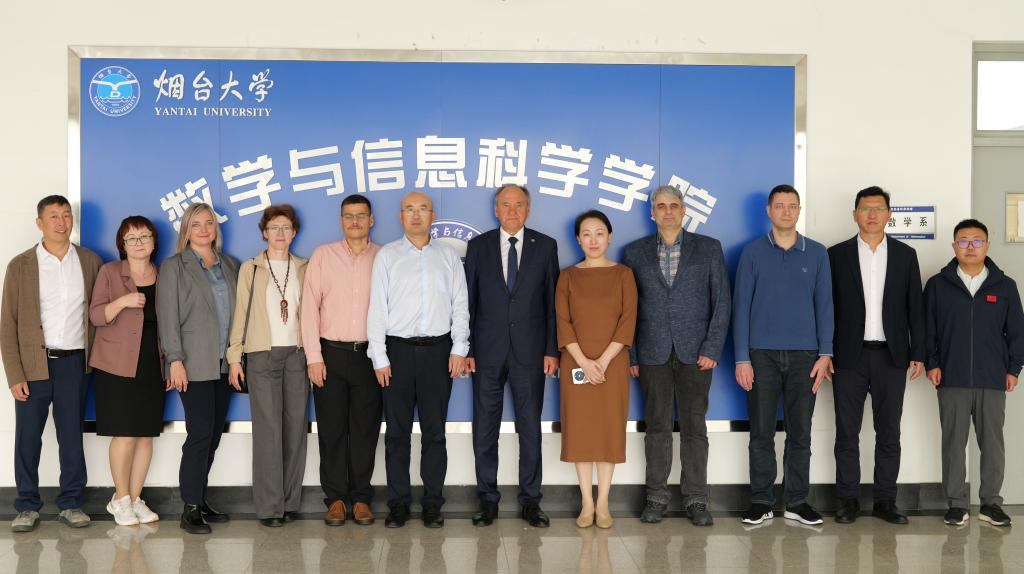
12月9日,山东省科学技术厅公布2025年度第六批山东省院士工作站备案名单,烟台大学数学建模与智能控制院士工作站通过备案,这是学校获批 的首个山东省院士工作站。作为山东省搭建高层次人才创新平台、助力新旧动能转换的重要载体,省级院士工作站旨在充分发挥中国科学院、中 国工程院院士及海外顶尖院士的智力支撑作用,聚焦关键核心技术攻关,推动创新资源整合与成果转化,为创新型省份建设注入强劲动力。 齐鲁晚报.齐鲁壹点李楠楠 数学建模与智能控制领域是现代数学、信息技术与工程应用深度融合的前沿方向,该领域研究成果在自主无人系统、分布式计算、智能决策等关 键领域具有广泛应用价值。烟台大学数学与信息科学学院在该领域积累了深厚的科研基础和人才储备,此次获批院士工作站,将进一步汇聚海内 外顶尖智力资源,搭建起"院士引领、团队攻坚、产学研融合"的创新平台。烟台大学数学建模与智能控制团队在所从事研究领域的国际权威学术 期刊和顶级会议发表学术论文300余篇,出版学术专著13部,团队负责人获伊尔库茨克州科学技术奖和俄罗斯联邦政府科技奖,并荣获俄罗斯联 邦"优秀科技工作者"称号。 未来,烟台大学将按照山东省科学技术厅关于院士工作站建设的相关要求 ...

多省公示新大学,越来越多高分考生选择职业本科
Di Yi Cai Jing· 2025-12-11 12:57
Core Viewpoint - The optimization of higher education layout in China is increasingly focusing on vocational undergraduate universities, with several provinces announcing plans to establish or rename institutions in this category [2][4]. Group 1: Recent Developments in Higher Education - Multiple provinces, including Hubei, Hebei, Anhui, and Henan, have recently published public notices regarding the establishment of new higher education institutions [2][3][4]. - Hubei Province plans to apply for the establishment of "Hubei University of Automotive Industry" and "Hubei Health Traditional Chinese Medicine College," both of which are public institutions [2]. - The number of vocational undergraduate institutions has reached a record high of 36 this year, bringing the total to 87 across the country [4]. Group 2: Characteristics and Trends of Vocational Undergraduate Institutions - Vocational undergraduate universities are becoming a key focus in the optimization of higher education layout, with a significant increase in their popularity among parents and students [4]. - Some vocational institutions have established a strong reputation over the years, leading to competitive programs and favorable employment prospects, which in turn raises their admission score lines [5]. - Notable vocational institutions, such as Shenzhen Polytechnic and Beijing University of Science and Technology, have seen their admission scores rise significantly, sometimes matching those of top-tier universities [4].
逼近170万大学生!中国高校第一城背后,城市人才格局重塑
2 1 Shi Ji Jing Ji Bao Dao· 2025-12-11 11:16
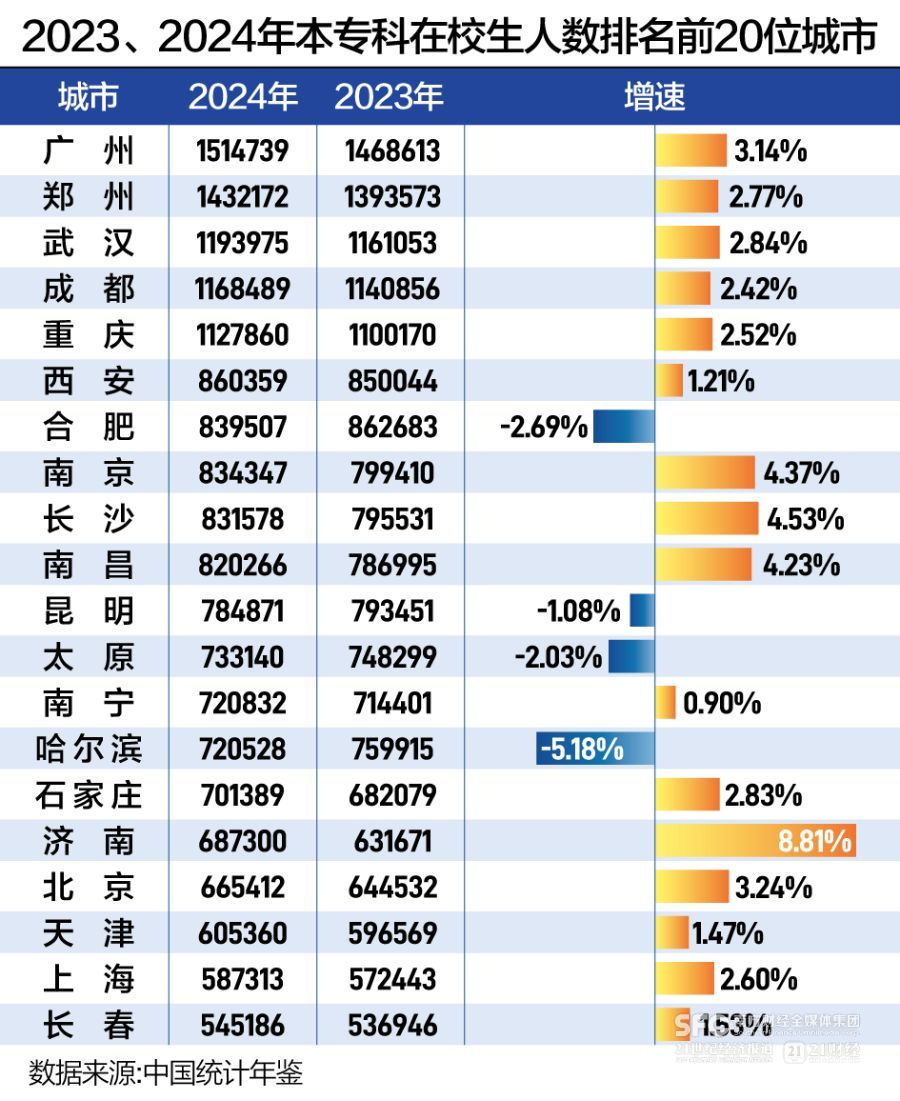
Core Insights - The number of students in higher education institutions in China continues to expand, with 10 cities now having over 800,000 students enrolled in undergraduate and vocational programs [1][3] - Guangzhou leads the country with over 1.5 million students, followed by cities like Zhengzhou, Wuhan, Chengdu, and Chongqing, which have surpassed 1 million students [1][3] - While enrollment numbers are increasing, the growth rate is slowing down, indicating a potential shift in educational dynamics [2] Enrollment Trends - From 2020 to 2024, the growth rates of undergraduate enrollment were 5.74%, 3.50%, 1.32%, 2.73%, and 2.56% respectively, showing a trend of diminishing growth [2] - The total number of students in the top 20 cities increased from 17.03 million in 2023 to 17.37 million in 2024, a growth of 1.97% [3] City-Specific Data - In 2024, Nanchang joined the "800,000 club" with 820,266 students, marking a 4.23% increase from the previous year [4][5] - Cities like Hefei, Kunming, Taiyuan, and Harbin saw a decline in student numbers, with Hefei's enrollment dropping by 2.69% [5][6] Graduate Education Development - Many cities are focusing on developing graduate education, with cities like Beijing and Shanghai having significant numbers of graduate students, indicating a shift towards higher education [6][7] - Beijing has the highest number of graduate students at 475,000, while Shanghai has 269,300, reflecting the concentration of higher education resources in major cities [6][7] Employment and Talent Retention - Cities are implementing strategies to attract and retain graduates, with initiatives like "Million College Students Stay in Wuhan" and "Ten Thousand College Students Stay in Hohhot" [10][11] - Employment opportunities and living costs are critical factors influencing graduates' decisions to stay in their respective cities [11][12] Recommendations for Cities - To retain graduates, cities should enhance job matching, improve salary competitiveness, and provide housing support [14] - Building a vibrant social and cultural environment is also essential to attract and retain young talent [14]
青岛五年新建改扩建幼儿园、中小学校277所,新增学位25万个
Qi Lu Wan Bao· 2025-12-11 10:58
Group 1 - The core objective of Qingdao's education reform is to bring quality educational resources closer to the community, ensuring children can access good education nearby [2] - Over the past five years, Qingdao has built or renovated 277 kindergartens and schools, adding 250,000 new student places, with a 90% coverage rate for group-based schooling [2] - The city has increased public kindergarten places by 45,000, with public and quality kindergartens now making up 66% and 90% respectively [2] Group 2 - Qingdao's education bureau emphasizes a holistic approach to student development, integrating moral, intellectual, physical, aesthetic, and labor education [3] - The city has implemented initiatives to enhance physical education, achieving the highest health assessment rates in the province and reducing the near-sightedness rate by 9.3% over five years [3] - A city-level psychological health service center has been established to support students' mental well-being [3] Group 3 - The education sector in Qingdao is aligned with the city's innovative industrial development needs, focusing on collaborative development between education and technology [4] - Four new vocational colleges have been established, training 150,000 skilled workers, and introducing over 90 new vocational programs [4] - The city has fostered partnerships with 650 enterprises and industry associations to facilitate technology transfer and innovation [4]
福州大学校长:对于高等教育,人工智能是“东风”
Xin Lang Cai Jing· 2025-12-11 10:21
Core Viewpoint - The article emphasizes that artificial intelligence (AI) is not a threat to higher education but rather an opportunity for transformation, with universities needing to adapt strategically to leverage AI for educational enhancement [1][19][20]. Group 1: AI's Role in Higher Education - AI is viewed as a "restart key" for the professional ecosystem, reshaping job roles rather than merely replacing them [2][10]. - The integration of AI capabilities into traditional disciplines is seen as a strategic necessity for universities aiming to become world-class institutions [2][20]. Group 2: Talent Development Strategies - The university aims to cultivate AI talent that is not only technically proficient but also aligned with national interests and ethical considerations [2][21]. - A systematic approach to curriculum reform is being implemented, focusing on the integration of AI across various disciplines and embedding ethical education within AI-related programs [3][21][22]. Group 3: Curriculum and Program Optimization - The university plans to optimize its undergraduate programs to around 80, enhancing traditional disciplines with AI-related content and creating new interdisciplinary programs [4][22]. - New programs such as "Sustainable Energy" and "Quantum Information Science" are being developed to meet future industry demands [4][22]. Group 4: Innovative Teaching Models - The university is promoting a cross-disciplinary curriculum that includes AI-related courses for all students, fostering a collaborative learning environment [5][23]. - A dual-pathway mechanism is being established to support both academic and industry-focused talent development, ensuring students are equipped to tackle real-world challenges [5][26]. Group 5: Digital Transformation in Education - The university is committed to creating a smart education ecosystem through digital transformation, enhancing personalized learning and teaching effectiveness [6][24]. - A significant number of graduate courses are being taught using smart classrooms, promoting interactive and diverse teaching methods [6][24]. Group 6: Response to Job Market Changes - The university is adapting its professional offerings to respond to the evolving job market, ensuring that traditional programs are enhanced rather than eliminated [10][29]. - The focus is shifting from knowledge transmission to cultivating core competencies that AI cannot easily replicate, such as critical thinking and problem-solving skills [10][18][29].
历史性的跨越丨执教育开放之笔 绘“留学海南”画卷
Hai Nan Ri Bao· 2025-12-11 03:16
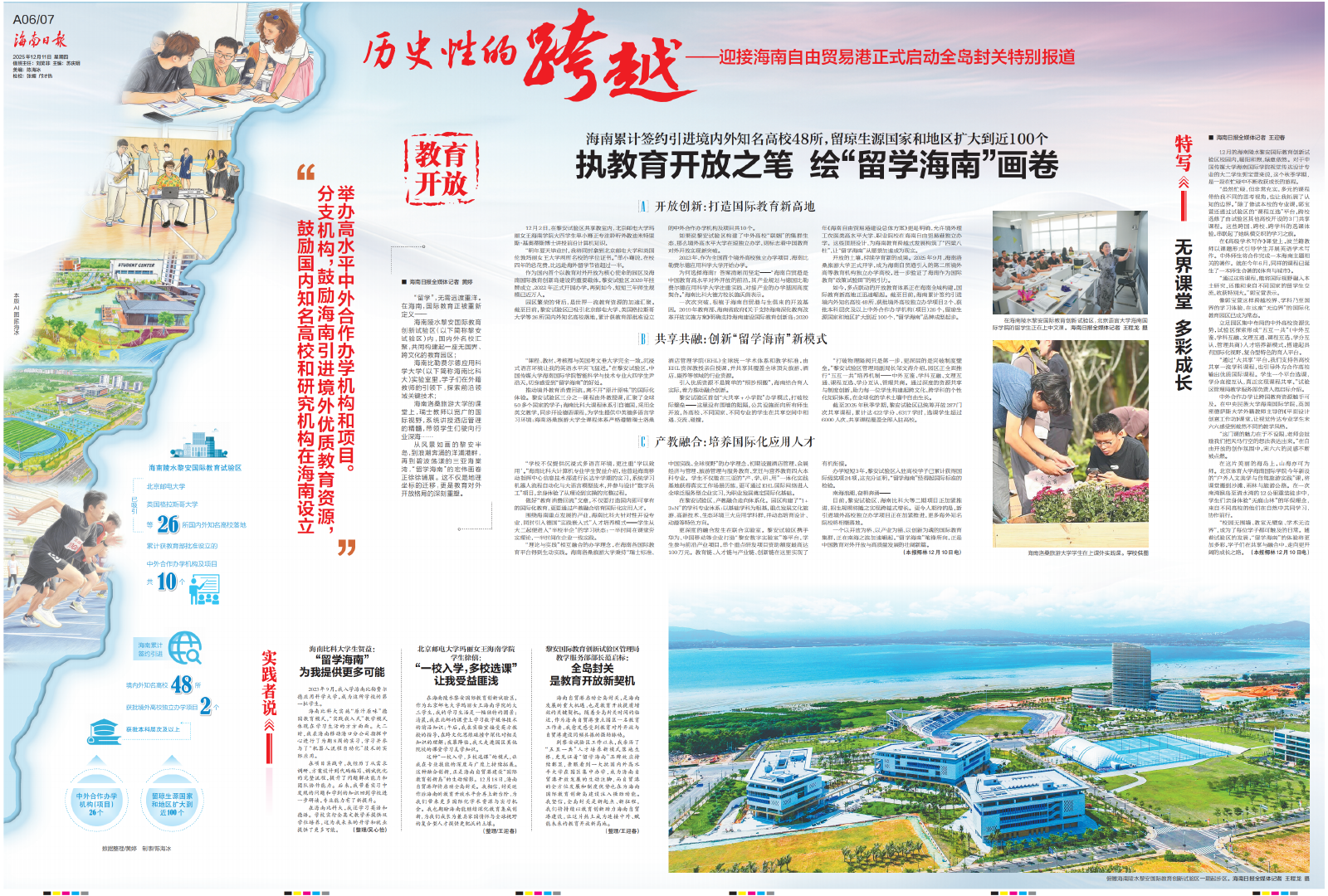
Core Viewpoint - Hainan is redefining international education by establishing the Lingshui Li'an International Education Innovation Pilot Zone, attracting renowned domestic and foreign universities to create a borderless, cross-cultural educational environment [1][3]. Group A: Open Innovation - Building an International Education Hub - The Lingshui Li'an Pilot Zone has attracted 26 well-known universities, including Beijing University of Posts and Telecommunications and the University of Glasgow, and has established 10 Sino-foreign cooperative education institutions and projects [4][6]. - The zone aims to facilitate the independent operation of foreign universities, marking a new breakthrough in China's educational openness [5]. - As of 2025, the zone has signed agreements with 48 domestic and foreign universities, expanding the source countries and regions for students to nearly 100 [7][16]. Group B: Shared Integration - Innovating the "Study in Hainan" Model - The Pilot Zone offers a unique educational experience with one-third of courses taught by foreign professors, creating an immersive language environment for students from over 50 countries [8][9]. - The "Big Sharing + Small College" model promotes resource sharing among institutions, allowing students to engage in cross-disciplinary and cross-cultural learning [9][17]. - By the fall semester of 2025, the zone has opened 287 shared courses, accumulating 422 credits and 6,317 class hours, with over 6,000 students participating [10]. Group C: Industry-Education Integration - Cultivating International Application Talent - The Pilot Zone emphasizes practical learning, with students participating in internships and projects that align with local industry needs, such as the "half school, half enterprise" model adopted by Hainan University of Applied Sciences [12][14]. - The Hainan Lausanne University and Hainan University of Applied Sciences have established programs that integrate theory with practice, preparing students for international careers [12][14]. - The zone has created a "1+3+N" academic system focusing on cultural tourism, high-tech, and ecological environment disciplines, fostering a comprehensive talent development approach [14].
数字化应用促进教师专业化发展
Xin Hua Ri Bao· 2025-12-11 02:23
Core Viewpoint - The rapid development of digital technology in education necessitates higher digital literacy and skills among teachers, but challenges such as inadequate hardware and software support, incomplete training systems, and insufficient technical application abilities hinder progress [1] Group 1: Establishing Support Mechanisms - Higher education institutions should focus on creating a support mechanism for teachers' professional development through digital technology, including enhancing infrastructure and establishing a comprehensive institutional framework [2] - Investment in smart campus construction is essential, ensuring full coverage of wired and wireless networks, and creating various digital teaching environments equipped with advanced digital devices [2] - A dedicated institution for the development of teachers' digital capabilities should be established, with clear planning and funding to support training and equipment acquisition [2][3] Group 2: Optimizing Training Systems - The training system for teachers should be innovated to ensure comprehensive coverage of digital literacy and skills training [4] - Training content should be scientifically planned based on diagnostic assessments of teachers' digital teaching capabilities, with tailored programs for different experience levels [4][5] - A dual training model that integrates pre-service and in-service training should be implemented, promoting continuous learning and mentorship for new teachers [5][6] Group 3: Strengthening Practical Application - Practical application is crucial for enhancing teachers' digital literacy and skills, with a focus on real-world scenarios for digital practice innovation [7] - A training cycle that combines theory and practice should be established, allowing teachers to learn cutting-edge digital teaching theories and engage in interactive classroom experiences [7] - Collaboration between schools and external organizations should be encouraged to enhance teachers' skills through joint training and practical projects [7]
卓越工程师培养改革三年形成新格局
Zhong Guo Qing Nian Bao· 2025-12-11 00:08
Group 1 - The core viewpoint of the news is the ongoing reform in engineering education aimed at cultivating "exemplary engineers" to meet the needs of modern industry and society, emphasizing the integration of education, talent, and industry [1][2][5] - Over the past three years, more than 60 engineering master's and doctoral students have obtained degrees based on practical achievements, with nearly 26,000 students recruited through university-enterprise collaboration [1] - The reform has established a new talent cultivation framework characterized by organized, systematic, and large-scale training, breaking away from traditional disciplinary and departmental models [1][2] Group 2 - The recently released "Exemplary Engineer Education Certification Standards" enhances the collaborative mechanism between universities and enterprises, requiring joint recruitment, training, topic selection, and sharing of results [2][3] - The integration of industry and education is highlighted as a key breakthrough in the reform, with over 10,000 topics identified by enterprises for research and practical projects, and the establishment of over 300 engineering technology centers [2][3] - Tsinghua University has successfully enrolled 1,430 engineering master's and doctoral students in collaboration with 56 partner organizations, addressing over 1,000 industry-related research topics [2][3] Group 3 - The establishment of a demand-driven recruitment mechanism ensures that university-enterprise collaboration effectively matches talent with real industry needs [3] - The certification system for exemplary engineers will be developed in three phases, including the formation of a certification committee and the implementation of pilot certifications [4] - The release of the standards marks a significant milestone in the reform of engineering education and the construction of a high-level engineering talent cultivation system in China [5]