快餐

Search documents
谁在麦麦岛门口大排长队?
36氪未来消费· 2025-08-23 12:26
Core Insights - McDonald's launched a large-scale marketing campaign called "McIsland" in August, featuring limited-time food items and immersive experiences to attract consumers and enhance brand engagement [3][5][36] - The campaign included the return of the classic milkshake, which generated significant consumer interest and long queues at stores, highlighting nostalgia among the target demographic [9][15][36] - The strategic location of flagship stores, such as the one in Chaoyang Park, Beijing, was chosen to maximize foot traffic and consumer interaction, emphasizing emotional connections over efficiency [19][21][22] Marketing Strategy - The "McIsland" campaign involved collaborations with various brands, including China Post and Didi, to create themed experiences that integrate McDonald's into everyday life [5][6] - The flagship stores were designed to be landmarks, focusing on unique experiences and social media engagement rather than traditional fast-food efficiency [22][30] - The campaign's success was reflected in social media engagement, with significant traffic on platforms like Xiaohongshu, indicating a successful marketing strategy that resonates with consumers [29][31] Product Offering - The limited-time milkshake, priced at 15 yuan per cup, became a key product driving consumer interest, with reports of long wait times and high demand [9][13][30] - The return of the milkshake was not just about sales but also aimed at rekindling childhood memories for consumers, particularly those in their 30s [15][36] - Despite the nostalgic appeal, some consumers noted that the product did not meet their expectations in terms of taste and quality compared to their childhood experiences [13][14] Financial Performance - McDonald's reported strong financial results in Q2, with revenue exceeding expectations and a double-digit increase in net profit, largely driven by growth in the Chinese market [33] - The company aims to open 1,000 new stores in China this year, reflecting its commitment to expanding its presence in a key growth market [34]


最低12元,高端汉堡“下凡”卖面包
3 6 Ke· 2025-08-22 11:51
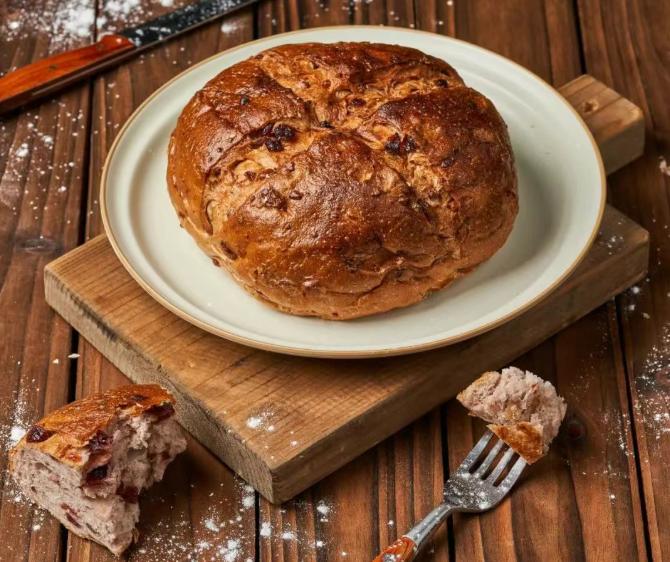
Core Insights - High-end burger brand Blue Frog has transformed its Beijing Guomao store into a bakery, indicating a strategic shift to diversify its product offerings beyond burgers [2][3][4] - The bakery features a range of baked goods priced between 12-38 yuan, significantly lower than the starting price of 78 yuan for its signature burgers, suggesting an attempt to attract a broader customer base [3][4] - Blue Frog's initiative to expand its menu and introduce bakery items aligns with its promotional slogan "Not just burgers" as it aims to enhance customer engagement and adapt to changing market conditions [8][17] Company Strategy - The newly opened bakery offers products such as strawberry soufflé, carrot cake, and various breads, while still retaining its original burger and grill offerings [4][12] - Blue Frog has been experimenting with desserts and baked goods in its existing stores prior to the bakery launch, indicating a gradual approach to product line expansion [6][7] - The company has introduced promotional packages, such as afternoon tea sets and discounts on specific days, to stimulate sales and increase foot traffic [11][12] Market Context - The high-end burger segment has faced challenges in recent years, with several brands, including Blue Frog, experiencing stagnation in store growth and customer interest [13][16] - The market for premium burgers, which once thrived, has seen a decline in consumer enthusiasm, prompting brands to seek new revenue streams through diversification [15][16] - Competitors in the high-end burger space are also adapting by introducing new product lines and promotional strategies to remain relevant in a more price-sensitive market [17][18]
印力集团与麦当劳中国战略合作 提升存量项目合作数量
Zheng Quan Shi Bao Wang· 2025-08-22 03:11
Core Insights - On August 21, 2023, Inry Group signed a cooperation agreement with McDonald's China in Shanghai, establishing a long-term strategic partnership to enhance the presence of the McDonald's brand in Inry Group's projects [1] - Inry Group has already reached cooperation intentions with McDonald's China in several provinces, including Tianjin, Fujian, Anhui, and Henan [1] - The collaboration aims to increase the number of existing project partnerships and enhance the value of commercial projects at regional, urban, and community levels [1]
8点1氪|12306回应高铁能否加挂吸烟车厢;官方通报50升油箱被加67.96升汽油;辛巴快手账号作品清空
3 6 Ke· 2025-08-22 00:24
Group 1 - 12306 responded that it is currently not possible to add a smoking carriage to high-speed trains due to safety considerations, although suggestions for such a carriage on green trains will be reported [2][3] - Chengdu's market supervision bureau reported an incident where a car with a 50-liter fuel tank was filled with 67.96 liters of gasoline, leading to an ongoing investigation [2][3] - Yonghui Supermarket reported a total revenue of 29.948 billion yuan for the first half of 2025, a year-on-year decline of 20.73%, and a net loss of 241 million yuan compared to a profit of 275 million yuan in the same period last year [5][6] Group 2 - Bilibili's second-quarter revenue reached 7.34 billion yuan, a year-on-year increase of 20%, with a net profit of 220 million yuan and an adjusted net profit of 560 million yuan, both hitting record highs [13] - China Petroleum & Chemical Corporation (Sinopec) reported a net profit of 21.483 billion yuan for the first half of 2025, a year-on-year decrease of 39.8%, with total revenue of 1.41 trillion yuan, down 10.6% [14] - Miniso's second-quarter adjusted net profit was 690 million yuan, a year-on-year increase of 10.6%, with total revenue of 4.97 billion yuan, up 23.1% [15] Group 3 - Meta has paused some hiring in its AI department to conduct planning and forecasting [11] - The AI toy market has seen a significant surge, with sales increasing by 600% year-on-year, driven by the integration of large language model technology [11] - DeepSeek announced a price adjustment for its API interface calls, effective September 6, 2025, and will cancel night-time discounts [10] Group 4 - The Korean government announced measures to restrict foreign purchases of housing in major areas to curb speculative demand [9] - Korean investors have increased their holdings in Chinese stocks from 19.083 billion yuan at the end of 2024 to 24.475 billion yuan by August 18, 2025, marking a nearly 30% increase [9] - Nikon will close its Yokohama factory by September 30, 2025, with minimal expected impact on annual profits [10]


8点1氪:12306回应高铁能否加挂吸烟车厢;官方通报50升油箱被加67.96升汽油;辛巴快手账号作品清空
36氪· 2025-08-22 00:21
Group 1 - 12306 stated that high-speed trains cannot add "smoking carriages" due to safety concerns [4] - The discussion about banning smoking in semi-enclosed high-speed train platforms continues, with suggestions for designated smoking areas [4] - In contrast, traditional green trains allow smoking in specific areas without affecting others [4] Group 2 - Yonghui Supermarket reported a net loss of 241 million yuan in the first half of 2025, with revenue down 20.73% year-on-year [6] - The decline in revenue is attributed to strategic transformations and the closure of loss-making stores [6] - Despite increased revenue from store adjustments, it could not compensate for the losses from closed stores [6] Group 3 - Delta Airlines experienced a wing component failure during a flight, but all passengers landed safely [6] - The aircraft was grounded for repairs following the incident [6] Group 4 - McDonald's is reducing prices on eight popular meal options by 15% to attract cost-conscious customers amid economic pressures [9] - The company plans to introduce $5 and $8 value meals to enhance its appeal [9] Group 5 - Nikon will close its Yokohama factory by September 30, 2025, shifting operations to other locations [11] - The factory's closure is not expected to significantly impact annual profits [11] Group 6 - Bilibili reported a 20% year-on-year revenue growth in Q2 2025, with net profit reaching 560 million yuan [16] - The platform's daily active users hit a record high of 109 million, reflecting strong user engagement [16] Group 7 - China Petroleum & Chemical Corporation (Sinopec) reported a 39.8% decline in net profit for the first half of 2025, totaling 21.48 billion yuan [17] - The company's revenue also decreased by 10.6% year-on-year [17] Group 8 - Miniso announced a 10.6% increase in adjusted net profit for Q2 2025, reaching 690 million yuan [18] - The company also reported a 23.1% year-on-year revenue growth for the same period [18] Group 9 - The AI toy market has seen a significant surge, with sales increasing by 600% in the first half of 2025 [12] - AI toys are gaining popularity across various age groups, not just children [12] Group 10 - Meta has paused some hiring in its AI department to focus on planning and restructuring [13] - This decision follows the introduction of new personnel and aims to enhance the company's AI capabilities [13]
女子在麦当劳飙英文打骂工作人员,叫嚣"认识大把警察",警方通报
Guan Cha Zhe Wang· 2025-08-21 09:06
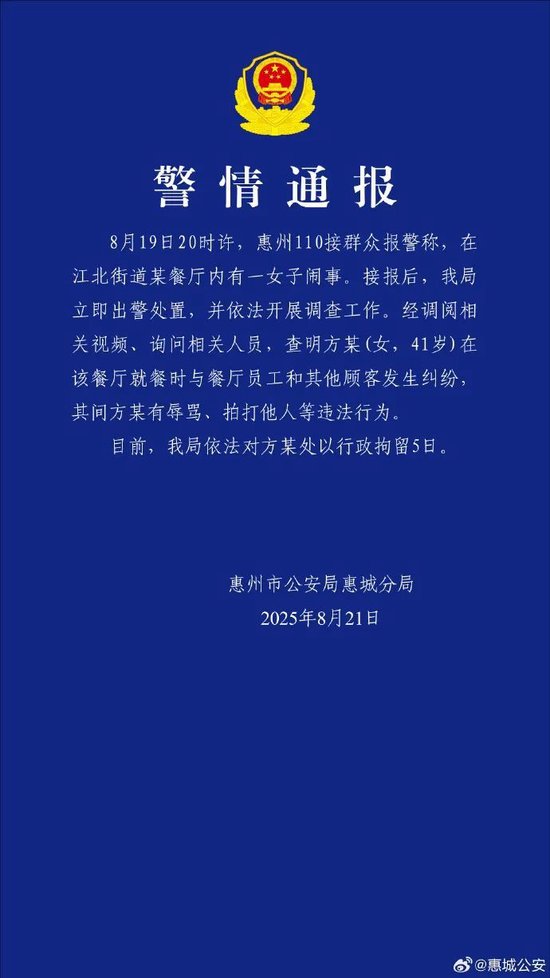
据@惠城公安 消息,广东惠州市公安局惠城分局发布警情通报: 据海报新闻消息, 8月19日晚,广东惠州一家麦当劳内,一女子与工作人员发生争执,还用脏话辱骂了 在场的工作人员和一名劝架的顾客。 据现场的男顾客反映,8月19日晚20时许,女子因不满麦当劳打扫卫生的阿姨未及时收拾男顾客留下的 食物,与麦当劳打扫阿姨发生争执,随后女子到前台投诉打扫阿姨,女子持续大声咆哮,影响了在场所 有就餐的顾客。 根据一段现场拍摄的视频,麦当劳工作人员对女子表示:"收个盘子没必要那么凶。"女子不依不饶,疯 狂输出,还飙英文辱骂,期间有一名男顾客看不过眼,女子随即将矛头对着男顾客,并让男顾客道歉, 男顾客打电话报警,女子将男顾客的电话打落。由于害怕女子做出过激行为,该顾客在被女子打骂后离 开。 8月19日20时许,惠州110接群众报警称,在江北街道某餐厅内有一女子闹事。接报后,我局立即出警处 置,并依法开展调查工作。经调阅相关视频、询问相关人员,查明方某(女,41岁)在该餐厅就餐时与 餐厅员工和其他顾客发生纠纷,其间方某有辱骂、拍打他人等违法行为。目前,我局依法对方某处以行 政拘留5日。 在男顾客离开后,女子对麦当劳工作人员表示自己认 ...
麦当劳奶昔限时返场,一杯难求的背后,是情怀还是饥饿营销?
3 6 Ke· 2025-08-21 04:01
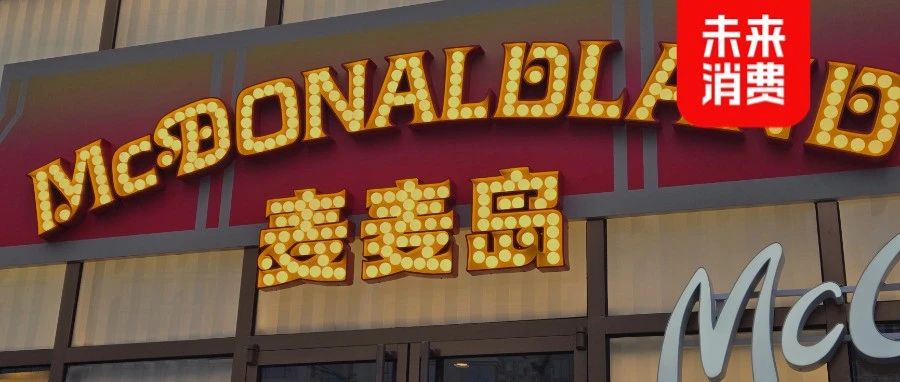
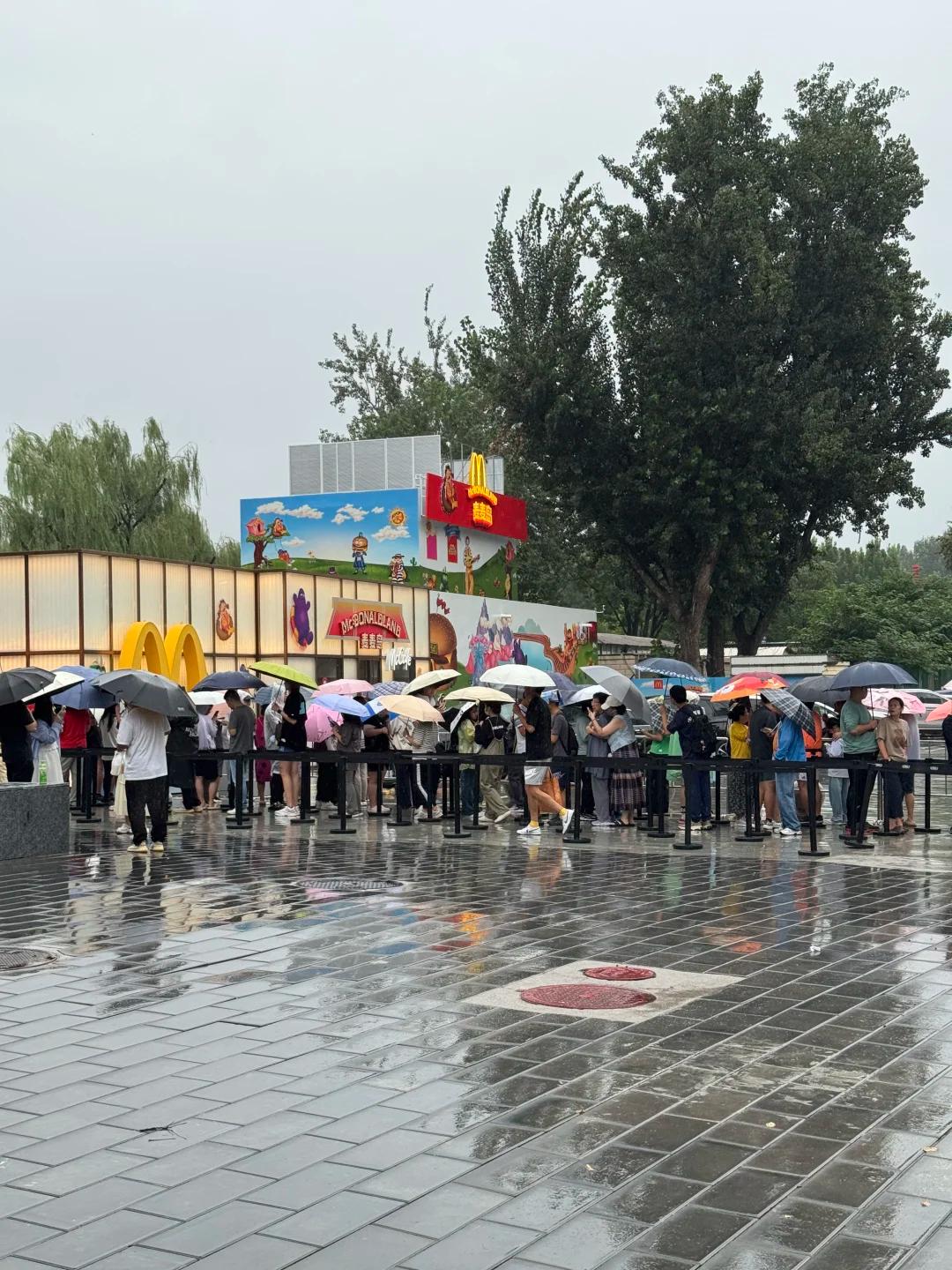
Core Insights - McDonald's has launched a limited-time summer carnival called "McIsland" across over 7,100 stores in China, attracting many young customers [1] - The highlight of this event is the return of the McDonald's milkshake, which has been absent from the market for nearly a decade, leading to long queues at select flagship stores [3][4] - The milkshake's comeback has sparked a secondary market, with prices on resale platforms reaching up to 150 yuan for a product originally priced at 15 yuan, indicating high demand and scarcity [3][14] Group 1: Product History and Market Dynamics - The milkshake was integral to McDonald's early success, being a staple alongside burgers and fries, and its absence left a nostalgic void for many consumers [5][9] - The decision to remove the milkshake from the menu in 2014 was due to poor sales, high operational costs, and changing consumer preferences towards other beverages [9][12] - The return of the milkshake has been met with overwhelming demand, attributed to a shift in consumer sentiment and marketing strategies that emphasize scarcity [12][26] Group 2: Marketing Strategies and Consumer Behavior - The limited-time offer creates a sense of urgency, encouraging immediate consumer action due to the fear of missing out [13] - The milkshake's return taps into "emotional economy," where consumers are willing to pay a premium for nostalgic experiences tied to their childhood [23][25] - Social media plays a crucial role in amplifying the product's popularity, as consumers share their experiences and create buzz around the limited availability [24][27] Group 3: Brand Impact and Future Implications - McDonald's has successfully transformed a past failure into a cultural phenomenon, demonstrating the power of strategic marketing in reviving brand symbols [26][27] - The milkshake's popularity highlights the importance of creating social conversations around products in an era of attention scarcity [27] - This case serves as a reminder for brands to explore and activate dormant assets within their history to connect with consumers on a deeper emotional level [26][27]
Shake Shack开进B1层,高端汉堡开始“向下”妥协?
3 6 Ke· 2025-08-21 01:39
Core Insights - Shake Shack has opened a new "cloud kitchen" model in Beijing, focusing solely on takeout and pickup, which contrasts sharply with its traditional high-end dining experience [1][2] - The brand's expansion in China has significantly slowed, with only 3 new stores opened in 2024, marking the lowest number since its entry into the market [1][2] - The new store format aims to enhance production efficiency and cater to customers outside the typical store locations, indicating a strategic shift in response to market pressures [2][3] Expansion Strategy - Shake Shack's total store count in mainland China is currently 43, with a noticeable decline in new openings over the past two years [2] - The brand's high-end positioning and reliance on prime locations have led to high operational costs, limiting its ability to scale effectively [4][6] - The new "cloud kitchen" model is seen as an attempt to explore lower-cost expansion while maintaining its target demographic [5][6] Market Challenges - The brand's high pricing strategy continues to restrict its customer base to high-tier cities, making it difficult to penetrate lower-tier markets [5][8] - Shake Shack's over-reliance on a few top-tier markets exposes it to risks associated with market fluctuations [6][7] - Increased competition in the fast-food sector, particularly from local brands offering better value, poses a significant challenge to Shake Shack's market position [9] Brand Identity - The introduction of the new store format raises questions about Shake Shack's brand identity, as it struggles to balance its high-end image with the need for cost-effective solutions [8][9] - The brand's commitment to high pricing, even in a simplified store model, may hinder its ability to adapt to changing consumer preferences for value [9][10]

肯德基下场抢炸鸡生意
Bei Jing Shang Bao· 2025-08-21 00:50
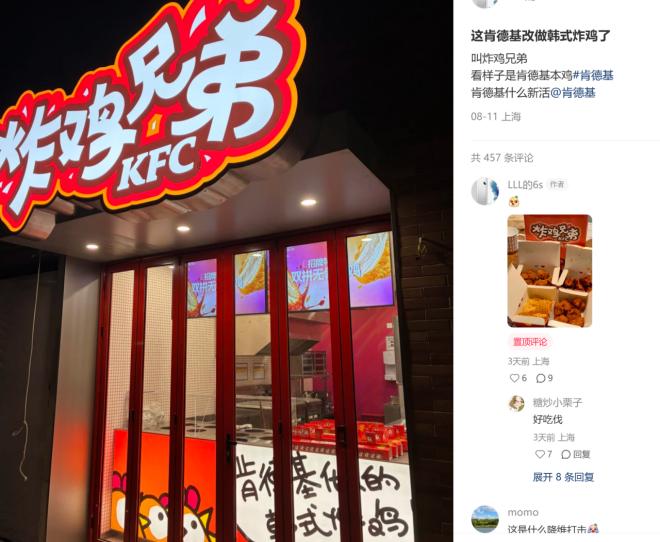
Core Viewpoint - KFC has entered the fried chicken market with the launch of two new stores named "Fried Chicken Brothers" in Shanghai, focusing on Chinese and Korean fried chicken offerings [1][2] Group 1: Store Details - The two new stores are located in Shanghai's Pudong New Area, each approximately 20 square meters, with no dine-in area, emphasizing takeout and delivery services [1] - The Chinese store features items like fried chicken legs and chicken frames, with an average spend of about 22 yuan per person, while the Korean store offers eight types of sauces and dishes like spicy chicken and Korean rice cakes, with an average spend of around 28 yuan [1] Group 2: Brand Strategy - "Fried Chicken Brothers" retains strong ties to the KFC brand, prominently featuring "KFC" in its signage and marketing materials, indicating a strategic move to leverage brand recognition [2][3] - The brand aims to attract younger consumers who prioritize cost-effectiveness, particularly during late-night hours, filling a gap in KFC's market offerings [3] Group 3: Competitive Landscape - The fried chicken segment is highly competitive, with over 16,000 Chinese fried chicken outlets reported as of last September, and nearly 1,000 new stores opened in the last six months [3] - KFC's established supply chain and logistics network provide a competitive edge in maintaining stable supply and cost control, which is crucial for price competitiveness [3][4] Group 4: Operational Challenges - For "Fried Chicken Brothers" to achieve scalable growth, it must address two main challenges: maintaining profit margins while offering high value and differentiating itself from other brands [4] - Continuous product innovation and local adaptation are essential to compete effectively against established local brands in the fried chicken market [4]


凉皮摊干翻麦当劳,酸奶店逼疯喜茶,3个“野路子”横扫餐饮圈
3 6 Ke· 2025-08-21 00:34
Group 1 - The article discusses the contrasting performance of various restaurant brands in a competitive market, highlighting how some succeed through innovative strategies while others struggle [1][40] - KFC has adapted by launching smaller, specialized fried chicken stores focusing on Chinese and Korean styles, aiming to capture new customer segments and increase operational efficiency [5][7][8] - The Chinese fried chicken market is projected to grow from 300 billion yuan in 2019 to 479.6 billion yuan by 2024, despite a slowdown in the Western fried chicken segment due to intense competition and rising costs [1][2] Group 2 - Wei's Liangpi, a local fast-food leader, faces saturation in its home market, leading to a decline in single-store revenue growth from 18% in 2019 to 5% in 2023 [11][13] - The brand has launched a sub-brand, Wei Si Li, to explore new growth avenues by leveraging its supply chain capabilities and expanding into the hamburger market [14][18] - Wei Si Li has successfully opened 40 stores nationwide, with a strong focus on high-density coverage in its home region and a cautious expansion strategy in new markets [18][21] Group 3 - Ziguangyuan, a traditional brand, has revitalized its image by transforming its signature product, milk skin yogurt, into a retail sensation, achieving sales of 30 million cups in a year [30][32] - The brand has adopted a multi-channel strategy, including standalone yogurt shops and partnerships with retail platforms, to enhance its market presence [35][38] - Ziguangyuan's approach illustrates how traditional brands can modernize by leveraging their heritage while appealing to contemporary consumer preferences [39][40]