
高端制造

Search documents
创投基金“快人一步”靠什么
Zheng Quan Ri Bao· 2025-08-24 15:41
Group 1 - The core viewpoint of the article emphasizes the crucial role of venture capital funds in supporting emerging industries, particularly in the robotics sector, by providing early-stage investments that enable companies to lead in innovation [1][2] - Venture capital funds are recognized as the "starting point" for capital markets to serve technological innovation, with policies encouraging them to invest early, small, long-term, and in hard technology [2][3] - The systematic policy guidance creates a virtuous cycle that injects stable capital into technological innovation, facilitating a collaborative development ecosystem for "technology research and development - capital empowerment - industrial upgrading" [2][4] Group 2 - Venture capital funds are characterized by a high-risk appetite, willing to "test and learn" during the nascent stages of emerging industries, which allows them to calibrate the value of different sectors and seek excess returns [3][4] - The funds employ a professional risk assessment system and scientific valuation methods, diversifying investments across multiple sectors to mitigate risks associated with individual projects [3][4] - The low cost and long-term nature of venture capital funding provide essential support for the sustainable operation of technology-driven enterprises, aligning well with their funding needs [4][5] Group 3 - The iterative process of "testing - summarizing - correcting" enables venture capital funds to act as "pathfinders," discovering and nurturing high-quality companies while accelerating the growth of emerging industries through technological innovation [5]
岚图汽车港股介绍上市的战略意义:新能源赛道的破局与跃升
Sou Hu Cai Jing· 2025-08-23 08:45
Current Situation of Shanghai Composite Index - The Shanghai Composite Index has recently experienced a rare strong rally, rising from 3700 points to 3800 points in just five trading days, with only minor fluctuations during this period [2] - On August 22, the index reached a ten-year high, closing at 3825.12 points, with a peak intraday value of 3825.68 points, marking the highest level since June 2015 [2] - The trading volume in both Shanghai and Shenzhen markets has exceeded 2 trillion yuan for eight consecutive trading days, setting a record for the longest duration of trillion-yuan trading [2] Factors Driving the Rise of Shanghai Composite Index - The acceleration of domestic substitution in the context of global technology industry chain restructuring is a core driving force [3] - There is a significant increase in demand for autonomy in sectors like semiconductors and high-end manufacturing, attracting substantial capital to the technology sector [3] - For instance, orders for leading chip manufacturing equipment company North China Huachuang increased by over 60% year-on-year for the first half of 2024, while orders for AI computing infrastructure provider Invec have been scheduled into the fourth quarter due to surging demand [3] Key Factors Influencing Short-term Trends - Historical data indicates that the third quarter is a critical observation phase for economic half-year reports and policy implementation, which can significantly affect market sentiment and capital flow [4] - Two key variables to monitor for short-term trends include the performance differentiation within the technology sector and the stability of foreign capital flows, with August seeing a 30% increase in daily volatility of northbound capital despite maintaining net inflows [4] Potential Risks and Challenges - Despite the index breaking through a key level, potential market risks are notable, including the semiconductor sector's rolling price-to-earnings (PE) ratio reaching 65 times, significantly above historical averages [5] - As the mid-year performance disclosure period approaches, high-valuation stocks may face critical validation regarding whether their growth rates can match their valuations [5] - Additionally, uncertainties surrounding the Federal Reserve's monetary policy have resurfaced, with the probability of a rate cut in September dropping from 55% to 32% in August, potentially increasing volatility in foreign capital flows [5] Investment Recommendations and Strategies - Given the current market environment, a "cautiously optimistic" investment approach is advised [6] - Investors should focus on technology stocks with core technological barriers and high order visibility, particularly in semiconductor equipment and AI computing infrastructure [6] - A "staggered entry" strategy is recommended to gradually build positions during short-term market pullbacks, avoiding the risks of chasing high prices [6] - Investors should closely monitor key events such as August PMI data and the Federal Reserve's September meeting to adjust their portfolio structures in response to market fluctuations [6]


沪指突破 3800 点后的市场分析报告
Sou Hu Cai Jing· 2025-08-23 08:34
Current Situation of Shanghai Composite Index - The Shanghai Composite Index has recently experienced a rare strong rally, rising from 3700 points to 3800 points in just five trading days, with only minor fluctuations during this period [2] - On August 22, the index reached a ten-year high, closing at 3825.12 points, with a peak intraday value of 3825.68 points, marking the highest level since June 2015 [2] - The trading volume in both Shanghai and Shenzhen markets has exceeded 2 trillion yuan for eight consecutive trading days, setting a record for the longest duration of trillion-yuan trading [2] Factors Driving the Rise of Shanghai Composite Index - The acceleration of domestic substitution in the context of global technology industry chain restructuring is a core driving force [3] - There is a significant increase in demand for autonomy in sectors such as semiconductors and high-end manufacturing, attracting substantial capital into the technology sector [3] - For instance, the leading chip manufacturing equipment company, North Huachuang, reported a more than 60% year-on-year increase in orders for the first half of 2024 [3] Key Factors Influencing Short-term Trends - Historical data indicates that the third quarter is a crucial observation period for economic half-year reports and policy implementation, which can significantly affect market sentiment and capital flow [4] - Two key variables to monitor for short-term trends are the performance differentiation within the technology sector and the stability of foreign capital flows, with August seeing a 30% increase in daily volatility of northbound capital despite net inflows [4] Potential Risks and Challenges - Despite the index breaking through a key level, potential risks remain significant, particularly with the semiconductor sector's rolling price-to-earnings (PE) ratio reaching 65 times, well above historical averages [5] - The uncertainty surrounding the Federal Reserve's monetary policy has increased, with the probability of a rate cut in September dropping from 55% to 32% in August, which may exacerbate fluctuations in foreign capital flows [5] Investment Recommendations and Strategies - Given the current market environment, a "cautiously optimistic" investment approach is advised [6] - Investors should focus on technology stocks with core technological barriers and high order visibility, particularly in semiconductor equipment and AI infrastructure [6] - A "staggered entry" strategy is recommended to gradually build positions during short-term market pullbacks, while closely monitoring key events such as August PMI data and the Federal Reserve's September meeting [6]
北交所上市公司整体盈利韧性强 75家已披露半年报的企业中,69家公司归母净利润为正,占比超九成
Zheng Quan Ri Bao· 2025-08-22 16:04
Core Insights - The report highlights that 75 companies listed on the Beijing Stock Exchange (BSE) have disclosed their semi-annual reports, with 54 companies showing year-on-year revenue growth and 69 companies reporting positive net profits, indicating strong resilience and growth potential in the BSE market [1][2] Group 1: Company Performance - Among the BSE companies, notable performers include Zhuozhao Adhesive, which achieved revenue of 156 million yuan, a year-on-year increase of 207.46%, and a net profit of 26.78 million yuan, recovering from a loss of 12.02 million yuan in the previous year [2] - Haineng Technology reported total revenue of 136 million yuan, a year-on-year growth of 34.87%, with a net profit of 5.47 million yuan, recovering from a loss of 14.01 million yuan [2] - Several companies, including Jinfeng Biological and Mingyang Technology, are planning mid-term dividends to reward investors, reflecting their strong financial performance [4] Group 2: Industry Trends - The BSE companies are increasingly focusing on high-value, high-growth emerging sectors, such as computing services and new energy materials, benefiting from the digital economy and energy transition [2][3] - The report indicates that the companies are characterized by significant innovation, with R&D investments translating into technological advantages and core competitive barriers [2] - The ongoing policy support and market dynamics are expected to provide a broad space for growth, particularly in sectors like new energy, high-end manufacturing, and the digital economy [4] Group 3: Future Outlook - Analysts believe that the BSE has a promising future, driven by continuous policy benefits, deepening reforms, and the increasing presence of state-owned enterprises in the AI sector [4] - The BSE is home to many "little giant" companies that focus on niche markets and possess core technologies, which are likely to benefit from domestic substitution and industrial upgrades [4] - Investors are advised to focus on companies with strong R&D investments, high customer recognition, and clear management strategies while being cautious of overvaluation and competitive risks [4]
【榜单揭晓】2024-2025年度中国科技产业投资榜 | 甲子引力X
Sou Hu Cai Jing· 2025-08-21 12:25
Group 1 - The Chinese private equity investment market is at a critical "crossroad," transitioning from old challenges to a new era of opportunities, with issues like fundraising difficulties and long exit cycles being prominent [2][3] - The technology investment landscape in China's primary market is showing signs of recovery, with positive growth in fundraising, investment scale, and event numbers, alongside an increase in A-share and Hong Kong IPOs [2][3] - Key challenges remain, including long investment return cycles, extended A-share IPO review periods, and pressures on limited partners (LPs) for returns [2][3] Group 2 - Technology investment is undergoing a comprehensive recalibration, with hard technology becoming a dominant investment direction, and alignment with national technology strategies providing additional premiums [3] - New investment hotspots are emerging, particularly in AI technologies such as AI infrastructure, embodied intelligence, and AI agents, as international capital reassesses the investment value in China's tech industry [3] - The role of General Partners (GPs) is evolving from mere fund providers to post-investment enablers and future industry ecosystem builders, emphasizing deep participation in enterprise growth [3] Group 3 - The "2025 Gravity X China Technology Industry Investment Conference" was successfully held in Beijing, recognizing outstanding investment institutions, investors, and tech companies contributing to China's tech industry development [4] - The "2024-2025 China Technology Industry Investment List" aims to guide the industry towards a new direction and reconstruct value coordinates during this uncertain yet transformative period [4]

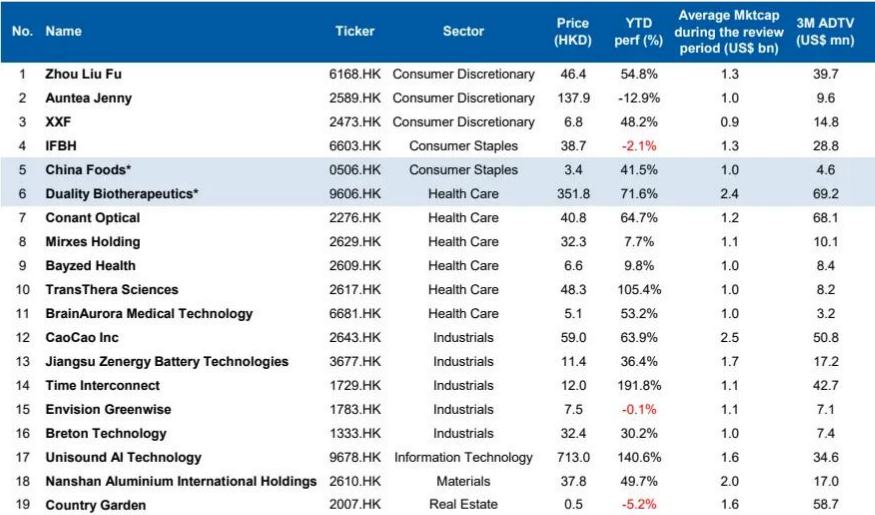
摩根士丹利重磅策略:南向通成港股 “定海神针“ 周六福(06168)、云知声(09678)等或迎先机
智通财经网· 2025-08-21 02:49
Group 1 - The core viewpoint is that southbound funds have become a crucial driving force in the Hong Kong stock market, with their influence expected to deepen due to unique investment opportunities and long-term policy support [1][2] - Southbound funds account for over one-third of the daily turnover on the Hong Kong Stock Exchange and hold nearly 15% of the free float market capitalization, with both metrics showing over 30% growth compared to before 2024 [2] - Cumulative net inflows from southbound funds have reached $14 billion since 2025, surpassing the total for 2024, with daily inflows increasing by 84.6% year-on-year [2] Group 2 - Historically, stocks included in the southbound trading scheme show strong performance prior to inclusion, with an average increase of 3.7% in the 30 days before inclusion, outperforming the Hang Seng Index by 5.2% [3] - In February, 26 out of 27 stocks that were included in the southbound scheme saw price increases in the 30 days prior, with an average absolute return of 41% [3] - Post-inclusion, stocks may experience short-term pressure, with an average relative return of -2.0% against the Hang Seng Index in the following 30 days, but a long-term excess return of 4.6% over 90 days [3] Group 3 - Morgan Stanley has developed a southbound stock selection model (MSSBT) that accurately predicts stocks to be included, achieving an average hit rate of 85% across the last four semi-annual inclusion cycles [4] - The model's hit rate reached 97% in the August 2024 cycle, with a simulated portfolio showing an average absolute return of 10.1% in the 30 days prior to inclusion [4] - The model employs strict selection criteria, including market capitalization above HKD 50 billion and compliance with turnover standards, while excluding stocks with high ownership concentration [4] Group 4 - In September, 19 stocks are predicted to be included in the southbound trading scheme, with a focus on the healthcare (6 stocks) and industrial (5 stocks) sectors, indicating increased interest in innovative drug development and high-end manufacturing [5][6] - The top five candidates by market capitalization include Cao Cao Inc (02643), Yimeng Biotech (09606), Nanshan Aluminum International (02610), Zhengli New Energy (03677), and Yunzhisheng (09678) [6] Group 5 - The recommended strategy for maximizing returns includes entering positions one month prior to inclusion, diversifying with equal-weighted stock selections, and selling on the official inclusion date to lock in short-term gains [8]
摩根士丹利重磅策略:南向通成港股 “定海神针“ 周六福、云知声等或迎先机
Zhi Tong Cai Jing· 2025-08-21 02:47
Group 1 - The core viewpoint is that southbound funds have become a crucial driving force in the Hong Kong stock market, with their influence expected to deepen due to unique investment opportunities and long-term policy support [1][2] - Southbound funds account for over one-third of the daily net inflow in the Hong Kong Stock Exchange's main board trading volume and hold nearly 15% of the free float market capitalization of Hong Kong stocks, both metrics having increased by over 30% since before 2024 [2] - Cumulative net inflow from southbound funds has reached $14 billion since 2025, surpassing the total for 2024, with daily inflows increasing by 84.6% year-on-year [2] Group 2 - Stocks included in the southbound trading scheme typically show strong performance prior to inclusion, with an average increase of 3.7% in the 30 days before inclusion, outperforming the Hang Seng Index by 5.2% [3] - In February, 26 out of 27 stocks included in the southbound scheme rose in the 30 days prior, with an average absolute return of 41% and a relative return of 19% compared to the Hang Seng Index [3] - Post-inclusion, stocks may experience short-term pressure, with an average relative return of -2.0% over 30 days, but still show a long-term excess return of 4.6% over 90 days [3] Group 3 - Morgan Stanley has developed a southbound stock selection model (MSSBT) that accurately predicts stocks to be included in the scheme, achieving an average hit rate of 85% across the last four semi-annual inclusion cycles, with a peak of 97% in August 2024 [4] - The simulated portfolio under equal-weight allocation shows an average absolute return of 10.1% in the 30 days prior to inclusion, outperforming the Hang Seng Index by 7.4% [4] - The model employs strict selection criteria, including market capitalization above 50 billion HKD and compliance with turnover rate standards, while excluding stocks with high ownership concentration [4] Group 4 - The latest forecast indicates that 19 stocks will be included in the southbound scheme in September, covering seven major sectors, with healthcare (6 stocks) and industrials (5 stocks) making up over 50% of the list [5][6] - The top five candidates by market capitalization include Cao Cao Inc (Industrials), Ying En Biological (Healthcare), Nanshan Aluminum International (Materials), Zhengli New Energy (Industrials), and Yunzhisheng (Information Technology) [6] Group 5 - The recommended strategy for maximizing returns involves entering positions one month prior to inclusion, diversifying risk through equal-weight allocation of selected stocks, and locking in short-term gains by selling on the official inclusion date [8]
东兴证券:市场对慢牛行情的认可程度开始逐步强化
天天基金网· 2025-08-20 11:27
Group 1 - The market's recognition of a slow bull market is gradually strengthening, with significant recent trading activity and increased inflow of external funds into the stock market [2][3] - The continuous decline in interest rates is enhancing residents' willingness to invest in the stock market, especially as many bank wealth management products mature, leading to a potential increase in stock market inflows [3] - Policy measures are maintaining a loose monetary environment and promoting consumption, which, combined with expectations of a Federal Reserve rate cut in September, may improve the economic fundamentals in Q4 [3][4] Group 2 - The electronic and semiconductor industries are showing positive trends driven by new technologies such as AI, with increasing technology penetration in automotive electronics, new energy, IoT, big data, and AI [5][6] - The global semiconductor sales are projected to increase by 19.60% year-on-year by June 2025, with TSMC reporting a 25.77% year-on-year increase in July revenue, indicating strong industry demand [6] - The domestic semiconductor manufacturing and supporting industries are accelerating development, benefiting from government support through industrial policies and tax incentives [6] Group 3 - A-shares are expected to remain active, with the potential for accelerated rotation in the market [7][8] - The index is anticipated to gradually rise due to the dual push of declining risk-free returns and accelerated capital market reforms, although short-term market risk preferences may continue to fluctuate [8] - Four investment opportunities are highlighted: AI sector, non-bank financials, Hong Kong dividend stocks, and the "anti-involution" theme, which is expected to be a significant policy direction in the latter half of the year [9]

科创50增强ETF(588460)盘中涨超2%,机构称关注泛科技行业的“头部效应”
Xin Lang Cai Jing· 2025-08-20 06:20
Group 1 - The core viewpoint highlights the significant performance of the technology sector, particularly the "head effect" observed in the top-performing stocks within the sector, indicating a strong trend investment effect [1][2] - The "head effect" is more pronounced in the technology and high-end manufacturing sectors, with G1/G2 groups showing higher average price increases compared to other industries, which exhibit a "waist effect" [1] - The AI industry is shifting from small and mid-cap stocks to larger mid-cap stocks, reflecting a growing institutional consensus and a trend towards investment in key sectors such as domestic chips, servers, and advanced manufacturing [2] Group 2 - As of July 31, 2025, the top ten weighted stocks in the STAR Market 50 Index account for 54.71% of the index, with notable companies including SMIC, Cambricon, and Haiguang Information [3] - The STAR Market 50 Enhanced ETF comprises 50 companies with high market capitalization and liquidity, representing key players in six strategic emerging industries [2][3] - The STAR Market 50 component companies demonstrate strong anti-cyclical capabilities and performance resilience amid increasing global technology competition [2]
烟台|万亿烟台向上冲的最大变量是什么
Da Zhong Ri Bao· 2025-08-20 01:13
Core Insights - The development of Yantai, which has surpassed the trillion-yuan GDP mark, is significantly driven by talent [2][3][4] Group 1: Economic Performance - Yantai's GDP for Q1 reached 2584.3 billion yuan, with a year-on-year growth of 6.9%, ranking first in the province; for the first half of the year, GDP was 5375.11 billion yuan, with a growth of 6.4%, maintaining the top position in the province [3] - The city has established a clear path for talent empowerment, contributing to its economic growth across various sectors, including aerospace and manufacturing [3][5] Group 2: Talent Development Initiatives - The Yantai Talent Week and the Talent Empowerment Conference highlighted the release of the "Technical Demand List" and the "High-level Talent Demand List," indicating a strategic focus on attracting skilled professionals [1][5] - The city has identified a total of 841 high-level talent positions, including 561 PhDs and 200 postdoctoral researchers, across various fields, showcasing a commitment to building a robust talent pool [5][8] Group 3: Innovation and Entrepreneurship - The 10th China Yantai Overseas Elite Entrepreneurship Competition concluded with 30 projects recognized for their growth potential, injecting innovative energy into the city [1][8] - The event emphasized the integration of talent, education, industry, and innovation, fostering a collaborative environment for high-level talent to thrive [8]