
外卖

Search documents
训练AI,然后被裁?Uber AI项目突遭裁员,零工、博士都没留下来
Tai Mei Ti A P P· 2025-11-27 03:20
Group 1 - Uber's AI training program "Project Sandbox" has recently laid off many project members due to changes in client internal priorities, despite initial commitments of at least three months of employment [2] - The layoffs affected both gig workers and PhD holders, with many employees not having received their first paycheck yet, which may be delayed by up to seven weeks [2] - Project Sandbox was launched a month ago, primarily to assist Google in developing AI tools, involving over ten outsourcing companies [2][3] Group 2 - Uber has been accelerating its AI business development, leveraging its experience in ride-hailing and food delivery to optimize pricing, matching, and scheduling efficiency [3] - The company aims to help clients build and test smarter AI models and applications by utilizing its decade-long data accumulation and business experience [3] - Uber's focus on Agentic AI is highlighted in its official publication detailing the requirements for large-scale adoption by 2026, emphasizing the need for extensive human input [4] Group 3 - The AI data labeling industry has seen significant growth, with many individuals participating in AI training tasks, some as a career path and others as a side income [4] - Companies like Surge AI and Scale AI are providing artificial training services for tech giants, but the market remains unstable, with layoffs being a common occurrence [5] - Major AI companies, including Scale AI, have initiated large-scale layoffs due to client losses and operational issues, with Scale AI laying off over 200 full-time employees and more than 500 contractors [6] Group 4 - Meta has also begun significant layoffs in its AI division, with plans to cut 600 AI-related positions between October and November [7] - Despite the current lack of visible impact on overall employment from AI, job postings in data analysis have decreased by 40% compared to pre-pandemic levels, indicating a potential shift in the job market [7] - The early adopters of AI may achieve success, but there is a paradox where those who initially contributed to AI development may ultimately face job insecurity [8]



阿里“休战”,美团猛涨!
Zhong Guo Ji Jin Bao· 2025-11-26 10:35
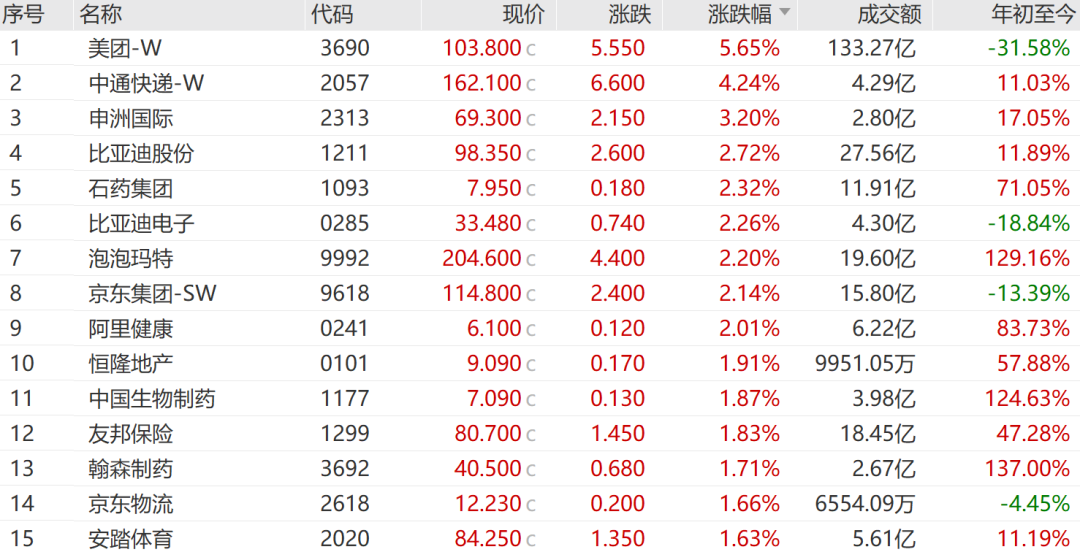
Market Overview - The Hong Kong stock market saw all major indices rise, with the Hang Seng Index up 0.13% to 25,928.08 points, the Hang Seng Tech Index up 0.11% to 5,618.36 points, and the Hang Seng China Enterprises Index up 0.04% to 9,162.37 points, with a total market turnover of HKD 207.08 billion [1] - Among the Hang Seng Index constituents, 51 stocks rose while 32 fell, with Meituan leading the blue-chip stocks with a 5.65% increase [1] Individual Stock Performance - Alibaba's stock saw a turnover of HKD 17.256 billion, down 1.90%, primarily due to a 72% year-on-year decline in adjusted net profit for Q2 of the fiscal year 2026 [2] - Meituan's stock had a turnover of HKD 13.327 billion, rising 5.65%, while Tencent Holdings experienced a turnover of HKD 8.976 billion, down 0.88% [2] Sector Performance - The healthcare sector index rose by 1.04%, while the telecommunications sector index increased by 0.52% [2] - The materials sector index fell by 1.09%, and the information technology sector index decreased by 0.58% [2] Meituan's Stock Movement - Meituan's stock surged by as much as 7.07% on November 25, closing at HKD 103.80 per share, following Alibaba's announcement to scale back its investment in Taobao Flash Sales, which positively impacted the food delivery competition landscape [3] - Meituan is expected to report its Q3 earnings on November 28, with market speculation suggesting it may face its first quarterly loss in over three years due to "irrational competition" eroding most of its profits for the quarter [3] Biotechnology Sector - The biotechnology sector has seen a rebound for the third consecutive day, with the Hang Seng Biotechnology Index rising by 1.25% [4] - Notable performers in the biotechnology sector include Kangfang Biotech, which rose by 3.97%, and Sanofi Biotech, which increased by 3.75% [7] Investment Trends in Healthcare - According to a report by CICC (Hong Kong), the global healthcare capital market has shown a recovery trend, with total financing in October reaching approximately USD 112 billion, marking a new high for the year [8] - The report highlights significant mergers and acquisitions in the medical device sector in October, indicating a focus on strategic core business enhancements and high-growth potential niche markets [9]

阿里烧钱拼外卖 到底值不值?
Mei Ri Jing Ji Xin Wen· 2025-11-26 07:33
Core Insights - The recent financial report from Alibaba shows steady overall revenue growth, with total revenue reaching 247.795 billion yuan, a year-on-year increase of 15% after excluding sold businesses. However, the operating profit has significantly declined by 85% to 5.365 billion yuan, indicating pressure from the ongoing food delivery competition [1] - The food delivery battle has also affected Meituan and JD.com, both of which reported revenue growth but a notable decline in net profits. This trend highlights the financial strain caused by the competitive landscape [1] - Alibaba's CEO of the China e-commerce division, Jiang Fan, mentioned that the first phase of scale expansion for Taobao Flash Purchase has ended, and the company is now entering a phase focused on efficiency optimization [1] Industry Analysis - The food delivery business is no longer a new trend, and major players are struggling to find innovative strategies beyond aggressive price subsidies. The current high spending model, which involves burning over 100 million yuan daily, is deemed unsustainable in the long term [1] - Alibaba's strategy appears to integrate food delivery into its broader e-commerce ecosystem, aiming to drive overall growth. JD.com has shifted its focus from the food delivery battle to other sectors like travel and in-store services, launching new apps to capture new markets [2] - Meituan has been significantly impacted by the competition, with a reported 89% decline in net profit due to high spending to maintain market share. Despite this, Meituan's stock performed relatively well after Alibaba's earnings report, likely due to market speculation that its third-quarter performance may have bottomed out [2]


新疆乌苏市市场监管局联合开展外卖行业食品安全及交通安全培训
Zhong Guo Shi Pin Wang· 2025-11-26 04:25
Core Viewpoint - The article highlights the efforts of the Urumqi City Market Supervision Bureau in Xinjiang to enhance food safety and traffic safety training for delivery riders, emphasizing their dual role in food safety supervision and delivery services [1][2]. Group 1: Food Safety Training - The training focuses on the responsibilities of delivery riders in ensuring food safety, encouraging them to act as "food safety scouts" while delivering meals [2]. - The Urumqi City Market Supervision Bureau staff provided a systematic interpretation of the Food Safety Law of the People's Republic of China and food safety operation standards [2]. - Delivery riders are urged to monitor restaurant kitchens and ensure proper packaging of food items [2]. Group 2: Traffic Safety Training - The training included safety knowledge for electric bicycle riders, analyzing typical safety cases and the new national standards for electric bicycles [2]. - A traffic safety theme campaign titled "Safe Travel, Happiness Accompanies" was launched to promote safe riding practices among delivery riders [2]. - The training covered essential traffic safety knowledge, including safe crossing, helmet usage, and winter slip prevention, along with the dangers of traffic violations such as drunk driving and speeding [2]. Group 3: Ongoing Initiatives - The local delivery industry party branch plans to continue regular education on food and traffic safety to enhance awareness among delivery riders [2]. - The initiative aims to protect the safety of delivery riders while they perform their duties [2].
阿里“增长战略2.0”:从“不惜代价”到“高效增长”,Q3是盈利拐点
Hua Er Jie Jian Wen· 2025-11-26 03:45
Core Viewpoint - Alibaba is undergoing a fundamental strategic shift from "growth at all costs" to "efficient growth," with a focus on profitability rather than just user scale [1] Group 1: Strategic Shift - Morgan Stanley's report indicates that Alibaba's growth model is transitioning from user scale-driven to efficiency-driven, with a potential profitability inflection point expected by Q3 2025 [1] - The report predicts that Alibaba's overall profitability will significantly recover starting Q4 2025 as the company shifts its growth strategy [1] Group 2: Business Performance - The report highlights two key business areas driving this transition: cloud services and food delivery [1] - The cloud business is expected to see a revenue growth rate increase to 37% year-on-year, driven by strong demand for AI [1][3] - The food delivery and flash purchase business is showing a significant reduction in losses, with projected losses decreasing from 350 billion yuan to approximately 210 billion yuan by Q4 2025 [2] Group 3: Financial Adjustments - Due to high base effects, the growth of Customer Management Revenue (CMR) is expected to slow down to 6% for both Q4 2025 and the fiscal year 2026 [4][5] - Morgan Stanley has adjusted its revenue forecasts for Alibaba, lowering estimates by 1% and 2% for fiscal years 2026 and 2027, respectively, while noting that strong growth in cloud services partially offsets this [5] - Despite these adjustments, the overall outlook remains positive, with a maintained "overweight" rating and a target price adjustment to $230 for U.S. shares and $225 for Hong Kong shares [1][5]
美团-W早盘涨近7% 阿里称对淘宝闪购的投入预计下个季度会显著收缩
Zhi Tong Cai Jing· 2025-11-26 02:56
Core Viewpoint - Meituan-W (03690) experienced a significant stock price increase, rising nearly 7% in early trading and currently up 5.85% at HKD 104, with a trading volume of HKD 7.823 billion. This movement is influenced by Alibaba's CFO comments regarding a reduction in investment in Taobao Flash Sales, indicating a potential "temporary truce" in competition [1]. Group 1: Company Performance - Meituan is set to hold a board meeting on November 28 to approve its quarterly performance [1]. - Citic Securities previously reported that Meituan's food delivery business losses are expected to peak in the current quarter, with competition intensity easing and subsidies returning to rational levels [1]. - It is anticipated that Meituan's food delivery market share will recover, with losses in the food delivery unit economics (UE) expected to be halved [1]. Group 2: Industry Insights - Alibaba's CFO indicated that the company's investment in Taobao Flash Sales will reach its peak in the September quarter, with a significant reduction expected in the next quarter due to improved efficiency and unit economics [1]. - The long-term outlook for Meituan's food delivery business includes substantial profit potential from international expansion, which may enhance the company's valuation flexibility [1].
外卖大战,冷暖自知
Bei Jing Shang Bao· 2025-11-25 16:40
外卖不是新兴行业,自身讲不出新故事。算不上风口,比不了AI,几乎成为电商零售线上最便宜的赛 道,但如今,几个巨头却愿意为了争夺几杯奶茶,打一场最贵的商战。 巨头,都不是什么"冤大头"。 外卖大战大半年后,阿里交出了利润跳水的业绩答卷。11月25日,阿里最新财报显示,报告期内阿里收 入同比微增5%。但同时,盈利显著承压,公司期内经营利润同比大幅下滑85%。 外卖大战和AI基建投入让阿里付出大笔现金流,但"淘宝闪购"也带动即时零售收入大增60%,淘宝App 月活显著提升。 淘宝闪购4月30日升级上线,在这场近年来最大的商战中,阿里入局越来越深,京东声量渐弱,而美团 一直都在。 尽管最新的财报尚未集齐,但从上个季度数据已经能清晰看到得失。 横向对比,在外卖大战的帮助下,阿里、京东、美团的营收均稳步攀升,但净利润却双位数下滑,业绩 冰火,冷暖自知。 三季度是外卖大战炮火猛烈的阶段,阿里猛攻美团为主线,三家巨头几个月烧掉数百亿,将外卖行业的 订单峰值从一天1个亿做大到2.5亿。 大力出奇迹。若放在大平台身上,这是聚焦短期目标的合理战术。用巨资补贴冲高任何单一数字,打外 卖战更是立竿见影。 在一个格外注重性价比的时代,对 ...
【西街观察】外卖大战 冷暖自知
Bei Jing Shang Bao· 2025-11-25 14:29
Core Viewpoint - Alibaba's latest financial report reveals a slight revenue increase of 5% year-on-year, but a significant decline in operating profit by 85%, attributed to the fierce competition in the food delivery market and heavy investments in AI infrastructure [1] Group 1: Financial Performance - Alibaba's revenue increased by 5% year-on-year, but operating profit saw a drastic decline of 85% during the reporting period [1] - The food delivery battle has led to substantial cash outflows for Alibaba, despite a 60% increase in instant retail revenue driven by the launch of "Taobao Flash Purchase" [1] Group 2: Market Competition - The food delivery market has seen Alibaba, JD.com, and Meituan all experiencing steady revenue growth, yet net profits have declined by double digits, indicating a stark contrast in performance [1] - The competition intensified in the third quarter, with Alibaba aggressively targeting Meituan, resulting in a surge of daily orders from 100 million to 250 million [1] Group 3: Strategic Insights - Alibaba's strategy involves not just competing in food delivery but also enhancing its overall e-commerce business, integrating retail operations, and creating a competitive edge in the market [2] - JD.com has shifted its focus from food delivery to in-store services, while Meituan has been preparing to expand its offerings beyond food delivery into a broader range of instant retail categories [2] Group 4: Marketing and Consumer Engagement - The intense competition serves as a marketing strategy and a means to enhance competitive capabilities, focusing on operational efficiency, resource integration, and innovative business models [3] - The battle for consumer attention in the food delivery sector is crucial, with companies prioritizing comprehensive strength over mere profitability [3]
【西街观察】外卖大战,冷暖自知
Bei Jing Shang Bao· 2025-11-25 14:16
尽管最新的财报尚未集齐,从上个季度数据已经能清晰看到得失。 横向对比,在外卖大战的帮助下,阿里、京东、美团的营收均稳步攀升,但净利润却双位数下滑,业绩 冰火,冷暖自知。 三季度是外卖大战炮火猛烈的阶段,阿里猛攻美团为主线,三家巨头几个月烧掉数百亿,将外卖行业的 订单峰值从一天1个亿做大到2.5亿。 大力出奇迹。若放在大平台身上,这是聚焦短期目标的合理战术。用巨资补贴冲高任何单一数字,打外 卖战更是立竿见影。 外卖不是新兴行业,自身讲不出新故事。算不上风口,比不了AI,几乎成为电商零售线上最便宜的赛 道,但如今,几个巨头却愿意为了争夺几杯奶茶,打一场最贵的商战。 外卖大战大半年后,阿里交出了利润跳水的业绩答卷。11月25日,阿里最新财报显示,报告期内阿里收 入同比微增5%。但同时,盈利显著承压,公司期内经营利润同比大幅下滑85%。 外卖大战和AI基建投入让阿里付出大笔现金流,但"淘宝闪购"也带动即时零售收入大增60%,淘宝App 月活显著提升。 淘宝闪购4月30日升级上线,在这场近年来最大的商战中,阿里入局越来越深,京东声量渐弱,而美团 一直都在。 京东作为最早的发起方,外卖身影退后,与几个月前高调的闯入者姿态 ...
多地上线“骑手公寓”:月租700元,外卖小哥住进北京中心区域
3 6 Ke· 2025-11-25 03:13
Core Viewpoint - The introduction of "Rider Apartments" by food delivery platforms like Meituan and Ele.me aims to provide affordable housing solutions for delivery riders, addressing their housing needs while also enhancing employee retention in a competitive labor market [2][6][9]. Group 1: Meituan's Initiatives - Meituan plans to establish "Rider Apartments" across various cities, starting with 600 riders in Beijing, Shenzhen, and Chongqing, with a total investment of 10 billion yuan over five years to cover utilities and internet costs [2][3]. - The monthly rent for these apartments is set at 700 yuan, significantly lower than the average rent of over 1500 yuan in the same area [2]. - Riders will receive rental subsidies to ensure their actual rent remains below market rates [3]. Group 2: Comparison with Ele.me - Ele.me previously launched the first "Rider Star Apartments" in Shanghai in 2023, offering monthly rents between 550 and 950 yuan, with a focus on providing ready-to-move-in accommodations [2][6]. - The Shanghai project included 98 units and approximately 300 beds, with an occupancy rate of around 85% over two years, indicating positive feedback from riders [6]. Group 3: Broader Industry Trends - Other cities, such as Wuhan, have also seen the establishment of dedicated apartments for delivery riders, with the "Smart Rider Apartment" offering rents from 350 yuan to over 1000 yuan [7]. - The trend of providing affordable housing is not limited to delivery platforms; major tech companies like Xiaomi, Huawei, and JD.com are also developing employee apartments to attract and retain talent in competitive markets [8][9].
